
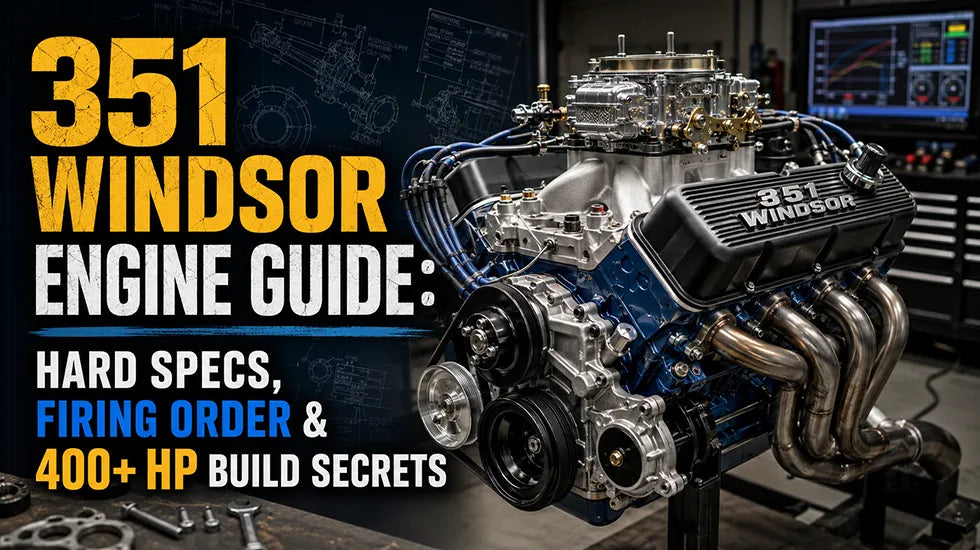
The 351 Windsor is arguably one of the most versatile and hard-working V8s Ford ever cast. Introduced in 1969, it became the go-to foundation for everything from heavy-duty work trucks to high-revving muscle cars. If you're looking to pull a junkyard motor for a Foxbody swap or build a nasty 400+ HP street machine, this tall-deck powerhouse is exactly where you want to start.
If you are short on time, here is exactly what you need to know about the 351W:
- Displacement & Deck: 5.8L V8. The defining feature is its 9.480-inch deck height (taller than the 302), giving it a longer stroke and massive low-end torque.
- Firing Order: 1-3-7-2-6-5-4-8. (Crucial: This is different from the early 289/302. Do not mix up the camshafts!)
- Best Blocks: 1969–1974 (D0AE, D1AE) for high-nickel strength; 1994+ (F4TE) for factory roller cam setups.
- HP Potential: Stock is around 150-290 HP depending on the era, but hitting 400–450 HP is easily achievable with a 393/408 stroker kit, aluminum heads, and proper headers.
351 Windsor Technical Specifications
To build a motor right, you need the hard numbers. The 351 Windsor shares the small-block Ford bellhousing pattern, but structurally, it’s a beefier unit than the 302. Here are the exact bench specs you'll need when ordering parts or setting up your engine stand.
| Specification | Engineering Details |
|---|---|
| Displacement | 351 cubic inches (5.8 liters) |
| Bore x Stroke | 4.000 in x 3.500 in |
| Deck Height | 9.480 inches (Allows for longer rods) |
| Main Journal Diameter | 3.000 inches (Extremely thick, heavy-duty) |
| Connecting Rod Length | 5.956 inches |
| Engine Block Material | Cast iron (Look for high-nickel in '69-'74 blocks) |

Performance Insights
In stock form, especially out of an 80s Bronco, the 351W is an absolute dog on horsepower but a monster on low-end torque. However, once you ditch the restrictive factory cast iron heads and flat-tappet cam, the airflow potential skyrockets.
| Metric | Junkyard Stock (e.g., 1985) | Mild Street Build (H/C/I + Headers) |
|---|---|---|
| Horsepower | ~210 HP | 380 - 450 HP |
| Torque | ~315 lb-ft | 420 - 480 lb-ft |
What Year Is the Best 351 Windsor?
If you are building a high-horsepower stroker, the foundation is everything. The early production years (1969–1974) are widely considered the holy grail. Castings like the D0AE or D1AE have significantly higher nickel content, making the cylinder walls thicker and less prone to core shift.
"I remember back in 2018, a '70 Mustang came into the shop. The owner wanted to build a nasty 408 stroker and brought in a late-80s block he got cheap off a forum. When we tore it down and did a sonic check on the cylinder walls, they were way too thin to safely overbore for his 500hp goals. We had to scrap that plan and source an early D0AE block with the thick webbing. Always verify your casting numbers and get a sonic check before dropping money on forged internals."
For modern street builds where you want the reliability of hydraulic roller lifters without retro-fit kits, look for the F4TE block (1994+ F-Series trucks/Vans). It’s "roller-ready" straight from the factory.
Transmission Compatibility: Can a T5 Handle a 351 Windsor?
The short answer? Yes, it will bolt up using the right bellhousing. The real answer? It probably won't survive long.
Many beginners watch online tutorials and think they can just bolt a stock Foxbody T5 behind a healthy 351W, dump the clutch, and do burnouts. I highly recommend not doing that. A World Class T5 is officially rated for about 300 lb-ft of torque. A mild H/C/I (Heads, Cam, Intake) 351W easily makes 380+ lb-ft right off idle. I had a buddy grenade third gear on his T5 within a week of swapping a Windsor into his Mustang. Save yourself the tow bill and step up to a Tremec TKX or a built T56 from day one.
351 Windsor vs. 351 Cleveland: Key Differences
While they share displacement, almost nothing interchanges between the Windsor and the Cleveland.
- Architecture: The Windsor uses a standard inline valve setup and routes coolant through the intake manifold. The Cleveland features massive, canted valves (specifically the 4V heads) and routes water through the block via a "dry" intake manifold.
- Power Curve: The 351W’s smaller ports make high port velocity, delivering killer low-to-midrange torque. The 351C 4V heads flow absurd amounts of air, making it a high-RPM screamer built for the track.
- Parts Cost: If you are on a budget, go Windsor. Aftermarket support for the 351W is massive, making intakes, heads, and EFI kits significantly cheaper than Cleveland gear.
351 Windsor Firing Order & Camshaft Selection
If there is one thing that trips up guys switching from a 302 to a 351W, it's the firing order. The factory 351 Windsor firing order is 1-3-7-2-6-5-4-8. This is identical to the late-model 5.0L HO, but completely different from the early 289/302 (which is 1-5-4-2-6-3-7-8).
When you are buying an aftermarket camshaft, make absolutely sure you are wiring your distributor to match the cam's profile, otherwise, you'll be chasing backfires and a no-start condition all weekend.

Customizing and Upgrading the 351 Windsor Engine
Getting real power out of this cast-iron lump comes down to air volume. Here is how you actually build it right.
Enhancing the Air Intake and Exhaust Systems
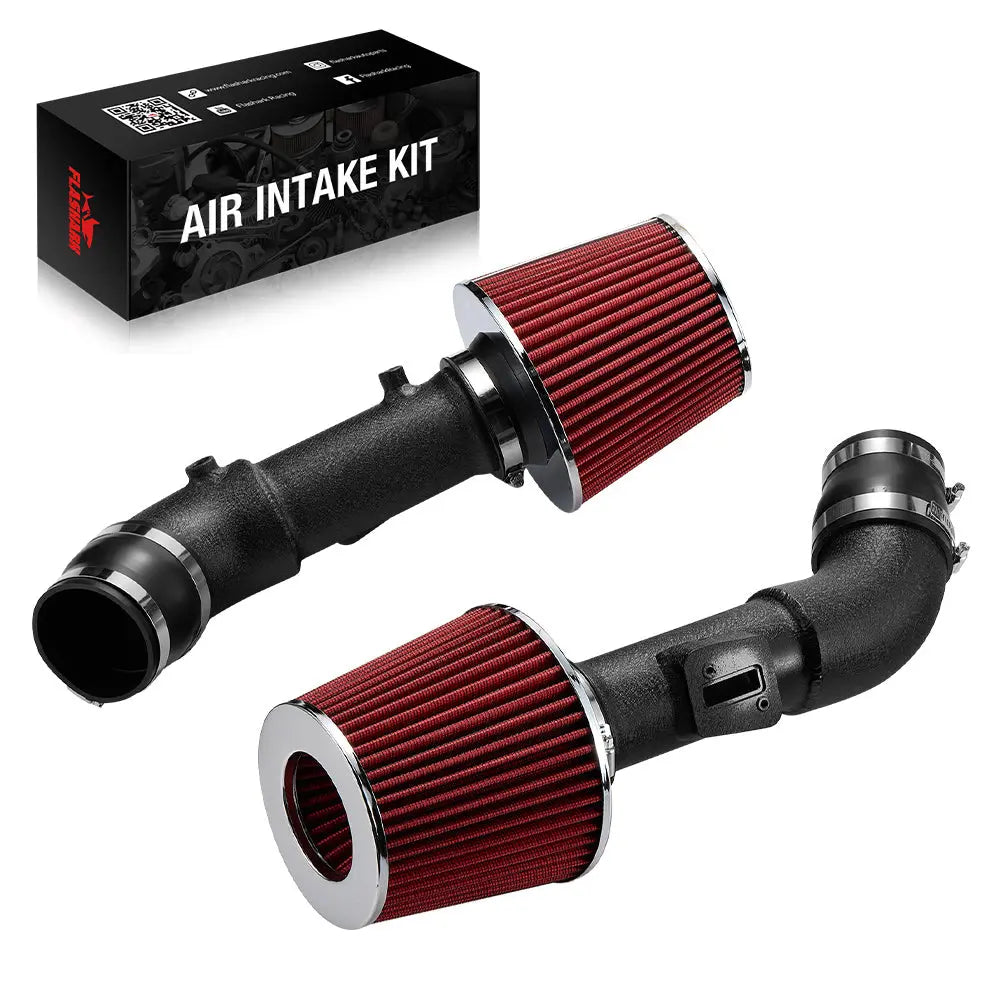
To let the engine breathe, ditch the factory air box. Installing a cold air intake or high-flow air filter is step one. But the real bottleneck on a 351W is the exhaust.
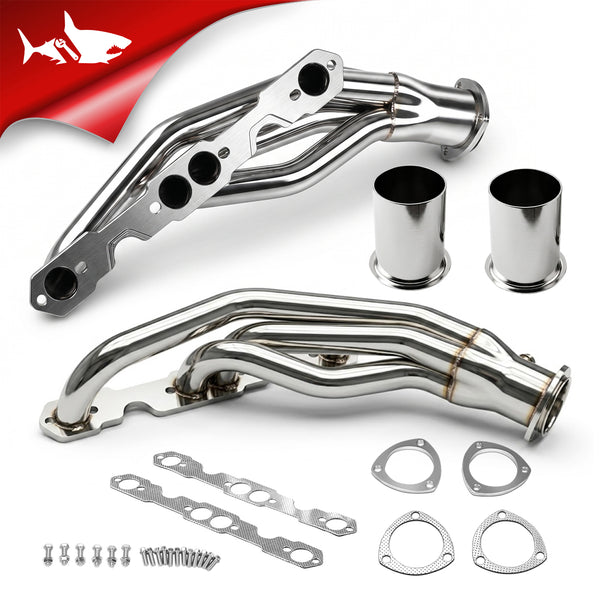
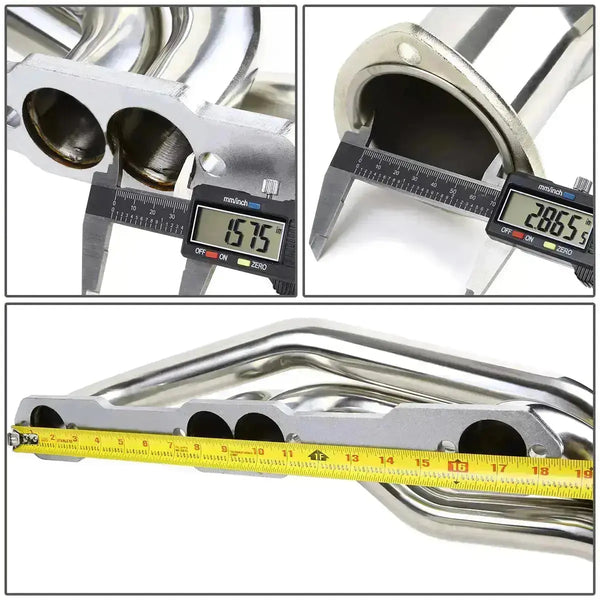
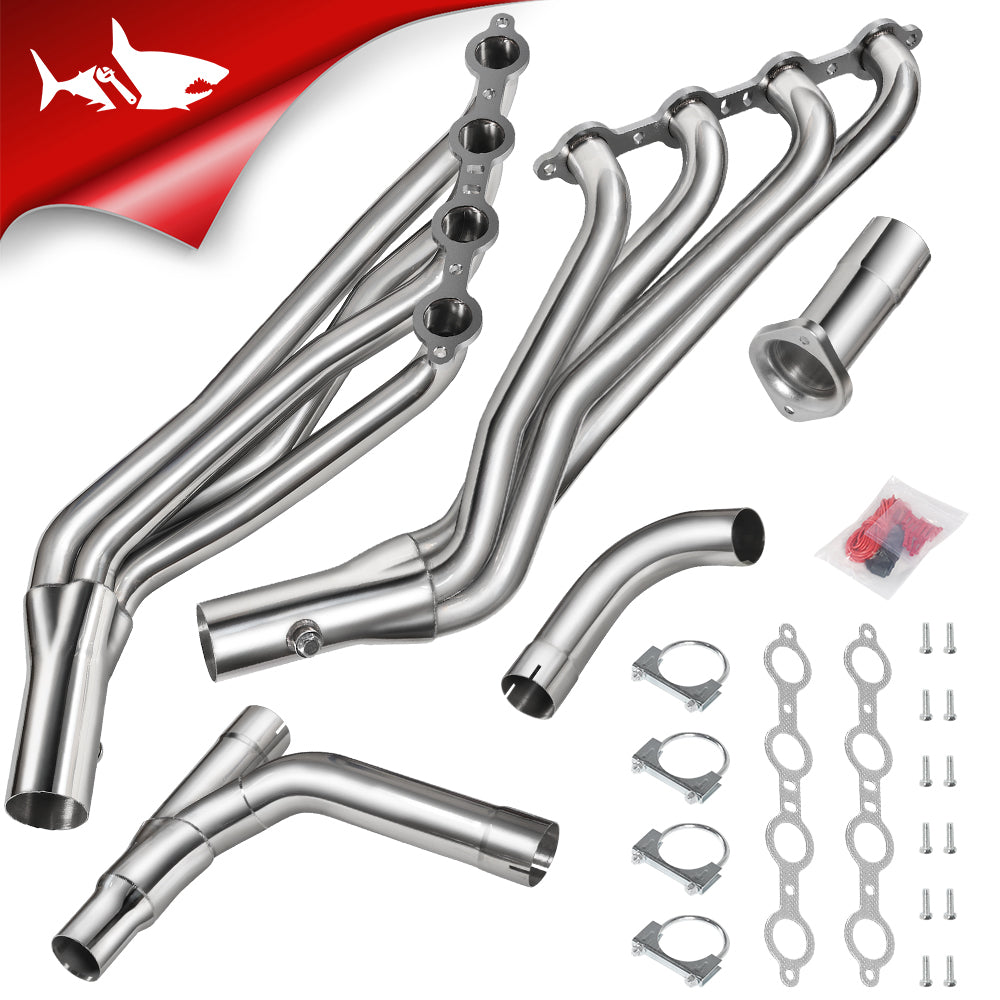
The stock exhaust manifolds are terribly restrictive. When upgrading to performance headers, pay attention to primary tube diameter. If you have a stock or mild street motor, stick to 1-5/8" primary tubes to maintain exhaust velocity and low-end torque. If you are building a 408 stroker pushing past 450 HP, you must step up to 1-3/4" primary tubes with a 3" collector.
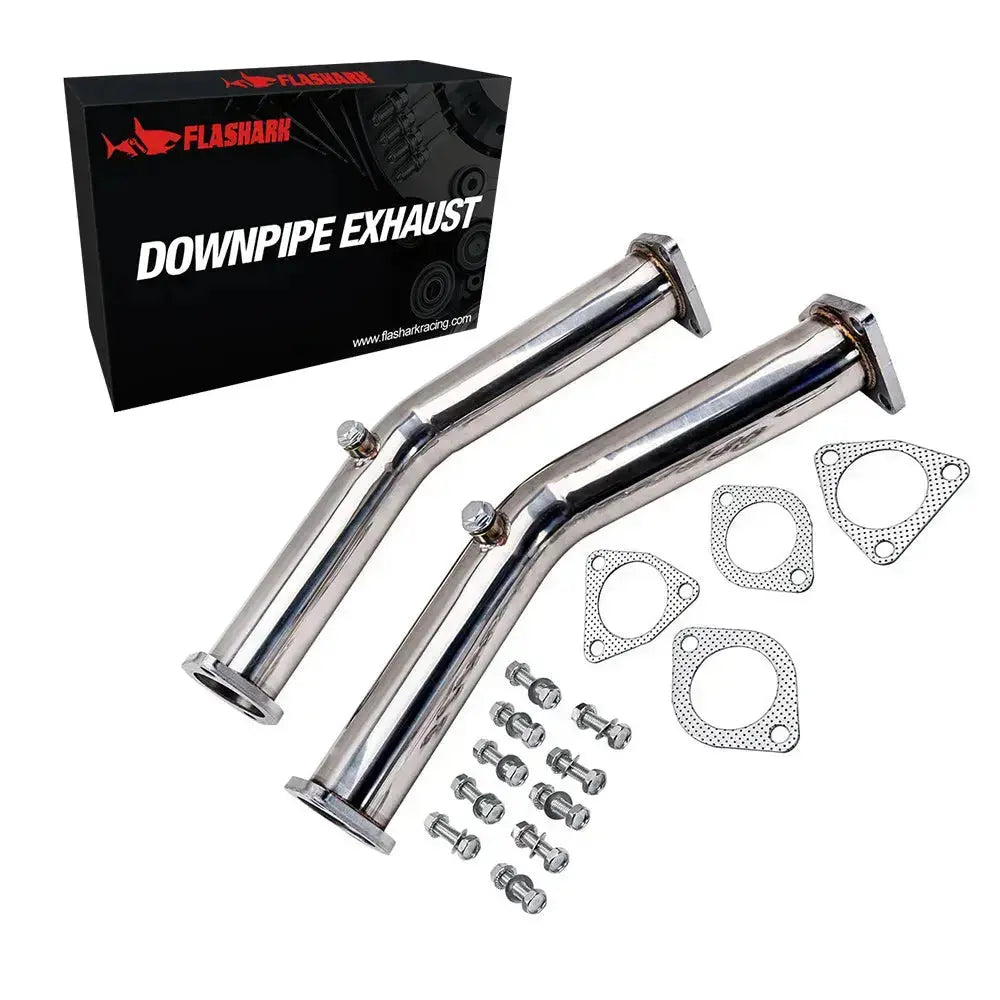
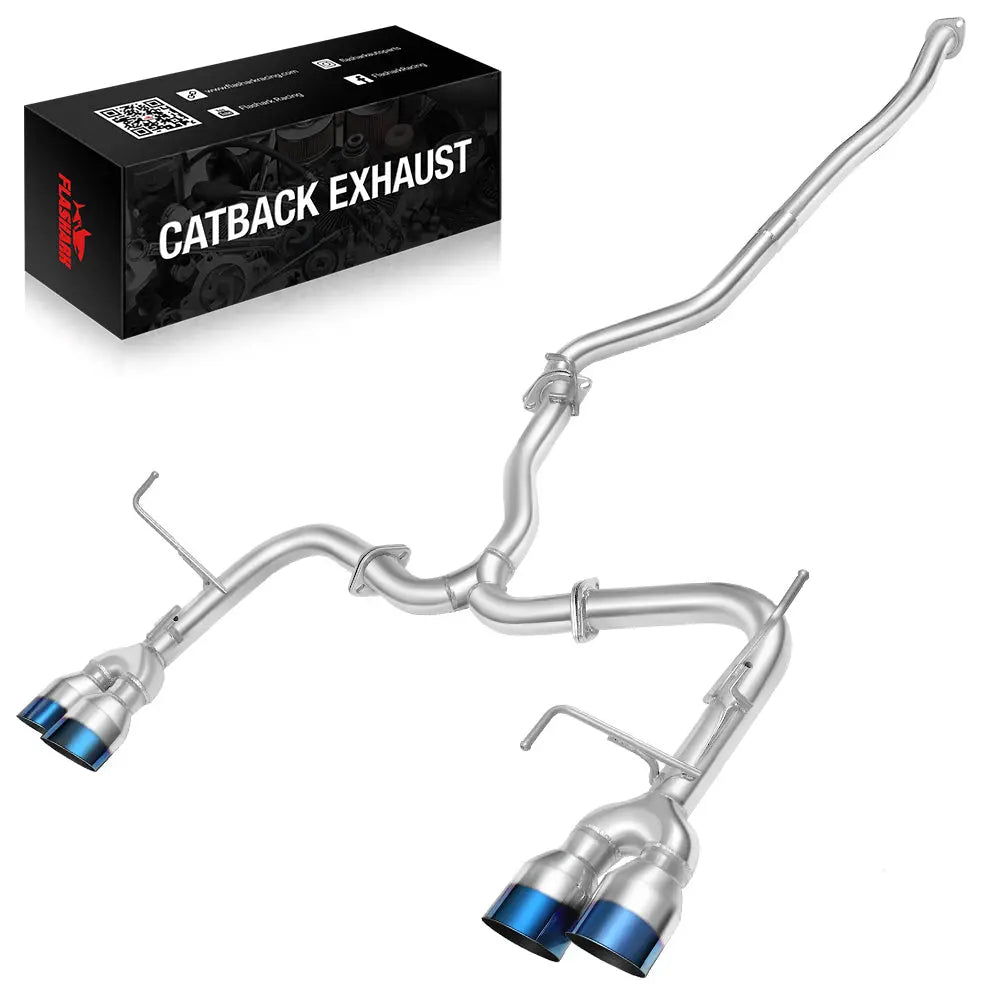
Pair those headers with high-flow cats, an X-pipe, and straight-through performance mufflers to eliminate backpressure.
Increasing Displacement with a Stroker Kit
Because of its 9.480-inch deck height, the 351W is begging to be stroked. By installing a new forged crankshaft, rods, and pistons, you can easily punch it out to 393, 408, or even 427 cubic inches.
Builder's Note: When dropping in a 408 rotating assembly, you will need to "clearance the block." This means physically grinding away small portions of the bottom of the cylinder bores so the larger rod bolts don't smack the cast iron as they swing around.
Upgrading Fuel and Cooling Systems
A 400 HP Windsor generates a lot of heat. The stock single-core radiator won't cut it. Upgrade to a 3-row aluminum cooling system, a high-volume mechanical water pump (Edelbrock makes great units), and a 180-degree thermostat. For fuel, if you are running a carburetor, a 750 CFM vacuum secondary carb fed by a 110 GPH mechanical pump is the sweet spot for a street bruiser.
Common Issues, Diagnostics, and Maintenance Tips
These engines are tanks, but they have a few predictable mechanical quirks.
- Rear Main Seal Leaks: Early blocks (pre-1983) use a 2-piece rear main seal that loves to drip oil on your driveway. When rebuilding, you have to stagger the seal ends and use a dab of RTV. If you have an 80s/90s block, they use a modern 1-piece seal which is much more reliable.
- Flat Tappet Cam Wear: If you are running an older block with a flat-tappet camshaft, modern off-the-shelf motor oil will destroy your cam lobes. You must use high-zinc (ZDDP) oil (like Valvoline VR1) or a zinc additive with every single oil change.
351 Windsor Factory Horsepower by Year
Emissions regulations strangled this engine in the 70s. Here is the reality of factory dyno numbers.
| Year | Typical HP Range | Mechanical Notes |
|---|---|---|
| 1969-1970 | 250–290 HP (Gross) | High compression (up to 10.7:1 for 4V models) |
| 1972-1973 | 159–250 HP (Net) | Compression dropped to ~8.0:1 for unleaded gas |
| 1974–1986 | 140–180 HP | Heavy smog equipment, 2-barrel carbs |
| 1987–1996 | 190–210 HP | EFI introduced (E7TE heads in trucks) |
351 Windsor Block Identification and Casting Numbers
Casting numbers are located on the block's passenger side, just above the starter motor. Get a wire brush and some brake cleaner to read them.
- D0AE / D1AE / D2AE: The holy grail blocks. High nickel content, heavy webbing. Best for strokers.
- E5AE / E9AE: Standard 80s truck blocks. Good for street builds, but use a 1-piece rear main seal.
- F4TE: The 1994+ roller block. It has taller lifter bosses drilled and tapped for the factory spider tray, allowing you to run modern hydraulic roller camshafts without expensive tie-bar lifters.
Applications and Compatibility
The 351W fits in almost any engine bay that a 302 fits in, though you may need a drop-base air cleaner or a cowl hood due to the taller deck height.
| Vehicle Model | Years Compatible | Notes for Swaps |
|---|---|---|
| Ford Mustang (Foxbody) | 1979–1993 | Requires specific swap oil pan and headers. Hood clearance is tight. |
| Ford F-150 / Broncos | 1977–1996 | Direct bolt-in. Factory EFI setups are great for off-roading. |
| Classic Mustangs/Cougars | 1969–1973 | Shock tower clearance is slightly tighter than a 289/302. |
Conclusion
The 351 Windsor isn't just an engine; it's a blank canvas. Whether you are doing a concourse-correct restoration on a '69 Mach 1 or building a fuel-injected, turbocharged 408 stroker for the drag strip, the Windsor block provides the torque and reliability to make it happen. Invest in good heads, map out your camshaft specs carefully, and let Flashark help you handle the exhaust flow.
FAQ: 351 Windsor Engine Expert Answers
Q1: What is the exact deck height of a 351 Windsor?
A1: The 351 Windsor has a deck height of 9.480 inches. This is significantly taller than the 302's 8.206-inch deck, which is why the 351W is wider, heavier, and requires a different intake manifold.
Q2: What is the correct firing order for the 351 Windsor?
A2: The factory firing order is 1-3-7-2-6-5-4-8. This matches the late-model 5.0L HO engines but differs from the early 289/302 motors.
Q3: How much horsepower does a stock 351 Windsor make?
A3: It varies wildly by era. Early 1969 engines produced up to 290 gross HP. Late 70s and 80s smog-era truck engines dipped as low as 140-150 net HP. 1990s EFI truck motors made around 210 HP.
Q4: What year 351 Windsor block is the strongest?
A4: The 1969 to 1974 blocks (Casting codes D0AE, D1AE, D2AE) are the strongest due to a higher nickel content in the cast iron and thicker main webs, making them ideal for high-horsepower stroker builds.
Q5: Can a T5 transmission handle a modified 351 Windsor?
A5: Generally, no. A stock World Class T5 is rated for about 300 lb-ft of torque. Even a mildly modified 351W will easily exceed this and likely shatter third gear. A Tremec TKX or T56 is highly recommended.
Q6: Are the 351 Windsor and 351 Cleveland parts interchangeable?
A6: Almost none. The blocks, intake manifolds, exhaust headers, and cooling routing are entirely different. You can bolt Cleveland heads on a Windsor block (called a "Clevor" build), but it requires custom intake manifolds and cooling modifications.
Q7: What are the best affordable upgrades for a 351 Windsor?
A7: The biggest restriction is airflow. Upgrading to aftermarket aluminum cylinder heads, pairing them with a matching camshaft, and installing 1-5/8" or 1-3/4" primary long-tube headers will unlock massive power gains over stock.
Q8: How big can you stroke a 351 Windsor?
A8: The most common and reliable stroker kits are 393 ci and 408 ci. With aftermarket aftermarket dart blocks, you can push a Windsor architecture to 427 or even 460 cubic inches, but 408 is the sweet spot for a factory block.
Q9: What oil should I use in an older 351 Windsor?
A9: If your engine has a flat-tappet camshaft (standard on pre-1994 blocks), you must use a high-zinc (ZDDP) oil or a zinc additive to prevent premature cam lobe wipe-out.
Q10: Is the F4TE block good for performance builds?
A10: Yes, the 1994+ F4TE block is highly desirable for street builds because it is cast to accept factory hydraulic roller lifters, saving you money on expensive retrofit link-bar lifters.




4 comments
Landon
Looking at a 1997 F250 with 351W and 5spd. I doubt the transmission is a T5 so maybe update the transmission selections and dates.
Aaron
I had a ‘76 granada that happened to have a Windsor. I rebuilt 60 over with 512 lift and 284 duration. Headers of course, with flexible piping out either side under the doors capped unless at the track. I made a small mistake in an edelbrok single plane tunnel ram intake which kinda makes for not such good line launching. I put it in a ’79 mustang fox body with a stock tranny (c4) but a 67 falcon Detroit locker rear end. No stall converter but I did make a few runs in the quarter of low to mid 13’s. Ahhh the memories.
Mark Sylvester
Loved my Windsor in my 1973 mach 1 it was not the stock engine. Back in 86 it was swapped out with the 1969 factory 4 barrel the modified 292- 512 lift cam headers valve job, hi comp pistons never lost a street race
Brian Powers
You forgot to list the 69, 70 and 71 Cyclone Cyclone Spoiler, and Cyclone, spoiler 2 and the Torino Talladega