La suspensión de su vehículo juega un papel crucial en la comodidad, el manejo y la seguridad general. No solo absorbe los baches y las irregularidades de la carretera, sino que también mantiene los neumáticos en contacto con la carretera para una mayor estabilidad.
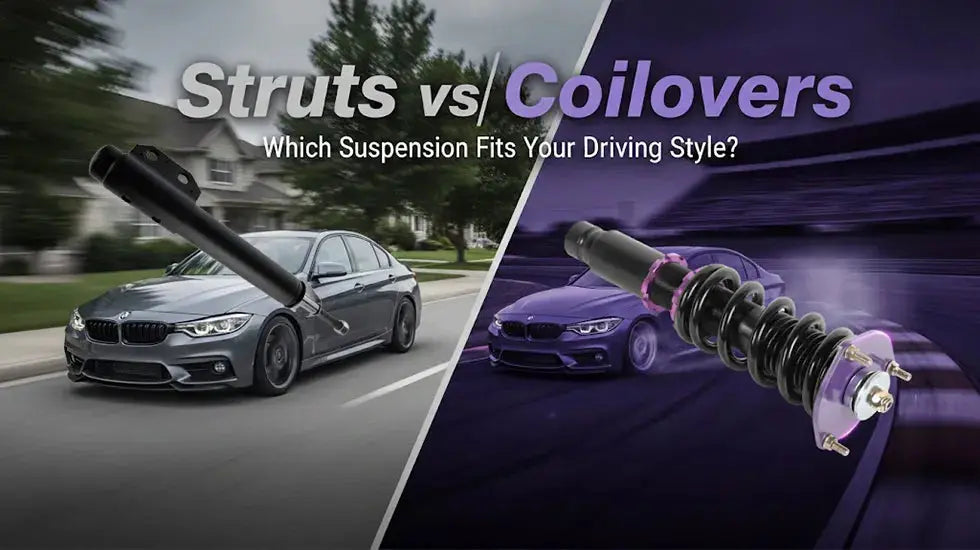
Al considerar mejoras en la suspensión, es fundamental comprender las diferencias entre los puntales y los coilovers . La elección correcta puede transformar su experiencia de conducción, mejorando la precisión en las curvas, el control del vehículo y la durabilidad a largo plazo. Según estudios de SAE International, una suspensión correctamente ajustada puede mejorar la respuesta de manejo hasta en un 20 % sin sacrificar la comodidad.
¿Qué son los puntales?
Los puntales son un tipo de componente de suspensión que combina un amortiguador con soporte estructural. Se utilizan comúnmente en suspensiones delanteras tipo MacPherson y soportan parte del peso del vehículo, controlando el movimiento vertical.

Detalles técnicos clave:
-
Los puntales a menudo integran un resorte helicoidal alrededor de un amortiguador o funcionan con un resorte separado.
-
La amortiguación suele ser fija, con una capacidad de ajuste mínima.
-
Los puntales delanteros generalmente soportan entre el 30 y el 50 % de la carga del eje, dependiendo del diseño del vehículo.
Ventajas:
-
El diseño compacto ahorra espacio en los modernos diseños de tracción delantera.
-
Rendimiento confiable y de bajo mantenimiento.
-
Más asequible en comparación con los coilovers.
Limitaciones:
-
Ajustes limitados de altura o amortiguación.
-
Mejoras moderadas en las curvas y el manejo general.
Para la mayoría de los conductores diarios, los puntales brindan un equilibrio confiable entre comodidad y control.
¿Qué son los coilovers?
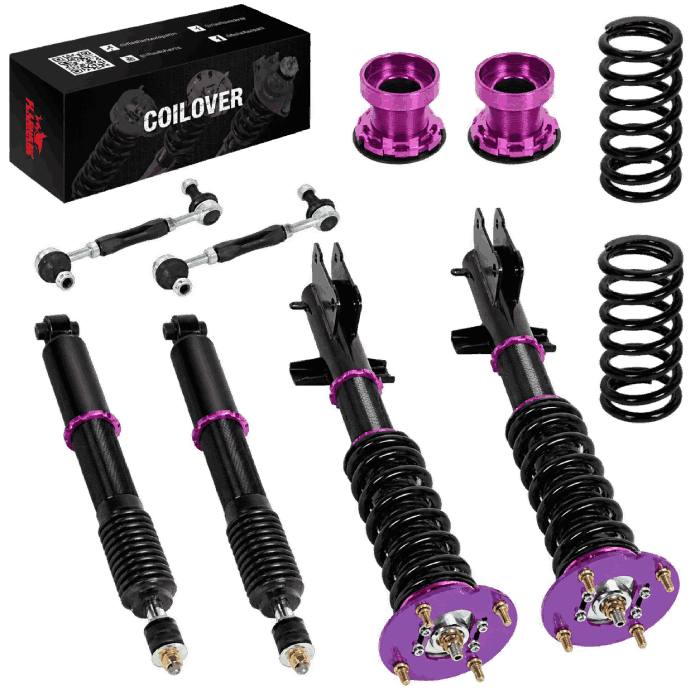
Los coilovers , abreviatura de "coil spring over shock", combinan un amortiguador con un resorte ajustable. Están diseñados para un ajuste preciso de la suspensión y un mejor manejo.

Detalles técnicos clave:
-
Ajuste de altura del vehículo: normalmente de 1 a 3 pulgadas.
-
Ajuste de la amortiguación: desde suave (cómoda) a rígida (orientada a la pista).
-
El ajuste de precarga permite ajustar con precisión la compresión del resorte para lograr un equilibrio en las curvas.
-
Generalmente están hechos de acero de alta resistencia o aluminio con recubrimientos resistentes a la corrosión.
Ventajas:
-
Mejora significativa en el manejo y la estabilidad, especialmente en las curvas.
-
La altura de manejo y la amortiguación ajustables proporcionan un ajuste personalizado para uso en la calle o en la pista.
-
Permite la optimización tanto del rendimiento como de la estética.
Limitaciones:
-
Mayor costo en comparación con los puntales estándar.
-
La instalación es más compleja y a menudo requiere alineación y calibración de altura.
-
Requiere mantenimiento periódico, como revisión de collares, sellos y ajustes de amortiguación.
Los amortiguadores coilover son ideales para los conductores que priorizan el rendimiento, la capacidad de ajuste y el manejo preciso.
Diferencias clave entre puntales y coilovers
Al comparar puntales y coilovers, se destacan varios factores:
| Característica | Puntales | Amortiguadores tipo coilover |
|---|---|---|
| Estructura | Amortiguación + soporte estructural | Amortiguador + resorte ajustable |
| Ajustabilidad | Mínimo | Altura de conducción, precarga y amortiguación ajustables. |
| Manejo del rendimiento | Mejora moderada | Importantes beneficios en curvas y estabilidad |
| Complejidad de la instalación | Simple | Moderado a alto; se requiere alineación |
| Mantenimiento | Bajo | Se necesita inspección regular |
| Costo | Más bajo | Más alto |
Perspectiva de conducción:
Si bien los amortiguadores son suficientes para la conducción diaria y la comodidad, los coilovers ofrecen un control adicional para la conducción de alto rendimiento o en circuito. Su ajuste permite a los conductores ajustar el comportamiento del vehículo a diferentes condiciones de la carretera y estilos de conducción.
Cómo la elección de la suspensión afecta tu conducción
La sensación de tu coche en la carretera depende en gran medida de la suspensión que elijas. Los amortiguadores ofrecen una conducción cómoda y equilibrada, lo que los hace perfectos para la conducción diaria. Los amortiguadores coilover, por otro lado, ofrecen opciones de ajuste precisas para reducir el balanceo de la carrocería y mejorar la estabilidad durante la conducción intensa o en circuito.
Si conduce principalmente en la calle y valora la comodidad, los amortiguadores suelen ser suficientes. Pero si busca rendimiento y una conducción más precisa, los amortiguadores coilover son la mejor opción. Comprender sus objetivos de conducción antes de cambiar de modelo es clave para obtener los resultados deseados.
Instalación y cuidado de su suspensión
La instalación de los puntales suele ser sencilla y requiere pocas herramientas. Tras la instalación, una correcta alineación de las ruedas ayuda a mantener el desgaste y la maniobrabilidad de los neumáticos.
Los coilovers requieren mayor atención durante la instalación. La altura de la suspensión y la amortiguación deben calibrarse cuidadosamente para garantizar el mejor rendimiento. El mantenimiento regular, como la revisión de los collarines y sellos de seguridad, garantiza el buen funcionamiento de la suspensión a lo largo del tiempo.
Cómo elegir la suspensión adecuada para sus necesidades de conducción

La elección de la suspensión depende de sus objetivos y condiciones de conducción:
-
Conducción diaria y comodidad: los puntales son confiables, fáciles de mantener y rentables.
-
Conducción centrada en el rendimiento: los amortiguadores tipo coilover proporcionan una altura de conducción ajustable, control de amortiguación y un manejo superior.
-
Uso mixto: algunos conductores prefieren amortiguadores con amortiguación más suave para uso en la calle y configuraciones más rígidas para días de pista ocasionales.
Considere el tipo de vehículo, el uso previsto y las posibilidades de mantenimiento. Elegir la suspensión adecuada garantiza seguridad, rendimiento y placer de conducción.
Conclusión
Los puntales y los coilovers cumplen funciones distintas en el sistema de suspensión de un vehículo. Los puntales ofrecen un soporte fiable y de bajo mantenimiento con beneficios moderados en el rendimiento. Los coilovers ofrecen altura de suspensión ajustable, mejor manejo y capacidades de ajuste fino para los entusiastas del alto rendimiento.
Comprender las diferencias estructurales, el impacto en el rendimiento, los requisitos de instalación y las necesidades de mantenimiento es fundamental para tomar una decisión informada. Seleccionar el componente de suspensión adecuado mejora la estabilidad del vehículo, optimiza la maniobrabilidad y ofrece una experiencia de conducción más segura y placentera.