


Tubos de escape y de prueba para Chevy/GMC
Comprar por marcas: TODAS | Chevy | Nissan | BMW | Audi | Honda | VW Golf | Subaru | Otros
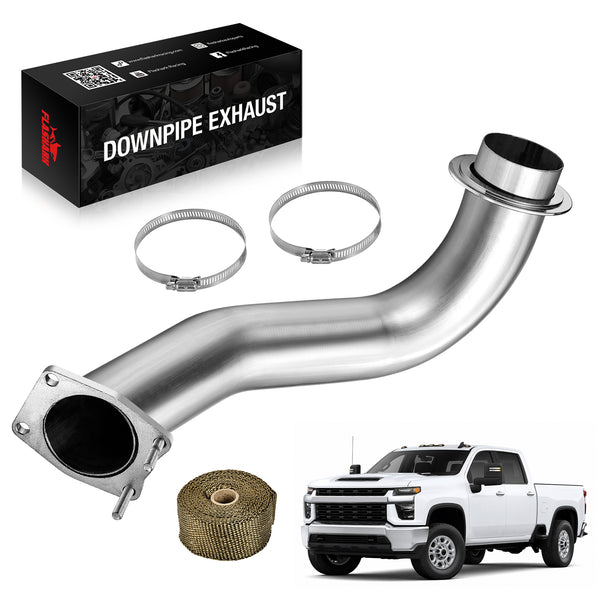
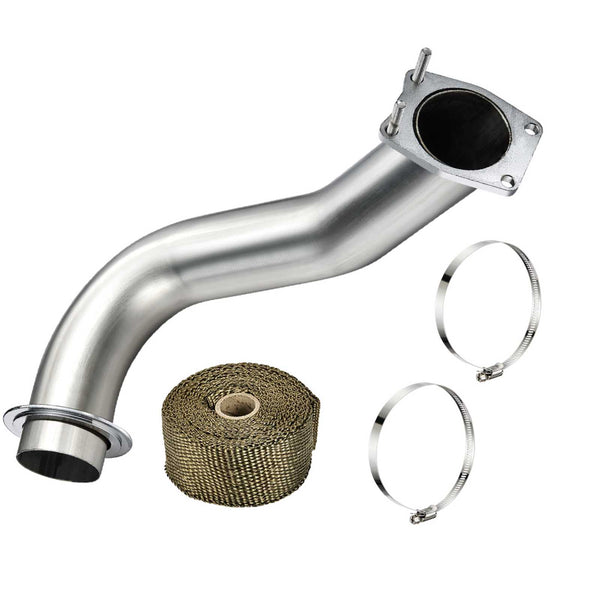
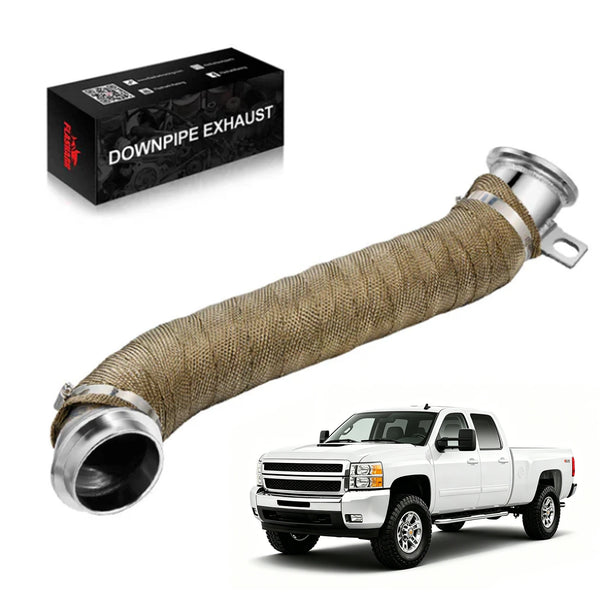
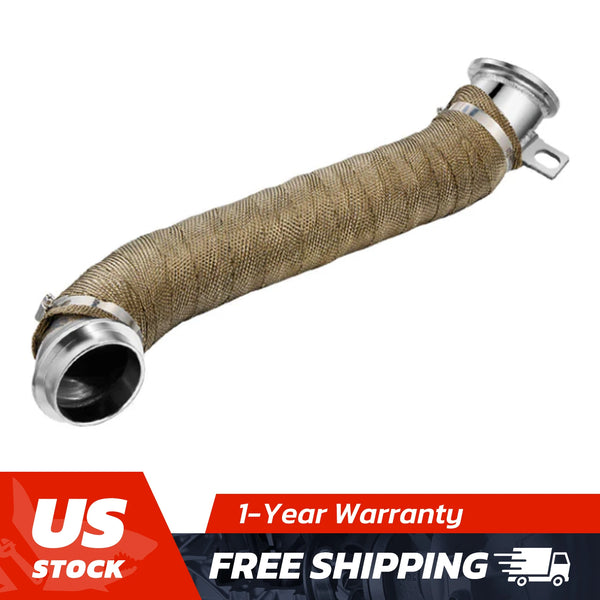
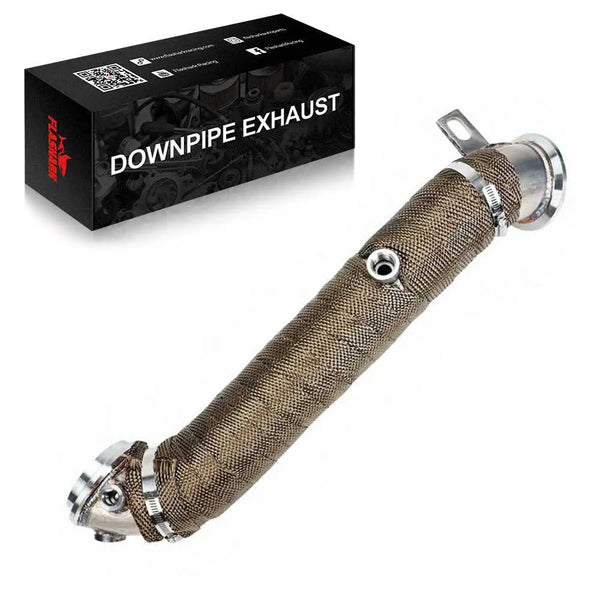
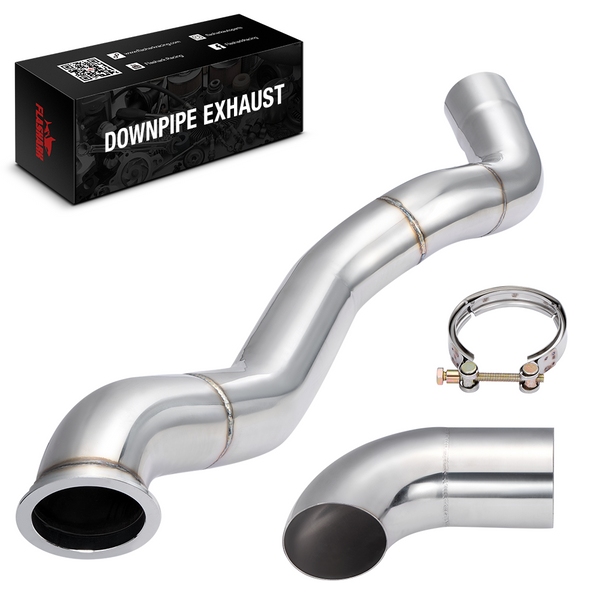
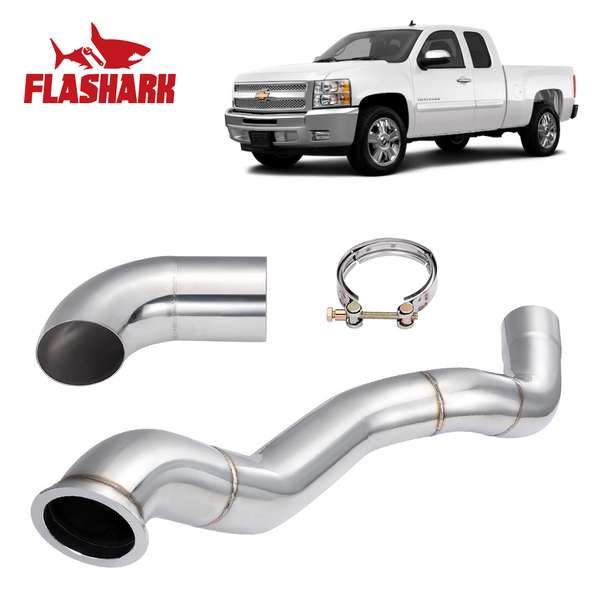
Los tubos de escape Flashark para Chevy/GMC están diseñados para mejorar la eficiencia del turbocompresor al desviar los gases de escape de la turbina, aumentando así la potencia. El tubo de escape conecta la salida de los gases con el sistema de escape, reduciendo las restricciones y optimizando el flujo. Elija entre nuestros tubos de escape o tubos de prueba para disfrutar de una experiencia de conducción superior con mayor potencia y rendimiento. Experimente precisión y potencia con Flashark.
Comprar por marcas: TODAS | Chevy | Nissan | BMW | Audi | Honda | VW Golf | Subaru | Otros
Los tubos de escape Flashark para Chevy/GMC están diseñados para mejorar la eficiencia del turbocompresor al desviar los gases de escape de la turbina, aumentando así la potencia. El tubo de escape conecta la salida de los gases con el sistema de escape, reduciendo las restricciones y optimizando el flujo. Elija entre nuestros tubos de escape o tubos de prueba para disfrutar de una experiencia de conducción superior con mayor potencia y rendimiento. Experimente precisión y potencia con Flashark.
Guía de tubos bajantes y de prueba para Chevy/GMC: lo que debe saber antes de comprar
Un tubo bajante es una de esas piezas que la gente tiende a simplificar demasiado. "Es solo un tubo", dicen. Sí, claro. Y un turbo es "solo un ventilador". En el mundo real, el tubo bajante se encuentra justo donde el calor del escape, el flujo de descarga del turbo, el espacio reducido del cortafuegos, las lecturas del sensor de oxígeno, las abrazaderas, las bridas y los equipos de emisiones comienzan a chocar entre sí.
Si está buscando un tubo bajante de escape Chevy o un tubo de prueba para una Duramax, Silverado, Sierra o una camioneta turbo LS, esta es la sección que me gustaría que leyera antes de ordenar. No después de que la camioneta esté a medio desarmar. No después de que la banda en V no se alinee. Antes.
BLUF: Lo esencial de forma concisa
- Para uso diario o remolque: elija precisión de ajuste, calidad de sellado, control de calor y compatibilidad con emisiones antes de buscar el máximo flujo.
- Camioneta Duramax tuneada: un tubo bajante bien adaptado puede ayudar a reducir la restricción después del turbo, agudizar la respuesta y soportar las mejoras de flujo de aire, pero el resultado depende en gran medida de la afinación, el turbo, el escape y la configuración de emisiones.
- Construcción de Silverado/Sierra con turbo LS: no compre un tubo bajante diésel. Necesita un tubo específico para turbo que coincida con la brida del turbo, la salida de banda en V, la posición del sensor de O2 y el enrutamiento del chasis.
- Con catalizador vs. sin catalizador: con catalizador suele ser la opción más segura para la calle. Las configuraciones sin catalizador o de tubo de prueba son más agresivas pero conllevan mayores riesgos de olor, luz de "check engine" (CEL), falla en la inspección y problemas legales.
- Tubos bajantes y de prueba Flashark: tienen sentido cuando se busca un reemplazo práctico y orientado al rendimiento para secciones de escape restrictivas, oxidadas o de bajo flujo de estilo de fábrica sin pagar precios de fabricación boutique.
Por qué su tubo bajante de serie se siente como un cuello de botella
Escuche, he quitado suficientes tubos bajantes de fábrica de camionetas Chevy y GMC para saber una cosa: el problema rara vez es simplemente "tubo viejo malo, tubo brillante bueno". El problema suele ser acumulativo. Curvas cerradas. Acumulación de calor. Abrazaderas oxidadas. Transiciones de salida pequeñas. Secciones aplastadas alrededor del cortafuegos. Y en las camionetas turbo, toda esa restricción se encuentra justo después de la turbina.
Eso importa. Los gases de escape salen del turbo calientes y rápidos. Si el tubo después del turbo es estrecho, doblado o mal formado, la turbina tiene que empujar contra más resistencia. En una camioneta de serie, puede sentirlo como una respuesta perezosa del acelerador. En una camioneta de remolque, puede notar un mayor calor y una sensación más pesada bajo carga. En una configuración tuneada o con un turbo más grande, el tubo de serie puede convertirse en una de esas piezas que silenciosamente frena todo el montaje.
Una buena mejora de tubo bajante de escape Chevy no se trata de presumir. Se trata de dar al turbo y al sistema de escape un camino de salida más limpio.
Problemas comunes que resuelve una mejora del tubo bajante de Chevy/GMC
Retardo lento del turbo y sensación de acelerador pesado
En una camioneta turboalimentada, el tubo bajante se encuentra inmediatamente después del turbo. Por eso, incluso una pequeña restricción puede sentirse más grande de lo que parece en el papel. Un tubo más suave y de mayor flujo puede ayudar a que el turbo descargue el escape de manera más eficiente, especialmente cuando se combina con una afinación, una admisión, un escape mejorado o un turbo más grande.
No espere que cada camioneta obtenga el mismo número. He visto configuraciones diésel y de gasolina turbo suavemente afinadas sentirse mucho más limpias después de un cambio de tubo bajante, mientras que una camioneta completamente de serie con emisiones intactas puede mostrar una diferencia menor perceptible. Las ganancias realistas dependen de la configuración. En construcciones turbo bien afinadas, un tubo bajante puede soportar aproximadamente 10-25whp en la combinación correcta, pero en una camioneta mayormente de serie, el mayor cambio puede ser la respuesta, el sonido y el comportamiento térmico en lugar de un gran número en el dinamómetro.
Acumulación de calor cerca del cortafuegos y el área del turbo
El área del tubo bajante es caliente, estrecha y molesta. Sin adornos. En las camionetas Duramax, especialmente en las HD que remolcan, el calor alrededor del turbo y el área del cortafuegos puede dañar el cableado, las abrazaderas, los protectores y los componentes circundantes. Un mejor enrutamiento y un control de calor adecuado pueden ayudar a reducir la sensación de "compartimento del motor cocido".
Por eso, el aislamiento térmico y el espacio libre importan. No porque se vean bien en las fotos. Porque el roce, el derretimiento y la acumulación de calor son problemas reales cuando el tubo está metido en un compartimento de motor diésel apretado.
Tubos de fábrica oxidados, abollados o con fugas
Las camionetas más antiguas LLY, LBZ, LMM y las primeras LML a menudo llegan con un hardware que parece haber pasado diez inviernos debajo de un camión de sal. Las abrazaderas se oxidan. Las bridas tienen fugas. Los dobleces de fábrica pueden verse desgastados o restrictivos. Una vez que comienza una fuga de escape cerca del área del turbo, la camioneta puede oler mal, sonar mal y sentirse áspera bajo carga.
Un reemplazo de acero inoxidable de Flashark ofrece a los propietarios un camino más limpio: mejor material, mejor potencial de flujo y una superficie de sellado nueva cuando el tubo original ya pasó su mejor momento.
Soporte para mejoras de turbo, afinación o escape más grandes
Un tubo bajante rara vez es la única mejora en una construcción seria. Por lo general, funciona con otras piezas: admisión, turbo, tubos ascendentes, tuberías del intercooler, escape cat-back, sistema de combustible y afinación. Si el resto de la camioneta respira mejor pero el tubo bajante sigue siendo restrictivo, ha creado un atasco de tráfico justo después del turbo.
Eso no significa que deba comprar el tubo más grande que encuentre. Significa que el tubo debe coincidir con la plataforma, la salida del turbo, el estilo de la brida y el objetivo de potencia.
Nota del mecánico: El L5P que se sentía ahogado al remolcar
Recuerdo una L5P Silverado 2500HD de 2018 que llegó al taller después de un largo viaje de remolque. El propietario dijo: "Tira bien, pero se siente como si estuviera trabajando demasiado". No había un humo dramático. Ni un ruido loco. Solo una sensación pesada y apretada bajo carga.
Cuando nos metimos en el área del escape del lado del turbo, la historia tenía sentido. El enrutamiento del tubo era ajustado, el blindaje térmico se había cocinado mucho, y un área de la abrazadera tenía suficiente hollín a su alrededor para decirnos que no estaba sellando perfectamente. Ese es el tipo de problema que la gente pasa por alto cuando solo se fija en los números de caballos de fuerza. Una mejor configuración del tubo bajante no convirtió la camioneta en una construcción de carrera de la noche a la mañana, pero la respuesta del acelerador se sintió más limpia, el sellado del escape mejoró y el comportamiento bajo carga fue más predecible. Ese es el tipo de mejora real que los propietarios de camionetas realmente notan.
Por qué elegir un tubo bajante o tubo de prueba Flashark para Chevy/GMC
Diseñado para plataformas específicas de Chevy/GMC
Esta categoría no es solo un tubo universal que pretende adaptarse a todo. Las camionetas Chevy y GMC utilizan diferentes familias de motores, diferentes diseños de chasis y diferentes configuraciones de escape. Una camioneta HD Duramax de 6.6L no es el mismo animal que una Silverado 1500 turbo LS de 5.3L.
Flashark ofrece opciones de tubos bajantes y de prueba dirigidas a plataformas populares de Chevy/GMC, incluyendo generaciones de Duramax como LLY, LBZ, LMM, LML, L5P y aplicaciones de camionetas turbo LS. La clave es simple: haga coincidir el producto por año, motor, modelo, estilo de brida, diámetro del tubo y uso previsto.
Flujo de escape centrado en el rendimiento
Un buen tubo bajante reduce la restricción innecesaria. Esa es la explicación aburrida. ¿La versión del taller? Permite que el turbo expulse el escape sin luchar contra un camino de salida de fábrica aplastado.
Curvas más suaves, un diámetro de tubo más grande donde sea apropiado y transiciones más limpias pueden ayudar a que los gases de escape salgan de la carcasa de la turbina con menos problemas. En camionetas afinadas, esto puede soportar un arranque más rápido y una tracción más fuerte. En camionetas más antiguas, también puede ser parte de la sustitución de hardware desgastado, con fugas o corroído.
Una actualización práctica sin precios de fabricación boutique
La fabricación personalizada tiene su lugar. Me encanta el trabajo de fabricación limpio. Pero no todos los propietarios de Silverado o Sierra quieren dejar la camioneta en un taller durante una semana solo para que se construya un tubo. Flashark se adapta al propietario que desea una solución lista para instalar para una plataforma conocida, sin pagar el dinero de un taller de carreras personalizado por cada sección de escape.
Material del producto y detalles de fabricación
Construcción de acero inoxidable
Los tubos bajantes viven en un ambiente brutal. Ciclos de calor. Rociado de carretera. Vibración. Hollín diésel. Sal. Empaquetado apretado en el compartimento del motor. El acero dulce barato puede verse bien el primer día y feo después. El acero inoxidable importa porque resiste la corrosión y maneja mejor el calor con el tiempo.
Para las camionetas que remolcan, trabajan o ven carreteras invernales, la calidad del material no es un detalle menor. Es la diferencia entre una pieza que olvida y una pieza con la que vuelve a luchar más tarde.
Curvas mandrinadas y enrutamiento suave
El doblado con mandril significa que el tubo mantiene su forma a través de la curva en lugar de colapsar hacia adentro. Esto es importante porque una curva aplastada es básicamente una restricción escondida a plena vista.
En una configuración turbo, la restricción después de la turbina puede perjudicar la respuesta. En una camioneta HD diésel, un enrutamiento deficiente también puede crear problemas de espacio y calor. Un camino de curvatura más limpio no es solo estético. Es funcional.
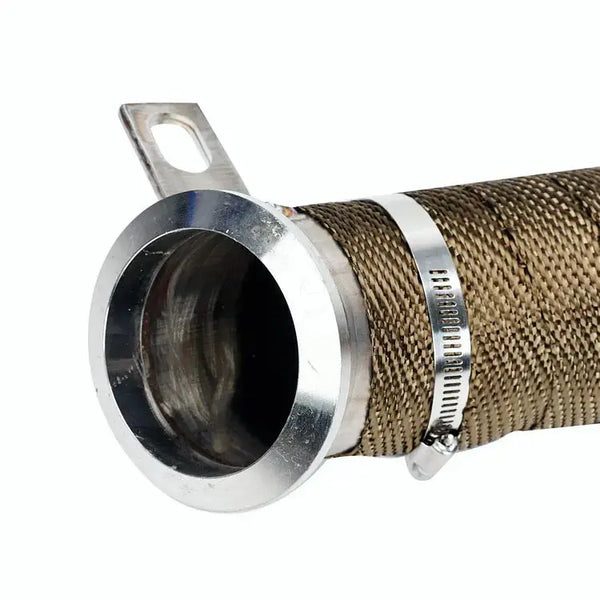
Bridas, abrazaderas en V, orificios para sensores y calidad de la soldadura
Las bridas y las abrazaderas en V deciden si la pieza sella o arruina su tarde. Una brida mal ajustada puede tener fugas. Un ángulo incorrecto de la abrazadera en V puede complicar la instalación. Una mala ubicación del orificio del sensor de O2 puede dificultar el enrutamiento del sensor o causar problemas más adelante.
Al revisar un tubo bajante o un tubo de prueba Flashark, observe de cerca:
- Diámetro del tubo, como 3 pulgadas o 3.5 pulgadas, según la aplicación
- Estilo de conexión de la salida del turbo
- Diseño de la salida de brida o abrazadera en V
- Número y posición de los orificios del sensor de O2
- Abrazaderas, envoltura térmica y herrajes incluidos
- Notas sobre las divisiones por año del vehículo, especialmente en camionetas LML y L5P
Aislamiento térmico y herrajes
El aislamiento térmico no es cinta mágica. Usado correctamente, ayuda a controlar el calor radiante en un área estrecha. Usado incorrectamente, puede atrapar la humedad, frotar el cableado o hacer que el servicio futuro sea miserable. Lo mismo ocurre con las abrazaderas. Ajustado es bueno. Torcido y demasiado apretado no lo es.
Siempre verifique la página del producto para conocer el contenido del paquete. No asuma que cada kit de tubo bajante incluye las mismas abrazaderas, envoltura, pernos o adaptadores.
Con catalizador vs. sin catalizador vs. tubo de prueba: ¿cuál se adapta a su construcción?
Aquí es donde muchos compradores se meten en problemas. Ven "más flujo", hacen clic en comprar y luego se sorprenden cuando la camioneta huele más fuerte, enciende la luz de "check engine" o falla la inspección. No sea esa persona.
| Tipo de configuración | Ideal para | Ventaja principal | Riesgo principal |
|---|---|---|---|
| Tubo bajante con catalizador | Construcciones para uso en calle, vehículos de uso diario, sistemas de escape más limpios | Mejor equilibrio entre flujo, control de olores y función del equipo de emisiones | Aun así debe cumplir con las leyes de emisiones locales y los requisitos del vehículo |
| Tubo bajante sin catalizador | Uso en carreras o todoterreno donde sea legal | Máximo flujo de escape y reducción de la restricción del catalizador | Mayor riesgo de CEL, olor más fuerte, falla en la inspección y problemas legales |
| Tubo de prueba | Pruebas de carreras/todoterreno, configuraciones centradas en pista, ciertos proyectos turbo | Sección de reemplazo simple y de alto flujo | Puede no ser legal para uso en la calle y puede activar problemas de preparación o CEL |
¿Qué es un tubo bajante con catalizador?
Un tubo bajante con catalizador incluye un convertidor catalítico o un elemento catalítico de alto flujo. Suele ser la mejor opción para un propietario con mentalidad de calle que desea un flujo mejorado sin eliminar por completo la función del catalizador.
Aun así, no asuma que "con catalizador" significa automáticamente legal en todas partes. Algunos estados requieren aprobación específica para piezas de posventa relacionadas con las emisiones. California es el caso obvio, pero no es el único lugar donde las normas de emisiones pueden morder.
¿Qué es un tubo bajante sin catalizador o un tubo de prueba?
Un tubo bajante sin catalizador o un tubo de prueba elimina la restricción catalítica de esa sección del escape. Puede reducir la restricción, hacer que la camioneta sea más ruidosa y aumentar el olor del escape. También puede encender la luz de "check engine" (CEL), hacer que fallen los monitores de preparación y crear problemas legales en vehículos que circulan por la calle.
Para construcciones de carreras o todoterreno, puede tener sentido. ¿Para una camioneta de uso diario en un estado con inspección? Escúcheme atentamente: verifique la ley y las notas del producto antes de gastar dinero.
Con catalizador vs. sin catalizador: sonido, olor, CEL y uso en calle
Sin catalizador suele sonar más agudo y oler más fuerte. Con catalizador suele mantener las cosas más limpias y controladas. Sin catalizador suele tener una mayor probabilidad de problemas de CEL. Con catalizador no garantiza la ausencia de CEL, pero generalmente es la dirección más razonable para el uso en la calle.
Los foros suelen hacer que esto parezca simple. No lo es. La ubicación del sensor de O2, la eficiencia del catalizador, la afinación, los monitores de preparación, las fugas de escape y los métodos de inspección locales, todo importa.
¿Cuál debería comprar?
- Conductor diario: opte por opciones con catalizador o compatibles con emisiones, cuando estén disponibles.
- Camión de remolque: priorice la precisión del ajuste, el sellado, el control del calor y la fiabilidad.
- Construcción para carreras/todoterreno: las configuraciones sin catalizador o con tubo de prueba pueden adaptarse al objetivo, pero la legalidad en la calle es un asunto aparte.
- Camión turbo LS: haga coincidir la brida del turbo, la banda en V, el orificio del sensor de O2 y el enrutamiento del chasis antes que nada.
- Camión de estado de inspección: no adivine. Confirme primero los requisitos de emisiones.
Advertencia: las piezas de emisiones no son una conjetura
Retirar o desactivar los convertidores catalíticos, los sistemas DPF, los sistemas SCR/DEF u otros equipos de emisiones obligatorios puede crear problemas legales en vehículos que circulan por la calle. Una pieza etiquetada para uso en carreras o fuera de carretera debe tratarse de esa manera. No asuma que un tubo sin catalizador pasará la inspección porque alguien en un foro dijo que su amigo se salió con la suya.
Ventajas ocultas y la ciencia "hardcore" del tubo bajante
La contrapresión no es lo mismo que la velocidad del escape
Aquí es donde la gente empieza a gritar en línea. "Los motores necesitan contrapresión". No. No así. Lo que los motores necesitan es una velocidad de escape y un barrido adecuados en la parte correcta del sistema. En un motor turboalimentado, la restricción después del turbo no suele ser su amiga.
La turbina quiere descargar el escape de manera eficiente. Un tubo bajante restrictivo dificulta eso. Pero eso no significa que el tubo más grande del mundo sea la mejor opción para cada construcción. El diámetro del tubo aún debe coincidir con el motor, el turbo, el nivel de potencia y el embalaje.
Por qué el tubo bajante importa más en los motores turboalimentados
En una camioneta de aspiración natural, los colectores y el resto del sistema de escape reciben mucha atención. En una camioneta turbo, el tubo bajante es un actor principal porque se encuentra justo después de la carcasa de la turbina. Ese es el punto de transición de presión.
Cuando el tubo es más liso y menos restrictivo, el turbo a menudo puede responder mejor. Es posible que sienta eso como una respuesta más rápida del turbo, un comportamiento del acelerador más limpio y una menor sensación de "arrastrar un remolque por el barro" bajo carga.
Retención de calor y control de la temperatura debajo del capó
El calor no solo es incómodo. Daña las cosas. Los cables de los sensores, los fuelles, el aislamiento del cortafuegos, las abrazaderas, los protectores y los componentes cercanos tienen una vida más difícil cuando el área del tubo bajante se está cocinando.
Un mejor enrutamiento, un aislamiento térmico adecuado y comprobaciones de holgura correctas pueden ayudar. Pero no envuelva un tubo descuidadamente y lo dé por terminado. Deje espacio alrededor del cableado, verifique los puntos de contacto e inspeccione después del primer ciclo de calor.
Colocación del orificio del sensor de O2 y monitores de preparación
Los sensores de O2 no son una decoración. Su posición afecta las lecturas, la monitorización del catalizador y el comportamiento de la luz de avería del motor (CEL). Si el orificio está mal colocado, el ángulo del sensor es incorrecto o el cableado está estirado, puede crear problemas que parecen problemas de ajuste, pero en realidad son problemas de hardware.
Esto es especialmente importante en configuraciones con catalizador, sin catalizador y con tubo de prueba. El sensor aguas abajo puede detectar problemas de eficiencia del catalizador, falta de función del catalizador o lecturas extrañas debido a fugas de escape.
Por qué el diámetro del tubo debe coincidir con la construcción
Un tubo de 3 pulgadas y un tubo de 3.5 pulgadas no tienen el mismo propósito en cada camioneta. Una construcción Duramax de remolque, una configuración de uso en carreras L5P y una construcción turbo T4 de Silverado de 5.3L son animales diferentes.
No compre solo por el diámetro. Compre por aplicación. Año. Motor. Salida del turbo. Brida. Banda en V. Chasis. Diseño del escape. Así es como evita que una mejora se convierta en una solicitud de devolución.
Motores, modelos y rutas de mejora de potencia populares de Chevy/GMC
Duramax LLY/LBZ/LMM 6.6L 2004.5-2010: Mejora de torque y flujo para camionetas de trabajo
El segmento Duramax 2004.5-2010 es enorme por una razón. Estas camionetas son lo suficientemente antiguas como para tener kilometraje real, óxido real e historial de trabajo real, pero lo suficientemente fuertes como para que sus propietarios las modifiquen, remolquen y ajusten. Las camionetas Silverado 2500HD, Silverado 3500HD, Sierra 2500HD y Sierra 3500HD de esta época son candidatas comunes para el reemplazo del downpipe.
Para las camionetas LLY, LBZ y LMM, un downpipe de mejor flujo puede ayudar a soportar las mejoras de flujo de aire y solucionar problemas de hardware antiguos. En una camioneta ajustada con soporte de admisión y escape, aquí es donde se puede sentir una mejor respuesta y una mayor potencia. En una camioneta de fábrica desgastada, reemplazar un tubo con fugas o corroído puede ser igual de valioso.
Notas sobre el Downpipe para LLY Duramax
El LLY Duramax es conocido por quejas relacionadas con el calor, especialmente cuando se trabaja duro. Un downpipe no solucionará todos los problemas de calor del LLY por sí solo, pero reducir la restricción y limpiar la trayectoria del escape puede ser parte de una estrategia de flujo de aire más inteligente.
El ajuste importa aquí. No asuma que todos los tubos de diésel de 6.6L son intercambiables entre todos los años. Verifique el año del modelo exacto, el código del motor y las notas de ajuste del producto.
Notas sobre el Downpipe para LBZ Duramax
El LBZ tiene una sólida reputación entre los entusiastas del diésel. La gente los tunea, los remolca, los usa con fuerza y aún confía en ellos. Una mejora del downpipe en un LBZ a menudo tiene más sentido cuando la camioneta ya tiene modificaciones de soporte o la sección de escape original está desgastada.
Si la camioneta está tuneada, el downpipe puede ayudar a soportar un mejor flujo de descarga del turbo. Si la camioneta está de serie, espere una trayectoria de escape más limpia y una posible mejora en la respuesta, no un número milagroso falso.
Notas sobre el Downpipe para LMM Duramax
El LMM se sitúa en una era más consciente de las emisiones, por lo que los compradores deben tomarse su tiempo y leer los detalles. El DPF, el catalizador, los sensores y el diseño del escape aguas abajo son importantes.
Si está buscando un downpipe o tubo de prueba para LMM, tenga especial cuidado con el estado del equipo de emisiones. No confunda las piezas de uso en carreras con las piezas de uso en la calle.
Duramax LML 6.6L 2011-2016: Detalles de ajuste y brida de la era DEF
El Duramax LML es donde los detalles de ajuste comienzan a ser aún más serios. Las camionetas Silverado 2500HD, Silverado 3500HD, Sierra 2500HD y Sierra 3500HD de 2011-2016 pueden tener importantes diferencias en la salida y la brida, especialmente en los cambios de mitad de año.
Si posee un LML, no compre un downpipe solo porque el listado dice "Duramax 2011-2016" y lo considere bueno. Verifique si el producto se ajusta a su año exacto, estilo de salida, diseño de banda en V y diseño de emisiones.
Notas de ajuste para LML 2011-2015
Para las camionetas LML 2011-2015, confirme el diámetro del tubo, la configuración de la banda en V y si la pieza está diseñada para el diseño de escape de fábrica o para una configuración modificada. Una pequeña discrepancia en la conexión puede detener el trabajo por completo.
También inspeccione el hardware antiguo antes del día de la instalación. Las abrazaderas oxidadas y las bandas en V obstinadas no son raras. Tenga a mano aceite penetrante, dados adecuados, guantes y paciencia.
Advertencia de ajuste para LML 2015.5-2016
Los cambios de ajuste a mitad de año son donde la gente se quema. Algunas camionetas LML 2015.5-2016 pueden usar diferentes estilos de salida que los modelos anteriores. Eso significa que un tubo que parece similar en una foto aún podría no ajustarse correctamente.
Si no está seguro, verifique antes de comprar. El código del motor por sí solo no siempre es suficiente.
Duramax L5P 6.6L 2017-2023: Camioneta más nueva, embalaje más ajustado, mayores riesgos
El Duramax L5P es una plataforma más fuerte, más nueva y más compleja. También tiene un embalaje más ajustado y una mayor complejidad en las emisiones. Eso significa que el área del downpipe no es el lugar para adivinar.
En las camionetas Silverado y Sierra HD 2017-2023, los compradores a menudo buscan un mejor flujo, una mejor respuesta o una configuración de escape para carreras/uso todoterreno. Bien. Pero el producto debe coincidir específicamente con la plataforma L5P. Las piezas antiguas de LML, LMM, LBZ o LLY no son intercambiables solo porque también digan "Duramax".
Downpipe L5P para configuraciones de remolque
Para el remolque, el objetivo inteligente no es el máximo ruido. Es la fiabilidad, la respuesta, el sellado y el control del calor. Un downpipe seleccionado correctamente puede soportar un mejor flujo de escape, pero la camioneta aún necesita la afinación, la refrigeración, la salud de la transmisión y la configuración de escape adecuadas.
Si remolca cargas pesadas, preste atención al aislamiento térmico, la holgura y el sellado de las abrazaderas. Una pequeña fuga cerca del lado del turbo puede volverse muy molesta bajo carga.
Downpipe L5P para configuraciones de carreras o todoterreno
Las configuraciones de carreras y todoterreno pueden priorizar el flujo máximo y un enrutamiento de escape simplificado. Eso no significa que esas configuraciones pertenezcan a una camioneta de calle. Si un tubo afecta el catalizador, DPF, SCR/DEF u otros sistemas de emisiones, tome en serio el cumplimiento.
No deje que la bravuconería de internet haga que su camioneta no pase la inspección o lo ponga en una mala situación legal.
Chevy Silverado / GMC Sierra 4.8L, 5.3L, 6.0L, 6.2L Vortec LS 1999-2013: Configuraciones de Downpipe para Turbo T4
Este es un mundo completamente diferente al de un downpipe de Duramax HD. Las camionetas Silverado y Sierra LS V8 1999-2013 usan motores de gasolina como el 4.8L, 5.3L, 6.0L y 6.2L. Si el producto es un downpipe para turbo T4, está destinado a una configuración de turbo único, no a un sistema de escape atmosférico de serie.
Eso significa que el tubo debe coincidir con su configuración de turbo. La brida del turbo, la salida de la banda en V, la sonda lambda, el enrutamiento de la válvula de descarga, el ángulo del downpipe, la holgura del eje de la dirección, la holgura del chasis y la conexión del escape, todo importa.
Notas sobre el Downpipe para Turbo 4.8L LS
El 4.8L LS es un favorito para aumentar la potencia con un presupuesto limitado. La gente lo subestima, luego se sorprende cuando acepta bien la sobrealimentación. Para un Silverado o Sierra 4.8L turboalimentado, el downpipe debe ajustarse al diseño del kit de turbo y dejar espacio alrededor del cableado, el cortafuegos y los componentes de la dirección.
Una configuración 4.8L puede no necesitar el mismo tamaño de escape que una configuración 6.0L o 6.2L de alta potencia, pero aún necesita un enrutamiento limpio y un buen sellado.
Notas sobre el Downpipe para Turbo 5.3L LS
La comunidad de Silverado 5.3L turbo es enorme. Un 5.3 de desguace, un turbo decente, un buen sistema de combustible, una afinación cuidadosa y de repente la camioneta es un problema para coches que cuestan cinco veces más. Pero el downpipe puede hacer o deshacer la instalación.
Para una configuración de turbo T4 de 5.3L, verifique la ubicación del turbo, el tamaño de la banda en V, la posición del sensor de oxígeno y cómo el tubo se enruta más allá del compartimiento del motor y la parte inferior de la carrocería. Un downpipe que "casi" encaja no es suficiente. "Casi" significa lijar, cortar, maldecir y quizás pedir otra pieza.
Notas sobre el Downpipe para Turbo 6.0L y 6.2L LS
Los motores 6.0L y 6.2L LS mueven más aire y a menudo terminan en configuraciones más potentes. Eso significa más calor, más volumen de escape y mayor necesidad de un tamaño de tubería y una holgura adecuados.
Si la configuración está generando una potencia seria, piense más allá del downpipe. El combustible, la transmisión, el intercooler, el control de la válvula de descarga, las bujías, el ajuste y el diámetro del escape, todo debe coincidir. El downpipe es una parte del sistema, no la receta completa.
Silverado 2500HD/3500HD vs Silverado 1500: No mezcle estas configuraciones
Esto es simple pero importante. Un downpipe diésel Duramax HD no es para una Silverado 1500 de gasolina. Un downpipe LS T4 turbo no es para un Duramax de serie. Un tubo de prueba para una familia de motores no encaja mágicamente en otra solo porque ambas camionetas lleven un distintivo de Chevy o GMC.
Utilice el filtro de año/marca/modelo. Lea el título del producto. Verifique el motor. Verifique la brida. Luego verifique de nuevo.
Mejor ruta de actualización según el objetivo de construcción
Camioneta de uso diario o de remolque
Para un vehículo de uso diario o una camioneta de remolque, no busque primero la configuración más ruidosa o agresiva. Concéntrese en un ajuste correcto, construcción de acero inoxidable, buen sellado, gestión del calor y compatibilidad con las emisiones.
Este tipo de comprador debería buscar una solución de escape con downpipe para Chevy que mejore el flujo sin crear problemas de inspección o un molesto olor en la cabina.
Camioneta de calle tuneada
Una camioneta tuneada a menudo puede aprovechar mejor la restricción reducida. La respuesta del turbo, el tono del escape y el soporte del flujo de aire pueden mejorar cuando el downpipe se ajusta correctamente.
Pero el tuning no borra el hardware defectuoso. Un ajuste deficiente, una abrazadera con fugas, un ángulo de sensor incorrecto o un estilo de salida incorrecto seguirán causando problemas.
Configuración de carreras o todoterreno
Las configuraciones de carreras y todoterreno son donde las configuraciones sin catalizador/tubo de prueba pueden tener sentido. La prioridad suele ser el flujo, el embalaje del turbo y la facilidad de mantenimiento.
Sea honesto sobre el caso de uso. Si la pieza no es legal para uso en la calle, no pretenda que lo es. Eso no es charla de ancianos. Eso es ahorrarse problemas.
Lista de verificación de ajuste e instalación antes de comprar
Confirmar año, marca, modelo y motor
Comience con lo básico: Chevy o GMC, Silverado o Sierra, 1500 o HD, gasolina o diésel, año exacto y motor exacto. Luego, verifique el ajuste del producto.
No compre de memoria. Los camiones se intercambian, modifican, eliminan, convierten, reparan y cambian a lo largo de los años. Si es necesario, mire debajo del camión.
Verificar el diámetro del tubo y el estilo de la brida
El diámetro de la tubería importa, pero el estilo de conexión importa tanto como. Un downpipe de 3.5 pulgadas con la salida incorrecta es simplemente un costoso adorno de pared. Lo mismo ocurre con una tubería de turbo T4 que no coincide con la ubicación de su turbo o la banda en V.
Antes de comprar, confirme:
- Estilo de salida del turbo
- Diámetro del tubo
- Tamaño de la banda en V
- Tipo de brida
- Ubicación de la sonda lambda
- Requisitos de envoltura térmica y abrazaderas
- Compatibilidad con escape de fábrica o modificado
Revise el equipo de emisiones antes de ordenar
Antes de elegir piezas con o sin catalizador, o tubos de prueba, inspeccione la camioneta. ¿Todavía tiene el convertidor catalítico de fábrica? ¿DPF? ¿Sistema DEF/SCR? ¿Equipo EGR? ¿Sensores de oxígeno? ¿Ha sido ajustada? ¿Alguien ha modificado el escape antes?
Comprar el tubo equivocado porque adivinó el diseño de las emisiones es una de las formas más rápidas de malgastar dinero.
Planifique la envoltura térmica, el acceso a los sensores y el espacio libre
El área del downpipe es ajustada. Necesita espacio para el tubo, la abrazadera, la envoltura térmica, el cableado del sensor y el movimiento del motor. Recuerde, el motor se mueve bajo torsión. Un tubo que pasa por un espacio mínimo cuando está estacionado puede rozar cuando el camión está cargado.
Después de la instalación, compruebe si hay:
- Fugas de escape en la salida del turbo
- Alineación de la abrazadera de banda en V
- Tensión del cable del sensor
- Contacto con el cortafuegos o el escudo térmico
- Traqueteos durante el ralentí y la aceleración
- La envoltura térmica toca el cableado o las piezas de goma
Nota del mecánico: El error del LML de mitad de año
Tuve un cliente que trajo una camioneta LML después de intentar instalar el downpipe en casa. No fue descuidado. Vio videos, leyó foros, pidió lo que parecía ser la pieza correcta, y tenía la camioneta a medio desarmar antes de darse cuenta de que el estilo de salida no coincidía. ¿El problema? Compró solo por "LML Duramax", no por la división de año exacta y la configuración de la salida.
La camioneta se quedó en el elevador mientras esperaba la pieza correcta. Ese es el tipo de error que hace que un trabajo simple sea costoso. Mi consejo es claro: no compre solo por el apodo del motor. Compre por el ajuste exacto. Rango de años, código de motor, salida, brida, banda en V y diseño de emisiones. Siempre.
Evitando errores: Emisiones, convertidores catalíticos, tubos de prueba y CEL
No confunda un downpipe con un tubo de eliminación completo
Un downpipe no es automáticamente un tubo de eliminación. Un tubo de prueba no es automáticamente lo mismo que un downpipe. Un tubo de eliminación de DPF es otra cosa completamente distinta. Y un escape "downpipe-back" es diferente de nuevo.
Estos términos se confunden todo el tiempo en foros y búsquedas de productos. Esa confusión lleva a compras incorrectas, instalaciones fallidas y camionetas que generan códigos de error.
La eliminación del convertidor catalítico puede crear problemas legales
Si una pieza elimina o desactiva un convertidor catalítico u otro dispositivo de emisiones en un vehículo de uso en carretera, debe detenerse y verificar las reglas. Las leyes de emisiones federales, estatales y locales pueden aplicarse.
Ninguna descripción de pieza, comentario de foro o instalación antigua de YouTube debería reemplazar el cumplimiento legal. Especialmente en California y estados con control de emisiones.
Los tubos sin catalizador/de prueba pueden activar la luz de verificación del motor
Los tubos sin catalizador y los tubos de prueba a menudo aumentan la probabilidad de problemas con la luz de verificación del motor (CEL) porque el sensor de oxígeno aguas abajo puede detectar una función catalítica faltante o ineficiente. A veces, la camioneta funciona bien pero aún así falla las pruebas de preparación. Esto sigue siendo un problema si necesita inspección.
Borrar el código no es lo mismo que solucionar el problema. No confunda un tablero silencioso con una camioneta legal o lista para la inspección.
Por qué los espaciadores de O2 y los trucos de CEL son arriesgados
A la gente le encantan las "soluciones rápidas". Espaciadores, extensiones, trucos, hacks. Algunos pueden ocultar una luz temporalmente. Otros pueden empeorar las lecturas. Algunos aún pueden fallar la inspección. Y algunos no son legales para uso en la calle.
No voy a adornarlo: si su configuración depende de engañar a un sensor, debe comprender el riesgo antes de conducirla en la calle.
California y los estados con control de emisiones necesitan precaución adicional
Las reglas de California son estrictas. Otros estados también pueden ser estrictos. Si una pieza afecta el equipo de emisiones, verifique si está aprobada para su vehículo y caso de uso. Haga esto antes de la instalación, no después de que el taller de emisiones falle la camioneta.
"Solo para uso en carreras / todoterreno" significa exactamente eso
Si un producto está marcado como "solo para uso en carreras" o "solo para uso todoterreno", tome esa etiqueta en serio. No es un texto decorativo. Significa que la pieza puede no ser legal para uso en vías públicas.
Advertencia importante: No construya una camioneta de calle como un coche de carreras de foro
No permita que un hilo ruidoso de un foro lo convenza de quitar el equipo de emisiones de una camioneta que necesita pasar la inspección. Una configuración sin catalizador puede parecer simple en una foto, pero el costo en el mundo real puede incluir luces de "check engine", monitores de preparación fallidos, un olor a escape más fuerte, poca confianza en la reventa y problemas legales.
Preguntas frecuentes: Preguntas sobre escape con downpipe y tubos de prueba para Chevy/GMC
P1: ¿Qué hace un downpipe en una camioneta Chevy o GMC?
R1: Un downpipe dirige los gases de escape lejos del turbo y hacia el resto del sistema de escape. En una camioneta Chevy o GMC turboalimentada, puede afectar el flujo de escape, el comportamiento térmico, la respuesta del turbo, el sonido y el funcionamiento del resto del sistema de escape.
P2: ¿Vale la pena un downpipe en un Duramax?
R2: Sí, un downpipe puede valer la pena en un Duramax si la camioneta está tuneada, se usa para remolcar, tiene mejoras de flujo de aire o reemplaza un tubo de fábrica restrictivo, oxidado o con fugas. No espere la misma ganancia en todas las camionetas. Una camioneta de serie con emisiones intactas puede sentir un cambio menor que una configuración correctamente tuneada.
P3: ¿Un downpipe añadirá caballos de fuerza?
R3: Puede soportar ganancias de caballos de fuerza, pero el resultado depende del motor, el turbo, la afinación, la configuración del escape y el equipo de emisiones. En configuraciones turbo tuneadas, un downpipe puede soportar aproximadamente 10-25 whp en la combinación correcta, mientras que una camioneta de serie puede obtener principalmente una mejor respuesta, un cambio de sonido y un mejor flujo de escape.
P4: ¿Un downpipe hará que mi camioneta sea más ruidosa?
R4: Por lo general, sí, pero el cambio depende de la configuración. Una configuración sin catalizador o con tubo de prueba suele ser más ruidosa y aguda. Un downpipe con catalizador suele ser más controlado. El silenciador, el DPF, el tamaño del turbo y el resto del escape también afectan el sonido.
P5: ¿Necesito un tuneo después de instalar un downpipe?
R5: Depende. Algunos reemplazos de downpipe pueden no requerir tuneo, mientras que las configuraciones sin catalizador, con tubo de prueba, con turbo más grande o con escape muy modificado pueden necesitar tuneo o pueden activar la luz de verificación del motor (CEL) y problemas de preparación. Siempre verifique las notas del producto y las leyes locales de emisiones antes de la instalación.
P6: ¿Cuál es la diferencia entre un downpipe y un tubo de prueba?
R6: Un downpipe es la sección de escape después del turbo. Un tubo de prueba generalmente se refiere a una sección de alto flujo para reemplazar el catalizador o a un tubo para carreras/uso todoterreno. En muchos listados de posventa, los términos pueden superponerse, así que siempre verifique qué reemplaza realmente el producto.
P7: ¿Es mejor un downpipe con catalizador que uno sin catalizador?
R7: Para la mayoría de las camionetas de calle, un downpipe con catalizador suele ser la opción más inteligente porque ayuda a controlar el olor, el sonido y la función de emisiones mejor que una configuración sin catalizador. Una configuración sin catalizador puede tener un mayor flujo, pero conlleva mayores riesgos de CEL, inspección, olor y problemas legales.
P8: ¿Un downpipe sin catalizador pasará las emisiones?
R8: En muchas áreas, no. Una configuración sin catalizador puede fallar la inspección visual, las verificaciones de preparación OBD o las pruebas de emisiones, según las reglas locales. No asuma que pasará solo porque la camioneta funciona normalmente.
P9: ¿Por qué un downpipe sin catalizador causa una luz de "check engine"?
R9: Un downpipe sin catalizador puede causar una luz de "check engine" (CEL) porque los sensores de oxígeno posteriores pueden detectar una función catalítica faltante o ineficiente. Las fugas de escape, la ubicación del sensor y el estado del ajuste también pueden afectar si aparece la luz.
P10: ¿Qué downpipe se ajusta a un LML Duramax 2011-2016?
R10: Debe confirmar el año exacto del modelo, el estilo de salida, la configuración de la banda en V o la brida, y si la camioneta es 2011-2015 o 2015.5-2016. No asuma que todos los downpipes LML se ajustan a todas las camionetas LML.
P11: ¿Qué downpipe se ajusta a un L5P Duramax 2017-2023?
R11: Un L5P Duramax 2017-2023 necesita un downpipe o tubo de prueba específico para L5P. No se debe asumir que las piezas de LML, LMM, LBZ o LLY más antiguas encajarán. Verifique el ajuste del producto, el diseño de las emisiones y el uso previsto antes de comprar.
P12: ¿Una Silverado 1500 5.3 necesita un downpipe Duramax?
R12: No. Una camioneta Silverado 1500 a gasolina de 5.3L no usa el mismo tubo de bajada que una camioneta HD diésel Duramax. Si es una construcción LS turbo, necesita un tubo específico para turbo que coincida con el kit de turbo, la brida, la banda en V y el enrutamiento del escape.
P13: ¿Servirá esto para una Silverado 5.3 de serie?
R13: Un tubo de bajada de turbo T4 es generalmente para una construcción LS de turbo único, no para un sistema de escape de una Silverado 5.3 de aspiración natural de serie. Si su camioneta no tiene una configuración de turbo compatible, no se instalará como un tubo de reemplazo normal.
P14: ¿Es mejor 3 o 3.5 pulgadas para un tubo de bajada?
R14: El tamaño adecuado depende de la camioneta, el motor, la configuración del turbo y el ajuste del producto. Más grande no es automáticamente mejor. Un tubo de 3.5 pulgadas con la conexión incorrecta es inútil, mientras que un tubo de 3 pulgadas correctamente emparejado puede funcionar bien para la construcción adecuada.
P15: ¿Puedo instalar un tubo de bajada Duramax en casa?
R15: Un instalador experimentado de bricolaje puede instalar algunos tubos de bajada Duramax en casa, pero el acceso es limitado y el trabajo puede volverse complicado rápidamente si las abrazaderas están oxidadas o la banda en V no se alinea. Si no se siente cómodo con el trabajo de escape del lado del turbo, el enrutamiento de los sensores y el aislamiento térmico, la instalación profesional es una decisión inteligente.
Conclusión final del garaje
Un tubo de bajada no es solo un tubo brillante escondido debajo del camión. En un Duramax, se encuentra en una de las áreas de escape más calientes e importantes. En una Silverado o Sierra LS turbo, puede decidir si el kit de turbo se ajusta limpiamente o se convierte en un fin de semana de cortes y maldiciones.
Si desea una mejora del escape del tubo de bajada de Chevy que realmente tenga sentido, comience por el ajuste. Luego, verifique el material, el estilo de la brida, el diámetro del tubo, la posición del orificio del sensor de oxígeno, el estado de las emisiones y el uso previsto. Flashark ofrece a los propietarios de Chevy y GMC un camino práctico hacia tubos de bajada y tubos de prueba de mayor flujo, pero la elección correcta aún depende de su camión exacto y su objetivo de construcción.


