


 Need car parts? Shop by vehicle
(Select the exact fit for your vehicle)
Need car parts? Shop by vehicle
(Select the exact fit for your vehicle)
Toyota Cold Air Intake
Shop Cold Air Intakes by Brand: Chevrolet/GMC | Dodge | Ford | Nissan | VW | Honda | Infiniti | Jeep | Toyota
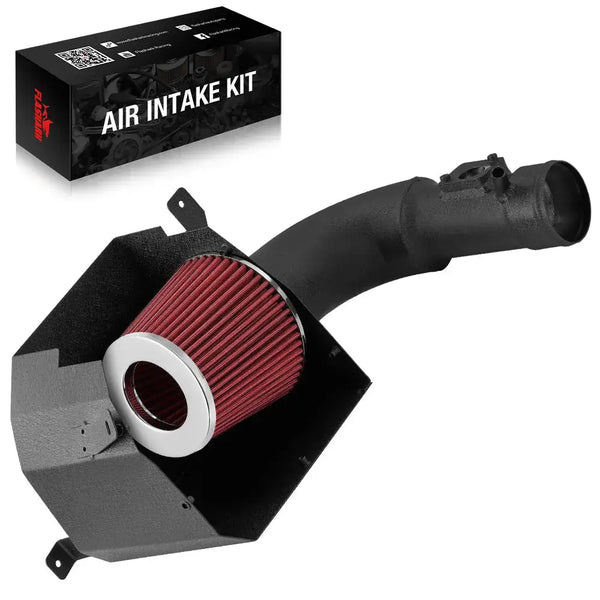
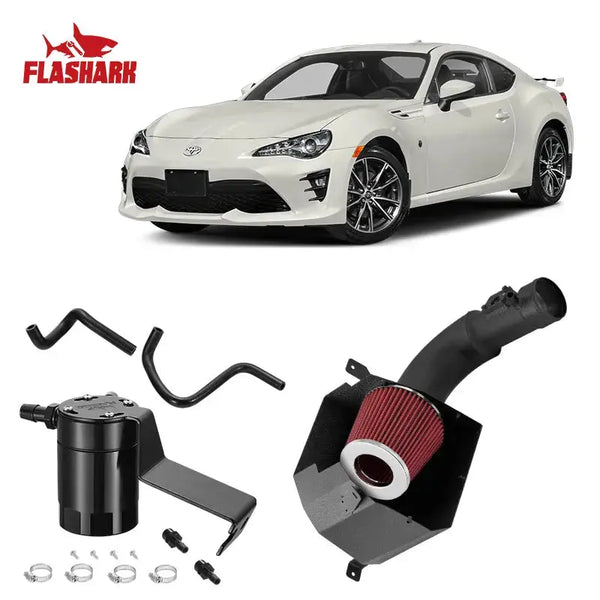
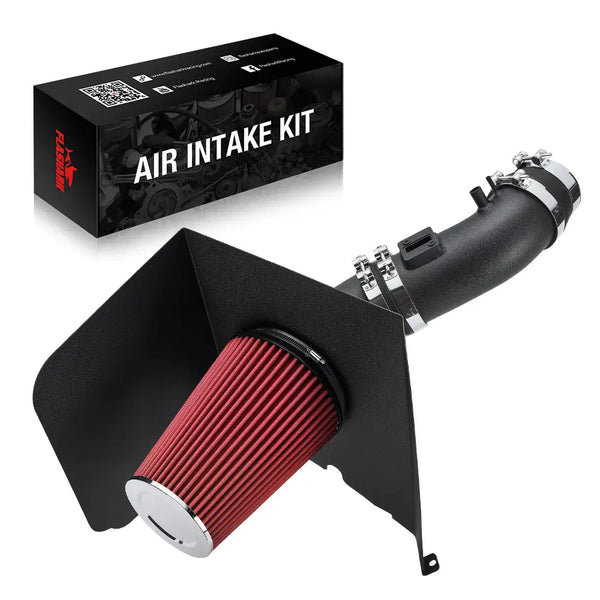
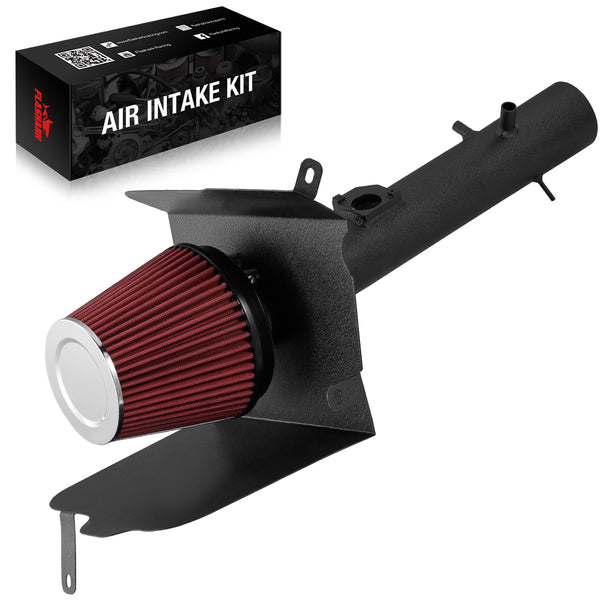
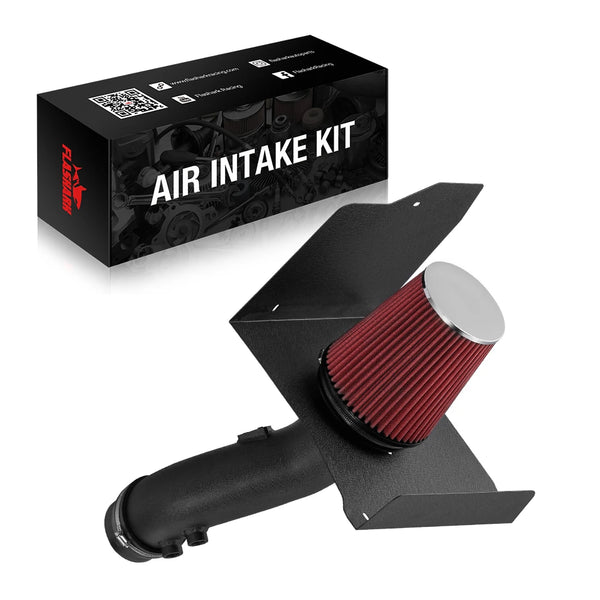
Shop Flashark Toyota air intake kits for select Camry, Solara, Corolla, Corolla iM, Toyota 86, Yaris, Tacoma, and Tundra applications. These kits replace parts of the restrictive factory intake path with model-specific tubing, cone filters, and, on many applications, a fitted heat shield.
Current Toyota cold air intake coverage spans selected 1997–2020 vehicles, including 1.5L and 1.8L four-cylinder cars, the 2.0L FA20-powered Toyota 86, 3.0L and 3.5L V6 applications, and 4.6L or 5.7L Tundra V8 trucks. Tacoma owners should pay close attention: the 2.7L, 3.5L, and 4.0L kits are different products.
Select your exact model, model year, and engine, then confirm the fitment details on the individual product page before ordering.






Shop Cold Air Intakes by Brand: Chevrolet/GMC | Dodge | Ford | Nissan | VW | Honda | Infiniti | Jeep | Toyota
Shop Flashark Toyota air intake kits for select Camry, Solara, Corolla, Corolla iM, Toyota 86, Yaris, Tacoma, and Tundra applications. These kits replace parts of the restrictive factory intake path with model-specific tubing, cone filters, and, on many applications, a fitted heat shield.
Current Toyota cold air intake coverage spans selected 1997–2020 vehicles, including 1.5L and 1.8L four-cylinder cars, the 2.0L FA20-powered Toyota 86, 3.0L and 3.5L V6 applications, and 4.6L or 5.7L Tundra V8 trucks. Tacoma owners should pay close attention: the 2.7L, 3.5L, and 4.0L kits are different products.
Select your exact model, model year, and engine, then confirm the fitment details on the individual product page before ordering.
Choosing the Right Toyota Air Intake Kit
A Toyota air intake is not something you should choose by body style alone. Two trucks may both say Tacoma on the tailgate, yet use different throttle-body connections, MAF housings, breather fittings, brackets, and intake routing. Same badge. Completely different hardware.
Honestly, this is where most ordering mistakes begin. A shopper sees the correct model name, skips the engine field, and assumes the tube will somehow line up. It usually will not. Start with the year and engine, then compare the intake design and included parts.
Before You Buy
- Match the kit to the exact model year, engine size, and engine code whenever it is listed.
- Tacoma 2.7L, 3.5L, and 4.0L intake kits are not interchangeable.
- Tundra 4.6L and 5.7L systems use different tubing and mounting layouts.
- Most products in this collection use a single intake tube; there are no dual-intake systems listed here.
- A louder induction sound is a reasonable expectation. A fixed horsepower gain is not.
- Check MAF orientation, hose connections, emissions information, and all included hardware before installation.
Toyota Models, Engines, and Intake Designs Available
The collection covers everything from a late-1990s Camry V6 to selected Tacoma and Tundra trucks. That range is useful, but it also means there is no single “Toyota-style” intake layout. The table below shows what each listing is actually intended to cover.
| Toyota Application | Model Years | Engine | Intake Structure | Selection Note |
|---|---|---|---|---|
| Camry and Solara V6 Air Intake Kit | Camry 1997–2001 Solara 1999–2001 |
3.0L 1MZ-FE V6 | Single aluminum tube with an open cone filter | V6 applications only; not for the 2.2L four-cylinder engine. |
| Toyota 86 FA20 Cold Air Intake | Toyota 86 2017–2020 Selected FR-S and BRZ years |
2.0L FA20 H4 | Single intake tube, cone filter, and heat shield | Check the product page for the exact shared-platform model years. |
| Corolla and iM 1.8L Cold Air Intake | Corolla 2009–2017 Scion iM 2016 Corolla iM 2017 |
1.8L 2ZR-FE I4 | Single tube, dry cone filter, and heat shield | Do not assume fitment for other 1.8L Toyota models. |
| Yaris 1.5L Air Intake Kit | 2006–2011 | 1.5L 1NZ-FE I4 | Single aluminum tube with an open cone filter | Review the listed hatchback and sedan trims before ordering. |
| Tacoma 2.7L Cold Air Intake | 2005–2019 | 2.7L 2TR-FE I4 | Single tube, dry filter, and heat shield | The listing spans more than one Tacoma generation, so confirm every fitment detail. |
| Tacoma 3.5L V6 Cold Air Intake | 2016–2019 | 3.5L 2GR-FKS V6 | Single tube, dry filter, and heat shield | Not intended for the 2.7L or earlier 4.0L engine. |
| Tacoma 4.0L V6 Air Intake Kit | 2005–2011 | 4.0L 1GR-FE V6 | 3-inch single tube, cone filter, and heat shield | Not for 2.7L models or later 3.5L trucks. |
| Tundra 4.6L V8 Cold Air Intake | 2012–2019 | 4.6L 1UR-FE V8 | Single tube, dry filter, and enclosed heat shield | Not interchangeable with the 5.7L Tundra system. |
| Tundra 5.7L V8 Cold Air Intake | 2012–2015 | 5.7L 3UR-FE V8 | 4-inch single tube, cone filter, and heat shield | Not for 4.6L, 4.0L, or newer twin-turbo applications. |
Open-Filter and Heat-Shielded Intake Designs
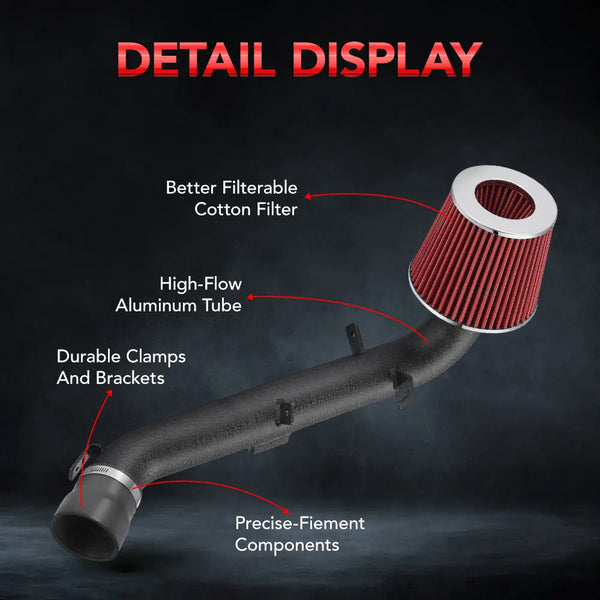
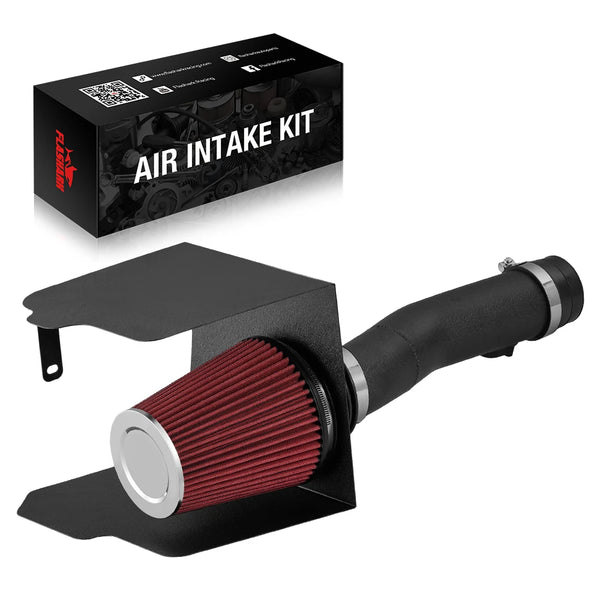
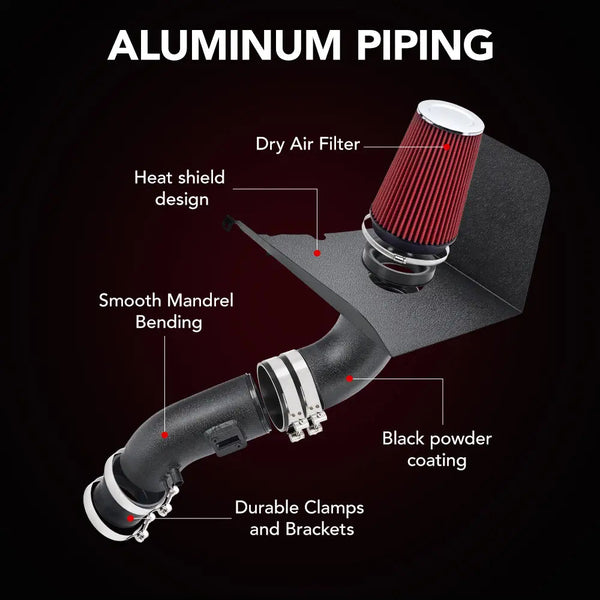
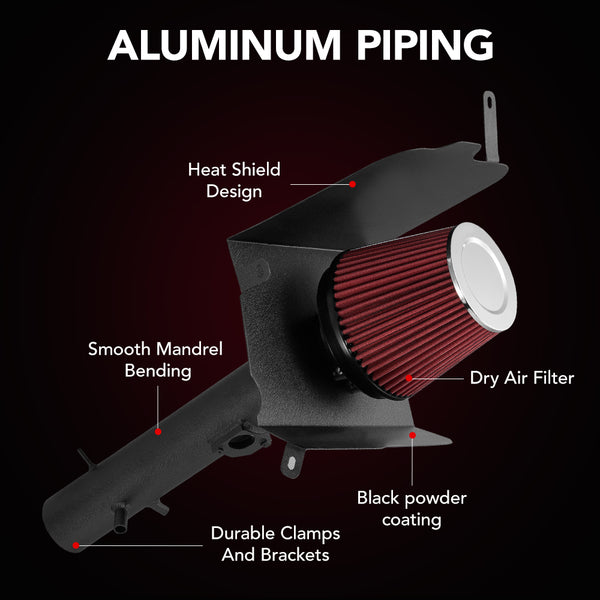
Most Flashark Toyota cold air intake kits in this collection use one intake tube and one cone filter. There are no dual-tube or dual-MAF systems listed here. The main design difference is how much the filter is separated from under-hood heat.
The Tacoma, Tundra, Corolla, and Toyota 86 listings use a heat shield around the filter area. That does not turn the assembly into a refrigerated air box—forget the forum noise—but it can help separate the filter from direct radiant heat and engine-fan wash. The Camry/Solara and Yaris packages use a simpler open-filter layout without a listed full heat shield.
Neither design should be called universally better. An open system is straightforward and usually produces a more obvious induction sound. A properly fitted heat shield offers more separation from the engine bay, but only when the seals, brackets, and surrounding panels sit where they are supposed to.
Why Tacoma and Tundra Engine Size Changes Everything
Tacoma buyers need to slow down for ten seconds. The 2.7L 2TR-FE, 3.5L 2GR-FKS, and 4.0L 1GR-FE engines do not share one universal intake kit. Tube bends differ. So do mounting brackets, breather ports, throttle-body connections, and MAF placement.
The same rule applies to the Tundra. A 2012–2019 Tundra 4.6L intake should not be ordered for a 5.7L truck simply because the engine bays look similar in a photo. The 2012–2015 Tundra 5.7L intake uses a different application-specific layout, including a listed 4-inch tube.
Engine displacement is therefore not a minor dropdown choice. It determines whether the tube reaches the throttle body, whether the sensor seals correctly, and whether the supplied hardware lands anywhere near the factory mounting points.
Shared Platforms Do Not Make Every Intake Universal
The Toyota 86 is the clearest shared-platform example in this collection. The first-generation Toyota 86, Scion FR-S, and Subaru BRZ use the FA20 boxer-four platform and closely related intake architecture, which is why one product may list all three vehicles.
Still, do not stretch that logic too far. Shared engines can appear in different bodies with different air boxes, radiator supports, hose routing, ECU calibration, and available space. The 2ZR-FE found in a Corolla does not automatically prove that a Corolla intake will fit every Toyota or Scion carrying a 1.8L engine.
Listen, the safe rule is simple: use shared-platform information to understand why a product covers several models, not as permission to add unlisted models of your own.
Realistic Sound and Performance Expectations
The most immediate change from a Toyota air intake kit is usually sound. Under light throttle, the car or truck may remain fairly calm. Open the throttle farther and the induction note becomes sharper, deeper, or more noticeable, depending on the engine and filter location.
Performance is harder to reduce to one number. Actual results depend on the factory air box, intake-tube diameter, filter condition, ambient temperature, ECU correction, installation quality, and any supporting exhaust or tuning changes. Without same-vehicle, same-day baseline and post-installation dyno testing, a fixed wheel-horsepower promise would be guesswork.
That does not make the upgrade pointless. A properly matched system can simplify the intake path, replace an aging factory assembly, add a serviceable filter, and deliver the intake sound many owners are actually chasing. Just keep the expectation grounded.
Mechanic’s Diagnostic Note
When a Toyota develops a rough idle or check engine light immediately after an intake installation, the intake tube itself is rarely the first thing to condemn. Start at the MAF sensor. Confirm that the sensing element faces the correct airflow direction, the O-ring is seated flat, and the sensor screws are snug without being overtightened.
Then inspect every coupler, clamp, breather hose, and unused port between the filter and throttle body. An air leak downstream of the MAF allows unmetered air into the engine. That can push fuel trims lean, create an unstable idle, or trigger a CEL even when the kit is otherwise correct for the vehicle.
MAF, CEL, Tune, and Installation Checks
Many direct-fit intake kits are intended to work with the factory ECU, but “bolt-on” does not mean the ECU will ignore poor installation. Toyota’s MAF strategy depends on measured airflow passing through a specific sensor housing. Change the housing geometry, leave a clamp loose, or rotate the sensor incorrectly, and the reported airflow may no longer match what the engine is actually receiving.
Before starting the engine, check the following:
- The MAF sensor is installed in the correct direction.
- The sensor seal is not twisted, pinched, or missing.
- Every silicone coupler is fully seated past the tube bead.
- Clamps are tight but not crushing the aluminum tube.
- Breather and vacuum hoses are connected to the correct ports.
- The tube and filter do not contact a fan, pulley, belt, hood, or sharp body panel.
- The filter has enough clearance to avoid rubbing through under engine movement.
A tune is not automatically required for every kit on this page. It may become relevant when intake diameter, MAF scaling, forced induction, fuel delivery, or other major modifications move beyond what the stock ECU can reasonably correct. Follow the individual product instructions and evaluate any persistent CEL rather than clearing it repeatedly and hoping it stays away.
Fitment and Compliance Warning
Do not order by model name alone. Confirm the model year, engine displacement, engine code, MAF layout, and all product-page exclusions. Tacoma and Tundra intake kits are especially engine-specific.
Emissions legality varies by product and jurisdiction. A kit that physically fits is not automatically legal for public-road use in every state or country. Check the individual listing for emissions information and verify your local requirements before purchase or installation.
These listings do not describe a bumper-level or fender-well long-run intake, but an exposed filter still should not be submerged or blasted directly with water. Avoid deep standing water and inspect the filter after severe rain, flooding, or off-road use.
Filter Care and Final Buying Checklist
Filter maintenance depends on the media supplied with the specific kit. Some dry filters are cleaned with low-pressure air or a manufacturer-approved wash procedure. Other filter types may require a different process. Do not soak, oil, or aggressively pressure-wash a filter unless its instructions specifically call for it.
More importantly, never reinstall a wet filter and immediately drive the vehicle. Let it dry completely. Water or excess filter oil can contaminate the MAF element and create a drivability problem that looks like a defective intake.
Before adding a Flashark Toyota intake kit to your cart, verify:
- Exact model: Camry, Solara, Corolla, Corolla iM, Toyota 86, Yaris, Tacoma, or Tundra.
- Exact model year: Do not assume adjacent years use the same intake layout.
- Engine size: Especially important on Tacoma and Tundra applications.
- Engine code: Use it as a second confirmation when available.
- Included parts: Check for the tube, filter, heat shield, couplers, clamps, brackets, and fittings.
- MAF configuration: Compare the product photos and listing details with the factory intake.
- Emissions requirements: Confirm whether the product is appropriate for your intended road or off-road use.
Get those details right and the purchase is straightforward. Skip them, and even a well-made intake can become a pile of aluminum tubing that does not belong under your hood.
Toyota Air Intake Fitment & Installation FAQs
Q1: Which Toyota models are currently covered by this collection?
A1: Current Toyota applications include selected Camry, Solara, Corolla, Corolla iM, Toyota 86, Yaris, Tacoma, and Tundra models. Coverage is limited to the model years and engines stated on each product page.
Q2: Will one Toyota air intake kit fit every engine offered in the same model?
A2: No. Different engines can use different throttle-body connections, MAF housings, breather fittings, brackets, and intake routing. Match the kit to the exact engine, not just the model name.
Q3: Which intake should I choose for a Toyota Tacoma 2.7L, 3.5L, or 4.0L?
A3: Choose the 2005–2019 2.7L kit for listed 2TR-FE applications, the 2016–2019 3.5L kit for the listed 2GR-FKS V6, or the 2005–2011 4.0L kit for the listed 1GR-FE V6. These three systems are not interchangeable.
Q4: Are the Toyota Tundra 4.6L and 5.7L intake kits interchangeable?
A4: No. The 4.6L 1UR-FE and 5.7L 3UR-FE use different application-specific intake layouts. Select the product that matches both your model year and engine displacement.
Q5: Does the Toyota 86 intake also fit the Scion FR-S and Subaru BRZ?
A5: The listed Toyota 86 product also covers selected Scion FR-S and Subaru BRZ applications because these vehicles share the first-generation FA20 platform. Confirm the exact years stated on the individual product page before ordering.
Q6: Does the Corolla intake fit the Scion iM and Corolla iM?
A6: The current 1.8L product listing includes selected 2009–2017 Corolla applications, the 2016 Scion iM, and the 2017 Corolla iM. It should not be assumed to fit every Toyota or Scion model using a 1.8L engine.
Q7: Do the Toyota air intake kits on this page use single or dual intake tubes?
A7: The products currently listed use a single intake path with one main tube and one cone filter. This collection does not currently include a dual-intake or dual-MAF system.
Q8: Does a Toyota cold air intake require an ECU tune?
A8: Not automatically. Many direct-fit kits are intended for use with the factory ECU, but tuning requirements depend on the intake design, MAF scaling, engine modifications, and the instructions for the specific product.
Q9: Can an incorrect MAF installation cause a check engine light?
A9: Yes. Incorrect sensor direction, a damaged seal, a loose coupler, an open breather port, or another post-MAF air leak can affect fuel trims and trigger a CEL.
Q10: Will an aftermarket Toyota intake make the engine louder?
A10: It usually makes the induction sound more noticeable during moderate or heavy throttle. The amount of change depends on the engine, factory sound insulation, filter position, and intake design.
Q11: Are all Flashark Toyota air intake kits emissions legal?
A11: Emissions compliance varies by product and jurisdiction. Physical fitment does not guarantee street legality, so review the individual product information and check your local regulations before installation.


