


 Need car parts? Shop by vehicle
(Select the exact fit for your vehicle)
Need car parts? Shop by vehicle
(Select the exact fit for your vehicle)
BMW Exhaust Header
Brand: All | Chevy | Ford | Dodge | Jeep | BMW | Nissan | Toyota | Honda | Subaru | Other
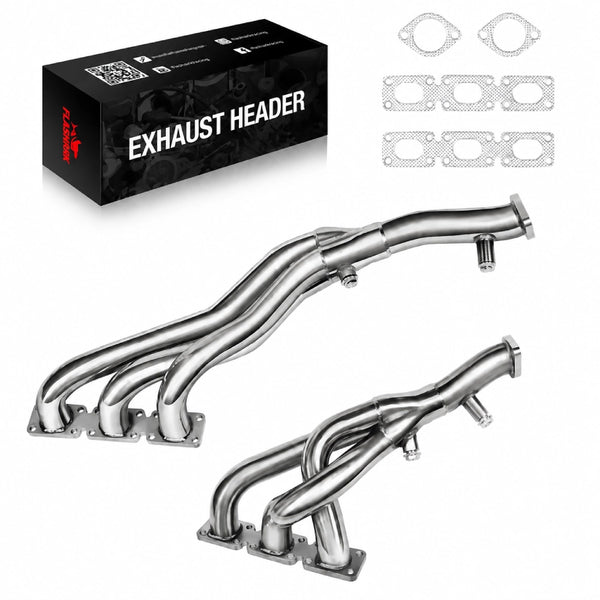
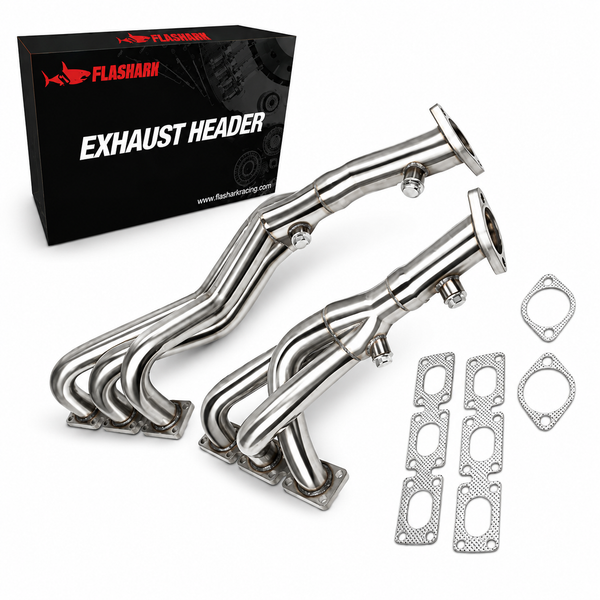
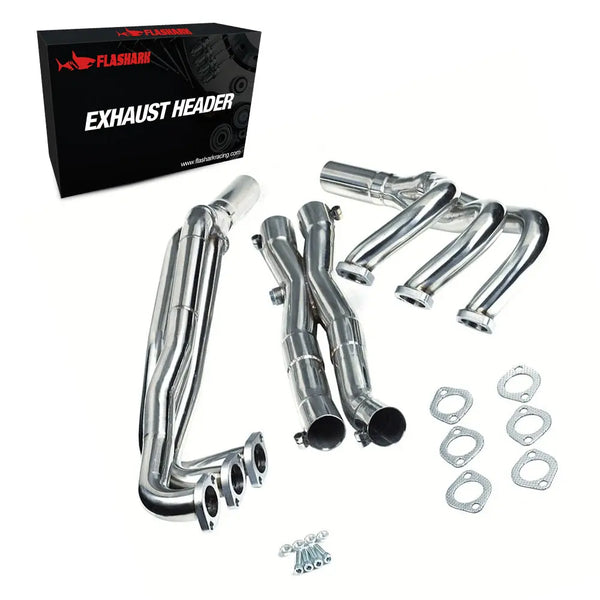
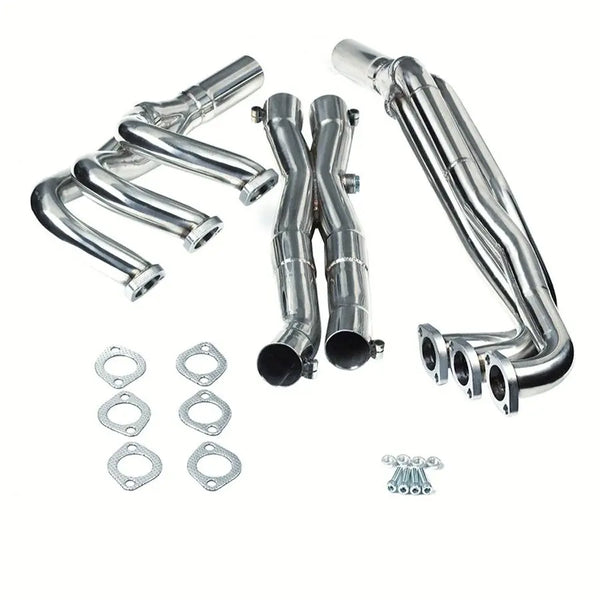
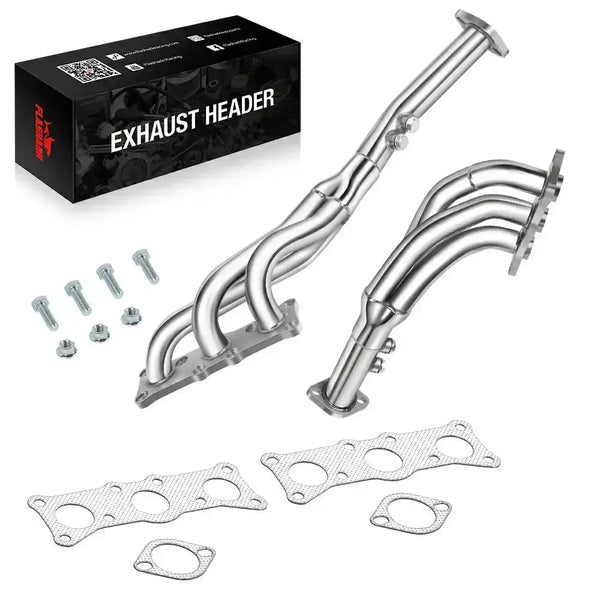
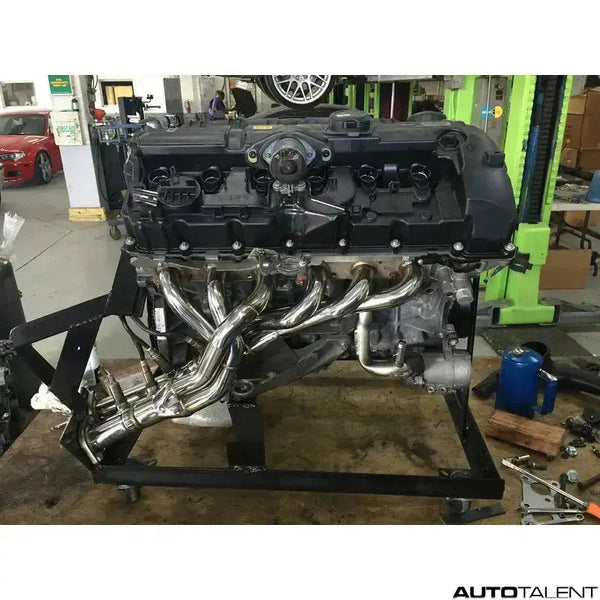
Flashark offers top-quality BMW Exhaust Headers that improve engine efficiency, enhance exhaust flow, and deliver a richer, more aggressive sound. Designed for both street and track use, our headers help unlock more power from your BMW while ensuring durability and performance. Explore our selection and elevate your driving experience today.


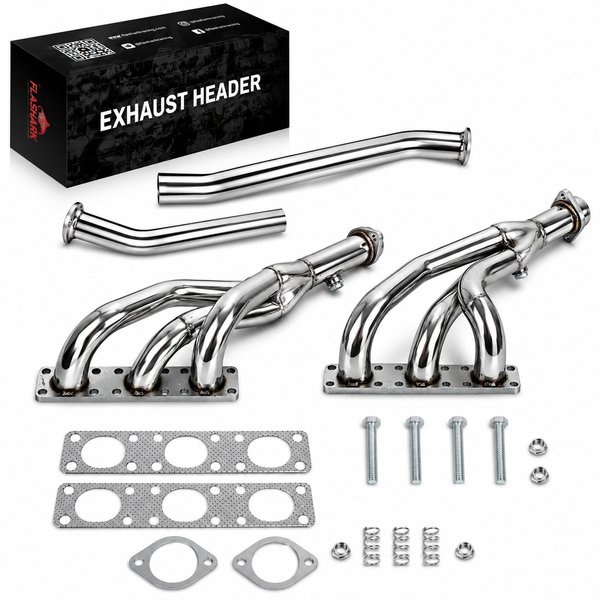
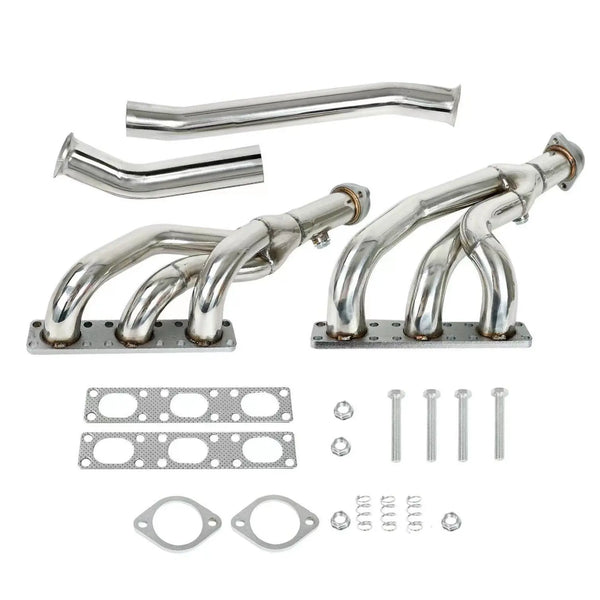
Brand: All | Chevy | Ford | Dodge | Jeep | BMW | Nissan | Toyota | Honda | Subaru | Other
Flashark offers top-quality BMW Exhaust Headers that improve engine efficiency, enhance exhaust flow, and deliver a richer, more aggressive sound. Designed for both street and track use, our headers help unlock more power from your BMW while ensuring durability and performance. Explore our selection and elevate your driving experience today.
High-Performance BMW Headers: Engineering the Ultimate Exhaust Flow
Let’s be brutally honest. If you are bolting a shiny cat-back exhaust onto your Bimmer and expecting it to pin you to the seat, you're wasting your time. Ignore the forum BS for a second and listen to me. The actual bottleneck on your engine is bolted directly to the cylinder head. Factory manifolds are heavy, restrictive logs of cast iron. Worse, they cram dense catalytic converter honeycombs right against the exhaust ports. It acts exactly like a cork. You build unwanted heat, you kill exhaust gas velocity, and you completely choke out that legendary straight-six throttle response.
The Bottom Line Up Front (BLUF): What You Actually Get
- Proven Dyno Gains: A legitimate 15-25 whp increase, with massive improvements in mid-range torque between 3,500 and 5,500 RPM.
- Thermal Efficiency: Shedding the heat-soaking factory iron for T304 stainless drops radiant under-hood temperatures by up to 15%.
- Flow Dynamics: Mandrel-bent runners eliminate turbulent backpressure, cutting turbo spool times by roughly 300-400 RPM or allowing an NA engine to scavenge properly.
Factory Flaws vs. The Flashark Advantage
Clogged Cats and Exhaust Restriction
Stock catalytic converters do one thing well: pass factory emissions. But for flow? They are a nightmare. Over time, that internal ceramic honeycomb structure degrades. It clogs up, forcing exhaust gases to literally fight their way out of the combustion chamber. Swapping to high-flow or catless BMW headers completely deletes this extreme restriction. Your engine stops working against its own exhaust pressure.
Flashark Material & TIG Welding Craftsmanship
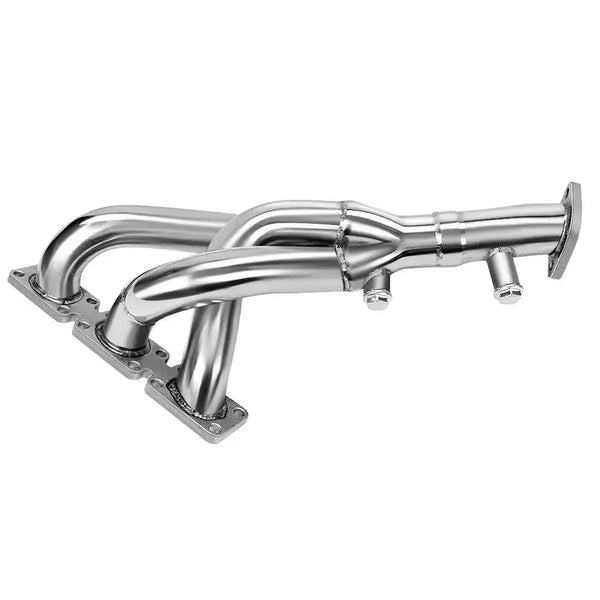
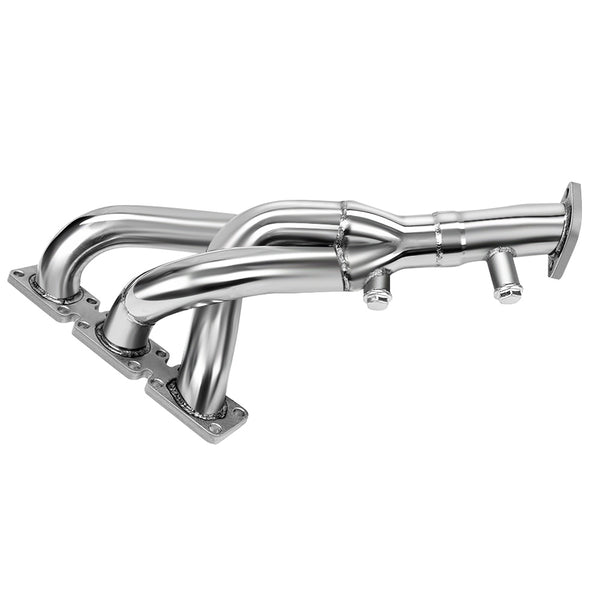
We don't mess around with cheap, thin-walled piping that cracks the second you hit a pothole. Flashark headers are built using mandrel-bent T304 stainless steel, finished with precision TIG welds. This isn't just about looking pretty in the engine bay. The smooth internal walls prevent the turbulent tumbling of gases caused by rough cast iron, keeping your exhaust velocity dangerously high.
Choosing Your Weapon: Header Styles & Materials Compared
Not all setups do the same job. You need to look at your specific build goals before throwing parts at the car.
| Spec Comparison | Shorty Headers | Long Tube Headers |
|---|---|---|
| Primary Use Case | Street-driven, tight engine bays, passing visual inspections. | Track-focused, maximizing high-RPM horsepower. |
| Material Upgrades | T304 Stainless (massive weight savings over cast logs). | T304 Stainless (optimizes flow geometry and pulse timing). |
| Performance Gain | Moderate (Focuses heavily on low-to-mid torque). | Aggressive (Focuses on peak exhaust scavenging). |
Beyond the Dyno: The Hardcore Science of Scavenging
Exhaust Scavenging & Volumetric Efficiency
Peak horsepower numbers are great for bragging rights, but volumetric efficiency is what actually wins races. Properly tuned runner lengths create a literal vacuum effect in the manifold—known as scavenging. When one exhaust pulse leaves the cylinder, it creates a low-pressure zone directly behind it, actively sucking the exhaust pulse out of the *next* firing cylinder. Better scavenging pulls a cleaner, denser air/fuel charge into the combustion chamber on the intake stroke.
Under-Hood Thermal Management
Factory manifolds soak up heat like a sponge and hold it against the aluminum engine block. High-velocity exhaust gases moving through polished stainless steel actually carry that heat out of the tailpipe faster. Managing your Exhaust Gas Temperatures (EGTs) this way protects surrounding plastic components and keeps intake temps from skyrocketing on track days.
Top BMW Fitments: Let's Talk Specific Chassis and Engines
Let's drop the generic advice. You don't drive a spec sheet; you drive a specific chassis with its own unique engineering headaches. Here is exactly what happens under the hood when you rip off the factory restrictions and bolt a set of Flashark headers onto the most common Bavarian blocks I see rolling into my shop.
E36 & Non-M E46 (M50 / M52 / M54 Engines): The Track-Rat Special
The M5x and M54 inline-sixes are virtually indestructible. You can beat on them all day. But BMW completely screwed them on the exhaust side. The factory manifolds are clunky cast iron logs that pinch down aggressively just to clear the steering column. They hold heat and cause terrible exhaust tumbling. When you swap to mandrel-bent stainless long-tube headers, you aren't just dropping 15 lbs off the nose of the car. You are physically allowing the engine to breathe past 5,000 RPM where it normally falls flat.
- The Real Numbers: Expect a solid 12-18 whp jump on a healthy M54B30 with a proper flash tune.
- Shop Reality: The original cats are built directly into the factory manifolds. When you swap these, you are going catless. You will need O2 simulators or a software delete to keep the ECU happy.
E46 M3 (S54 Engine): Curing the US-Spec Rasp
If you own a US-spec E46 M3, you got robbed from the factory. Period. To meet strict US cold-start emissions, BMW crammed dense catalytic converters directly into the header collectors. The European cars didn't have this restriction. That’s why US cars have that awful, metallic "angry bees in a tin can" rasp at 3,500 RPM. Bolting on a set of Flashark headers essentially converts your S54 to a high-flow Euro-style setup. It drastically reduces the rasp, lowers oil temps on track, and gives you back the mid-range punch.
- The Real Numbers: Dyno sheets consistently show a 15-20 whp increase when paired with an Alpha-N or standard DME tune.
- Sound Profile: Shifts from a tinny rattle to a deep, aggressive mechanical scream all the way to the 8,000 RPM redline.
E90/E92 3-Series (N52 / N54 Engines): Waking Up the Daily
This is where the differences get violent. For the naturally aspirated N52 (325i/328i), the exhaust manifold is the single biggest bottleneck on the car. For the N54 twin-turbo guys (335i), the stock cast manifolds pinch down right before the tiny Mitsubishi TD03 turbos, creating massive backpressure that chokes out top-end power.
F80/F82 M3 & M4 (S55 Engine): Managing the Boost Spikes
The S55 twin-turbo is an absolute monster, but it has a heat problem when you start pushing boost past 22psi on a Stage 2 map. Upgrading the primary exhaust components (manifolds/downpipes) on the S55 is less about chasing an extra 10 horsepower and more about thermal survival. By replacing the restrictive factory cats with high-flow stainless piping, you drop the pressure differential across the turbines. This stops the turbos from over-spinning and choking at high RPM, allowing you to actually hold power all the way to redline instead of falling on its face at 6,500 RPM.
- The Real Numbers: Essential for pushing past the 500+ whp barrier safely without blowing charge pipes off or spiking EGTs.
- Turbo Response: Cuts turbo lag down by roughly 300-400 RPM, making throttle transitions out of corners incredibly sharp.
The Wrench's Survival Guide: Avoiding Common Header Traps
Dealing with Seized Studs and Tight Clearances
Installing BMW headers on your back in the driveway on jack stands is a rite of passage. But it can turn into a living hell if you aren't careful.
The Ugly Truth About Emissions Compliance
Let's talk about the legal headache nobody wants to bring up before you swipe your credit card. If you are ripping off your factory catalytic converters for a set of straight catless headers, your car is officially for off-road or track use only. Don't let the forum guys tell you otherwise. If you live in a state with strict visual inspections or CARB regulations—looking at you, California and New York—a smog tech will take one glance with an inspection mirror and fail you on the spot. Even if you use software to hide the dash lights, you will absolutely fail a tailpipe sniffer test because you are dumping raw, unfiltered hydrocarbons.
- Catless Headers: Maximum power, maximum noise, guaranteed emissions failure. Know your local laws before bolting these on.
- High-Flow Catted Headers: The daily-driver compromise. They use a high-flow 200-cell metallic core instead of the highly restrictive factory 400-cell ceramic brick. You keep about 85% of the performance gains without having a panic attack every time your yearly registration is due.
Beating the Dreaded Check Engine Light (CEL)
Let's not sugarcoat it. If you remove the primary cats, your rear O2 sensors will freak out, and you will get a Check Engine Light. You have two choices. You can run O2 sensor spacers (mini-cats) to physically pull the sensor out of the direct exhaust stream to trick the ECU. Or, you can do it the right way: get a proper DME flash tune to turn off the rear O2 readiness monitors and adjust your fueling for the massive increase in airflow.
Frequently Asked Questions (FAQs) on BMW Headers
Q1: How much actual horsepower do headers add to a BMW?
A1: On naturally aspirated engines like the N52 or S54, expect a solid 15-20 whp with a tune. On turbocharged platforms (N54, N55, B58), dropping backpressure can free up 25+ whp easily when paired with increased boost levels.
Q2: Do I absolutely need a DME tune after installing headers?
A2: The car will physically run and drive without one. But honestly, you are leaving money on the table. A remap is absolutely essential to optimize the air/fuel ratio, prevent running lean, clear the CEL, and actually feel the power you paid for.
Q3: Will catless BMW headers make my car smell like raw fuel?
A3: Yes. Removing the catalytic converters deletes the filter for unburnt hydrocarbons. You will definitely notice a raw exhaust and fuel smell, especially when sitting at a red light or idling in your garage.
Q4: Can I pass OBD2 emissions testing with aftermarket headers?
A4: A fully catless setup will fail visual and sniffer emissions tests. High-flow catted options might pass the sniffer, but it highly depends on how strict your local county laws are regarding moving or modifying factory emission devices.
Q5: What is the difference between equal-length and unequal-length headers?
A5: Equal-length runners ensure that exhaust pulses hit the collector at the exact same time, creating a higher-pitched, smoother, and more exotic sound. Unequal lengths result in pulses colliding, which creates that deeper, classic burbling tone.
Q6: Is it difficult to install headers on a BMW driveway DIY?
A6: It is a knuckle-busting job. Depending on the chassis—especially the E90 and E46—you often have to remove the passenger side motor mount, lift the engine slightly, or even drop the subframe just to physically snake the stainless pipes in.
Q7: Should I heat-wrap or ceramic-coat my stainless steel headers?
A7: Ceramic coating is the superior choice. Heat wrap absolutely lowers engine bay temps, but if you daily drive the car in the rain, that wrap can trap moisture against the metal and accelerate fatigue. Ceramic coating keeps heat inside the pipe without trapping water.
Q8: How do headers affect the spool time of my BMW's turbo?
A8: By removing the dense honeycomb restriction right behind the engine, exhaust gases can exit much faster. This rapid flow spins the exhaust turbine wheel quicker, significantly reducing the delay known as turbo lag.
Q9: Why does my exhaust sound raspy after installing headers, and how do I fix it?
A9: Factory cats act as massive sound deadeners. When you remove them, high-frequency sound waves escape un-muffled. To fix this, you need to weld resonators—not just mufflers—into your mid-pipe section to cancel out those specific annoying frequencies.
Q10: Will upgrading my exhaust manifold void my BMW factory warranty?
A10: Under the Magnuson-Moss Warranty Act, a dealership cannot just blindly void your entire vehicle's warranty. However, they can legally deny a specific powertrain claim if they can prove the aftermarket headers directly caused the engine failure.