


 Need car parts? Shop by vehicle
(Select the exact fit for your vehicle)
Need car parts? Shop by vehicle
(Select the exact fit for your vehicle)
Subaru Catback Exhaust
Brand: ALL | Honda | Nissan | Toyota | Ford | Chevy | BMW | Mazda | Subaru | Lexus | Hyundai | Mitsubishi | Other
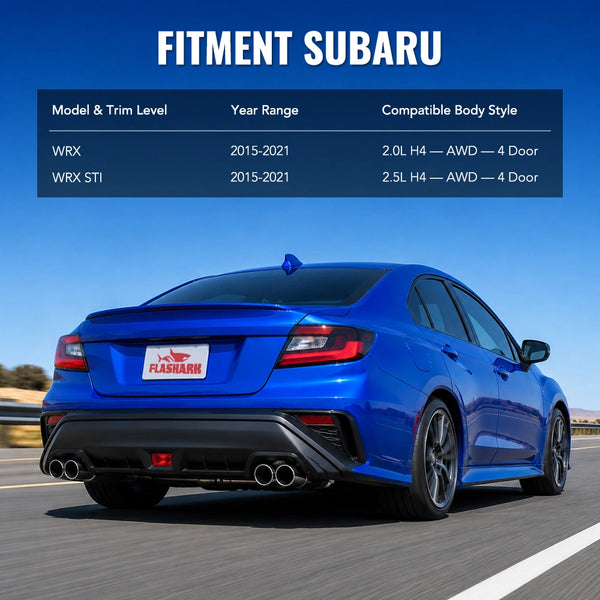
Shop by Model: Subaru WRX/STI Catback Exhaust
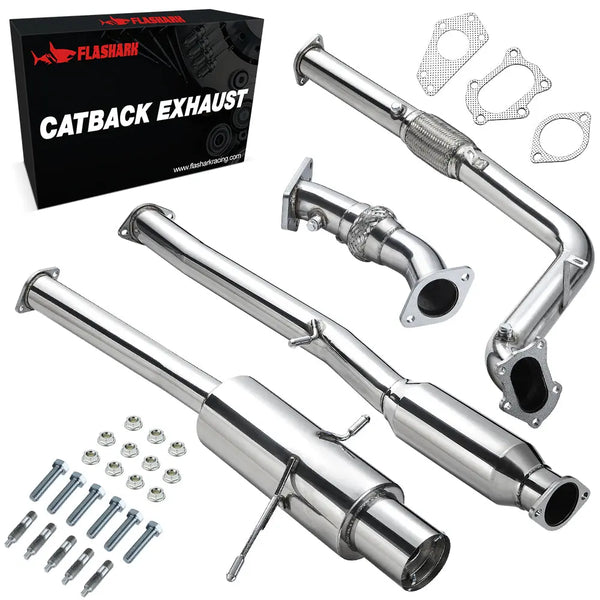
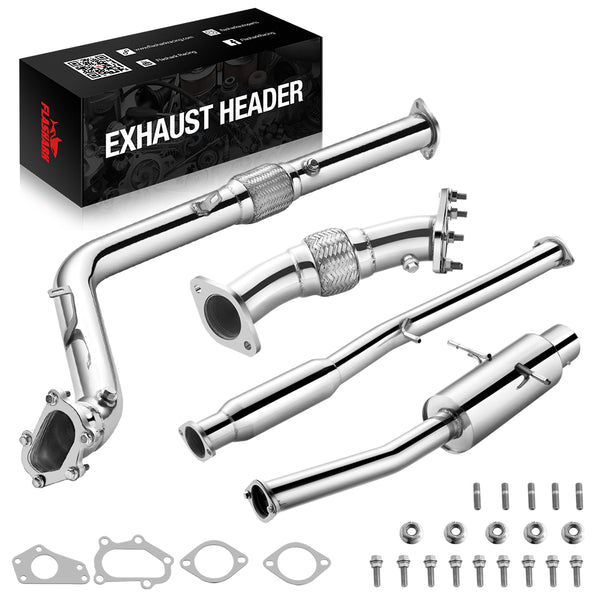
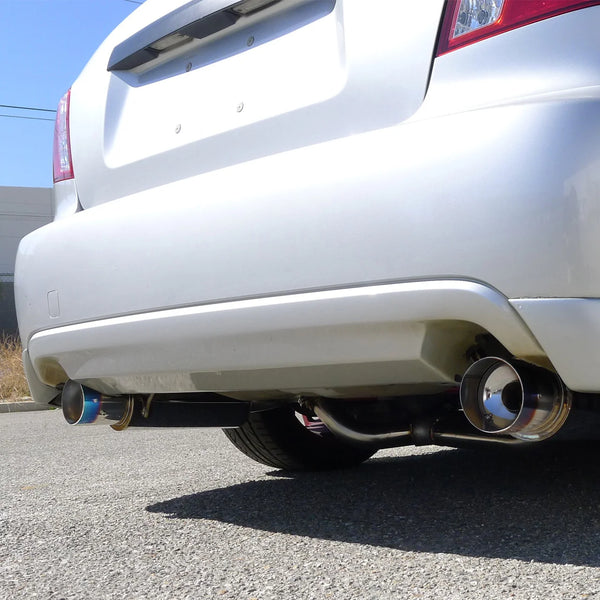
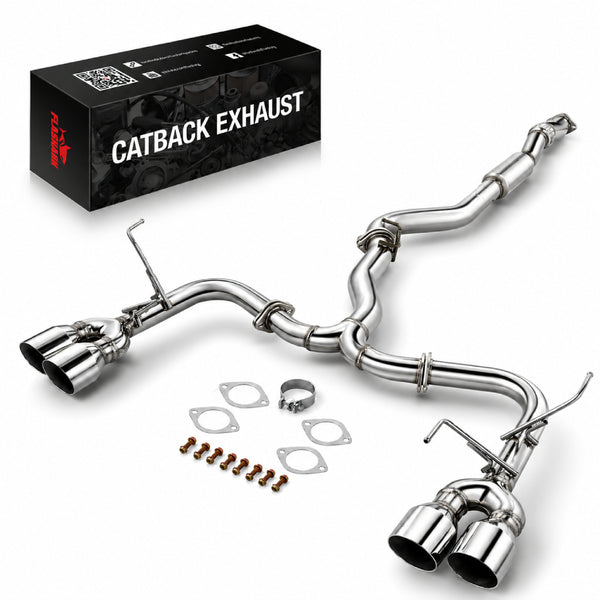
Upgrade your Subaru with our high-performance cat-back exhaust systems. Designed to improve exhaust flow, boost horsepower, and enhance sound, these systems are perfect for those looking for performance and style.
- Boost Performance: Increase horsepower and throttle response.
- Enhanced Exhaust Flow: Optimized design for maximum efficiency.
- Aggressive Sound: Achieve a deep, sporty exhaust tone.
Whether you're looking for better performance or a bold sound, our Subaru cat-back exhaust systems are the ideal upgrade.


Brand: ALL | Honda | Nissan | Toyota | Ford | Chevy | BMW | Mazda | Subaru | Lexus | Hyundai | Mitsubishi | Other
Shop by Model: Subaru WRX/STI Catback Exhaust
Upgrade your Subaru with our high-performance cat-back exhaust systems. Designed to improve exhaust flow, boost horsepower, and enhance sound, these systems are perfect for those looking for performance and style.
- Boost Performance: Increase horsepower and throttle response.
- Enhanced Exhaust Flow: Optimized design for maximum efficiency.
- Aggressive Sound: Achieve a deep, sporty exhaust tone.
Whether you're looking for better performance or a bold sound, our Subaru cat-back exhaust systems are the ideal upgrade.
Unleashing the True Boxer Rumble: The Ultimate Flashark Subaru Catback Guide
Let me shoot straight with you. If you’re daily driving a WRX, STI, or BRZ with the factory exhaust, you are committing a crime against that flat-four engine. I’ve dropped countless stock Subaru exhaust systems in my shop, and they are absurdly heavy. Subaru engineers bolted on these massive, highly restrictive rear mufflers to keep the emissions board and suburban neighbors happy. The result? They completely suffocate the exhaust pulses and murder your turbo spool time. Stop listening to the forum keyboard warriors who claim you need that restriction for "daily driveability." It's pure nonsense. That stock setup is choking your engine, trapping heat against your cylinder heads, and burying the legendary boxer rumble under layers of dense fiberglass. It’s time to rip it out.
The Bottom Line Up Front (BLUF): What a Flashark Subaru Catback Actually Delivers
- Measurable Dyno Output: See a proven 10-18 whp and 15-20 lb-ft of torque bump, heavily concentrated in the mid-range where your turbo kicks in.
- Reduced Turbo Lag: Drastically drops backpressure post-downpipe, allowing a twin-scroll or single turbo to spool roughly 200-300 RPM sooner.
- The Weight Diet: Shaves off 15 to 25 lbs of dead chassis weight from the rear overhang, tightening up rear-end dynamics during hard cornering.
- Acoustic Engineering: Awakens the deep, guttural UEL rumble or the smooth EL growl, while utilizing tuned resonators to keep the cabin drone-free at 75 mph.
Ditching the Restrictive Factory Setup: Pain Points & Flashark Solutions
Factory mild steel degrades fast. Subarus are built for the snow and the dirt, which means your undercarriage is constantly bombarded with corrosive road salt. Give it three winters, and the OE tubing looks like flaking rust. But beyond corrosion, the airflow path is a mess.
Aerospace-Grade Materials & Mandrel-Bent Craftsmanship
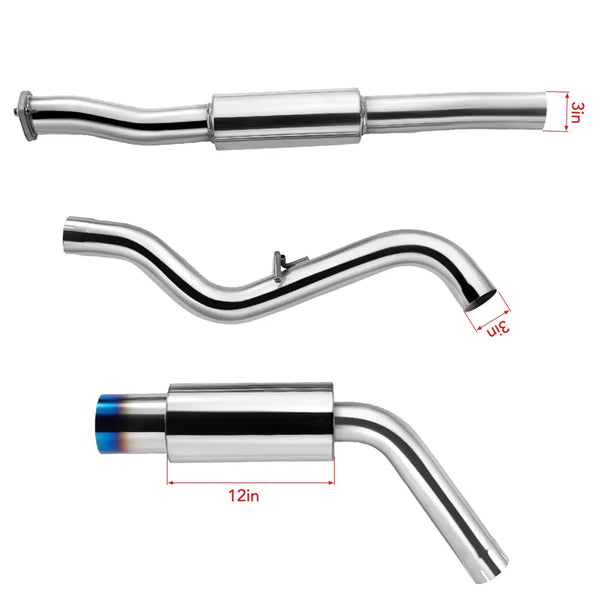
Flashark refuses to cut corners with cheap alloys. We build our systems using thick-walled T304 stainless steel, which virtually ignores road salt and rust. More importantly, every single curve is CNC mandrel-bent. When a factory pipe bends around the rear differential, the machine crushes the metal, shrinking the inner diameter. A mandrel bend stays perfectly round. If you run a 3-inch Subaru Catback, it stays a true 3 inches the entire way out, keeping exhaust gas velocity violently high.
The Sound of Power: Tuning the Iconic Subie Rumble
You didn't buy a Subaru to sound like a hybrid. But slapping a straight pipe on a flat-four usually results in a terrible, clapping rasp. Tuning this is a mechanical art. Flashark packs our mufflers with high-density, high-temp fiberglass. If you have an EJ motor with Unequal Length (UEL) headers, we amplify that iconic, uneven "wub-wub" helicopter rumble. If you have an FA motor with Equal Length (EL) headers, we deepen the tone to a smooth, aggressive roar, while eliminating high-frequency trash noises.
Proven Performance Gains: Turbo Spool and Scavenging Effect
Let’s talk fluid dynamics. Backpressure is the mortal enemy of any turbocharger. By opening up the exhaust flow, a high-flow Subaru Catback Exhaust maximizes the scavenging effect. Fast-moving exhaust gases create a vacuum, literally pulling spent gases away from the turbine wheel. Less pumping loss means the engine revs freely and throttle response becomes razor-sharp.
Choosing Your Layout: Quad Exit vs. Single Exit (JDM Style)
The Subaru community is split into two distinct visual camps. Don't just buy a system blindly; pick the layout that matches your specific build philosophy.
| Exhaust Layout | Ideal Subaru Build | The Good | The Bad |
|---|---|---|---|
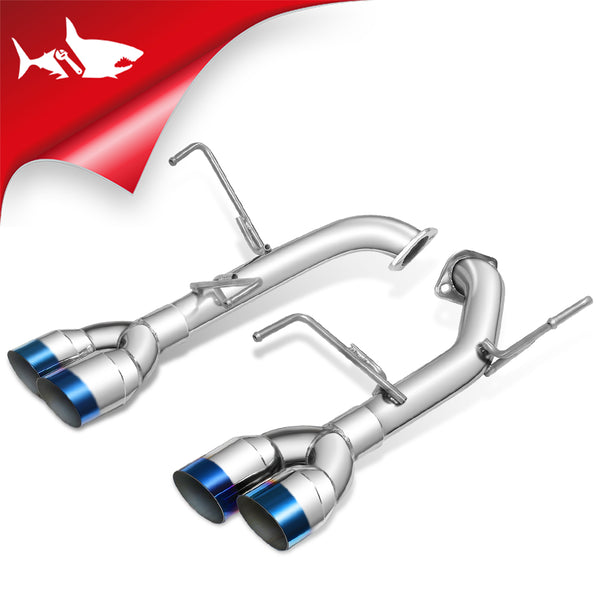
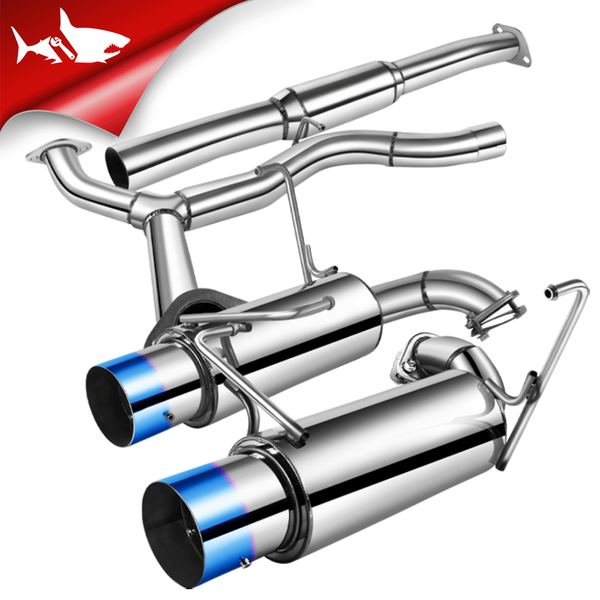
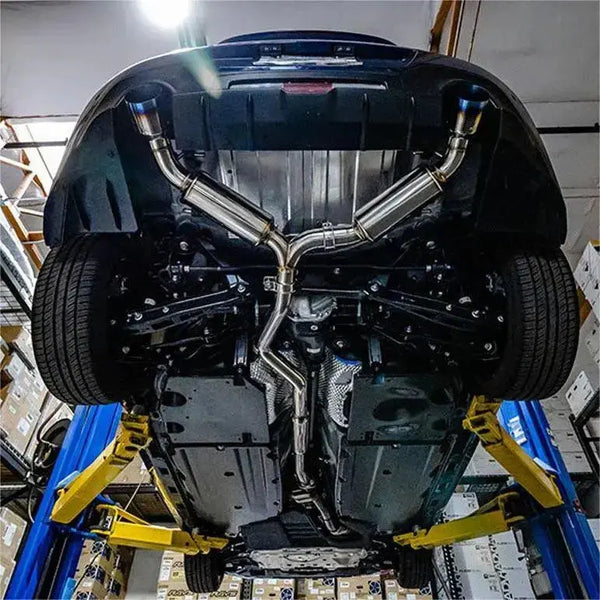
| Quad Exit (Dual Mufflers) | Street WRX/STI, Daily Drivers | Perfect symmetrical aesthetics. Fills the wide factory bumper cutouts flawlessly. Deep stereo sound. | Slightly heavier due to the extra Y-pipe and dual muffler cans. |
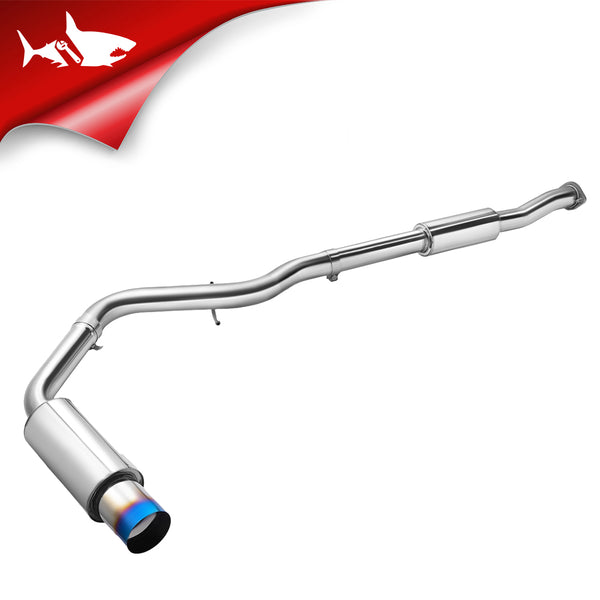
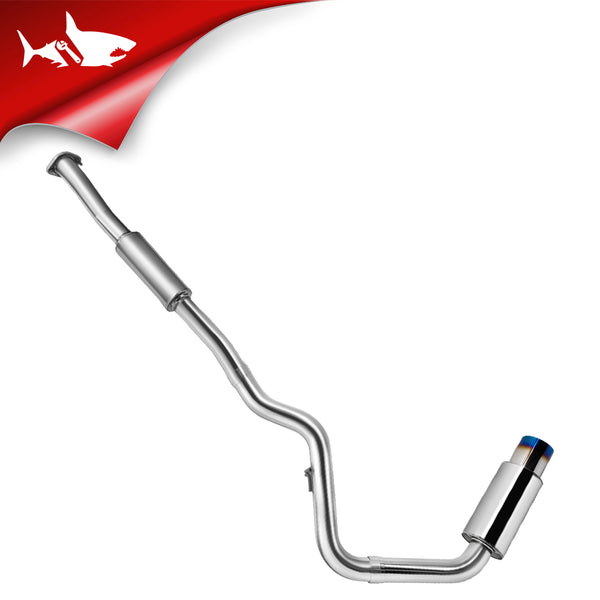
| Single Exit (Angled JDM) | Track Cars, Hardcore Rally Builds | Absolute maximum weight reduction. Aggressive, old-school JDM racing look. | Leaves one bumper cutout empty (requires a block-off plate for a clean look). |
The Hardcore Nerd-Out: Hidden Benefits of a Free-Flowing Subaru Exhaust
Here is a harsh reality the dyno sheets won't tell you: heat kills Subarus. High backpressure traps extreme heat inside the cylinder heads. This spikes your Exhaust Gas Temperatures (EGTs), which is a leading cause of the dreaded Subaru ringland failure (cracked pistons). A free-flowing Flashark catback gives that thermal energy an immediate escape route. Dropping your EGTs protects your engine internals during aggressive canyon runs or heavy track days.
Platform-Specific Deep Dive: Subaru Engines and Power Dynamics
You cannot treat an old-school EJ the same way you treat a modern FA direct-injection motor. Here is exactly how we engineer airflow for the boxer family.
WRX STI (EJ257): Freeing the Classic Rumble
The legendary EJ257 relies on its Unequal Length (UEL) headers for that iconic sound, but those headers create complex, clashing exhaust pulses. The stock restrictive muffler chokes on these pulses at high RPM. A full 3-inch Flashark system smooths out this chaotic airflow, giving you that violently loud, raw rally car bark while safely supporting high-boost applications past 20 PSI.
WRX (FA20/FA24DIT): Maximizing Twin-Scroll Efficiency
The newer FA engines utilize a twin-scroll turbocharger and Equal Length (EL) headers. Because the exhaust pulses are evenly spaced, the engine naturally sounds smoother, but the factory exhaust makes it sound like an appliance. We specifically size our piping to drop twin-scroll backpressure instantly, heavily reducing turbo lag and giving the FA a deep, sophisticated, aggressive growl that doesn't break into a rasp.
BRZ / FR-S / 86 (FA20/FA24 NA): The High-Revving Boxer
For the naturally aspirated rear-wheel-drive guys, exhaust velocity is everything. Going too massive on the pipe diameter will ruin your low-end grunt and make the infamous "torque dip" even worse. We precision-match our piping diameter (typically 2.5-inch) to maximize high-RPM breathing while maintaining the necessary velocity to punch through the mid-range torque curve.
The Mechanic's Warning: Avoiding Subaru Exhaust Pitfalls and CEL Nightmares
⚠️ Garage Truths: Don't Butcher the Downpipe
"Listen to me. In my shop, I see it constantly. Last month, a kid brought in his 2018 WRX. He wanted aggressive turbo whistle on a tight budget. So, he bought a cheap, unbranded straight-pipe J-Pipe (downpipe), slapped it on, and didn't even bother to get a Cobb Accessport tune.
It was a ticking time bomb. The moment he hit highway speeds, his dash lit up with Check Engine Lights (CEL). Worse, because the ECU couldn't handle the sudden lack of restriction at the wastegate, he experienced massive boost creep. The turbo over-spooled, leaned out the engine, and nearly cracked a piston ringland.
A true Subaru Catback Exhaust from Flashark is your safest first step. It bolts on strictly after the factory catalytic converter. You don't mess with the primary O2 sensors, you don't trigger boost creep, and your dash stays 100% code-free. Get the catback first. Do it right."
Frequently Asked Questions (Subaru Catback Exhausts)
Q1: Does a catback exhaust void my Subaru factory warranty?
A1: No. Under the federal Magnuson-Moss Warranty Act, a Subaru dealership cannot legally void your vehicle's overall powertrain warranty simply because you bolted on an aftermarket catback. They would have to mathematically prove the exhaust directly caused a specific mechanical failure.
Q2: Will a Flashark catback trigger a Check Engine Light (CEL) on my WRX/STI?
A2: Absolutely not. Because the system is installed completely downstream of the factory Downpipe/J-Pipe and primary O2 sensors, your ECU's emissions monitoring system remains entirely untouched. You will not throw any error codes.
Q3: Why does my FA20 WRX not have the "Subie Rumble," and can a catback fix it?
A3: The classic rumble comes from Unequal Length (UEL) headers used on the STI. Your FA20 WRX uses Equal Length (EL) headers for better twin-scroll turbo efficiency. A catback cannot magically create the UEL rumble, but it will transform your current muted sound into a very deep, aggressive, and smooth boxer roar.
Q4: Quad tip vs. Single exit for a WRX/STI: Which makes more power?
A4: Assuming the main mid-pipe diameter is the same (e.g., 3 inches), there is virtually zero horsepower difference between a single exit and a quad exit. The single exit simply offers maximum weight reduction, while the quad exit offers a refined, symmetrical aesthetic.
Q5: How do you fix exhaust drone on a Subaru at highway speeds?
A5: Drone is a maddening, low-frequency sound wave that resonates in the cabin, usually striking around 2,800 to 3,200 RPM—right where Subarus sit at 75 mph. Flashark eliminates this by engineering precision mufflers with specific chamber volumes and Helmholtz resonance tech to naturally cancel out those exact frequencies.
Q6: Do I need a Cobb Accessport (AccessTUNER) tune after installing a catback?
A6: No custom tuning is required. The factory Subaru ECU is incredibly adaptive. Through its Long Term Fuel Trims (LTFT), the computer will automatically recognize the improved exhaust flow and safely adjust the air/fuel ratios. (Note: Changing the downpipe/J-pipe *does* require a tune).
Q7: Will a larger 3-inch exhaust pipe ruin the low-end torque on my BRZ?
A7: Yes, going too large on a naturally aspirated 2.0L/2.4L engine will kill exhaust velocity and gut your low-end torque. That's why Flashark specifically sizes our BRZ/86 systems to an optimized diameter (typically 2.5-inch) to maximize top-end flow without sacrificing the low-end punch.
Q8: Is a Flashark Subaru catback exhaust CARB compliant in California?
A8: Yes. Because a catback exhaust does not alter, remove, or relocate the factory emissions equipment (the catalytic converters), it is legally classified as a sound-modifying component and is 50-state emissions legal, including in California.
Q9: Can I install a WRX catback exhaust myself on jack stands?
A9: Yes. Flashark systems are 100% bolt-on. However, Subaru factory spring-bolts at the downpipe connection are notorious for rusting solid. Get the car safely on jack stands, soak those bolts in penetrating oil (like PB Blaster) for an hour, and use a long breaker bar. Expect the job to take about 2 hours.
Q10: T304 vs. T409 Stainless Steel: Which does my Subaru need?
A10: Subarus are built for the snow, which means heavy road salt. T304 is the premium alloy with high nickel and chromium content, meaning it virtually ignores rust. It is the ultimate choice for a Subaru. T409 is a budget-friendly alternative that develops surface oxidation over time but will never rust through like cheap factory steel.