


VW Golf Downpipe Exhaust & Test Pipes
Shop by Brands: ALL | Chevy | Nissan | BMW | Audi | Honda | VW Golf | Subaru | Others
Unlock the true performance potential of your VW Golf with our high-quality VW Golf downpipes and VW Golf test pipes. Designed to improve exhaust flow, boost horsepower, and enhance engine efficiency, these parts will take your Golf to the next level. Whether you’re aiming for better acceleration or a more aggressive exhaust note, our downpipes and test pipes deliver the power and sound your VW Golf deserves.
- Enhanced Performance: Increase horsepower and torque for better acceleration and improved driving dynamics.
- Optimized Exhaust Flow: Engineered for maximum exhaust efficiency and power gains.
- Aggressive Sound: Enjoy a deeper, more aggressive exhaust tone for a sportier driving experience.
- Durable Design: Made with high-quality materials to ensure long-lasting performance.
Perfect for VW Golf enthusiasts who want to upgrade both performance and sound, our VW Golf downpipes and test pipes provide the ultimate boost for your vehicle.
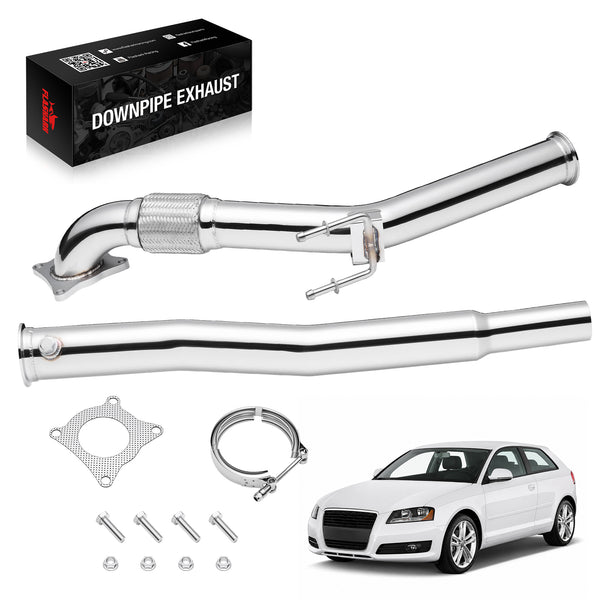
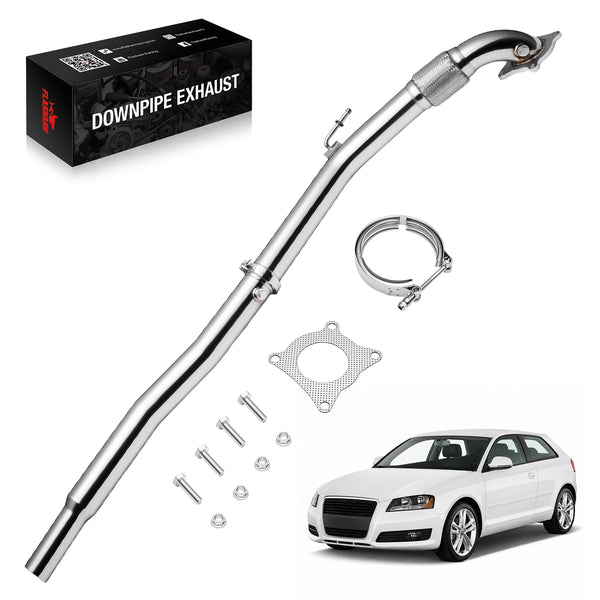
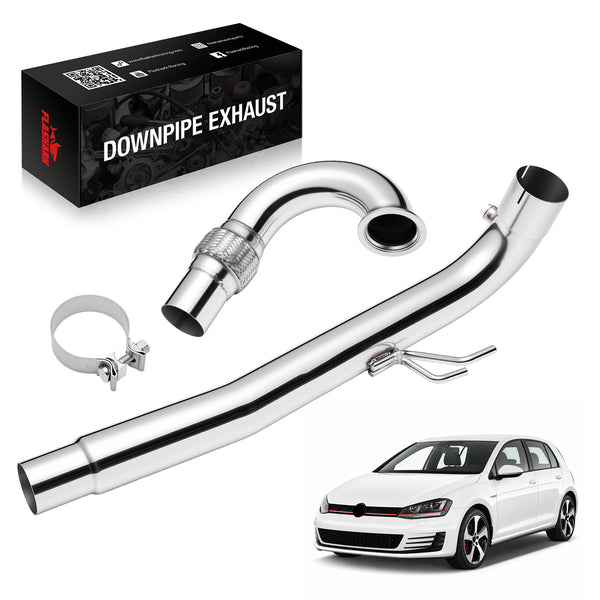


Shop by Brands: ALL | Chevy | Nissan | BMW | Audi | Honda | VW Golf | Subaru | Others
Unlock the true performance potential of your VW Golf with our high-quality VW Golf downpipes and VW Golf test pipes. Designed to improve exhaust flow, boost horsepower, and enhance engine efficiency, these parts will take your Golf to the next level. Whether you’re aiming for better acceleration or a more aggressive exhaust note, our downpipes and test pipes deliver the power and sound your VW Golf deserves.
- Enhanced Performance: Increase horsepower and torque for better acceleration and improved driving dynamics.
- Optimized Exhaust Flow: Engineered for maximum exhaust efficiency and power gains.
- Aggressive Sound: Enjoy a deeper, more aggressive exhaust tone for a sportier driving experience.
- Durable Design: Made with high-quality materials to ensure long-lasting performance.
Perfect for VW Golf enthusiasts who want to upgrade both performance and sound, our VW Golf downpipes and test pipes provide the ultimate boost for your vehicle.
VW Golf Downpipe Exhaust & Test Pipes: What Actually Matters Before You Buy
Let’s be honest. A VW Golf or GTTI downpipe is one of those parts that sounds simple until the car is on the lift, the O2 sensor is stuck, the turbo flange is sweating exhaust, and the dash is glowing with a check engine light. The part sits in a brutal spot: right after the turbo, baked by heat, shaken by engine movement, and watched closely by the ECU.
That is why buying a VW Golf downpipe exhaust & test pipe is not just about grabbing the loudest or cheapest 3-inch pipe you can find. You need the right fitment, the right material, the right expectation, and, yeah, a realistic idea of what happens with emissions monitors and CEL codes after the install.
BLUF — Bottom Line Up Front
- Best use case: A Flashark VW Golf downpipe is a strong upgrade for turbo 2.0T owners who want better exhaust flow, sharper spool response, and a more aggressive tone.
- Realistic power range: On a healthy tuned 2.0T FSI/TSI setup, a proper 3-inch downpipe can support roughly 15–25 whp gains when paired with the right Stage 2-style calibration. Pipe-only gains on stock software are usually smaller.
- Catted vs catless: Catted downpipes are usually more street-friendly. Catless downpipes or decat test pipes flow harder and sound rawer, but they carry higher smell, CEL, and emissions risk.
- Do not skip this: Confirm your exact year, model, engine, generation, turbo flange, O2 sensor layout, and local emissions rules before ordering.
Why Upgrade the Downpipe on a VW Golf or GTI?
The factory downpipe has a hard job. It has to keep the car quiet, clean enough for emissions rules, comfortable for normal drivers, and cheap enough for mass production. That is fine for a stock commuter. It is not always great for a tuned turbo VW.
On a GTI or Golf 2.0T build, the downpipe is the first major exhaust section after the turbocharger. When you reduce restriction there, the turbo can move exhaust out with less fight. The car may spool a little cleaner, pull harder in the midrange, and sound less plugged-up.
Factory Restriction: Where the Stock System Holds Back the Turbo
The stock catalytic section and smaller factory piping can create backpressure right where you do not want it: after the turbine wheel. Once the car has an intake, tune, intercooler, or bigger turbo plan, that bottleneck becomes more obvious.
Listen, a downpipe is not magic. It does not turn a tired 2.0T with boost leaks and old plugs into a rocket. But on a sorted car, it gives the turbo a cleaner exit path. That matters.
Better Turbo Spool and Throttle Response
A freer-flowing downpipe can help the turbo respond faster because exhaust gas is not pushing through as much restriction after the turbine. The difference is usually most noticeable in midrange pulls, not creeping around a parking lot.
On a typical tuned MK5 or MK6 GTI 2.0T, you may feel the car come alive around the 2,800–4,500 rpm area. That is where a lot of street driving happens. That is also where a restrictive factory downpipe can make the car feel like it is breathing through a shop rag.
Deeper Exhaust Tone Without Replacing the Whole Catback
A downpipe changes the sound more than some people expect. The tone gets deeper. The turbo noise gets more obvious. Cold starts can get sharper. If the car already has a straight-through catback, a catless downpipe can make it loud fast.
Do not trust every forum clip, either. Phone videos lie. The same pipe can sound clean on one GTI and raspy on another depending on the resonator, muffler, tune, leaks, and even engine mount condition.
Pain Points vs Real Advantages
Here is the real trade-off. A performance VW Golf downpipe exhaust & test pipe can improve flow and sound, but it also moves the car farther away from factory behavior. That means more responsibility on the buyer’s side.
- Stock downpipe: quiet, compliant, predictable, but restrictive for tuned turbo builds.
- Performance catted downpipe: better flow and tone with less smell than catless, but CEL risk may still exist.
- Catless downpipe or decat test pipe: maximum flow and raw sound, but higher emissions, smell, and check engine light risk.
Flashark VW Golf Downpipe Materials, Build Quality, and Design Details
A downpipe lives in a nasty place. Road water, heat cycles, vibration, salt, seized hardware, turbo heat — all of it beats on the part. That is why material and fitment matter more here than they do on some shiny dress-up part under the hood.
Flashark focuses this category around the physical problems VW owners actually deal with: restriction, aging factory hardware, tight fitment, and exhaust heat. The goal is not a fancy buzzword. The goal is a pipe that fits, flows, and survives under the car.
T-304 Stainless Steel Construction
T-304 stainless steel is a smart material choice for a VW Golf downpipe because it resists corrosion better than cheap mild steel and handles repeated heat cycles better over time. On a car that sees rain, winter roads, or hard pulls, that matters.
I have pulled rusty budget pipes off older GTIs where the welds looked like burnt popcorn and the flex section was already splitting. Not after ten years. Sometimes after two. That is the kind of cheap part that costs you twice.
3-Inch Piping and Exhaust Flow
Most performance VW Golf and GTI downpipes use a 3-inch pipe because that size gives the turbo more breathing room without becoming ridiculous for common stock-turbo and mild upgraded-turbo setups. For 2.0T builds, it is a practical sweet spot.
On a properly tuned car, the benefit is not only peak horsepower. It is also how the car carries torque, how quickly it recovers after a shift, and how much less choked it feels at higher load.
TIG Welds, Flanges, and Leak Prevention
The flange is not glamorous, but it decides whether your install is clean or miserable. A warped flange near the turbo can create ticking noises, exhaust smell, lazy spool, and false troubleshooting. People blame the tune. Sometimes it is just a leak.
Good welds and clean flange surfaces help the pipe seal properly. That is especially important around the turbo outlet and O2 sensor area, where even a small leak can mess with readings and make the car act weird.
Flex Pipe and O2 Sensor Bung Placement
The flex pipe is there for a reason. The engine moves. The exhaust system moves. Without some flex, stress travels into the welds, hangers, and flange joints. Eventually something cracks.
O2 bung placement matters too. The sensor needs to sit in a safe location with enough clearance for wiring, heat, and service access. If the wiring gets stretched or cooked against the pipe, congratulations — your simple downpipe job just became an electrical problem.
Catted vs Catless VW Golf Downpipes: Which One Fits Your Build?
This is where a lot of buyers get into trouble. They hear “catless makes more power” and stop thinking. Bad move. A catless pipe is not automatically the right choice for every Golf or GTI, especially if the car is still a daily driver.
The right choice depends on your build goal, local rules, tune plan, noise tolerance, and how much exhaust smell you are willing to live with.
| Setup | Flow | Sound | Smell | CEL Risk | Best For |
|---|---|---|---|---|---|
| Stock Downpipe | Lowest flow | Quiet | Lowest | Lowest | Stock daily driving and inspection-sensitive use |
| High-Flow Catted Downpipe | Moderate to high | Deeper, controlled | Moderate | Moderate | Street-style tuned builds where comfort still matters |
| Catless Downpipe / Decat Test Pipe | Highest | Louder, rawer | Highest | High | Off-road, racing, track, or non-emissions-controlled builds |
What Is a Catted Downpipe?
A catted downpipe includes a catalytic converter, usually a higher-flow unit than the factory cat. It is the more civilized choice for a lot of daily-driven GTI owners because it can reduce smell and noise compared with a catless pipe.
But do not twist that into a guarantee. A high-flow catted downpipe can still trigger a check engine light. The ECU is picky. Some cars tolerate the change better than others.
What Is a Catless Downpipe or Decat Test Pipe?
A catless downpipe or decat test pipe removes the catalytic converter restriction from that section of the exhaust. Flow goes up. Sound goes up. Smell goes up. Legal and inspection risk goes up too.
Warning: Catless and decat test pipe setups are generally intended for off-road, racing, or track use. Removing or defeating required emissions equipment may be illegal for street use in many areas. Check federal, state, and local rules before buying or installing one.
Performance Difference: Flow vs Real-World Use
Catless usually gives the least restriction. That part is simple. But the fastest setup is not always the most livable setup, and it is not always the smartest setup for a daily car that still has to pass inspection.
A well-matched catted downpipe can still support strong power on many stock-turbo 2.0T builds. If the tune, intercooler, spark plugs, coil packs, PCV system, and boost control are not right, a catless pipe will not save the car. It just makes the problems louder.
Sound, Smell, Drone, and Cabin Comfort
Catless setups often smell stronger at idle and during cold starts. You may notice raw exhaust odor near the rear of the car, in traffic, or when backing into a garage. Some people do not care. Some people hate it after three days.
Catted setups are usually easier to live with. They still sound deeper than stock, but they do not usually have the same raw edge. If your Golf or GTI is a daily driver, that matters more than forum bragging rights.
CEL and Emissions Readiness Risk
The big code people worry about is P0420, usually tied to catalyst efficiency. The rear O2 sensor compares what it sees after the catalyst area against what the ECU expects. Change the catalyst behavior too much and the ECU complains.
An O2 spacer, high-flow cat, or tune may reduce CEL risk in some cases. But I am not going to lie to you: none of those are a universal magic fix, and “no visible check engine light” is not the same thing as “emissions monitors are ready.”
VW Golf and GTI 2.0T Fitment and Upgrade Paths
VW fitment can get messy fast. MK5, MK6, MK7, EA113, EA888, FSI, TSI, GTI, Golf R, Jetta, Audi A3 — people throw those names around like they all use the same pipe. They do not.
This Flashark category mainly fits VW Golf and GTI 2.0T owners looking for downpipe and test pipe upgrades, but the safe move is simple: match the product listing to your exact year, engine, chassis, turbo flange, and exhaust layout before ordering.
2006–2011 VW Golf / GTI MK5-Style 2.0T Applications
The 2006–2011 GTI and Golf 2.0T crowd is one of the most important groups for this type of upgrade. A lot of these cars are old enough now that the factory hardware is rusty, the O2 sensors have been heat-cycled a thousand times, and the original exhaust parts may already be tired.
On these cars, the downpipe install is not just “remove old pipe, bolt on new pipe.” You may fight seized fasteners, tight turbo access, worn hangers, old gaskets, and previous-owner surprises. And there are always previous-owner surprises.
EA113 2.0T FSI Buyer Notes
Early 2.0T FSI-style GTI builds are popular because they respond well to basic breathing mods and tuning. A 3-inch downpipe can be a key part of a Stage 2-style setup, especially when paired with intake, intercooler, and proper ECU calibration.
Before buying, verify engine code, model year, turbo connection, O2 sensor placement, and whether your car has any swapped or modified exhaust parts already. I have seen cars listed as one year, titled as another year, and modified like a third year. It happens.
Common Build Path for MK5 and MK6 GTI 2.0T
A sensible GTI 2.0T upgrade path usually starts with maintenance, not parts shopping. Fresh plugs, healthy coil packs, a working PCV system, and no boost leaks should come before chasing more flow.
After that, a common path is intake or high-flow filter, downpipe, ECU tune, intercooler, catback, and then bigger turbo or fueling changes. Do it backward and you will spend more time diagnosing the car than enjoying it.
- Fresh spark plugs and coil packs before pushing more boost
- PCV and diverter valve inspection before blaming the tune
- Downpipe and tune pairing for proper boost and fueling behavior
- Intercooler upgrade if the car heat-soaks during repeated pulls
- Catback upgrade if sound and rear-section flow become the next goal
2010–2015 VW Golf GTI 2.0T Fitment Notes
This year range is where a lot of buyers get tripped up. Some owners shop by model year only, but VW generation changes, market differences, and engine variations can make downpipe fitment less obvious than it looks on paper.
If you own a 2010–2015 Golf GTI 2.0T, do not assume every 2.0T downpipe fits your car. Check whether your car is MK6, early MK7, or a market-specific version, then confirm the turbo flange, O2 sensor layout, and rear exhaust connection before buying.
EA888 2.0T TSI Buyer Notes
EA888-style 2.0T engines are strong candidates for downpipe upgrades because they respond well to flow improvements when tuned correctly. But fitment depends on more than the engine family name.
Generation matters. Turbo configuration matters. Sensor layout matters. The rest of the exhaust matters too. If your car has an aftermarket catback or custom mid-pipe already, measure and inspect before assuming everything will bolt together cleanly.
DSG vs Manual Considerations
Most downpipe fitment problems are not strictly about DSG vs manual. They are usually about chassis, engine, turbo flange, bracket location, and exhaust routing. That said, some products may include transmission-specific notes, so do not ignore them.
Also, tuned DSG cars may need TCU software to make the most of added torque. The downpipe helps the turbo breathe, but the transmission still has to manage the hit.
Golf R and MQB 2.0T Owners: Do Not Assume GTI Fitment
Golf R and later MQB 2.0T cars may look close from a distance, but the downpipe routing, turbo outlet, hanger position, and clearance points can be different from a standard Golf or GTI setup. That small difference is enough to turn a “bolt-on” job into a no-fit return.
If your car is a Golf R, MQB GTI, or another newer 2.0T VW platform, verify product-specific fitment before ordering. A GTI downpipe listing should never be treated as automatic Golf R fitment unless the product page clearly says so.
MK4 1.8T and TDI Owners: Check Before You Buy
Older MK4 1.8T and TDI owners sometimes land on VW Golf downpipe pages because the vehicle name sounds close. But the turbo layout, catalyst position, diesel emissions hardware, and exhaust routing can be completely different from the 2.0T Golf and GTI applications listed here.
If you drive a 1.8T or TDI, do not buy a 2.0T Golf downpipe just because the title says “VW Golf.” Check the engine, generation, and product fitment notes first. Otherwise, you may end up with a clean stainless pipe that does not line up with your car.
Best Use Cases by Build Goal
Not every buyer needs the same pipe. That is the part a lot of product pages skip.
- Daily driver: Consider a catted setup if smell, noise, and inspection risk matter.
- Stage 2 street-style build: A 3-inch downpipe with proper tuning is usually the core hardware move.
- Track or off-road car: A catless downpipe or decat test pipe may make sense where emissions compliance is not required.
- Budget turbo-flow upgrade: Focus on fitment, flange quality, and leak-free installation before chasing peak dyno numbers.
- Old aftermarket replacement: Replace cracked flex sections, poor welds, and leaking flanges before adding more mods.
Hidden Benefits and Hard-Core Tech: What a Downpipe Really Changes
Everyone talks horsepower. Fine. But the downpipe also affects heat, pressure, sensor readings, boost behavior, and how angry your neighbors get at 6:30 in the morning.
Backpressure After the Turbo
On a turbo car, you generally want lower restriction after the turbine. The turbine already did the work of extracting energy from exhaust gas. After that, you want the spent gas to leave cleanly.
Less post-turbine restriction can help the turbo operate more efficiently. That does not mean zero exhaust system design. It means the downpipe should flow well without creating leaks, rattles, or fitment headaches.
Exhaust Gas Temperature and Heat Management
A better-flowing downpipe can help move hot exhaust gas out of the turbo area faster, but it also sends more heat downstream. That is why nearby wiring, CV boots, underbody shields, and O2 sensor harnesses need attention.
If you install the pipe and leave the rear O2 wiring resting against hot stainless, you did not finish the job. You planted a future problem.
Boost Control and Tune Matching
Changing the downpipe changes how the turbo breathes. On some cars, boost comes in faster. On tuned cars, that can be a good thing. On a mismatched setup, it can cause overboost, weird throttle closure, or inconsistent torque delivery.
A proper tune helps the ECU understand the new hardware. Do not bolt on a pipe, hammer the throttle, and then blame the part when the car acts confused.
O2 Sensor Readings and Catalyst Monitoring
The front O2 sensor helps the ECU manage fueling. The rear O2 sensor usually monitors catalyst efficiency. Mix those up, damage the wiring, or create a leak near the sensor and you can chase codes all weekend.
This is why a downpipe install should include a real leak check after the first heat cycle. Hot metal expands. Clamps settle. Gaskets compress. Recheck it.
Mechanic’s Note — Real Shop Case:
I remember a MK5 GTI that came into the shop after the owner installed a cheap decat pipe in his driveway. He cleared the CEL three times and kept saying, “The forum said an O2 spacer would fix it.” We put the car on the lift and found two problems in five minutes: a small leak at the turbo flange and the rear O2 sensor angled so close to the body that the wiring had started to rub through. The code was not just because the pipe was catless. The install was sloppy.
We reseated the flange, replaced the gasket, repaired the sensor wiring, and routed the harness away from the hot pipe. The car still needed proper software for the hardware, but at least we stopped chasing a fake problem caused by a leak. That is the lesson: before blaming the ECU, check the mechanical basics.
Installation Notes: What VW Golf Owners Should Check Before the Job
A VW Golf downpipe install is not impossible, but it is not always a lazy Saturday job either. The videos online make it look cleaner than it feels when the car has 120,000 miles, rusty hardware, and one O2 sensor that refuses to move.
Pre-Install Checklist
- Confirm exact year, model, trim, and engine.
- Check whether your car is MK5, MK6, MK7, or market-specific.
- Verify turbo flange style and downpipe connection.
- Inspect existing exhaust modifications before ordering.
- Have new gaskets, clamps, and hardware ready.
- Check local emissions rules before choosing catless or catted.
- Plan the tune before the install, not after the CEL appears.
Tools, Hardware, and Shop Time Expectations
At minimum, expect to need penetrating oil, O2 sensor socket, extensions, swivel joints, quality jack stands or lift access, anti-seize, and patience. A clean car may take a few hours. A rusty car can eat half a day and your mood.
Do not reuse damaged clamps or crushed gaskets. Saving ten dollars there can create an exhaust leak that makes the whole install feel cheap.
Turbo Flange and Clamp Area
The turbo connection is the critical seal. If that area leaks, the car may tick, smell, and spool strangely. You may also hear a sharp puffing noise under load.
After the first drive and cool-down, recheck the connection. Stainless moves with heat. Clamps can settle. A proper install is not finished until the pipe is heat-cycled and inspected again.
O2 Sensor and Wiring Safety
Use the correct tool and remove O2 sensors carefully. Do not twist the wiring like you are wringing out a towel. Do not pull the sensor by the wires. Do not cross-thread the bung.
Route the harness away from the pipe and secure it. Heat-damaged O2 wiring can create fuel trim issues, catalyst codes, heater circuit codes, and random headaches that make people blame the downpipe.
Mechanic’s Note — The YouTube Install Mistake:
I had one young guy bring in a GTI after watching a “30-minute downpipe install” video. He yanked the rear O2 sensor harness instead of releasing the connector, then zip-tied the damaged wire near the new pipe because he wanted to finish before dinner. Two days later the car had a heater circuit code and a catalyst efficiency code. The pipe was fine. The wiring was cooked.
My advice? Slow down around the sensors. Label the connectors. Keep the wiring away from heat. A downpipe install is mechanical work, but one lazy electrical mistake can turn it into a diagnostic job.
Emissions Compliance, Catalytic Converters, and CEL Warnings
This section matters. Not because it is fun, but because ignoring it can cost you money. A VW Golf downpipe exhaust & test pipe can change the behavior of emissions-related hardware. That means you need to know what your area allows before you install anything.
Compliance Warning: Flashark performance downpipes and test pipes should be selected based on your intended use and local rules. Catless/decat parts may not be legal for street use and may fail visual inspection, OBD readiness checks, or emissions testing.
Why Catless Downpipes Trigger CEL Codes
When the catalytic converter is removed or changed heavily, the rear O2 sensor may see readings outside the factory expected range. That is when codes like P0420 show up.
Clearing the code does not fix the cause. It just turns the light off until the ECU runs the monitor again.
Catted Downpipes Can Still Trigger a CEL
A high-flow cat is not the same as a factory catalyst. It may flow better, but the ECU may still decide catalyst efficiency is too low, especially after certain drive cycles.
Sensor position, catalyst cell count, catalyst placement, exhaust leaks, software, and fuel trims can all affect whether the monitor passes. That is why two cars with similar hardware can behave differently.
O2 Spacers, Tunes, and Readiness Monitors
O2 spacers get discussed constantly in forums. Sometimes they help reduce CEL problems. Sometimes they do nothing. Sometimes they hide one issue while another problem remains.
Same with tunes. A tune may be required for proper performance behavior, but it does not automatically mean the car is legal or inspection-ready. There is a big difference between “the dash has no light” and “the emissions monitors are ready and compliant.”
Smog, Inspection, and State-Specific Rules
Some areas check OBD readiness. Some perform visual catalyst checks. Some care about both. Some are stricter than others. That is why the safe answer is boring but correct: check your local rules before buying.
If your car must pass regular inspection, think carefully before choosing a catless downpipe or decat test pipe. Do not let a five-minute forum comment make a legal decision for your car.
How to Choose the Right Flashark VW Golf Downpipe
The right part is the one that matches your car and your goal. Not the loudest one. Not the one with the most aggressive title. The one that actually fits and supports the way you use the car.
Match the Product to Your Exact Car
Before ordering, match the product to your exact year, model, generation, engine, and exhaust setup. VW Golf, GTI, Jetta, Audi A3, Golf R, 1.8T, 2.0T, and TDI parts are not automatically interchangeable.
If the listing says 2.0T, still check the year range. If your car has swapped parts, custom exhaust work, or a previous aftermarket downpipe, inspect the connection points first.
Choose by Goal: Daily Driver, Stage 2 Build, or Track Car
For a daily driver, balance sound, smell, and emissions risk. A catted setup may be easier to live with. For a Stage 2-style build, focus on flow, tune compatibility, and leak-free installation. For track or off-road use, catless may make sense if the rules of your use case allow it.
Flashark parts make the most sense when the buyer understands the job: reduce restriction after the turbo and give the exhaust a cleaner path out. That is the physical problem the part is solving.
Check Your Tune Plan Before Installing
Many VW 2.0T owners pair a downpipe with Stage 2-style software. Depending on your tuner, the calibration may adjust boost targets, torque behavior, fueling strategy, and CEL handling.
Do not install first and ask questions later. Talk to your tuner before the wrenching starts. It saves time, money, and a lot of annoyed late-night searching.
Don’t Ignore the Rest of the Exhaust
The downpipe is not the whole exhaust system. A crushed mid-pipe, bad flex section, restrictive muffler, loose hanger, or leaking clamp can ruin the result.
If the car still sounds raspy, rattles under load, or smells after the install, inspect the full system. Start from the turbo and work back. That is how you find the real problem.
FAQ: VW Golf Downpipe Exhaust & Test Pipe Questions
Q1: Will a downpipe add horsepower to my VW Golf GTI?
A1: Yes, a downpipe can support more horsepower by reducing exhaust restriction after the turbo. On a healthy tuned 2.0T setup, a 3-inch downpipe can help support roughly 15–25 whp gains with the right software and supporting hardware, but pipe-only gains on stock software are usually smaller.
Q2: Do I need a tune after installing a VW Golf downpipe?
A2: Many turbo VW setups benefit from a tune after a downpipe install, and some Stage 2-style setups require it. A tune helps match boost control, fueling, torque behavior, and sometimes CEL strategy to the new hardware.
Q3: Will a catless downpipe cause a check engine light?
A3: Very likely on many cars. A catless downpipe changes what the rear O2 sensor sees, so catalyst-efficiency codes like P0420 are common without the right supporting setup.
Q4: Can a catted downpipe still trigger a CEL?
A4: Yes. A high-flow catted downpipe can still trigger a CEL depending on catalyst design, O2 sensor placement, exhaust leaks, software, and the car’s readiness monitor behavior.
Q5: What is the difference between a downpipe and a test pipe on a VW Golf?
A5: On a turbo VW, the downpipe is the exhaust section after the turbo. A test pipe or decat pipe usually refers to a catless section that removes the catalytic converter restriction from that part of the exhaust path.
Q6: Is a VW Golf catless downpipe legal for street use?
A6: In many areas, removing or disabling required catalytic or emissions equipment is not legal for street use. Catless and decat parts are generally intended for off-road, racing, or track applications where allowed.
Q7: Will a downpipe make my Golf GTI louder?
A7: Yes, usually. A catted downpipe normally gives a deeper, stronger tone, while a catless downpipe is usually louder, sharper, and more raw. The final sound also depends on the catback, resonator, muffler, and tune.
Q8: Does a downpipe make the exhaust smell stronger?
A8: Catless setups often create more exhaust smell, especially at cold start, idle, and low-speed driving. Catted setups usually reduce smell compared with catless pipes, but they may still smell stronger than stock.
Q9: Can I install a VW Golf downpipe myself?
A9: A skilled DIY owner can install one with the right tools, but tight turbo access, seized bolts, rusty clamps, and stuck O2 sensors can make the job harder than it looks online. If you do not have lift access or exhaust experience, professional installation is safer.
Q10: What does P0420 mean after a downpipe install?
A10: P0420 usually means the ECU believes catalyst efficiency is below the expected range. After a downpipe install, this can be caused by catless hardware, high-flow catalyst behavior, exhaust leaks, O2 sensor issues, or tune mismatch.
Q11: Are O2 spacers a guaranteed CEL fix?
A11: No. O2 spacers may help on some setups, but they are not guaranteed and may not solve emissions readiness or legal compliance problems.
Q12: Will a downpipe damage my engine?
A12: A properly fitted downpipe should not damage the engine by itself. Problems usually come from poor installation, exhaust leaks, heat-damaged wiring, bad sensor handling, or mismatched tuning.
Q13: Is a 3-inch downpipe good for a stock turbo VW GTI?
A13: Yes, a 3-inch downpipe is a common size for stock-turbo 2.0T GTI builds and can support future tuning. For a fully stock daily driver, consider sound, CEL risk, emissions rules, and tune plans before buying.
Q14: Does a downpipe replace the catalytic converter?
A14: Some downpipes include a high-flow catalytic converter, while catless or decat downpipes remove the catalytic converter section. Always check the specific product design before ordering.
Final Buyer Takeaway
A Flashark VW Golf downpipe exhaust & test pipe is not just a noise part. It is a turbo-flow part. It sits in the part of the exhaust that can make a real difference on a tuned 2.0T build, but it also affects sound, smell, sensor behavior, emissions readiness, and install difficulty.
If your goal is better turbo response, a stronger exhaust note, and a cleaner path for future tuning, this category makes sense. Just do it the right way: match the exact fitment, plan the tune, use fresh hardware, check for leaks, and be honest about local emissions rules.
- Best for: VW Golf and GTI 2.0T owners building for stronger flow, deeper tone, and tuned performance.
- Think twice if: Your car must pass strict visual or OBD emissions inspection.
- Before ordering: Confirm year, engine, chassis, turbo flange, O2 layout, and product fitment notes.


