


 Need car parts? Shop by vehicle
(Select the exact fit for your vehicle)
Need car parts? Shop by vehicle
(Select the exact fit for your vehicle)
Ford Exhaust Header

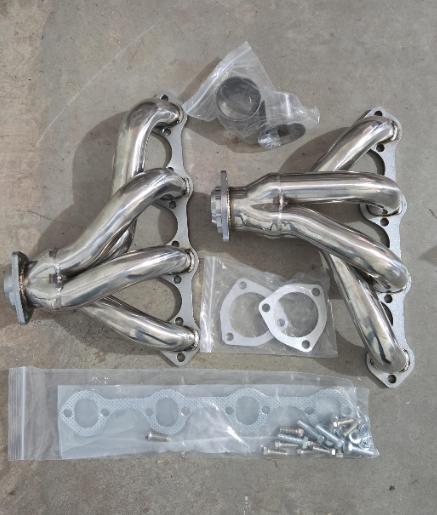
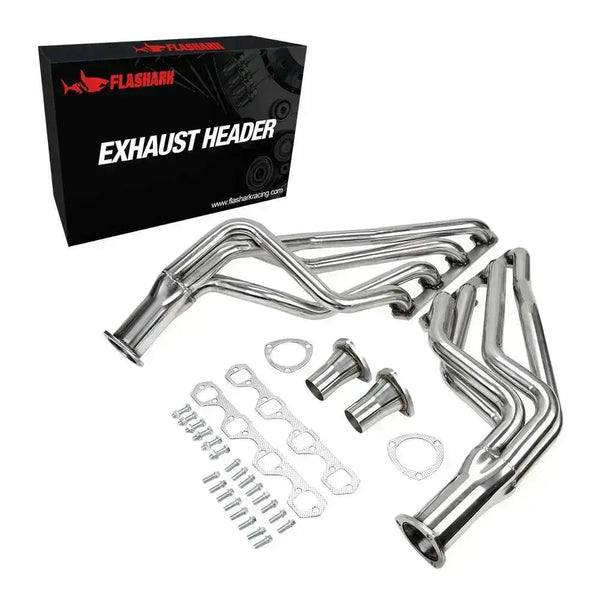
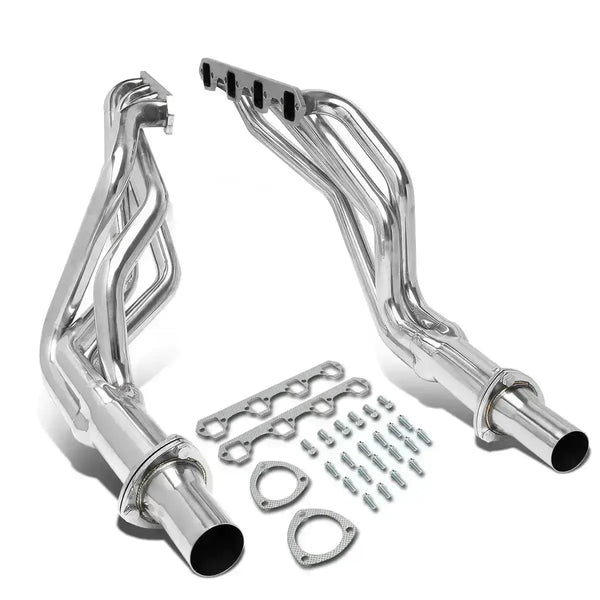
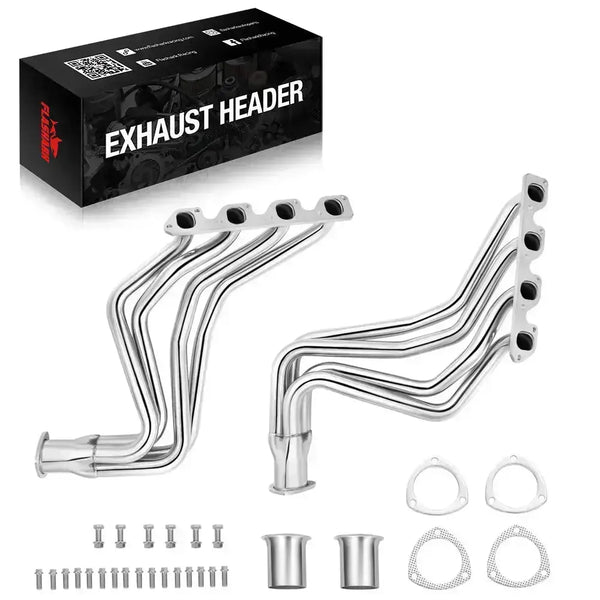
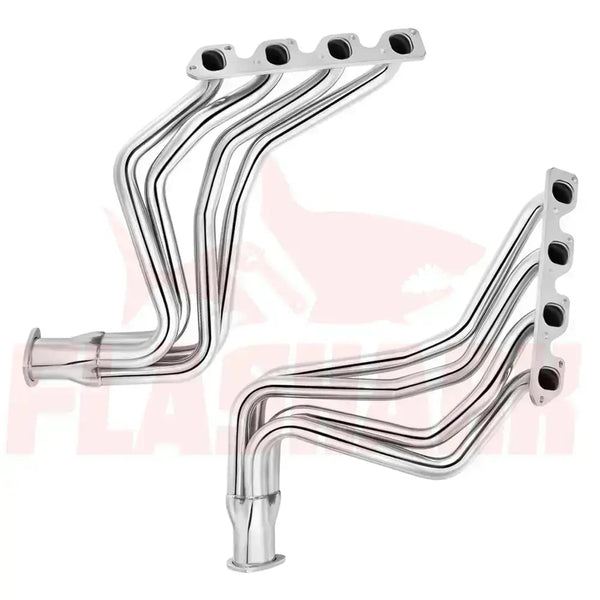
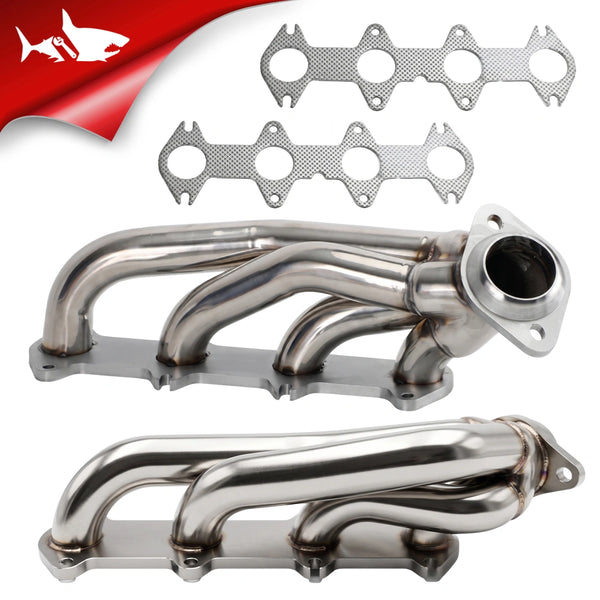
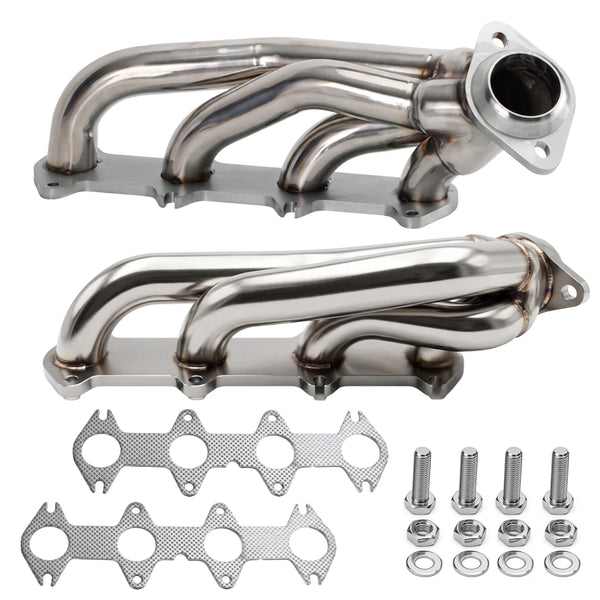
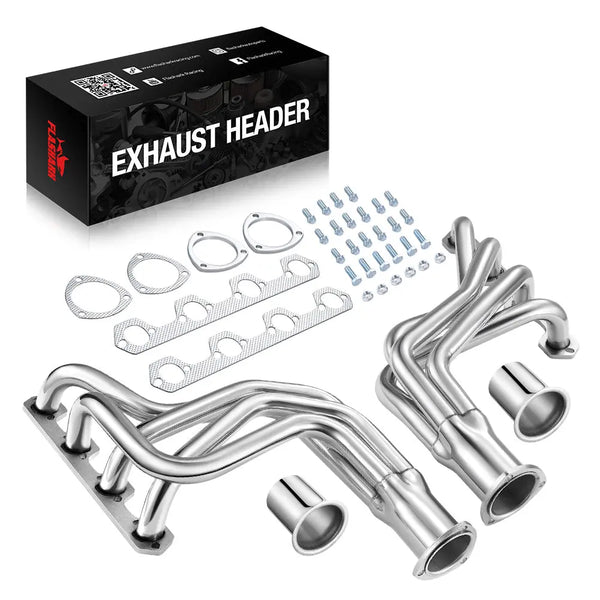
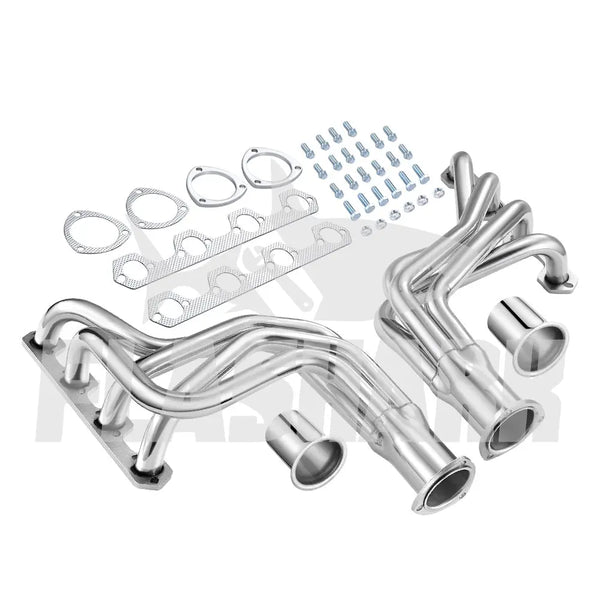


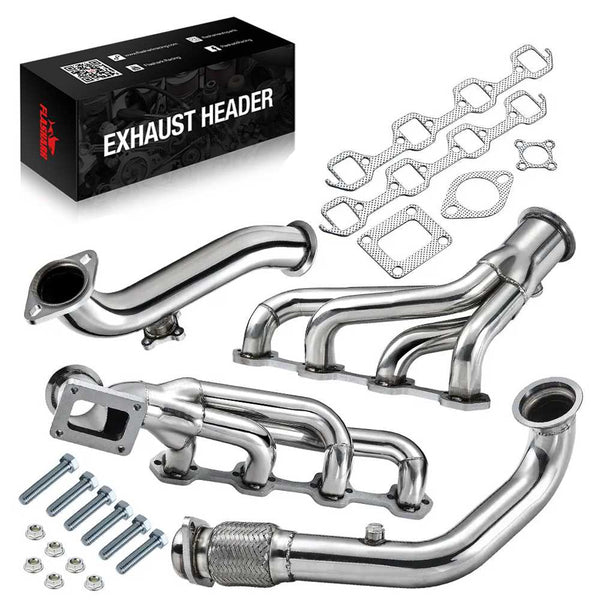
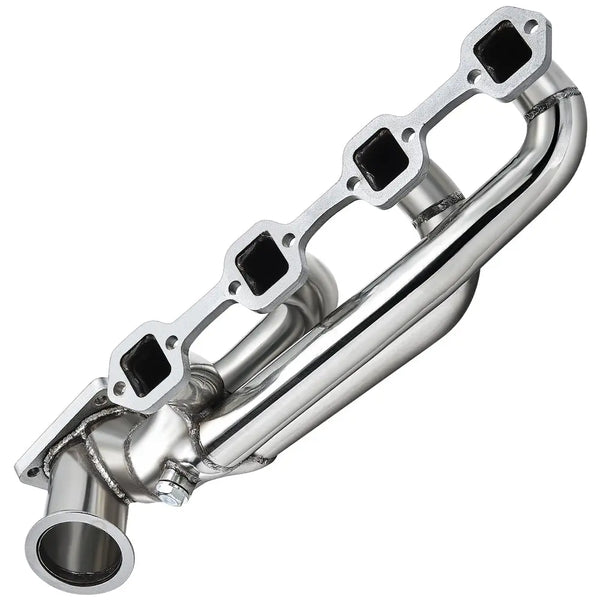

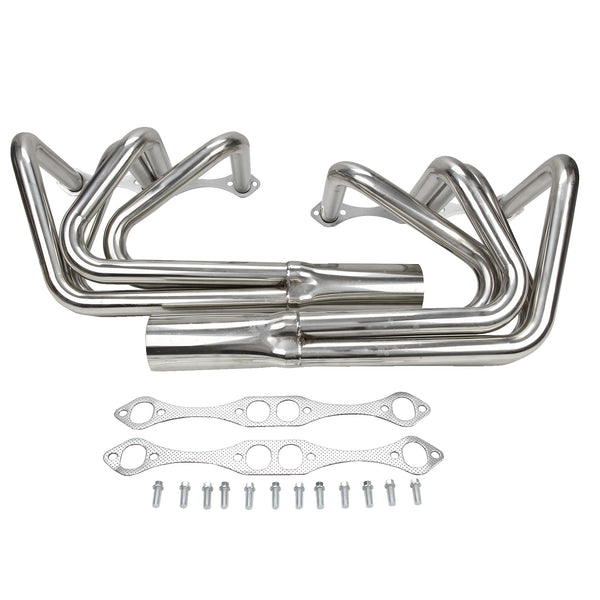
Brand: All | Chevy | Ford | Dodge | Jeep | BMW | Nissan | Toyota | Honda | Subaru | Other
Shop by Brand: Ford F150 | Ford F250 | Ford Mustang | Ford Bronco
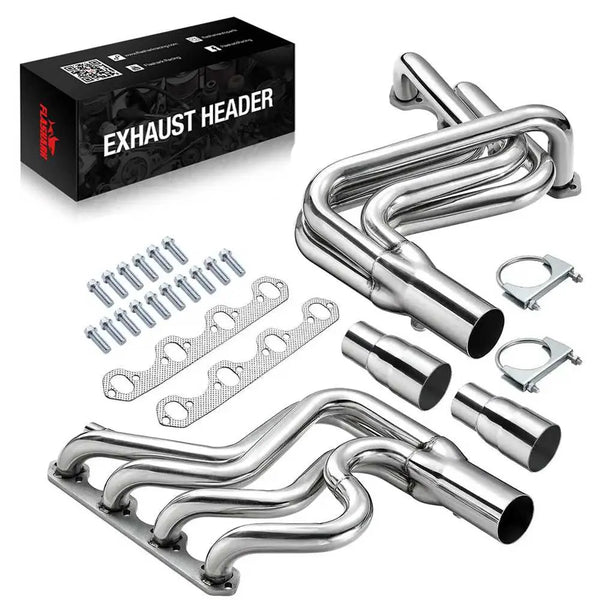
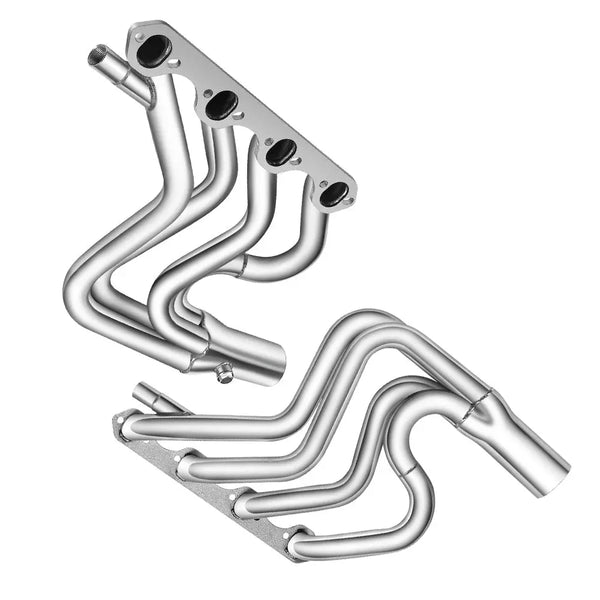
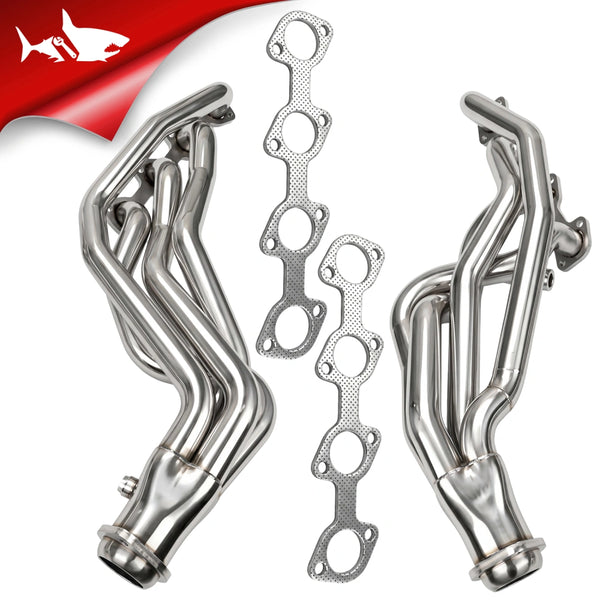
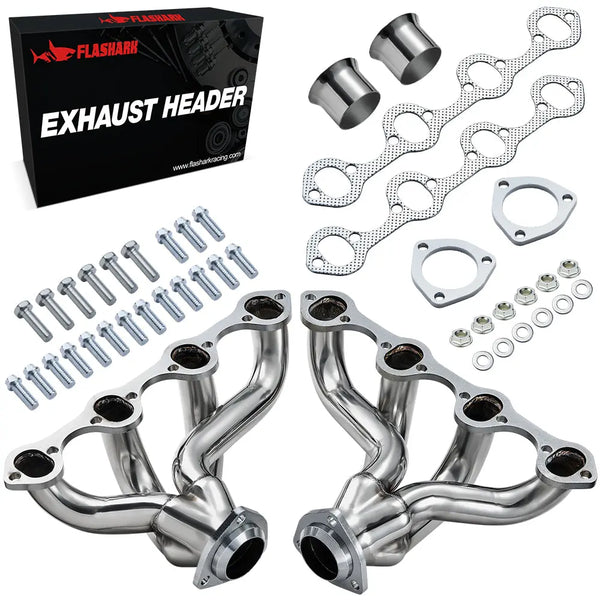
Ford Performance Exhaust Headers: Unleash Your Engine's True Sound and Power
Let's cut right to the chase. Factory Ford cast iron exhaust manifolds are essentially boat anchors. They are restrictive, they soak up heat like an oven, and they choke the exhaust scavenging process your engine desperately needs to make power. Whether you are building a track weapon or just want your daily driver to sound like a proper V8, upgrading to a set of aftermarket Ford exhaust headers is step one in the performance playbook.
Here at Flashark Racing, we don't do generic fluff. We engineer Flashark headers specifically for Ford platforms to fix the flow restrictions engineers were forced to build in for mass-production assembly lines.
Choosing Your Setup: Long Tube vs. Shorty Headers
Before you start turning wrenches, you need to know what you're building the truck or car for. The debate between long tubes and shorties comes down to where you want your powerband and how much custom fabrication you want to deal with.
| Feature | Long Tube Headers | Shorty Headers |
|---|---|---|
| Performance Focus | Mid to high-RPM horsepower. Maximum exhaust scavenging. | Low to mid-range torque. Excellent throttle response. |
| Installation | Complex. Often requires a custom mid-pipe and relocating catalytic converters. | Direct bolt-on. Connects straight to the factory mid-pipe/cats. |
| Best For | Track cars, heavy towing, or aggressive street builds. | Daily drivers and strict emissions-compliant upgrades. |
Engineered for Ford: Displacement & Model Master Guide
We know Ford guys search for exact engine specs. You aren't just looking for generic exhaust parts; you need a setup that clears the steering shaft, avoids the starter, and mates perfectly to your specific cylinder heads. Here is how we cover the blue oval lineup:
- The Legendary Small Block Ford (SBF): Space is always the enemy in early Mustangs and Foxbodies. Whether you're piecing together a standard 289 headers or a high-flow setup for a Ford 302 build, our SBF tube routing is bent to clear tight shock towers. Upgrading to a taller deck height? We have the specific geometry needed for a Mustang 351w swap. We also solve modern fitment headaches—if you're wrestling with an SUV platform, our 5.0 Explorer replacements keep the layout correct without bashing tubes with a hammer.
- Modular V8s (4.6L / 5.4L): That annoying ticking sound on a cold start? Yeah, that's a warped factory manifold. Truck guys rely on our thick-flange upgrades to stop the leaks; replacing cracked units on a F150 or bolting on a specific 5.4 2v long tube setup restores lost towing torque. If you've got the later 3-valve, dropping in our 5.4 3v extractors completely wakes up the powerband. For the S197 chassis, stuffing piping into a Mustang GT requires precision mandrel bends to bypass the steering linkage, making our Ford 4.6 solutions a mechanic's favorite.
- Big Blocks & Vintage Iron: Torque monsters need massive flow. Choking a 385-series or FE block with factory iron logs is a sin. We cater to the heavy hitters with Big Block Ford applications, including high-flow 429 and 460 systems. For the old-school hot rodders, we even provide niche fitments for the classic Ford Y-block and custom Model A chassis builds.
- The Inline 6 & 4-Cylinder Workhorses: The 4.9L is unkillable, but its exhaust manifold is a massive bottleneck. Installing our Ford 300 inline 6 upgrade (perfect for 4.9L applications) completely transforms the tractor-like grunt of these trucks by splitting the exhaust pulses. We also support the smaller classics with Ford 200 manifolds, and provide high-velocity 2.3L tubular options for the four-banger crowd.
A common pitfall: A lot of guys think their standard headers 302 ford setup will bolt directly into a chassis after a 351 Windsor swap. While the exhaust ports match, the 351W has a taller deck height, which pushes the headers up and out. Always order headers specifically designed for the 351W in your exact chassis to avoid clearance issues with the firewall and steering box.
Precision Specs: Primary Tube Diameters & Mandrel-Bent Construction
The magic is in the math. The primary tube diameter dictates exhaust gas velocity. Go too big on a stock motor, and you lose low-end torque. Go too small, and you choke top-end power. We typically run 1-5/8" to 1-3/4" primaries for street/strip applications, stepping up to 1-7/8" or 2" for heavy forced induction Mustang builds.
Every set of Flashark headers utilizes mandrel bending. This means the inner diameter of the tube remains completely uniform through every curve—no crush bends, no turbulence. Pair that with heavy-duty CNC-machined flanges (usually 3/8" or 1/2" thick) and TIG welding, and you get a mating surface that won't warp under extreme heat cycles.
Never reuse factory manifold studs if they are heavily rusted, and absolutely throw away the cheap paper gaskets. When installing your new Flashark header, invest in a premium multi-layer steel (MLS) gasket and use anti-seize on your new locking header bolts. Heat cycling will back standard bolts out within a week if you aren't careful.
Emissions Compliance & Street Legality
Let's talk legality. If you are bolting on shorty headers that retain the factory catalytic converter locations, you are generally safe in most states (always check your local regulations). However, if you are throwing on a set of ford 302 long tube headers or SN95 long tubes, you are deleting or moving the cats. These are strictly engineered for "Off-Road or Track Use Only" and will likely trigger a Check Engine Light (CEL) requiring a custom tune.
Frequently Asked Questions (FAQ)
Q1: What is the main advantage of installing Flashark headers on my Ford?
A1: The primary advantage is drastically reduced exhaust backpressure. By replacing the restrictive factory cast-iron manifolds with our mandrel-bent tubing, exhaust gases exit the cylinders faster. This scavenging effect improves throttle response, increases horsepower, and gives your Ford that deep, aggressive exhaust note.
Q2: Will headers for a Ford 302 fit a Ford 289 engine?
A2: Generally, yes. The 289 and 302 Small Block Fords (SBF) share the same deck height and exhaust port layouts on standard cylinder heads. Most headers for 302 ford will bolt right up to a 289 block, assuming the chassis (Mustang, Falcon, F100) has the same engine bay clearances.
Q3: Do I need a custom tune after installing long tube headers?
A3: Yes. Because long tube headers alter the location of the O2 sensors and significantly change the air/fuel flow dynamics, running them on a factory ECU map will often cause the engine to run lean and trigger a Check Engine Light (CEL). A custom tune is highly recommended to safely extract the power gains.
Q4: What are the best headers for limited clearance engine bays?
A4: If you are doing an engine swap or working with an early Mustang/Falcon chassis with tight shock towers, you want "block-hugger" or shorty headers. These keep the primary tubes tucked tight against the engine block to clear steering boxes and frame rails.
Q5: Are your Ford exhaust headers made of stainless steel?
A5: Yes, the majority of our premium line headers are constructed from high-quality T304 or T409 stainless steel to resist corrosion and handle the extreme thermal shock of high-performance driving better than mild steel.
Q6: Why is my exhaust leaking right after I installed new headers?
A6: Exhaust leaks at the flange are usually caused by three things: using cheap paper gaskets instead of Multi-Layer Steel (MLS), failing to clean the cylinder head mating surface properly, or not going back and re-torquing the header bolts after the first few heat cycles.
Q7: Do you offer Ford 300 inline 6 headers?
A7: Yes! We know the 4.9L (300ci) I6 is a legendary engine with a terrible factory exhaust manifold. We offer configurations that split the exhaust into two collectors, drastically improving the breathing and torque output of the big six.
Q8: Should I use exhaust heat wrap on my new headers?
A8: Heat wrap is excellent for reducing under-hood temperatures and protecting your starter and wiring. However, wrapping mild steel headers can trap moisture and accelerate rust. If you wrap headers, we highly recommend ensuring they are made of quality stainless steel first.
Q9: Are shorty headers CARB compliant for California?
A9: Some shorty headers that do not alter the factory catalytic converters can be street legal, but they *must* have an EO (Executive Order) number stamped on them from CARB. Always check the specific product listing; if it doesn't state CARB compliant, assume it is for off-road use only in California.
Q10: What size primary tubes do I need for my 2005 Mustang GT?
A10: For a mildly modified or stock 4.6L 3V engine, 1-5/8" primary tubes provide the best balance of maintaining low-end torque while increasing top-end flow. If you are adding a supercharger or building a high-RPM race motor, stepping up to a 1-3/4" primary is the better choice.
Q11: Can I install these headers myself on jack stands?
A11: It depends on the vehicle. Shorty headers on older pushrod V8s are a great weekend driveway project. However, installing long tube headers on modern vehicles like a newer Mustang or F-150 often requires dropping the steering shaft, lifting the engine off its mounts, and navigating extremely tight spaces. A vehicle lift and a seasoned mechanic are highly recommended for modular V8s.