


 Need car parts? Shop by vehicle
(Select the exact fit for your vehicle)
Need car parts? Shop by vehicle
(Select the exact fit for your vehicle)
Ford F250 Exhaust Header


Shop Headers by Brand: Ford Exhaust Header
Shop by Model: Ford F-150 Headers | Ford Mustang Headers | Ford Bronco Headers
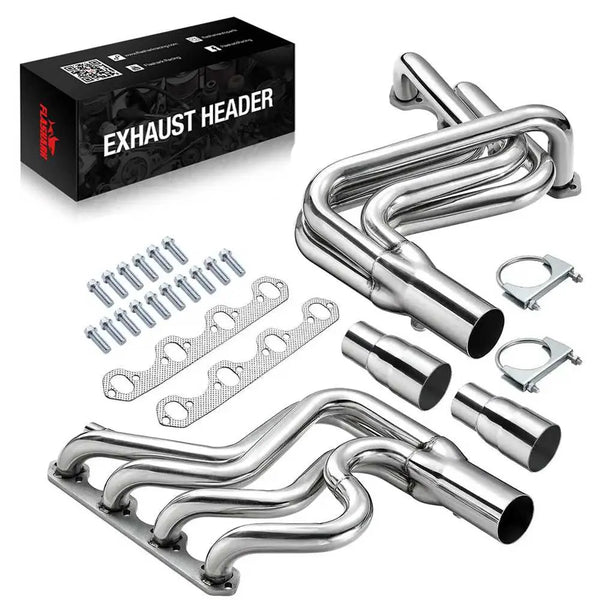
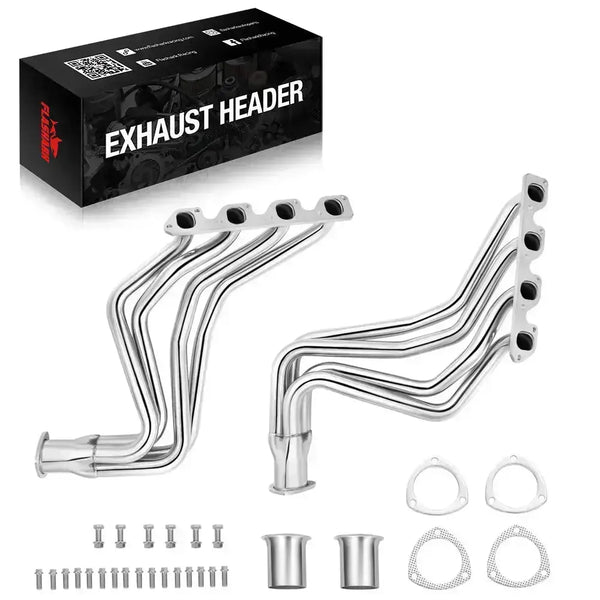
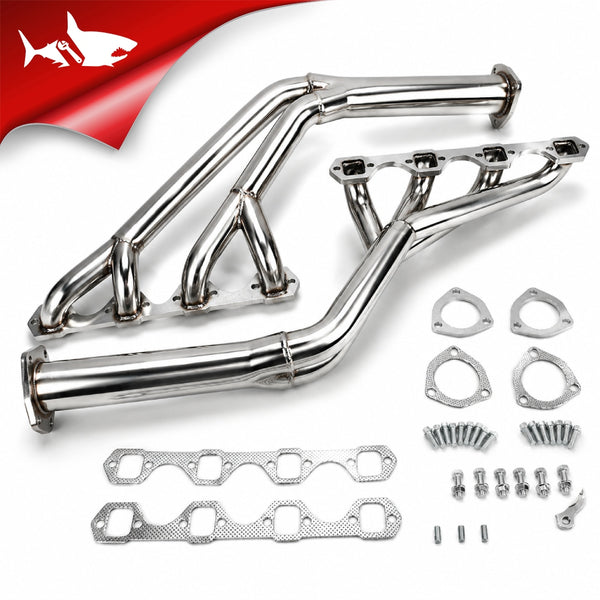
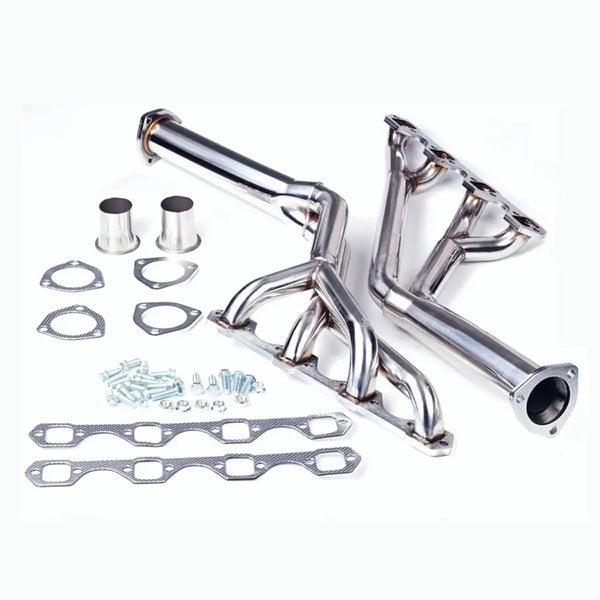
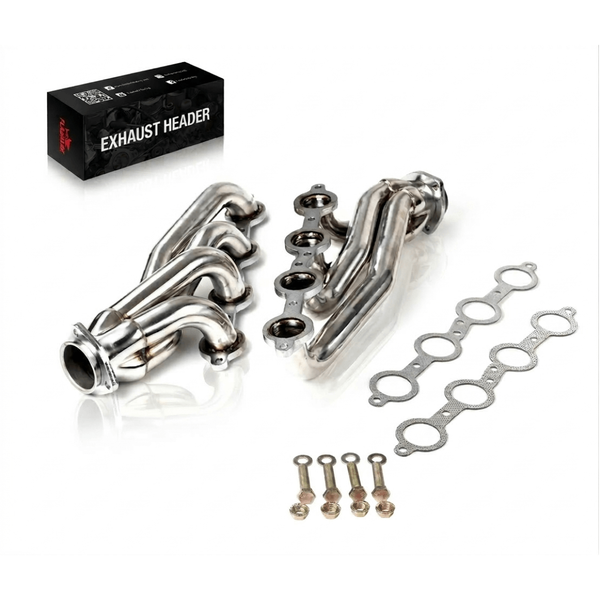
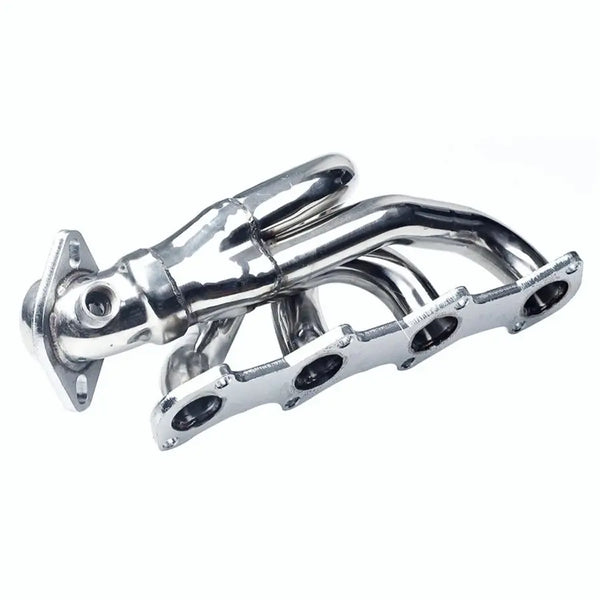
Shop Flashark exhaust headers for supported Ford F-250 gasoline-engine applications, from selected classic small-block trucks through certain 1997–2003 4.6L and 5.4L configurations. The available designs include compact shorty headers, full-length headers, and classic Tri-Y systems, giving you options for replacing restrictive manifolds or building a more performance-focused exhaust. Coverage varies considerably by product: some headers are limited to 4WD trucks, specific engines, or narrow year ranges, while others have trim and chassis exclusions. Before ordering, match the product listing to your truck’s exact year, factory engine, drivetrain, emissions equipment, and existing exhaust connection.
Recently viewed
Choosing Headers for Your Ford F-250
The F-250 name covers several generations, engine families, and chassis layouts. A header that bolts to the correct cylinder head can still interfere with the front axle, steering components, starter, transmission, clutch linkage, or crossmember. Start with the engine, but do not stop there.
- Confirm the model year and factory-installed engine.
- Check whether the product is intended for 2WD, 4WD, or both.
- Compare the collector or outlet with your current Y-pipe and catalytic-converter layout.
- Verify O2 sensor and EGR provisions when the truck uses those systems.
- Review every listed exclusion, especially on 5.4L trucks and Super Duty configurations.
Current F-250 Applications
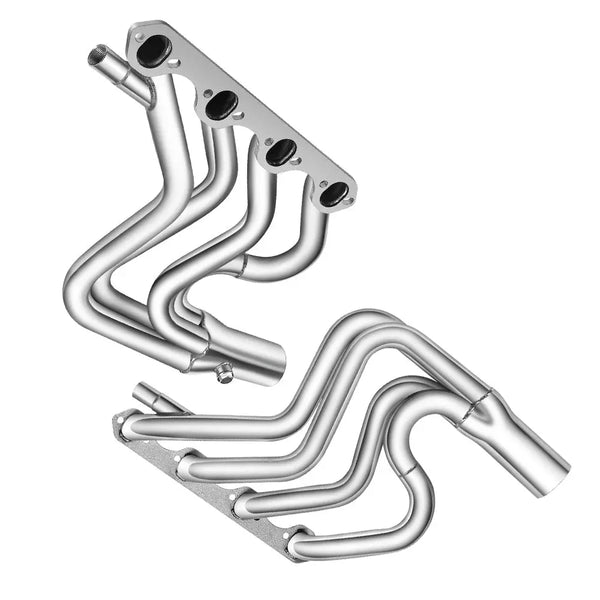
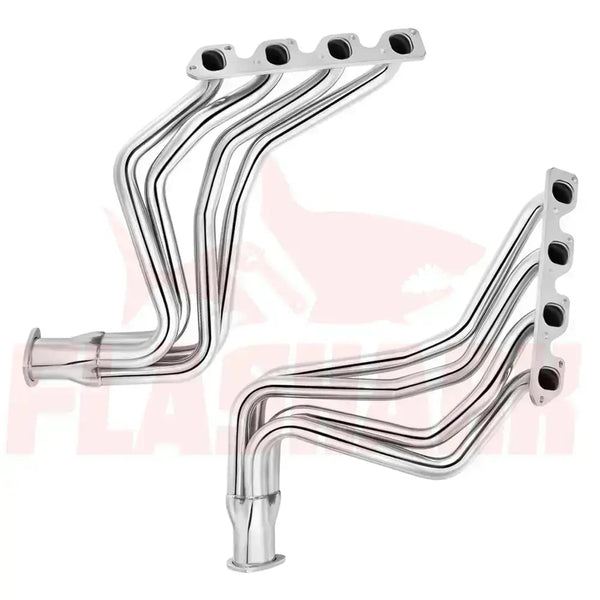
The products in this collection cover several separate F-250 applications rather than one continuous year range. Current listings include a Tri-Y header for 1965–1970 F-250 pickups with a factory 5.0L small-block Ford V8, long-tube headers for 1977–1979 4WD trucks with 351M or 400M engines, and shorty or long-tube choices for selected late-1980s and 1990s 5.8L trucks.
Later coverage includes a header for 1997–1999 F-250 trucks with the 4.6L V8 and multiple 5.4L options covering selected configurations from 1997 through 2003. The 5.4L products do not share identical fitment. One O2/EGR-compatible listing supports F-250 applications only through 1999, while another 5.4L 2-valve product lists later years but excludes certain F-250 and Super Duty configurations.
The 5.8L shorty and long-tube listing also contains conflicting year notes. Use its product-level fitment information and contact Flashark before ordering if your truck falls near an exclusion or disputed model year.
Shorty, Long-Tube, and Tri-Y Designs
| Header Design | Current F-250 Applications | Key Buying Considerations |
|---|---|---|
| Shorty | Selected 5.8L, 4.6L, and 5.4L applications | More compact than a long-tube system, but the outlet, O2/EGR provisions, and factory exhaust connection still require verification. |
| Long Tube | Selected 5.8L trucks and 1977–1979 351M/400M 4WD applications | Extended tubing increases the chance of interference with the chassis, drivetrain, steering, or existing exhaust. Collector adaptation may be required. |
| Tri-Y | 1965–1970 F-250 pickups with the supported 5.0L small-block Ford V8 | Check the clutch linkage, crossmember, steering clearance, spark-plug access, and 2.5-inch collector connection. |
These designs package the primary tubes differently and can change how exhaust pulses reach the collector. Actual power and sound changes depend on the engine condition, camshaft, cylinder heads, exhaust system, tuning, and installation. No single header style guarantees a fixed horsepower or torque increase.
Collector and Exhaust Connections
The collector is where the primary tubes combine before connecting to the rest of the exhaust. Current products do not all use the same outlet. The classic Tri-Y header has a 2.5-inch collector, while the 1977–1979 351M/400M long-tube system lists a 3-inch collector with a 2.5-inch reducer. Other headers use product-specific outlets that must be compared with the truck’s existing Y-pipe.
Do not assume that “bolt-on” means the entire exhaust will connect without adjustment. A header may bolt to the cylinder head yet still require reducers, clamps, new flanges, pipe alignment, or professional fabrication farther downstream. Trucks with engine swaps, non-stock cylinder heads, replacement catalytic converters, or previously modified exhaust systems need additional measurement.
Chassis and Drivetrain Clearance
The 1977–1979 351M/400M long-tube product is currently documented for 4WD trucks. That fitment should not be extended to 2WD applications without confirmation. On other products, the available information does not consistently verify both drive layouts.
Long tubes deserve particular attention around the front axle, steering shaft, frame rails, transmission bellhousing, starter, crossmember, and clutch linkage. Classic trucks may also have replacement engines, altered mounts, or decades of previous exhaust work. Those changes can matter even when the listed year and engine are correct.
Engine displacement alone does not confirm header fitment. Verify the exact engine family, cylinder-head layout, drivetrain, chassis configuration, and exhaust connection before installation. Do not force a tube against steering, brake, fuel, or electrical components to make a header fit.
O2 Sensors, EGR, Catalytic Converters, and Tuning
One current 5.4L product specifically lists O2 sensor and EGR bungs, but those provisions should not be assumed on every header in this collection. Compare the number and location of the truck’s sensors with the photos and specifications for the exact product.
A header that retains the original sensor and catalytic-converter arrangement may not require the same calibration changes as a system that relocates sensors or changes the exhaust path. Even so, tune and check-engine-light behavior cannot be guaranteed across these trucks. Exhaust leaks, damaged sensors, altered catalytic converters, wiring limitations, and existing engine faults can all affect the result.
Emissions requirements also vary by location and vehicle configuration. Confirm whether the selected header changes any monitored emissions equipment before treating it as suitable for street use.
Technician’s Note
As a general installation check, record the VIN, year, engine displacement, engine family, drivetrain, transmission, and current collector size before removing the factory manifolds. Photograph the O2 sensors, EGR connection, catalytic-converter position, steering clearance, and existing Y-pipe. Comparing those details with the product photos is more reliable than ordering from the model name alone.
Use suitable gaskets and hardware, inspect the cylinder-head sealing surfaces, and recheck fasteners after the initial heat cycles according to the installer’s recommended procedure. Any contact with steering or safety-critical components must be corrected before the truck is driven.
Frequently Asked Questions
Q1: Do these headers fit every Ford F-250?
A1: No. This collection covers only the listed gasoline-engine applications, including selected classic small-block trucks, 1977–1979 351M/400M 4WD trucks, certain 5.8L applications, and supported 1997–2003 4.6L or 5.4L configurations. It does not represent every F-250 year or engine.
Q2: How do I choose between the two 5.4L header products?
A2: Compare the exact F-250 year, 2-valve engine configuration, listed exclusions, O2 and EGR provisions, and outlet dimensions. One O2/EGR-compatible product lists F-250 fitment only for 1997–1999, while the other covers selected later configurations but excludes certain F-250 and Super Duty applications.
Q3: Will the 1977–1979 long-tube headers fit a 2WD F-250?
A3: The current product information confirms the 351M/400M long-tube headers for 1977–1979 4WD applications. Compatibility with a 2WD truck needs to be verified before purchase.
Q4: Are the 1965–1970 headers compatible with every listed small-block engine in an F-250?
A4: No. Although the product serves several Ford vehicles and small-block engines, its F-100 and F-250 fitment row currently confirms factory-equipped 5.0L applications. Other F-250 engine combinations need separate verification.
Q5: Will long-tube headers connect to the factory F-250 exhaust?
A5: Not necessarily. Connection depends on the collector size, factory or aftermarket Y-pipe, catalytic-converter position, and previous exhaust modifications. Reducers, clamps, flange work, pipe alignment, or fabrication may be required.
Q6: Do these F-250 headers include O2 sensor and EGR connections?
A6: One current 5.4L product specifically lists O2 sensor and EGR bungs. The same equipment is not confirmed for every header in this collection, so check the specifications and product photos for the exact part before ordering.
Q7: Will installing headers require a tune?
A7: A tune is not automatically required for every installation. The answer depends on the engine management system, sensor locations, catalytic-converter arrangement, exhaust changes, and existing calibration. Sensor relocation or emissions-system changes may affect engine operation or trigger a check-engine light.
Q8: Can these headers cause a check-engine light?
A8: It is possible on electronically monitored trucks. Exhaust leaks, altered sensor locations, damaged wiring, catalytic-converter changes, or an existing engine fault can trigger a check-engine light. No universal CEL-free result can be promised.
Q9: Are these headers legal for street use?
A9: Street legality depends on the exact product, vehicle configuration, catalytic-converter arrangement, and applicable local regulations. Verify emissions requirements before installing any header that changes monitored equipment or the location of the catalytic converters.
Q10: What should I check before installing F-250 headers?
A10: Confirm the engine family, model year, drivetrain, transmission, chassis clearance, O2 and EGR connections, collector dimensions, catalytic-converter position, and Y-pipe compatibility. Trucks with engine swaps, modified mounts, non-stock cylinder heads, or custom exhausts require additional measurement.


