


 Need car parts? Shop by vehicle
(Select the exact fit for your vehicle)
Need car parts? Shop by vehicle
(Select the exact fit for your vehicle)
Ford Catback Exhaust
Brand: ALL | Honda | Nissan | Toyota | Ford | Chevy | BMW | Mazda | Subaru | Lexus | Hyundai | Mitsubishi | Other
Ford vehicles have a legacy of innovation and performance, from iconic muscle cars like the Mustang to powerful trucks like the F-150. Known for their robust engines and dynamic driving experience, Ford models provide an excellent platform for upgrades.
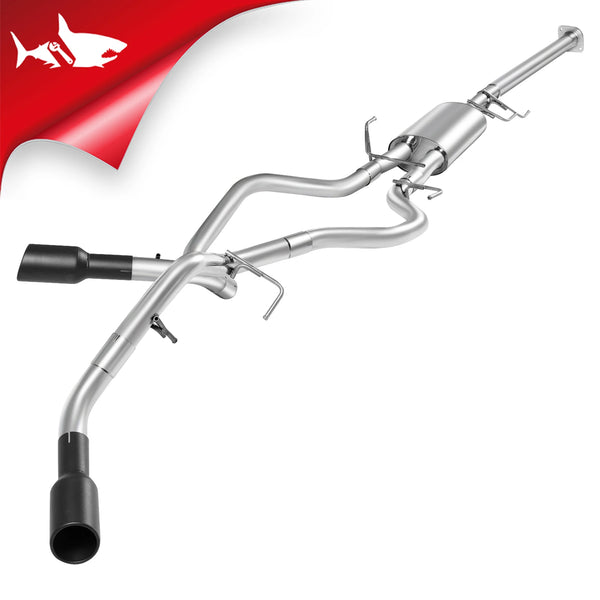
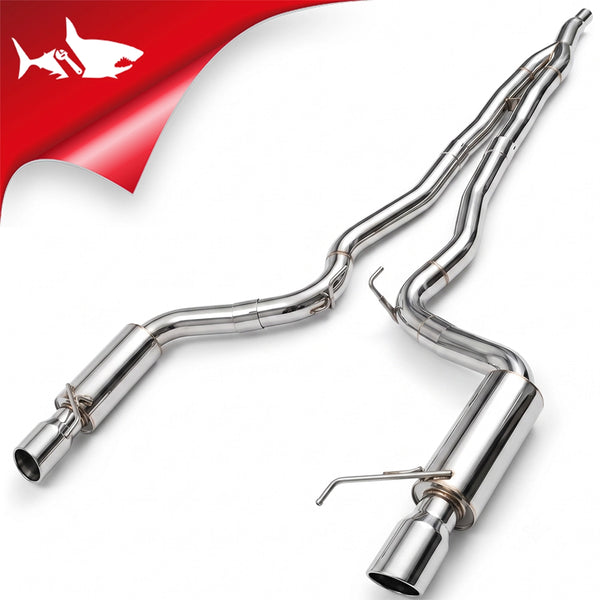
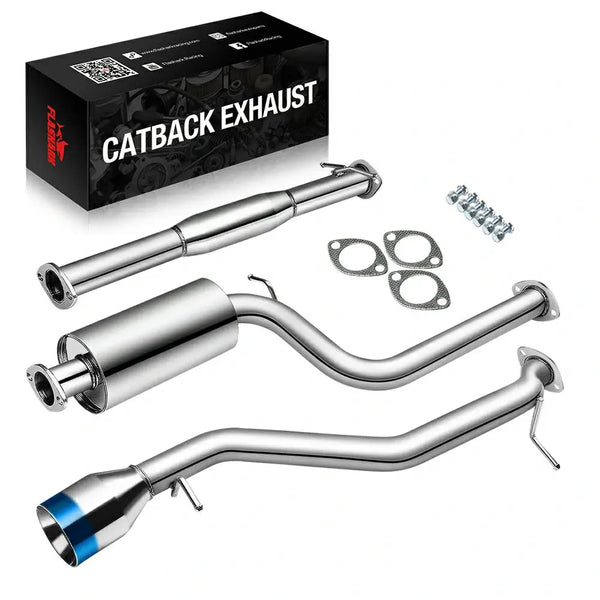
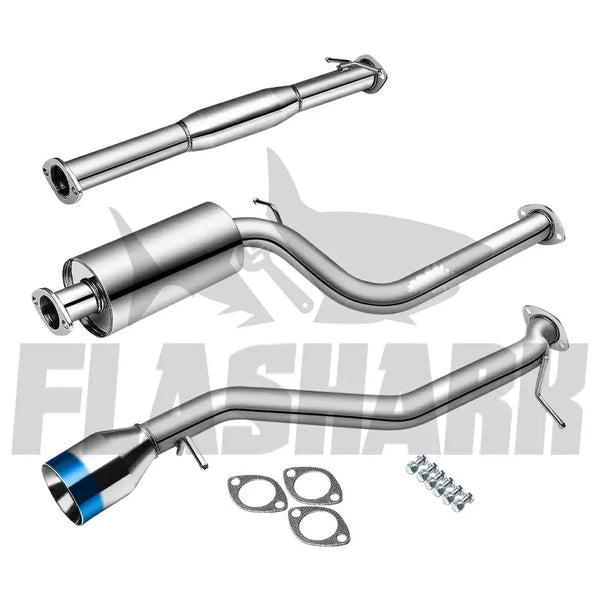
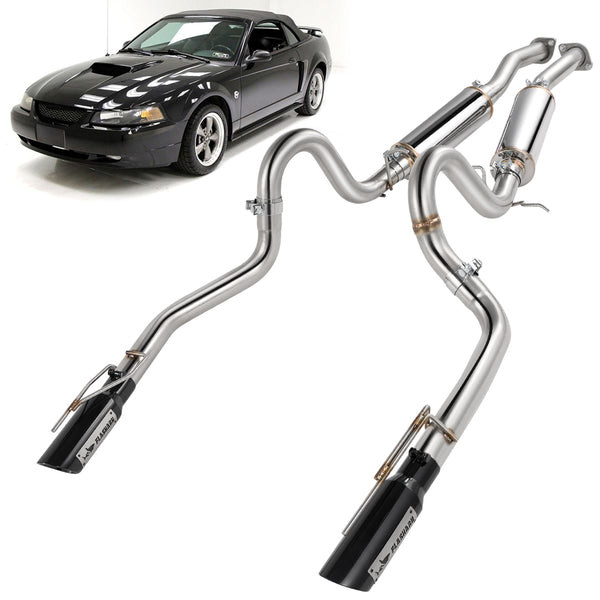
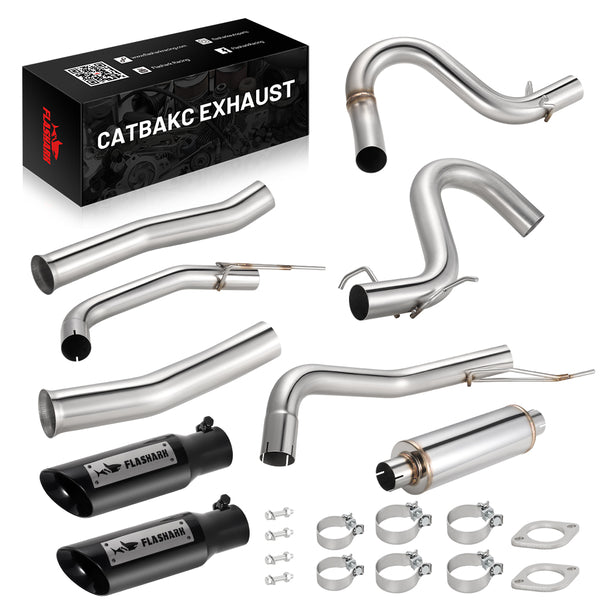
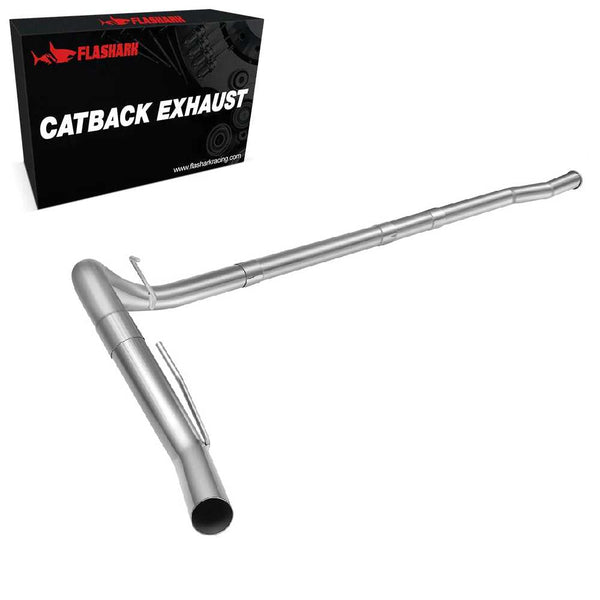
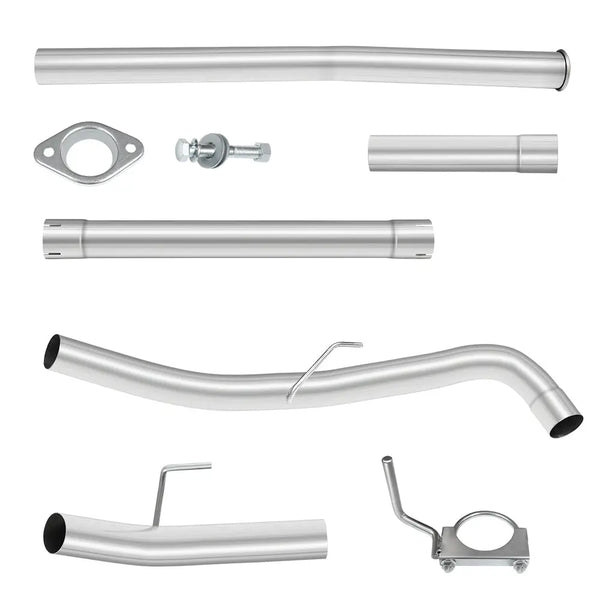
Installing a cat-back exhaust system is essential for enhancing performance, as it increases performance by upgrading a stock exhaust with a large diameter and more efficient mid-pipe, muffler, and tailpipe. FLASHARK exhaust systems are made of SUS-304 Stainless Steel with a fully polished surface, CNC machined flanges, and mandrel bends. It also serves to improve horsepower, torque, and overall performance with its straight-through design.
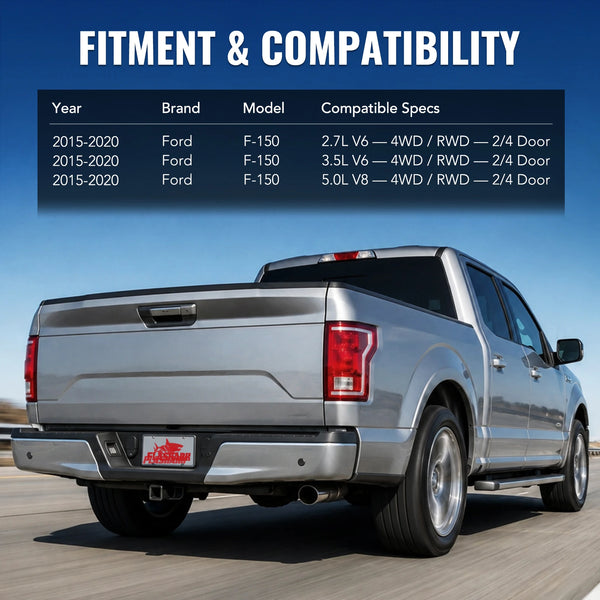
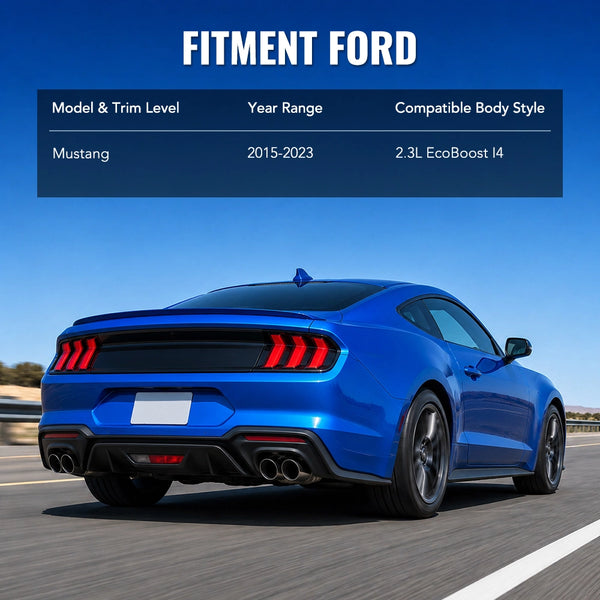
Brand: Ford F150 | Ford Mustang
Brand: ALL | Honda | Nissan | Toyota | Ford | Chevy | BMW | Mazda | Subaru | Lexus | Hyundai | Mitsubishi | Other
Ford vehicles have a legacy of innovation and performance, from iconic muscle cars like the Mustang to powerful trucks like the F-150. Known for their robust engines and dynamic driving experience, Ford models provide an excellent platform for upgrades.
Installing a cat-back exhaust system is essential for enhancing performance, as it increases performance by upgrading a stock exhaust with a large diameter and more efficient mid-pipe, muffler, and tailpipe. FLASHARK exhaust systems are made of SUS-304 Stainless Steel with a fully polished surface, CNC machined flanges, and mandrel bends. It also serves to improve horsepower, torque, and overall performance with its straight-through design.
Brand: Ford F150 | Ford Mustang
Squeezing Raw Power From Your Blue Oval: The Ultimate Flashark Ford Catback Guide
Let me be real with you. If you've ever crawled under a modern F-150 or a Mustang, you know exactly what I'm talking about. Ford engineers build incredibly capable engines, but then the bean counters step in. They slap this massive, 40-pound steel suitcase of a muffler right in the middle of the chassis to keep suburban commuters happy. It's ridiculous. To clear the rear axle, they use cheap crush-bends that literally pinch the pipe, creating a massive airflow bottleneck. Forget the forum BS claiming the factory setup is "optimized for backpressure." The physical reality is that your stock exhaust is strangling your top-end power and completely muting the engine's natural sound. You're driving a caged beast. It's time to let it breathe.
The Bottom Line Up Front (BLUF): What a Flashark Ford Catback Actually Does
- Measurable Dyno Output: Expect a genuine 10-18 whp and up to 25 lb-ft of torque increase, specifically waking up the mid-to-high RPM range.
- Thermal Management: Significantly drops Exhaust Gas Temperatures (EGTs) on EcoBoost platforms by 40-60°F, reducing turbo heat soak during long towing hauls.
- The Weight Diet: Shaves off roughly 15-25 lbs of dead chassis weight by ditching that massive factory resonator.
- Acoustic Engineering: Delivers a deep, aggressive Coyote V8 rumble or a pronounced V6 turbo whistle, while utilizing internal baffling to maintain a drone-free cabin at 70 mph.
Ditching the Restrictive Factory Setup: Pain Points & Flashark Solutions
I’ve burned my forearms on enough rusted factory exhaust pipes to know they don't last. The OE mild steel turns to a flaky orange mess after three winters in the rust belt. Worse, on forced induction motors, that factory restriction creates turbine backpressure that literally fights your engine's attempt to build boost.
Aerospace-Grade Materials & Precision Craftsmanship
We solve this with heavy-duty T304 and T409 stainless steel. Flashark uses pure CNC mandrel-bent tubing. That means if it's a 3-inch pipe, it stays a true 3 inches through every single curve. No pinching. No restrictions. Just a smooth, high-velocity channel for the exhaust gases to escape.
The Sound of Power: Tuning the Ford Exhaust Note
A 5.0L Coyote should sound like it wants to tear the asphalt apart, not like a fleet vehicle. But tuning the sound is a science. Slapping a straight pipe on it just makes it obnoxiously raspy. Flashark engineers our mufflers with high-temp fiberglass packing to absorb the harsh, high-frequency trash noises. What you get is a deep, bone-rattling cold start that settles into a smooth idle, and an aggressive, tuned roar when you go wide-open throttle.
Proven Performance Gains: HP, Torque, and Flow Dynamics
Let’s talk physics. A proper Ford Catback Exhaust relies on the scavenging effect. By maintaining exhaust gas velocity, each exhaust pulse creates a low-pressure vacuum behind it, literally sucking the next pulse out of the cylinder head. Less pumping loss equals more horsepower hitting the rear tires. It’s that simple.
Choosing Your Layout: Dual vs. Side Exit vs. Single Out
Don't just buy an exhaust because it looks good in an Instagram photo. Pick the layout that matches what you actually do with your truck or car.
| Exhaust Layout | Ideal For | The Good | The Bad |
|---|---|---|---|
| Single Side Exit | Overlanding, Work Trucks | Maximum ground clearance. Tucks high behind the passenger tire, safe from trail rocks. | Standard, unassuming visual look. |
| Dual Rear Exit | Street Trucks, Mustangs | That classic, aggressive symmetrical muscle-car aesthetic. Incredible stereo sound. | Exhaust tips can drag or get crushed on steep off-road departure angles. |
| Turndown (Dumped) | Hardcore Off-Roaders | Absolutely zero chance of crushing a tailpipe. Massive weight reduction. | Cabin noise is noticeably louder; kicks up dust directly under the bed on dirt roads. |
The Hardcore Nerd-Out: Hidden Benefits of a Free-Flowing Exhaust
Beyond the raw sound, opening up the exhaust flow is a survival modification for forced induction. On an EcoBoost, excessive backpressure traps heat in the turbine housing. By bolting on a high-flow Ford Catback, you let that heat escape instantly. The result? Your turbos spool about 200-300 RPM sooner, and your oil temps stay more stable during consecutive hard pulls.
Platform-Specific Deep Dive: Ford Models and Engine Tuning
A Mustang needs a completely different flow dynamic than an F-150 towing a 7,000-pound boat. Here is how we break it down by powerplant.
F-150 & Mustang GT (5.0L Coyote V8)
The Coyote is a high-revving masterpiece that loves to breathe past 6,500 RPM. The stock exhaust heavily restricts this top-end rush. Running a dual 3-inch Flashark system entirely transforms the car, giving it that iconic, raspy-free V8 bark while freeing up top-end horsepower that the factory system suffocates.
F-150 & Bronco (2.7L & 3.5L EcoBoost V6)
Listen, I know the biggest complaint from EcoBoost owners: "It sounds like a vacuum cleaner." You will never make a twin-turbo V6 sound like a V8—don't let anyone lie to you. But a properly tuned catback will deepen the exhaust tone to a throaty growl and significantly amplify the turbo spool and whistle, making the truck actually sound like the powerhouse it is.
Mustang EcoBoost & Focus ST/RS (2.3L/2.0L Turbo)
For the four-cylinder turbo guys running a COBB Accessport or a custom Stage 2 flash, the stock exhaust is a total liability. You're pushing more boost, which means more exhaust volume. Our systems provide the precise volumetric flow required to keep EGTs down and prevent your ECU from pulling timing due to heat soak.
The Mechanic's Warning: Avoiding Exhaust Pitfalls and CEL Nightmares
⚠️ Garage Truths: Leave the Cats Alone
"Last month, a guy towed his 2021 F-150 5.0L into my bay. He wanted it louder, so he got a buddy to saw-zall off his factory catalytic converters and weld in straight pipes. Total disaster. His dash was throwing three different Check Engine Light (CEL) codes, his O2 sensors were completely out of range, and the truck went into limp mode. He couldn't even drive it over 40 mph.
Hear me now: a true Flashark Catback system bolts on strictly after the factory cats. You get the airflow, you get the sound, and you drop the weight—without ever touching the emissions equipment. No CELs. No limp mode. Just reliable power."
Frequently Asked Questions (Ford Catback Exhausts)
Q1: Does installing a Ford catback exhaust void my factory warranty?
A1: No. Under the federal Magnuson-Moss Warranty Act, a dealership cannot void your vehicle's warranty simply because you installed an aftermarket exhaust. They would have to mathematically prove the exhaust directly caused the mechanical failure.
Q2: Will a Flashark catback trigger a Check Engine Light (CEL) on my F-150?
A2: Absolutely not. Because the system is installed downstream of the factory catalytic converters and O2 sensors, your truck's emissions monitoring system remains entirely untouched. Your ECU will not throw any codes.
Q3: How do you fix the exhaust drone on a 5.0L Coyote at highway speeds?
A3: Drone is caused by specific sound frequencies resonating in the cabin around 1,800 to 2,200 RPM. Flashark eliminates this by engineering precision mufflers and Helmholtz resonators that naturally cancel out those low-frequency sound waves, keeping the cabin calm during highway cruising.
Q4: What’s the difference between T304 and T409 stainless steel for a Ford?
A4: T304 is the premium, high-nickel alloy that basically ignores rust, making it perfect for nasty winter climates with heavy road salt. T409 is a highly durable, budget-friendly alternative that will develop surface oxidation (a brown tint) over time but will not rust through like factory mild steel.
Q5: Can I install a Mustang or F-150 catback exhaust myself?
A5: Yes. If you have a decent socket set, some jack stands, and a can of PB Blaster for the old bolts, you can do this in your driveway. Flashark systems are 100% bolt-on with zero welding required. Expect the job to take about 1.5 to 2.5 hours.
Q6: How much horsepower does a catback add to a 3.5L EcoBoost?
A6: Realistically, you will see a gain of 12 to 20 wheel horsepower (whp). More importantly, relieving the backpressure on the twin turbos allows them to spool faster, giving you a sharper, more immediate throttle response off the line.
Q7: Is a Flashark Ford catback exhaust CARB compliant in California?
A7: Yes. Because a catback exhaust does not alter, remove, or relocate the factory emissions equipment (the catalytic converters), it is considered a sound-modifying component and is 50-state legal, including in California.
Q8: How to make a 2.7L EcoBoost sound like a V8?
A8: Let's be honest: you can't. A V6 will never mimic the firing order of a V8. However, a quality catback will eliminate the raspy, vacuum-cleaner noise, replacing it with a deep, aggressive V6 growl while noticeably amplifying the awesome sound of the turbos spooling.
Q9: Do I need a custom tune (ECU flash) after putting a catback on my Ford?
A9: No custom tuning is required. The factory Ford ECU is highly adaptive. Through its Long Term Fuel Trims (LTFT), the computer will automatically recognize the improved exhaust flow and adjust the air/fuel ratios safely after a few drive cycles.
Q10: Single vs. Dual exhaust on an F-150: Which makes more power?
A10: Assuming the total cross-sectional area of the piping is matched to the engine's output, the peak horsepower difference between a single 3-inch exhaust and a dual 2.5-inch exhaust is negligible (maybe 1-2 hp). Your choice should be based entirely on visual preference and ground clearance needs.