


 Need car parts? Shop by vehicle
(Select the exact fit for your vehicle)
Need car parts? Shop by vehicle
(Select the exact fit for your vehicle)
Mitsubishi Catback Exhaust
Brand: ALL | Honda | Nissan | Toyota | Ford | Chevy | BMW | Mazda | Subaru | Lexus | Hyundai | Mitsubishi | Other
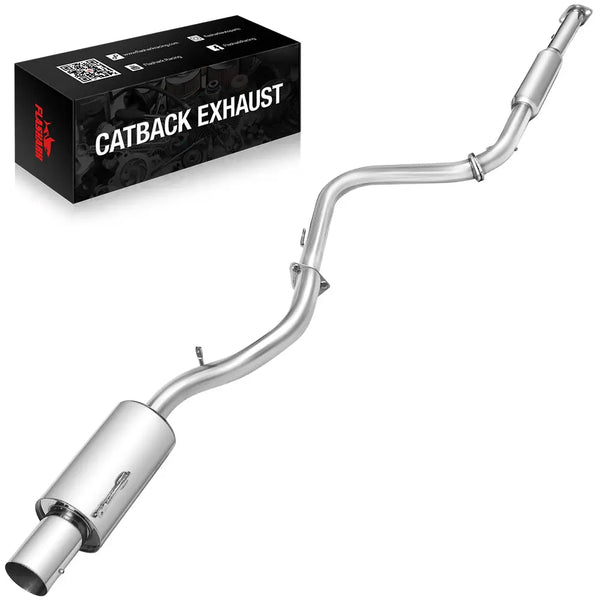
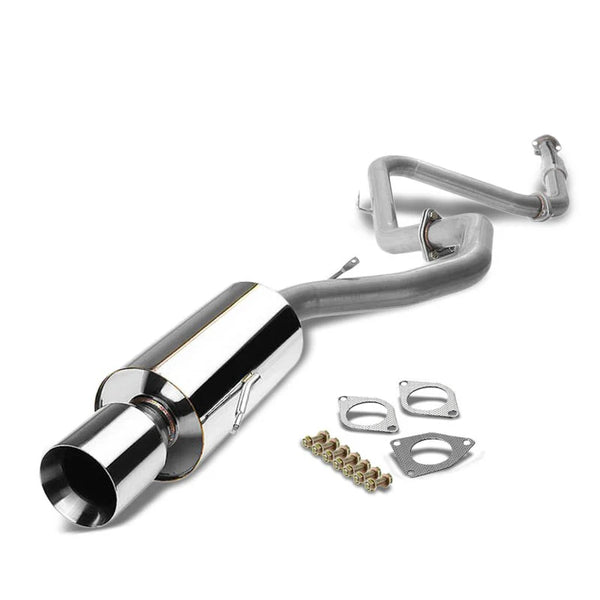
A Mitsubishi catback exhaust enhances performance by upgrading the stock system with a larger diameter and more efficient mid-pipe, muffler, and tailpipe. Flashark Mitsubishi Catback exhaust systems are made from SUS-304 stainless steel, featuring a fully polished surface, CNC-machined flanges, and mandrel bends. Its straight-through design improves horsepower, torque, and overall performance, delivering superior power and exhaust flow for your Mitsubishi.


Brand: ALL | Honda | Nissan | Toyota | Ford | Chevy | BMW | Mazda | Subaru | Lexus | Hyundai | Mitsubishi | Other
A Mitsubishi catback exhaust enhances performance by upgrading the stock system with a larger diameter and more efficient mid-pipe, muffler, and tailpipe. Flashark Mitsubishi Catback exhaust systems are made from SUS-304 stainless steel, featuring a fully polished surface, CNC-machined flanges, and mandrel bends. Its straight-through design improves horsepower, torque, and overall performance, delivering superior power and exhaust flow for your Mitsubishi.
Waking Up the Rally Legend: The Ultimate Flashark Mitsubishi Catback Guide
Let's shoot straight. If you’ve spent your weekends wrenching under an Evo, a Lancer, or an Eclipse, you already know the ugly truth. Mitsubishi built absolute rally weapons, but they severely handicapped them right off the assembly line. To pass strict noise regulations, the factory slapped a massive, heavily baffled, 40-pound steel suitcase right at the rear bumper. It's a tragedy. That stock setup suffocates your turbo, spikes your exhaust temperatures, and makes a naturally aspirated Lancer sound like a broken lawnmower. Forget the forum BS claiming you need restrictive backpressure for daily driving. You need exhaust gas velocity. It’s time to rip that heavy garbage off your chassis and let the engine breathe.
The Bottom Line Up Front (BLUF): What a Flashark Mitsubishi Catback Actually Delivers
- Measurable Dyno Output: Expect a proven 10-18 whp and 15-22 lb-ft of torque bump on the 4G63/4B11 turbo platforms, widening your usable powerband.
- Faster Spool Times: Drastically drops post-turbine backpressure, allowing your turbo to hit peak boost roughly 250-300 RPM sooner.
- The Weight Diet: Tossing the bulky factory rear section physically sheds 20 to 30 lbs of dead chassis weight off the rear overhang.
- Acoustic Engineering: Awakens a deep, aggressive JDM rumble on throttle, utilizing targeted resonators to keep the cabin drone-free at 75 mph highway speeds.
Ditching the Restrictive Factory Setup: Pain Points & Flashark Solutions
I’ve torched off enough rusted factory tailpipes to know that OE mild steel just doesn't survive. Give it a few harsh winters, and the tubing looks like flaking rust. But beyond the terrible corrosion resistance, the internal baffling and crush-bent piping are what really hold your Mitsubishi back.
Aerospace-Grade Materials & Mandrel-Bent Craftsmanship
Flashark refuses to cut corners with cheap alloys. We build our systems using thick-walled T304 and T409 stainless steel. The real performance trick, however, is CNC mandrel bending. When a factory pipe bends around the rear subframe, the machine crushes the metal, shrinking the inner diameter and killing your flow. A mandrel bend stays perfectly round. If you bolt up a 3-inch Mitsubishi Catback Exhaust, it stays a true 3 inches the entire way out.
The Sound of Power: Amplifying the Iconic 4G63/4B11 Tone
You didn't buy a JDM legend to sound like a hybrid commuter. Tuning this sound is a mechanical art form. Flashark packs our mufflers with high-density, high-temp fiberglass. We specifically engineer the pipe volumes to amplify those aggressive, rally-style pops and deep rumbles on deceleration, while utilizing Helmholtz resonance tech to completely eliminate that headache-inducing highway drone. You get the violence when you drop a gear, and peace when you're just cruising.
Proven Performance Gains: Turbo Spool and Flow Dynamics
Let’s talk fluid dynamics. Backpressure is the mortal enemy of your turbocharger. By opening up the exhaust flow post-downpipe, a high-flow Mitsubishi Catback maximizes the scavenging effect. Fast-moving exhaust gases create a vacuum, literally pulling spent gases away from the turbine wheel. Less pumping loss means your engine breathes easier, and your throttle response becomes razor-sharp.
Choosing Your Layout: JDM Angled Single Exit vs. Dual Exit
Don't just blindly click "buy" on the first exhaust you see. You need the layout that actually matches your driving habits and your chassis.
| Exhaust Layout | Ideal Mitsubishi Build | The Good & The Bad |
|---|---|---|
| JDM Angled Single Exit | Evo VIII/IX, Hardcore Track Lancers | Pros: Absolute maximum weight reduction and straightest flow path. The iconic, raw rally aesthetic. Cons: Extremely aggressive look isn't for everyone; leaves one bumper cutout empty on Evo X. |
| Dual Exit | Evo X, Street-Driven Lancers | Pros: Perfectly symmetrical aesthetics matching the factory bumper. Deep, balanced stereo sound. Cons: Slightly heavier than a single-exit system due to extra piping. |
The Hardcore Nerd-Out: Hidden Benefits of a Free-Flowing Exhaust
Here is a harsh reality the dyno sheets won't explicitly show you: heat soak. Mitsubishi turbo engines push a lot of boost. High backpressure traps extreme heat inside the turbine housing and cylinder heads. A free-flowing Flashark system gives that thermal energy an immediate escape route. Dropping your Exhaust Gas Temperatures (EGTs) protects your turbo seals, saves your exhaust valves, and prevents the ECU from aggressively pulling timing during a hot track session.
Platform-Specific Deep Dive: Mitsubishi Engines and Power Dynamics
You cannot treat a naturally aspirated 2.0L the same way you treat a boosted 4G63. Here is exactly how we engineer airflow for the heavy hitters of the diamond-star family.
Lancer Evolution VIII/IX (4G63T): Freeing the Holy Grail
The iron-block 4G63T is legendary, but it needs to breathe to make big power. A full 3-inch, straight-through angled Catback from Flashark is the gold standard here. It perfectly complements high-boost setups, releasing that raw, unadulterated rally car bark and ensuring you don't choke the engine when you're pushing past 25 PSI.
Lancer Evolution X (4B11T): Maximizing Dual-Exit Flow
The aluminum-block 4B11T in the Evo X uses a dual-exit setup from the factory, but the stock Y-pipe design is awful. Flashark optimizes the split and pipe diameter, heavily reducing backpressure on the twin-scroll turbo. You get to keep the clean, symmetrical rear-end look while waking up the mid-range torque curve.
Lancer & Eclipse (Naturally Aspirated): Killing the Lawnmower Rasp
If you own a base Lancer or Eclipse, your biggest enemy is rasp. Slapping a cheap straight pipe on these NA engines makes them sound like an angry tin can. We fix this by utilizing precisely engineered resonator volumes to physically filter out those high-frequency "trumpet" noises. You get a deep, exotic four-cylinder howl that actually sounds tuned, not broken.
The Mechanic's Warning: Avoiding Mitsubishi Exhaust Pitfalls and CEL Nightmares
⚠️ Garage Truths: Don't Butcher the Flanges
"Listen to me. In my shop, I've seen at least a dozen Lancer kids try to save a few bucks by buying cheap, unbranded exhausts online. When they go to install it, the manufacturing tolerances are a joke. The flanges don't line up. So what do they do? They crank down the bolts with an impact gun, warping the metal.
The result? The moment they start the car, it has a massive exhaust leak. It hisses, it smells like raw fuel in the cabin, and it sounds like a tractor. Worse, some of these kits require you to cut the factory catalytic converter pipe, which immediately throws a Check Engine Light (CEL) and puts the car in limp mode.
A true Mitsubishi Catback from Flashark is CNC-machined for your exact chassis. It bolts on directly behind the factory cat. Your O2 sensors stay happy. The flanges mate perfectly. You get the brutal sound, the actual horsepower, and your dashboard stays 100% code-free. Do it right the first time."
Frequently Asked Questions (Mitsubishi Catback Exhausts)
Q1: Does a catback exhaust void my Mitsubishi factory warranty?
A1: No. Under the federal Magnuson-Moss Warranty Act, a dealership cannot legally void your powertrain warranty simply because you bolted on an aftermarket catback. They would have to mathematically prove the exhaust directly caused a specific engine failure.
Q2: Will a Flashark catback trigger a Check Engine Light (CEL) on my Lancer?
A2: Absolutely not. Because the system is installed completely downstream of the factory downpipe and primary O2 sensors, your ECU's emissions monitoring system remains completely untouched. You will not throw any error codes.
Q3: Why do so many Evos run an angled single-exit exhaust?
A3: It’s pure JDM function over form. An angled exhaust provides the straightest possible path for exhaust gases to escape, minimizing bends and backpressure. It also drops the maximum amount of weight by eliminating the heavy Y-pipe and secondary muffler.
Q4: How do I fix the terrible rasp on my naturally aspirated Lancer/Eclipse?
A4: Rasp is caused by clashing exhaust pulses and poor factory resonance in NA engines. A high-quality Flashark catback fixes this by utilizing fiberglass-packed resonators that absorb those nasty, high-frequency metallic noises, leaving only a deep tone.
Q5: Can I install a Mitsubishi catback exhaust myself on jack stands?
A5: Yes. If you have a decent socket set, a safe set of jack stands, and a can of penetrating oil (like PB Blaster or WD-40) for the rusty factory spring bolts, you can easily do this in your driveway. Flashark systems are 100% bolt-on. Expect the job to take about 1.5 to 2 hours.
Q6: How much horsepower does a catback actually add to an Evo X (4B11T)?
A6: Relieving backpressure on the 4B11T turbo engine pays off incredibly well. Expect a realistic gain of 12 to 18 wheel horsepower (whp). More importantly, the turbo spools much faster, drastically improving your off-the-line throttle response and mid-range punch.
Q7: T304 vs. T409 Stainless Steel: Which does my Mitsubishi need?
A7: If you live in an area that sees snow and heavy road salt (and since it's an AWD Mitsubishi, you probably do), T304 is the only answer. It has high nickel and chromium content, meaning it virtually ignores rust. T409 is a durable, budget-friendly alternative that develops surface oxidation over time but will never rust through like cheap factory steel.
Q8: Is a Flashark Mitsubishi catback exhaust CARB compliant in California?
A8: Yes. Because a catback exhaust does not alter, remove, or relocate the factory emissions equipment (the catalytic converters inside your downpipe), it is legally classified as a sound-modifying component and is 50-state emissions legal, including in California.
Q9: Do I need a custom ECU tune after installing this catback?
A9: If you are *only* installing a catback, no custom tuning is required. The factory ECU is adaptive enough to handle it safely. However, if you are also upgrading the downpipe/test pipe, a custom tune is absolutely mandatory to prevent boost creep and lean air/fuel conditions.
Q10: What is exhaust drone, and will it ruin my daily commute?
A10: Drone is a maddening, low-frequency sound wave that vibrates the cabin, usually striking around 2,500 to 3,000 RPM at highway speeds. Flashark eliminates this by engineering precision mufflers with specific chamber resonance (Helmholtz tech) that naturally cancels out those frequencies, keeping your commute comfortable.


