


 Need car parts? Shop by vehicle
(Select the exact fit for your vehicle)
Need car parts? Shop by vehicle
(Select the exact fit for your vehicle)
Lexus Catback Exhaust
Brand: ALL | Honda | Nissan | Toyota | Ford | Chevy | BMW | Mazda | Subaru | Lexus | Hyundai | Mitsubishi | Other
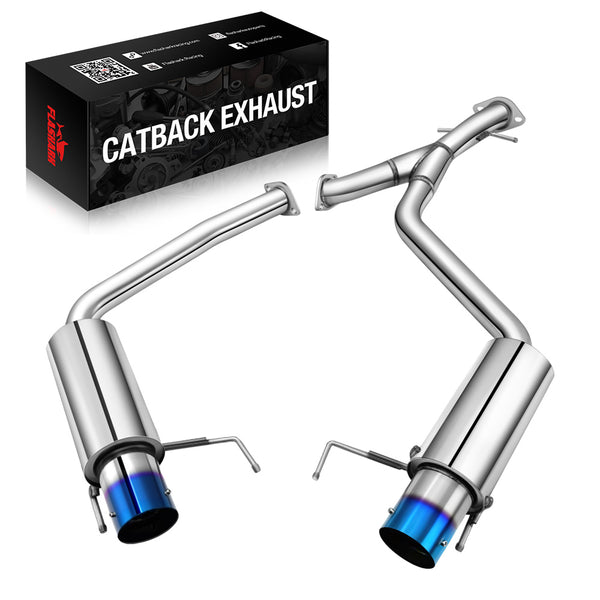
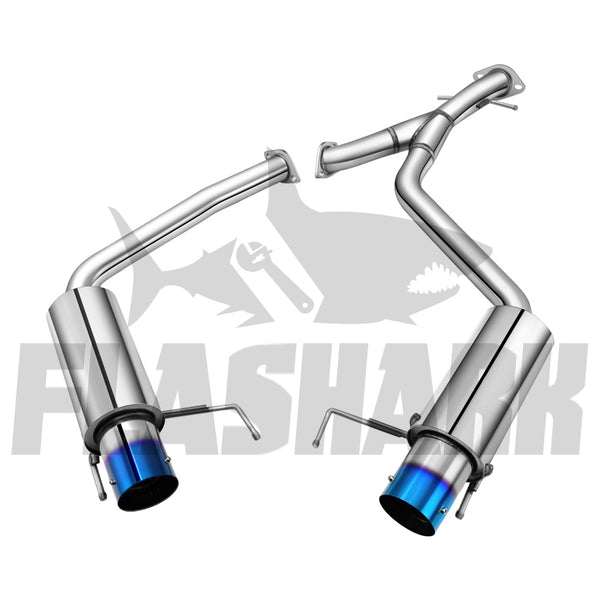
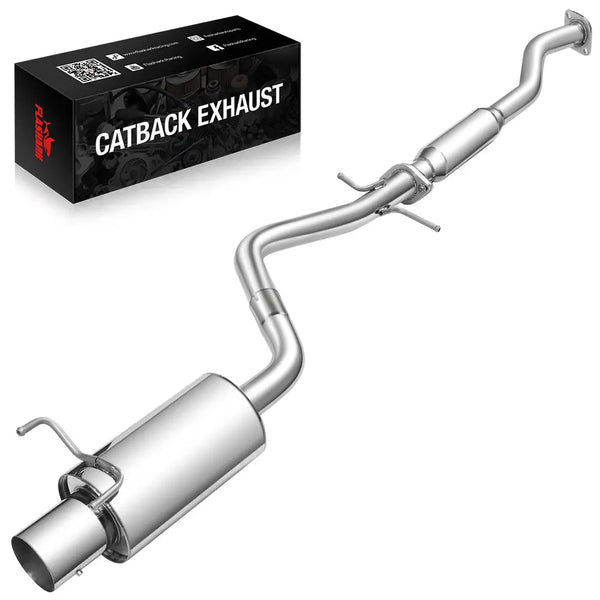
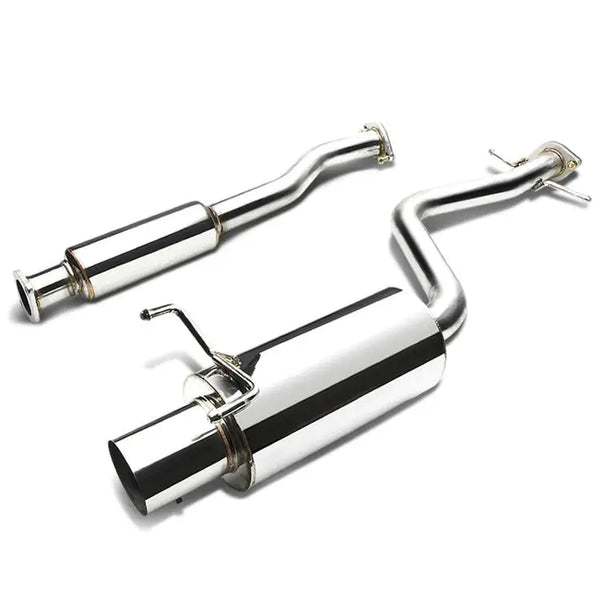
The Lexus catback exhaust system enhances performance by upgrading the stock exhaust with a larger diameter and more efficient mid-pipe, muffler, and tailpipe. Flashark Lexus catback exhaust systems are crafted from high-quality SUS-304 stainless steel, featuring a fully polished surface, CNC-machined flanges, and mandrel-bent tubing. Its straight-through design not only boosts horsepower and torque but also improves overall performance, delivering enhanced sound, exhaust flow, and driving dynamics for your Lexus.
Brand: ALL | Honda | Nissan | Toyota | Ford | Chevy | BMW | Mazda | Subaru | Lexus | Hyundai | Mitsubishi | Other
The Lexus catback exhaust system enhances performance by upgrading the stock exhaust with a larger diameter and more efficient mid-pipe, muffler, and tailpipe. Flashark Lexus catback exhaust systems are crafted from high-quality SUS-304 stainless steel, featuring a fully polished surface, CNC-machined flanges, and mandrel-bent tubing. Its straight-through design not only boosts horsepower and torque but also improves overall performance, delivering enhanced sound, exhaust flow, and driving dynamics for your Lexus.
Waking Up the Samurai: The Ultimate Flashark Lexus Catback Guide
Let's talk facts. You bought a Lexus because you wanted bulletproof Japanese engineering wrapped in premium quality. But if you’re driving an IS, RC, or even a full-blown F model, you already know the dirty secret: Lexus engineers completely muzzled these engines. To hit absurd luxury NVH (Noise, Vibration, and Harshness) targets, they bolted a massive, baffled, 45-pound steel coffin under your trunk. It’s embarrassing. You have a brilliant 3.5L V6 or a Yamaha-tuned 5.0L V8, yet the cabin is so dead quiet that Lexus literally pipes fake engine noise through the stereo speakers (Active Sound Control). Forget the forum purists telling you not to mess with factory perfection. That restrictive stock muffler is killing your exhaust gas velocity and burying the mechanical soul of your car. It’s time to rip it out and let the engine actually breathe.
The Bottom Line Up Front (BLUF): What a Flashark Lexus Catback Actually Delivers
- Measurable Dyno Output: Expect a proven 15-20 whp jump on the 5.0L V8s, and a solid 8-12 whp on the V6 platforms, focused right in the mid-to-high RPM range.
- The Luxury Weight Diet: Tossing the factory suitcase muffler immediately drops 25 to 35 lbs of dead chassis weight off the rear overhang.
- Acoustic Engineering: Awakens a deep, aggressive mechanical roar on throttle, utilizing targeted Helmholtz resonators to ensure your highway commute stays 100% drone-free.
- Zero Fake Noise: Gives you the genuine, raw exhaust note so you can finally turn off that annoying digital Active Sound Control.
Ditching the Luxury Muzzle: Pain Points & Flashark Solutions
I’ve unbolted enough factory Lexus exhausts to tell you that while their engines last forever, their mild steel exhaust flanges don't. After a few years in a harsh climate, those factory pipes rust and corrode. But the bigger issue is the restrictive layout.
Aerospace-Grade Materials & Mandrel-Bent Craftsmanship
You don't put cheap metal on a $60,000 luxury car. Flashark builds our systems exclusively using premium, thick-walled T304 stainless steel. More importantly, every single curve clearing your rear differential is CNC mandrel-bent. Factory pipes use crush-bends that physically shrink the inner diameter of the tube. A mandrel bend stays perfectly round. If you run a 2.5-inch Lexus Catback, it stays a true 2.5 inches the entire way out, preventing exhaust turbulence and keeping gas velocity dangerously high.
The Sound of Power: Tuning the F-Sport and V8 Note
You want your Lexus to sound exotic, not like a straight-piped minivan. Tuning a Toyota/Lexus 2GR V6 is notoriously difficult because they naturally produce a terrible, high-pitched metallic rasp at 4,000 RPM. Flashark completely engineers this out. We use specific Y-pipe merges and high-density fiberglass-packed resonators to filter out that harsh rasp. What’s left? A deep, sophisticated growl. And for the V8 guys, we unleash that raw, hammering Yamaha roar while keeping the cabin isolated from headache-inducing drone at 75 mph.
Proven Performance Gains: Scavenging and Flow Dynamics
Let’s talk fluid dynamics. Backpressure is a performance killer. By opening up the exhaust flow post-catalytic converter, a high-flow Lexus Catback Exhaust maximizes the scavenging effect. Fast-moving exhaust pulses create a vacuum that physically pulls the next cycle of spent gases out of the cylinder head. Less pumping loss means the engine revs noticeably freer, sharpening your throttle response immensely.
Choosing Your Layout: Quad Exit vs. Dual Exit Aesthetics
Your exhaust tips define the rear of the car. Make sure you pick the layout that matches your specific bumper and build style.
| Exhaust Layout | Ideal Lexus Build | Visual & Acoustic Impact |
|---|---|---|
| Quad Exit (Stacked or Side-by-Side) | IS F, RC F, GS F, IS500 | The signature "F" aesthetic. Aggressive, track-ready look with a slightly louder, high-flow profile. |
| Dual Exit (Large Canisters) | IS350, RC350, IS200t (F-Sport/Base) | Fills the factory F-Sport diffuser perfectly. Deep, smooth stereo sound with a clean, OEM+ appearance. |
The Hardcore Nerd-Out: Hidden Benefits of a Free-Flowing Lexus Exhaust
Here is a mechanical reality most guys ignore: weight distribution. Modern Lexus chassis (like the XE30) are heavy. Hanging a massive, 45-pound iron lung completely behind the rear axle acts like a pendulum when you are pushing the car through a canyon run. Ripping that out and bolting up a lightweight Flashark system physically reduces the polar moment of inertia. Your rear suspension doesn't have to fight that dead weight over bumps, making the rear end feel significantly more planted.
Platform-Specific Deep Dive: Lexus Engines and Power Dynamics
A turbo 4-cylinder requires entirely different exhaust geometry than a 5.0L V8. Here is exactly how we engineer airflow for the Japanese heavy hitters.
5.0L V8 (2UR-GSE): Unleashing the Yamaha-Tuned Beast
The 2UR-GSE in the IS F and RC F is a naturally aspirated masterpiece that revs to 7,300 RPM. The stock exhaust heavily restricts this top-end rush. By running an optimized true dual Flashark system, you completely un-cork the high-RPM breathing. It transforms the car, giving you that violent, hammering V8 bark while freeing up top-end horsepower that the factory system suffocates.
3.5L V6 (2GR-FKS/FSE): Killing the V6 Rasp
The 2GR V6 makes over 300 horsepower, but Lexus muffled it because, without heavy baffling, it sounds raspy. We fix this by utilizing a precisely engineered Y-pipe and specific resonator volumes. We keep exhaust velocity high for low-end torque while physically filtering out the annoying "trumpet" high frequencies. You get a deep, exotic V6 howl without sounding like a cheap tuner car.
2.0T Inline-4 (8AR-FTS): Turbo Spool and Heat Management
For the IS200t and RC200t owners, backpressure is the mortal enemy of your turbocharger. By opening up the exhaust post-downpipe, we drop that pressure drastically. Your turbo spools noticeably sooner, virtually eliminating that frustrating off-the-line turbo lag. Plus, pushing exhaust gas out faster drops your Exhaust Gas Temperatures (EGTs), protecting your turbine during hard driving.
The Mechanic's Warning: Avoiding Lexus Exhaust Pitfalls and CEL Nightmares
⚠️ Garage Truths: AWD vs. RWD Chassis Differences
"Listen to me closely. In my shop, I see guys mess this up all the time. Last spring, an IS350 AWD owner bought a cheap exhaust system online because he found a deal. He didn't realize the system was built exclusively for the RWD chassis.
He tried to install it himself in his driveway. Because the AWD Lexus models have a bulky transfer case protruding into the transmission tunnel, the RWD mid-pipe completely smashed into the drivetrain. He literally forced it on with a pry bar. The result? The exhaust pipe vibrated directly against the transfer case, causing massive, teeth-rattling cabin vibration, melted a hanger bushing, and eventually triggered a Check Engine Light (CEL) because he stressed the O2 sensor wiring.
A true Lexus Catback from Flashark is specifically routed for your exact drivetrain. If you have an AWD, you buy the AWD layout. You get perfect fitment, proper clearance, and zero dashboard errors. Do it right the first time."
Frequently Asked Questions (Lexus Catback Exhausts)
Q1: Does a catback exhaust void my Lexus factory warranty?
A1: No. Under the federal Magnuson-Moss Warranty Act, a Lexus dealership cannot legally void your vehicle's powertrain warranty simply because you bolted on an aftermarket catback. They would have to mathematically prove the exhaust directly caused a specific mechanical failure.
Q2: Will a Flashark catback trigger a Check Engine Light (CEL) on my IS/RC?
A2: Absolutely not. Because the system is installed completely downstream of the factory primary catalytic converters and O2 sensors, your ECU's emissions monitoring system remains completely untouched. You will not throw any error codes.
Q3: Does this exhaust fit both AWD and RWD Lexus models?
A3: No. AWD (All-Wheel Drive) and RWD (Rear-Wheel Drive) Lexus models have different mid-pipe routing due to the AWD's transfer case. Flashark engineers specific mid-pipes for each drivetrain. Always ensure you select the correct drivetrain option when ordering to guarantee perfect fitment.
Q4: How do you fix the exhaust drone on a Lexus V6 at highway speeds?
A4: Drone is a maddening, low-frequency sound wave that vibrates the cabin, usually striking around 2,000 to 2,500 RPM. Flashark eliminates this by engineering precision mufflers with high-density acoustic packing and Helmholtz resonance tech that naturally cancels out those exact frequencies, keeping your luxury cruise silent.
Q5: Can I turn off the fake Active Sound Control (ASC) after installing this?
A5: Yes! Once you install a real, high-flowing Flashark exhaust, you will finally have genuine mechanical engine noise. You can (and should) use the ASC dial near your steering wheel to turn the fake speaker noise completely off.
Q6: Will a catback exhaust melt my F-Sport rear bumper diffuser?
A6: No. Flashark exhaust tips are precision-engineered to sit perfectly within the factory bumper cutouts. Furthermore, we utilize double-walled tip construction, which dissipates heat rapidly and prevents your expensive F-Sport diffuser from warping or melting.
Q7: How much actual horsepower does a catback add to a 5.0L V8 (IS500/RC F)?
A7: On the big 5.0L V8s, relieving backpressure pays off extremely well. Expect a realistic gain of 15 to 20 wheel horsepower (whp) near the top of the rev range. You will immediately feel the car pull harder past 5,000 RPM.
Q8: Is a Flashark Lexus catback exhaust CARB compliant in California?
A8: Yes. Because a catback exhaust does not alter, remove, or relocate the factory emissions equipment (the catalytic converters), it is legally classified as a sound-modifying component and is 50-state emissions legal, including in California.
Q9: Can I install an IS350 catback exhaust myself on jack stands?
A9: Yes. If you have a decent socket set, a safe set of jack stands, and a can of penetrating oil (like PB Blaster) for the rusty flange bolts, you can easily do this in your garage. Flashark systems are 100% bolt-on. Expect the job to take about 1.5 to 2 hours.
Q10: T304 vs. T409 Stainless Steel: Which does my Lexus need?
A10: For a premium car like a Lexus, T304 is the only answer. T304 is the premium alloy with high nickel and chromium content, meaning it virtually ignores rust and maintains its polish. It is the ultimate choice to match your luxury chassis. T409 develops surface rust over time and looks cheap under a high-end car.


