


 Need car parts? Shop by vehicle
(Select the exact fit for your vehicle)
Need car parts? Shop by vehicle
(Select the exact fit for your vehicle)
Chevy/Chevrolet Catback Exhaust
Brand: ALL | Honda | Nissan | Toyota | Ford | Chevy | BMW | Mazda | Subaru | Lexus | Hyundai | Mitsubishi | Other
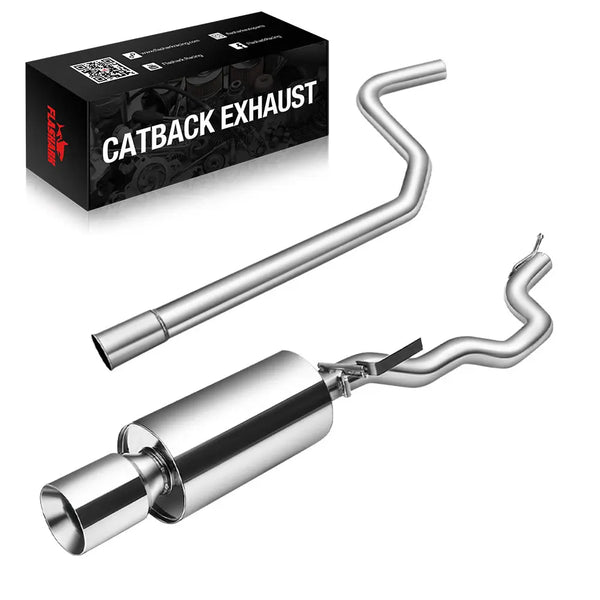
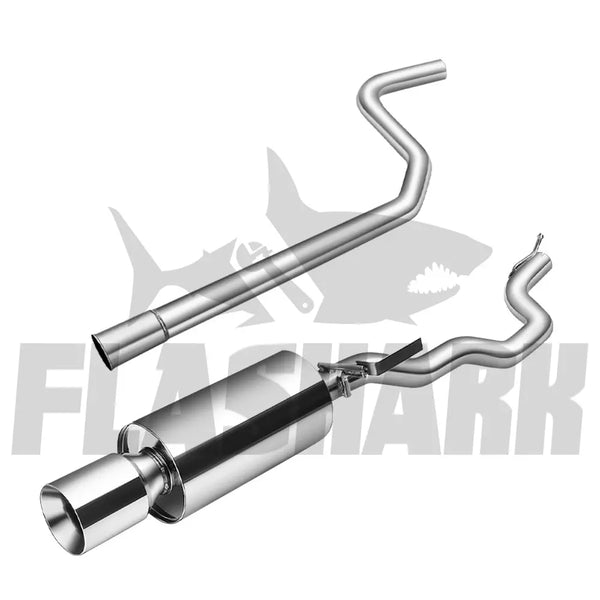
A Chevy Catback exhaust boosts performance by upgrading the stock system with a larger diameter and more efficient mid-pipe, muffler, and tailpipe. Flashark Chevy Catback exhaust systems are crafted from SUS-304 stainless steel, featuring a fully polished surface, CNC-machined flanges, and mandrel bends. Its straight-through design enhances horsepower, torque, and overall performance, offering superior exhaust flow and power for your Chevy.
Brand: ALL | Honda | Nissan | Toyota | Ford | Chevy | BMW | Mazda | Subaru | Lexus | Hyundai | Mitsubishi | Other
A Chevy Catback exhaust boosts performance by upgrading the stock system with a larger diameter and more efficient mid-pipe, muffler, and tailpipe. Flashark Chevy Catback exhaust systems are crafted from SUS-304 stainless steel, featuring a fully polished surface, CNC-machined flanges, and mandrel bends. Its straight-through design enhances horsepower, torque, and overall performance, offering superior exhaust flow and power for your Chevy.
Squeezing Real Power From Your Bowtie: The Ultimate Flashark Chevy Catback Guide
Let's shoot straight. If you’re still driving around with that massive, rusty trash can GM calls a muffler bolted under your rig, you are absolutely suffocating your V8. I’ve spent half my life on a creeper under these trucks and cars. The factory Chevy exhaust is dead weight. They use cheap crush-bends to clear the rear axle, which creates a massive bottleneck for exhaust gases. Worse? It completely neuters the soul of the engine. You didn't buy a Bowtie to sound like a hybrid commuter. Ignore the forum BS claiming you "need" that restriction for low-end torque. Physics doesn't lie. Your stock setup is strangling your top-end power and burying that classic American rumble. It’s time to fix it.
The Bottom Line Up Front (BLUF): The Flashark Difference
- Measurable Dyno Gains: A genuine 10-18 whp and 15-20 lb-ft of torque increase, bringing your mid-range RPMs to life.
- The AFM/DFM Solution: Custom internal baffling specifically handles GM's cylinder deactivation, eliminating that miserable "helicopter drone" when your V8 drops to 4 cylinders.
- Chassis Diet: Drops over 20 lbs of dead weight compared to the bulky factory suitcase muffler.
- True Bolt-On: Precision-engineered to fit your existing hangers. Zero welding. Zero cutting.
Ditching the Restrictive Factory Setup: Pain Points & Flashark Solutions
I’ve torched off enough seized, rusted-out factory tailpipes to know mild steel is a joke. After a couple of winters, the factory tubing looks like peeling tree bark. But it's not just about rust; it's about flow.
Aerospace-Grade Materials & Precision Craftsmanship
Flashark doesn't mess around with cheap alloys. We build these systems using heavy-wall T304 and T409 stainless steel. More importantly, every single curve is CNC mandrel-bent. When a factory pipe bends, it crinkles and shrinks the inner diameter. A mandrel bend stays perfectly round. If it’s a 3-inch Chevy Catback Exhaust, it stays a true 3 inches the entire way out the back, ensuring a high-velocity channel for your exhaust pulses.
The Sound of Power: Tuning the Chevy Exhaust Note
A Silverado or a Camaro should have that signature "Chevy Growl"—a deep, guttural chop at idle that turns into a raw roar when you floor it. But you don't want your ears bleeding on a two-hour highway drive. Flashark tunes the muffler packing with high-density fiberglass to soak up high-frequency rasp. You get the aggressive muscle car sound outside, while the cabin stays comfortable enough to hold a conversation.
Proven Performance Gains: HP, Torque, and Flow Dynamics
Let's talk mechanical reality. Replacing your restrictive factory pipe with a high-flow Chevrolet Catback Exhaust maximizes the scavenging effect. Fast-moving exhaust gases create a vacuum that literally pulls the exhaust out of the next firing cylinder. Less pumping loss for the engine means a sharper throttle response and more horsepower getting to the pavement.
Choosing Your Layout: Dual vs. Side Exit vs. Single Out
Don't just pick a style because it looks cool on a screen. Your layout needs to survive how you actually use the vehicle.
| Exhaust Layout | Ideal Chevy Platform | The Good | The Bad |
|---|---|---|---|
| Single Side Exit | Silverado/Colorado (Work & Trail) | Maximum ground clearance. Tucked high and away from rocks. | Looks like a standard truck; nothing flashy. |
| Dual Rear Exit | Silverado (Street) & Camaro | That classic, symmetrical muscle look. Excellent stereo exhaust note. | Exhaust tips can get crushed if you do heavy off-roading. |
| Turndown (Dumped) | Hardcore Off-Road Builds | Impossible to damage a tailpipe. Massive weight savings. | Loud inside the cab. Kicks up severe dust on dirt roads. |
The Hardcore Nerd-Out: Hidden Benefits of a Free-Flowing Exhaust
There are benefits the dyno sheets won't show you. Pushing exhaust gas out faster significantly lowers Exhaust Gas Temperatures (EGTs). This pulls heat away from your cylinder heads, which is vital if you're towing a heavy 5th wheel up a grade. Also, because the engine revs more freely without fighting backpressure, you'll actually notice your 6-speed or 10-speed automatic transmission shifts feel crisper and more predictable.
Platform-Specific Deep Dive: Chevrolet Models and Engine Tuning
A truck pulling 8,000 lbs needs different airflow dynamics than a track car pushing redline. Here is how it breaks down for the heavy hitters.
Silverado & Sierra (5.3L L83/L84 & 6.2L L86/L87 V8)
The 5.3L and 6.2L are torque monsters, but GM’s AFM/DFM (Active/Dynamic Fuel Management) ruins the exhaust note. When the truck drops to 4 cylinders on the highway, a cheap straight-pipe will sound like a broken lawnmower. Flashark utilizes engineered resonance chambers to cancel out that specific V4 frequency, keeping the truck sounding like a V8 should, while maximizing the exhaust velocity you need for low-end towing grunt.
Camaro & Corvette (6.2L LT1 & 6.2L LS3 V8)
For the track guys, the LT1 and LS3 engines demand serious high-rpm airflow. The factory suitcase muffler chokes these engines past 4,500 RPM. Bolting on a dual Flashark system absolutely unleashes the top-end horsepower, giving you that pure, violent LS/LT scream down the straightaway without restricting the flow when you're banging through the gears.
The Mechanic's Warning: Avoiding Exhaust Pitfalls and CEL Nightmares
⚠️ Garage Truths: Don't Butcher Your Bowtie
"Listen to me. Just last month, a guy dragged his 2019 Silverado 5.3L into my shop. He wanted it loud on a budget, so he went to a shady muffler shop. They chopped off his factory catalytic converters, hacked off the factory exhaust flapper valve, and welded in a straight pipe. It was a total disaster.
His dash was lit up with Check Engine Lights (CEL), his AFM system went completely crazy, and the truck drove like a tractor stuck in limp mode. A proper Chevy Catback from Flashark bolts on after the catalytic converters. You don't mess with the O2 sensors, you easily transfer or bypass the flapper valve correctly, and you keep your dash code-free. Do it right, or don't do it at all."
Frequently Asked Questions (Chevy/Chevrolet Catback Exhausts)
Q1: Does installing a Chevy catback exhaust void my GM factory warranty?
A1: No. Thanks to the Magnuson-Moss Warranty Act, a dealership cannot void your overall powertrain warranty just because you installed an aftermarket catback. They have to legally prove the exhaust directly caused the mechanical failure in question.
Q2: Will a Flashark catback trigger a Check Engine Light (CEL) on my Silverado?
A2: Absolutely not. Because the system is installed completely downstream of your factory catalytic converters and O2 sensors, the truck's computer doesn't see any emissions changes. No codes, no CEL.
Q3: How do you fix the exhaust drone when the 5.3L drops to 4 cylinders (AFM/DFM)?
A3: That V4 "helicopter" drone is notorious. Flashark designs our Silverado mufflers with specific internal baffling and acoustic packing that targets and absorbs those nasty low-frequency sound waves, keeping your highway ride smooth.
Q4: What’s the difference between T304 and T409 stainless steel for a Chevy?
A4: T304 is the premium choice—it has high nickel and chromium content, meaning it virtually never rusts, which is essential if you live in the salt-heavy north. T409 is a highly durable, budget-friendly alloy that develops a protective surface oxidation (turning slightly brown) but won't rust through like factory steel.
Q5: Can I install a Silverado or Camaro catback exhaust myself in my driveway?
A5: Yes. If you know how to safely put your vehicle on jack stands and operate a socket wrench, you can do this. Flashark systems are 100% bolt-on. Soak your old flange bolts in PB Blaster an hour before you start, and expect it to take about 2 hours.
Q6: How much horsepower will a catback add to a 6.2L V8?
A6: Realistically, you can expect a gain of 12 to 18 wheel horsepower (whp) on a 6.2L. What you'll feel even more is the throttle response—the engine revs much faster when it isn't fighting to push exhaust gases through a restricted pipe.
Q7: Is a Flashark Chevrolet catback exhaust CARB compliant in California?
A7: Yes. A catback exhaust does not remove, modify, or relocate your factory emissions equipment (catalytic converters). It is classified as a sound-modifying component and is 100% legal in all 50 states, including California.
Q8: What do I do with the factory exhaust flapper valve on my Silverado?
A8: GM uses that valve to create backpressure for the AFM system. Depending on the exact Flashark kit, you will either reuse the factory actuator by bolting it onto a provided bracket, or use a simulator plug. Either way, it prevents any dashboard errors.
Q9: Do I need a custom tune (ECU flash) after installing a catback on my Chevy?
A9: No tune is required. The factory GM ECU uses Long Term Fuel Trims (LTFT) and will automatically adapt to the slightly increased exhaust flow after a few drive cycles, keeping your air/fuel ratios perfectly safe.
Q10: Dual vs. Single exhaust on a Silverado: Which is better for towing?
A10: For heavy towing, a properly sized single exhaust (like a 3-inch) is often slightly better as it maintains maximum exhaust gas velocity at lower RPMs, which builds low-end torque. Duals are great for high-end horsepower and sound, but the difference in towing capacity is negligible.


