


BMW Downpipe Exhaust & Test Pipes
Shop by Brands: ALL | Chevy | Nissan | BMW | Audi | Honda | VW Golf | Subaru | Others
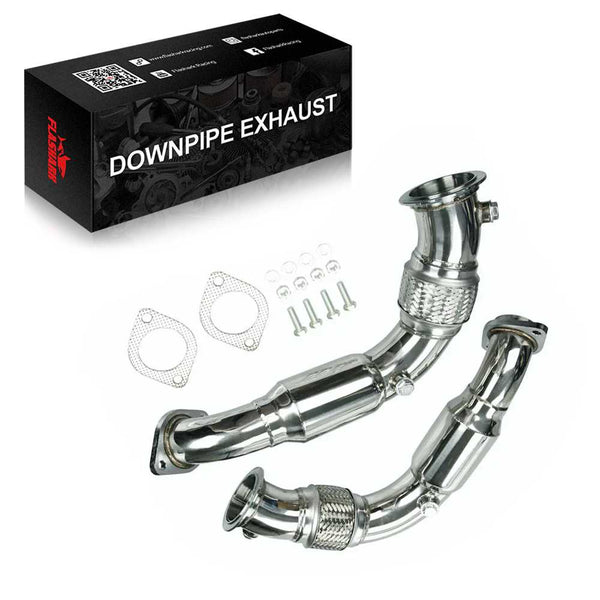
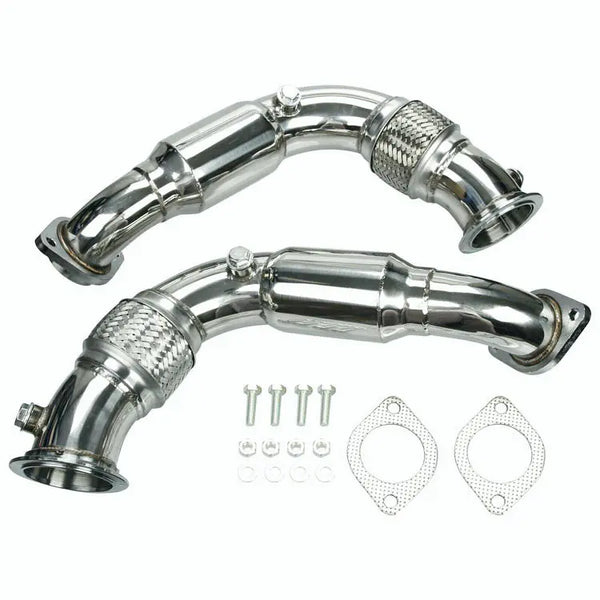
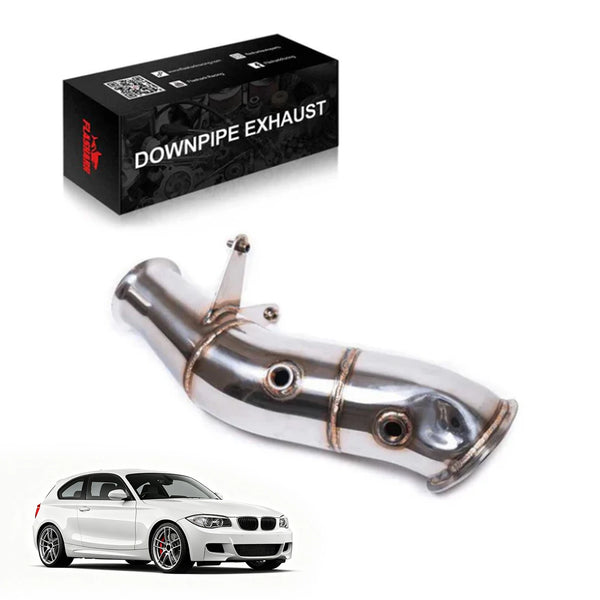
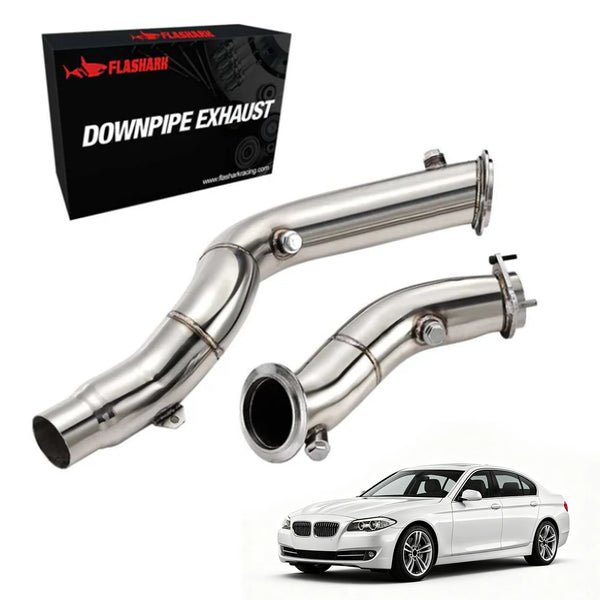
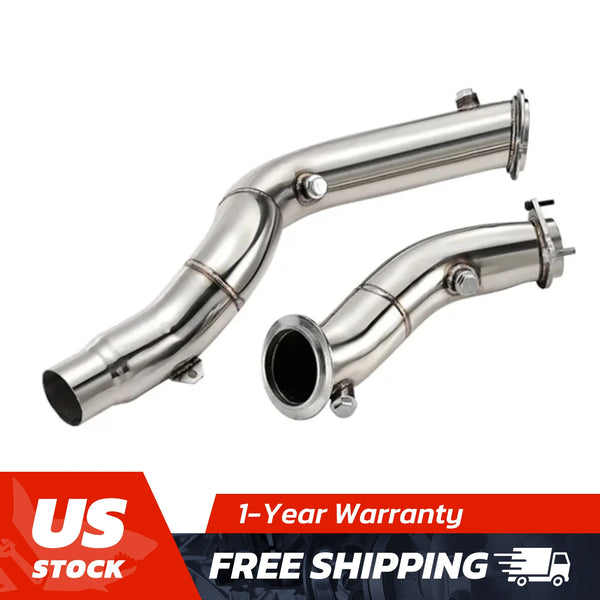
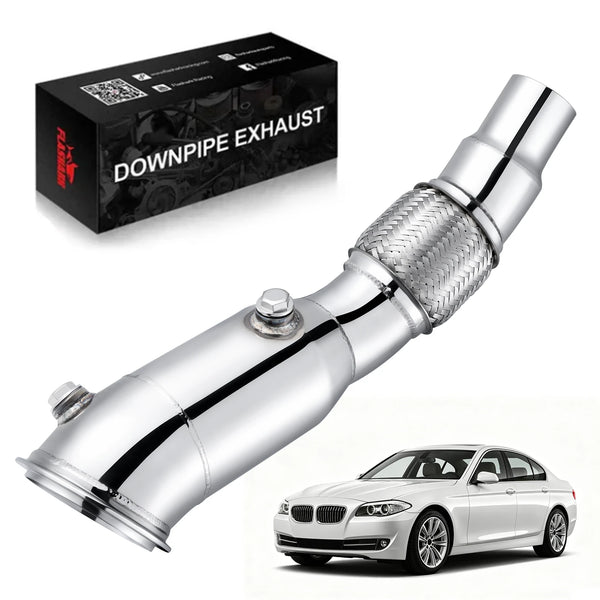
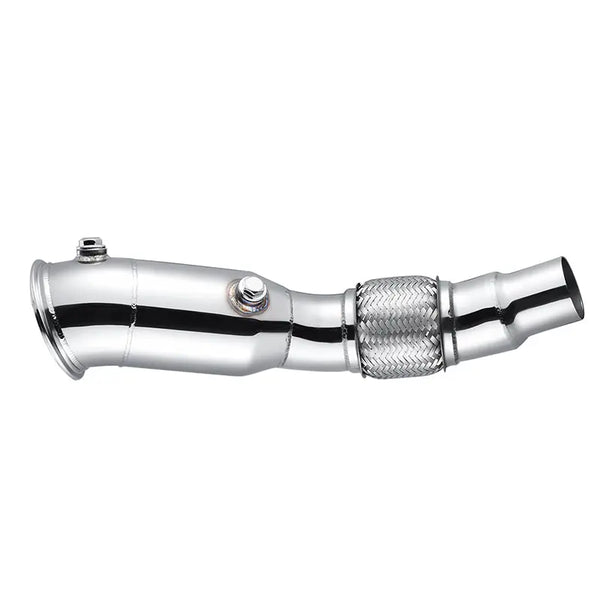
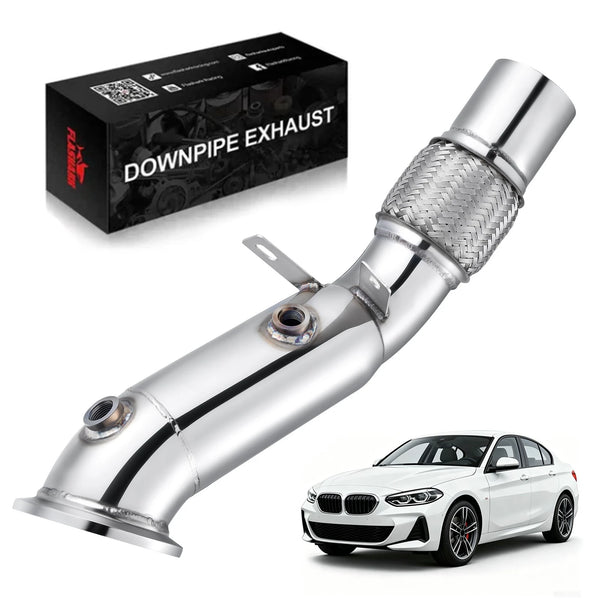
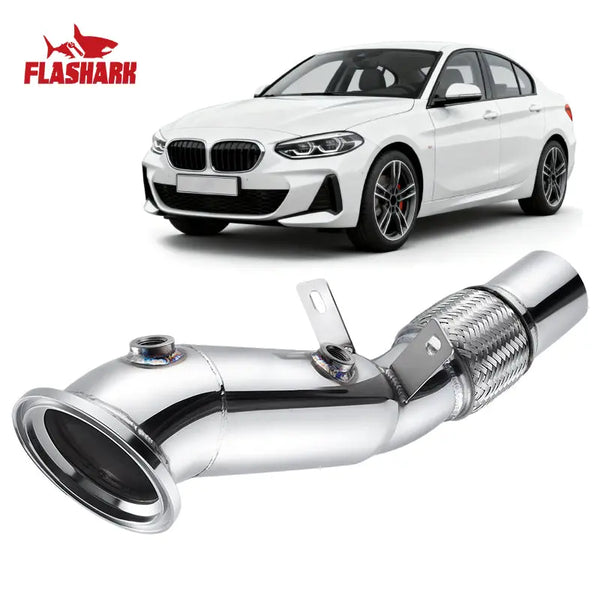
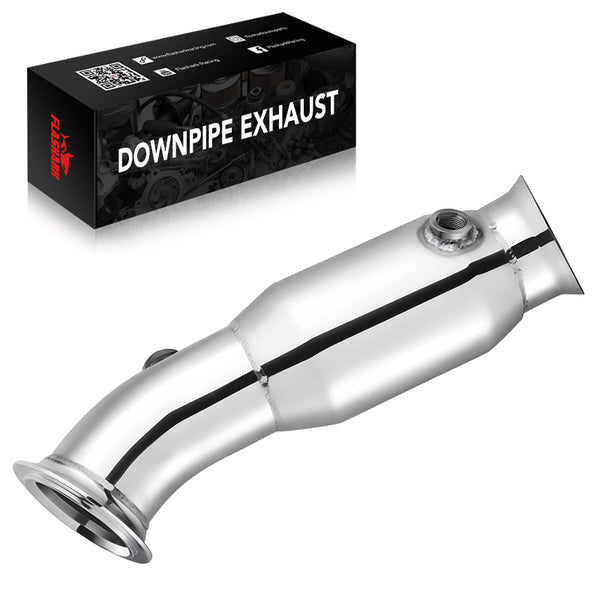
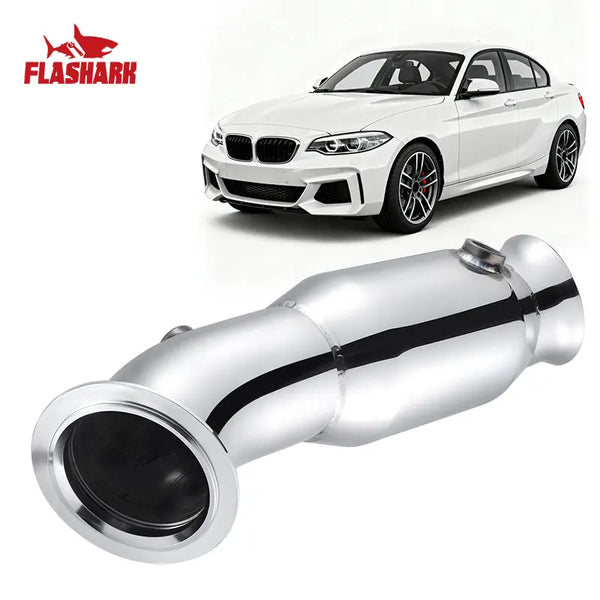
Unlock the true performance of your BMW with our premium BMW downpipes and test pipes. Engineered to enhance exhaust flow, increase horsepower, and improve engine efficiency, these parts are perfect for both street and track use. Whether you’re aiming for quicker acceleration or a more dynamic driving experience, these downpipes will provide the performance boost your BMW deserves.
- Boost Horsepower & Torque: Optimize exhaust flow to improve engine performance.
- Durable Construction: Crafted from high-quality materials for long-lasting durability.
- Aggressive Exhaust Sound: Achieve a more powerful and sporty exhaust tone.
- Enhanced Throttle Response: Experience quicker acceleration and sharper driving dynamics.
Perfect for BMW enthusiasts who want to enhance both performance and sound, our BMW downpipes and test pipes are the ideal upgrade for your vehicle.
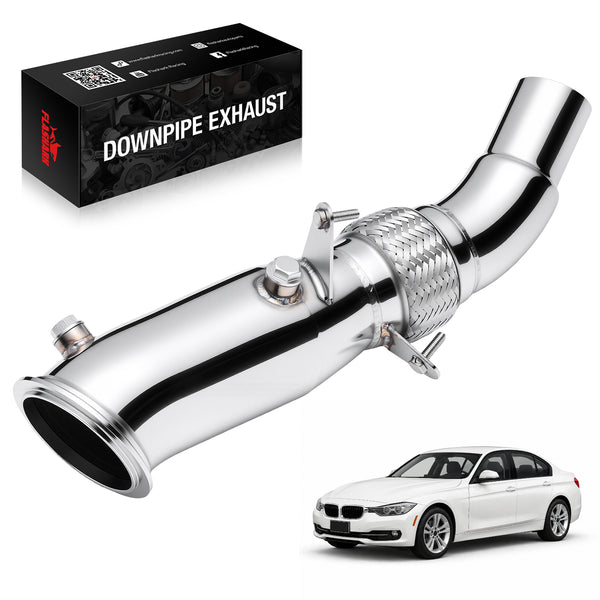

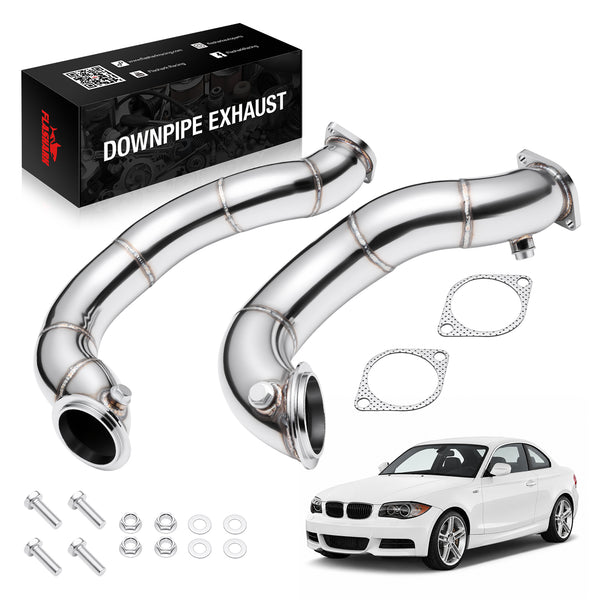

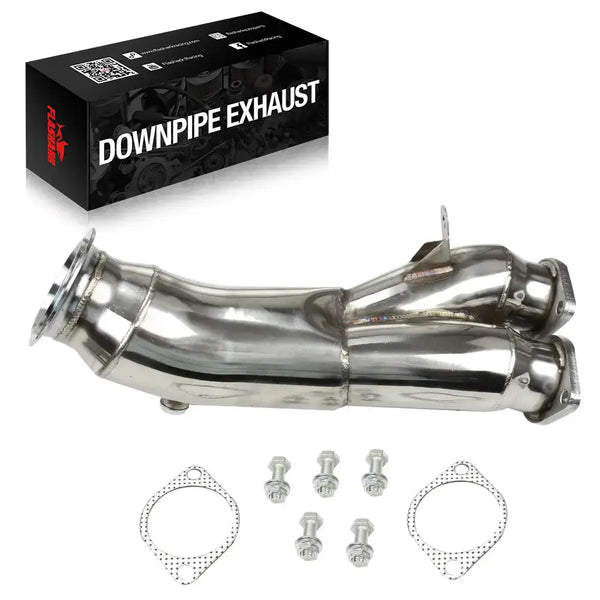
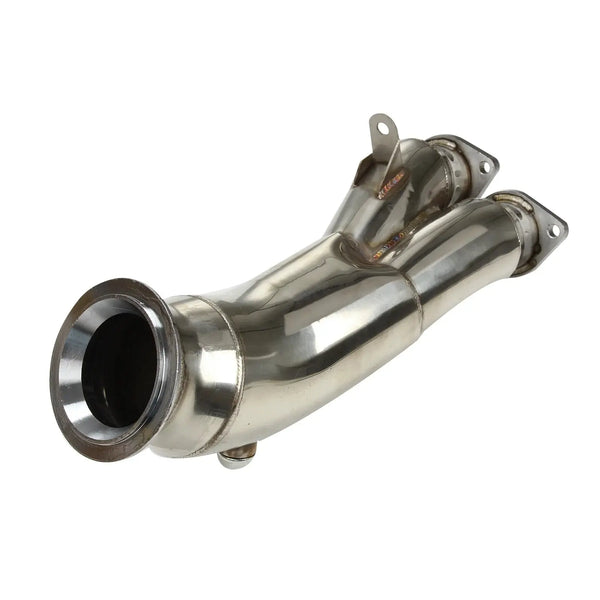
Shop by Brands: ALL | Chevy | Nissan | BMW | Audi | Honda | VW Golf | Subaru | Others
Unlock the true performance of your BMW with our premium BMW downpipes and test pipes. Engineered to enhance exhaust flow, increase horsepower, and improve engine efficiency, these parts are perfect for both street and track use. Whether you’re aiming for quicker acceleration or a more dynamic driving experience, these downpipes will provide the performance boost your BMW deserves.
- Boost Horsepower & Torque: Optimize exhaust flow to improve engine performance.
- Durable Construction: Crafted from high-quality materials for long-lasting durability.
- Aggressive Exhaust Sound: Achieve a more powerful and sporty exhaust tone.
- Enhanced Throttle Response: Experience quicker acceleration and sharper driving dynamics.
Perfect for BMW enthusiasts who want to enhance both performance and sound, our BMW downpipes and test pipes are the ideal upgrade for your vehicle.
BMW Downpipe Exhaust & Test Pipes: What Really Changes After the Turbo
A BMW downpipe is not just a louder pipe bolted under the car. On a turbo BMW, it sits right after the turbocharger, where heat, pressure, oxygen sensors, catalytic material, tight chassis clearance, and ECU logic all meet in one ugly little battlefield.
Listen, this is where a lot of BMW owners get it wrong. They buy an intake, flash a tune, talk big on the forum, then leave the most choked part of the turbo exhaust path untouched. The car makes boost, sure. But it still feels like it is breathing through a wet towel once the rpm climbs.
BLUF: Bottom Line Up Front
- Best performance use: A Flashark BMW downpipe exhaust upgrade makes the most sense on turbo BMW engines such as N20, N54, N55, N63, S55, and B48 when the owner wants faster turbo response, stronger exhaust flow, and more tuning headroom.
- Realistic power range: On many tuned turbo BMW setups, a downpipe can help support roughly 10-30whp, depending on engine, tune, fuel, turbo condition, and supporting mods. Aggressive N54/N55/S55 cars can see stronger gains when the rest of the setup is ready.
- Best sound result: Expect sharper turbo noise, more exhaust volume, and a deeper tone. Catless pipes are louder and rawer. Catted pipes are usually cleaner and more street-friendly.
- Main risk: Catless downpipes and test pipes can trigger CEL, create exhaust smell, fail emissions inspection, and may not be legal for street use in many areas.
- Best buyer move: Match your BMW by engine code, chassis, model year, drivetrain, and product fitment notes. Do not buy by model badge alone.
Why Upgrade the Factory BMW Downpipe?
The factory BMW downpipe is designed for quiet cold starts, emissions compliance, cabin comfort, and warranty-safe manners. That is fine for a stock lease car. It is not ideal when you start chasing faster spool, harder mid-range pull, or Stage 2 tuning.
Factory Downpipes Restrict Turbo Exhaust Flow
The downpipe is the first major exhaust section after the turbo. On a turbocharged BMW, restriction here matters more than restriction farther back because the turbine is trying to dump hot exhaust gas as quickly as possible. When the pipe is tight, packed with dense catalytic material, or shaped poorly, the turbo works harder to push exhaust out.
That does not mean every BMW suddenly gains race-car power from one pipe. Be honest. But on N54, N55, S55, and even tuned N20/B48 cars, the downpipe is often one of the first parts that starts limiting the setup once boost and airflow increase.
The Stock Catalytic Converter Can Hold Back Tuned Setups
BMW factory catalytic converters do a serious job. They reduce emissions and keep the car civilized. The downside is heat and restriction, especially when a tune asks the turbo to move more air than BMW originally planned for that model.
On a mild tune, the driver may feel better throttle response and stronger top-end pull. On a more serious setup with intake, intercooler, charge pipe, ethanol blend, or upgraded turbos, the downpipe becomes less of a “sound mod” and more of a real airflow part.
Sound Gains Without Replacing the Whole Exhaust
A BMW downpipe changes sound near the source. You hear more turbo whistle, more exhaust pulse, and more bark on throttle. It is not the same as a full catback. A catback changes tone and volume farther downstream. A downpipe changes the way exhaust leaves the turbo.
That is why a lot of BMW owners start here. It gives the car more character without immediately replacing the entire exhaust system.
Where Flashark Fits In
Flashark downpipes are aimed at the owner who wants a practical performance part without paying luxury-brand tax for a bent piece of stainless steel. The important stuff is physical: stainless tubing, proper pipe diameter, cleaner bends, solid welds, and flanges that actually sit where they should.
No magic dust. No fake dyno fairy tales. Just better flow where the turbo needs it.
Mechanic’s note: I remember a 2015 BMW 335i that rolled into the shop with an intake, charge pipe, and a Stage 1-style flash already done. The owner kept saying, “It makes boost, but it doesn’t feel angry.” We pulled the stock downpipe and the old catalytic section looked cooked, tight, and heat-stained. After the downpipe install and tune revision, the car did not just get louder. It came into boost cleaner, pulled harder past 4,500 rpm, and stopped feeling like it was dragging an anchor through the mid-range. That is the part people miss. A downpipe is not only about noise.
Flashark BMW Downpipe Materials, Build Quality & Fitment Details
Cheap downpipes usually fail in boring ways. Bad flange angle. Thin tubing. Ugly welds. Oxygen sensor bungs placed in stupid spots. V-band that almost fits but not quite. Then the owner blames the car, the tune, or the shop. No, man. Sometimes the part is just built wrong.
Stainless Steel Construction
Turbo BMW downpipes live in a high-heat area. Exhaust gas temperature can climb fast under boost, and the pipe sees repeated heat cycles every drive. Stainless steel matters because it resists corrosion better than mild steel and holds up better around moisture, road salt, and heat.
16-Gauge T-304 Stainless Steel
Where product specs apply, 16-gauge T-304 stainless steel is a strong selling point. It gives the tubing enough wall strength for vibration and heat without turning the part into dead weight. That balance matters on a car where the downpipe is tucked near the turbo, subframe, steering shaft, firewall, or underbody tunnel.
Mandrel-Bent Tubing
Mandrel bends help the pipe keep a smoother internal diameter through curves. Crush-bent tubing can narrow at the bend and create turbulence. On a turbo car, that is exactly the opposite of what you want after the turbine.
TIG-Welded Joints
TIG welding is important because the downpipe sees heat, vibration, and movement. A weak weld can crack. A messy weld inside the pipe can disturb flow. A small pinhole leak near the turbo can make the car smell bad and sound broken.
CNC-Machined Flanges and V-Band Fitment
Flange accuracy is not glamorous, but it is everything during installation. A BMW downpipe that is off by a few millimeters can fight the turbo outlet, stress the V-band, leak at the gasket, or rattle against the chassis.
Shop case: I have seen new guys force a downpipe into place by tightening the bolts like they are trying to win a strongman contest. Bad move. One N55 car came in after a driveway install with a ticking leak under load. The pipe was not fully seated at the turbo flange, and the owner had tightened the rear bracket first, twisting the front connection just enough to leak. We loosened everything, seated the turbo side first, aligned the midpipe, checked oxygen sensor wire tension, then tightened the system from front to back. Leak gone. Rattle gone. The fix was not fancy. It was patience.
Catted vs Catless BMW Downpipes
This is where forum advice gets messy. Some people say catless is the only way. Some people say catted is always better. Real answer? It depends on your car, your local laws, your nose, your tolerance for CEL, and how hard you are pushing the setup.
What Is a Catless BMW Downpipe?
A catless downpipe removes the catalytic converter section from the downpipe path. That usually gives the least restriction, the strongest exhaust volume, and the most aggressive turbo sound. It can also create more smell, more emissions risk, more inspection trouble, and a higher chance of check engine light issues.
What Is a Catted BMW Downpipe?
A catted downpipe uses a catalytic converter or high-flow catalytic section inside the pipe. It is usually more civilized than catless. Less smell. Cleaner tone. Lower emissions impact than a straight test-pipe-style setup. But listen carefully: catted does not automatically mean street legal. Local laws and inspection rules still decide that.
| Comparison Point | Catted BMW Downpipe | Catless BMW Downpipe / Test Pipe |
|---|---|---|
| Flow Potential | Better than many stock downpipes, but still has catalyst material in the path. | Usually the highest-flow option because there is no catalytic brick inside the pipe. |
| Sound | Deeper and sportier than stock, usually less raw. | Louder, sharper, more turbo noise, more crackle potential depending on tune. |
| Exhaust Smell | Usually reduced compared with catless. | More likely to smell rich at idle, cold start, and stop-and-go traffic. |
| CEL Risk | Possible, depending on catalyst efficiency, sensor readings, and ECU logic. | High risk without proper tuning or ECU calibration support. |
| Inspection Risk | Still depends on local emissions laws, OBD readiness, and visual inspection. | High risk for street-driven cars in emissions inspection areas. |
| Best Use Case | Daily-driven tuned BMWs where smell and street comfort matter. | Off-road, race, track, or aggressive performance builds where maximum flow is the goal. |
Which One Should You Choose?
If your BMW is a daily driver, you hate fuel smell, and your area has emissions inspection, be careful with catless. If your car is a weekend toy, track build, or off-road-use setup and you want maximum flow, catless may fit that use case better. But do not pretend the legal side does not exist. It does.
Hidden Performance Science: Why Downpipes Matter So Much on Turbo BMW Engines
Here is the short garage version: the turbo wants pressure before the turbine and low restriction after the turbine. That pressure difference helps the turbo do its job. A restrictive downpipe fights that process.
Backpressure After the Turbo Is Different
People throw the word “backpressure” around like a wrench in a junk drawer. On a naturally aspirated engine, exhaust pulse behavior can get complicated. On a turbo BMW, restriction after the turbine is usually the enemy when the goal is power and response.
Less restriction after the turbo helps exhaust gases leave faster. That can improve spool behavior, reduce turbine outlet pressure, and make the engine feel cleaner under load.
Faster Spool and Better Transient Response
Transient response is how fast the car reacts when you roll back into the throttle. A freer-flowing downpipe can make the turbo feel less lazy, especially in the mid-range. You feel it merging onto the highway, rolling into boost from 2,500 rpm, or punching out of a corner.
On tuned N55 cars, for example, I have seen the difference show up more in the seat than in some owner expectations. The car does not always become a dyno-sheet monster from one part. But it can feel sharper, less plugged, and more willing to carry power past the middle of the tach.
Heat Management Around the Turbo
Turbo BMW engine bays get hot. N54 twin turbos are tight. N55 packaging is not exactly roomy. N63 V8 turbo layouts can cook everything around them. A cleaner-flowing downpipe can help move heat out of the turbine area faster, but installation quality still matters.
If the pipe touches a heat shield, bracket, steering shaft, subframe area, or underbody panel, you may get rattle, vibration, melted material, or false knock-like noise. Fitment is not just “does it bolt on?” Fitment is “does it sit correctly when the whole drivetrain moves?”
Why a Downpipe Pairs Well With a Tune
The hardware improves flow. The tune tells the ECU how to use the new airflow safely and effectively. That is why many BMW owners pair a downpipe with a Stage 2-style calibration, better intercooler, intake, charge pipe, or spark plug refresh.
Old coils, tired plugs, boost leaks, and weak fuel quality can ruin the party fast. Do the maintenance first. Then ask the car for more power.
Popular BMW Engines, Models & Power-Stage Analysis
Do not shop for a BMW downpipe by badge alone. A “335i downpipe” can mean different things depending on year, chassis, and engine. Same with 328i, 435i, 535i, M2, and even hybrid models. BMW loves making fitment complicated. That is not your fault, but it is your problem before checkout.
BMW N20 2.0L Turbo: F30 328i / 330i and F10 528i
The N20 is not a giant power monster, but it responds well to smart airflow changes. On F30 328i and F10 528i cars, a downpipe is usually chosen for quicker response, stronger mid-range feel, and a more noticeable turbo tone.
On a mild daily setup, expect the improvement to feel more like response and torque shape than huge peak horsepower. With a tune, intake, and healthy ignition system, a realistic downpipe-supported gain may sit around 10-20whp on many setups. Push harder and supporting mods start to matter more.
Fitment warning: confirm whether your car is N20 or B48, confirm chassis, and check xDrive/RWD notes. Do not guess from the trunk badge.
BMW N54 3.0L Twin Turbo: 135i / 335i
The N54 is the old-school turbo BMW troublemaker. Strong engine, big tuning culture, lots of power potential, and plenty of neglected cars floating around with tired vacuum lines, old sensors, and crusty hardware.
For E82 135i and E90/E92 335i owners, downpipes are one of the classic first serious upgrades. A 3-inch BMW downpipe exhaust setup can help the twin turbos breathe better, especially with a tune. On tuned N54 cars, I have seen downpipe-supported gains in the 15-30whp range when the car already had supporting mods and no major boost leaks.
Old hardware is the enemy here. Oxygen sensors can seize. V-band clamps can fight back. Studs can be tired. If the car has 100,000 miles and has never been apart, budget time for the install.
Shop case: I had an E92 335i come in after the owner bought downpipes and tried to install them on jack stands after watching three videos and drinking too much confidence. The rear O2 sensor was cross-threaded, one clamp was half-seated, and the pipe was touching the subframe area under load. We had to chase the sensor threads, reset the pipe angle, and re-route the wiring so it would not cook near the hot section. The car ran strong after that, but the owner paid twice because the first install was rushed. I tell every N54 guy the same thing: loosen, align, check clearance, then tighten. Do not muscle it.
BMW N55 3.0L Single Turbo: 135i / 335i / M135i / M235i / 435i / M2
The N55 is smoother than the N54 and usually simpler with its single turbo layout, but fitment still changes by chassis. E-chassis N55 downpipes are not the same conversation as F-chassis N55 downpipes. That is where many buyers mess up.
On F30 335i, F32/F36 435i, F22 M235i, and F87 M2, a downpipe is often paired with a Stage 2 tune. A realistic result on a healthy tuned N55 setup may be around 15-25whp supported by the downpipe, with stronger throttle response and louder turbo character. Add intercooler, charge pipe, and good fuel, and the setup starts to feel much more complete.
Do not buy an N54 pipe for an N55 car because a forum comment sounded confident. That mistake still happens. Too often.
BMW N63 4.4L Twin Turbo V8: X5 / X6 / 550i / 650i / 750i / B7
N63 downpipes are a different animal. This is twin-turbo V8 territory. Bigger heat, tighter packaging, heavier cars, and more labor. Owners usually want deeper V8 tone and stronger acceleration, not just a little extra whistle.
On tuned N63 cars, downpipes can support serious torque gains, but the install is not casual driveway fun for most people. The engine bay is hot and cramped. Heat shielding, sensor access, and pipe clearance matter a lot.
If you own an X5, X6, 550i, 650i, 750i, or Alpina B7-style application, check exact engine version, production year, and chassis. A small fitment difference on these cars can turn a normal job into a full Saturday of swearing.
BMW S55: F80 M3 / F82-F83 M4
The S55 is more serious from the factory. F80 M3 and F82/F83 M4 owners usually care about turbo response, track use, aggressive sound, and tuning headroom. A downpipe changes these cars fast. Sometimes too fast for owners who thought they only wanted “a little more sound.”
Catless S55 downpipes can make the car loud, sharp, and raspy depending on the midpipe and rear exhaust. With a proper tune and supporting mods, downpipes can support meaningful power. Many tuned S55 setups can see downpipe-supported gains around 20-35whp, but fuel, tune quality, turbo condition, and heat control decide the final number.
If rasp bothers you, think about the full exhaust path. Downpipe, midpipe, resonators, mufflers, and burble tune settings all stack together.
BMW B48: 120i / 220i / 230i / 320i / 330e / 330i / 420i / 430i / 630i / 730i
The B48 is the newer 2.0L turbo platform, and the buyer is often different from the older N54 crowd. Many B48 owners want a cleaner daily upgrade: sharper response, sportier sound, and better tune support without turning the car into a smelly science project.
On B48 cars like 230i, 320i, 330i, 420i, 430i, and related models, downpipe gains are usually more modest than big six-cylinder or M-car setups. Think in the 8-18whp support range on many tuned street cars, with response and sound being the bigger day-to-day difference.
Hybrid models such as 330e need extra caution. Packaging, market differences, and drivetrain layout can change what fits. Read fitment notes like your wallet depends on it, because it does.
What About B58 or S58 BMW Downpipes?
B58 and S58 are hot search terms, no question. But this specific category should not pretend to cover every BMW turbo engine unless the products are actually listed for those platforms. If Flashark adds B58 or S58 downpipes to this collection later, then the content should expand with proper model coverage for 340i, 440i, Supra-related B58 searches, G80 M3, G82 M4, and X3M/X4M fitment.
Until then, keep the focus tight. N20, N54, N55, N63, S55, and B48 are already enough ground to cover properly.
BMW Downpipe Install Notes Before You Order
A downpipe install is simple in theory: remove the old pipe, move the sensors, bolt in the new pipe. In real life, BMW packaging can make you earn it.
Check Fitment by Year, Chassis, Engine, and Drivetrain
Do not search “BMW 335i downpipe” and buy the first shiny pipe you see. Confirm:
- Engine code: N20, N54, N55, N63, S55, or B48
- Chassis code: E-series, F-series, or G-series where applicable
- Model year and production split
- RWD or xDrive fitment
- Transmission or regional fitment notes if listed
- Oxygen sensor location and connector routing
Oxygen Sensors and CEL Risk
Most BMW downpipe installs involve oxygen sensors. Be careful with them. Do not twist the wiring until it looks like a phone cord from 1998. Do not let the harness rest against the hot pipe. Do not cross-thread the sensor bung because you were rushing.
A check engine light can happen when the ECU sees catalyst efficiency outside its expected range. Catless setups are especially likely to cause this without proper tuning support.
Gaskets, Clamps, V-Bands, and Exhaust Leaks
Use fresh gaskets where required. Seat the V-band correctly. Tighten gradually. Check clearance before final torque. Start the car, listen cold, then listen again after heat expansion. Exhaust leaks can sound like ticking, rasping, or even a strange flutter under load.
Tune or No Tune?
Some BMWs can physically run after a downpipe install without a tune. That does not mean the setup is optimized. For real performance gains, smoother boost control, and cleaner drivability, a tune is often part of the package.
Do not use a tune as an excuse to ignore maintenance. Spark plugs, coils, boost leaks, vacuum lines, PCV issues, and fuel quality all matter more once you raise power.
Smell, Drone, Rasp, and Cabin Comfort
Catless pipes can smell. No sugarcoating it. You may notice it at cold start, idle, reverse gear near a wall, or sitting in traffic with the windows down. Sound can also get sharper, especially on S55 and some N55 setups.
If you want more sound but still care about comfort, consider the full system: downpipe, resonator, midpipe, muffler, and tune settings. One loud part can make another loud part annoying.
Warning: Removing, disabling, or replacing emissions equipment can violate federal, state, or local laws on street-driven vehicles. Catless downpipes and test pipes may be intended for off-road, race, or competition use only. Before ordering or installing any BMW downpipe, check your local emissions rules, inspection process, and street-use requirements.
Emissions, Catalytic Converters, CEL & Street-Legal Warnings
This part matters. Not because it sounds exciting, but because it saves headaches.
Catless Downpipes and Street Use
A catless downpipe removes catalytic converter function from that section of the exhaust. On many street-driven vehicles, that can create legal and inspection problems. If your car needs to pass emissions, do not buy based only on horsepower talk.
High-Flow Catted Does Not Mean Automatically Legal
A high-flow catted downpipe may reduce smell and emissions compared with a catless pipe, but that does not automatically make it legal in your area. Some inspections check OBD readiness. Some include visual inspection. Some care about catalyst certification. Some states are much stricter than others.
Check Engine Light Is a Real Possibility
CEL happens because the ECU monitors catalyst behavior through oxygen sensor readings. If the catalyst is removed or its efficiency changes too much, the ECU may flag a catalyst efficiency code. That is not a random BMW mood swing. It is the car seeing something outside its expected emissions window.
Emissions Testing and OBD Readiness
If your state checks OBD readiness monitors, you need to understand that before installation. A car can run strong and still fail inspection because readiness monitors are incomplete or catalyst-related codes are present.
Off-Road / Track-Use Positioning
Catless and test-pipe-style setups make the most sense for off-road, closed-course, race, or competition applications where emissions rules for street vehicles do not apply. If the car is registered and driven on public roads, confirm the rules first.
How to Choose the Right Flashark BMW Downpipe
The right part is not the loudest part. It is the one that fits your exact car, matches your goal, and does not create problems you are not ready to deal with.
Step 1: Match Your Engine Code
N20, N54, N55, N63, S55, and B48 downpipes are not interchangeable. Start with the engine code. If you do not know it, check the VIN, engine bay, service records, or reliable BMW fitment data before buying.
Step 2: Match Your Chassis and Model Year
BMW reused model names across different engines and chassis generations. A 335i can be N54 or N55 depending on year and chassis. A 328i may be N20 in one setup and not the same as a newer B48 application. This is why fitment notes exist.
Step 3: Choose Catted or Catless Based on Use Case
Choose catless if maximum flow, aggressive sound, and off-road or track use are your priorities. Choose catted if you care more about smell control, daily comfort, and a more civilized setup. Either way, check emissions rules.
Step 4: Consider Supporting Mods
A downpipe pairs well with a tune, intake, intercooler, charge pipe, catback exhaust, and healthy ignition system. On higher-power cars, fuel quality and cooling become more important too.
Step 5: Plan the Install Before Ordering
Check whether you need gaskets, clamps, sensor tools, penetrating oil, a lift, or professional installation. A good BMW downpipe exhaust upgrade can feel great, but a rushed install can make even a good part look bad.
FAQ: BMW Downpipe Exhaust & Test Pipes
Q1: What does a BMW downpipe do?
A1: A BMW downpipe connects the turbo outlet to the rest of the exhaust system. Its job is to move hot exhaust gas away from the turbo. A freer-flowing downpipe can reduce restriction, improve turbo response, and support more power on tuned turbo BMW engines.
Q2: Does a downpipe add horsepower on a BMW?
A2: Yes, it can support horsepower gains, especially on turbocharged BMWs with a tune. Many mild tuned setups may see roughly 10-30whp supported by the downpipe, while aggressive N54, N55, or S55 builds can gain more when fuel, tune, intercooling, and turbo condition are ready.
Q3: Do I need a tune after installing a BMW downpipe?
A3: A tune is often recommended if you want the best performance and drivability from a downpipe. It may also be needed to address CEL behavior depending on the setup. The exact answer depends on your engine, downpipe type, ECU logic, and local emissions rules.
Q4: Will a catless downpipe cause a check engine light?
A4: It can. Catless downpipes commonly increase CEL risk because the ECU may detect catalyst efficiency changes through the oxygen sensors. Some cars trigger a light quickly. Others may take longer. Do not assume your car will ignore it.
Q5: Is a catless BMW downpipe legal?
A5: Catless downpipes may not be legal for street use in many areas because they remove catalytic converter function. They are usually best treated as off-road, race, or competition-use parts. Check local emissions laws before buying or installing one.
Q6: What is better, catted or catless downpipe?
A6: Catless usually offers maximum flow and the most aggressive sound. Catted is usually better for daily driving, smell control, and a more civilized exhaust note. The better choice depends on your use case, emissions requirements, and tolerance for CEL risk.
Q7: Will a BMW downpipe make my car louder?
A7: Yes, usually. Expect more turbo sound, a deeper tone, and more volume under throttle. Catless downpipes are normally louder than catted ones. Final sound also depends on your midpipe, resonators, mufflers, and tune settings.
Q8: Does a downpipe make turbo spool faster?
A8: A freer-flowing downpipe can help the turbo respond faster because exhaust gases leave the turbine area with less restriction. The difference is usually more noticeable on tuned cars or cars with other supporting airflow mods.
Q9: Will a downpipe make my BMW smell like fuel?
A9: A catless downpipe can create stronger exhaust smell, especially at cold start, idle, parking garages, and stop-and-go traffic. A catted downpipe usually smells cleaner, but it still depends on catalyst quality, tune, and engine condition.
Q10: Can I install a BMW downpipe myself?
A10: Skilled DIY owners can install one, but BMW downpipes can be tight and frustrating. Oxygen sensors, V-bands, old hardware, heat shields, and clearance checks are the common pain points. If you are not comfortable working around the turbo and exhaust, professional installation is smarter.
Q11: Are N54 and N55 downpipes the same?
A11: No. N54 and N55 are different turbo engine platforms, and their downpipes are not the same. Always match the product to your exact engine, chassis, model year, and drivetrain.
Q12: What BMW engines does Flashark cover in this category?
A12: This category focuses on popular turbo BMW engines such as N20, N54, N55, N63, S55, and B48, depending on current product availability. Always check each product page for the exact model-year and chassis fitment.
Q13: Do downpipes affect fuel economy?
A13: During normal cruising, fuel economy may not change much. But most owners drive harder after the upgrade because the car sounds and responds better. That usually lowers fuel economy in real life.
Q14: Will a BMW downpipe pass emissions inspection?
A14: It depends on the downpipe type, local laws, OBD readiness, visual inspection rules, and catalyst requirements. Do not assume a catted aftermarket downpipe will pass. Confirm your local inspection rules before installation.
Q15: What supporting mods work well with a BMW downpipe?
A15: Common supporting mods include an ECU tune, upgraded intercooler, intake, charge pipe, catback exhaust, fresh spark plugs, healthy coils, and proper boost leak repair. The more boost you run, the more the supporting parts matter.


