


 Need car parts? Shop by vehicle
(Select the exact fit for your vehicle)
Need car parts? Shop by vehicle
(Select the exact fit for your vehicle)
Honda Exhaust Header
Shop by Model: Civic | Accrod | Integra | RSX | Prelude
Other Brand: All | Chevy | Ford | Dodge | Jeep | BMW | Nissan | Toyota | Honda | Subaru | Other
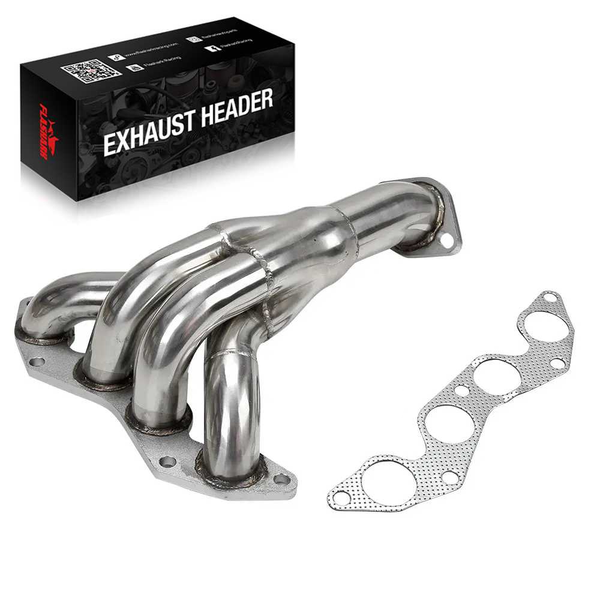
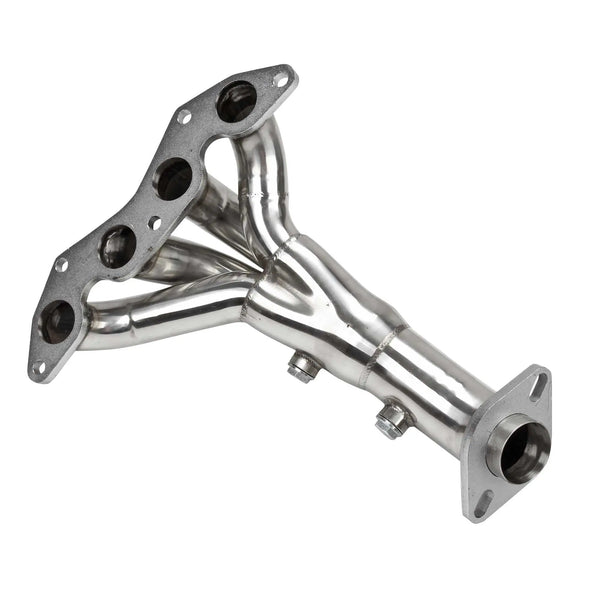
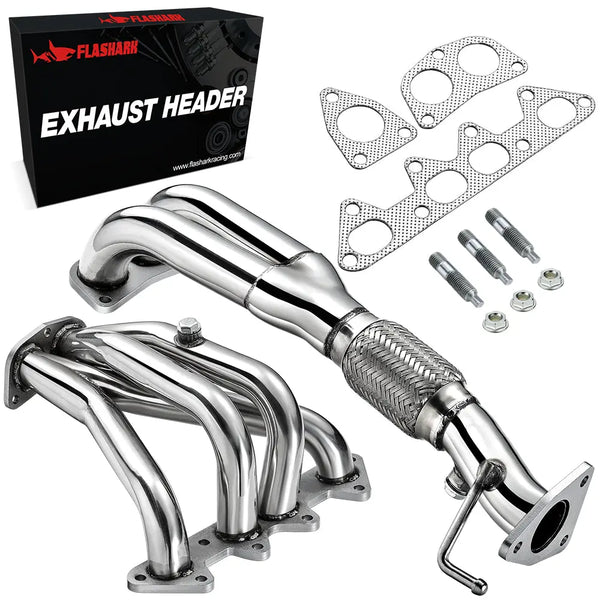
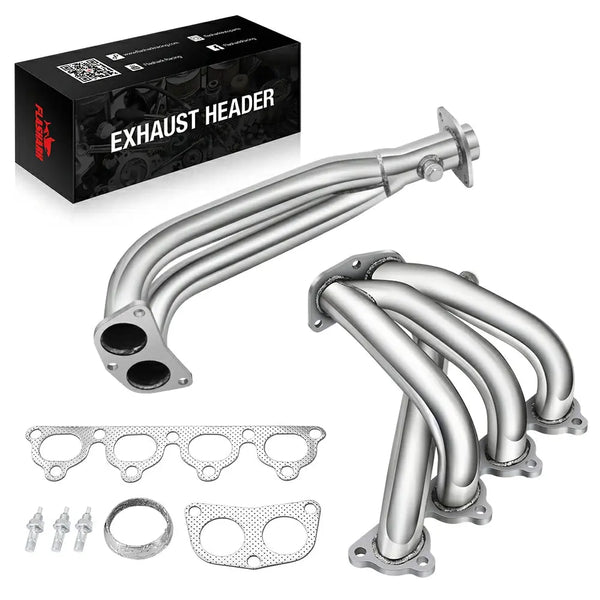
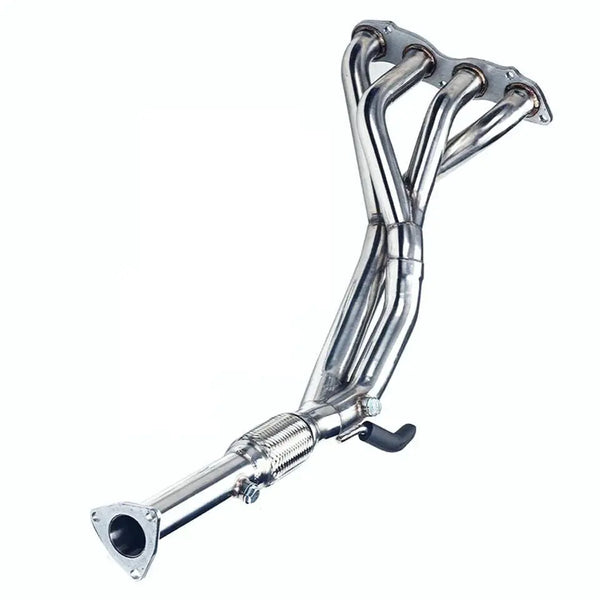
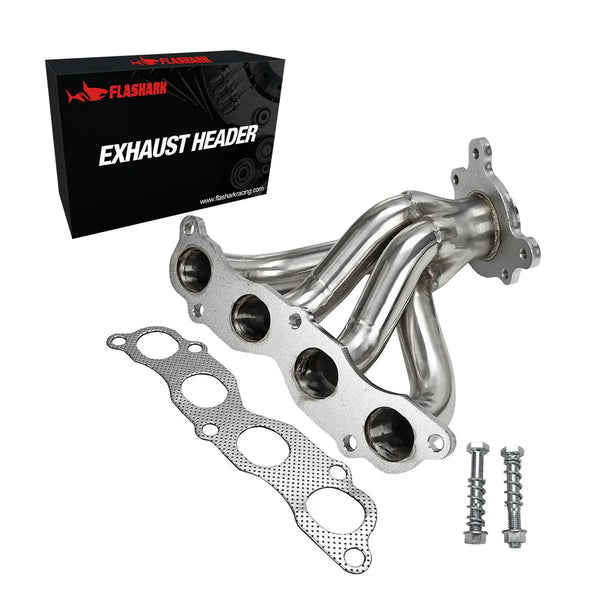
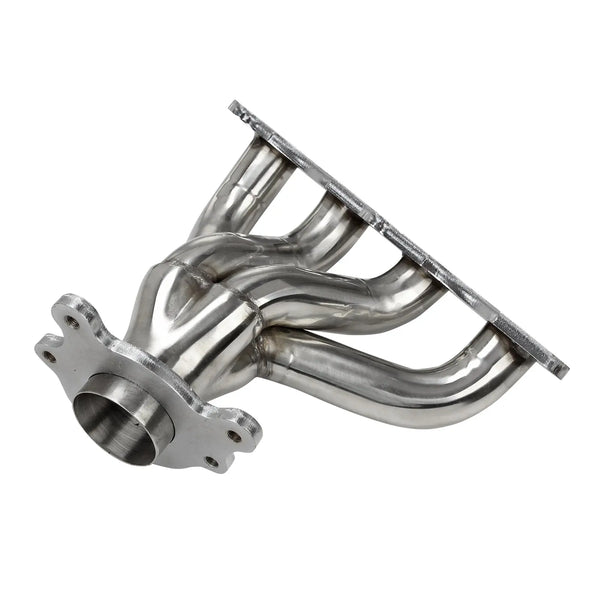
Honda Exhaust Headers are essential for directing exhaust gases from your engine’s cylinders to the exhaust system. Upgrading to high-performance headers enhances engine efficiency, boosts horsepower, improves fuel economy, and creates a more aggressive sound.
Why Upgrade to Honda Exhaust Headers?
- Boost Performance: Increase horsepower and torque
- Improve Fuel Efficiency: Optimize engine flow for better economy
- Enhance Sound: Enjoy a deeper, more powerful exhaust tone
- Reduce Heat: Lower engine temperatures and backpressure
Perfect for any Honda enthusiast looking to enhance both performance and sound.







Shop by Model: Civic | Accrod | Integra | RSX | Prelude
Other Brand: All | Chevy | Ford | Dodge | Jeep | BMW | Nissan | Toyota | Honda | Subaru | Other
Honda Exhaust Headers are essential for directing exhaust gases from your engine’s cylinders to the exhaust system. Upgrading to high-performance headers enhances engine efficiency, boosts horsepower, improves fuel economy, and creates a more aggressive sound.
Why Upgrade to Honda Exhaust Headers?
- Boost Performance: Increase horsepower and torque
- Improve Fuel Efficiency: Optimize engine flow for better economy
- Enhance Sound: Enjoy a deeper, more powerful exhaust tone
- Reduce Heat: Lower engine temperatures and backpressure
Perfect for any Honda enthusiast looking to enhance both performance and sound.
The Mechanic's Hook: Stop Choking Your Engine
Let's get real for a second. If you are still running the factory exhaust manifold on your Honda or Acura, you are literally suffocating your engine. Honda builds bulletproof blocks, but those stock cast-iron manifolds? Total garbage. They heat-cycle, they crack, and they bottleneck your exhaust flow right at the cylinder head. You feel that sluggish throttle response when you try to merge on the highway? That is your motor fighting to push exhaust gases out of a restrictive cast-iron straw. It's time to fix the physical restriction.
BLUF: Why Flashark Headers Actually Matter
- Immediate Physical Fix: Permanently cures the notorious OEM cast-iron cracking and annoying exhaust tick.
- Real-World Power: Expect a proven 10-15 whp gain on Golden Era B/D-Series, and a solid 15-25 whp on K-Series and J-Series engines when paired with a proper tune.
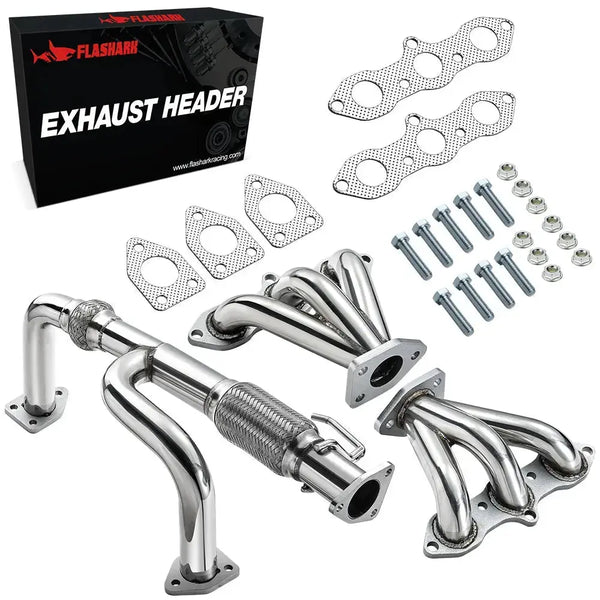
- Built to Take Abuse: Constructed from mandrel-bent T304 stainless steel with thick CNC-machined flanges to prevent warping under extreme track temps.
Factory Flaws vs. Flashark Craftsmanship
The Curse of the Cracked Cast Manifold
Look under the hood of almost any 90s Civic or early 2000s Accord with over 100k miles. Pull the rusty heat shield back. I guarantee you will find a hairline crack running straight down the middle of the collector. The factory iron just cannot handle decades of brutal heat cycling. It cracks, introduces unmetered air, ruins your O2 sensor readings, and wrecks your fuel trims.
T304 Stainless Steel vs. Factory Iron
We don't mess with cheap mild steel that rusts out in two winters. Flashark headers are built using T304 stainless steel. The difference is night and day. We use CNC-machined flanges that are thick enough to resist warping when bolted to an aluminum cylinder head. The TIG welds are stacked solid. You can bounce off the rev limiter all day at the track, and these won't blow out.
Choosing Your Weapon: Header Styles Decoded
4-2-1 Tri-Y vs. 4-1 Configurations
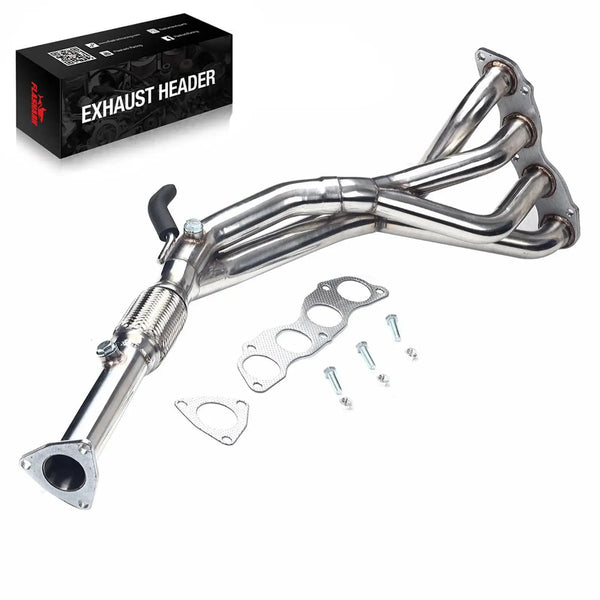
Don't listen to the forum BS; pick the pipe that fits your driving style. A 4-2-1 (Tri-Y) setup merges four runners into two, then into one. This creates massive mid-range torque. It's the absolute best choice for daily driving and street pulls. A 4-1 header dumps all four cylinders straight into a massive collector. You lose a little low-end grunt, but it absolutely screams past 6,500 RPM. Strictly for track rats and high-revving builds.
Shorty vs. Long Tube & UEL Headers
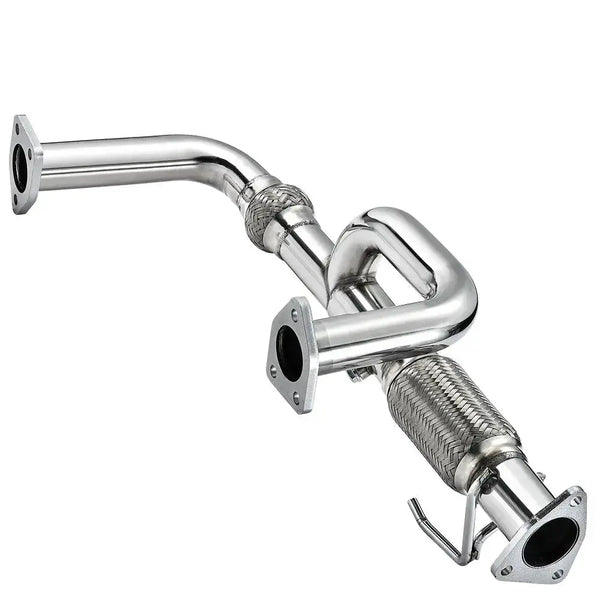
Shorty headers are your direct replacements. They bolt right up to the factory catalytic converter. Easy install, no fuss. Long tube headers bypass the factory cat location entirely to maximize exhaust scavenging. They flow significantly better but require more elbow grease to fit. And yeah, we hear you Subaru guys—Unequal Length (UEL) headers give your Honda that aggressive boxer rumble, though traditional equal-length pipes are still mathematically better for pure pulse timing.
| Header Type | Power Band Focus | Best Application | Install Difficulty |
|---|---|---|---|
| 4-2-1 (Tri-Y) | Mid-Range (3000-6000 RPM) | Street / Daily Driving | Moderate |
| 4-1 | Top-End (6000+ RPM) | Track / Drag Racing | Moderate |
| Shorty | Low to Mid-Range | Direct OEM Replacement | Easy |
| Long Tube | Broad Power Band | Max Effort NA Builds | Hard (Requires modifying exhaust) |
The Hardcore Science: Beyond the Dyno Sheet
Exhaust Scavenging & Volumetric Efficiency
This isn't magic; it is pure fluid dynamics. When your engine fires, it pushes an exhaust pulse down the runner. A properly designed header uses the low-pressure zone behind that pulse to physically suck the exhaust out of the next firing cylinder. This vacuum effect even helps pull the fresh intake charge past the intake valves faster. This is how you drastically improve volumetric efficiency. Dyno numbers are cool, but the throttle response improvement is what you actually feel in the driver's seat.
Heat Management & Thermal Velocity
Here is a physics lesson for your garage: hot gases move faster than cold gases. By keeping the exhaust heat contained inside our thick-walled T304 stainless tubing, the thermal velocity of the exhaust gas stays high, pushing it out the tailpipe quicker. As a bonus, this keeps ambient engine bay temperatures down, preventing your intake from sucking in hot, power-robbing air.
Engine-Specific Fitment & Power Progression Analysis
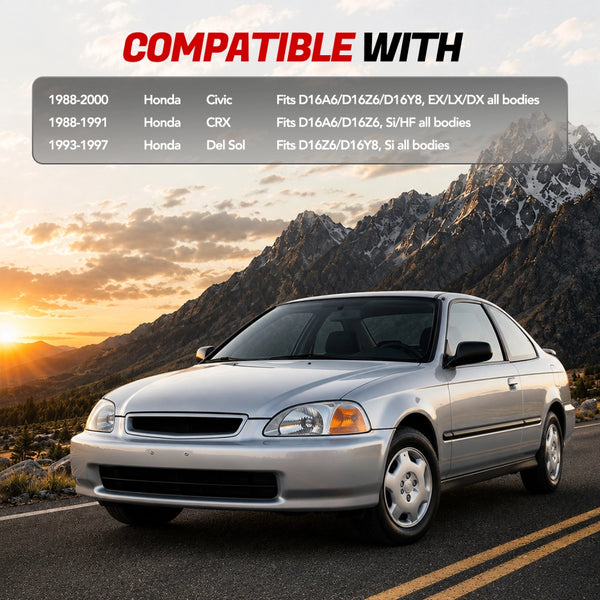
Golden Era B-Series & D-Series (1990-2000 Civic, Integra, CRX)
If you're building a 1998 Honda Civic or an old-school Integra, you are likely dealing with a D16 headers, B16, or B18. The factory exhaust manifold on these choke out the VTEC crossover severely. Stepping up to a header with a 2.5-inch collector is the definitive way to wake up that high-cam transition. The B-series engines respond violently to a good 4-2-1 setup headers, dropping ETs at the drag strip instantly.
The K-Series Revolution (2002+ RSX, TSX, Civic Si)
The K20 and K24 are airflow monsters. Period. Whether you are hunting for 2004 Acura TSX headers or parts for your 8th Gen Civic Si, the rule is the same: the factory catalytic converter and pinched piping are ruining your i-VTEC potential. Bolting on a race header eliminates that massive restriction. With a 3-inch exhaust and a K-Tuner or Hondata reflash, K-series motors easily pick up 20+ wheel horsepower from this one mod.
Big Block J-Series V6 (Accord & Acura TL/CL Type-S)
The J32 and J35 engines sound incredible, but Honda choked them with terrible cast pre-cats and a crushed factory J-pipe. Upgrading to aftermarket Acura headers on your TL or Honda Accord V6 completely transforms the car. You get a vicious, exotic exhaust note and a massive spike in throttle response that makes the heavy chassis feel 500 lbs lighter.
The Mechanic's Pitfall Guide: Installation & Emissions Warnings
Managing the Check Engine Light (CEL) and O2 Sensors
Listen up: if you install catless long tube headers, your secondary O2 sensor will read too much flow and throw a P0420 catalyst inefficiency code. If you are building a dedicated track car, use a mechanical O2 defouler (spacer) to pull the sensor out of the direct exhaust stream, or better yet, permanently disable the secondary sensor via your tuning software. Always check your local emissions laws before turning a wrench.
The Gasket Mistake: A Shop Floor Story
I remember back in '18, a kid brought his 2006 Acura RSX Type-S into the shop. Complained about a massive exhaust leak and a ticking sound that drove him crazy. We pulled the cowl and heat shield off, and sure enough, he had tried to install headers in his driveway but reused the crushed 15-year-old OEM metal gasket. Even worse, he hit the bolts with a pneumatic impact gun instead of hand-threading them. Cross-threaded two studs right into the aluminum K20 head. Complete nightmare to extract. Listen to me on this: throw the old stuff in the trash. Always use the fresh gaskets we provide in your Flashark kit. Hand-thread every single nut. Torque them to factory spec from the center, moving outward. Don't be that guy.
Top 10 FAQs on Honda & Acura Headers
Q1: Do I need to tune my Honda Civic after installing headers?
A1: For a simple shorty header on an older D-series, the factory ECU can usually adjust fuel trims enough to compensate. But if you are installing long tube headers on a K-series (like a Civic Si or RSX), yes. You need a tune via Hondata or K-Tuner to optimize fuel maps and actually make power, otherwise, you'll run lean.
Q2: Are Unequal Length (UEL) headers bad for a Honda engine?
A2: They aren't "bad" and won't blow up your engine, but they are designed entirely for sound (giving you that Subaru rumble) rather than maximum performance. Equal length headers provide superior pulse timing and exhaust scavenging for better peak horsepower.
Q3: Can I pass smog in California with aftermarket headers?
A3: Only if the header has a specific CARB (California Air Resources Board) EO number. Most direct-replacement shorty headers that retain the factory catalytic converter are 50-state legal. Catless race headers or long tubes are strictly for off-road/track use only.
Q4: What is the difference between Flashark headers and older brands like DC Sports or Comptech?
A4: A lot of legacy brands relied on ceramic-coated mild steel, which inevitably chips and rusts. Flashark uses modern T304 stainless steel, thicker flanges to prevent warping, and superior TIG welding. You get top-tier manufacturing tolerances without the insane "JDM tax".
Q5: Are the headers for a 1998 Civic EX the same as a DX or LX?
A5: No. The 1998 Honda Civic EX (D16Y8) has a traditional exhaust manifold that bolts to an under-car catalytic converter. The DX and LX (D16Y7) have the catalytic converter built directly into the exhaust manifold. If you put EX headers on a DX/LX, you must also install an aftermarket cat and EX-style mid-pipe.
Q6: How much horsepower do headers actually add to a K24 or B18?
A6: On a bone-stock B18 without a tune, maybe 7-10 whp. On a K24 with a 3-inch exhaust, high-flow intake, and a dyno tune, you can easily see gains of 15 to 25 wheel horsepower by ditching the factory restrictions.
Q7: Why is my exhaust rasping or rattling after installing new headers?
A7: Two main culprits. First, removing the catalytic converter removes a massive sound dampener, leading to exhaust "rasp"—you usually need to add a vibrant resonator to fix this. Second, check your clearances; larger piping often rattles against the oil pan, subframe, or factory heat shields.
Q8: Should I use exhaust wrap on my stainless steel headers?
A8: For a street car, I strongly advise against it. Exhaust wrap traps moisture and oil, which can degrade even high-quality stainless over years of street driving. If you need heat management, get them ceramic coated or fabricate a custom aluminum heat shield.
Q9: Are Acura TL and Honda Accord V6 headers interchangeable?
A9: Generally, yes, if they share the same J-series generation (e.g., J32A3 and J30A4). However, subframe clearance and J-pipe lengths can vary slightly between the TL and Accord chassis. Always verify your specific year and engine displacement before buying.
Q10: Will installing headers on my Acura TSX make the cabin drone?
A10: Headers change the tone and volume, but drone is usually caused by your muffler and resonator setup. If you run race headers straight into a cheap fart-can muffler, it will drone miserably at 3,000 RPM. Pair your headers with a quality baffled exhaust system for a clean tone.