


 Need car parts? Shop by vehicle
(Select the exact fit for your vehicle)
Need car parts? Shop by vehicle
(Select the exact fit for your vehicle)
Subaru Exhaust Header
Shop By Brand: All | Chevy | Ford | Dodge | Jeep | BMW | Nissan | Toyota | Honda | Subaru | Other
Subaru Exhaust Headers are designed to efficiently channel exhaust gases from your engine's cylinders to the exhaust system, improving overall engine performance. Upgrading to high-performance headers can boost horsepower, enhance sound, and improve fuel efficiency while reducing heat buildup.
Benefits of Subaru Exhaust Headers:
- Increase Performance: Gain more horsepower and torque for a better driving experience
- Enhance Sound: Achieve a deeper, more aggressive exhaust note
- Improve Fuel Efficiency: Optimize engine flow for better fuel economy
- Reduce Heat: Minimize engine heat and backpressure
Perfect for Subaru enthusiasts looking to enhance both performance and sound, whether you're on the road or off the track.
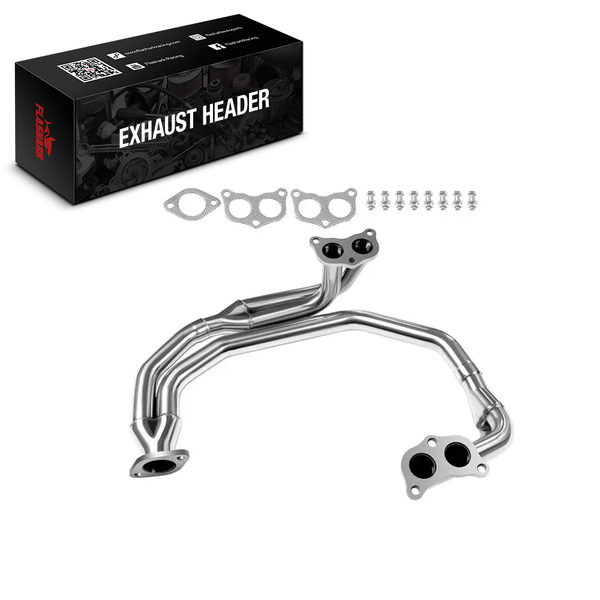
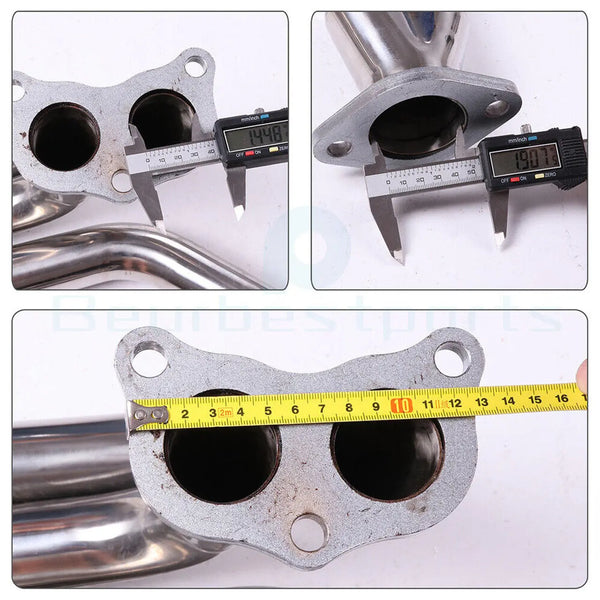
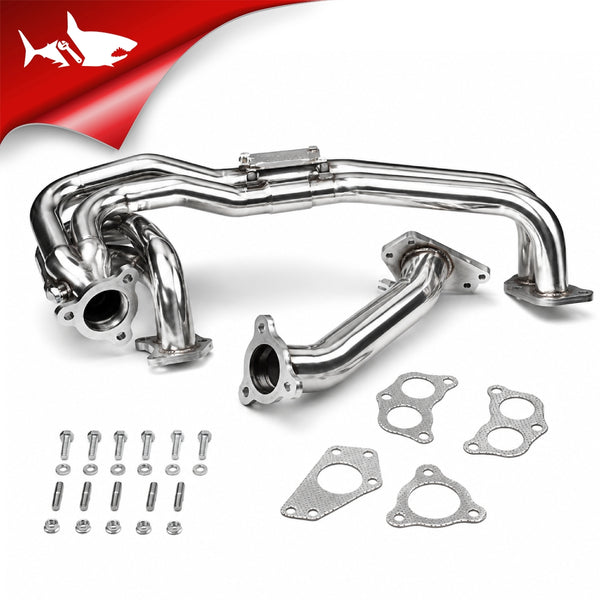

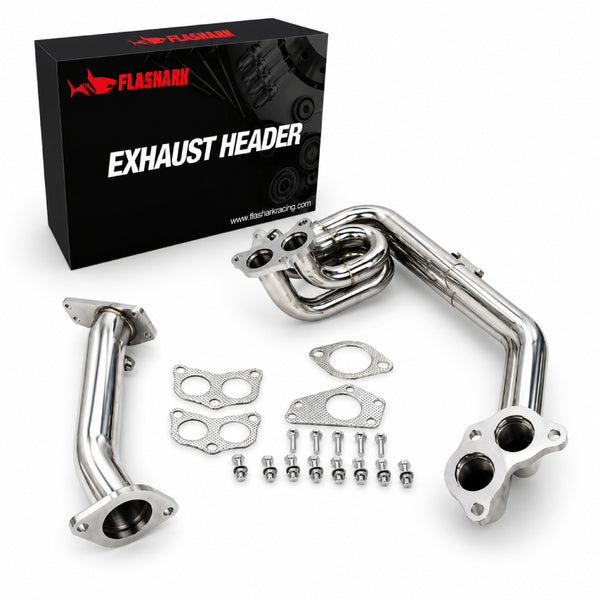
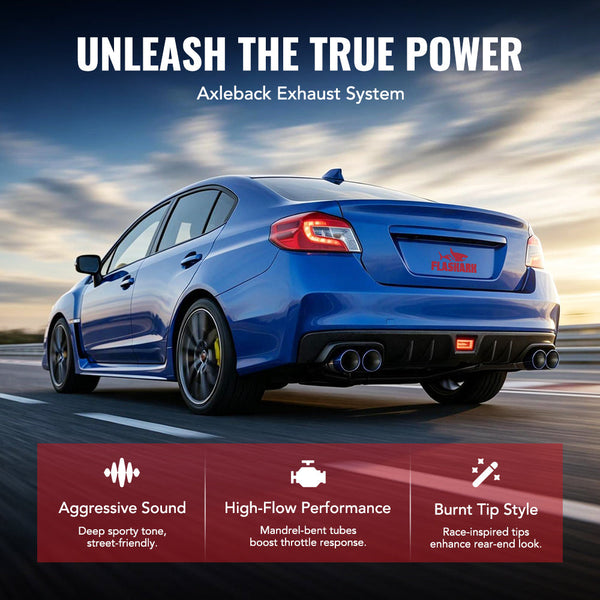


Shop By Brand: All | Chevy | Ford | Dodge | Jeep | BMW | Nissan | Toyota | Honda | Subaru | Other
Subaru Exhaust Headers are designed to efficiently channel exhaust gases from your engine's cylinders to the exhaust system, improving overall engine performance. Upgrading to high-performance headers can boost horsepower, enhance sound, and improve fuel efficiency while reducing heat buildup.
Benefits of Subaru Exhaust Headers:
- Increase Performance: Gain more horsepower and torque for a better driving experience
- Enhance Sound: Achieve a deeper, more aggressive exhaust note
- Improve Fuel Efficiency: Optimize engine flow for better fuel economy
- Reduce Heat: Minimize engine heat and backpressure
Perfect for Subaru enthusiasts looking to enhance both performance and sound, whether you're on the road or off the track.
High-Performance Subaru Headers: Saving Cylinders and Freeing the Rumble
Let’s be brutally honest. You can spend all day arguing on NASIOC about which intake sounds the coolest, but if you're ignoring your exhaust manifold, you're driving a ticking time bomb. Factory Subaru headers are restrictive, heavy cast-iron nightmares. They trap a massive amount of extreme exhaust heat directly around Cylinder 4. And if you know anything about the EJ platform, you know that excessive heat is exactly what causes the dreaded ringland failure. Upgrading your Subaru headers isn’t just about making your boxer engine louder. It is a critical survival modification. You need to pull that heat out of the block, scavenge the exhaust pulses efficiently, and let the turbo actually do its job without fighting backpressure.
The Bottom Line Up Front (BLUF): What You Actually Get
- Thermal Survival: Ditching the cast iron drops radiant engine bay temperatures and significantly lowers Exhaust Gas Temperatures (EGTs), saving your pistons.
- Proven Dyno Gains: Expect a legitimate 15-20 whp bump with UEL setups, and up to 25-30+ whp with EL headers when paired with a proper pro-tune.
- Turbo Response: Mandrel-bent runners eliminate turbulent backpressure, cutting turbo spool times and bringing your peak boost in hundreds of RPMs sooner.
Factory Flaws vs. The Flashark Advantage
The Heat-Soak Nightmare of Cast Iron
The OEM Subaru manifold is thick, heavy, and shielded by cheap tin that rattles relentlessly. Worse, that cast iron acts like an oven. It soaks up exhaust heat and radiates it directly back into your aluminum engine block and oil pan. When you're beating on the car through a canyon, that trapped heat cooks your oil and fries your internal components. Shedding this restriction is about engine survival.
Flashark Material & TIG Welding Craftsmanship
We don't mess around with cheap, thin-walled piping that cracks the second it gets hot. Flashark headers are built using mandrel-bent T304 stainless steel, finished with precision TIG welds. Stainless steel expands and contracts properly under extreme turbo heat. The smooth internal walls prevent the exhaust gases from tumbling and stalling, keeping your exhaust velocity dangerously high.
Choosing Your Weapon: UEL vs. EL Headers Compared
This is the most religious debate in the Subaru community. Stop listening to the forum hype and look at what your build actually needs.
| Spec Comparison | UEL (Unequal Length) | EL (Equal Length) |
|---|---|---|
| Sound Profile | Retains the classic deep, burbling "Subaru Rumble". | Smooth, high-pitched, aggressive motorsport scream. |
| Performance Goal | Excellent low-to-mid range torque for street driving. | Maximum peak high-RPM horsepower and flow. |
| Cylinder Balance | Maintains some factory heat bias (Cyl 4 runs hotter). | Perfectly balances EGTs across all four cylinders. |
Beyond the Dyno: The Hardcore Science of Scavenging
Exhaust Scavenging & Volumetric Efficiency
Peak dyno numbers are cool for Instagram, but volumetric efficiency wins races. Properly tuned runner lengths—especially on an EL setup—create a literal vacuum effect. When one exhaust pulse leaves the cylinder, it creates a low-pressure zone that actively sucks the dead exhaust gases out of the next firing cylinder. Better scavenging means the engine doesn't fight itself, pulling a cleaner, denser air/fuel charge into the intake stroke.
Protecting the Oil Pan and Block
Because the boxer engine lays flat, the exhaust manifold wraps directly around the oil pan. Replacing the bulky factory log with sleek stainless tubular headers drastically increases ambient airflow under the engine block. If you ceramic coat these headers, the radiant heat stays strictly inside the pipe, dropping your engine oil temperatures significantly during hard track sessions.
Top Subaru Fitments: Let's Talk Specific Engines and Chassis
2.5L EJ257 (STI / WRX): Saving the Ringlands
The EJ257 is notorious for detonating ringlands. The root cause is almost always cylinder pressure and extreme heat. Upgrading the header and up-pipe relieves the massive backpressure sitting between the engine and the turbocharger. By dropping those EGTs, you pull the engine out of the danger zone, making your tune safer and your power delivery violently smooth.
2.0L FA20 / 2.4L FA24 (BRZ / GR86): Erasing the Torque Dip
For the naturally aspirated guys, the factory unequal-length manifold on the FA20 creates a frustrating, massive dead zone right around 4,000 RPM. Swapping to a properly tuned aftermarket manifold completely erases that torque dip. It transforms the car, allowing the boxer engine to pull linearly and aggressively all the way to redline.
2.0L FA20F / 2.4L FA24F (VA & VB WRX): The Twin-Scroll Advantage
Modern Direct Injection Turbo (DIT) engines use twin-scroll turbos. The factory manifold merges the exhaust pulses poorly. Flashark headers isolate and optimize those specific exhaust pulses feeding the twin-scroll turbine, resulting in lightning-fast boost response and a massive hit of low-end torque.
The Wrench's Survival Guide: Avoiding Common Header Traps
The Up-Pipe Catastrophe
If you own an older EJ, listen to me very carefully. Do not ignore your up-pipe.
Snapping Exhaust Studs in the Aluminum Block
Installing Subaru headers on your back in the driveway is actually easier than most inline engines because everything is right there under the bumper. But the hardware is treacherous. Taking a high-torque impact gun to 15-year-old exhaust nuts threaded into a soft aluminum block is financial suicide. Soak the studs in Kroil overnight. Use a hand ratchet. When reassembling, use brand-new OEM multi-layer steel gaskets and high-quality anti-seize on the threads.
Frequently Asked Questions (FAQs) on Subaru Headers
Q1: Will installing Equal Length (EL) headers make me lose the Subaru Rumble?
A1: Yes, absolutely. The signature rumble is physically caused by the unequal lengths of the exhaust runners creating acoustic interference. EL headers equalize the pulse timing, replacing the rumble with a smoother, higher-pitched aggressive tone.
Q2: Do I absolutely need a Cobb Accessport or pro-tune after installing headers?
A2: Yes. While the car will physically start, a tune is 100% mandatory. Changing the exhaust flow drastically alters your air/fuel ratio and wastegate duty cycles. Running untuned will cause the car to run lean and overboost, risking catastrophic engine failure.
Q3: How much horsepower do UEL vs. EL headers add to a WRX/STI?
A3: A quality UEL setup usually yields 15-20 WHP with a solid mid-range punch. An EL setup flows better at high RPMs and can yield 20-30+ WHP with massive top-end gains when paired with a proper pro-tune and supporting mods.
Q4: Will aftermarket headers void my Subaru factory warranty?
A4: Under the Magnuson-Moss Warranty Act, a dealership cannot blindly void your entire vehicle's warranty. However, they can legally deny a specific powertrain claim if they can prove the aftermarket headers or the mandatory ECU flash tune directly caused the engine or turbo to fail.
Q5: Do Flashark Subaru headers include the up-pipe?
A5: This depends on the specific kit. For many EJ20 and EJ25 applications, we offer combo kits that include both the 2-piece manifold and the up-pipe. For naturally aspirated (BRZ/86) or FA-series DIT engines, the manifold is a single direct-replacement unit.
Q6: Are headers hard to install on a Subaru in a driveway?
A6: Compared to an inline-six or a V8, it's actually quite accessible. Because the boxer engine lays flat, the entire exhaust manifold is exposed on the bottom of the engine. The only real difficulty is fighting rusty 14mm nuts and ensuring the slip-joints are perfectly aligned.
Q7: Should I heat-wrap my stainless steel Subaru headers?
A7: Heat management is critical on a boxer engine. Ceramic coating is the superior, permanent choice. Heat wrap works incredibly well to lower under-hood temps, but if you daily drive the car in rain or snow, the fiberglass wrap can trap moisture and road salt against the metal, accelerating fatigue.
Q8: Can I pass OBD2 emissions testing with aftermarket Subaru headers?
A8: It highly depends on your state. If you remove the cats located in the factory BRZ/86 header, or delete the catted up-pipe on an early WRX, you will fail a visual inspection and likely fail an OBD2 plug-in test unless your tuner disables the readiness monitors (which is increasingly difficult with green-speed updates).
Q9: Why does my car smell like exhaust in the cabin after installing headers?
A9: You have an exhaust leak. Subaru exhaust flanges are notoriously finicky. If you reused old, crushed metal gaskets or didn't torque the up-pipe flange evenly, exhaust gases will leak out and get sucked directly into your cabin air intake located at the base of the windshield.
Q10: Does an aftermarket header reduce turbo lag on an EJ25?
A10: Yes. By removing the restrictive cast iron walls and optimizing the runner diameter, exhaust gas velocity increases drastically. This rapid flow hits the exhaust turbine wheel faster and harder, spinning the turbo up quicker and pushing your peak boost a few hundred RPM lower in the powerband.