


 Need car parts? Shop by vehicle
(Select the exact fit for your vehicle)
Need car parts? Shop by vehicle
(Select the exact fit for your vehicle)
Ford F150 Catback Exhaust
The Ford F-150 is built for strength and versatility, and upgrading to a high-performance catback exhaust is a key step in enhancing its power and sound. This exhaust system improves exhaust flow, reduces backpressure, and increases horsepower, torque, and throttle response. It also provides a deeper, more aggressive exhaust note that matches the rugged nature of the F-150.
In addition to performance gains, the catback exhaust system can also improve fuel efficiency and reduce engine strain. Whether you're towing, hauling, or simply enjoying a drive, this upgrade ensures your F-150 performs at its best while turning heads with a commanding exhaust sound.
Shop by Brand: Ford Mustang
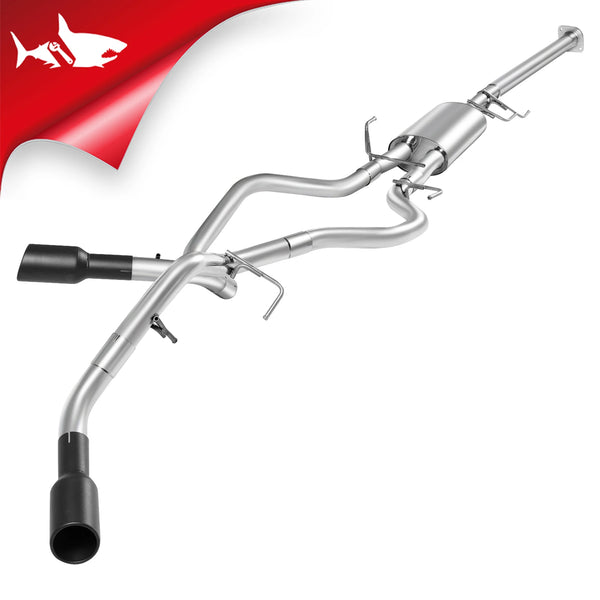
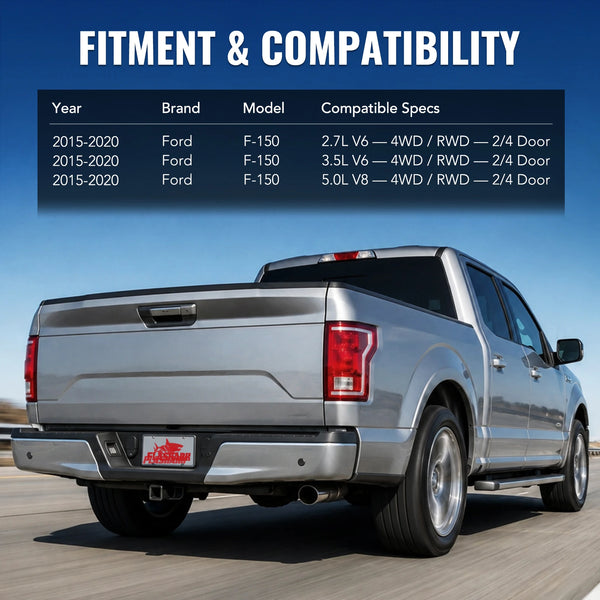
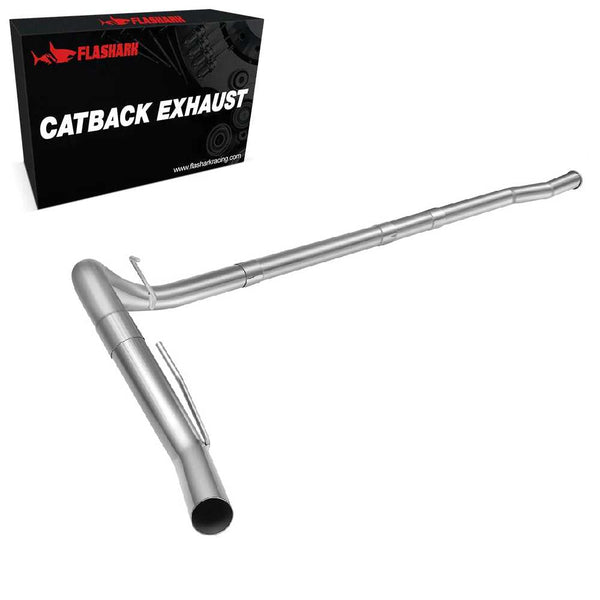
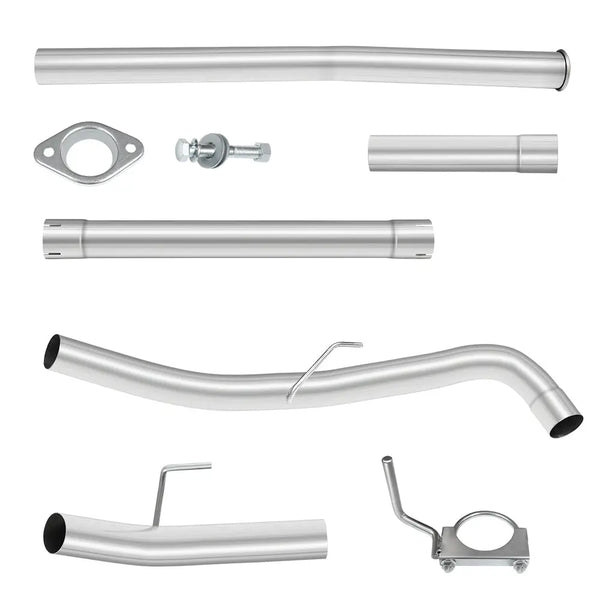
The Ford F-150 is built for strength and versatility, and upgrading to a high-performance catback exhaust is a key step in enhancing its power and sound. This exhaust system improves exhaust flow, reduces backpressure, and increases horsepower, torque, and throttle response. It also provides a deeper, more aggressive exhaust note that matches the rugged nature of the F-150.
In addition to performance gains, the catback exhaust system can also improve fuel efficiency and reduce engine strain. Whether you're towing, hauling, or simply enjoying a drive, this upgrade ensures your F-150 performs at its best while turning heads with a commanding exhaust sound.
Shop by Brand: Ford Mustang
Unleash Your Truck's True Potential: The Ultimate Flashark Ford F150 Catback Guide
Look, I’ll be straight with you. I’ve spent thousands of hours under the chassis of these trucks, and it’s the same frustrating story every time. Ford builds a hell of a powertrain, but then the bean counters step in. They bolt on this massive, 45-pound steel suitcase of a muffler right under your bed. It’s built for quiet suburban drive-thrus, not for letting a Coyote V8 breathe or letting those twin turbos actually spool. Forget the forum BS about "needing backpressure." The reality? That factory crush-bent tubing is an asthmatic bottleneck. It chokes your top-end power and completely castrates the exhaust note. If you want to feel what your truck can actually do, you need to rip that restriction out.
The Bottom Line Up Front (BLUF): What a Flashark F150 Catback Actually Delivers
- Real Dyno Output: Expect a proven 12-20 whp and 15-25 lb-ft of torque increase, bringing your mid-to-high RPMs to life.
- Thermal Management: Drops Exhaust Gas Temperatures (EGTs) by up to 60°F on EcoBoost motors, heavily reducing turbo heat soak when towing up a grade.
- The Weight Diet: Shaves off roughly 20 lbs of dead chassis weight by tossing the factory resonator and muffler.
- Acoustic Engineering: Delivers a deep, aggressive roar on throttle, but utilizes targeted internal baffling to keep the cabin drone-free at 75 mph.
Ditching the Restrictive Factory Setup: Pain Points & Flashark Solutions
I’ve torched off enough seized, rusted-out factory tailpipes to know mild steel is a joke. After a couple of winters in the rust belt, the OE tubing looks like peeling tree bark. But it's not just about the rust; it's about the restrictive airflow.
Aerospace-Grade Materials & Mandrel-Bent Craftsmanship
Flashark doesn't mess around with cheap alloys. We build our systems using thick-walled T304 and T409 stainless steel. More importantly, every single curve is CNC mandrel-bent. When a factory pipe bends over the rear axle, it crinkles and shrinks the inner diameter. A mandrel bend stays perfectly round. If it’s a 3-inch Ford F150 Catback, it stays a true 3 inches the entire way out the back.
The Sound of Power: Tuning the F150 Exhaust Note
Your F150 shouldn't sound like a fleet vehicle. But slapping a straight pipe on it is a rookie mistake—you just end up with an obnoxious, raspy rattle. Flashark tunes the muffler packing with high-temp, high-density fiberglass to absorb those harsh, high-frequency trash noises. You get the aggressive, bone-rattling cold start outside, while the cabin stays comfortable enough to take a phone call on the highway.
Proven Performance Gains: HP, Torque, and Scavenging Effect
Let's talk fluid dynamics. Replacing your restrictive factory pipe with a high-flow F150 Catback maximizes the scavenging effect. Fast-moving exhaust gases create a vacuum pulse that literally sucks the spent exhaust out of the next firing cylinder. Less pumping loss for the engine means a sharper, more violent throttle response.
Choosing Your F150 Layout: Dual vs. Side Exit vs. Dumped
We purposefully engineered three distinct layouts for this truck. Don't just pick a style because it looks cool on a screen. Pick the layout that survives how you actually use your rig.
| Exhaust Layout | Ideal F150 Application | The Good | The Bad |
|---|---|---|---|
| Single Side Exit | Overlanding, Towing & Work Trucks | Maximum ground clearance. Tucked high behind the passenger tire, safe from trail rocks. | Standard visual look; keeps a low profile. |
| Dual Rear Exit | Street Trucks & Highway Cruisers | Aggressive, symmetrical muscle-truck aesthetic. Incredible stereo exhaust note. | Exhaust tips can drag or get crushed on steep off-road departure angles. |
| Turndown (Dumped) | Hardcore Off-Roaders | Absolutely zero chance of crushing a tailpipe. Massive weight reduction. | Loudest cabin noise. Kicks up severe dust directly under the bed on dirt roads. |
The Hardcore Nerd-Out: Hidden Benefits of F150 Free-Flowing Exhausts
There are massive mechanical benefits the dyno sheets won't explicitly show you. On an EcoBoost, excessive backpressure traps extreme heat inside the turbine housing. By bolting on a high-flow system, you give that heat an immediate escape route. The result? Your turbos spool about 200-300 RPM sooner, and your oil temps stay remarkably stable during consecutive hard pulls or long towing stints.
Platform-Specific Deep Dive: F150 Engines and Power Dynamics
A truck pulling an 8,000 lb camper needs different airflow dynamics than an empty street truck running a custom tune. Here is how it breaks down for Ford's heavy hitters.
The 5.0L Coyote V8: Freeing the American Roar
The Coyote is a high-revving masterpiece that desperately wants to breathe past 5,500 RPM. The stock exhaust heavily restricts this top-end rush. Running a Flashark system entirely transforms the truck, giving it that iconic, deep V8 bark while freeing up top-end horsepower that the factory system suffocates.
3.5L EcoBoost V6: Turbo Spool and Heat Management
Listen, I know the biggest complaint from 3.5L owners: "It sounds like a vacuum cleaner." You will never make a twin-turbo V6 sound like a V8—don't let anyone lie to you. But a properly sized 3-inch catback will deepen the exhaust tone to a throaty growl and significantly amplify the turbo spool, making the truck actually sound like the powerhouse it is, while drastically cutting turbo lag.
2.7L EcoBoost V6: Optimizing Low-End Grunt
For the punchy 2.7L, it’s all about maintaining exhaust gas velocity to keep that low-end torque fat and usable. Going too big on the piping here is a mistake. We utilize optimized pipe diameters to ensure you get a deep, aggressive tone without losing an ounce of the low-end grunt you need for getting off the line.
The Mechanic's Warning: Avoiding F150 Exhaust Pitfalls and CEL Nightmares
⚠️ Garage Truths: Leave the Cats Alone
"In my shop, I've seen at least a dozen F150 owners try to go the cheap route. They grab a Sawzall, hack off the factory catalytic converters, and weld in a piece of scrap pipe because they heard it makes more power. Last Tuesday, a guy limped his 2022 3.5L into my bay. His dash was lit up with Check Engine Lights (CEL), his O2 sensors were completely out of range, and the truck was locked in Limp Mode. It drove like garbage.
Hear me clearly: a true Ford F150 Catback Exhaust from Flashark bolts on strictly after the factory cats. You don't mess with the emissions sensors, and you never throw a CEL. You get the airflow, the sound, and the power—without the dashboard nightmares. Do it right."
Frequently Asked Questions (Ford F150 Catback Exhausts)
Q1: Does a catback exhaust void my Ford F150 factory warranty?
A1: No. Under the federal Magnuson-Moss Warranty Act, a dealership cannot void your vehicle's overall warranty simply because you installed an aftermarket exhaust. They would have to mathematically prove the exhaust directly caused a specific mechanical failure.
Q2: Will installing a Flashark catback trigger a Check Engine Light (CEL) on my F150?
A2: Absolutely not. Because the system is installed completely downstream of the factory catalytic converters and O2 sensors, your truck's emissions monitoring system remains untouched. Your ECU will not throw any codes.
Q3: How do you fix exhaust drone on an F150 at highway speeds?
A3: Drone is caused by specific low-frequency sound waves resonating in the cabin around 1,800 to 2,000 RPM. Flashark eliminates this by engineering precision mufflers and utilizing high-density acoustic packing that naturally cancels out those frequencies, keeping highway cruising smooth.
Q4: Can I make my 3.5L EcoBoost sound exactly like a 5.0L V8?
A4: Let's be honest: no. A V6 will never mimic the firing order of a V8. However, a quality catback will eliminate the raspy, vacuum-cleaner noise, replacing it with a deep, aggressive V6 growl while noticeably amplifying the awesome sound of your turbos spooling.
Q5: T304 vs. T409 Stainless Steel: Which does my F150 need?
A5: T304 is the premium, high-nickel alloy that basically ignores rust, making it mandatory for nasty winter climates with heavy road salt. T409 is a highly durable, budget-friendly alternative that will develop a surface oxidation (a brown tint) over time but will never rust through like factory mild steel.
Q6: Can I install an F150 catback exhaust myself in the driveway?
A6: Yes. If you have a decent socket set, some jack stands, and a can of PB Blaster for the rusty bolts, you can do this. Flashark systems are bolt-on. Depending on your cab/bed length, you might need a Sawzall to cut the original mid-pipe for easier removal without dropping the axle, but the new system bolts right up. Expect 1.5 to 2.5 hours.
Q7: How much actual horsepower does a catback add to an F150?
A7: Realistically, you will see a gain of 12 to 20 wheel horsepower (whp). More importantly, relieving the backpressure on the EcoBoost twin turbos allows them to spool faster, giving you a sharper, more immediate throttle response off the line.
Q8: Is a Flashark F150 catback exhaust CARB compliant in California?
A8: Yes. Because a catback exhaust does not alter, remove, or relocate the factory emissions equipment (the catalytic converters), it is considered a sound-modifying component and is 50-state legal, including in California.
Q9: Do I need a custom ECU tune after putting a catback on my F150?
A9: No custom tuning is required. The factory Ford ECU is highly adaptive. Through its Long Term Fuel Trims (LTFT), the computer will automatically recognize the improved exhaust flow and adjust the air/fuel ratios safely after a few drive cycles.
Q10: Will a larger diameter exhaust pipe ruin my F150's towing torque?
A10: Only if you go ridiculously massive. Slapping a 4-inch pipe on a stock 2.7L will kill exhaust velocity and gut your low-end torque. Flashark properly sizes our piping (typically 3-inch single or 2.5-inch duals) to maximize high-end flow without sacrificing the low-end grunt you need for towing.


