


 Need car parts? Shop by vehicle
(Select the exact fit for your vehicle)
Need car parts? Shop by vehicle
(Select the exact fit for your vehicle)
Ford F150 Exhaust Header


Shop Exhaust Headers by Brand: Ford Exhaust Header
Shop by Model: Ford F-250 Headers | Ford Mustang Headers | Ford Bronco Headers
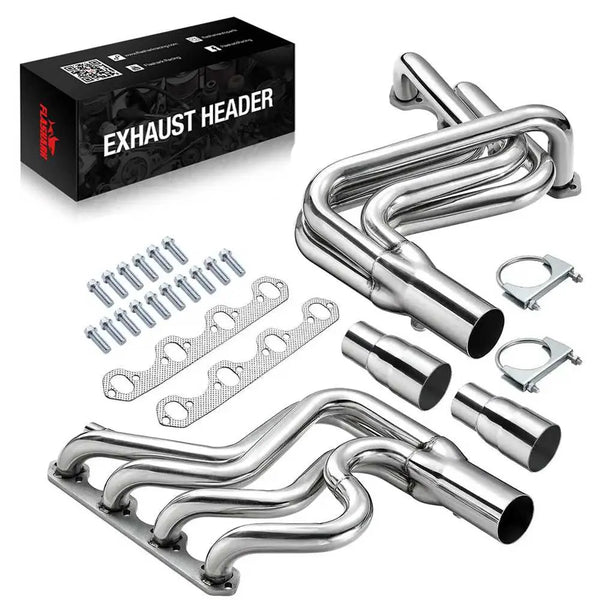
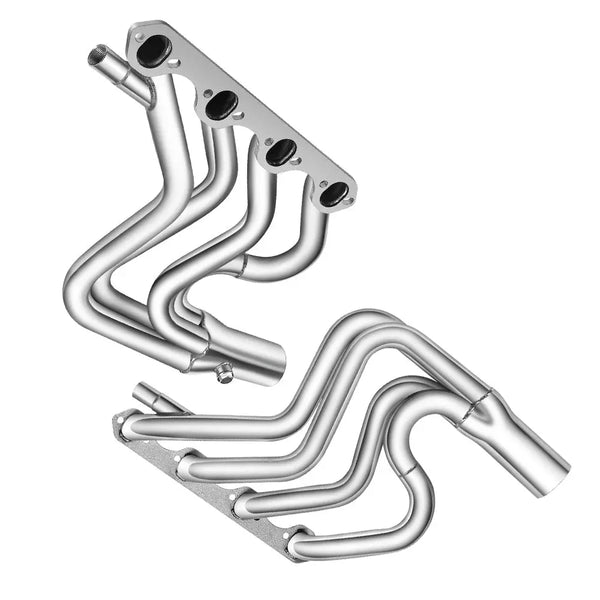
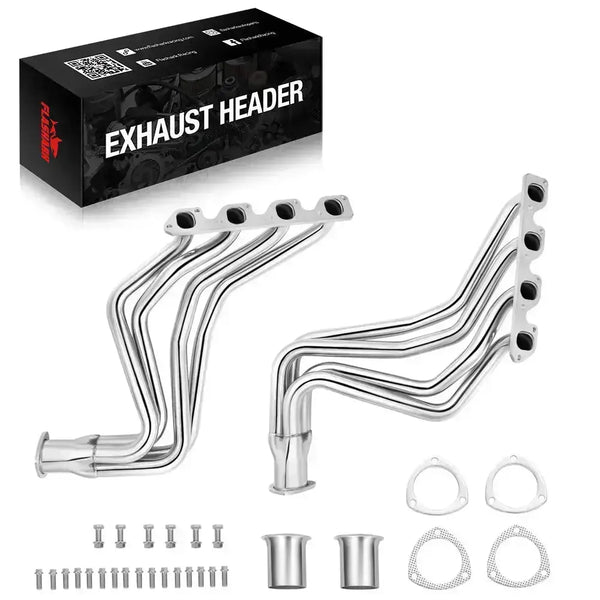
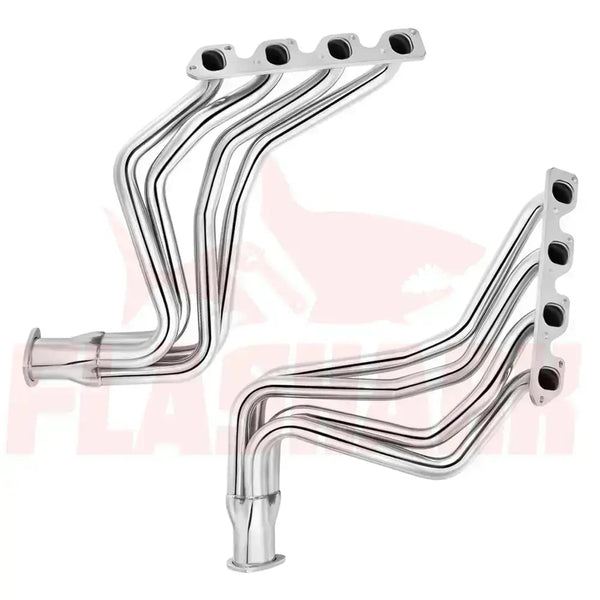
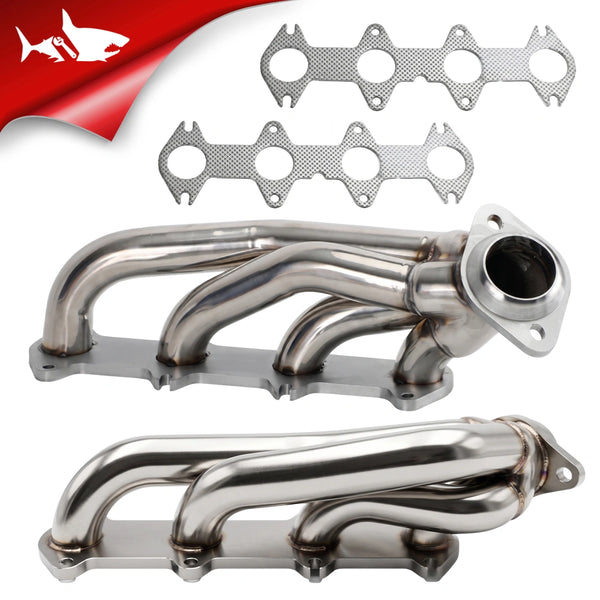
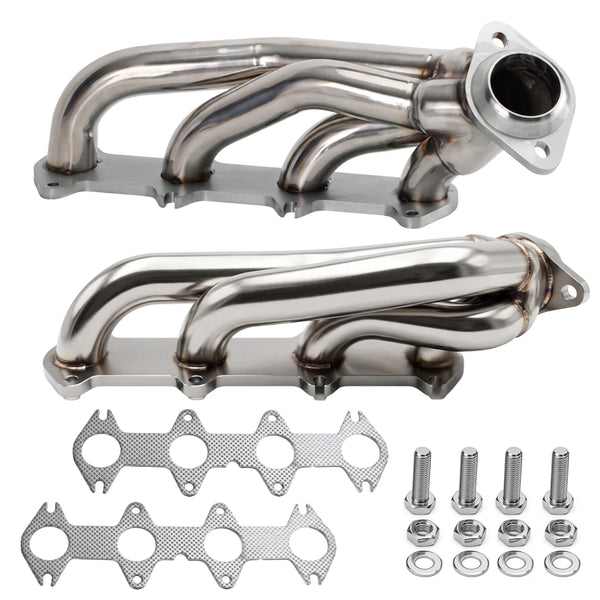
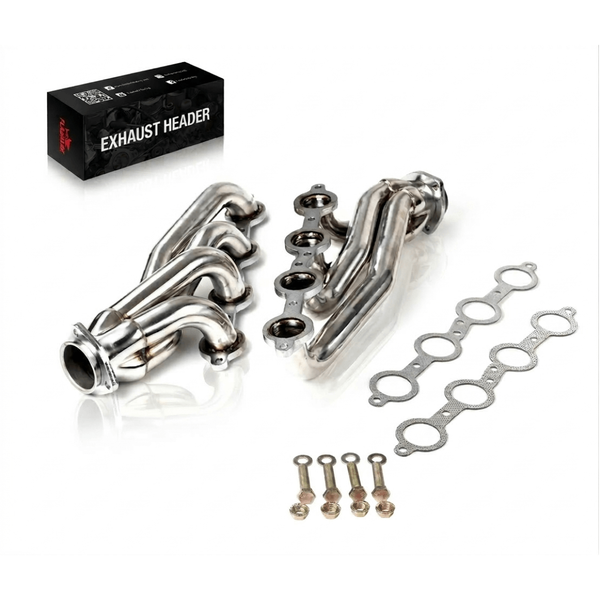
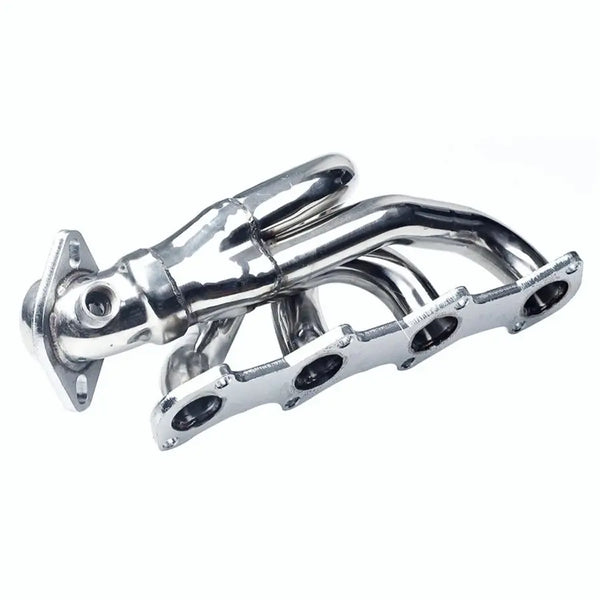
Shop Flashark headers for supported Ford F-150 V8 applications, from selected 1977–1979 trucks with 351M/400M engines through 2004–2010 models equipped with the 5.4L Triton V8. The collection also includes options for 1987–1996 5.8L trucks and selected 1997–2004 4.6L and 5.4L applications. Available designs include shorty-style replacements, long-tube headers, and a product with separate short- and long-tube variants. These options can replace aging factory manifolds or support a less restrictive exhaust setup, but the required clearance and downstream connection vary by product. Before ordering, verify the exact model year, engine, drivetrain, body exclusions, header variant, sensor provisions, and collector connection on the individual product page.
Recently viewed
Choose the Right Headers for Your Ford F-150
The products in this collection cover several generations of F-150 trucks, but coverage is not continuous and the parts are not interchangeable simply because two trucks have the same engine displacement. Changes in engine design, chassis layout, drivetrain hardware, factory exhaust routing, and emissions equipment can all affect fitment.
Start with the model year and engine shown on the vehicle, then compare those details with the individual product listing. Owners of 2004 trucks should pay particular attention to whether the vehicle is an F-150 Heritage or the newer 2004 F-150 configuration.
Before You Buy
- Confirm the model year, engine displacement, and engine version.
- Check whether the selected product is a shorty or long-tube design.
- Verify 2WD or 4WD compatibility instead of assuming both use the same routing.
- Compare the collector and outlet connection with the existing Y-pipe or exhaust system.
- Confirm O2 sensor, EGR, catalytic converter, and local emissions requirements.
Current F-150 Applications
The table below summarizes the product groups currently represented in this collection. It is a shopping guide rather than a substitute for the fitment details on each product page.
| Listed Years | Engine | Available Design | Important Fitment Check |
|---|---|---|---|
| 1977–1979 | 351M/400M, 5.8L/6.6L V8 | Long tube | The current listing specifies 4WD. Confirm the collector connection and downstream exhaust requirements. |
| 1987–1996 | 5.8L V8 | Short-tube and long-tube variants | Select the correct variant and verify the final supported year, drivetrain clearance, O2 provisions, and exhaust routing. |
| 1997–2003 | 4.6L V8 | Tubular manifold-replacement header | Check the listed body and trim exclusions, plus drivetrain, sensor, and outlet compatibility. |
| 1997/1999–2004 | 5.4L V8 | Shorty-style options | Listings overlap and do not use the same starting year. Confirm the SKU, 2-valve application, and whether a 2004 truck is an F-150 Heritage. |
| 2004–2010 | 5.4L Triton V8 | Confirm on product page | Verify the exact engine version, header structure, collector, sensors, drivetrain, and downstream connection. |
Shorty and Long-Tube Header Differences
Shorty-style headers remain closer to the factory manifold location and may be the more practical choice when the goal is to replace a damaged or leaking manifold while retaining more of the existing exhaust layout. Connection details still vary, so “shorty” should not be treated as a guarantee that every part of the factory Y-pipe will bolt up without adjustment.
Long-tube headers extend farther under the truck. Their longer primary tubes and collector position can change how the headers meet the rest of the exhaust. Depending on the product and vehicle, installation may require different reducers, clamps, intermediate pipes, welding, or other exhaust work. Long-tube fitment also makes drivetrain and underbody clearance especially important.
Collector and Y-Pipe Connections
Collector diameter is only one part of the connection. The flange shape, outlet angle, reducer size, pipe location, and distance to the existing Y-pipe must also match. Some products in this collection publish collector or outlet measurements, while others do not provide enough information to confirm a factory-style connection.
Inspect the product photos and listed dimensions before ordering. If the listing does not clearly show how the header connects to the downstream exhaust, compare the part with the truck while it is on a lift or ask the installer what additional fabrication may be required.
Chassis and Drivetrain Clearance
A header may fit the cylinder head but still conflict with surrounding components. On an F-150, the areas that deserve attention include the steering shaft, starter, transmission, frame, front driveshaft, crossmember, wiring, hoses, and heat-sensitive components near the primary tubes.
The 1977–1979 long-tube product in this collection is specifically listed for 4WD. Drivetrain compatibility is not equally clear for every other product, so do not assume a header sold for one 2WD or 4WD configuration automatically clears the other.
O2 Sensors, EGR, and Catalytic Converters
Some products in this collection list O2 sensor bungs, EGR provisions, or both. That does not establish compatibility with every F-150 covered by the broader year range. Confirm the number of fittings, thread locations, sensor position, wiring reach, and EGR connection for the selected truck.
Long-tube layouts may place the collector farther downstream and can affect the location of the catalytic converters. A product should not be assumed to retain the factory converters or meet local emissions requirements unless its documentation clearly supports that configuration.
Tuning and Check-Engine Lights
A tune is not automatically required for every header installation, but it also should not be ruled out for every combination. The result depends on header design, O2 sensor placement, catalytic converter configuration, downstream exhaust changes, and the vehicle’s existing calibration.
A check-engine light can result from an exhaust leak, damaged sensor, altered catalyst monitoring, incorrect sensor placement, wiring problems, or another issue discovered during installation. Scan and diagnose any fault instead of assuming that a header or tune alone is responsible.
Installation and Post-Installation Checks
Older F-150 exhaust hardware may be corroded or seized, and manifold studs can break during removal. Inspect the cylinder-head threads, sealing surfaces, gaskets, fasteners, and nearby components before installing the replacement parts. Use the fastening procedure appropriate for the selected product and engine.
After installation, check for exhaust leaks, rattles, wiring tension, heat exposure, and contact under engine movement. Reinspect the fasteners and connections after the first heat cycles according to the product or installer’s recommendations.
What to Expect from an F-150 Header Upgrade
Replacing restrictive or damaged factory manifolds with tubular headers can change exhaust flow, throttle response, and exhaust character. The size and location of those changes depend on the engine, header structure, collector, downstream exhaust, calibration, and overall vehicle condition.
No fixed horsepower, torque, fuel-economy, or sound result applies to every product on this page. Choose the part for verified fitment and the intended exhaust layout first, then treat performance and sound as configuration-dependent outcomes.
Frequently Asked Questions
Q1: Do these headers fit every Ford F-150?
A1: No. This collection covers selected V8 applications, including certain 1977–1979, 1987–1996, 1997–2004, and 2004–2010 trucks. It does not provide continuous coverage across every F-150 year or engine, so check the individual product fitment before ordering.
Q2: How do I choose between the overlapping 5.4L header listings?
A2: Compare the SKU, stated year range, engine version, F-150 or F-150 Heritage designation, O2 and EGR provisions, dimensions, and outlet connection. The listings do not use identical fitment ranges, so engine displacement alone is not enough to choose between them.
Q3: Are the headers in this collection shorty or long tube?
A3: The collection includes both designs. One 1987–1996 5.8L listing offers separate short- and long-tube variants, the 1977–1979 351M/400M product is a long-tube design, and selected 5.4L products are described as shorty-style. Confirm the selected variant on the product page.
Q4: Will these headers connect to the factory Y-pipe?
A4: That depends on the product and truck. Shorty-style headers may remain closer to the factory connection, while long-tube headers can require different pipes, reducers, clamps, welding, or other exhaust work. Verify the collector, flange, outlet angle, and Y-pipe location before installation.
Q5: Do these headers fit both 2WD and 4WD F-150 trucks?
A5: Do not assume that every product fits both. The 1977–1979 long-tube listing specifically identifies a 4WD application, while drivetrain compatibility is not equally clear for the other products. Confirm steering, frame, crossmember, and front-driveshaft clearance for the selected SKU.
Q6: Do the headers include O2 sensor and EGR fittings?
A6: Some products list O2 sensor bungs, EGR fittings, or both, but the provisions vary by SKU. Check the number, position, and thread location of each fitting, along with sensor wiring reach and the truck’s original emissions equipment.
Q7: Will installing F-150 headers require a tune?
A7: Not necessarily, but the answer depends on the header design, sensor placement, catalytic converter configuration, downstream exhaust, and current calibration. No single tune recommendation applies to every product or vehicle covered by this collection.
Q8: Can these headers cause a check-engine light?
A8: A check-engine light is possible if there is an exhaust leak, sensor or wiring problem, changed catalyst monitoring, incorrect sensor placement, or another installation issue. Diagnose stored fault codes and inspect the complete exhaust installation rather than assuming a guaranteed no-CEL result.
Q9: Will the factory catalytic converters remain in place?
A9: That varies by header structure and connection layout. Shorty-style products may retain more of the original downstream exhaust, while long-tube headers can change the collector and catalytic converter location. Confirm the selected product’s layout and local emissions requirements before ordering.
Q10: What should I inspect after the headers are installed?
A10: Check for exhaust leaks, loose fasteners, rattles, wiring tension, heat exposure, and contact with the steering, frame, drivetrain, hoses, or other components. Reinspect the connections after the first heat cycles according to the product or installer’s recommendations.


