




 Product Specifications
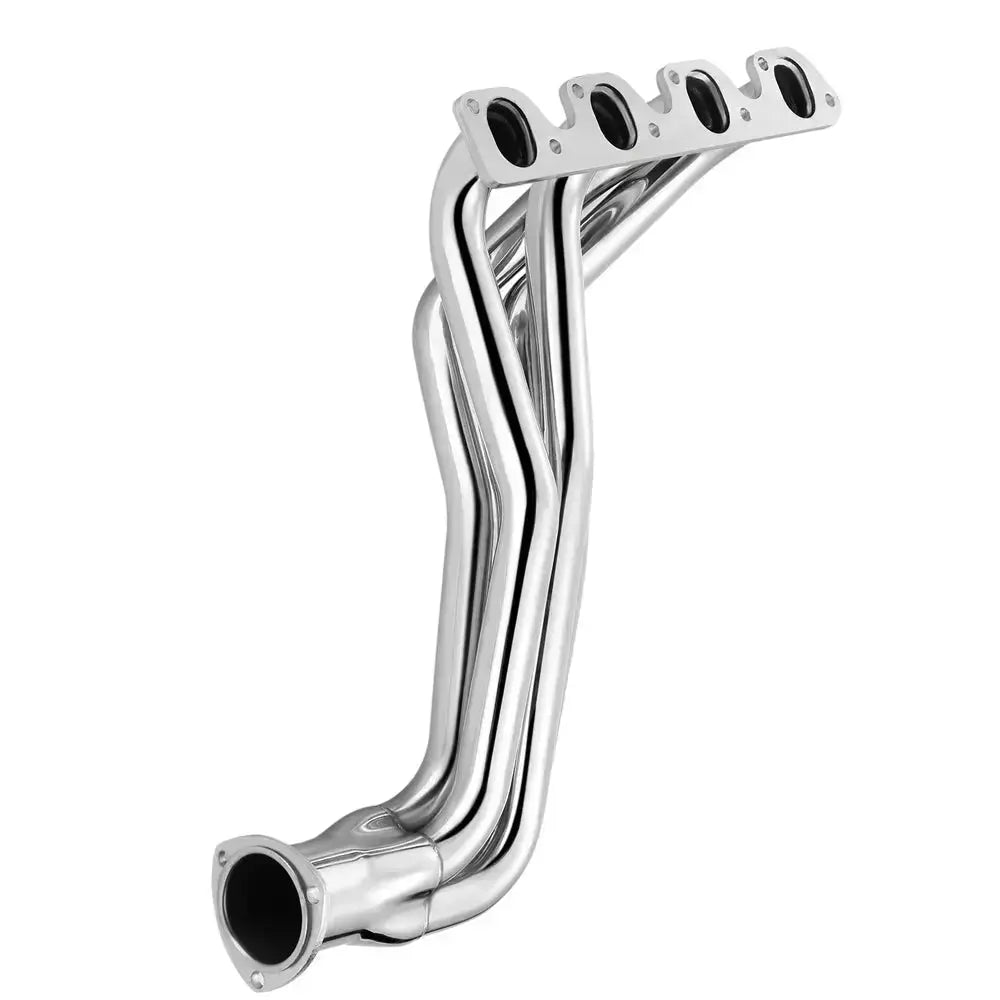
Long Tube Headers for Ford 351M and 400 V8 4WD Applications
Replace restrictive or leaking cast-iron manifolds with a freer-flowing exhaust path and a more pronounced classic V8 tone. This Flashark long tube header kit is designed for listed 1977–1979 Ford 4WD trucks and 1978–1979 Ford Bronco models equipped with a 351M 5.8L or 400 6.6L V8. Check the fitment table and installation notes before ordering, especially on trucks with engine swaps, steering changes, altered crossmembers, or modified exhaust systems.
Specifications
| Product Type | Full-length long tube exhaust headers |
|---|---|
| Engine Family | Ford 351M / 351 Modified 5.8L and 400 / 400M 6.6L V8 |
| Material | T-304 stainless steel |
| Surface | Natural mirror-polished finish |
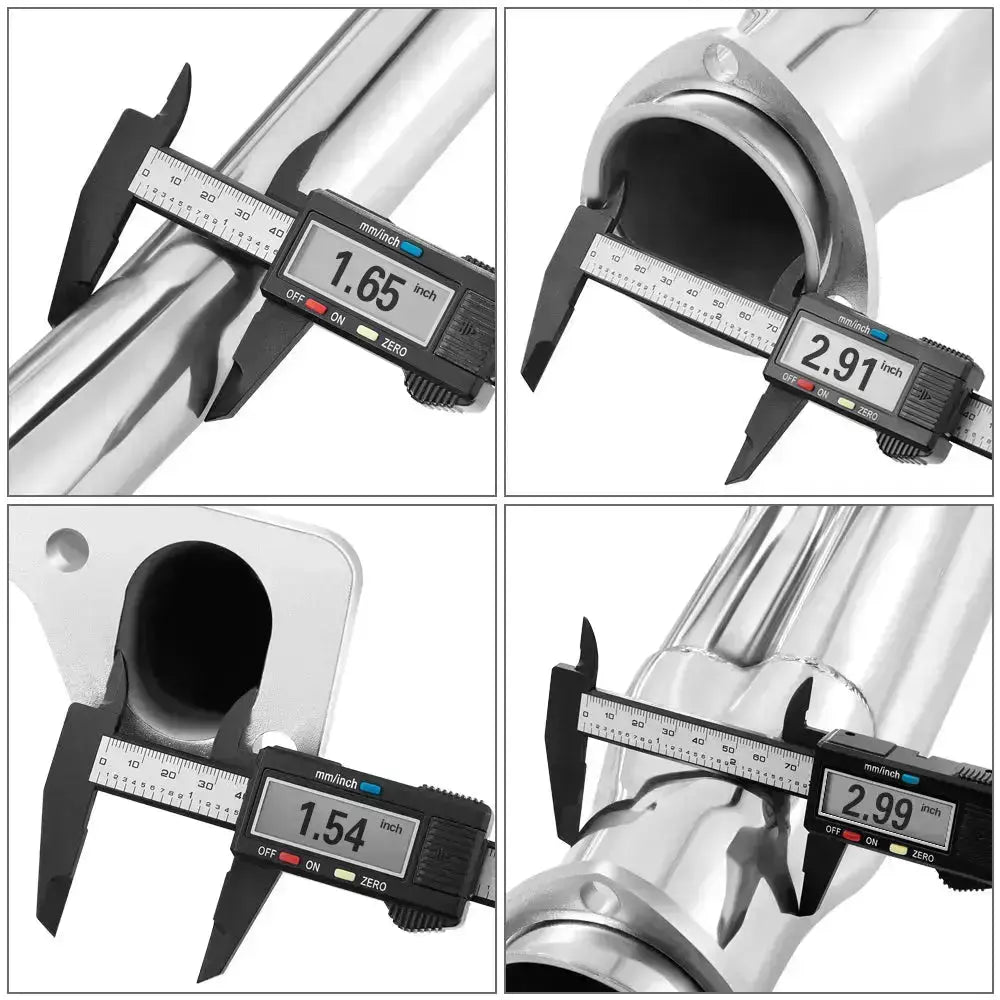
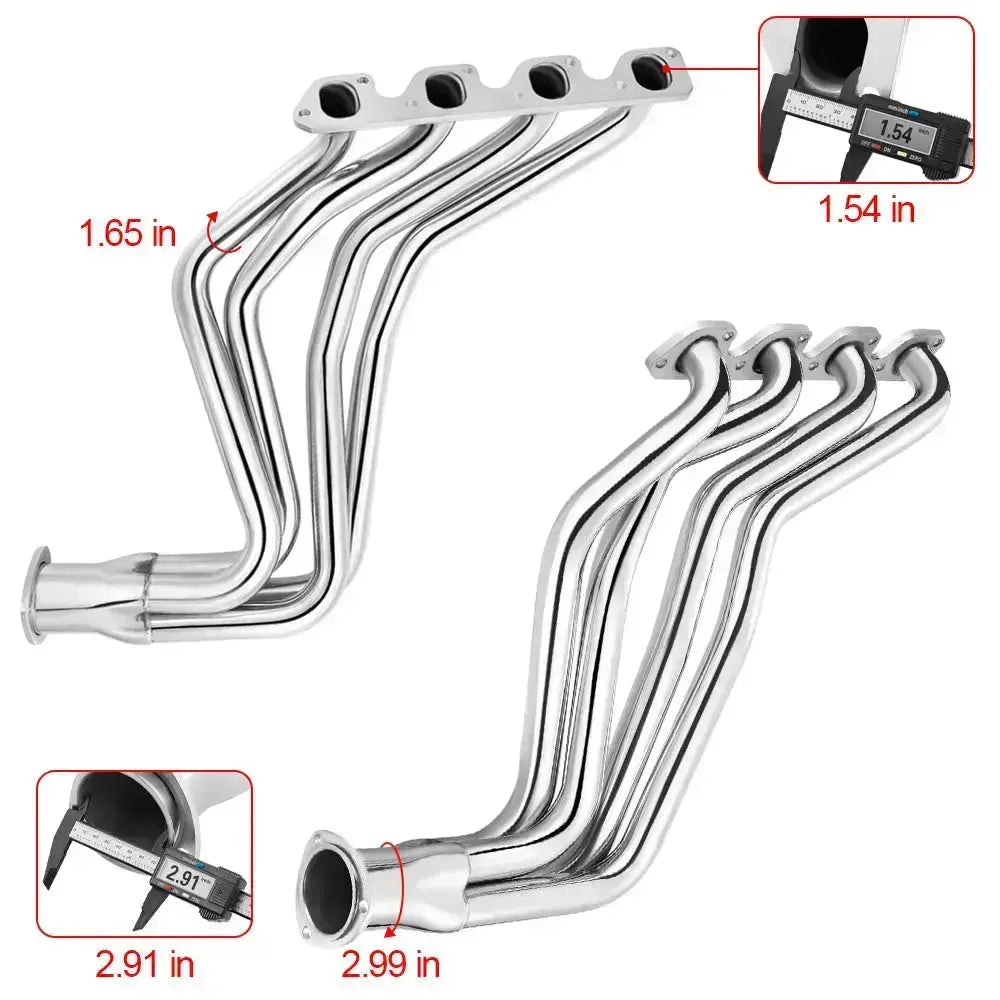
| Primary Tube Diameter | 1-5/8 in. / 1.625 in. |
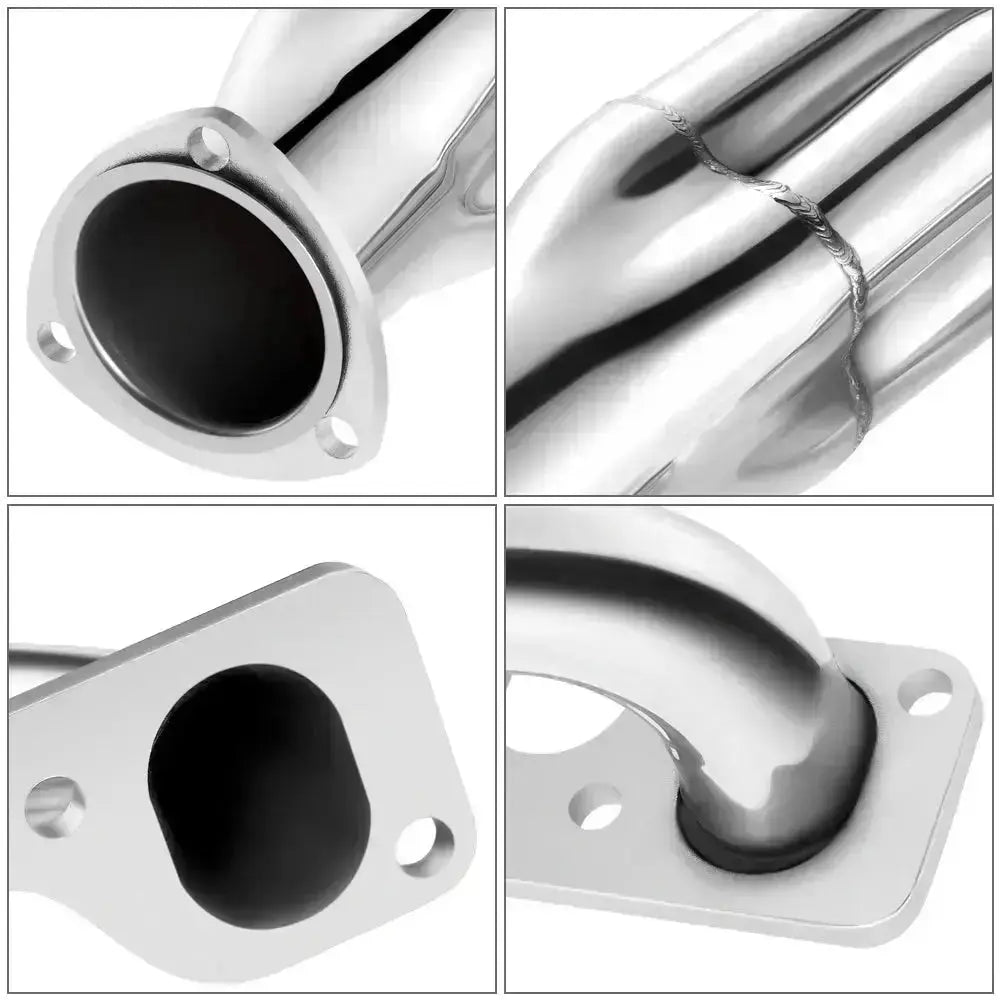
| Collector Diameter | 3 in. |
| Reducer Outlet | 2-1/2 in. |
| Flange Thickness | 5/16 in. machined flanges |
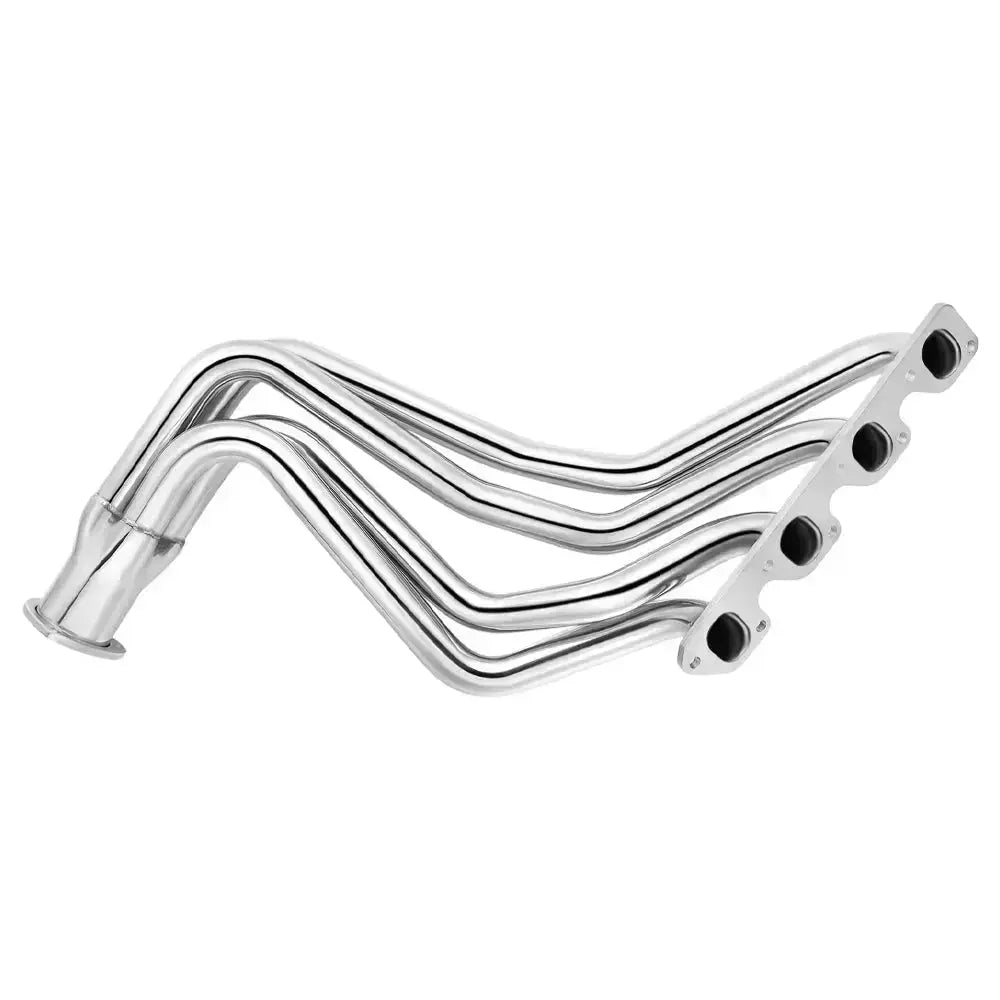
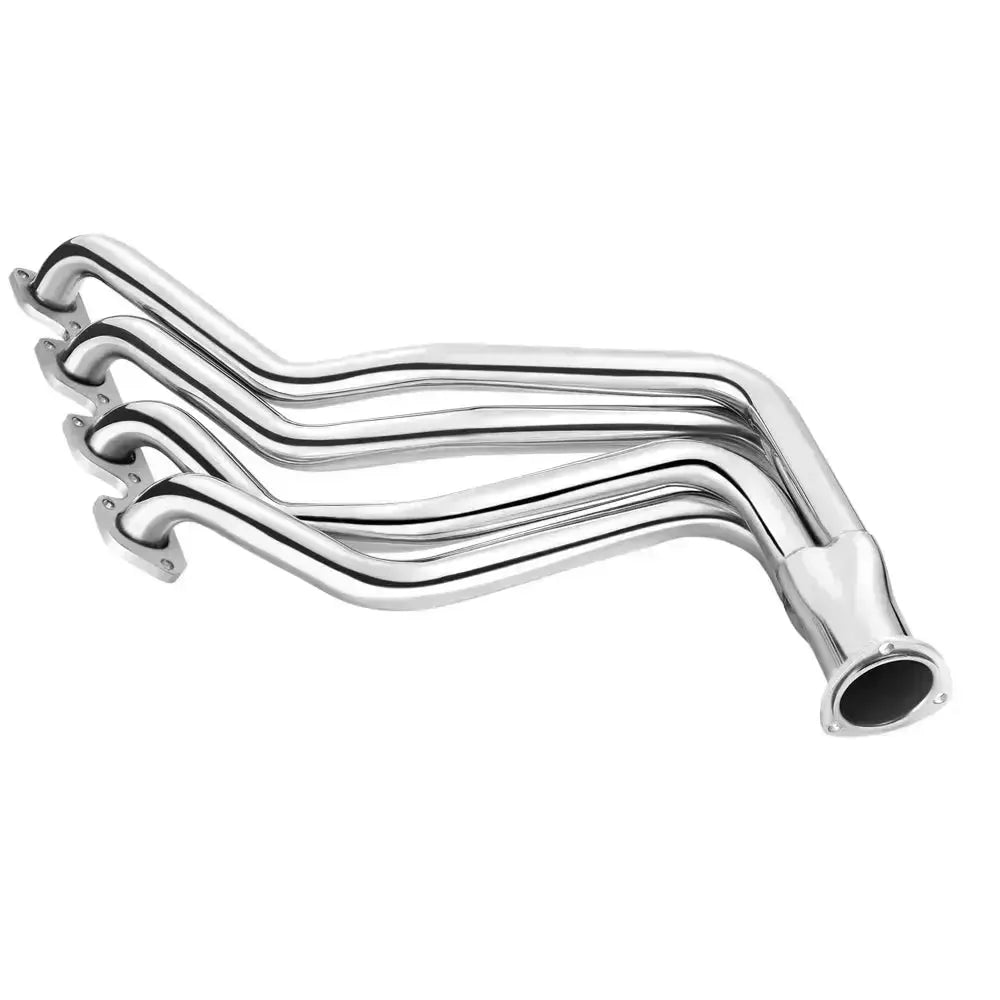
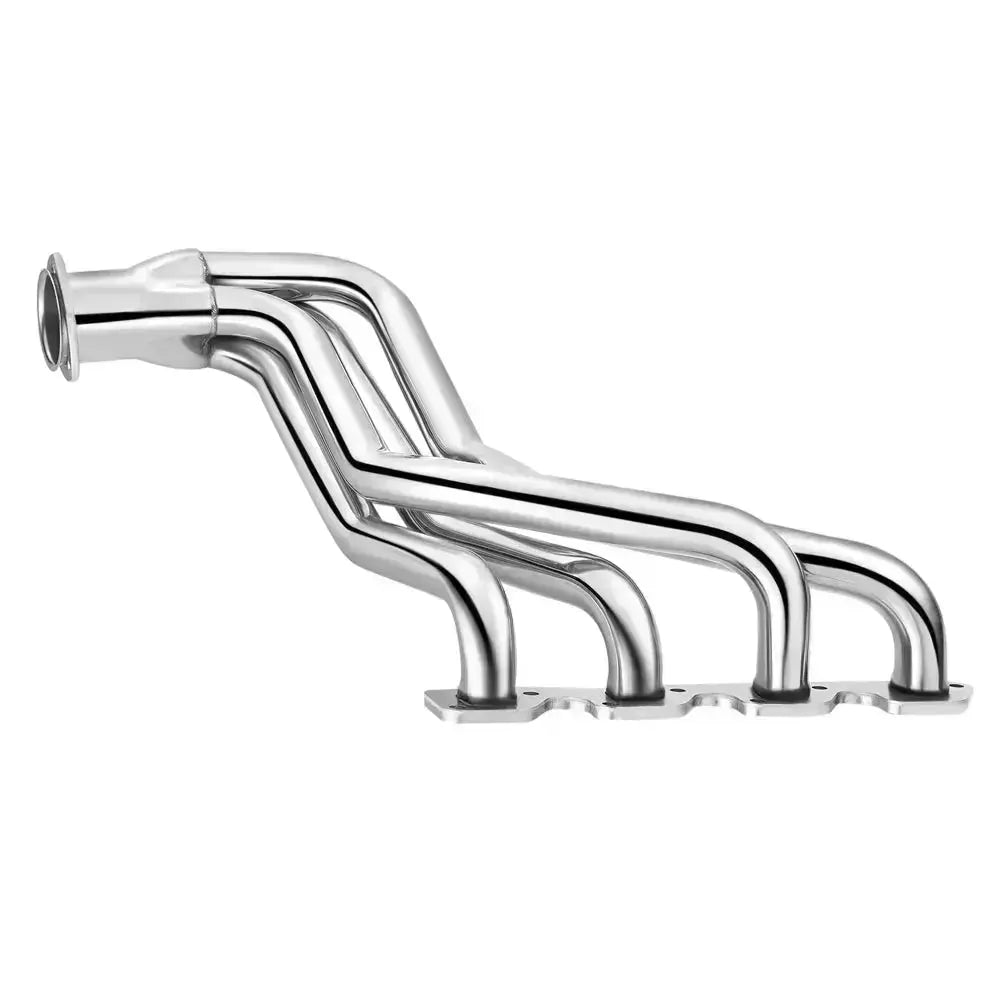
| Header Layout | Four primary tubes from each cylinder bank feed one collector |
| Model / SKU | EH28225 / FLES08376 |


Key Features
- Long primary tubes provide a smoother exhaust path than compact factory cast-iron manifolds.
- Mandrel-bent 1-5/8-inch tubing maintains a consistent internal diameter through the bends.
- Each cylinder bank uses four primary tubes feeding a single 3-inch collector.
- Supplied reducers transition the 3-inch collectors to 2-1/2-inch outlets.
- Machined 5/16-inch flanges provide a stable sealing surface when installed against clean, flat cylinder-head surfaces.
- T-304 stainless construction avoids the peeling associated with painted coatings, although normal heat discoloration can occur.
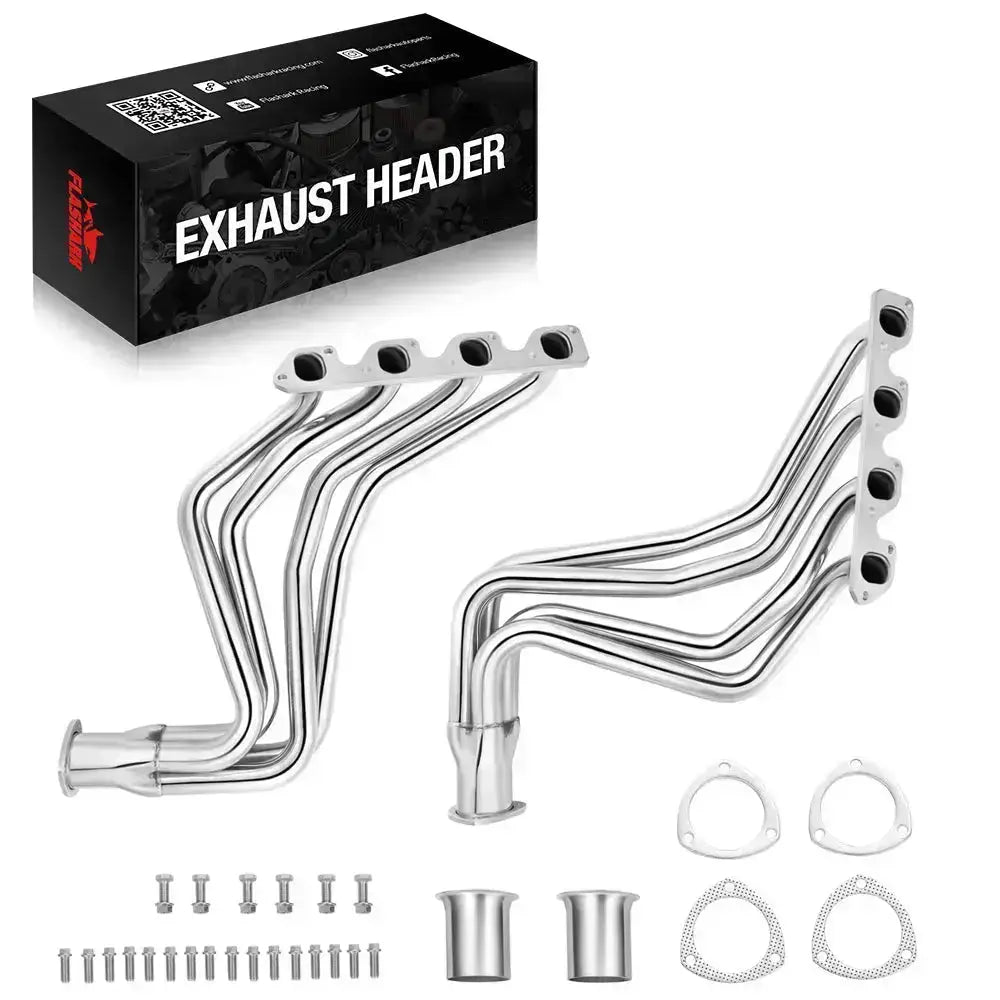
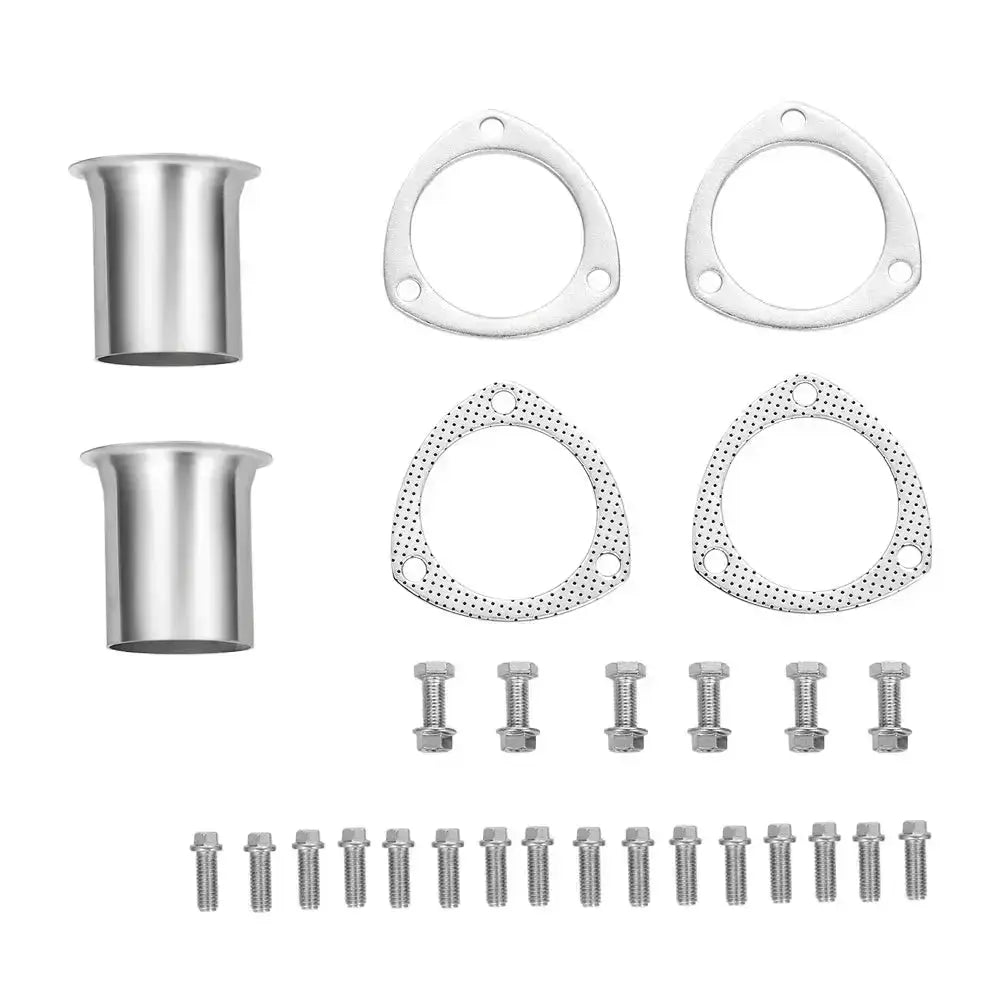
- Header gaskets, collector gaskets, reducers, flanges, and mounting hardware are supplied with the header pair.
Built for Better Exhaust Flow and a Stronger V8 Tone
Factory cast-iron manifolds use short, compact passages designed around production packaging and noise requirements. These full-length headers give each cylinder a longer individual primary tube before the exhaust gases merge at the collector. With a suitable engine and downstream exhaust combination, this layout can provide sharper throttle response, a deeper exhaust note, and better pull through the midrange and upper rpm range.
A complete, well-matched setup supports an estimated 10–15 HP and 5–10 ft-lbs of torque depending on the full exhaust setup, carburetor calibration or fuel tuning, ignition settings, engine condition, and installation quality. Results vary between vehicles and engine combinations.
Final sound depends on the mufflers, pipe diameter, tailpipe routing, compression ratio, camshaft, and the condition of the exhaust system. Long tube headers generally make the exhaust note deeper and more pronounced, but the headers alone do not determine final volume, rasp, or highway drone.

Factory Cast-Iron Manifolds vs. Long Tube Headers
| Area | Factory Cast-Iron Manifold | Flashark Long Tube Header |
|---|---|---|
| Exhaust path | Short, compact passages | Individual long primary tubes |
| Construction | Heavy cast iron | Mandrel-bent stainless tubing |
| Sound | Quieter and more subdued | Deeper and more pronounced, depending on the remaining exhaust |
| Exhaust connection | Uses the factory exhaust layout | Connects through supplied reducers and can require additional exhaust work |
| Installation clearance | Compact around nearby components | Starter, steering, crossmember, driveline, and pipe clearance must be checked |
How the 4-Into-1 Header Layout Works
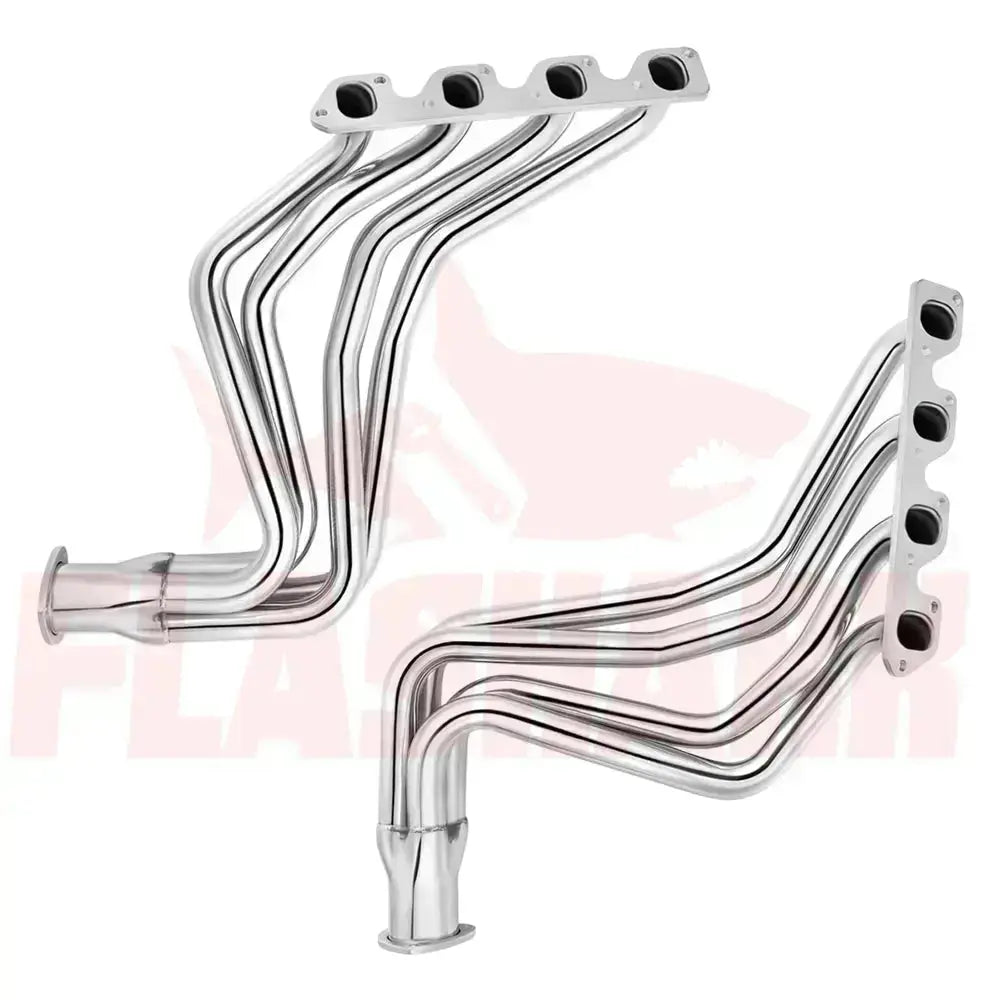
The 351M and 400 are V8 engines, so each side of the kit uses four primary tubes that merge into one collector. Across the complete engine, the pair has eight primary tubes feeding two collectors. “4-into-1 headers” describes the layout on one cylinder bank, while “eight-primary, two-collector system” describes the complete header pair.
The Ford 400 is also commonly called the 400M by owners and parts listings. Likewise, 351M is commonly expanded as 351 Modified. These names do not make the kit interchangeable with 351W or 351C headers; the engine family and vehicle chassis still need to match.

What Is Included
- Left and right T-304 stainless long tube headers
- Two 3-inch to 2-1/2-inch collector reducers
- Header and collector gaskets
- Header and collector mounting hardware
Inspect the components before removing the factory manifolds. Additional exhaust tubing, clamps, hangers, fabrication materials, or welding can be needed to connect the 2-1/2-inch reducer outlets to the vehicle’s downstream exhaust.
Installation and Exhaust-Leak Prevention
- Allow the engine and exhaust system to cool completely before disassembly.
- Remove old gasket material and clean the cylinder-head sealing surfaces.
- Check the sealing surfaces for damage or warping before installing the new gaskets.
- Test-fit both headers before tightening the fasteners.
- Check clearance around the starter, steering, crossmember, front driveline, suspension, transmission, brake lines, and fuel lines.
- Keep wiring, hoses, and heat-sensitive parts away from the primary tubes.
- Connect the reducers without pulling the headers sideways or placing the tubes under exhaust-pipe tension.
- Recheck the fasteners and inspect for leaks after the first complete heat cycles.
This installation is best handled by an experienced DIY owner or an exhaust shop familiar with classic Ford 4WD trucks. Tight starter or chassis clearance can increase installation time, and the downstream exhaust connection can require cutting or welding.
Who This Header Kit Is For
- Owners of a listed Ford 4WD truck or Bronco with a 351M or 400 V8
- Drivers replacing restrictive, cracked, warped, or leaking cast-iron manifolds
- Builds seeking a deeper V8 tone and a freer-flowing exhaust path
- Restomod, off-road, towing, and performance-oriented trucks
- Owners who accept the clearance checks and exhaust fabrication associated with full-length headers
Who Should Choose a Different Header
- Owners of a 2WD truck or a vehicle outside the listed fitments
- Vehicles with a 351W, 351C, 302, 360, 390, 429, 460, or another engine family
- Owners looking specifically for shorty headers
- Vehicles with unresolved engine-swap, steering, crossmember, or driveline clearance
- Owners who require a factory-style exhaust connection with no cutting, welding, or custom pipe work
- Drivers who require documented emissions approval for public-road use
Emissions and Street-Use Notice
Exhaust modification requirements vary by location and vehicle registration class. Check the emissions and inspection rules that apply where the vehicle will be registered and driven. Do not remove required emissions equipment, and do not assume an aftermarket header is approved for every public-road application.
Explore Related Ford Exhaust Parts
Need a header for another Ford engine, year, or drivetrain? Browse additional exhaust headers and match the engine family, model year, and drivetrain before selecting an alternative part.
Shipping & Returns
Free U.S. Shipping: Orders are typically processed within 1–2 business days and delivered within 7–9 business days. Additional charges may apply to remote areas.
30-Day Returns: Unopened and unused items in their original packaging may be returned within 30 days of receipt. Return shipping is covered for verified quality issues.
Worry-Free Delivery: Optional protection against eligible loss, theft, delay, or transit damage is available at checkout.


