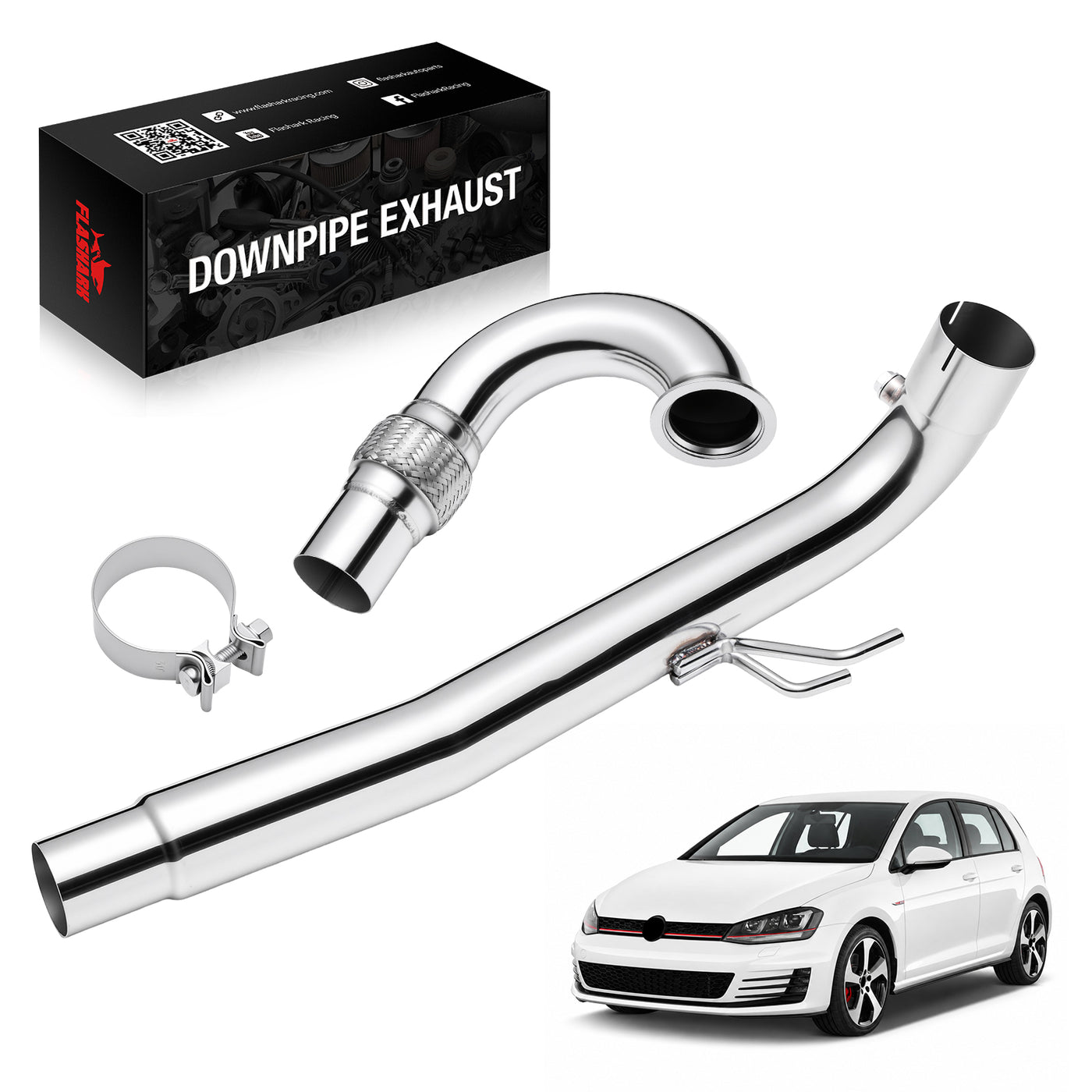

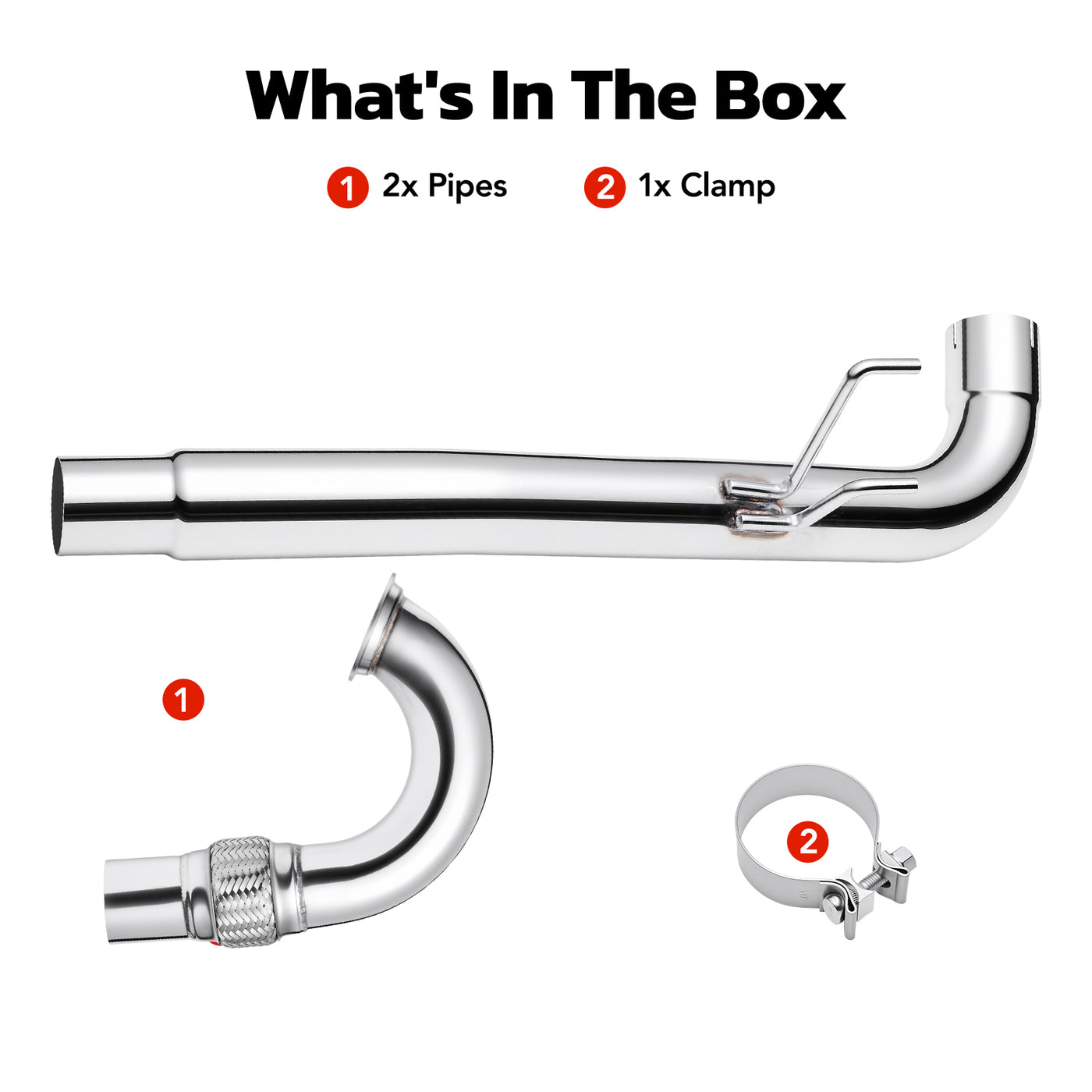

2012-2015 VW Golf GTI MK7 3‘’ Downpipe Exhaust 2.0T Bolt on
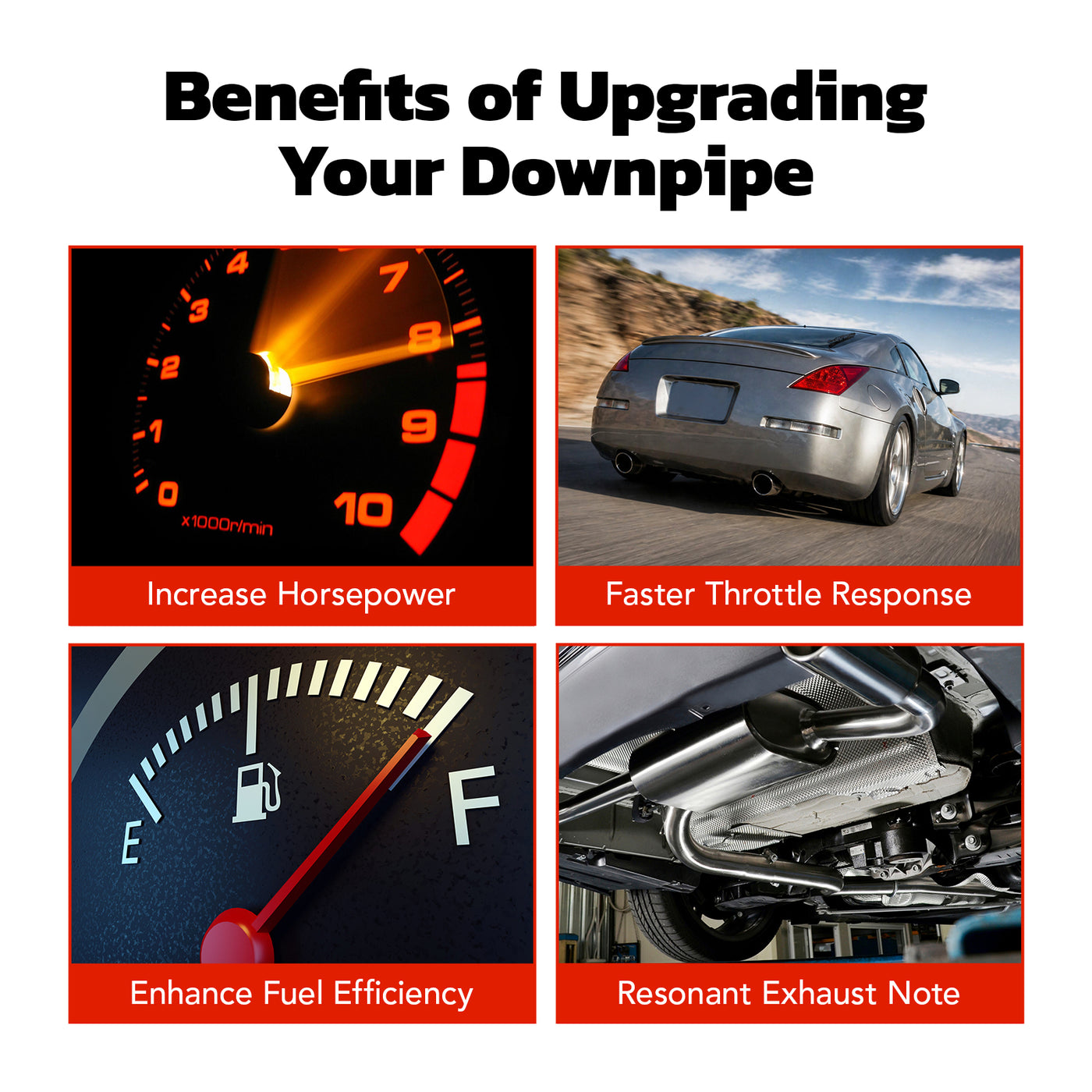
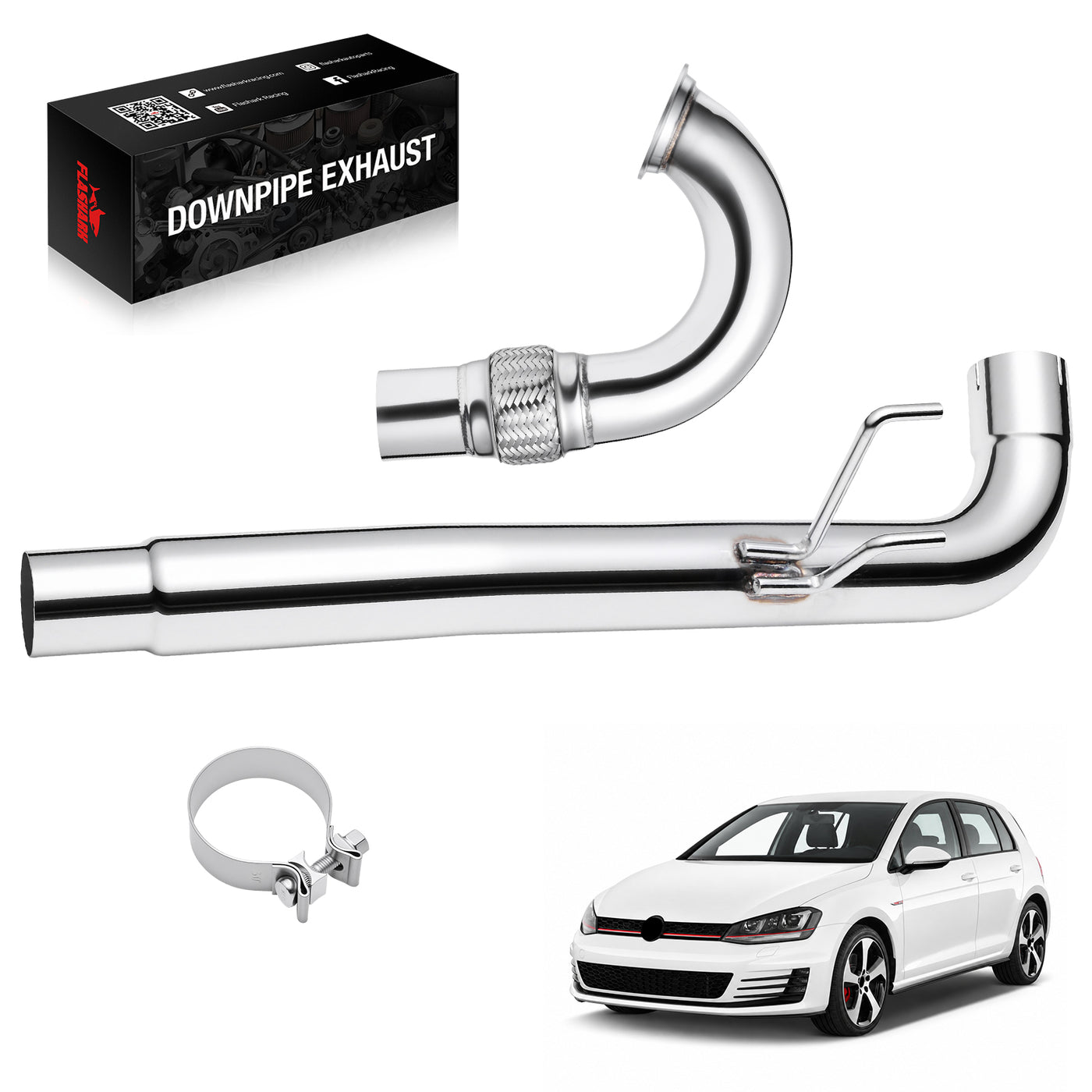
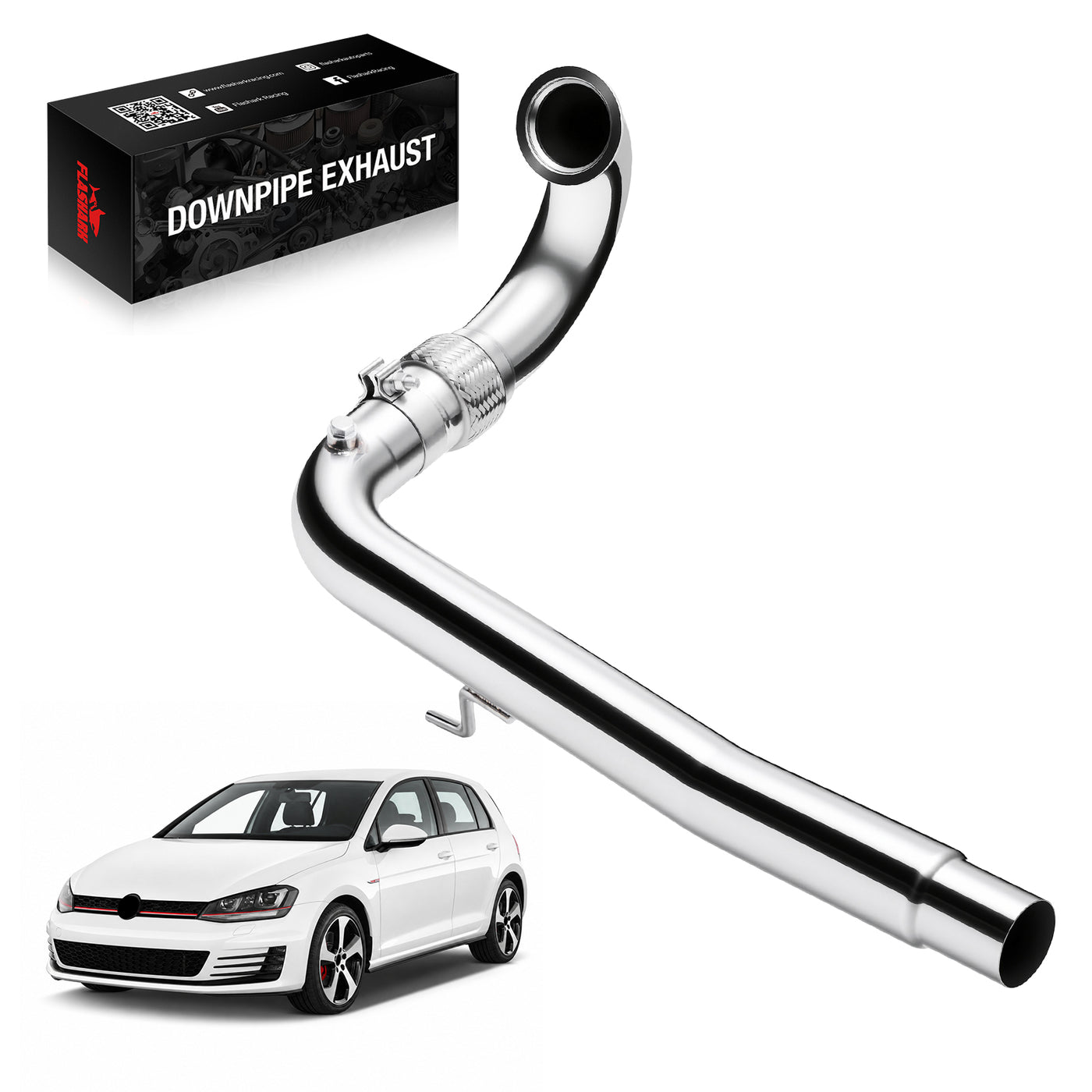
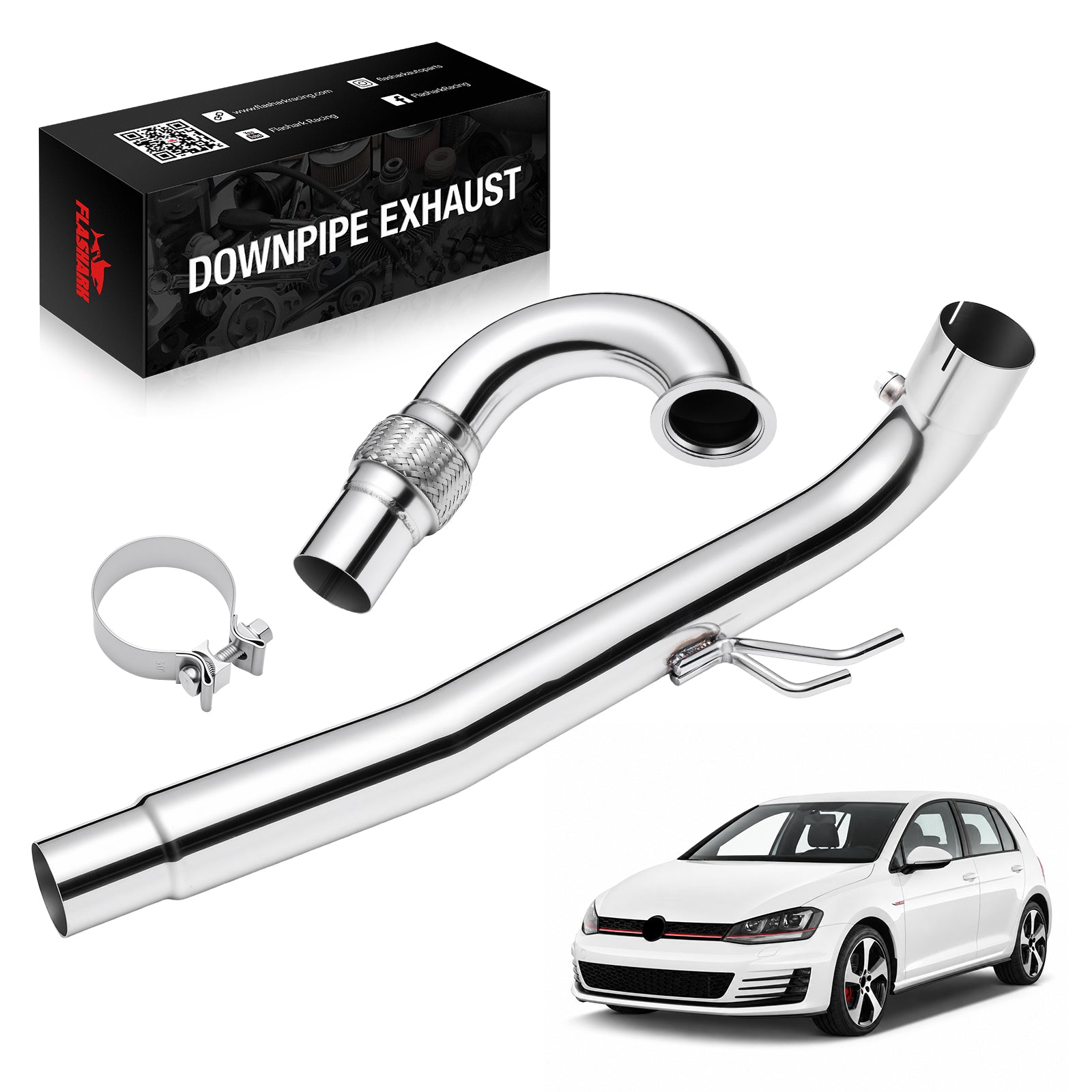
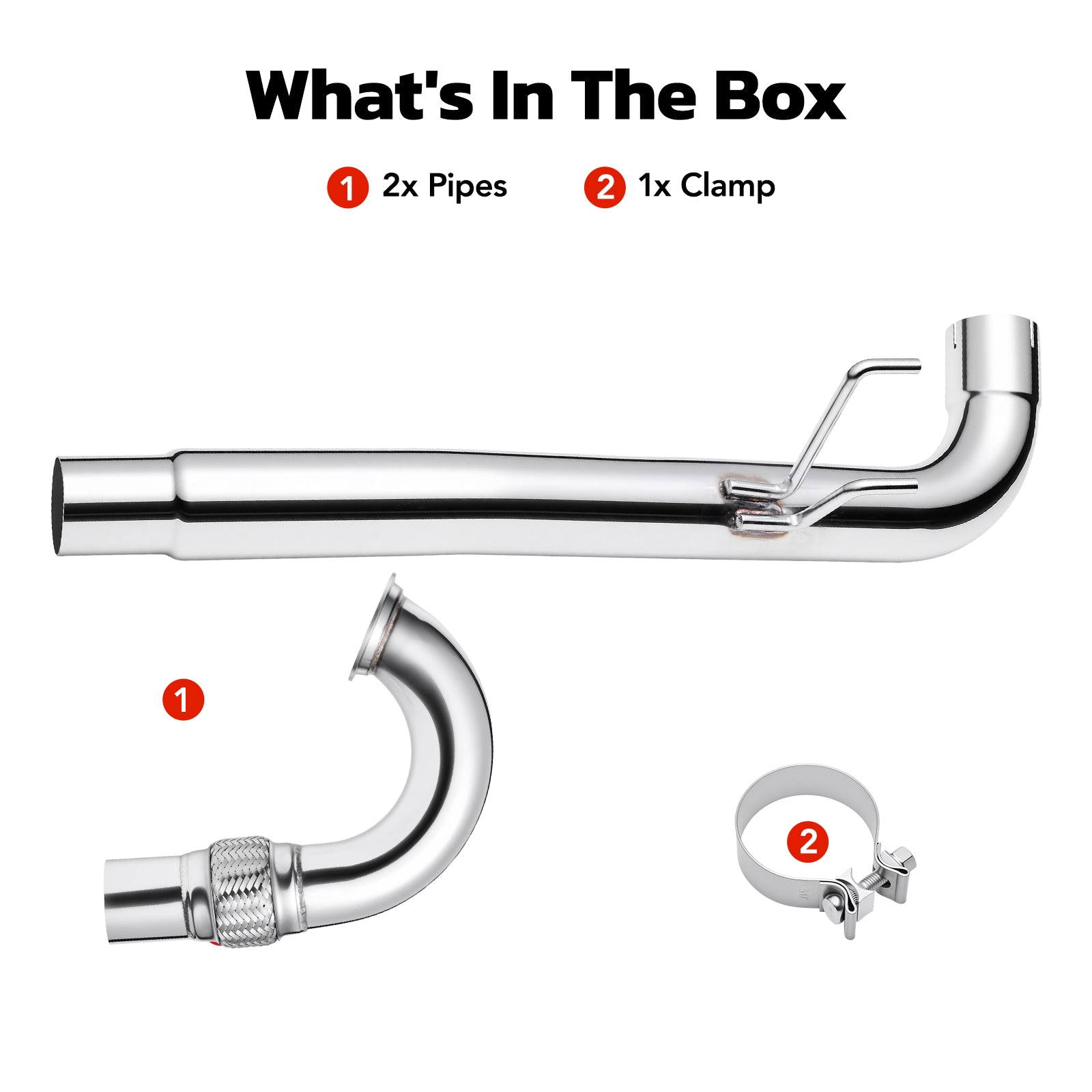
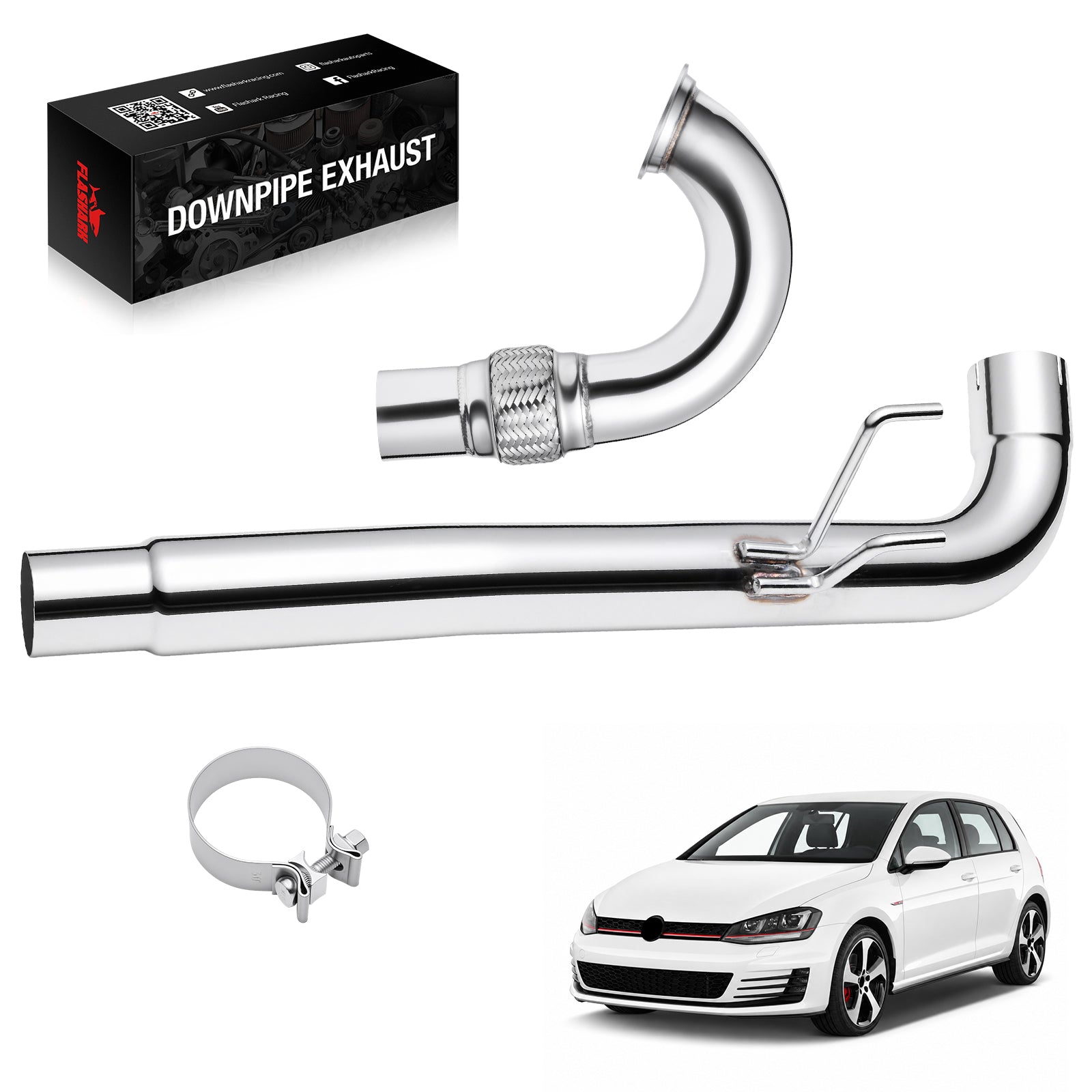
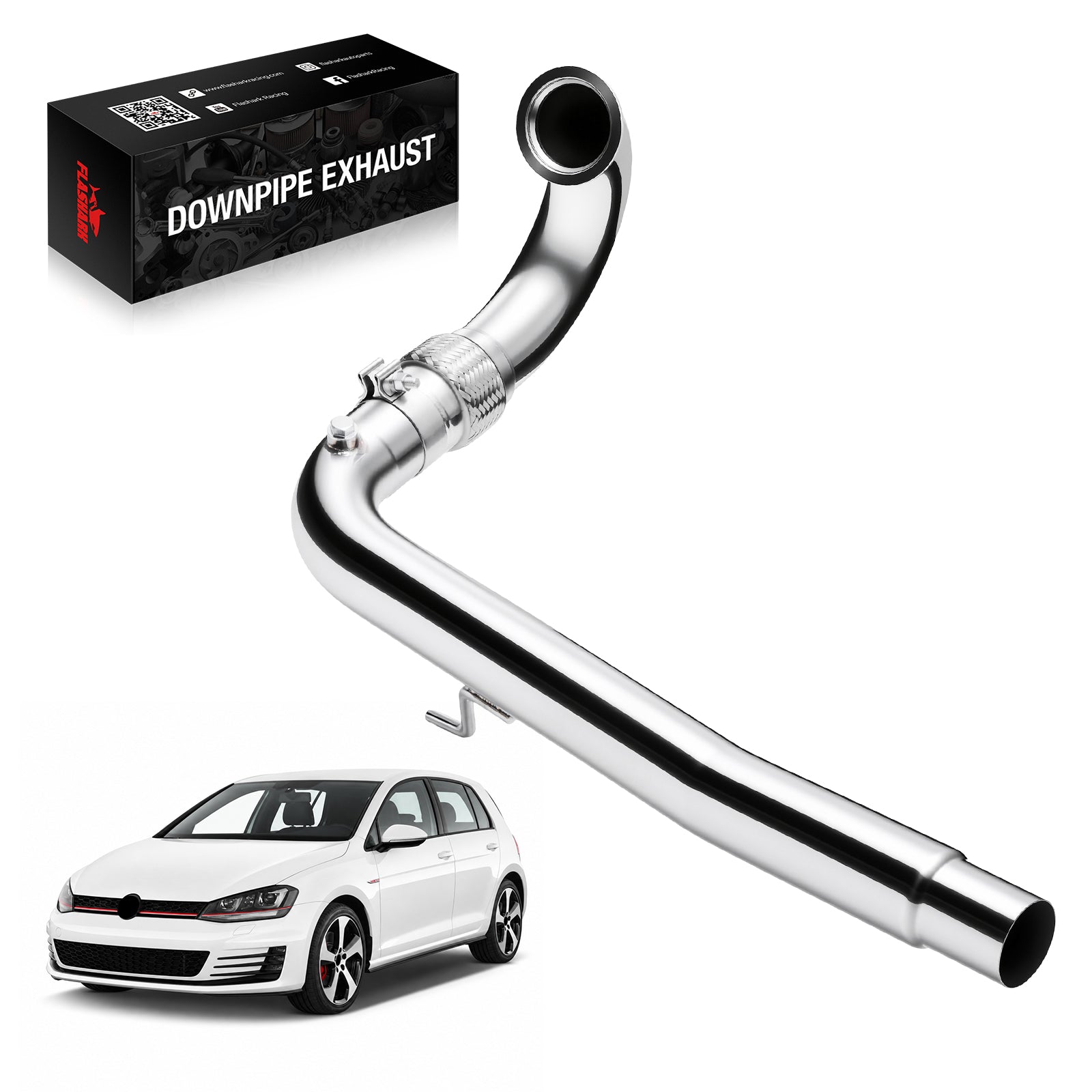
FLASHARK MK7 GTI Downpipes are designed to seamlessly replace the restrictive stock downpipes found in your 2012-2015 VW Golf GTI MK7, located just after the catalytic converters. Upgrading to MK7 GTI downpipes significantly boosts horsepower and torque for your turbocharged vehicle by allowing exhaust gases to flow more freely as they exit the turbo. The high-quality MK7 GTI exhaust manifold improves exhaust airflow, optimizing engine performance and ensuring a more responsive and enjoyable driving experience.
Specifications:
Brand Name: FLASHARK
Certificate: ISO9001:2000
Application: Exhaust Downpipe
Material: Stainless Steel
Surface: Mirror Polish
Model: DP29710
Features:
1. Improve Engine Output and Efficiency, Give you an extra 15 HPs, and increases torque by 17lb·ft
2. Large diameter and free flow tubing for unrestricted flow, Making the exhaust air flow smooth, Designed for high-performance racing
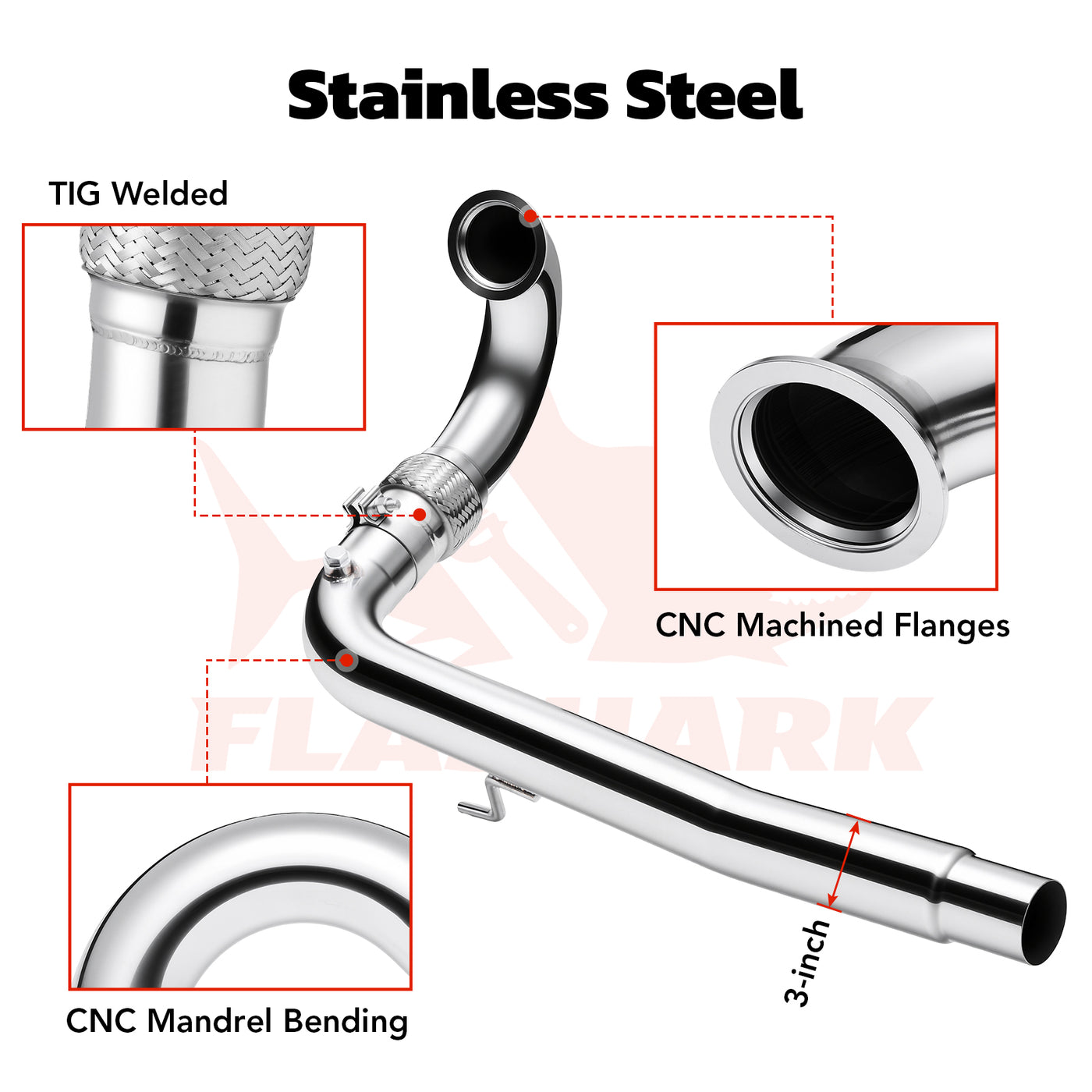
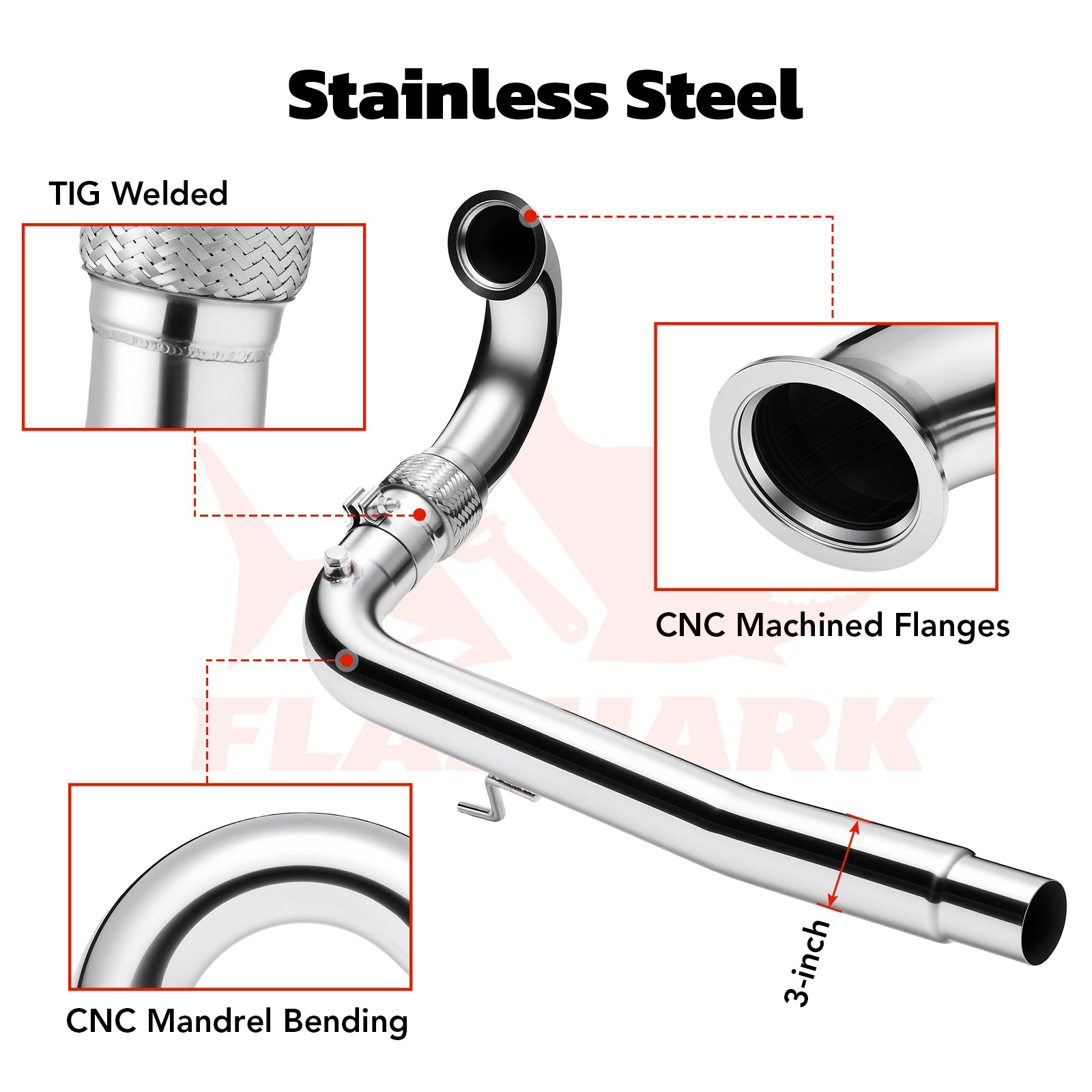
3. Made of High-Quality 16-gauge T-304 Stainless Steel with Computerized Mandrel-Bends
4. All joints are TIG welded to prevent cracking and wear
5. CNC Machine Flange for MAX Strength and Durability
6. Flanges chrome plated for corrosion resistance
Fitment:
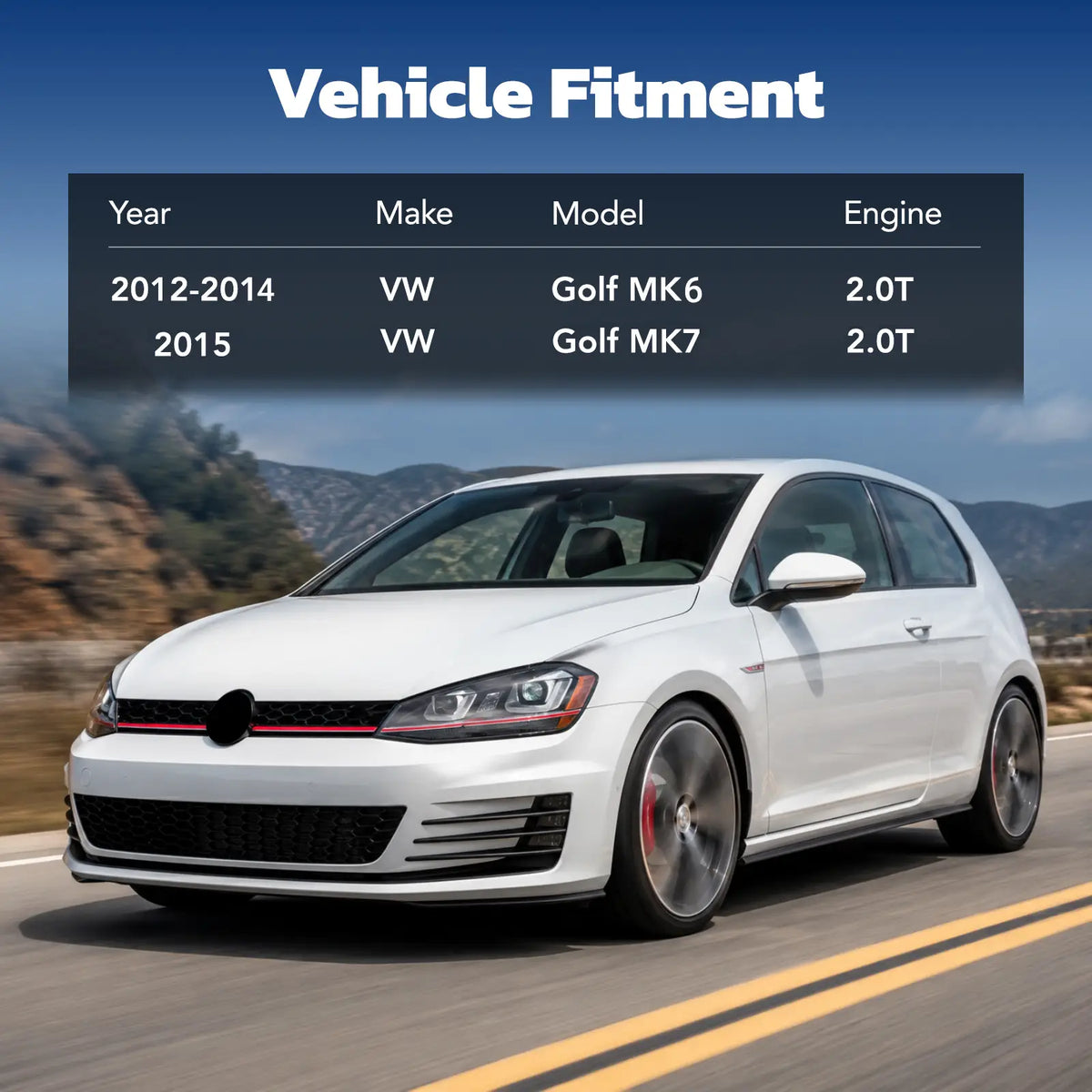
3" Turbo Exhaust Pipe Downpipe for 2012-2015 VW Golf GTI MK7 2.0T
Q1: What makes the MK7 GTI downpipe a good upgrade for the EA888 engine?
A1: The EA888 Gen 2 turbo in the MK7 GTI chokes on its own exhaust. The stock downpipe has a tight restriction right after the turbo outlet—factory cats are built for emissions, not flow. A 3-inch downpipe eliminates that bottleneck. The turbo spools faster because exhaust gases exit faster, which means less lag and stronger response off boost. It's one of the best bang-for-buck mods on the platform.
Q2: How much horsepower does a MK7 GTI downpipe add?
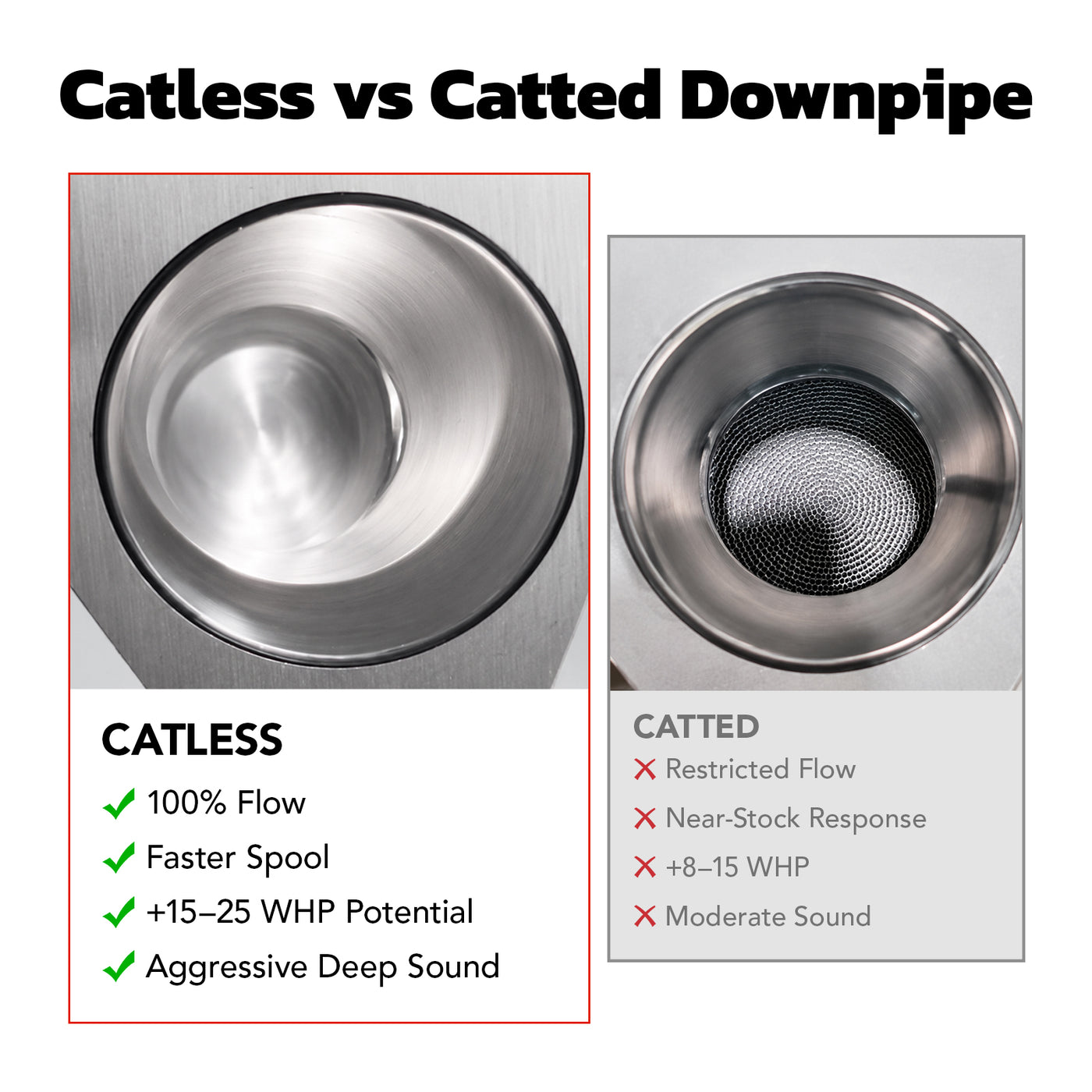
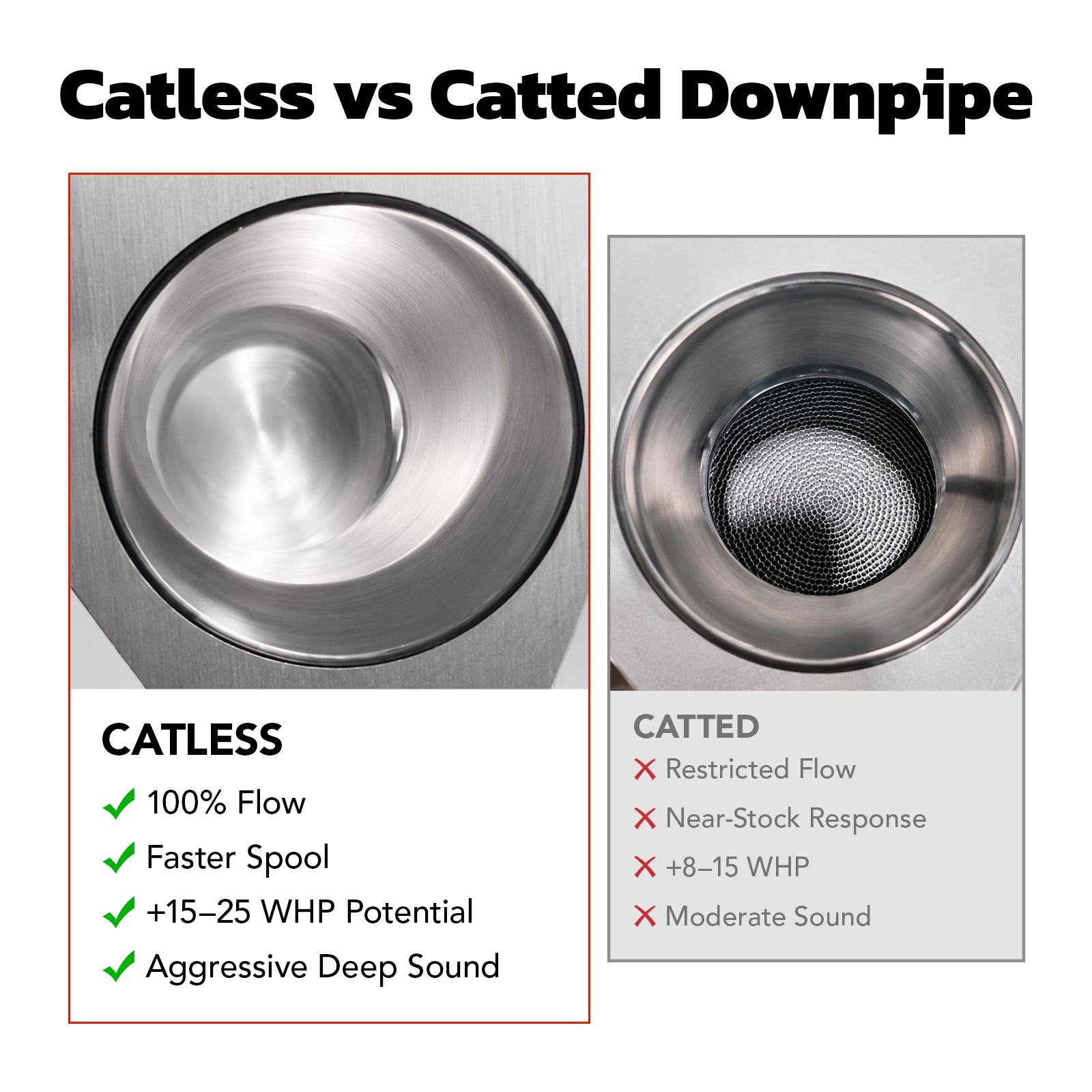
A2: With a proper stage 2 tune, you're looking at 10-20 wheel horsepower and 15-25 lb-ft of torque over stock. The catless version pushes toward the higher end (20whp), while the high-flow catted version settles around 12-15whp. On a stock car with no tune, a catless downpipe actually makes things worse—the engine runs richer and less efficiently without the ECU adjustment.
Q3: Do I need a tune for the MK7 GTI downpipe?
A3: Yes. The MK7's ECU is drive-by-wire and expects a certain exhaust load. Without a tune, you'll trigger a CEL, experience hesitation, and possibly enter limp mode under heavy throttle. Stage 2 tuning (downpipe + tune) is the standard path for the MK7 GTI. Most tuners like Unitronic, IE, or APR offer specific maps for downpipe-equipped cars.
Q4: Is the MK7 GTI downpipe a direct bolt-on, or do I need adapters?
A4: Most aftermarket downpipes for the MK7 GTI are designed as direct bolt-on replacements. The turbo outlet uses a specific flange pattern, and the downpipe threads into the factory mid-pipe or your aftermarket exhaust. Quality units include new hardware and gaskets. Double-check fitment for your specific year—2012-2015 GTI MK7 has slight variations in the turbo elbow depending on production date.
Q5: What's the sound difference with a MK7 GTI downpipe?
A5: Quieter than you might expect, actually. The turbo whoosh becomes more pronounced because you're hearing the compressor work better. Under hard acceleration, the exhaust note deepens slightly. At idle, not much changes unless you go catless. The MK7 already has a decent exhaust note from the factory—the downpipe enhances rather than completely transforms it.
Q6: Catless or catted—best choice for MK7 GTI street use?
A6: For most people, a high-flow catted downpipe hits the sweet spot. You get significant power gains without the smell, CEL headaches, or emissions issues. Catless downpipes on the EA888 tend to produce a sulfur smell at low loads because fuel burns less completely without catalytic converter heat regulation. If you track the car or live somewhere with no emissions testing, catless is fine.
Q7: Can I install the MK7 GTI downpipe myself?
A7: Installing a MK7 GTI downpipe is more involved than most bolt-ons. The process involves removing the front undertray, working from above and below, and dealing with heat shield removal. Expect 2-4 hours if you're experienced, longer if it's your first time. The V-band clamps and flanges need to be torqued properly to avoid leaks. Access to an impact wrench makes the turbo flange bolts much easier.
Q8: Will a MK7 GTI downpipe pass emissions testing?
A8: With a high-flow catted downpipe, probably yes in most states. CARB-approved units exist but are expensive. Catless downpipes will fail in any state with OBD-II emissions testing because the secondary O2 sensors trigger codes immediately. If emissions testing is a concern, factor in the cost of a CARB-legal cat or keep your stock downpipe for inspection day.
Q9: What other mods pair well with the MK7 GTI downpipe?
A9: Intake system next—the stock intake box restricts flow on the cold side. A charge pipe upgrade prevents the factory plastic one from cracking under increased boost (stage 2 pushes more pressure). An intercooler helps with heat soak on the EA888, especially if you're driving hard. The downpipe is the foundation; everything else builds on top of it.
Q10: Does the MK7 GTI downpipe affect my warranty?
A10: VW's powertrain warranty covers stock modifications less favorably. If you experience turbo or engine failure, they may investigate and deny coverage if they find aftermarket parts contributed. The MK7 EA888 turbos are known to fail on stock cars anyway from oil starvation or carbon buildup, so warranty claims are already a crapshoot. Many owners go aftermarket extended warranty instead of relying on VW.
Q11: How does the downpipe improve MK7 GTI turbo response?
A11: The turbo has to work against exhaust backpressure to spin. Factory downpipes create high backpressure because the catalytic converter is restrictive. A larger-diameter, smoother-bore downpipe reduces that resistance. The turbo reaches target boost faster, which means less mid-range lag. You feel it most when you're at partial throttle and punch it—the car responds immediately instead of waiting for the turbo to catch up.
Q12: What's the difference between 3-inch and 3.5-inch downpipe for MK7 GTI?
A12: For a stock or lightly modified MK7 GTI, 3-inch is the sweet spot. The EA888 Gen 2 compressor can't flow enough to justify 3.5-inch on a street car—bigger pipe means more turbulence at low flow rates, which actually hurts response. 3.5-inch setups make sense when you're pushing serious power (400whp+) with a larger turbo. Save your money and go 3-inch for now.


