


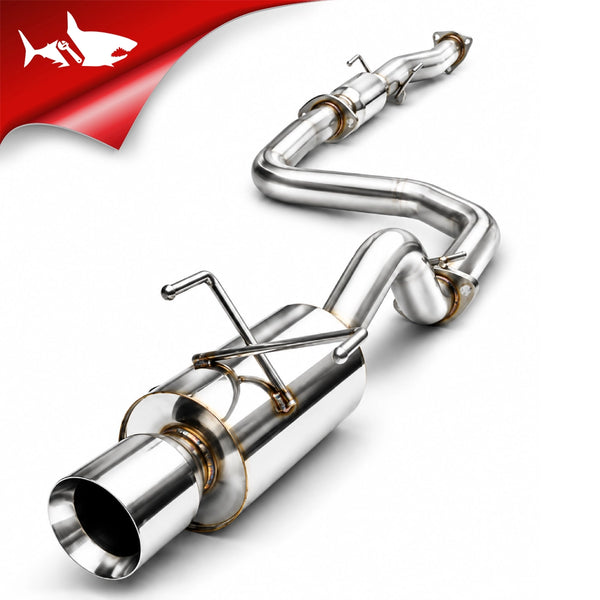
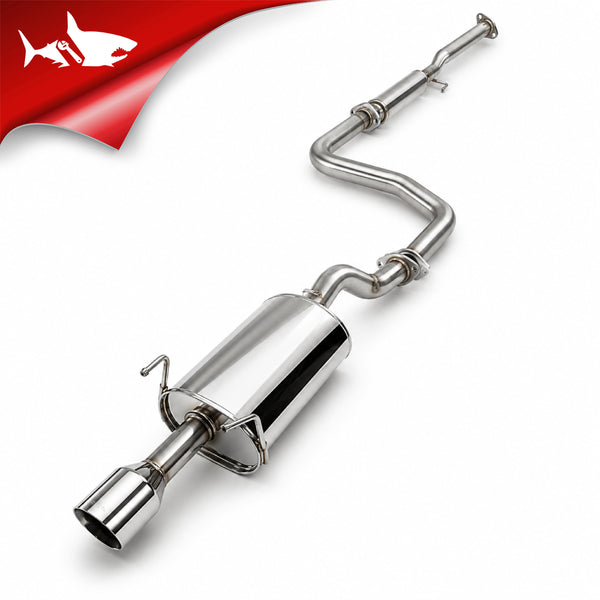
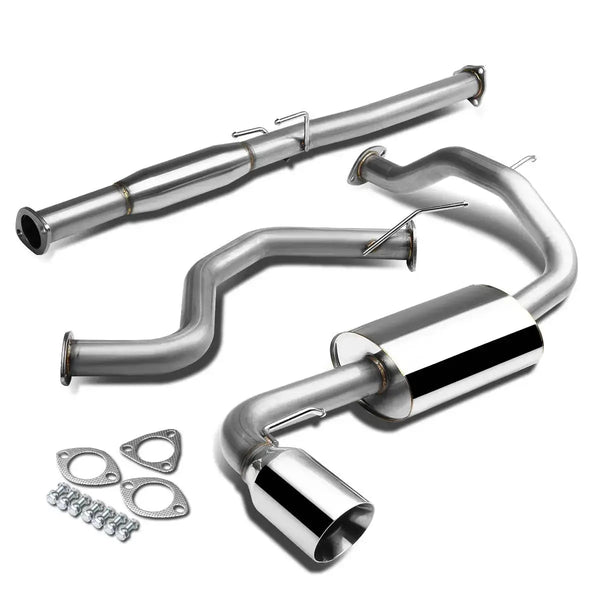
Escape Catback de Honda
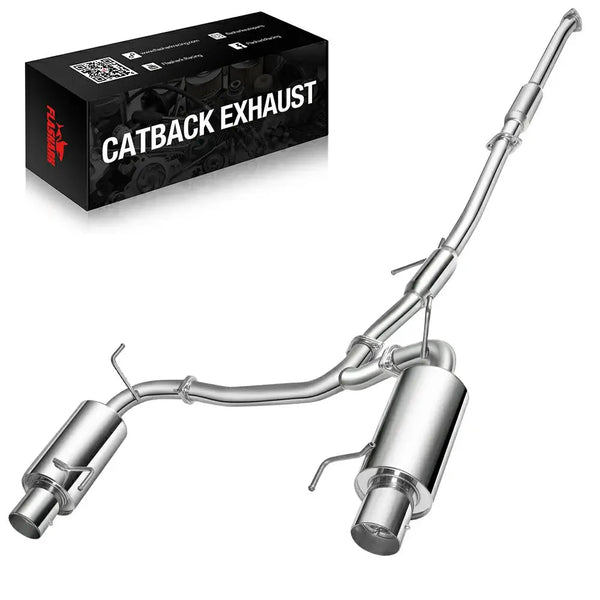
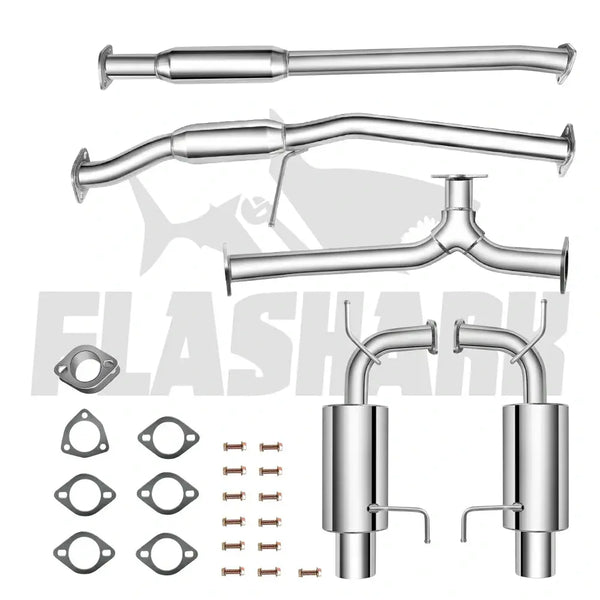
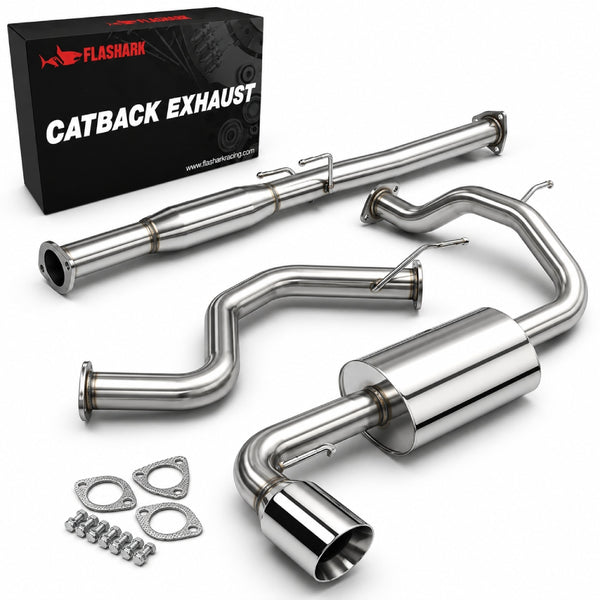
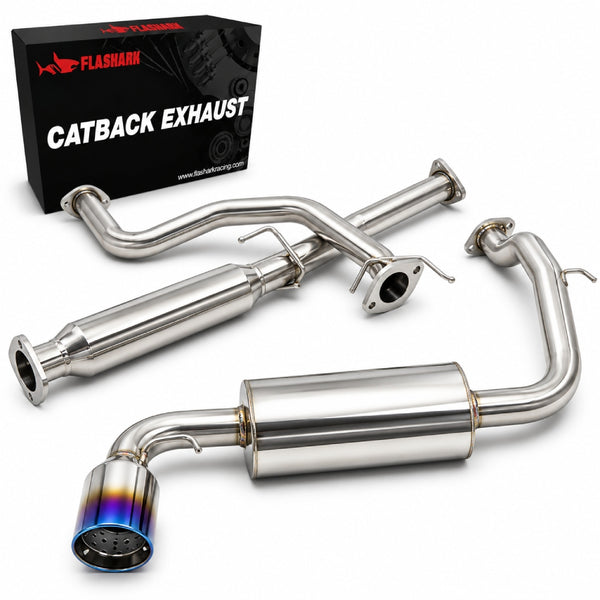
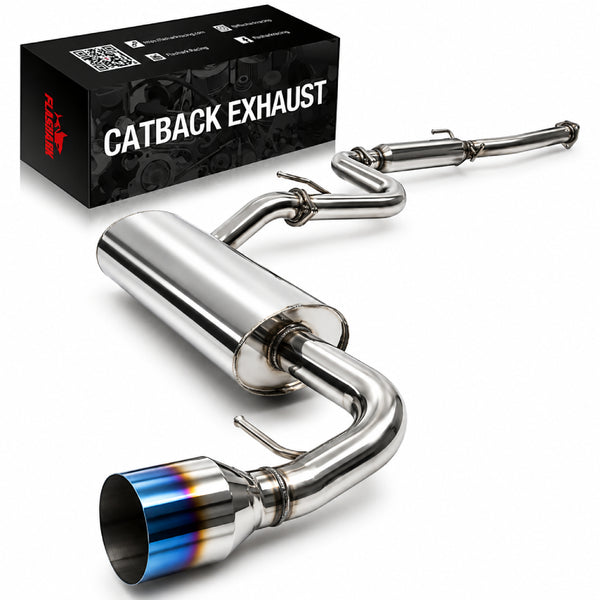
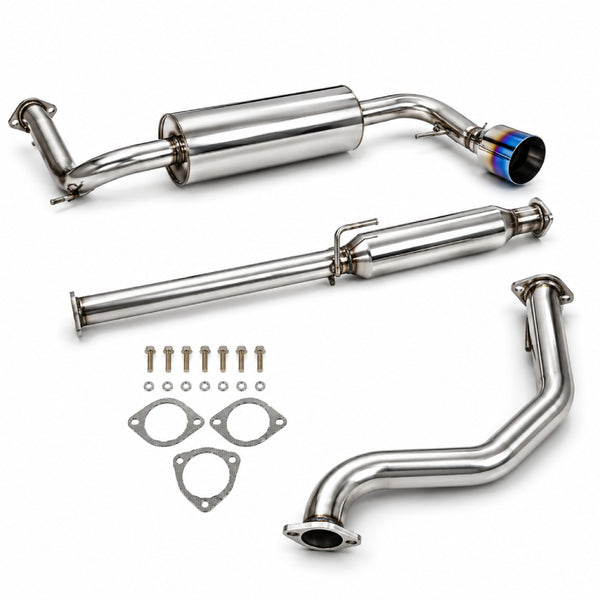
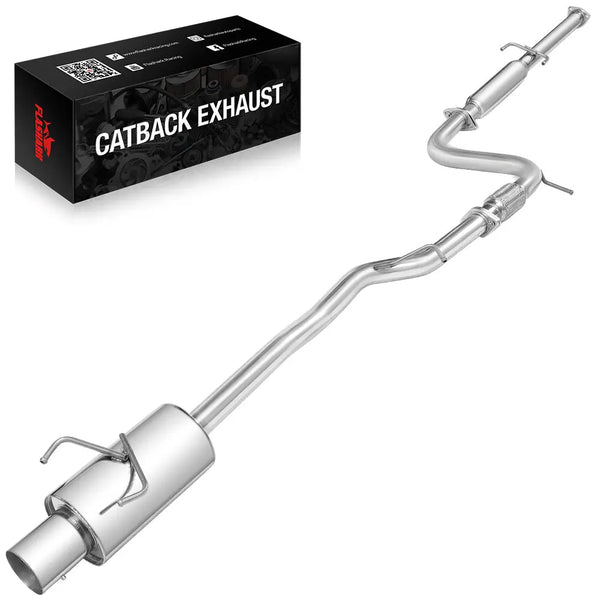
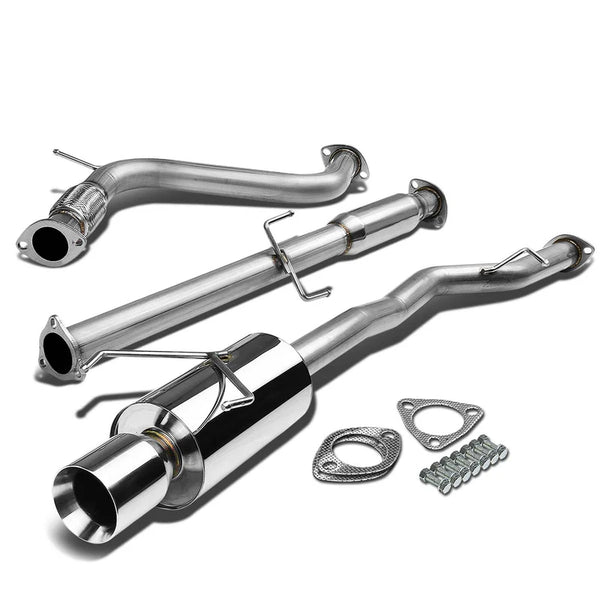
Marca: TODOS | Honda | Nissan | Toyota | Ford | Chevy | BMW | Mazda | Subaru | Lexus | Hyundai | Mitsubishi | Otros
La dura verdad sobre tu configuración: Deja de ahogar tu motor
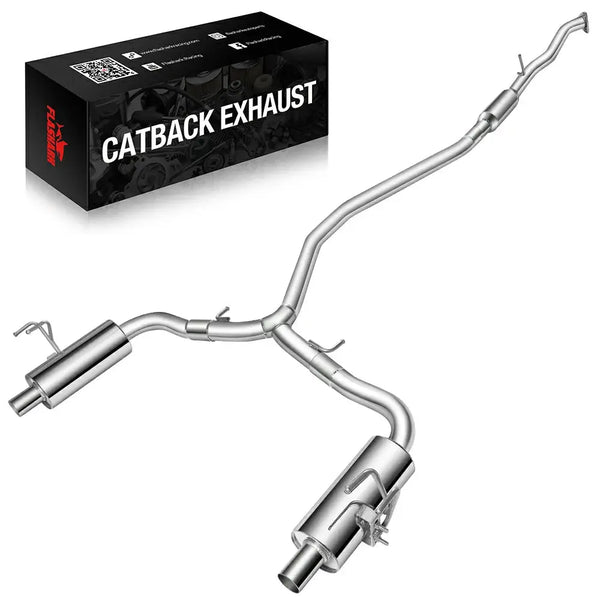
Seamos realistas. Los sistemas de escape Honda de fábrica están diseñados para dos cosas: mantener el ruido de la cabina inexistente y reducir los costos de fabricación. Ahogan el flujo de escape natural de tu motor con tuberías dobladas por aplastamiento y deflectores masivos y restrictivos. Finalmente alcanzas el VTEC, y en lugar de un grito mecánico, obtienes un ruido amortiguado que suena como una aspiradora en apuros. Es una porquería. Me he magullado los nudillos en suficientes tuberías de fábrica como para decirte directamente: si quieres una respuesta real del acelerador y un tono agresivo, necesitas deshacerte de las restricciones OEM.
Lo esencial de antemano (BLUF): Lo que realmente hace una configuración Flashark
- Acústica: Ofrece un tono profundo y gutural bajo fuerte aceleración. Absolutamente cero ruidos de "bote de pedos" metálicos, y diseñado para eliminar el zumbido en carretera.
- Rendimiento: Deja de adivinar. En el dinamómetro, vemos rutinariamente una ganancia de 8-12 whp y 10-15 lb-pie de torque en motores de la serie K de aspiración natural. ¿Para los turbos L15B7? Un aumento sólido de 15-25 whp con una afinación adecuada.
- Valor: Precios directos al consumidor. Pagas por acero inoxidable SUS-304 de primera calidad y curvas mandriladas, no por los enormes gastos generales de marketing de una marca tradicional.
La firma de sonido Flashark: Profunda, agresiva y sin zumbidos
Olvídate de las tonterías del foro donde los chicos afirman que una simple eliminación del silenciador es todo lo que necesitas. Eso solo te da un traqueteo metálico y áspero que molesta a tus vecinos y te da dolor de cabeza. Un sistema de escape Honda adecuado requiere una afinación acústica. Dimensionamos específicamente nuestros resonadores y ajustamos nuestros deflectores de silenciador para complementar las órdenes de encendido de Honda. ¿El resultado? Una nota de escape de Civic con un tono profundo que gruñe suavemente al ralentí, grita limpiamente a 8,000 RPM y elimina por completo la resonancia de la cabina. Es una verdadera experiencia de escape Honda sin zumbidos.
¿Por qué elegir Flashark en lugar del status quo?
Mira los grandes nombres que existen. Borla te dice por qué elegirlos, Corsa te dice que no te conformes. Pero cuando miras el precio, estás pagando un "impuesto de marca" masivo. Flashark fue construido por entusiastas que se cansaron de pagar de más por el metal doblado.
Construcción de acero inoxidable SUS-304 de primera calidad
No jugamos con acero barato de la serie 400 que empieza a oxidarse después de un invierno. Utilizamos acero inoxidable SUS-304 de alta resistencia. Soporta temperaturas extremas de gases de escape y se ríe de la sal de la carretera.
Modelo de precios directo al consumidor (D2C)
Eliminamos a los intermediarios, los distribuidores y los márgenes minoristas. Esto significa que obtienes un escape cat back Honda listo para la pista a un precio que te deja presupuesto para neumáticos y suspensión.
Garantía de ajuste de precisión
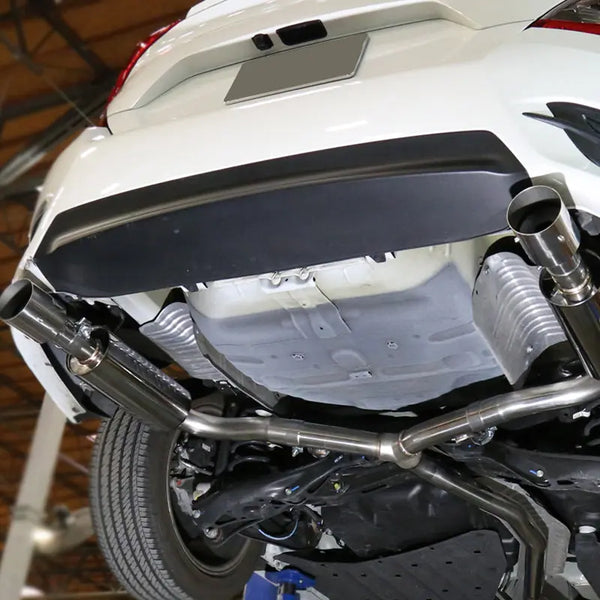
Nuestros sistemas se escanean en 3D directamente desde el chasis. No hay que golpear los soportes con un martillo. No hay que quemar las perchas para que se alineen. Es un ajuste de atornillado real desde el primer momento.
Ingeniería acústica para el tono perfecto
Cada resonador y silenciador está ajustado para filtrar el sonido áspero de tono alto inherente a los motores de 4 cilindros. Obtienes el volumen que deseas afuera y paz cuando viajas a 120 km/h.
Resolviendo problemas comunes de los escapes Honda
Las bridas viejas se oxidan. Los protectores térmicos traquetean. Las tuberías de fábrica se estrechan justo donde más necesitas flujo. Un sistema diseñado a medida repara el deterioro físico al tiempo que reduce significativamente el peso del chasis.
Nota del mecánico: Escúchame en esto. El mes pasado, un cliente habitual trajo su Civic Si de décima generación a mi taller. La brida del tubo intermedio de fábrica estaba completamente podrida, y todo el conjunto traqueteaba como una lata de café llena de monedas. Colocamos un catback Flashark SUS-304 en el elevador. No necesité doblar con calor ni una sola percha ni luchar con las juntas deslizantes. Las bridas de precisión se atornillaron a ras en exactamente 45 minutos. Lo sacamos a dar una vuelta por la autopista, curó por completo su zumbido a 110 km/h, y el turbo L15B7 finalmente tuvo ese gruñido profundo y gutural que se merece sin sonar desagradable. Sin tonterías, solo un ajuste sólido y sin problemas.
Ingeniería Flashark: Materiales, artesanía y rendimiento
Veamos las especificaciones. Porque al final del día, el metal es metal, y la física dicta cómo respira tu coche.
Acero inoxidable T-304 y tubería doblada por mandril
Los tubos de fábrica están doblados por aplastamiento. Imagina beber un batido espeso a través de una pajita que pellizcaste por el medio. Utilizamos doblado CNC por mandril para mantener el diámetro del tubo perfectamente consistente en cada curva, maximizando la velocidad de los gases de escape.
Diámetro óptimo del tubo para la purga
Ajustamos el tamaño específico del tubo, típicamente saltando de tuberías de fábrica restrictivas de 2 pulgadas a diámetros optimizados de 2.5 pulgadas o 3 pulgadas, dependiendo de la aplicación. Esto mantiene la purga del escape para que no pierdas torque a bajas revoluciones mientras aumentas drásticamente el flujo a altas RPM.
| Característica | Escape Honda OEM | Flashark Cat-Back | Marcas baratas de eBay |
|---|---|---|---|
| Material | Acero aluminizado / 409 SS | Acero inoxidable T-304 | Acero dulce (propenso a la oxidación) |
| Curvas | Doblado por aplastamiento (Restrictivo) | Doblado por mandril (Flujo máximo) | Aplastamiento/mandril mal ajustado |
| Control de zumbido | Deflectores pesados (Silencioso) | Resonadores acústicamente afinados | Ninguno (Zumbido masivo en carretera) |
Análisis profundo: Motores Honda, modelos y análisis de progresión de potencia
Los diferentes motores requieren características de flujo de aire completamente diferentes. No solo soldamos tuberías genéricas; diseñamos para el código de motor específico que tienes bajo el capó.
Civic & Civic Si (Dinámica de flujo de las series K y L1.5T)
Si buscas un escape cat back para un Honda Civic Si 2000 o una mejora para un K20 de 8.ª generación, necesitas volumen de escape para evacuar los gases justo cuando el VTEC entra en acción. Nuestras configuraciones de 3 pulgadas aseguran que respire. Para las plataformas modernas, instalar un escape cat back en un Honda Civic Si de 10.ª generación o una configuración de escape cat back para un Honda Civic 2022 reduce la contrapresión posterior a la turbina. Esto significa que el turbo L15B7 se carga drásticamente más rápido.
Potencia del Accord extraída (2.0T, K24 y J-Series V6)
El moderno Accord 2.0T mueve una tonelada de aire. La instalación de un sistema de escape cat back para Honda Accord Sport en ese K20C4 produce mejoras masivas en el torque a medio régimen. Para los modelos más antiguos que buscan un escape cat back para un Honda Accord V6 2004 o un escape cat back para un Honda Accord 2008, nuestras configuraciones sacan ese aullido exótico y profundo de la Serie J sin los matices metálicos.
Leyendas heredadas y de nicho: S2000, Prelude, CR-V y Element
El F20C del S2000 vive a más de 8,000 RPM. A esas velocidades, un escape cat back Honda S2000 sin restricciones es obligatorio para los días de pista. También apoyamos a la enorme comunidad de overland DIY, ya sea que necesites un escape cat back para un Honda Prelude, o estés rastreando senderos y necesites un escape cat back para un Honda Element AWD que no se oxide en el barro, tenemos el ajuste preciso.
Preguntas frecuentes (FAQ) - Escapes cat back Honda
P1: ¿Un escape cat back Flashark Honda anula mi garantía de fábrica?
R1: No. Según la Ley de Garantía Magnuson-Moss, un concesionario no puede anular la garantía completa de su vehículo simplemente porque haya instalado un escape de posventa. La única excepción es si el concesionario puede demostrar que la pieza de posventa causó directamente una falla específica, lo cual un sistema cat-back no hará.
P2: ¿Necesitaré una reprogramación de la ECU después de instalar esto en mi Civic?
R2: No se requiere una reprogramación para que nuestro cat-back funcione de forma segura. La ECU de fábrica se adaptará al flujo mejorado. Sin embargo, si desea extraer cada caballo de fuerza del nuevo sistema de escape Honda, se recomienda encarecidamente una reprogramación personalizada (como Hondata o KTuner).
P3: ¿Cuál es la diferencia entre un escape axle-back y un cat-back para un Honda?
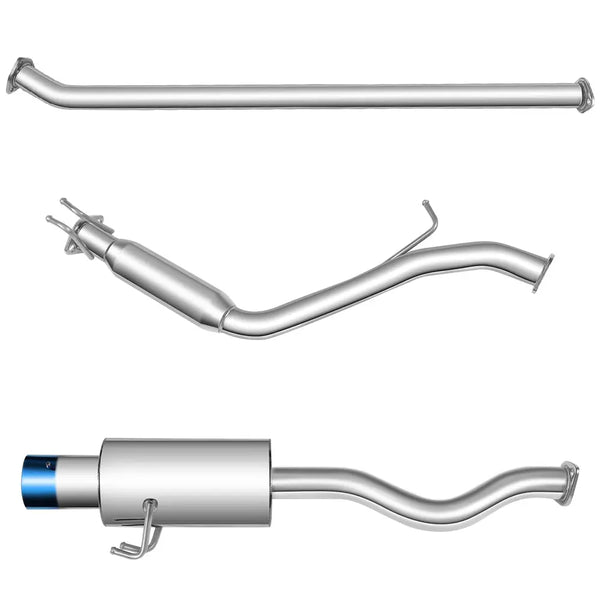
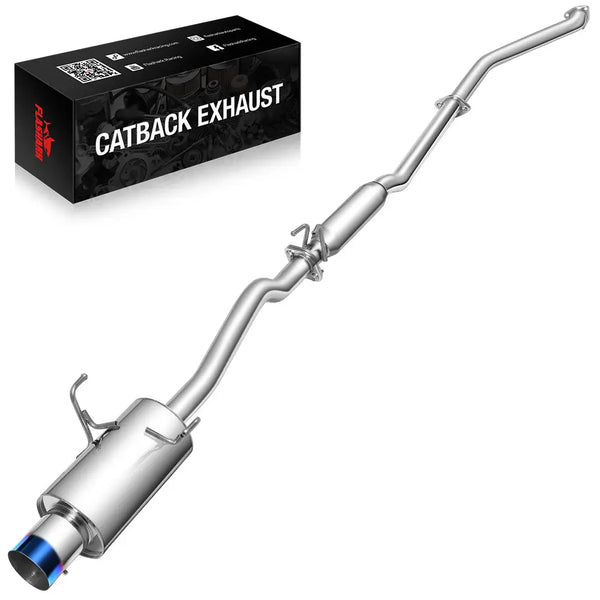
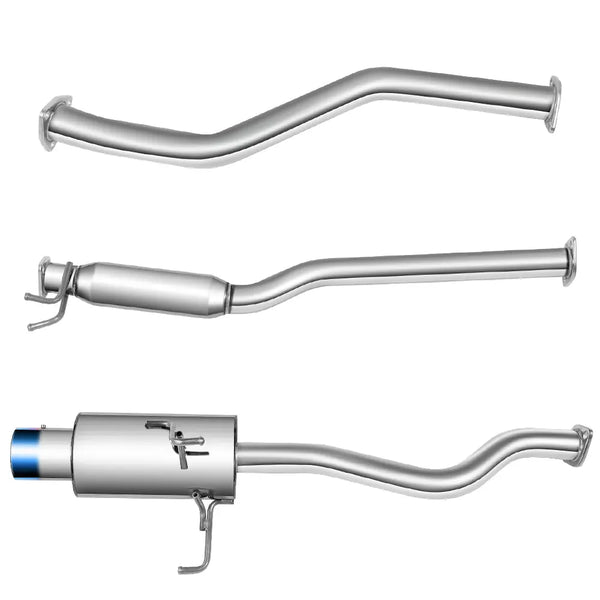
R3: Un axle-back solo reemplaza los silenciadores y las puntas detrás del eje trasero. Un cat-back reemplaza todo desde el catalizador hacia atrás, incluyendo el tubo intermedio restrictivo de fábrica y el resonador. Los cat-backs ofrecen ganancias de rendimiento significativamente mejores y un sonido mucho más profundo.
P4: ¿Cuánto dura la garantía del escape Flashark?
R4: Respaldamos nuestra ingeniería. Cada sistema de escape Flashark viene con una sólida garantía de 1 año que cubre defectos de fabricación, soldaduras rotas y problemas de ajuste.
P5: ¿Un escape Flashark causará zumbido en la carretera en mi Honda Accord?
R5: Absolutamente no. Diseñamos nuestros resonadores en línea para identificar y cancelar las frecuencias específicas que causan resonancia en la cabina a velocidades de crucero de 3,000-4,000 RPM.
P6: ¿Puedo instalar este sistema de escape Honda yo mismo, o necesito un mecánico?
R6: Si sabes cómo levantar un coche de forma segura con caballetes y tienes herramientas manuales básicas, puedes hacerlo en tu entrada. Nuestros sistemas son 100% atornillados directamente. No se requiere soldadura ni corte.
P7: ¿Este escape hará que mi Honda suene como un "bote de pedos"?
R7: No. Ese sonido áspero y agudo proviene de la eliminación de resonadores o del uso de metal barato y de paredes delgadas. Utilizamos acero inoxidable T-304 grueso y silenciadores afinados específicamente para crear un gruñido profundo y maduro.
P8: ¿Necesito comprar juntas y herrajes nuevos para la instalación?
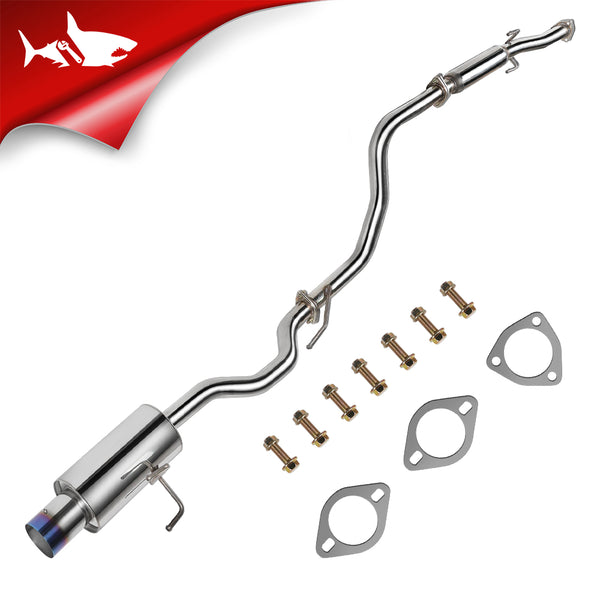
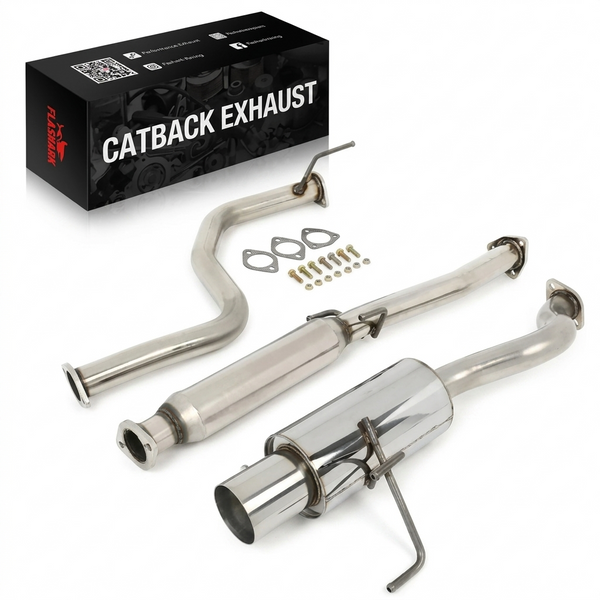
R8: No te dejamos colgado. Todas las juntas, tornillos, tuercas y herrajes de primera calidad necesarios están incluidos en la caja para que puedas terminar el trabajo el mismo día.
P9: ¿Un escape cat-back activará la luz de verificación del motor (CEL) en mi Honda?
R9: Nunca. Debido a que la instalación se realiza corriente abajo del convertidor catalítico y de los sensores de O2 de fábrica, su ECU no arrojará ningún código.
P10: ¿Cuánta potencia añade realmente un escape Flashark Honda?
R10: Realmente, espere 8-12 whp en motores de aspiración natural y 15-25 whp en modelos turboalimentados (como el 1.5T o 2.0T) cuando se combina con una reprogramación de la ECU, puramente al reducir la contrapresión y mejorar el barrido.


