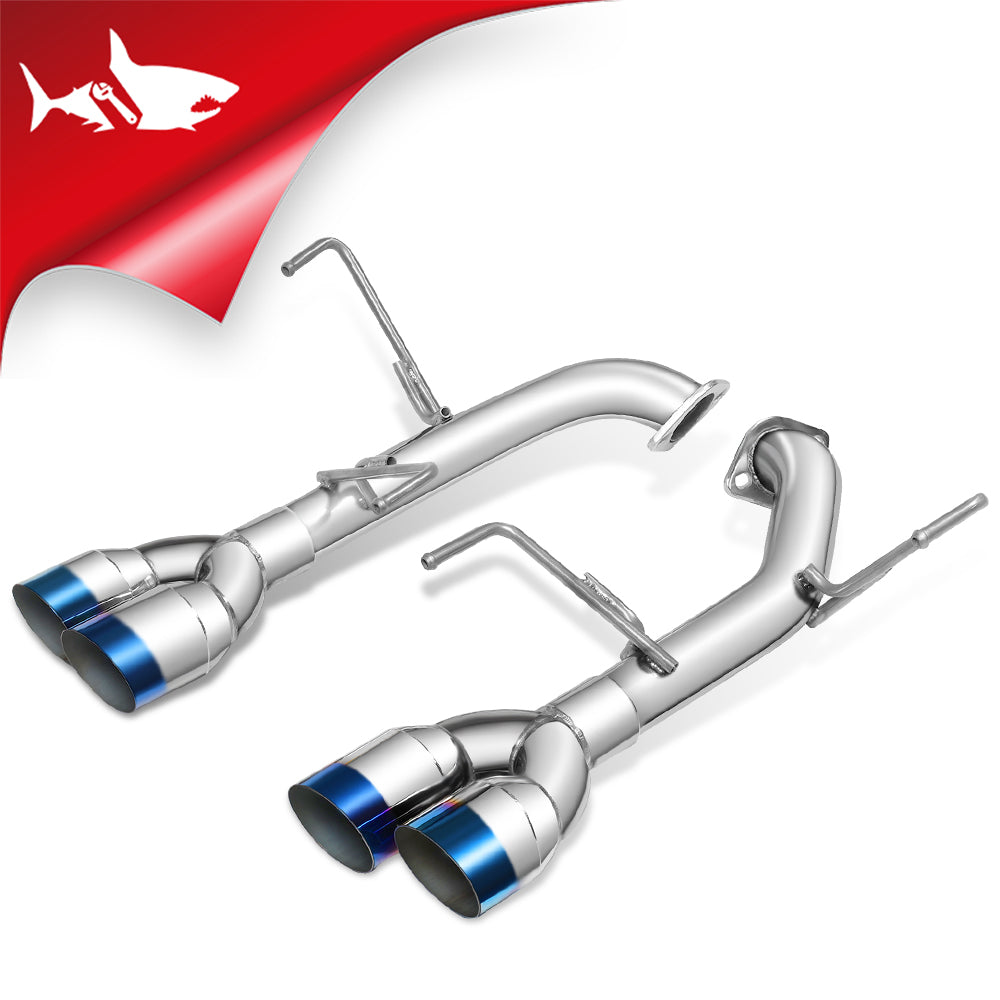
El sistema de escape de un Subaru WRX desempeña un papel crucial en el rendimiento del motor y la experiencia de conducción. Dirige los gases de escape de forma segura fuera del motor, a la vez que influye en el sonido, la contrapresión y la eficiencia. Un escape de un WRX generalmente incluye colectores, convertidor catalítico, tubo intermedio, silenciador y tubo de escape. Comprender cómo interactúan los sistemas catback y shaftback con estos componentes es esencial para tomar una decisión informada sobre la actualización.
Mejorar el escape puede mejorar el rendimiento del WRX, ajustar su tono y optimizar la respuesta del acelerador. Tanto los sistemas catback como los de eje trasero son populares entre los propietarios del WRX, pero su alcance y efectos difieren significativamente.
¿Qué es un escape Catback en un WRX?
El sistema de escape catback del WRX se extiende desde el convertidor catalítico hasta el tubo de escape. Incluye el tubo intermedio, el silenciador y el tubo de escape, y reemplaza los componentes de fábrica después del convertidor catalítico.
La instalación de un sistema catback mejora el flujo de escape, reduce la contrapresión y modifica el sonido del escape del WRX. Si bien las mejoras de rendimiento suelen ser modestas, los sistemas catback pueden mejorar ligeramente la potencia y el par motor, especialmente al combinarse con otras mejoras.
La instalación requiere reemplazar toda la sección trasera, lo que garantiza una mejor integración con los componentes de escape originales del WRX. Los sistemas catback suelen estar diseñados para equilibrar la calidad del sonido con un flujo de gas eficiente en motores turboalimentados.

¿Qué es un escape Axleback en un WRX?
Un sistema de escape trasero en un WRX reemplaza solo la sección que va del eje trasero al tubo de escape. Esto incluye el silenciador y el tubo de escape, pero deja intactos el tubo intermedio y el convertidor catalítico.
Las mejoras del eje trasero se centran principalmente en modificar el sonido del escape. Proporcionan una mejora notable del sonido sin afectar significativamente el rendimiento del motor.
La instalación suele ser más sencilla que la de los sistemas catback y suele ser atornillable. Esto convierte a los sistemas de eje trasero en una opción rentable para los propietarios del WRX que buscan mejorar el sonido con el mínimo esfuerzo.

Diferencias clave entre Catback y Axleback para el WRX
Las diferencias entre los sistemas de escape catback y shaftback para el WRX se pueden resumir en varios aspectos clave:
- Alcance del reemplazo: Un sistema catback reemplaza toda la sección de escape trasera, incluyendo el tubo intermedio, el silenciador y el tubo de escape. En cambio, un sistema shaftback reemplaza solo la sección más trasera, generalmente el silenciador y el tubo de escape.
- Impacto en el rendimiento: Los escapes catback pueden ofrecer mejoras menores en la potencia y el par motor gracias a un flujo de escape más eficiente. Sin embargo, los sistemas de eje trasero tienen un impacto insignificante en la potencia del motor cuando el WRX conserva su convertidor catalítico de serie.
- Características sonoras: Los escapes catback producen un sonido más profundo y agresivo que realza la sensación deportiva del WRX. Los sistemas de eje trasero proporcionan una mejora moderada del sonido, ideal para la conducción diaria sin resultar excesivamente ruidosos.
- Complejidad y costo de instalación: Los sistemas Catback son más complejos de instalar y generalmente más costosos debido a los componentes adicionales y los posibles requisitos de instalación. Los sistemas Axleback son más sencillos de instalar y más rentables, lo que facilita su actualización.
Consideraciones de rendimiento y sonido para las actualizaciones del WRX
El flujo de escape afecta directamente el rendimiento del motor turboalimentado del WRX. Los sistemas catback pueden reducir la contrapresión y mejorar ligeramente la respuesta del acelerador.
El ajuste del sonido es otro factor clave. Los sistemas catback ofrecen un sonido de escape más pleno y rico, mientras que los sistemas shaftback ofrecen una mejora sutil pero notable.
Los propietarios del WRX deberían considerar la compensación entre un sonido agresivo y la comodidad del habitáculo. Si bien un escape más potente mejora la sensación deportiva, puede generar más resonancia en el habitáculo al conducir en ciudad.
Instalación y mantenimiento de los sistemas Catback y Axleback del WRX
La instalación de un sistema catback en un WRX suele implicar retirar el tubo intermedio y el silenciador trasero. Dependiendo del diseño, algunos sistemas requieren soldadura, aunque muchos se atornillan para facilitar su instalación.
La instalación del eje trasero es sencilla y generalmente solo implica el silenciador trasero y el tubo de escape. Se debe confirmar la compatibilidad con los convertidores catalíticos y resonadores de serie para evitar problemas de montaje.
El mantenimiento es mínimo, pero importante. Las inspecciones periódicas para detectar corrosión, el correcto funcionamiento de las abrazaderas y la integridad de las juntas garantizan un rendimiento y una durabilidad a largo plazo.
Cómo elegir el sistema de escape adecuado para su WRX
Al elegir entre catback y shaftback, tenga en cuenta la preferencia de sonido, los objetivos de rendimiento, la complejidad de la instalación y el presupuesto.
Elija un sistema catback si desea optimizar completamente el escape trasero, un sonido más profundo y posibles mejoras menores en el flujo. Opte por un sistema de eje trasero para una instalación más sencilla, una mejora moderada del sonido y un menor costo.
Una evaluación sistemática de tu estilo de conducción y tus objetivos de mejora te ayudará a determinar la opción de escape adecuada para tu WRX. Comprender las diferencias te garantiza una decisión técnicamente fundamentada.
Conclusión: Catback vs. Axleback para el WRX
En resumen, los sistemas de escape catback y shaftback tienen funciones diferentes en el Subaru WRX. Las mejoras catback reemplazan toda la sección trasera, ofreciendo un sonido más profundo y pequeñas mejoras de rendimiento. Las mejoras shaftback se centran en mejorar el sonido trasero con una instalación más sencilla.
Los propietarios de un WRX deben considerar las ventajas de rendimiento, las preferencias de sonido y las consideraciones de instalación al elegir un sistema de escape. Seleccionar la opción correcta garantiza una mejor experiencia de conducción y maximiza el potencial del vehículo sin complejidades innecesarias.
Preguntas frecuentes
P1. ¿Cuál es la principal diferencia entre un escape catback y un escape axisback en un WRX?
Un escape catback reemplaza toda la sección trasera del sistema de escape del WRX, incluyendo el tubo intermedio, el silenciador y el tubo de escape. Un escape shaftback reemplaza solo la sección que va del eje trasero al tubo de escape, generalmente el silenciador y el tubo de escape.
P2. ¿Un escape catback aumentará la potencia de mi WRX?
Los sistemas Catback pueden proporcionar mejoras menores en la potencia y el par motor al optimizar el flujo de escape. Sin embargo, las mejoras suelen ser modestas, especialmente si el convertidor catalítico se mantiene original.
P3. ¿Un escape trasero mejora el rendimiento del WRX?
Los sistemas de eje trasero mejoran principalmente el sonido del escape y tienen un impacto insignificante en el rendimiento del motor cuando se conserva el convertidor catalítico original.
P4. ¿Cómo afecta un catback al sonido de un WRX?
Un escape catback produce un tono más profundo y agresivo que mejora la sensación deportiva del WRX, especialmente a RPM más altas.
P5. ¿Cómo afecta un eje trasero al sonido del escape del WRX?
Un eje trasero proporciona una mejora de sonido moderada, ofreciendo una mejora notable pero sutil, adecuada para la conducción diaria sin ruido excesivo en la cabina.
P6. ¿Cuál es la diferencia entre los escapes catback de salida simple y de salida doble del WRX?
Los catbacks de una sola salida cuentan con un solo tubo de escape, lo que produce un sonido concentrado y ligeramente más potente. Los catbacks de doble salida cuentan con dos tubos de escape, lo que ofrece un sonido equilibrado y agresivo con un diseño trasero más deportivo.
P7. ¿Es complicado instalar un escape catback en un WRX?
La instalación del catback es más compleja, ya que requiere reemplazar toda la sección trasera. Algunos sistemas se atornillan, mientras que otros pueden requerir soldadura, según el diseño.
P8. ¿Es más fácil instalar un escape trasero en un WRX?
Sí. Los sistemas Axleback generalmente involucran solo el silenciador trasero y el tubo de escape y, a menudo, están atornillados, lo que hace que la instalación sea más simple y rápida.
P9. ¿Cómo elijo entre un escape catback y un escape con eje trasero para mi WRX?
Considere sus preferencias de sonido, sus objetivos de rendimiento, la complejidad de la instalación y su presupuesto. Elija un sistema catback para un sonido más completo y un mayor flujo de aire, o un sistema shaftback para una mejora del sonido más sencilla y económica.
P10. ¿Cómo debo mantener el sistema de escape catback o axisback del WRX?
Inspeccione regularmente si hay corrosión, asegúrese de que las abrazaderas y juntas estén bien sujetas y limpie el tubo de escape según sea necesario. Un mantenimiento adecuado garantiza la durabilidad y un rendimiento óptimo.