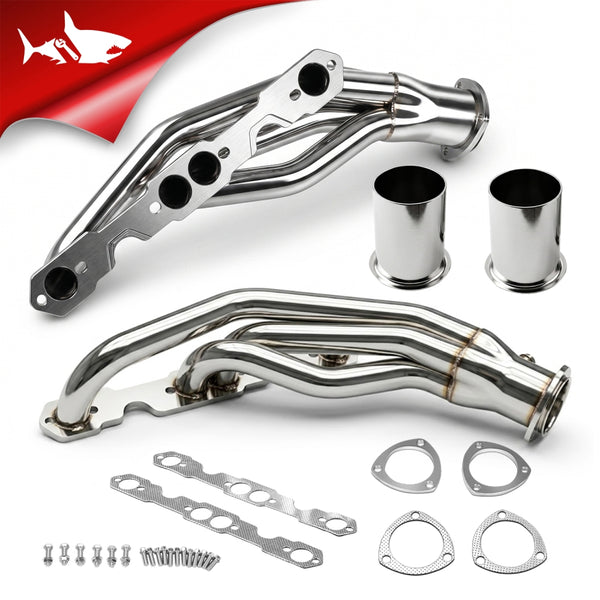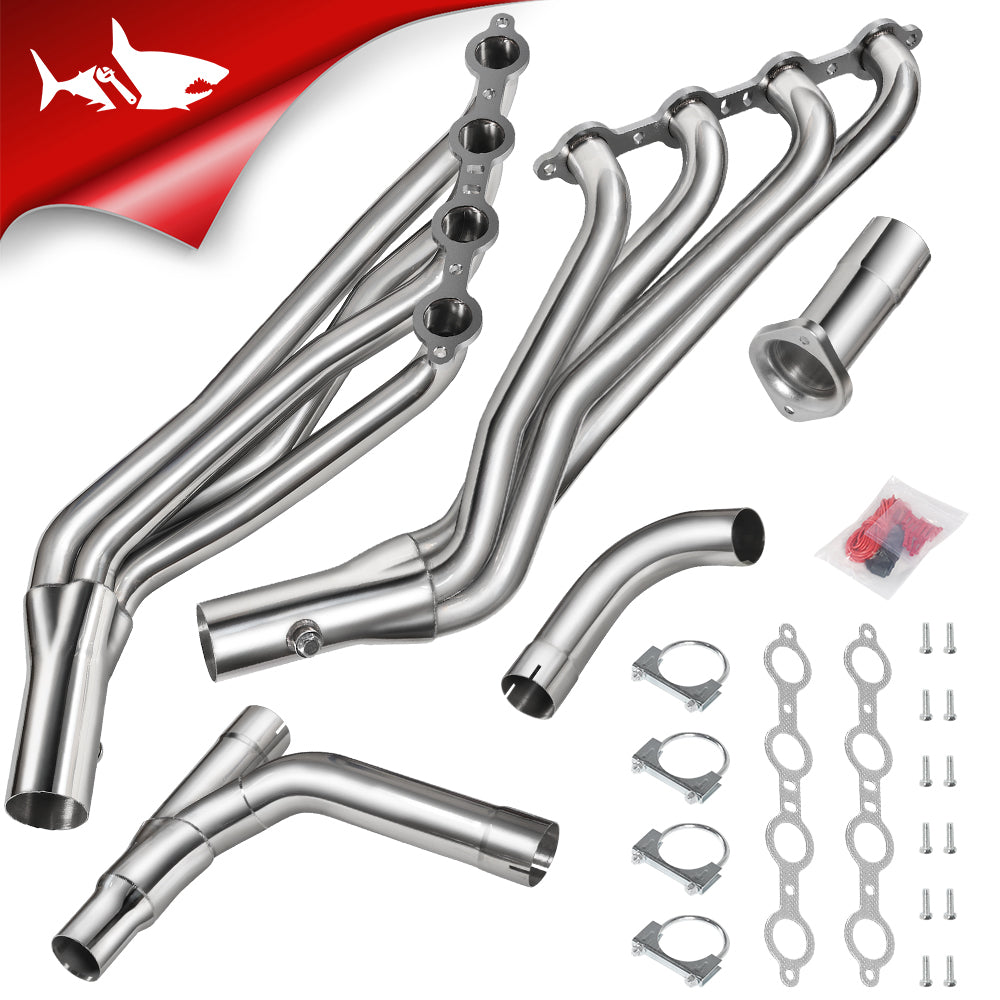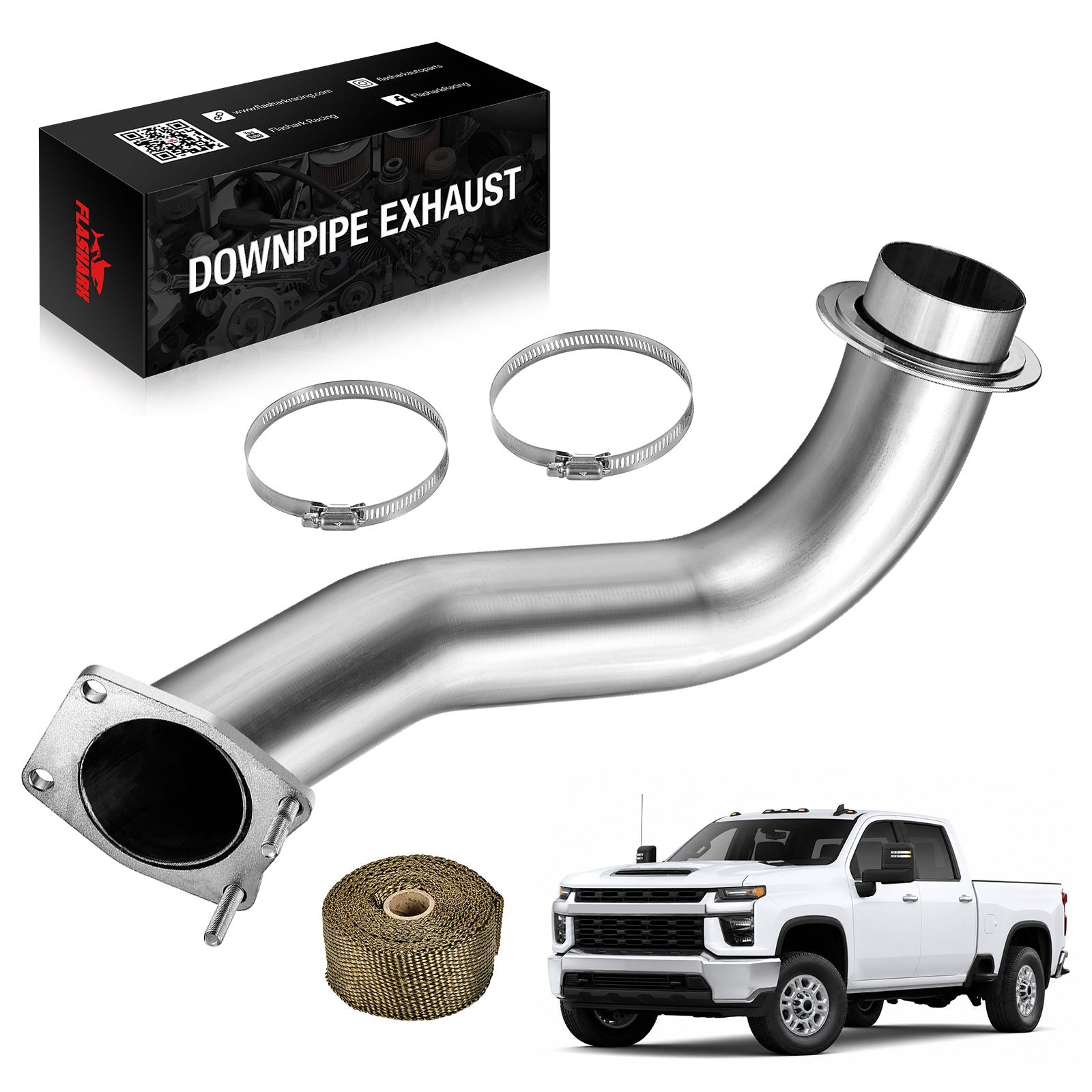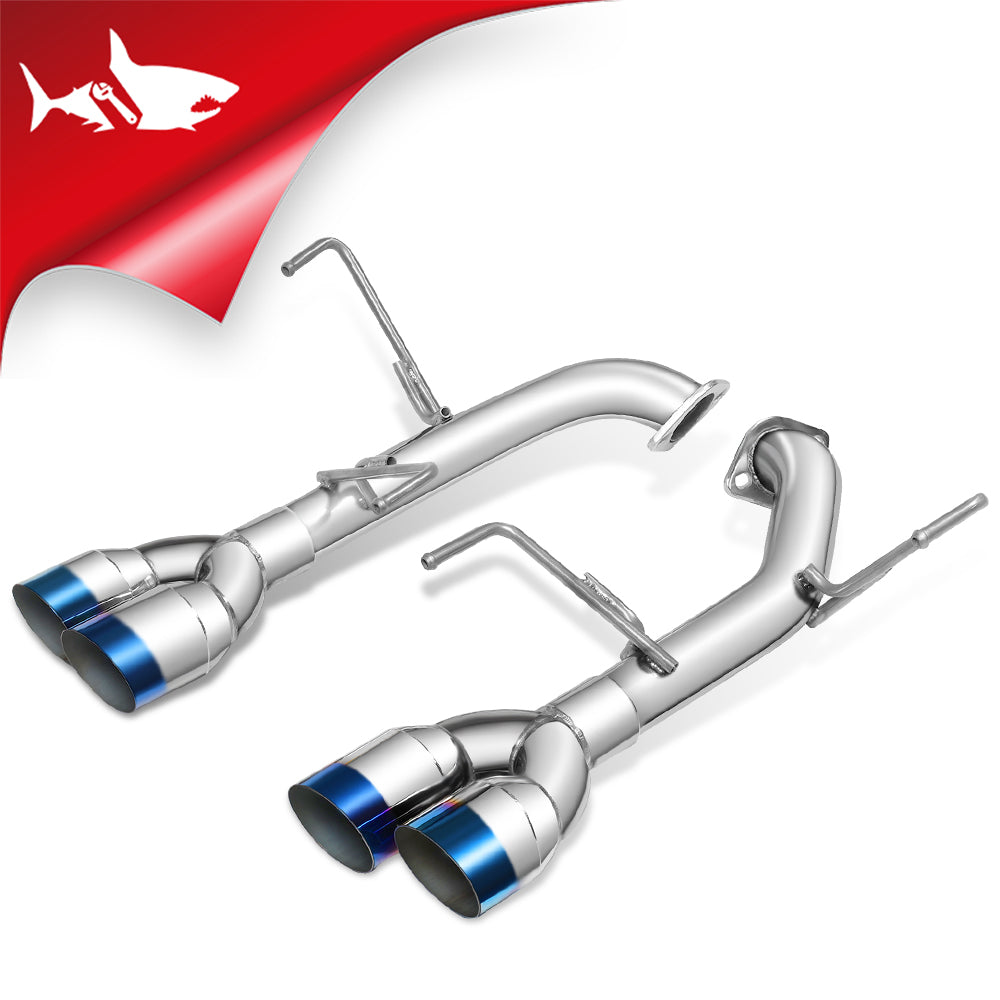
Ask ten builders whether tri y headers beat 4-1 long tubes and you may get twelve answers. One guy remembers how hard his old Mustang pulled out of a corner. Another points at the last 500 rpm of a dyno graph. Both may be telling the truth. They are just measuring different parts of the job.
Here is the blunt version: a header is not a magic bundle of shiny tubing. It is a pressure-wave device that also has to clear the steering shaft, starter, frame, transmission, floor, oxygen sensors, and the pavement. Get the wave timing right but hang the collector below a lowered crossmember, and you have built an expensive speed-bump detector.
Shop-floor answer:
- For a street engine that spends most of its working life from roughly 2,000 to 5,500 rpm, a properly sized 4-2-1 layout is often the stronger starting point because it can spread useful scavenging over a wider band.
- For a naturally aspirated engine built to live near the top of the tach, a tuned 4-1 long-tube layout may concentrate its best work higher in the rev range.
- Neither layout wins by name alone. Primary diameter, tube length, merge quality, firing order, cam timing, collector size, downstream exhaust, and calibration can reverse the expected result.
- On a lowered car, engine swap, or 4WD truck, the design that clears the chassis and seals correctly is more valuable than a theoretical peak-power advantage.
What Are Tri Y Headers?
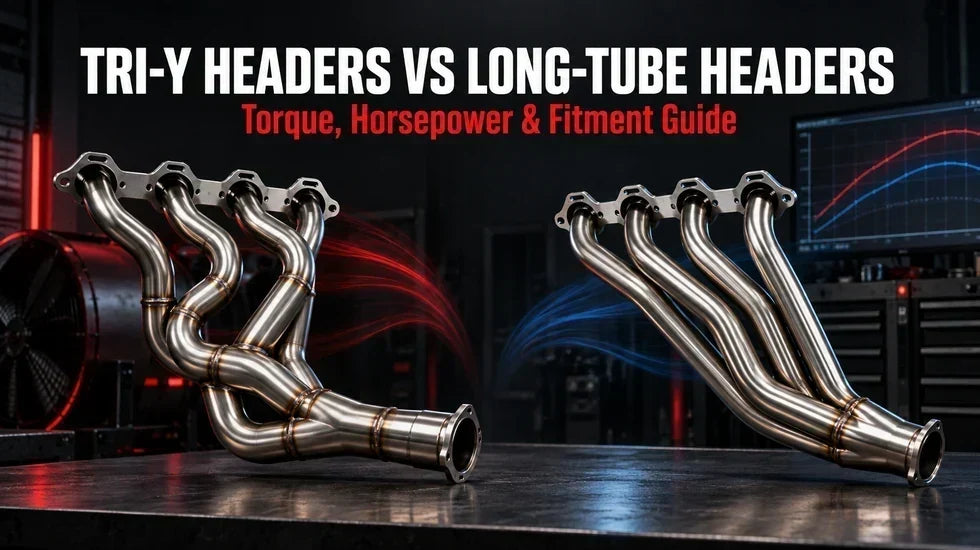
A Tri-Y is a 4-2-1 header. Four primary tubes leave the cylinder head. Those four tubes merge into two secondary tubes, and the two secondaries merge again into one final collector. Count the junctions and you get three Y-shaped merges—hence the name.
Cylinder 1 ─ Primary ─┐
                      ├─ First merge ─ Secondary ─┐
Cylinder 4 ─ Primary ─┘                            │
                                                   ├─ Final collector
Cylinder 2 ─ Primary ─┐                            │
                      ├─ First merge ─ Secondary ─┘
Cylinder 3 ─ Primary ─┘
The cylinder numbers above are only a common inline-four example. Pairing must follow the engine's firing order and firing intervals. Copying the same pairs onto a different engine because the tubes look tidy is not engineering. It is pipe art.
Tri-Y and long-tube are not opposites
This catches people all the time. “4-2-1” and “4-1” describe how the tubes merge. “Long-tube” and “shorty” describe tube length and where the collector sits. A Tri-Y can be a long-tube header. If you need the broader layout comparison first, read this guide to shorty vs long-tube header performance and fitment.
How 4-1 Long-Tube Headers Work
A 4-1 header keeps all four primaries separate until they enter one common collector. That single merge can create a strong scavenging event over a deliberately chosen rpm window. On a high-revving engine with enough head flow, camshaft, compression, and gearing to use that window, it can be very effective.
Do not turn that into the lazy rule that “4-1 means top end and no torque.” Primary length still matters. So does diameter. A long, correctly sized 4-1 can make stout midrange power; a badly oversized one can feel flat before the cam wakes up. The badge on the box does not rescue a mismatched tube.

Exhaust Pulse Pairing and Scavenging Without the Fairy Tales
What happens when the exhaust valve opens?
When the exhaust valve cracks open, cylinder pressure sends a positive pulse down the primary. That pulse does not simply leave and disappear. Changes in area—the first merge, collector throat, or pipe outlet—send pressure waves back through the system. If a low-pressure wave returns while the exhaust valve is open, it can help empty the cylinder and reduce residual exhaust before the next intake charge arrives.
Timing is the whole trick. A helpful wave that arrives late is just noise and heat traveling through tubing.
Why the two-stage merge can broaden the torque curve
In a 4-2-1 layout, the first pair of cylinders interacts through a secondary tube, then both pairs interact at the final merge. Two lengths and two merge events give the designer more ways to shape wave behavior. Done well, that tends to spread useful cylinder scavenging across more of the tach instead of stacking the strongest effect into a narrow band.
That is why a street car can feel stronger rolling from 2,800 rpm without producing a dramatic peak number. You feel the area under the torque curve every time the transmission drops the engine below its horsepower peak.
Pair cylinders by firing order, not convenience
On a typical inline-four with a 1-3-4-2 firing order, pairing 1 with 4 and 2 with 3 can space the pulses entering each secondary by 360 crank degrees. Other engine architectures need other answers. A cross-plane V8 has uneven pulse spacing within each bank, which makes the routing problem more complicated. This is one reason a real V8 Tri-Y can look like a box of snakes.

Your engine does not need “backpressure” to make torque
Listen to me on this one: backpressure is not a performance ingredient. The engine benefits from suitable gas velocity, controlled expansion, useful reflected waves, and low unnecessary resistance. Those ideas get mashed into the word “backpressure,” then somebody bolts on an undersized pipe and calls the restriction helpful.
If you want the foundation before going deeper, start with how exhaust headers improve flow and scavenging.
Tri Y Headers vs Long Tube: Torque Curve and Top-End Power
The familiar pattern is real, but it is conditional. A well-developed 4-2-1 often fattens low-to-midrange and carries that gain across a broad window. A well-developed 4-1 often targets a narrower, higher band and may hold an advantage near peak horsepower. “Often” matters.

| Feature | Factory Cast Manifold | 4-2-1 / Tri-Y | 4-1 Long Tube |
|---|---|---|---|
| Flow path | Compact shared passages | Four into two into one | Four primaries into one collector |
| Typical tuning goal | Cost, heat retention, packaging, cold start | Broad usable torque band | Strong targeted rpm band |
| Primary length | Very short or integrated | Application-dependent primary plus secondary | Long separate primaries |
| Packaging | Usually the most compact | Can package well, but has an extra merge stage | Can place the collector low or far rearward |
| Best comparison metric | Baseline curve and packaging | Average torque in the used rpm range | Average and peak power in the target rpm range |
Read the full dyno curve
Suppose one header is ahead from 2,800 to 5,500 rpm, while the other gains only from 6,200 to 6,800 rpm. The second piece may print the larger peak number. On a street truck shifting at 5,800, that number is decoration. On a road-race engine that never falls below 6,000, it may matter a lot.
Compare runs made on the same engine, fuel, calibration, correction method, and dyno. Keep wheel horsepower separate from crankshaft horsepower. If a seller gives you “up to 25 hp” with no baseline, rpm, vehicle configuration, or test conditions, treat it as advertising—not a build specification.
Diameter can overpower the layout
A 1-7/8-inch primary has about 31% more cross-sectional area than a 1-5/8-inch primary before wall thickness is considered. That is not a small step. On an engine that cannot use the extra area, gas speed drops and the low-to-midrange response may soften. On a high-output combination that is choking a smaller tube, the larger primary may be exactly right.
This is why comparing a small-primary Tri-Y with a large-primary 4-1 does not isolate the merge layout. You are testing two complete systems.
Packaging, Ground Clearance, and the Stuff That Ruins Saturday
Headers live in ugly real estate. A V8 engine bay may give you less than an inch near the steering shaft, a starter wrapped in radiant heat, plug boots inches from tubing, and a collector aimed at a transmission crossmember. Then the engine moves on its mounts when torque hits. Static clearance is only the opening bid.
My first-person test-fit rule
Here is the check I use before I call any header “a fit.” I hang both sides loosely, support the downstream exhaust, and leave every joint able to move. Then I cycle the steering from lock to lock, inspect the starter and plug-wire paths, check the oil-filter service path, and look around the engine and transmission mounts. Only after the system sits without being forced do I tighten from the cylinder-head flanges rearward.
I have learned not to judge clearance with the car hanging by its suspension. I set it at ride height and check the collector against the lowest fixed parts of the chassis. A half inch on a lift can disappear when the suspension loads, the engine rocks, or a tired mount sags. That small pause has saved me from chasing rattles that only appear under throttle.

Pre-purchase fitment checklist
- Match the vehicle year, engine, transmission, drivetrain, steering configuration, and emissions equipment.
- Check whether the header is built for 2WD, 4WD, or both. A transfer case changes the available tunnel space quickly.
- Measure around the steering shaft, starter, frame rails, engine mounts, bellhousing, and floor.
- Find the collector location and diameter. Make sure the downstream exhaust can meet it without pulling the header sideways.
- Check oxygen-sensor bung location, connector reach, and wire routing away from heat.
- Inspect the engine and transmission mounts. Worn mounts turn a close fit into contact under load.
- At ride height, measure collector clearance before final tightening.
If the job is happening in your garage, keep this exhaust header installation and maintenance guide open for the removal, sealing, alignment, and heat-cycle checks.
Match the Header to the Engine and the Job
Street naturally aspirated engines
A street engine lives through traffic, part-throttle rolls, passing maneuvers, and gear changes. If the car spends most of its hard-use time between 2,500 and 5,500 rpm, broad torque usually beats a brief hit close to redline. This is prime territory for a correctly sized 4-2-1—provided the pairing, lengths, and fit are right.
High-rpm drag and track engines
A close-ratio transmission changes the calculation. If the engine shifts at 7,500 rpm and drops back to 6,200, the header should work in that window. A tuned 4-1 may make sense. A road-course car is trickier: exit rpm, track layout, gearing, and traction matter more than the label “race car.”
Trucks, towing, and heavy vehicles
A heavy truck with tall tires asks for cylinder filling where it pulls away and climbs, not only at the top of the tach. A broad 4-2-1 curve can suit that job. Still, do not oversize the primaries because the engine has a large displacement. Per-cylinder demand, operating rpm, camshaft, head flow, and collector size all matter.
Turbocharged engines
Stop here before applying naturally aspirated rules to a turbo build. A turbo manifold has to manage pulse energy into the turbine, heat, volume, wastegate flow, and turbo placement. The best naturally aspirated collector arrangement is not automatically the best turbo manifold.
Primary Length, Collector Size, and the Rest of the Exhaust
The header does not stop working at the flange. A sharp step into the wrong collector throat, a crushed transition, or a rear exhaust too small for the intended mass flow can erase good work upstream. So can forcing the mid-pipe into place and preloading the flanges.
What to match
- Primary diameter: enough area for the target airflow without throwing away useful gas speed.
- Primary and secondary length: selected for the rpm window where the engine needs help.
- Merge angle and throat: smooth enough to avoid an abrupt, turbulent junction.
- Collector diameter: matched to the engine and downstream system, not chosen because the largest option sounds impressive.
- Camshaft overlap: important because pressure behavior during overlap can help scavenging or encourage reversion.
- X-pipe or H-pipe: a separate tuning choice on dual-exhaust V engines; neither one replaces correct header sizing.
Catalysts, oxygen sensors, and calibration
Longer layouts can move the collector, catalytic converters, or oxygen sensors. That can affect warm-up behavior, sensor wiring, fuel trims, and diagnostic monitoring. Tune requirements vary by vehicle and installed hardware. Review local emissions and road-use requirements before modifying emissions-related equipment, and never route sensor wiring where it can touch a primary tube.
Which Design Fits Your Use Case?
| Use case | Starting point | What matters most |
|---|---|---|
| Daily street car | 4-2-1 | Average torque, fitment, catalysts |
| Autocross or canyon car | 4-2-1 or broad-band 4-1 | Corner-exit rpm and response |
| High-rpm drag build | Tuned 4-1 | Shift recovery and high-rpm airflow |
| Towing or heavy truck | 4-2-1 | Low/midrange load and 4WD clearance |
| Lowered vehicle | Best proven routing | Collector height at ride height |
| Engine swap | Chassis-specific or fabricated | Steering, starter, frame, service access |
Once you know your engine, drivetrain, and working rpm range, you can compare Flashark exhaust headers by vehicle and header style. Use that as a fitment-led starting point. Match the selected configuration to the vehicle and the rest of the exhaust before ordering.
Common Header Buying Mistakes
- Shopping by peak horsepower: one number cannot show where the engine gained or lost torque.
- Buying the biggest primary: more area is useful only when the engine can use it.
- Ignoring firing order: a pretty 4-2-1 with poor pulse pairing misses the point.
- Assuming “vehicle-specific” means every configuration: transmission, drivetrain, steering, mounts, and emissions hardware can change the job.
- Forcing the exhaust into alignment: preload invites leaks, cracked welds, and rattles.
- Skipping heat management: protect plug wires, hoses, starter wiring, brake lines, and nearby harnesses.
- Judging by sound alone: firing order, cam, catalysts, crossover, pipe diameter, and mufflers all shape the note.
Final Verdict: Choose the Curve, Not the Label
Tri y headers are a smart starting point when you want a broad, usable torque curve for street driving, towing, autocross, or a road course with frequent rpm changes. A 4-1 long tube deserves a hard look when the engine, gearing, and driving style keep it in a narrower high-rpm window.
But the honest winner is the complete combination. Correct tube area. Sensible lengths. Clean merges. Enough chassis clearance. A downstream exhaust that meets the collector without a fight. Get those pieces right and the engine responds. Get them wrong, and even the prettiest header becomes hot garage décor.
Frequently Asked Questions About Tri-Y and Long-Tube Headers
Q1: What are Tri-Y headers?
A1: They are 4-2-1 headers: four primary tubes merge into two secondaries, then those two merge into one collector. The three merge points create the “Tri-Y” name.
Q2: Are Tri-Y headers considered long-tube headers?
A2: Some are. “Tri-Y” describes the merge layout, while “long-tube” describes tube length and collector placement. One header can be both.
Q3: Do Tri-Y headers make more torque than 4-1 headers?
A3: A properly designed 4-2-1 often supports a broader low-to-midrange torque curve, but it is not guaranteed to beat every 4-1. Diameter, lengths, merge design, engine combination, and calibration decide the result.
Q4: Do 4-1 long tubes always make more peak horsepower?
A4: No. They can be tuned for a strong high-rpm band, but an effective 4-2-1 can match or exceed a poorly sized 4-1. Compare complete curves under consistent test conditions.
Q5: Which header is better for a street car?
A5: For a car that usually works between roughly 2,000 and 5,500 rpm, a correctly sized 4-2-1 is often a sensible choice. Vehicle weight, gearing, camshaft, and fitment still matter.
Q6: Which design is better for racing?
A6: It depends on the racing. A high-rpm drag engine may favor a tuned 4-1. Autocross, rally, and many road-course combinations may benefit more from a wide torque curve.
Q7: How should cylinders be paired in a 4-2-1 header?
A7: Pairing follows firing order and pulse spacing. A common inline-four with a 1-3-4-2 firing order often pairs 1 with 4 and 2 with 3, but that must not be copied blindly to another engine.
Q8: Do engines need backpressure for low-end torque?
A8: No. They need suitable pipe area, gas velocity, pressure-wave timing, and low unnecessary restriction. Excess backpressure makes the engine work harder to empty the cylinders.
Q9: What primary tube size should I choose?
A9: Choose it around per-cylinder displacement, head flow, camshaft, power target, and operating rpm. A larger tube supports more high-rpm flow but may weaken response when the engine cannot maintain useful gas speed.
Q10: Will a Tri-Y reduce ground clearance?
A10: The layout alone cannot answer that. Tube routing and collector location control clearance. Measure at ride height and compare the collector with the lowest fixed chassis parts.
Q11: Are Tri-Y headers easier to install?
A11: Sometimes, but not automatically. The extra merge stage may package neatly on one chassis and interfere with the frame, steering, starter, or transmission on another.
Q12: Do headers require an ECU tune?
A12: Tune requirements vary with the vehicle and hardware. Changes to airflow, oxygen-sensor position, catalysts, intake parts, or camshaft can increase the need for calibration review.
Q13: Will a 4-2-1 header change the exhaust sound?
A13: It can change pulse timing and tone, but the camshaft, firing order, catalysts, crossover, pipe diameter, and mufflers also have major effects.
Q14: Can a Tri-Y work with an X-pipe or H-pipe?
A14: Yes, on a suitable dual-exhaust V-engine layout. The header manages pulses near the engine; the crossover manages pressure interaction farther downstream. Pipe diameter and crossover position still need to match the build.
Q15: Are headers legal for street use?
A15: Street legality depends on the vehicle, location, emissions configuration, and the specific part. Review local emissions and road-use requirements before changing catalysts or other emissions-related equipment.
Q16: Are equal-length headers always better?
A16: No. Equal length is a tuning tool, not a universal quality score. Pulse pairing, diameter, merge geometry, target rpm, and packaging can matter just as much.

Steven Chen
Automotive Performance Specialist | Engine & Exhaust Systems
Steven focuses on practical engine performance, exhaust fitment, and real-world upgrade paths for classic and modern enthusiast vehicles. He reviews small-block Ford, LS, truck, and street/strip applications with one goal in mind: helping builders choose parts that actually work together. His philosophy: "Good power starts with the right combination, not the biggest part."