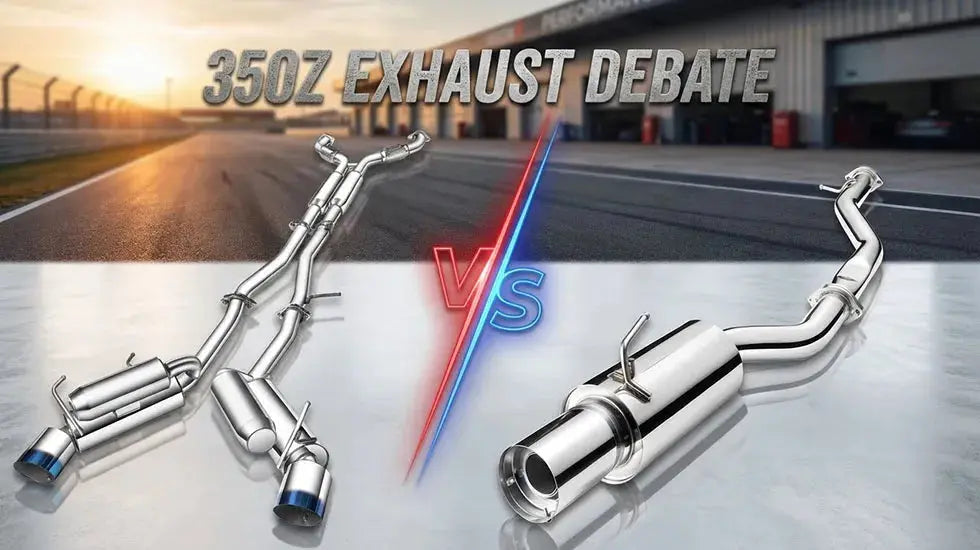
Si has pasado algún tiempo cerca de un Nissan Z33, ya conoces la infame nota de escape del VQ35DE (y posteriormente HR). Ese sonido distintivo y vibrante de trompeta VQ es legendario en la comunidad automotriz. Pero aquí está la cruda realidad: directamente de fábrica, tu coche deportivo suena como si respirara a través de una pajita mojada. Entre la tubería en Y estrangulada, los densos catalizadores de fábrica y ese enorme silenciador trasero transversal de 50 libras que parece un cubo de basura metálico colgando debajo de tu parachoques, la configuración de serie es pesada, restrictiva y, francamente, un insulto al chasis.
He pasado los últimos 15 años metido hasta los codos en grasa debajo de estos coches. He roto más "tornillos demoníacos" oxidados en los catalizadores de los que me gustaría contar. Sin falta, la primera pregunta que me hace cada nuevo propietario de un Z cuando sube a mi elevador es: "¿Cuál es el mejor sistema de escape para un 350z? ¿Debería ir con uno simple o doble?"
Hay un montón de consejos basura en los foros de tipos que nunca han metido mano. Hoy, estamos zanjando el debate entre simple y doble con hechos reales de taller, pura física y datos de dinamómetro reales, sin rodeos, solo lo que realmente funciona.
En Resumen
¿No quieres leer todo el desglose? Aquí tienes la chuleta para encontrar el mejor escape para tu 350z en tu escenario específico:
- Si estás construyendo un coche de pista/drift: Opta por una Salida Única. Necesitas la máxima reducción de peso (reduciendo ~35 lbs de la parte trasera) y el barrido de escape de alta velocidad para la máxima potencia a altas RPM.
- Si estás construyendo un coche de uso diario o de calle/exhibición: Opta por una configuración Doble Verdadera. Obtendrás una estética simétrica que rellena los recortes del parachoques, combinada con un rugido más profundo y rico que cancela activamente el zumbido de la carretera.
- Regla general para el tamaño: Quédate con tuberías de 2.5 pulgadas para construcciones de Aspiración Natural (NA) para mantener el torque a bajas revoluciones. Solo salta a sistemas duales de 3 pulgadas si planeas una inducción forzada (turbo/supercargador).
- Rendimiento esperado: Un catback adecuado te dará entre 8 y 12 whp en el dinamómetro. Se requiere la adición de catalizadores de alto flujo (HFC) y una sintonización Uprev/EcuTek para maximizar estas ganancias.
Por qué el escape de serie del Z33 está ahogando tu VQ35
A principios de los años 2000, los ingenieros de Nissan tuvieron que ahogar este motor para cumplir con las estrictas regulaciones de ruido y emisiones. El resultado es un sistema de escape lleno de curvas estrechas. En la tubería en Y de fábrica, las dos tuberías de 2.25 pulgadas se comprimen en una sola tubería de 2.5 pulgadas. Cuando pisas el acelerador a fondo (WOT), la presión de los gases de escape literalmente lucha contra sí misma intentando escapar.
Un sistema de escape cat back completo reemplaza todo desde los catalizadores hacia atrás. Al usar tuberías lisas y curvadas con mandril (donde el diámetro interior se mantiene perfectamente constante a través de las curvas), se reduce drásticamente la contrapresión. Esta es la base obligatoria. Antes incluso de considerar espaciadores de plenum, tomas de aire o tuberías de prueba, tu motor necesita poder exhalar.

⚠️ Historia de Taller #1: El desastre del "Muffler Delete" DIY
Muchos novatos miran tutoriales en línea, cogen una sierra de sable y simplemente cortan el silenciador trasero para soldar tubos rectos, pensando que sonará como un coche de carreras por $50. Por favor, nunca hagas esto.
Recuerdo que en 2018, un chico trajo su modelo '04 Touring a mi taller después de hacer exactamente esto. Me dijo que sonaba "increíble". Lo sacamos a probar. Justo a 3,000 RPM—que es exactamente la velocidad de crucero en autopista a 75 mph en 6ª marcha—el zumbido dentro de la cabina era tan violento que mis dientes vibraban y el espejo retrovisor era inútil. El motor VQ crea frecuencias resonantes masivas. Necesitas absolutamente un sistema correctamente diseñado con resonadores sintonizados (como los resonadores Heimholtz) o silenciadores con relleno para cancelar ese molesto zumbido que causa dolor de cabeza mientras mantienes la nota de escape agresiva.
El debate principal: escape doble vs. simple para el 350Z
Entra en cualquier reunión de coches y escucharás a la gente discutir sobre las configuraciones de escape doble vs. simple para el 350Z. Normalmente se reduce a la estética vs. el rendimiento. Aquí tienes exactamente lo que cada geometría hace a la dinámica de tu vehículo.

El arma de pista: escape de salida única
En el mundo del automovilismo, el peso es el enemigo. El escape de serie del Z33 pesa aproximadamente 65 libras. Un sistema de salida única de calidad con un tubo intermedio de 3 pulgadas reduce eso a unas 25-30 libras. Recortar casi 40 libras de la parte trasera del coche es una victoria masiva para tu relación potencia-peso y la dinámica de la suspensión.
Además, el enrutamiento de un solo tubo directamente hacia atrás aumenta la velocidad del flujo de escape a altas RPM, que es exactamente donde el motor VQ alcanza su potencia máxima. Para mis clientes centrados en la pista, siempre les dirijo hacia un escape cat back simple para 350z. Ofrece ese aspecto JDM agresivo e inclinado. Solo ten en cuenta: es ruidoso, áspero y sin complejos.
El barrendero callejero: escape doble verdadero
Seamos honestos. A muchos no les gusta el aspecto de "agujero vacío" en el lado izquierdo del parachoques cuando se usa una salida simple. El parachoques trasero del 350Z fue moldeado para puntas dobles. Un sistema doble verdadero te da esa presencia callejera equilibrada, agresiva y al ras.
Más importante aún, la dinámica del sonido cambia por completo. Una configuración doble verdadera (especialmente una con una tubería en X integrada) actúa como una cámara de resonancia más grande. Filtra el notorio "VQ Rasp" (ese sonido metálico y traqueteante a altas revoluciones) y produce un rugido mucho más profundo, estilo V8. Si realmente conduces tu Z a diario o haces viajes de fin de semana, un escape cat back doble para 350z es infinitamente más habitable.
🛠️ Historia de Taller #2: El mito de "cuanto más grande, mejor"
Muchos novatos creen que las tuberías más grandes equivalen a más caballos de fuerza, por lo que inmediatamente piden un escape doble de 3 pulgadas para su motor completamente de serie y de aspiración natural (NA).
Tuve un cliente que hizo esto en un modelo Rev-Up de 2006 impecable. Lo trajo quejándose de que el coche se sentía perezoso al arrancar. Lo pusimos en el dinamómetro y, efectivamente, había perdido alrededor de 12 lb-ft de torque por debajo de las 3,500 RPM. ¿Por qué? Porque un motor NA depende de la velocidad de los gases de escape (barrido) para extraer el siguiente pulso de escape del cilindro. Las tuberías demasiado grandes ralentizan el gas, matando tu potencia de gama baja. Para el 90% de los 350Z de calle con motor NA, un sistema doble de 2.5 pulgadas es el punto óptimo absoluto. Solo opta por uno doble de 3 pulgadas si vas a colocar un supercargador o turbos gemelos en el bloque.
Las mejores opciones: ¿Cuál es el mejor sistema de escape para un 350Z?
En un mundo perfecto donde el dinero no es problema, todos estaríamos atornillando configuraciones Tomei o Motordyne de titanio de 2.500 dólares. Son sistemas increíbles. ¿Pero volviendo a la realidad? Necesitas dinero para neumáticos, tarifas de pista y reemplazar esos bujes de brazo de control inferior desgastados.
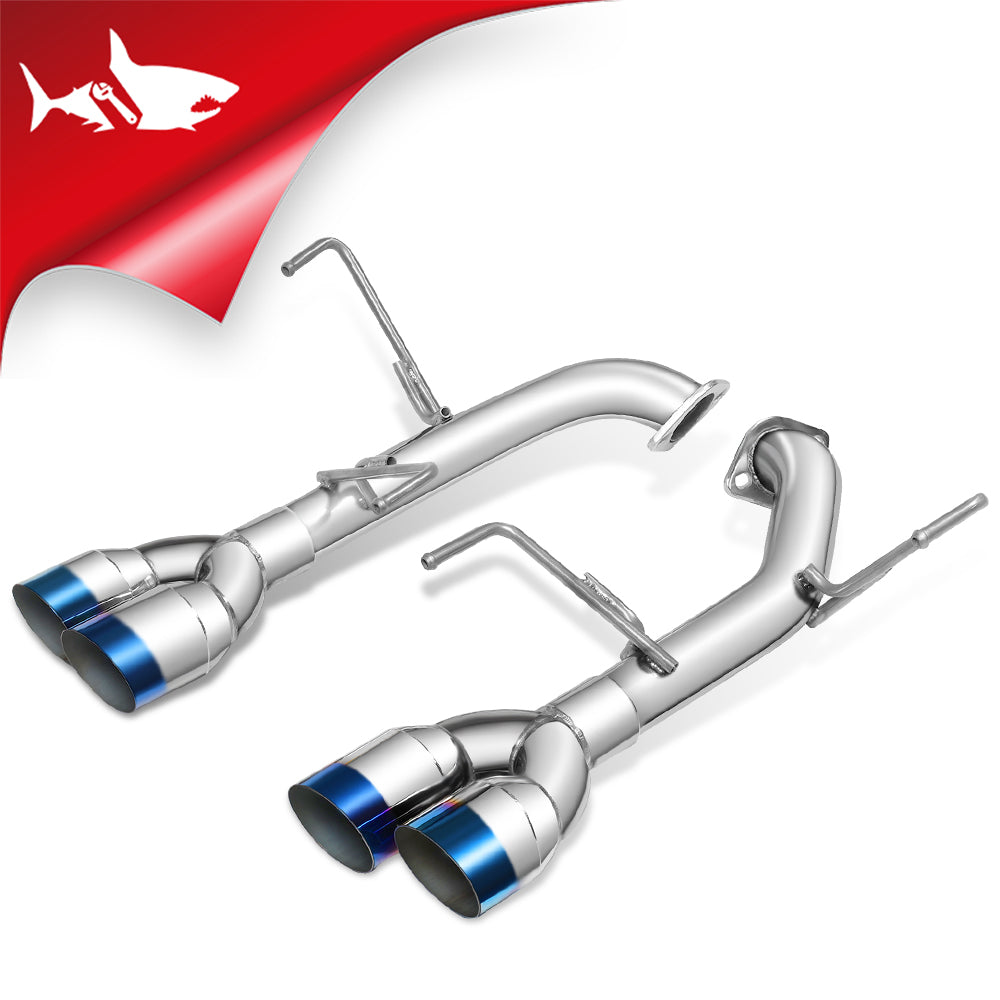
He tenido clientes que han traído escapes de eBay de 400 dólares que no encajaban con los soportes de fábrica ni a tiros. Después de arreglar suficientes de esos líos, empecé a recomendar Flashark. Obtienes el mejor equilibrio: acero inoxidable T304, un ajuste real atornillado que no requiere un soplete para alinear, y una nota de escape impresionante sin vaciar tu cuenta bancaria.

| Especificación / Característica | Flashark 4.5" Doble Verdadera | Flashark 4.5" Salida Única |
|---|---|---|
| Mejor Aplicación | Calle / Diario / Conducción en Curvas | Días de Pista / Drifting / Potencia Máxima |
| Perfil Acústico | Rugido profundo y gutural. Los resonadores eliminan activamente el zumbido de la autopista. | Grito fuerte, agresivo y crudo a altas RPM. Espera algo de aspereza. |
| Material y Tubería | Acero Inoxidable T304, curvado con mandril de 2.5" | Acero Inoxidable T304, curvado con mandril de 3" |
| Comprar Ahora | Ver Configuración Doble | Ver Configuración Simple |
Preguntas Frecuentes rápidas desde el elevador
¿Todavía estás indeciso? Aquí tienes las preguntas más comunes que me hacen mientras el coche está elevado.
P: ¿Un catback realmente añade caballos de fuerza?
R: Sí. Al eliminar la restrictiva tubería en Y y la tubería intermedia de fábrica, reduces la contrapresión. En el dinamómetro, un VQ35 en buen estado suele ganar entre 8 y 12 caballos de fuerza en las ruedas.
P: ¿Cuál es más ruidoso: el escape simple o el doble?
R: El escape simple. Hay menos tuberías y solo un silenciador para amortiguar las ondas sonoras. Grita a tope.
P: ¿Un escape doble causará zumbido?
R: Mínimo, siempre y cuando compres un sistema con resonadores de tamaño adecuado. Son las configuraciones baratas de tubería recta las que te hacen vibrar el cerebro a 2,500 RPM.
P: ¿Puedo instalar esto yo mismo en casa?
R: Absolutamente. Es un atornillado directo. Consigue un poco de PB Blaster para los tornillos oxidados de serie, un buen juego de caballetes y calcula unas 2 o 3 horas en tu garaje.
P: ¿El escape del 2003 DE encaja en el motor 2007 HR?
R: Sí. El recorrido por debajo del coche desde los catalizadores hacia atrás es idéntico. Atorníllalo directamente.
P: ¿Realmente necesito una reprogramación después de instalarlo?
R: No la necesitas estrictamente para conducir con seguridad al trabajo; la ECU de fábrica se ajustará ligeramente. Pero para sentir realmente ese flujo de aire adicional y maximizar tus ganancias de caballos de fuerza, se recomienda encarecidamente una reprogramación Uprev o EcuTek.
P: ¿Qué es el sonido de "trompeta VQ"?
R: Es la resonancia única y metálica producida por el orden de encendido de los motores de la serie VQ de Nissan. Un escape de posventa amplifica este tono distintivo en lugar de ocultarlo.
P: ¿Un escape de posventa no pasará la prueba de emisiones?
R: Los sistemas catback se atornillan después de los catalizadores de fábrica. No estás tocando el equipo de emisiones, por lo que no debería activar una luz de verificación del motor ni fallar una prueba de conexión OBD2.
P: ¿Por qué estos escapes tienen puntas masivas de 4.5 pulgadas?
R: Porque los recortes del parachoques de fábrica son enormes. Las puntas estándar de 3 pulgadas se ven diminutas y extrañas. Una punta de 4.5 pulgadas llena perfectamente el vacío.
P: ¿Qué pasa con la distancia al suelo en coches rebajados?
R: Si vas muy bajo con coilovers, eventualmente rasparás el tubo intermedio en rampas empinadas. Es un rito de iniciación. Dicho esto, los escapes dobles a veces se ajustan un poco más cerca del chasis que un enorme tubo único de 3 pulgadas.
P: ¿Cómo elimino el molesto sonido áspero?
R: Aléjate de los tubos de prueba sin resonador. Combina tu catback con catalizadores de alto flujo (HFC) o tubos ART (Advanced Resonance Tuning), y opta por un sistema doble verdadero con una tubería en X integrada. Las tuberías rectas en un VQ suenan como una desbrozadora enfadada.
P: ¿Simple o doble para hacer drifting?
R: Simple. Quieres la máxima reducción de peso sobre el eje trasero y una rápida evacuación de los gases de escape a altas RPM.