Deep Exhaust Sound Without Drone: How to Keep the Growl and Lose the Highway Headache
You fire the car up in the morning. Nice. Deep idle. A little bark when you crack the throttle. Then you hit the interstate, settle into sixth gear, and somewhere around 1,800 to 2,600 rpm the cabin starts booming like somebody put a subwoofer under the rear seat.
That is exhaust drone. And no, it is not simply “too much volume.” A car can be loud outside and still be pleasant inside. Another car can sound great in a 15-second cold-start clip, then beat your eardrums to death on a two-hour highway drive.
Quick Answer: You can often get a deeper exhaust sound without drone, but the solution depends on where the noise happens.
- If the entire system is too loud: use a larger, better-matched muffler or a resonated cat-back.
- If the sound is harsh or metallic: add or retain a quality resonator in the mid-pipe.
- If one narrow highway rpm range is miserable: measure that frequency and consider a tuned J-pipe or quarter-wave side branch.
- If the floor buzzes or rattles: inspect pipe clearance, hangers, clamps, heat shields, and leaks before buying another exhaust part.
What Exhaust Drone Really Is—and Why Highway RPM Triggers It
Listen, a deep exhaust note and a droning exhaust note are not the same animal.
A deep note has weight. You hear it at idle, you hear it when you roll into the throttle, and it backs off when you settle into cruise. Drone is different. Drone is a steady low-frequency pressure that hangs in the cabin at one engine speed and load. It does not sound exciting after ten minutes. It sounds like your car is trying to massage your skull.

The ugly part is that the engine, exhaust tubing, rear floor, trunk area, and cabin can all join the party. When the exhaust pulse frequency lines up with a natural resonance in the system, the sound energy gets amplified instead of fading away. That is why the same exhaust can sound civilized at 45 mph and miserable at 72 mph.
Gear ratio matters. Tire size matters. Cylinder count, firing order, pipe length, tailpipe exit, muffler design, and even a loaded trailer on a truck can matter. This is why copying somebody else’s “perfect no-drone setup” without looking at your own car can get expensive fast.
Technician’s Note: A loud exhaust is an overall volume problem. Drone is usually a frequency-and-resonance problem. Treating one like the other is how people end up installing three mufflers and still hating their highway commute.
Deep Tone, Rasp, Boom, and Drone Are Four Different Problems
- Deep tone: low, round, controlled sound. Usually what most street-car owners actually want.
- Rasp: sharp, metallic, fizzy noise that often shows up under throttle or on decel.
- Boom: a broad low-frequency swell. It can be fun outside the car but tiring inside it.
- Drone: a repeating low-frequency cabin pressure at a predictable rpm and load.
Old-school advice says “just delete the resonator.” Sometimes that makes a car louder. It can also turn a clean exhaust note into a coffee can full of bolts. Many first-time builders learn that lesson after the first freeway trip.
Diagnose Highway Drone Before You Buy Another Part
Before you order a muffler, resonator, or J-pipe, figure out exactly what the car is doing. Do not judge the whole system from a cold start in the driveway. Cold starts sell exhausts. Highway driving tells the truth.
I remember a late-model V8 truck that came in with a complaint of “horrible drone at 65 mph.” The owner was ready to replace the muffler. We put it on a lift first. The tailpipe was sitting only a few millimeters from a crossmember, and under load the system moved just enough to touch it. The truck body became a giant speaker. Re-centering the exhaust and tightening the clamps from front to rear changed the cabin noise without replacing a single sound-control part.
That is why a smart diagnosis begins underneath the vehicle, not in a shopping cart.
Build a Simple Highway Drone Test Sheet
Make one pass on a familiar road and write down the conditions. It takes five minutes and can save you from throwing parts at the problem.
- Record the vehicle speed where the drone begins and fades out.
- Record engine rpm, gear, throttle position, and whether the road is flat or uphill.
- Note whether the sound changes with windows open, windows closed, or rear seats folded down.
- Use a phone spectrum app if possible and note the strongest low-frequency peak.
- Repeat the test after every exhaust change using the same stretch of road.
Check Mechanical Problems Before Chasing Acoustics
- Look for soot around slip joints, flanges, and clamps.
- Check heat-shield, crossmember, driveshaft, spare-tire, bumper, and suspension clearance.
- Inspect rubber hangers for excessive preload, twisting, or torn rubber.
- Make sure the tip does not end under the cabin or point directly at a body panel.
- Check for a metallic buzz that changes over bumps; that is often contact, not acoustic drone.
For a wider look at sorting normal exhaust character from rattles and vibration, read this guide to exhaust-related NVH after car modifications.

Resonator vs Muffler Drone: What Each Part Actually Changes
Here is the part people get wrong all the time: a resonator and a muffler are not interchangeable just because both make an exhaust quieter.
A muffler is usually the broad-brush tool. It controls more of the overall sound level across a wider rpm range. A resonator is often the finer tool. It can clean up specific parts of the exhaust note, reduce harshness, smooth out rasp, and help calm troublesome frequencies without making the car feel dead.
| Setup | Cold Start | Acceleration Tone | Highway Cabin Risk | Best Use |
|---|---|---|---|---|
| Factory exhaust | Quiet | Restrained | Low | Daily comfort |
| Muffler delete | Very loud | Raw, often uneven | High | Short-term sound experiment, not most daily drivers |
| Resonated cat-back | Moderate | Deep and cleaner | Low to moderate | Street cars and long commutes |
| Large muffler + resonator | Controlled | Full and mature | Usually lowest aftermarket risk | Daily-driven performance builds |
| Existing exhaust + tuned J-pipe | Mostly unchanged | Mostly unchanged | Can be reduced at one target band | A narrow, repeatable drone rpm |

When a Resonator Is the Better First Move
A resonator is often the sensible first move when you like the volume but dislike the texture. Maybe the car has a harsh edge at 3,500 rpm. Maybe deceleration sounds tinny. Maybe a non-resonated mid-pipe made the system louder but less expensive-sounding.
That is where a properly sized resonator can help. It does not have to erase the personality of the exhaust. In many street builds, it is the part that lets you keep the growl without turning the car into a rolling drum.
When a Muffler Is the Better First Move
If the car is loud everywhere—idle, part throttle, cruise, and wide-open throttle—a muffler change makes more sense than trying to tune one narrow frequency. A larger muffler body generally gives the designer more room to control low-frequency energy. That is not glamorous. It works.
Do not buy by outlet diameter alone. Two 3-inch mufflers can behave completely differently because chamber layout, perforated core design, packing density, body volume, and pipe routing are all part of the equation.
How to Reduce Exhaust Drone Without Losing Sound With a J-Pipe
A J-pipe is the cool, slightly nerdy answer when the exhaust already sounds how you want it to sound—except for one ugly rpm band.

It is a capped side branch attached to the exhaust system. At the right effective length, it reflects a sound wave back into the main exhaust stream out of phase with the offending frequency. Think of it as a mechanical way to take a bite out of one bad note instead of turning down the whole stereo.
But hear me out: a J-pipe is not magic. It is not a universal 30-inch tube you weld under every vehicle. The right length depends on the drone frequency, gas temperature, tube dimensions, layout, and where the branch sits in the system.
Garage Warning: Many new builders copy a J-pipe length from a forum, weld it in permanently, and then wonder why nothing changed. Start with measured highway rpm and leave room for trimming or adjustment. A quarter-inch or half-inch can matter when you are tuning a narrow frequency band.
Use a J-Pipe for a Narrow, Repeatable Drone Window
If your car drones from 2,000 to 2,100 rpm every single time, that is a good J-pipe candidate. If the whole exhaust is obnoxious from idle to redline, it is not. Start with the muffler and resonator layout first.
I remember a turbo four-cylinder street car that had a clean pull through the gears but droned hard during a steady 70 mph cruise. The owner had already tried thicker trunk mat and a different rear muffler. The noise changed a little, but the problem stayed in the same rpm window. Once the exhaust frequency was measured and the side branch was tuned through road testing, the cabin calmed down while the car still sounded sharp when the boost came in.
That is the point of a J-pipe: keep the character, target the headache.
Pipe Diameter, Crossovers, and Tailpipe Location Matter More Than People Think
Bigger pipe is not automatically better pipe. A larger diameter can change the tone, flow behavior, and resonant characteristics of the whole system. On one build, it may make the exhaust fuller. On another, it may make low-rpm sound hollow and loose.
Choose pipe size around the engine, the power goal, the existing exhaust path, and the available space. A street-driven naturally aspirated engine, a turbo four-cylinder, a supercharged V8, and a tow rig do not want the same answer.
H-Pipe vs X-Pipe for Exhaust Tone and Cabin Control
On dual-exhaust V8 applications, crossovers can change how the system blends pulses. An H-pipe often leans toward a lower, old-school rumble. An X-pipe can produce a smoother, more blended sound as rpm rises. Neither one is a guaranteed drone cure, but both can affect the character and frequency balance of the exhaust.
Do not treat crossover placement as decoration. It is part of the acoustic layout.

Rear Exit, Side Exit, and Before-Tire Exit
Tailpipe location matters because the sound does not disappear once it leaves the tip. It reflects off pavement, body panels, trailers, barriers, and the underside of the vehicle.
- Rear exit: usually the most predictable choice for a daily driver.
- Side exit: can sound aggressive and work well, but placement near the cabin matters.
- Before-tire exit: can be loud and fun, but it deserves a careful highway test.
- Under-body dump: often raises the chance of unwanted cabin noise and fumes.
Truck owners considering a side exit can also read this F-150 side-exit exhaust guide for a closer look at sound, clearance, and towing use.
Three Build Paths for Deeper Exhaust Sound Without Highway Drone
Build Path 1: The Daily-Driver Deep Tone Setup
This is the move for people who enjoy sound but also drive their car to work, take road trips, or carry passengers who do not want a headache before lunch.
- Keep a useful mid-pipe resonator.
- Choose a larger-bodied rear muffler rather than a tiny race-style can.
- Run the tips to a sensible rear or properly positioned side exit.
- Check the cabin at real cruise rpm before calling the build finished.
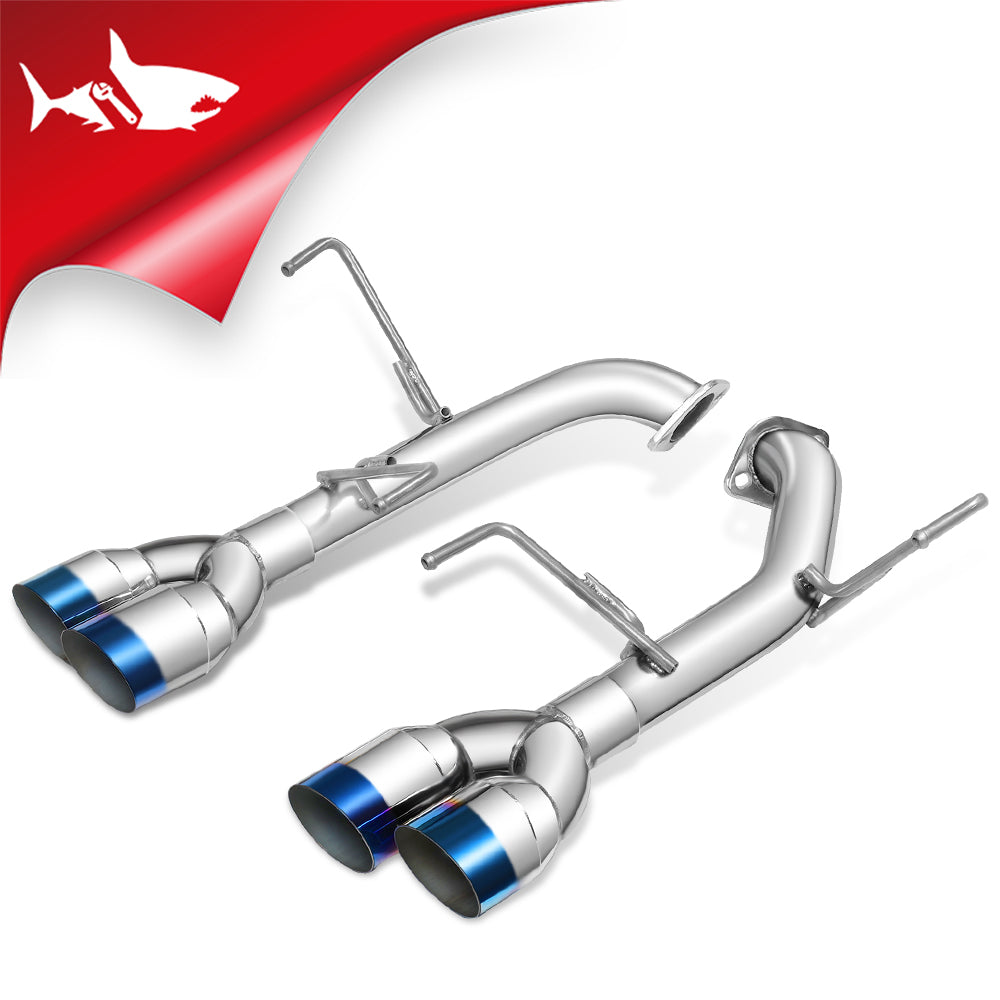
For broad vehicle coverage, browse Flashark cat-back exhaust systems and match the system to your vehicle year, engine, drivetrain, exhaust connection, and intended use.
Build Path 2: Aggressive Sound With Controlled Cruise
This path is for the owner who wants a stronger startup and a real change under throttle, but still wants to hear a conversation at 75 mph. A resonated mid-pipe paired with a straight-through rear muffler can be a solid middle ground when the layout is built for the vehicle instead of copied from a random video.
Nissan drivers looking for a stronger note without immediately jumping to a delete-style setup can compare Nissan cat-back exhaust options. The right configuration depends heavily on engine layout, rear subframe space, tip location, and how much highway time the car sees.
Build Path 3: Keep the Existing Tone and Target One Bad RPM
If you love the exhaust almost everywhere except one repeatable highway rpm range, this is the J-pipe route. Measure first. Build second. Road-test after every adjustment.
This approach is especially useful when a full exhaust replacement would change a tone you already enjoy. It is more precise than simply adding another muffler and hoping for the best.
Choosing a Flashark Cat-Back Without Building a Cabin Boom Box
A cat-back is often the cleaner route when you want the system to work as a complete package instead of mixing random tubing, tips, clamps, and mufflers one piece at a time.
For Ford trucks and cars, look through Ford cat-back exhaust systems with your actual highway use in mind. A weekend toy, a commuter, and a tow vehicle can all want a deep tone, but they do not need the same exhaust behavior at steady load.
For turbo Subaru owners, Subaru cat-back exhaust systems should be chosen with special attention to mid-pipe resonance and cruising rpm. If you already have a Subaru with an annoying freeway boom, this WRX exhaust drone guide breaks down the usual trouble areas in more detail.
The smart purchase is not the loudest kit. It is the one that gives the car more personality when you get into the throttle and lets you relax when the road opens up.
Installation and Road-Test Checklist
Do the install carefully. A well-designed exhaust can still sound awful if it is preloaded against a hanger, leaking at a slip joint, or tapping a brace under acceleration.
- Lay out all sections before tightening anything fully.
- Install from front to rear and keep the system loose enough to align.
- Center the tips and check bumper, suspension, spare-tire, and heat-shield clearance.
- Tighten clamps progressively after the entire exhaust is sitting naturally.
- Start the vehicle and inspect every joint for leaks.
- Drive the same highway route used for the original drone test.
- Recheck clamp tightness and alignment after a few heat cycles.
One last shop-floor truth: Do not make a final decision from a phone clip filmed behind the car. Test cold start, warm idle, light throttle, hard acceleration, and a 20-minute highway cruise with the windows up. That is where good exhaust builds separate themselves from loud mistakes.
Final Verdict: Build for the Cabin, Not the Parking Lot
If your goal is a deeper exhaust sound without drone, start by being honest about how you use the vehicle. If you commute, travel, tow, or carry passengers, do not delete sound-control parts blindly. A well-sized muffler and resonator package is usually easier to live with than a raw setup patched later with cheap tip silencers.
If your exhaust only misbehaves at one narrow rpm, measure it. A properly tuned J-pipe can be a far more elegant fix than making the entire car quieter.
Keep the growl. Lose the headache. That is the whole job.
Frequently Asked Questions
Q1: Can I get a deep exhaust sound without drone?
A1: Yes, in many street builds. The usual path is a balanced muffler and resonator layout, then a targeted J-pipe only if one narrow cruising rpm still produces drone.
Q2: Why does my exhaust drone only at highway speeds?
A2: Highway cruising holds the engine at a steady rpm and load. That can line up exhaust pulse frequency with resonance in the exhaust system, body structure, or cabin.
Q3: Will a resonator reduce exhaust drone without losing sound?
A3: It can. A resonator often cleans up harshness and unwanted frequencies while preserving more character than a major muffler change. Results depend on placement, size, internal design, and the rest of the exhaust.
Q4: Does a muffler reduce drone better than a resonator?
A4: A muffler is usually better when the whole exhaust is too loud. A resonator can be more useful when the issue is rasp, harshness, or a narrower part of the sound range.
Q5: Is a J-pipe the same as a Helmholtz resonator?
A5: They are often discussed together because both can target specific frequencies. A J-pipe is generally a capped quarter-wave side branch, while Helmholtz designs use a chamber-and-neck arrangement.
Q6: Can a J-pipe remove drone at every rpm?
A6: No. A J-pipe is most effective around a chosen frequency band. If the entire exhaust is loud or boomy, start with the overall muffler and resonator layout.
Q7: Will a bigger exhaust pipe make my car sound deeper?
A7: Not automatically. Larger tubing can change tone and flow behavior, but it can also create a hollow or boomy low-rpm sound if the full system is not matched to the engine and chassis.
Q8: Does deleting a resonator cause drone?
A8: It can. Removing a resonator changes the sound-control balance of the full system and may reveal low-frequency boom or metallic rasp that was previously controlled.
Q9: Why is my exhaust louder inside the car than outside?
A9: Cabin boom can come from acoustic resonance, an under-body exhaust exit, pipe contact, loose heat shields, leaking joints, or vibration transferring through the chassis.
Q10: Can sound-deadening material fix exhaust drone?
A10: It can reduce some panel vibration and cabin noise, but it does not correct the root frequency problem. Inspect exhaust fitment and tune the exhaust layout first.
Q11: What rpm should I use when testing exhaust drone?
A11: Test the rpm you use most during steady highway cruising. Record the exact speed, gear, engine rpm, and road load so the result can be repeated after changes.
Q12: Should I choose rear exit or side exit if I want less cabin noise?
A12: Rear exit is often more predictable for a daily driver. A properly designed side exit can still work well, but tip placement, cab style, bed length, pipe route, and muffler design all affect the result.

Steven Chen
Automotive Performance Specialist | Engine & Exhaust Systems
Steven focuses on practical engine performance, exhaust fitment, and real-world upgrade paths for classic and modern enthusiast vehicles. He reviews small-block Ford, LS, truck, and street/strip applications with one goal in mind: helping builders choose parts that actually work together. His philosophy: "Good power starts with the right combination, not the biggest part."