Exhaust drone in a Subaru WRX is usually caused by acoustic resonance, not simply excessive exhaust volume. The most effective fixes are a properly designed resonator, a frequency-specific Helmholtz chamber, or a tuned cat-back exhaust system. Sound-deadening material and polyurethane exhaust hangers can also reduce cabin noise and physical vibration, but they do not directly cancel the exhaust frequencies that cause drone.
WRX Exhaust Drone Fix: Quick Summary
- Identify the operating range: WRX exhaust drone is commonly most noticeable between 2,500 and 3,200 RPM in sixth gear.
- Add a high-flow resonator: A straight-through resonator can reduce unwanted frequencies without functioning like a restrictive exhaust silencer.
- Use frequency-specific cancellation: A correctly sized Helmholtz resonator, sometimes called a J-pipe in this context, can target a narrow drone frequency.
- Consider a tuned system: A properly designed Subaru cat-back exhaust system may control cabin resonance more effectively than a straight pipe or non-resonated system.
- Address cabin vibration: Applying 80-mil sound-deadening material in the trunk and installing stiffer polyurethane hangers may reduce transmitted noise and physical movement.
What Is Exhaust Drone?
Exhaust drone is a sustained, low-frequency cabin hum caused by acoustic resonance. It occurs when exhaust sound waves align with the natural resonant frequency of the exhaust piping or vehicle structure. The resulting waves can reflect through the system instead of dissipating cleanly from the tailpipes.
This resonance can make the exhaust tubing, floor, trunk, and interior panels vibrate. Drivers may experience the result as both audible noise and low-frequency pressure inside the cabin.
Exhaust Drone vs. Exhaust Loudness
Drone and loudness are related but different:
- Loudness is the overall sound level, generally measured in decibels.
- Drone is a concentrated resonant frequency that becomes especially noticeable at a particular engine speed and load.
An exhaust can therefore sound aggressive during acceleration without producing severe highway drone. Conversely, a system that is not exceptionally loud may still create an intrusive low-frequency hum at cruising speed.
Why WRX Exhaust Drone Often Appears Around 2,500–3,200 RPM
For many WRX configurations, the most noticeable drone occurs between approximately 2,500 and 3,200 RPM. The 2,500–3,000 RPM range is a particularly common problem area because it often coincides with highway cruising in sixth gear.
At steady highway speed, the engine operates under a relatively consistent load and generates repeating low-frequency exhaust pulses. If the exhaust system does not absorb, diffuse, or cancel those frequencies, the vehicle’s floor and rear body panels can amplify them.

How to Diagnose WRX Exhaust Drone
- Record the engine speed. Note the precise RPM range in which the cabin hum begins and ends.
- Test under steady load. Determine whether the noise appears mainly during sixth-gear highway cruising rather than during all driving conditions.
- Separate acoustic drone from mechanical rattling. A steady low-frequency hum suggests resonance, while buzzing trim or contact between the exhaust and chassis suggests physical vibration.
- Inspect the exhaust configuration. Identify whether the vehicle has a straight pipe, non-resonated mid-pipe, single-canister N1-style exhaust, catalytic converter, or dual mufflers.
- Choose the appropriate correction. Use a resonator or Helmholtz chamber for frequency control, and use hangers or sound deadening for vibration and cabin-noise control.
Proven Approaches to Reducing WRX Exhaust Drone
1. Install a High-Flow Resonator
A resonator is a chamber designed to control specific exhaust frequencies. Many performance resonators use a straight-through internal path surrounded by sound-absorbing material. Their purpose is to clean up harsh or resonant frequencies without reducing overall exhaust volume as aggressively as a muffler.
Track-style and straight-pipe systems are more likely to produce drone when they lack adequate resonance control. For a custom system, consider performance cat-back exhaust upgrades that use a mid-pipe resonator and prioritize a deep tone rather than maximum sound level.
A well-selected straight-through resonator is intended to control sound without creating the substantial restriction associated with an exhaust-tip silencer.
2. Add a Helmholtz Resonator
A Helmholtz resonator is a closed side branch attached to the main exhaust pipe. In this application, it may also be described as a blind pipe or J-pipe. The side branch is cut to a calculated length so that reflected sound waves return out of phase with the target exhaust frequency.
This process is called phase cancellation: the reflected wave opposes the incoming wave and reduces the strength of the targeted drone frequency. Because the chamber is attached beside the main exhaust path rather than placed directly in it, it can target drone without intentionally restricting the primary exhaust flow.
The chamber must be designed for the actual problem frequency. The recommended process is to measure the drone frequency or operating range first rather than guessing the required pipe length.

Technician case example:
A reported 2019 WRX with a straight-pipe exhaust produced enough drone to rattle the plastic dashboard trim. After the wave frequency was calculated at 3,000 RPM, a Helmholtz chamber was added. The vehicle reportedly produced 315 wheel horsepower on the dynamometer, described as an 8–12 whp gain over stock, while becoming much quieter during cruising. This is an individual example rather than a guarantee of identical results on other vehicles.
3. Replace the Exhaust With a Tuned Cat-Back System
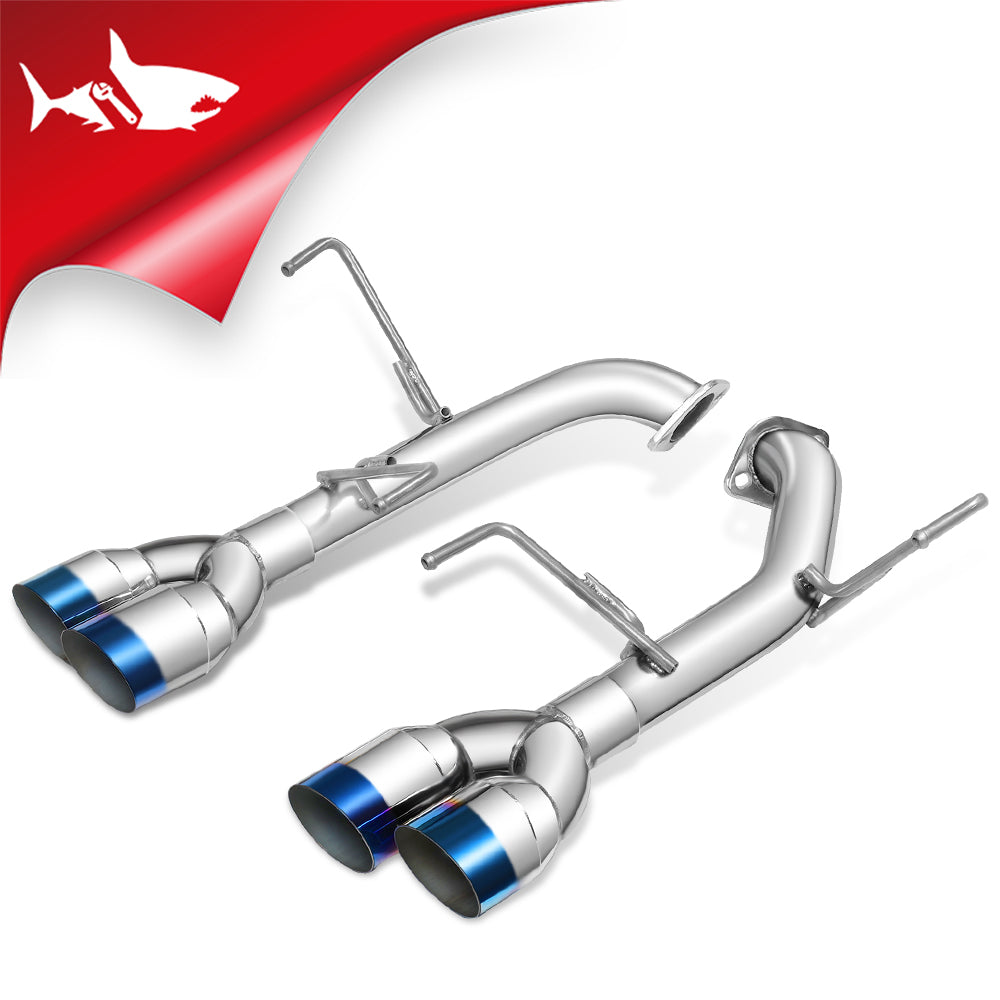
A complete tuned cat-back system may be simpler than modifying a poorly matched straight-pipe setup. Cat-back refers to the exhaust components installed after the catalytic converter. Internal geometry, resonators, pipe routing, and muffler configuration can all affect how much sound enters the cabin.
Examples listed for WRX applications include:
- N1 Style Burnt Tip cat-back for the 2015–2021 WRX, described as using internal geometry intended to project sound outward rather than into the cabin.
- 4-inch Quad Tip cat-back exhaust for the 2015–2022 Subaru WRX, presented as an OEM-plus-style option with a quad-tip layout and reduced “cheap pipe” resonance.
- 2008–2021 Subaru WRX sedan cat-back exhaust system for older chassis applications.

4. Apply Sound-Deadening Material
Sound-deadening material does not cancel the exhaust resonance inside the pipe. Instead, it reduces the amount of vibration and noise transmitted through body panels into the cabin.
For a WRX trunk, approximately 20–30 square feet of material can cover the spare-tire well and rear wheel arches. This amount is reported to reduce perceived cabin noise by approximately 3–5 decibels. The tradeoff is additional vehicle weight.
5. Install Polyurethane Exhaust Hangers
Soft rubber hangers can allow the exhaust to sway and transfer movement into the chassis. Stiffer polyurethane hangers hold the system more rigidly and may reduce contact, movement, and vibration-related noise.
Polyurethane hangers mainly address physical vibration. They are not a substitute for a resonator when the underlying problem is acoustic resonance inside the exhaust system.
Comparison of WRX Exhaust Drone Fixes
| Fix | Cost Factor | Primary Effect | Reported Power Impact |
|---|---|---|---|
| Polyurethane hangers | $30–$50 | Low effectiveness for drone; primarily addresses vibration | None |
| Sound deadening | $100–$200 | Moderate; masks transmitted cabin noise | Adds weight rather than horsepower |
| Flashark cat-back | $500–$900 | Listed as the maximum-effectiveness option in this comparison | Reported at +8 to +15 wheel horsepower |
Will Fixing Drone Remove the Subaru Rumble?
A properly targeted drone fix should reduce a problem frequency rather than eliminate the exhaust’s overall tone. On STI models, the characteristic rumble is associated with unequal-length headers. The flat-four engine’s firing characteristics also contribute to the exhaust note.
A resonator can therefore reduce the steady highway hum while preserving the deep low-speed growl and the sharper exhaust sound between shifts. The exact result depends on the full exhaust configuration.
Muffler vs. Resonator vs. Helmholtz Chamber
- Muffler: Primarily reduces overall exhaust volume across a broad range of frequencies.
- Resonator: Targets selected undesirable frequencies and may have less effect on total volume.
- Helmholtz chamber: Uses a calculated closed side branch to cancel a narrow target frequency through phase cancellation.
- Sound deadening: Reduces noise transmitted through the vehicle body but does not alter resonance inside the exhaust.
- Exhaust hanger: Controls physical movement and vibration but does not directly cancel sound waves.
Warning About Exhaust-Tip Silencers
Metal silencer cones or baffles inserted into the exhaust tips can reduce noise by creating a restriction. That restriction may reduce power, increase backpressure, and contribute to higher exhaust-gas temperatures, commonly abbreviated as EGTs. For a turbocharged engine, a properly designed resonator or tuned exhaust system is preferable to using a restrictive tip insert as a long-term drone fix.
Frequently Asked Questions About WRX Exhaust Drone
At what RPM does exhaust drone usually occur on a WRX?
WRX exhaust drone is commonly most prominent between 2,500 and 3,200 RPM. This range often coincides with highway cruising in sixth gear.
Does a catted J-pipe reduce drone compared with a catless pipe?
A catted J-pipe can reduce drone significantly compared with a catless configuration. The substrate inside the catalytic converter acts as a sound diffuser, breaking up harsh acoustic pulses before they reach the rest of the exhaust system.
Will exhaust heat wrap fix drone?
No. Exhaust heat wrap is intended for thermal management. It can help contain heat, but it does not address the internal sound-wave resonance responsible for drone.
What is the difference between a muffler and a resonator?
A muffler’s main purpose is to reduce overall sound volume. A resonator is designed to target specific undesirable frequencies, including drone, without necessarily making the vehicle much quieter at every engine speed.
Are Nameless or Invidia exhausts worse for drone on an FA20?
Drone depends more on configuration than brand name alone. In general, single-canister, non-resonated N1-style systems tend to produce more drone. Systems with larger mid-pipe resonators or dual mufflers typically provide a more refined cabin experience.
Can polyurethane exhaust hangers reduce cabin drone?
They can help reduce the physical component of drone. Soft rubber hangers allow more exhaust movement, while stiffer polyurethane hangers keep the system more rigid and can reduce vibration-related contact with the chassis. They do not directly cancel acoustic resonance.
How much Dynamat is needed for a WRX trunk?
Approximately 20–30 square feet is needed to cover the spare-tire well and rear wheel arches. This coverage is reported to reduce perceived cabin noise by approximately 3–5 decibels.
Do exhaust silencers or baffles work?
They reduce noise, but they also create a restriction that may cause power loss, higher backpressure, and increased engine or exhaust temperatures. They are not recommended as a long-term WRX exhaust drone fix.
Does adding a resonator require a custom tune or Cobb Accessport adjustment?
Normally, no. A mid-pipe resonator should not affect the air-fuel ratio if the modification does not significantly change pipe diameter or alter the headers or J-pipe.
How much does it cost to have a resonator welded into an exhaust?
Typical stated labor cost is $100–$200, excluding the resonator. The work is generally described as a one-hour job for a competent welder.
Recommended Decision Process
- Confirm that the noise is a steady RPM-specific hum rather than an exhaust leak or loose component.
- Record the RPM at which the drone is strongest.
- If the system is non-resonated, begin with a suitable straight-through resonator.
- If the drone occurs in a narrow and repeatable frequency band, consider a measured and correctly sized Helmholtz chamber.
- If the entire exhaust is poorly matched, consider replacing it with a tuned cat-back system.
- Use sound deadening and polyurethane hangers as supporting measures for cabin noise and physical vibration.
- Avoid restrictive exhaust-tip silencers as a long-term solution.

Steven Chen
Automotive Performance Specialist | Engine & Exhaust Systems
Steven focuses on practical engine performance, exhaust fitment, and real-world upgrade paths for classic and modern enthusiast vehicles. His work includes small-block Ford, LS, truck, and street/strip applications, with an emphasis on choosing compatible parts. His philosophy is: “Good power starts with the right combination, not the biggest part.”