


 Need car parts? Shop by vehicle
(Select the exact fit for your vehicle)
Need car parts? Shop by vehicle
(Select the exact fit for your vehicle)
Admisión de aire frío de Infiniti
Comprar entradas de aire frío por marca: Chevrolet/GMC | Dodge | Ford | Nissan | Volkswagen | Honda | Infiniti | Jeep | Toyota
Compre kits de admisión de aire Infiniti para modelos G35, G37, Q50 y FX35 seleccionados. Esta colección incluye opciones de admisión única para modelos VQ35DE de 3.5L y sistemas de admisión doble para vehículos VQ37VHR de 3.7L seleccionados, con diseños de filtro abierto y con protección térmica para conductores que buscan una trayectoria de admisión más limpia y una nota de inducción más fuerte al acelerar.
La cobertura actual se centra en los modelos G35 y FX35 de 2003-2006, las aplicaciones G37 de 2008-2013 y el Q50 de 2014-2015 equipado con el motor de 3.7L. Algunos kits comparten la arquitectura del motor con las plataformas Nissan 350Z o 370Z, pero eso no hace que todos los tubos, soportes, posiciones de MAF o conexiones de mangueras sean intercambiables.
Compare los diseños disponibles a continuación, luego confirme el año exacto del modelo, el motor, el estilo de carrocería, la transmisión y la configuración del producto seleccionado en la página individual del producto antes de realizar el pedido.
Comprar entradas de aire frío por marca: Chevrolet/GMC | Dodge | Ford | Nissan | Volkswagen | Honda | Infiniti | Jeep | Toyota
Compre kits de admisión de aire Infiniti para modelos G35, G37, Q50 y FX35 seleccionados. Esta colección incluye opciones de admisión única para modelos VQ35DE de 3.5L y sistemas de admisión doble para vehículos VQ37VHR de 3.7L seleccionados, con diseños de filtro abierto y con protección térmica para conductores que buscan una trayectoria de admisión más limpia y una nota de inducción más fuerte al acelerar.
La cobertura actual se centra en los modelos G35 y FX35 de 2003-2006, las aplicaciones G37 de 2008-2013 y el Q50 de 2014-2015 equipado con el motor de 3.7L. Algunos kits comparten la arquitectura del motor con las plataformas Nissan 350Z o 370Z, pero eso no hace que todos los tubos, soportes, posiciones de MAF o conexiones de mangueras sean intercambiables.
Compare los diseños disponibles a continuación, luego confirme el año exacto del modelo, el motor, el estilo de carrocería, la transmisión y la configuración del producto seleccionado en la página individual del producto antes de realizar el pedido.
Cómo elegir un kit de admisión de aire Infiniti
Un sistema de admisión de aire Infiniti no es algo que deba comprarse solo por la cilindrada del motor. Una insignia de 3.5L, una de 3.7L o una familia de motores VQ compartida pueden indicarle la dirección correcta, pero no confirman que el tubo de admisión encajará en el compartimento del motor, que el soporte se alineará o que la manguera de ventilación llegará.
Aquí está la parte honesta: los cuatro productos de esta colección de Flashark cubren un grupo bastante específico de vehículos Infiniti. El rango es útil, pero no es universal. Comience con la aplicación del vehículo, luego verifique la plataforma del motor y el diseño de la admisión antes de comparar los acabados de los tubos, los protectores térmicos, los filtros o los paquetes opcionales de tanques de retención.
Antes de comprar
- 2003-2006 G35 y FX35: Los productos actuales se basan en el diseño de admisión única del VQ35DE de 3.5L.
- 2008-2013 G37: Los productos actuales utilizan un diseño de doble admisión para el motor VQ37VHR de 3.7L.
- 2014-2015 Q50: La cobertura se limita a la aplicación VQ37VHR de 3.7L explícitamente listada en la página del producto.
- Los modelos Q50 3.0T no están cubiertos por los productos que se muestran actualmente en esta colección.
- Una familia de motores compartida no garantiza que los soportes, las carcasas del MAF, las mangueras o el enrutamiento de los tubos sean intercambiables.
Comience con el modelo, año y motor de su Infiniti
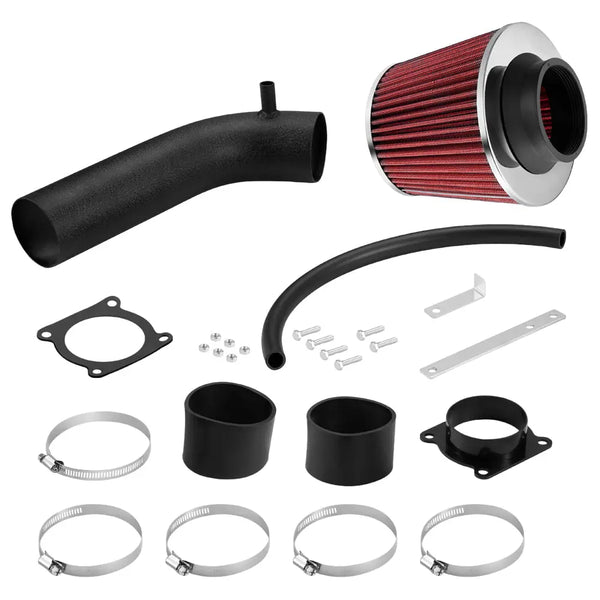
La forma más segura de comprar es leer la sección completa de Compatibilidad antes de mirar las fotos del producto. Las fotos del producto le indican si un kit utiliza uno o dos filtros, pero no siempre muestran las pequeñas diferencias que deciden si la instalación se realizará sin problemas: la posición del soporte, el ángulo de montaje del MAF, la ubicación del puerto de ventilación, la curvatura del tubo o el espacio libre alrededor del soporte del radiador.
Para los productos G35 y FX35 que se muestran aquí, la plataforma principal del motor es el 3.5L VQ35DE. Estas son aplicaciones de un solo cuerpo de aceleración con una ruta de admisión principal. No asuma que el mismo kit sirve para un vehículo posterior con VQ35HR solo porque ambos motores dicen 3.5L en la insignia del maletero.
Las aplicaciones G37 y Q50 de 3.7L compatibles utilizan el VQ37VHR. Esa plataforma tiene dos cuerpos de aceleración, dos rutas de admisión y dos sensores MAF. Por lo tanto, un kit adecuado utiliza dos tubos y dos filtros. Un soporte de sensor faltante o un tubo con la curvatura incorrecta es suficiente para detener el trabajo.
| Modelo Infiniti | Años actuales | Motor | Diseño de admisión | Cobertura actual | Verificación clave antes de ordenar |
|---|---|---|---|---|---|
| G35 | 2003-2006 | 3.5L VQ35DE | Tubo único, filtro único | Dos opciones de productos actuales | Confirme el estilo de la carrocería, la transmisión, la versión del motor y el paquete seleccionado |
| FX35 | 2003-2006 | 3.5L VQ35DE | Admisión deportiva o de corto recorrido única | Un producto lista explícitamente el FX35 | No sustituya un producto solo para G35 a menos que se indique la compatibilidad con FX35 |
| G37 | 2008-2013 | 3.7L VQ37VHR | Tubos dobles, filtros dobles, sensores MAF dobles | Dos opciones de doble admisión superpuestas | Confirme el año exacto, el estilo de la carrocería, el hardware suministrado y el paquete de accesorios |
| Q50 | 2014-2015 | 3.7L VQ37VHR | Tubos dobles, filtros dobles, sensores MAF dobles | Un producto lista explícitamente el Q50 3.7L | No para Q50 3.0T; verifique que el kit seleccionado liste el Q50 directamente |
Admisión única VQ35DE vs. Admisión doble VQ37VHR
No deje que la insignia VQ compartida le engañe. El VQ35DE y el VQ37VHR pueden provenir de la misma gran familia de motores, pero sus diseños de admisión son físicamente diferentes.
Una admisión VQ35DE en esta colección típicamente reemplaza un conducto de admisión de fábrica con un tubo de posventa y un filtro. Dependiendo del producto, el filtro puede quedar expuesto en el compartimento del motor o detrás de un protector térmico básico. El diseño es comparativamente simple, pero aún necesita la carcasa MAF correcta, la conexión del respiradero, los acopladores y los puntos de montaje.
Un sistema VQ37VHR es un animal diferente. Alimenta dos cuerpos de aceleración y utiliza dos sensores MAF, por lo que la instalación debe permanecer equilibrada de izquierda a derecha. Ambos sensores MAF deben mirar en la dirección correcta. Ambos tubos deben sellar. Ambos filtros deben instalarse de forma segura. Un acoplador suelto en un lado puede causar un funcionamiento irregular incluso cuando la otra mitad del sistema parece perfecta.
- VQ35DE: Un camino de admisión, una ubicación MAF principal, un filtro.
- VQ37VHR: Dos caminos de admisión, dos sensores MAF, dos filtros.
- No intercambiables: El número de tubos, el diseño del cuerpo del acelerador, la ubicación de los sensores y los soportes son diferentes.
Compare los diseños de admisión de Infiniti en esta colección
Los productos actuales no utilizan todos el mismo diseño, y eso importa más que el nombre del producto impreso en la parte superior de la página.
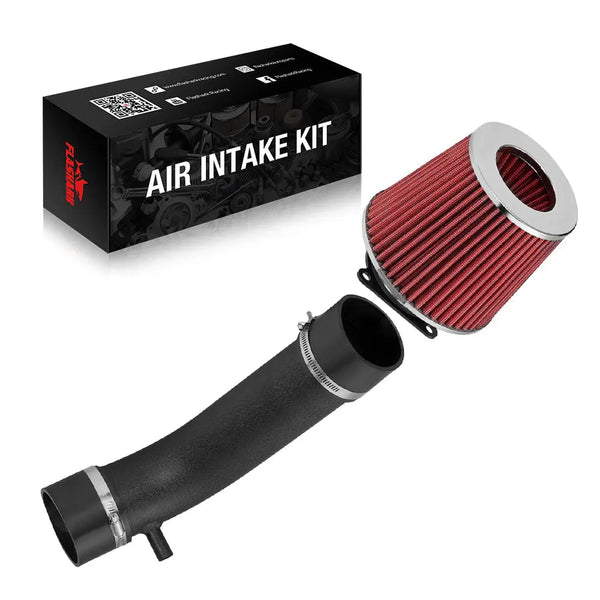
El kit de admisión de aire frío de alto flujo para Infiniti G35 2003-2006 utiliza un diseño sencillo de tubo único. Es la opción más sencilla para una aplicación G35 listada, pero la página del producto aún debe revisarse para el paquete exacto que se está seleccionando, especialmente cuando se incluye un colector de aceite como opción separada.
La admisión deportiva VQ35DE del G35 y FX35 utiliza un diseño tipo "short-ram" con un filtro abierto y un escudo térmico de acero. Este es el único producto actual en la colección que lista explícitamente el FX35. Esa lista importa. Un producto solo para G35 no debe tratarse como un producto para FX35 simplemente porque ambos vehículos pueden usar un VQ35DE.
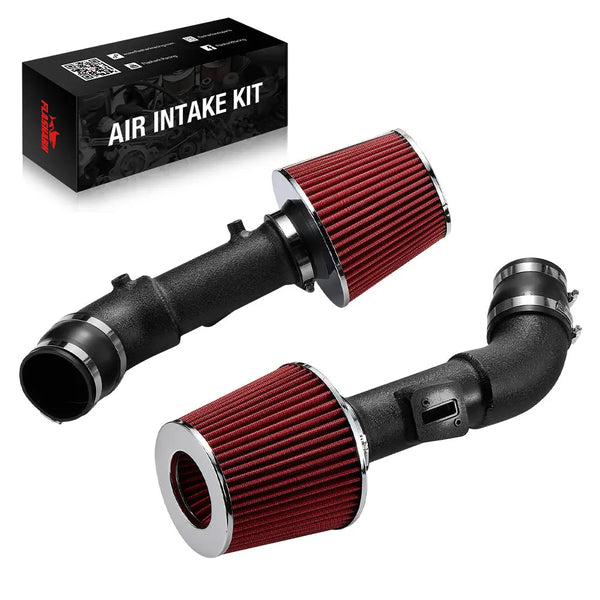
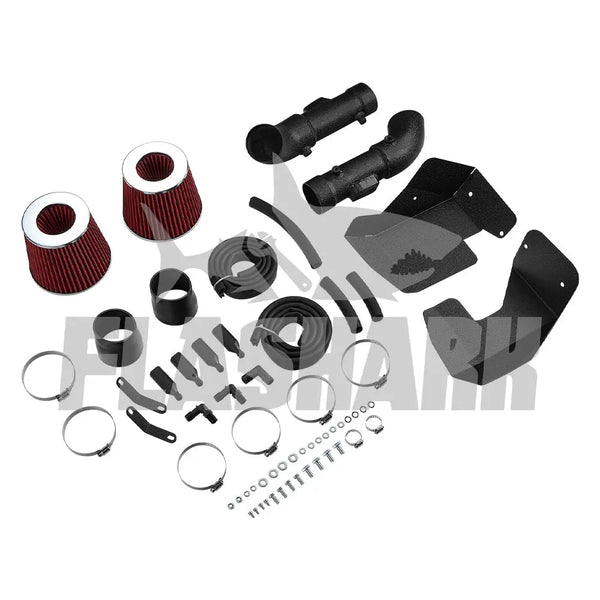
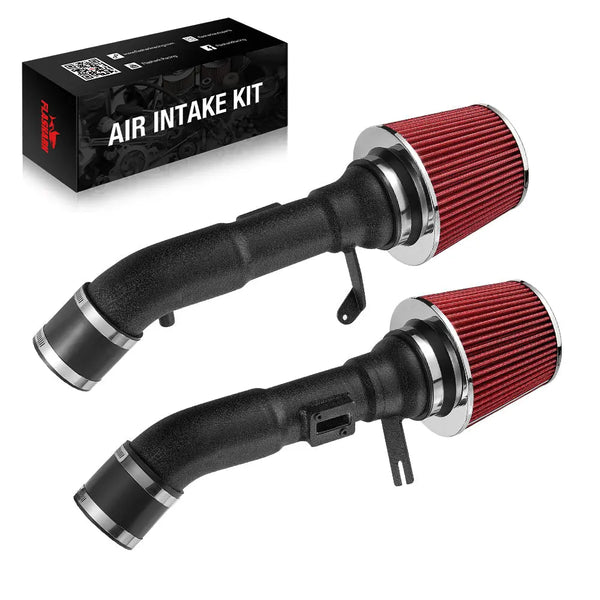
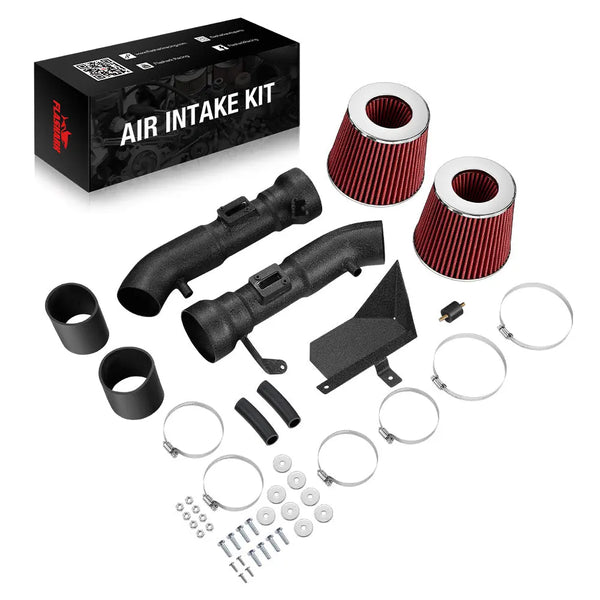
Para el G37, la doble admisión de aire para Infiniti G37 2008-2013 utiliza dos tubos y dos filtros para el diseño VQ37VHR. Una segunda opción de doble admisión también aparece en la colección, pero las dos listas se superponen en gran medida. Compare los años indicados, los protectores térmicos suministrados, el acabado de los tubos, el hardware de montaje y el contenido del paquete en lugar de asumir que el kit de menor precio o de mejor aspecto es automáticamente el correcto.
El kit de doble admisión para modelos G37 seleccionados y Q50 3.7L 2014-2015 es la única opción actual que lista explícitamente el Q50. Escuche, esa línea en la tabla de compatibilidad es más importante que diez comentarios en foros que dicen que los motores se parecen.
Sonido y expectativas de rendimiento de la admisión de aire frío Infiniti
Evite la lotería de caballos de fuerza del foro. No hay ningún resultado de banco de pruebas verificado, mismo coche, mismo día, mismas condiciones disponible aquí que respalde un número fijo de caballos de fuerza en la rueda para cada producto, vehículo, transmisión, temperatura y combinación de modificaciones.
Lo que sí puede esperar razonablemente es un sonido de admisión más notable cuando se abre el acelerador. En un VQ35DE, un filtro abierto generalmente hace que el gruñido de la admisión sea más fácil de escuchar desde el asiento del conductor. En un VQ37VHR, los filtros dobles pueden producir una nota de inducción más aguda y ocupada porque ambos bancos están aspirando a través de filtros de posventa expuestos.
Si el coche gana potencia medible depende de algo más que el tubo en sí. La temperatura del aire, la geometría de la carcasa del MAF, la restricción del filtro, la corrección de la ECU, las modificaciones de escape existentes, la calidad del combustible y la calibración, todo importa. Una admisión puede reducir la restricción en una parte del conducto, pero eso no justifica prometer una ganancia fija en cada Infiniti.
Para un conductor diario, compre una admisión de aire frío Infiniti porque desea el diseño del hardware, un acceso más fácil al filtro, un sonido de inducción más fuerte o una base para futuras modificaciones. No compre una esperando una mejora garantizada en el consumo de combustible o un cambio dramático en la aceleración solo por la admisión.
Sensores MAF, luces de verificación del motor y requisitos de ajuste
El sensor MAF no es un hardware decorativo. La ECU utiliza su señal para estimar el flujo de aire entrante y calcular el suministro de combustible. Si el sensor se instala al revés, se deja suelto, se contamina durante la manipulación o se expone al aire que entra por una fuga después del sensor, la ECU recibe información incorrecta.
Una instalación básica de admisión no requiere automáticamente un ajuste. Al mismo tiempo, ningún vendedor responsable debe garantizar que todos los coches, todos los sensores y todas las configuraciones de admisión permanecerán completamente libres de luces de advertencia. El estado del vehículo importa. También lo hace la precisión de la carcasa del MAF y la calidad de la instalación.
En una configuración VQ37VHR de doble admisión, verifique ambos lados. Es fácil concentrarse en el tubo que fue difícil de instalar y pasar por alto una abrazadera ligeramente suelta en el lado más fácil. Al motor no le importa qué lado del coche causó la fuga.
Nota de diagnóstico del mecánico: Un patrón típico de fallas post-instalación
Un escenario de diagnóstico común comienza con un coche que funcionaba normalmente antes de la instalación de la admisión, pero que desarrolla un ralentí irregular, una duda o una luz de advertencia inmediatamente después. Ese momento es la clave. Antes de culpar a la ECU o pedir nuevos sensores, vuelva al trabajo que se acaba de realizar.
Comience en el cuerpo del acelerador y avance hacia el filtro. Verifique que cada acoplador esté completamente asentado detrás de su cordón de tubo, que cada abrazadera esté colocada correctamente y que cada manguera de ventilación o de vacío esté conectada. Luego, verifique la flecha o la dirección del flujo de aire del sensor MAF, el bloqueo del conector eléctrico y el sello del sensor. En un VQ37VHR, repita la misma inspección en el segundo banco.
Si la falla persiste, lea los códigos de diagnóstico almacenados en lugar de borrarlos ciegamente. Un código de mezcla pobre específico de un banco puede ayudar a reducir la inspección a un lado de un sistema de doble admisión. Esta es una secuencia de diagnóstico general basada en fallas de instalación comunes, no una afirmación sobre un vehículo de cliente específico o una reparación garantizada.
Gestión del calor, cuidado del filtro y conducción diaria
Un escudo térmico es útil, pero no es lo mismo que una caja de aire sellada de fábrica. Su función es reducir la exposición directa al calor del radiador y del compartimento del motor, al tiempo que proporciona al filtro un área de montaje definida. Una vez que el coche está en movimiento, el flujo de aire a través de la parte delantera del vehículo ayuda. En el tráfico lento, la temperatura bajo el capó sigue aumentando.
Eso no convierte automáticamente una admisión de filtro abierto en una modificación inadecuada para el uso diario. Significa que las expectativas deben coincidir con el diseño. Un sistema de tipo "short-ram" o de elemento abierto suele priorizar la sencillez de la instalación, el sonido de inducción y la facilidad de acceso para el servicio, por encima de un aislamiento térmico completo.
El mantenimiento del filtro depende del filtro exacto suministrado con el kit. Algunos filtros están diseñados para permanecer secos. Otros pueden usar un proceso específico de limpieza y engrase. No rocíe aceite de filtro sobre un filtro seco, y no engrase en exceso un filtro reparable cerca del sensor MAF. El exceso de aceite o los residuos de limpieza pueden contaminar el elemento sensor.
- Inspeccione el filtro durante los intervalos normales de servicio de aceite.
- Verifique si hay abrazaderas sueltas, acopladores agrietados y marcas de roce.
- Confirme que el tubo no está en contacto con el protector del ventilador, el panel de la carrocería o la manguera del refrigerante.
- Siga las instrucciones de mantenimiento para el filtro exacto incluido con el kit seleccionado.
- Vuelva a verificar el hardware después de los primeros ciclos de calor.
Advertencia de compatibilidad, agua y emisiones
No haga el pedido solo por la familia de motores. Un producto VQ35DE que lista el G35 no se ajusta automáticamente al FX35, y un producto G37 no se ajusta automáticamente al Q50. Utilice solo las aplicaciones explícitamente indicadas en la página del producto individual.
Los productos actuales son principalmente diseños de admisión en el compartimento del motor en lugar de filtros montados cerca de la parte inferior del parachoques. Aun así, un filtro expuesto no debe conducirse intencionalmente a través de agua estancada profunda ni lavarse a presión mientras está instalado.
La legalidad y los requisitos de emisiones de las admisiones del mercado de accesorios varían según la ubicación. Confirme las regulaciones locales antes de la instalación, especialmente donde se puedan requerir inspecciones visuales, certificaciones de emisiones o equipos de admisión originales.
Lista de verificación final de la admisión de aire Infiniti
Antes de añadir un kit al carrito, revise la aplicación completa en lugar de detenerse cuando el nombre del modelo coincida. Dos minutos aquí pueden ahorrar una tarde intentando que el tubo equivocado se asiente correctamente.
- Modelo: G35, G37, Q50 o FX35.
- Año del modelo: Confirme que el año exacto esté dentro del rango indicado.
- Motor: Verifique VQ35DE de 3.5L o VQ37VHR de 3.7L.
- Estilo de carrocería: Verifique la aplicación Coupé, Sedán, Convertible, IPL o SUV cuando sea relevante.
- Tren motriz: Confirme el soporte RWD o AWD cuando la página del producto distinga entre ellos.
- Diseño de admisión: Un cuerpo de aceleración y un MAF, o dos cuerpos de aceleración y dos sensores MAF.
- Paquete: Asegúrese de que la opción seleccionada sea el kit solo de admisión o el paquete de admisión y depósito de aceite previsto.
- Hardware: Revise las fotos del producto y la lista de piezas para filtros, protectores, acopladores, abrazaderas, soportes y mangueras.
La mejor opción no es el producto con el título más largo o el tubo más pulido. Es la página del producto que lista explícitamente su Infiniti, su motor y su año de modelo. Comience por ahí, luego elija el diseño de admisión y el acabado que coincidan con la forma en que usa el coche.
Preguntas frecuentes sobre la admisión de aire Infiniti
P1: ¿Qué modelos de Infiniti están cubiertos actualmente en esta colección?
R1: La cobertura actual incluye modelos seleccionados de Infiniti G35 y FX35 de 2003-2006 con el VQ35DE de 3.5L, aplicaciones de Infiniti G37 de 2008-2013 con el VQ37VHR de 3.7L, y el Infiniti Q50 de 2014-2015 con el motor de 3.7L. El estilo de carrocería exacto, el tren motriz y el soporte del paquete de productos aún deben confirmarse en la página de producto individual.
P2: ¿Vale la pena una admisión de aire Infiniti para un conductor diario?
R2: Puede valer la pena si desea un sonido de inducción más notable, un diseño de filtro diferente o una ruta de admisión menos restrictiva. No es la compra correcta si espera un número de caballos de fuerza garantizado, una mejora automática en el consumo de combustible o un cambio importante en la aceleración solo por la admisión.
P3: ¿Una admisión de aire Infiniti G35 encaja en un G37?
A3: No. Los productos G35 compatibles usan un diseño de admisión única para el VQ35DE, mientras que el G37 VQ37VHR usa dos cuerpos de mariposa, dos sensores MAF, dos tuberías de admisión y dos filtros. Los sistemas no son intercambiables.
P4: ¿Cada admisión de aire frío del G37 servirá para un Q50 3.7L de 2014-2015?
A4: No. Un motor VQ37VHR compartido no garantiza un enrutamiento de tuberías, soportes o conexiones de mangueras idénticos. Use solo el producto actual que enumere explícitamente el Infiniti Q50 3.7L 2014-2015 en su información de ajuste.
P5: ¿Esta colección incluye una admisión para el Infiniti Q50 3.0T?
A5: No. El producto Q50 que se muestra actualmente es para la aplicación VQ37VHR 3.7L 2014-2015, no para el motor biturbo 3.0L posterior.
P6: ¿Una admisión de aire frío de Infiniti requiere un ajuste?
A6: Un ajuste no es automáticamente necesario para cada instalación básica de admisión atornillada. Sin embargo, las necesidades de calibración pueden depender de la geometría de la carcasa del MAF, los cambios en el flujo de aire, las modificaciones existentes y el estado del vehículo. Ninguna admisión debe tratarse como una garantía de que cada automóvil funcionará idénticamente sin calibración.
P7: ¿Una instalación de admisión puede causar una luz de verificación del motor o un ralentí irregular?
A7: Sí. Las causas comunes incluyen un sensor MAF instalado en la dirección incorrecta, un conector eléctrico desbloqueado, un acoplamiento suelto, una manguera de ventilación desconectada o la entrada de aire no medido después del sensor MAF. Lea los códigos de falla almacenados e inspeccione la instalación antes de reemplazar piezas.
P8: ¿Cuál es la diferencia entre una admisión única VQ35DE y una admisión doble VQ37VHR?
A8: Los productos VQ35DE de esta colección utilizan una tubería de admisión principal, un filtro y una ubicación MAF primaria. El VQ37VHR utiliza dos tuberías de admisión, dos filtros, dos sensores MAF y dos cuerpos de mariposa. Esa diferencia física es la razón por la que los kits de admisión G35 y G37 no se pueden intercambiar.
P9: ¿Cómo cambiará el sonido una admisión Infiniti del mercado de accesorios?
A9: Una admisión de elemento abierto generalmente hace que la nota de inducción sea más fácil de escuchar durante la aceleración, especialmente cuando se abre el acelerador. No reemplazará el sonido de un sistema de escape, y el volumen exacto depende de la posición del filtro, el diseño del escudo térmico, el motor y el aislamiento acústico de fábrica.
P10: ¿Cómo debo limpiar el filtro de mi kit de admisión de aire Infiniti?
A10: Siga las instrucciones para el filtro exacto suministrado con el kit seleccionado. No aplique aceite de filtro a menos que el filtro esté diseñado específicamente para ser aceitado, y permita que cualquier filtro limpio se seque completamente antes de reinstalarlo cerca del sensor MAF.


