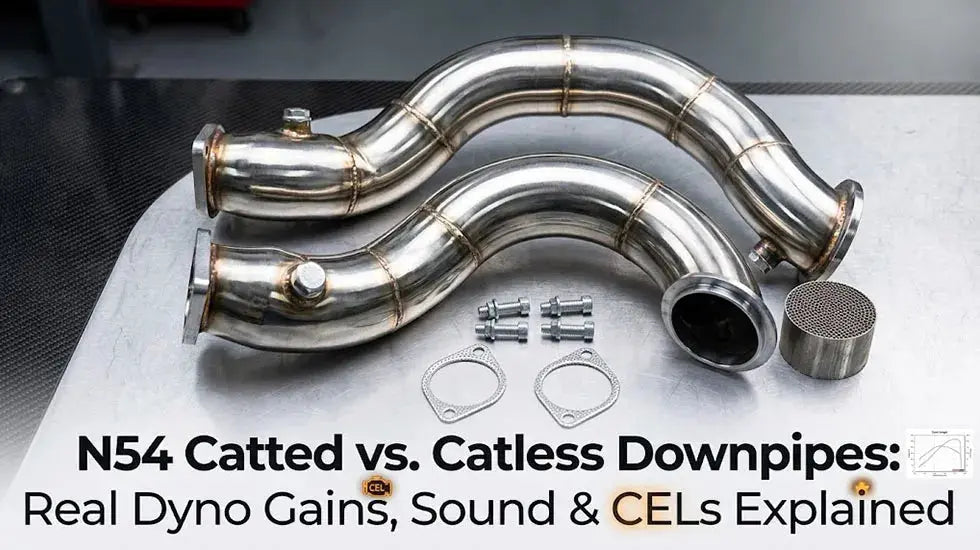
Todos llaman al N54 el 2JZ alemán. No se equivocan, pero suelen olvidar lo ridículamente estrangulado que está este motor de fábrica. Si quieres esa potencia real que te pega al asiento, el primer paso es instalar un downpipe adecuado. Esos dos enormes y restrictivos catalizadores cerámicos atascados justo detrás de los turbos tienen que desaparecer. Es así de simple.
Pero luego empiezas a comprar piezas y, de repente, te ahogas en el clásico debate sobre downpipe n54 sin catalizador vs con catalizador en los foros. La mitad del hilo dice que necesitas tubos rectos para obtener potencia real. La otra mitad se queja del olor del escape y de las emisiones fallidas. Se vuelve confuso rápidamente.
Saltémonos la basura del marketing. Vamos a ver qué sucede realmente en el dinamómetro, qué tendrás que escuchar todos los días y cómo lidiar con esa inevitable luz de verificación del motor.
Conclusión: ¿Cuál deberías elegir?
- Opta por sin catalizador si: Buscas la máxima potencia al eje (WHP) absoluta, quieres el sonido más ruidoso y agresivo del turbo, tienes un coche de pista dedicado o vives en una zona sin pruebas de emisiones.
- Opta por con catalizador si: Conduces tu 335i/135i a diario, odias absolutamente el olor a combustible crudo sin quemar en los semáforos, quieres un sonido de escape profundo y refinado sin una aspereza excesiva, y quieres reducir el dolor de cabeza de las inspecciones visuales de emisiones.
- La realidad: Una opción con catalizador de 200 celdas de alta calidad solo pierde entre 8 y 15 WHP en comparación con una configuración de escape totalmente directo, lo que la convierte en la opción más inteligente para el 80% de los coches que se conducen por la calle.
La verdad del dinamómetro: diferencias de potencia y spool
Cuando se analiza el argumento del downpipe n54 sin catalizador vs con catalizador, todo se reduce a la contrapresión. Los catalizadores de fábrica crean una resistencia masiva justo en la salida de la turbina. Reducir esa presión significa que los turbos no tienen que trabajar tan duro, lo que reduce drásticamente las temperaturas de los gases de escape (EGTs).
Ganancias del downpipe sin catalizador
Una configuración sin catalizador significa cero restricciones. La actualización a un downpipe n54 sin catalizador real te ofrece solo un suave acero inoxidable de 3 pulgadas que guía el escape hacia afuera. Si instalas un MHD Stage 2 o usas un JB4, eliminar los catalizadores de fábrica para esta configuración te proporciona aproximadamente entre 25 y 40 WHP. ¿Pero honestamente? La potencia ni siquiera es la mejor parte. Debido a que no hay un obstáculo físico en el camino, el aumento máximo de presión se alcanza aproximadamente 300-400 RPM antes. La respuesta del acelerador se vuelve violentamente rápida.

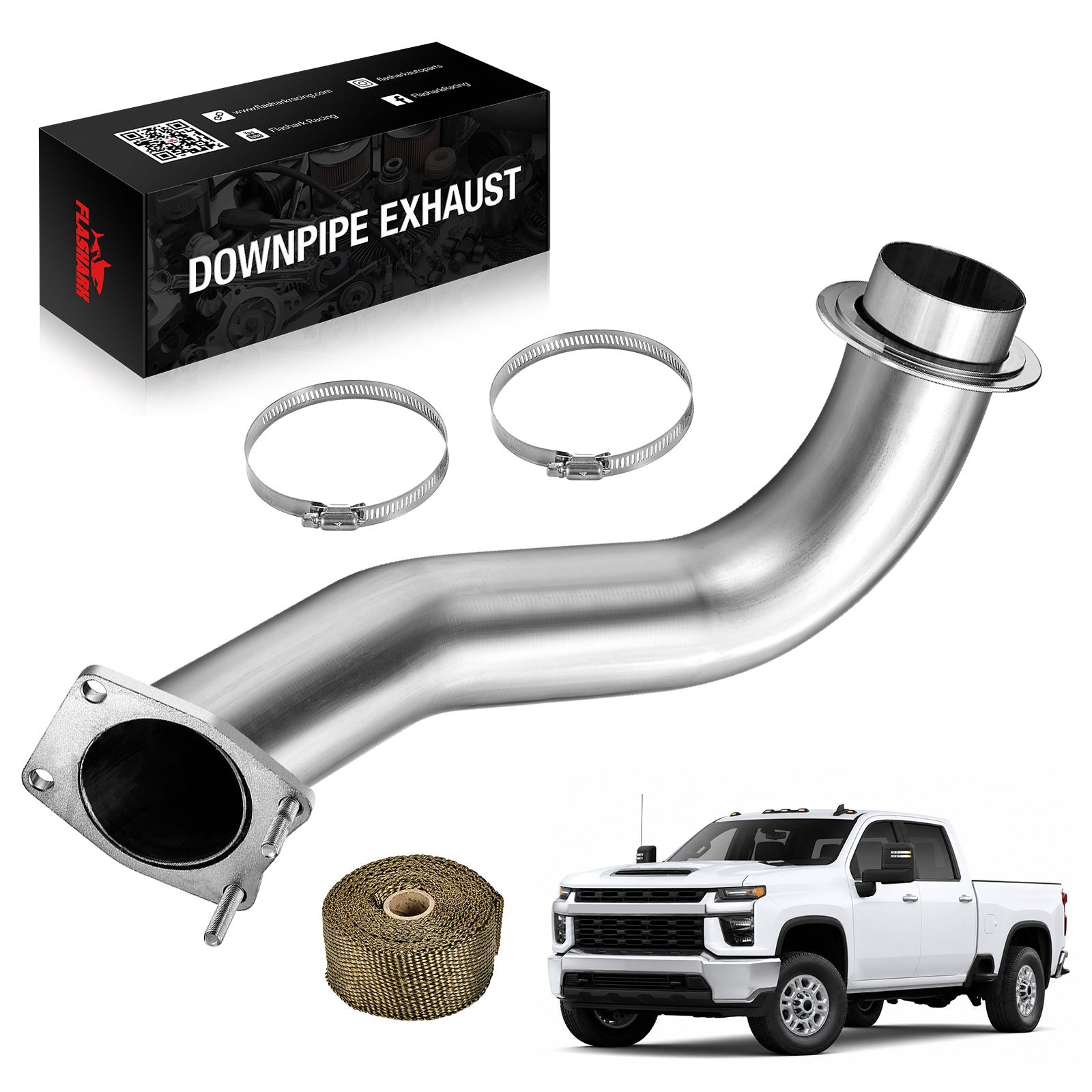
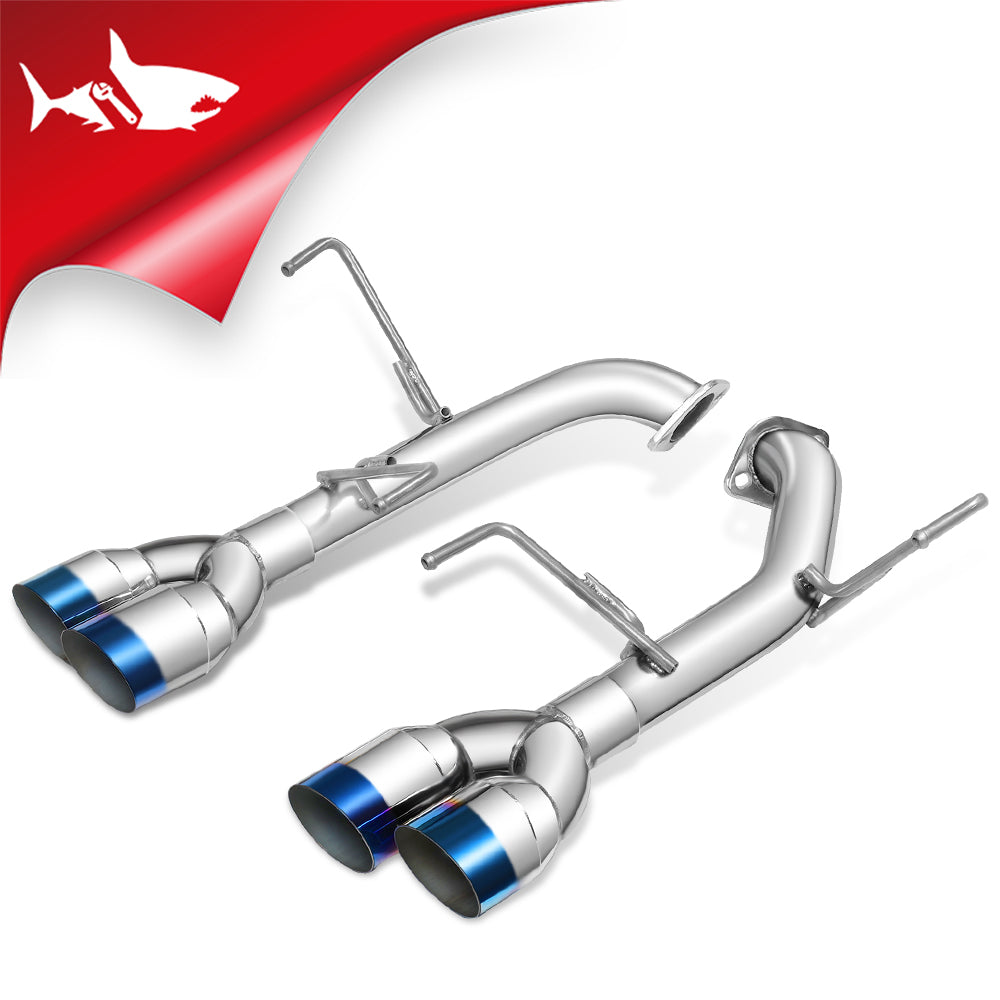
Flashark Catless Downpipe para BMW N54 335i/135i de 2007-2010 de 3"
Mejora el flujo de escape para una respuesta más rápida del turbo y un tono más profundo y agresivo. Diseñado con precisión para un ajuste garantizado.
- Material: Acero inoxidable T-304 de calibre 16 (soldadura TIG)
- Especificaciones: Entrada V-Band de 3" a salida con brida de 2.5"
- Ganancias: +10-15 CV y spool instantáneo
Ganancias de downpipe con catalizador de alto flujo
Las versiones modernas con catalizador de alto flujo suelen utilizar un núcleo metálico de 200 celdas. Sí, hay un catalizador físico, pero fluye mucho mejor que la densa chatarra cerámica de fábrica. Seguirás viendo ganancias masivas, normalmente superando una configuración sin catalizador en solo 8 a 15 WHP en el extremo superior del rango de revoluciones.

Nota de escape y olor: vivir con ello a diario
Los números en una pantalla son geniales, pero tienes que vivir con este coche todos los días. Aquí es donde aparecen las verdaderas diferencias.
El sonido (petardeos, raspiness y silbido del turbo)
Una configuración sin catalizador es ruidosa. Amplifica todo. Escucharás el distintivo silbido agudo del turbo al ralentí y a bajas revoluciones. Si tienes la configuración de burbujeo de MHD activada, sonará como disparos. Sin embargo, si todavía tienes los tramos intermedios de fábrica, una sección delantera sin catalizador puede introducir un "raspiness" metálico y agudo alrededor de las 3.000 RPM que a algunas personas no les gusta.
Una configuración con catalizador actúa como un resonador. Absorbe esas ondas sonoras ásperas y de alta frecuencia. El resultado es un rugido de seis cilindros en línea de BMW mucho más profundo y gutural. Es agresivo cuando le pisas, pero no resuena en la autopista.
El olor a combustible crudo
Este es el factor decisivo para la mayoría. Sin un convertidor catalítico, tu escape olerá a cortacésped. Si estás parado en un semáforo con las ventanas bajadas, o retrocediendo en tu garaje, olerás a combustible crudo y sin quemar. Tu ropa olerá a eso. Si eso te molesta, deja de leer y compra la versión con catalizador.
Luces de verificación del motor (CEL) y emisiones: lidiando con la ley
Quitas los catalizadores de fábrica, enciendes el coche y, ¡ding! Ahí está. La temida luz amarilla de verificación del motor en tu tablero.
Por qué se activan los códigos 29F4/29F5
Tu N54 tiene sensores de O2 primarios (antes de los catalizadores para la inyección) y sensores de O2 secundarios (después de los catalizadores para el monitoreo de emisiones). Cuando instalas downpipes de posventa, los sensores secundarios se dan cuenta de que los gases de escape no han sido depurados. La ECU arroja los códigos 29F4 y 29F5 (conversión del catalizador).
Cómo solucionar el CEL
Si usas una configuración sin catalizador, te aparecerá un CEL. Punto. Si usas una configuración con catalizador de 200 celdas, es probable que aun así te aparezca un CEL eventualmente, porque el flujo es demasiado rápido para los parámetros de fábrica. La solución suele ser el software. Programas como MHD o JB4 tienen una función de "Borrado automático" que suprime estos códigos específicos en segundo plano para que tu tablero se mantenga limpio.

| Característica | Sin catalizador | Con catalizador de alto flujo (200 celdas) | Original de fábrica |
|---|---|---|---|
| Potencial de potencia máxima | El más alto (+25 a 40 WHP) | Alto (+15 a 25 WHP) | Línea base |
| Spool del turbo | El más rápido (Instantáneo) | Muy rápido | Lento |
| Olor del escape | Fuerte olor a combustible crudo | Apenas perceptible | Sin olor |
| Disparo del CEL | Garantizado (Necesita ajuste) | Muy probable (Necesita ajuste) | Sin CEL |
| Perfil de sonido | Ruidoso, áspero, silbido de turbo | Profundo, agresivo, controlado | Silencioso, amortiguado |
Ajuste e instalación: no compres metal barato
Hablemos del trabajo mecánico real. Instalar esto en un N54 es un trabajo notoriamente miserable. El espacio entre el subchasis, el bloque y la cremallera de dirección es ridículamente estrecho. El tubo trasero, en particular, es una pesadilla.
Si compras tubos baratos de eBay, las bridas estarán deformadas. Las infames abrazaderas V-band que se conectan a los turbos no encajarán correctamente, y tendrás fugas masivas de escape. He perdido 6 horas intentando forzar tubos desalineados en el coche de un cliente. No vale la pena ahorrar cincuenta dólares.
Cuando tomas la decisión entre un downpipe n54 sin catalizador y uno con catalizador, la construcción física importa tanto como lo que hay dentro. Necesitas bridas V-band perfectamente mecanizadas por CNC y acero inoxidable T304. Esa es exactamente la razón por la que desarrollamos nuestro downpipe n54 en Flashark. Escaneamos las holguras de fábrica para asegurarnos de que el tubo trasero realmente librara el subchasis sin tener que golpearlo, y las bridas encajan en las V-band de fábrica como si pertenecieran allí. Un buen ajuste te ahorra a ti (o a tu mecánico) horas de pura rabia.
Conclusión: ¿Qué downpipe le corresponde a tu N54?
Para resumir el dilema del downpipe N54 sin catalizador vs con catalizador: Sé honesto con cómo usas el coche. Si es un guerrero de fin de semana o un juguete de pista donde necesitas hasta la última gota de potencia, opta por una configuración sin catalizador. Pero si conduces a diario tu E90/E92, vas a la compra y no quieres oler a empleado de gasolinera, una configuración con catalizador de alto flujo es la opción correcta.
Preguntas frecuentes sobre el downpipe N54
P1: ¿Necesito una reprogramación después de instalar un downpipe N54?
R1: Sí. Aunque el coche arrancará y circulará físicamente sin una reprogramación, encenderá la luz de "check engine" (CEL) y no maximizarás las ganancias de potencia. Necesitas una reprogramación flash como MHD Stage 2 o un piggyback JB4 para ajustar los objetivos de presión del turbo y el suministro de combustible para el mayor flujo de escape.
P2: ¿Cuánta potencia añade un downpipe sin catalizador a un N54?
R2: En un N54 con turbo de serie y una reprogramación Stage 2 adecuada, una configuración sin catalizador suele añadir entre 25 y 40 caballos de fuerza a la rueda (WHP) y una cantidad significativa de torque, mientras que reduce el tiempo de spool del turbo en aproximadamente 300-400 RPM.
P3: ¿Un downpipe con catalizador de alto flujo seguirá encendiendo la luz de "check engine" (CEL)?
R3: Es muy probable. Incluso con un catalizador de alto flujo de 200 celdas, los gases de escape pasan demasiado rápido para que los sensores de O2 secundarios de fábrica detecten la eficiencia esperada. Es probable que sigas necesitando una reprogramación de software o espaciadores de O2 para mantener la CEL apagada.
P4: ¿Los downpipes N54 son difíciles de instalar?
R4: Muy difícil. Se considera una de las modificaciones atornilladas más frustrantes para el N54. El espacio es extremadamente reducido, las abrazaderas V-band son notoriamente difíciles de alinear y los tornillos de fábrica suelen estar oxidados. Espera que tarde de 4 a 6 horas en caballetes.
P5: ¿Cómo solucionar los códigos de sensor de O2 después de instalar un downpipe N54?
R5: El método más fiable es utilizar software de tuning (como MHD o JB4) para borrar automáticamente los códigos de convertidor catalítico 29F4 y 29F5. Alternativamente, puedes usar espaciadores de sensor de O2 especializados con microcatalizadores incorporados, aunque los resultados varían.
P6: ¿Los downpipes sin catalizador huelen mal?
R6: Sí. Sin un convertidor catalítico que queme el exceso de hidrocarburos, el escape olerá a combustible crudo. Es muy notorio al ralentí en un semáforo, al retroceder o al estar de pie detrás del vehículo.
P7: ¿Puedo pasar las emisiones con un downpipe N54 con catalizador?
R7: Depende estrictamente de las leyes locales. En estados donde solo se realiza una prueba de conexión OBD-II (verificando los monitores de preparación), a veces se puede pasar con espaciadores de O2. En estados estrictos como California (CARB), cualquier downpipe de posventa sin un número de EO de CARB fallará la inspección visual.
P8: ¿Con catalizador vs sin catalizador: cuál es más ruidoso en el N54?
R8: Sin catalizador es significativamente más ruidoso. Elimina todas las propiedades de silenciamiento directamente en los turbos, lo que resulta en arranques en frío más ruidosos, un silbido del turbo mucho más prominente y más explosiones/gorgoteos del escape. También tiende a introducir más aspereza en la nota del escape.
P9: ¿La mejora de los downpipes solucionará el traqueteo de la wastegate del N54?
R9: No. De hecho, suele empeorarlo. Debido a que el flujo de escape está menos restringido y el volumen general es más ruidoso, el sonido metálico de traqueteo de las válvulas de descarga desgastadas de fábrica será aún más fácil de escuchar.
P10: ¿Cuál es el mejor tamaño de downpipe para el N54?
R10: El estándar de la industria es una tubería de 3 pulgadas que sale de los turbos y se estrecha a 2.5 pulgadas en la brida para acoplarse perfectamente con los tramos intermedios de fábrica. Esto proporciona el mejor equilibrio entre el barrido del escape y el ajuste.
P11: ¿Puedo usar downpipes sin catalizador con una reprogramación de N54 de serie?
R11: Puedes conducirlo físicamente, pero no se recomienda. Además de la luz de check engine (CEL) permanente en tu tablero, los mapas de la ECU de serie no están pensados para ese nivel de baja contrapresión, lo que significa que estás dejando la mayoría de los beneficios de rendimiento sobre la mesa y puedes experimentar pequeñas peculiaridades de conducción.