


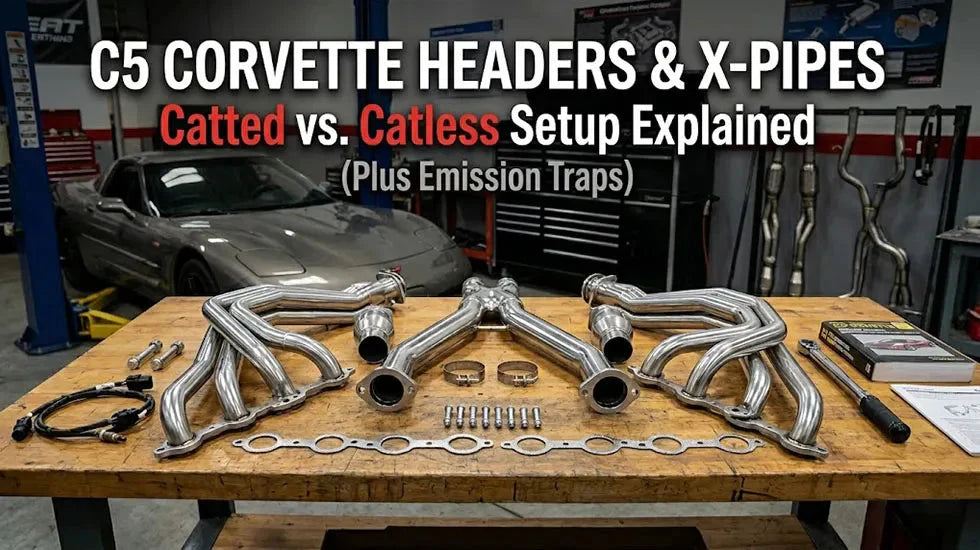
Mira, si conduces un C5 Corvette, ya sabes que los colectores de escape de fábrica son básicamente un ataque de asma para ese motor LS. Los pesados registros de hierro fundido ahogan el flujo de escape. Quieres despertarlo. Un buen juego de colectores de escape para c5 corvette y un X-pipe es la mejor manera de permitir que el LS1 o el LS6 respiren de verdad. Pero una vez que empiezas a buscar, inmediatamente te encuentras con un muro: ¿deberías usar catalizador o sin catalizador?
Sinceramente, he destripado cientos de estos coches en los últimos 15 años, y esta es la pregunta que mantiene a los chicos despiertos por la noche. Todos en los foros tienen una opinión, pero la mitad de ellos nunca han usado una llave dinamométrica. Vamos a cortar el ruido. Vamos a hablar de cosas reales, a ver números de dinamómetro reales y a averiguar qué tiene sentido para tu construcción específica.
Resumen Rápido: La Conclusión
- Realidad de la Potencia: Una configuración sin catalizador solo produce aproximadamente entre 5 y 8 caballos de fuerza a la rueda (whp) más que una configuración moderna con catalizador de alto flujo en un LS de aspiración natural.
- El Sonido: Sin catalizador es increíblemente ruidoso y ronco a aceleración máxima. Con catalizador proporciona un rugido V8 más profundo y controlado sin el crujido ensordecedor.
- El Factor Olor: Sin catalizador hará que tu ropa y tu garaje huelan a combustible crudo sin quemar. Si lo usas a diario o tu esposa viaja contigo, elige con catalizador.
- Luz de Verificación del Motor (CEL) y Ajuste: Ambas configuraciones requieren un ajuste de la ECU para funcionar de manera óptima. Sin catalizador requiere al 100% ajustar los sensores O2 traseros para evitar una luz de verificación del motor permanente.
¿Qué significa realmente "con catalizador" vs. "sin catalizador" para tu C5?
Antes de hablar de números, aclaremos la terminología. Cuando finalmente decidas deshacerte de esos restrictivos colectores de fábrica por un juego adecuado de colectores de escape para C5 Corvette, el tubo intermedio (la sección que conecta los colectores con el escape de la parte trasera del eje) debe ser reemplazado. Este tubo intermedio suele incorporar un diseño de X-pipe para equilibrar los pulsos de escape. La elección es lo que va dentro de ese tubo intermedio.
Explicación de los catalizadores de alto flujo (con catalizador)
Ir "con catalizador" significa que tu nuevo X-pipe incluye catalizadores de alto flujo. Olvídate de los restrictivos y densos panales de fábrica (generalmente con más de 400 celdas) que Chevrolet puso a finales de los 90. Los catalizadores modernos de alto flujo suelen ser sustratos metálicos de 200 celdas. Limpian los gases de escape lo suficiente como para pasar una inspección visual y eliminar el olor a gasolina, pero fluyen tan bien que apenas restringen el proceso de barrido de los gases de escape.
Explicación de "Off-Road/Directo" (sin catalizador)
Sin catalizador (a menudo vendido como "X-Pipe Off-Road") es exactamente lo que parece. Es una tubería recta de 3 pulgadas desde los colectores del escape hasta la parte trasera. Cero restricciones. Máxima velocidad de escape. Esta configuración está diseñada estrictamente para uso en pista porque ofrece la menor contrapresión posible.

La Verdad del Dyno: Diferencias de Caballos de Fuerza y Torque en el LS1/LS6
Si frecuentas los foros de Corvette lo suficiente, escucharás a algunos decir que quitar los catalizadores les dio 30 caballos de fuerza. Eso es una completa tontería. En un coche con inducción forzada (sobrealimentador/turbo), los catalizadores pueden ser una gran restricción. Pero en un LS1 o LS6 de 5.7L de aspiración natural, la diferencia es sorprendentemente pequeña.
En el mundo real, cambiar los colectores de serie por tubos largos y un X-pipe te dará entre 25 y 35 whp después de un ajuste. Si usas un X-pipe con catalizadores de alto flujo, podrías ver 28 whp. Si usas un X-pipe sin catalizadores, podrías ver 33 whp.

🛠️ Archivo del Mecánico: Recuerdo que en el 2021, un tipo trajo un '99 Fixed Roof Coupe (FRC) súper limpio al taller. El coche ya tenía una configuración premium de tubos largos con catalizador, pero el dueño estaba obsesionado con exprimir cada gota de potencia. Nos pagó para cortar los catalizadores de alto flujo nuevos y soldar tubos rectos. Lo pusimos en el Dynojet antes y después. ¿El resultado? Encontramos exactamente 6 whp en la parte superior de la banda de RPM. Por debajo de las 4000 RPM, la curva de torque era prácticamente idéntica. El dueño gastó $400 en mano de obra por 6 caballos de fuerza, y una semana después se quejó de que su garaje olía a refinería.

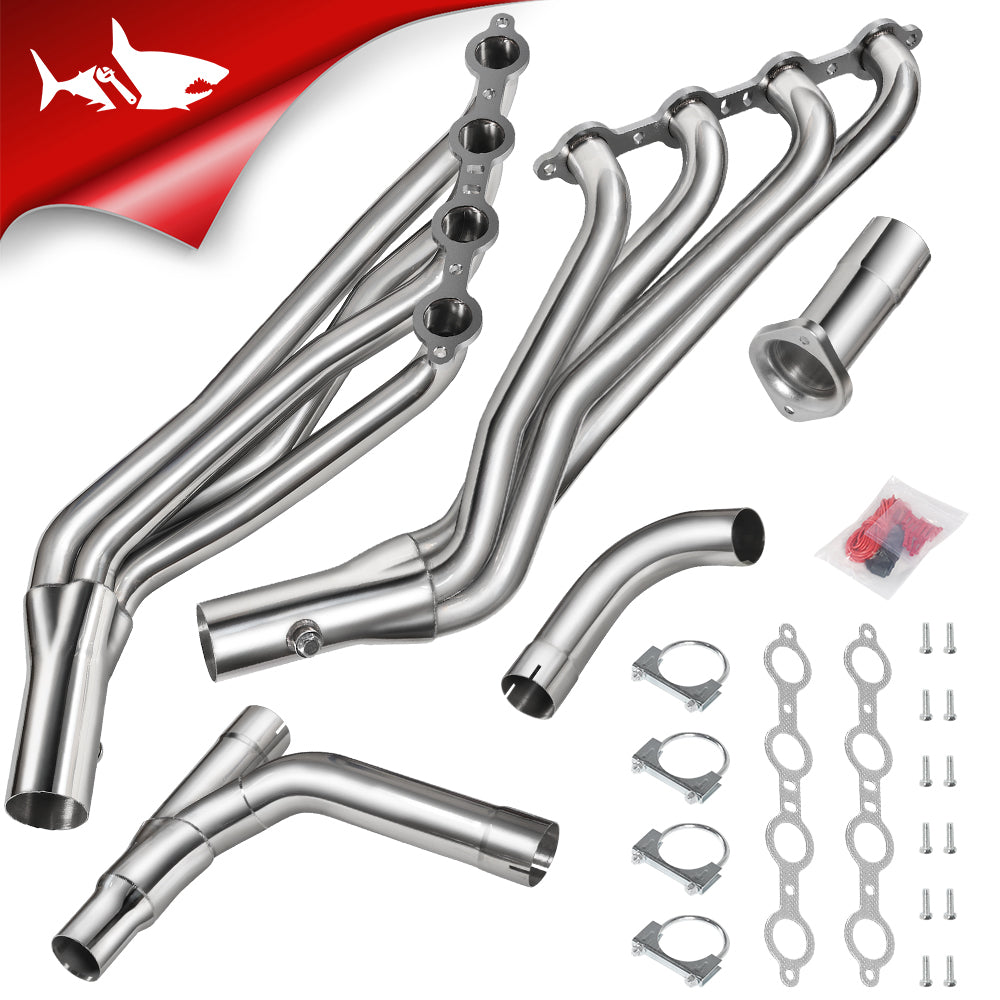
Colectores Flashark C5 de tubo largo y X-Pipe sin catalizador
- Diseño: Primarios de 1-7/8" a colectores de 3"
- Configuración: Sin catalizador / X-Pipe Off-Road Incluido
- Compatibilidad: Atornillado directo para C5 Base y Z06 1997-2004
El Sonido y el Olor: Lo que los Foros no te Dicen
Aquí es donde se toma la verdadera decisión. No se trata de la hoja de dinamómetro; se trata de lo que se siente al sentarse en el asiento del conductor.
Nota de Escape y Resonancia
El H-pipe de fábrica en un C5 le da ese sonido clásico, algo lento, de "lancha motora". Cambiar a un X-pipe suaviza los pulsos de escape, dándole al coche un grito V8 exótico y de tono más alto a revoluciones más altas.
Si vas sin catalizador, ese grito se vuelve violentamente ruidoso. Sin el sustrato del convertidor catalítico para amortiguar las ondas sonoras, la nota del escape se vuelve cruda, agresiva y a menudo "áspera" (un sonido crepitante en la desaceleración). Si vas con catalizador, el volumen sigue aumentando drásticamente con respecto al de serie, pero el tono es más profundo, más apretado y mucho más refinado. Le quita el "filo" a la aspereza.
La Realidad del "Olor a Gasolina"
Seamos brutalmente honestos. Un C5 sin catalizador huele a cortacésped de los años 70. Los hidrocarburos sin quemar salen directamente por la parte trasera. Si te detienes en un semáforo con las ventanillas bajadas, o lo metes en tu garaje, tu ropa y tu pelo olerán a escape crudo. Si tu C5 es un coche de fin de semana en el que sales con tu pareja, hazte un favor y compra la versión con catalizador.
Luces de Revisión del Motor (CEL) y Pruebas de Humos: Evitando las Trampas
Aquí es donde los chicos cometen errores caros. Cuando instalas colectores largos, físicamente alejas los sensores de O2 delanteros del bloque del motor (hacia los colectores). Como están más lejos, tardan más en calentarse. Además, los sensores de O2 traseros (que monitorean la salud del convertidor catalítico) se darán cuenta instantáneamente de que los catalizadores faltan o fluyen de manera diferente.

⚠️ Advertencia - No seas como este tipo: Escúchame en esto. Muchos novatos leen algún tutorial de bricolaje, compran un tubo sin catalizador barato, pasan un fin de semana sudando en caballetes instalándolo, e inmediatamente salen a hacer aceleraciones en la autopista sin ajustar el coche. ¿El resultado? El coche funciona con una mezcla de combustible demasiado rica, la ECU se vuelve loca y obtienes un retardo de encendido masivo (el encendido se retrasa para proteger el motor). Funciona peor que de serie y el salpicadero está encendido como un árbol de Navidad. Te sugiero que nunca hagas esto. Ya sea que elijas con o sin catalizador, prevé un ajuste de la ECU inmediatamente. Si optas por sin catalizador, el sintonizador DEBE eliminar electrónicamente los sensores O2 traseros, o nunca te librarás de esa luz de Check Engine.
¿Y las pruebas de smog? Si vives en California o en un estado que cumple con la normativa CARB, los colectores de tubo largo son técnicamente ilegales, punto. En los estados que solo realizan una prueba de conexión OBD2, un buen afinador puede configurar los monitores O2 traseros en "Listo" para que pases. Pero si hacen una revisión visual o una prueba de olfato, un coche sin catalizador fallará al instante.
Veredicto: ¿Qué configuración de colectores de C5 Corvette y X-Pipe es la adecuada para ti?
La elección se reduce a cómo usas el coche. Elige una configuración con catalizador si quieres un sonido refinado, odias oler a gasolina y conduces el coche por la calle regularmente.
Elige una configuración sin catalizador si estás construyendo un arma de pista dedicada, usas un árbol de levas masivo, o simplemente quieres el sonido V8 más violento e impenitente posible con un presupuesto limitado.
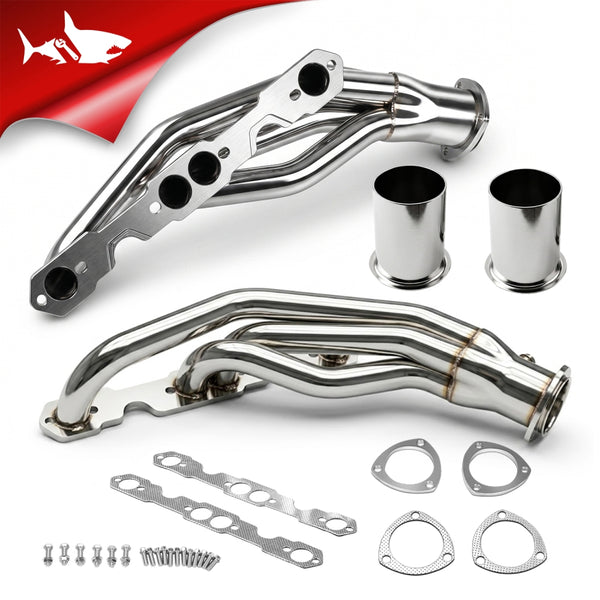
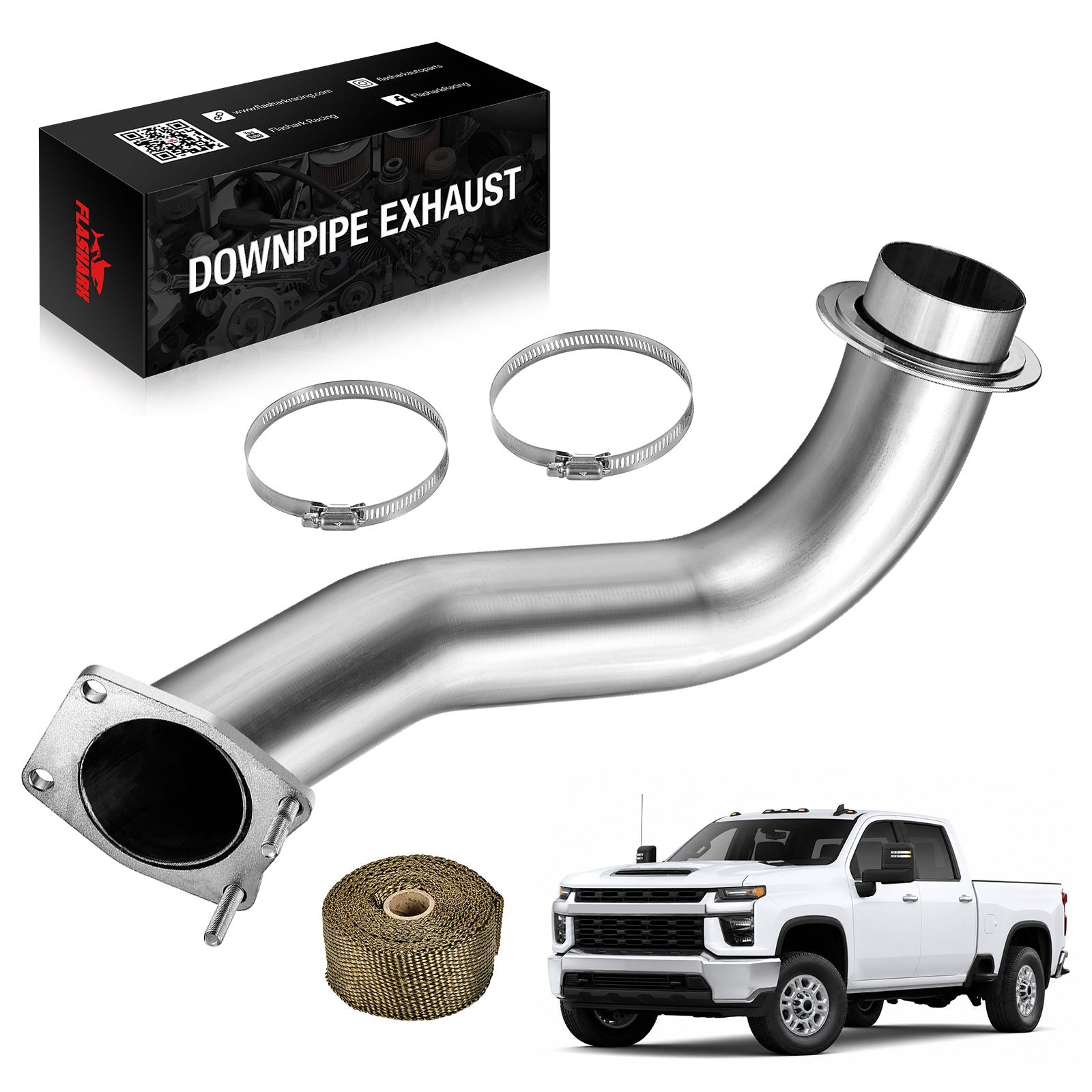
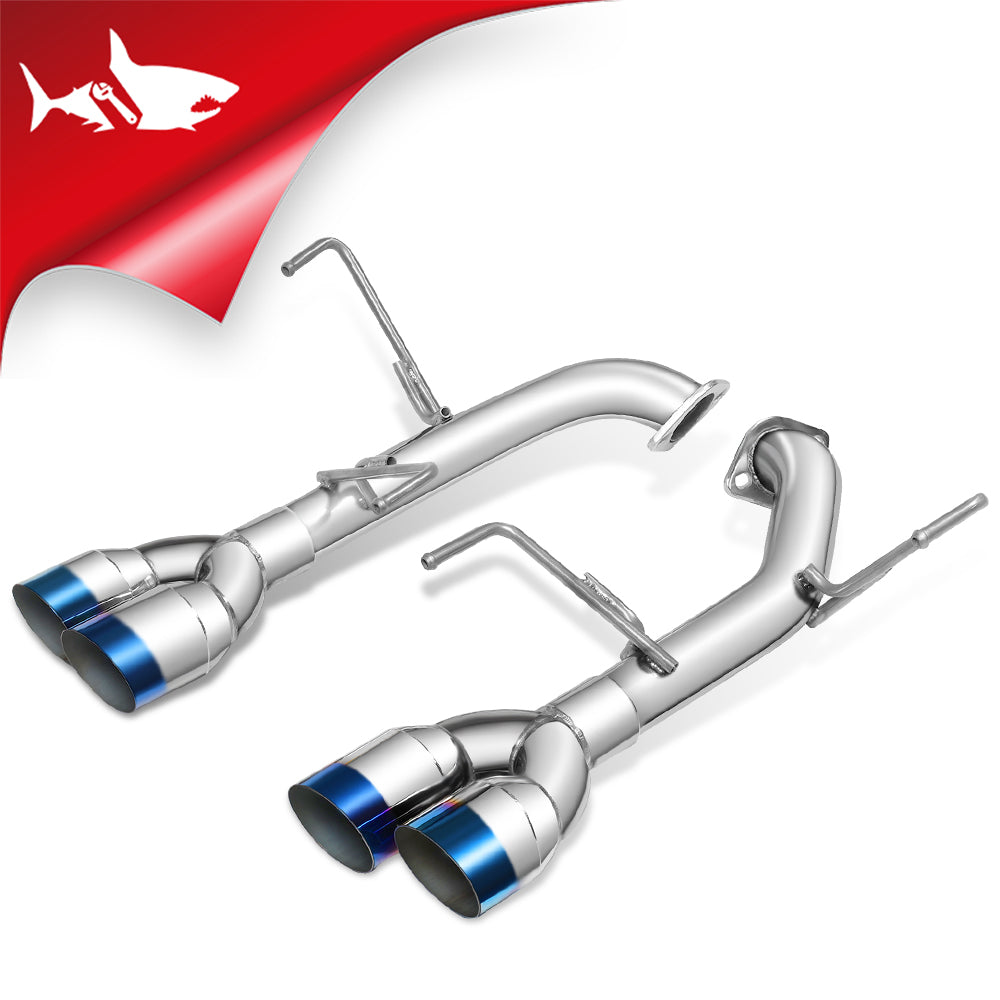
Hablando de presupuestos, si has decidido que la ruta off-road es para ti, no necesitas gastar $2,000 para obtener un rendimiento de primera. Una de las formas más inteligentes de mejorar es buscar colectores de escape para automóviles de alta calidad que no conlleven el "impuesto Corvette". Recomendamos encarecidamente la configuración que se muestra a continuación para un ajuste impecable y una mejora masiva del flujo de aire.

Preguntas Frecuentes sobre Colectores y X-Pipes para C5 Corvette
P1: ¿Requieren los colectores de tubo largo una reprogramación en un C5 Corvette?
R1: Absolutamente. La instalación de colectores de tubo largo altera la relación aire/combustible y desplaza los sensores de oxígeno más hacia atrás. Es obligatorio un ajuste adecuado en banco de pruebas o en carretera para optimizar el combustible, corregir el encendido y desactivar los códigos de los sensores O2 traseros.
P2: ¿Un X-pipe sin catalizador encenderá la luz de verificación del motor en mi C5?
R2: Sí, al 100%. Sin convertidores catalíticos, los sensores de oxígeno traseros leerán un código de ineficiencia del catalizador (como P0420/P0430). Tu afinador necesitará deshabilitar electrónicamente el reporte de los O2 traseros en la ECU.
P3: ¿Cuántos caballos de fuerza reales añaden los colectores de tubo largo y un X-pipe a un C5 LS1?
R3: Con un ajuste adecuado, puedes esperar un aumento de 25 a 35 caballos de fuerza a la rueda (whp) y una mejora masiva en el torque a medio régimen. La diferencia en el "dyno del asiento" es abismal.
P4: ¿Puedo pasar las emisiones (smog) con colectores de tubo largo en un C5?
R4: En estados con estrictas regulaciones CARB como California, no, los colectores largos fallarán la inspección visual. En estados que solo requieren un escaneo de preparación OBD2, una configuración con catalizador (y a veces sin catalizador) correctamente ajustada puede pasar, siempre que tu afinador maneje los códigos correctamente.
P5: ¿Necesito extensiones para los sensores de O2 para los colectores de tubo largo del C5?
R5: Sí. Dado que los colectores de tubo largo empujan el colector de escape mucho más hacia la parte inferior del coche que los colectores de fábrica, los arneses de cableado de los sensores de O2 delanteros de fábrica no llegarán. Debes usar arneses de extensión.
P6: ¿Un escape sin catalizador hace que el C5 Corvette huela a gasolina?
R6: Sí, significativamente. Sin convertidores catalíticos para quemar el exceso de hidrocarburos, olerás los gases de escape crudos, especialmente durante los arranques en frío, al ralentí en los semáforos y en tu garaje.
P7: ¿Colectores cortos vs. colectores de tubo largo para C5 Corvette: Cuál es mejor?
R7: Los colectores de tubo largo siempre ganan en rendimiento. Los colectores cortos son más fáciles de instalar y podrían mantenerte dentro de la legalidad en la calle, pero ofrecen ganancias mínimas de caballos de fuerza. Si quieres potencia real, necesitas colectores de tubo largo.
P8: ¿Qué tamaño de primarios es mejor para un C5 de serie? ¿1 3/4" o 1 7/8"?
R8: Para un LS1 de serie, los colectores de 1-3/4" mantienen la velocidad de los gases de escape alta para un gran torque a bajas revoluciones. Sin embargo, si planeas añadir un árbol de levas más grande, un supercargador, o tienes un Z06 (LS6), los colectores de 1-7/8" son una mejor inversión a largo plazo.
P9: ¿Un X-pipe hará que mi C5 Corvette suene más fuerte que el H-pipe de fábrica?
R9: Sí, pero cambia el tono. Un H-pipe da un tono bajo y retumbante de "músculo clásico". Un X-pipe mezcla mejor los gases de escape, lo que resulta en un "grito" V8 ligeramente más fuerte, más agudo y más suave a altas revoluciones.
P10: ¿Puedo instalar colectores de tubo largo para C5 en casa con caballetes?
R10: Puedes, pero coge unas cervezas y analgésicos. Es un ajuste apretado. Necesitarás levantar el coche al menos 20-24 pulgadas del suelo, quitar el motor de arranque, desatornillar el eje de dirección y, potencialmente, quitar las tapas de válvulas para deslizarlos desde abajo.







1 comentario
Tom
So where is the catted version for sale at???