Vayamos directamente al grano: el VQ37HR es una obra maestra de la ingeniería atmosférica, pero de fábrica, está estrangulado por las normas de emisiones y las regulaciones de ruido. Si sientes que tu G37 se está conteniendo, tienes razón. Las cajas de aire de serie son restrictivas, los convertidores catalíticos crean una contrapresión masiva y las tuberías de escape están engarzadas y deflectoras para mantener el VQ silencioso como un susurro.
Mejorar la admisión y el escape de tu G37 no se trata solo de hacer ruido; se trata de corregir estos cuellos de botella de fábrica para mejorar la eficiencia volumétrica. Al permitir que el motor inhale aire más denso y exhale los gases de escape sin restricciones, desbloqueas la potencia y la respuesta del acelerador que Nissan dejó sobre la mesa. Analicemos las verdades técnicas de las modificaciones de respiración del VQ37, omitamos el marketing y veamos cómo construir correctamente la combinación definitiva de admisión y escape para tu G37. (Si buscas una hoja de ruta más amplia para tu proyecto, consulta nuestra guía completa: Las 5 mejores mejoras de rendimiento atornilladas para despertar tu Infiniti G37.)
En resumen: Maximizando el rendimiento del VQ37
- El efecto sinérgico: Mejorar solo la admisión o solo el escape limita tu potencial. Una combinación completa de admisión y escape del G37 crea un efecto de barrido, amplificando significativamente tus ganancias de potencia.
- El diámetro del tubo importa: Para un VQ37 atmosférico, la tubería de doble 2.5 pulgadas doblada con mandril es la regla de oro. Saltar a tuberías de 3 pulgadas en una construcción NA mata la velocidad de los gases de escape y sacrifica el par motor a bajas revoluciones.
- Eliminando el "rasp" del VQ: La eliminación de los catalizadores de serie a menudo introduce un zumbido metálico áspero (el "rasp de trompeta") entre 3,500-4,500 RPM. Los sistemas cat-back de calidad utilizan resonadores Helmholtz para cancelar estas frecuencias específicas.
- La reprogramación de la ECU es obligatoria: Para aprovechar al máximo el aumento del flujo de aire y evitar que el motor funcione con una mezcla pobre, es esencial una reprogramación personalizada (EcuTek o Uprev) después de instalar estas piezas atornilladas.
Arreglando la entrada: Admisiones de aire corto (SRI) vs. Admisiones de aire frío (CAI)
El VQ37 se basa en una configuración de doble cuerpo de mariposa, lo que significa que, cualquiera que sea la ruta de admisión que elijas, necesitas un flujo de aire equilibrado y sin restricciones. Generalmente tienes dos opciones: admisiones de aire corto (SRI) y admisiones de aire frío (CAI). (Para una inmersión profunda en este debate específico, lee nuestro análisis detallado de mecánicos: ¡No pierdas potencia! Admisión de aire corto vs. Admisión de aire frío G37 (Guía de mecánico de 15 años).)

Admisiones de Aire Corto (SRI): El Sonido y la Simplicidad
Las SRI reemplazan las voluminosas cajas de aire de fábrica con filtros cónicos de alto flujo situados directamente en el compartimento del motor. Ofrecen la instalación más sencilla y producen un rugido de admisión increíblemente agresivo a pleno acelerador.
👨🔧 La realidad del mecánico: El enemigo de la SRI es la absorción de calor. Debido a que los filtros se encuentran dentro del compartimento caliente del motor, pueden aspirar aire caliente y menos denso cuando el coche está al ralentí o en el tráfico con paradas y arranques. Si optas por una SRI, asegúrate de que venga con escudos térmicos robustos y bien sellados para aislar los filtros del calor del radiador y del colector.
Admisiones de Aire Frío (CAI): Buscando la Potencia Máxima
Si buscas cifras en el dinamómetro, una admisión de aire frío (CAI) es la opción superior. La instalación de una admisión de aire frío Infiniti G37 dedicada desvía la tubería extendida hacia el parachoques delantero o los pasos de rueda, extrayendo aire ambiente más frío y denso del exterior del compartimento del motor. Un aire más denso significa más oxígeno, lo que permite a la ECU añadir más combustible y generar más potencia. (¿Necesitas ayuda para elegir la configuración correcta? Consulta nuestra selección de Los mejores sistemas de admisión de aire frío para Infiniti G37: Mejoras de rendimiento para tu motor.)
⚠️ Advertencia (Riesgo de golpe de ariete): La instalación es más compleja, a menudo requiere la retirada del parachoques. Más importante aún, la colocación de los filtros en la parte baja del parachoques introduce el riesgo de ingestión de agua (golpe de ariete) si se conduce por aguas profundas. Si tu G37 es un coche de uso diario en un clima lluvioso, considera válvulas de desvío o cíñete a los SRI blindados.

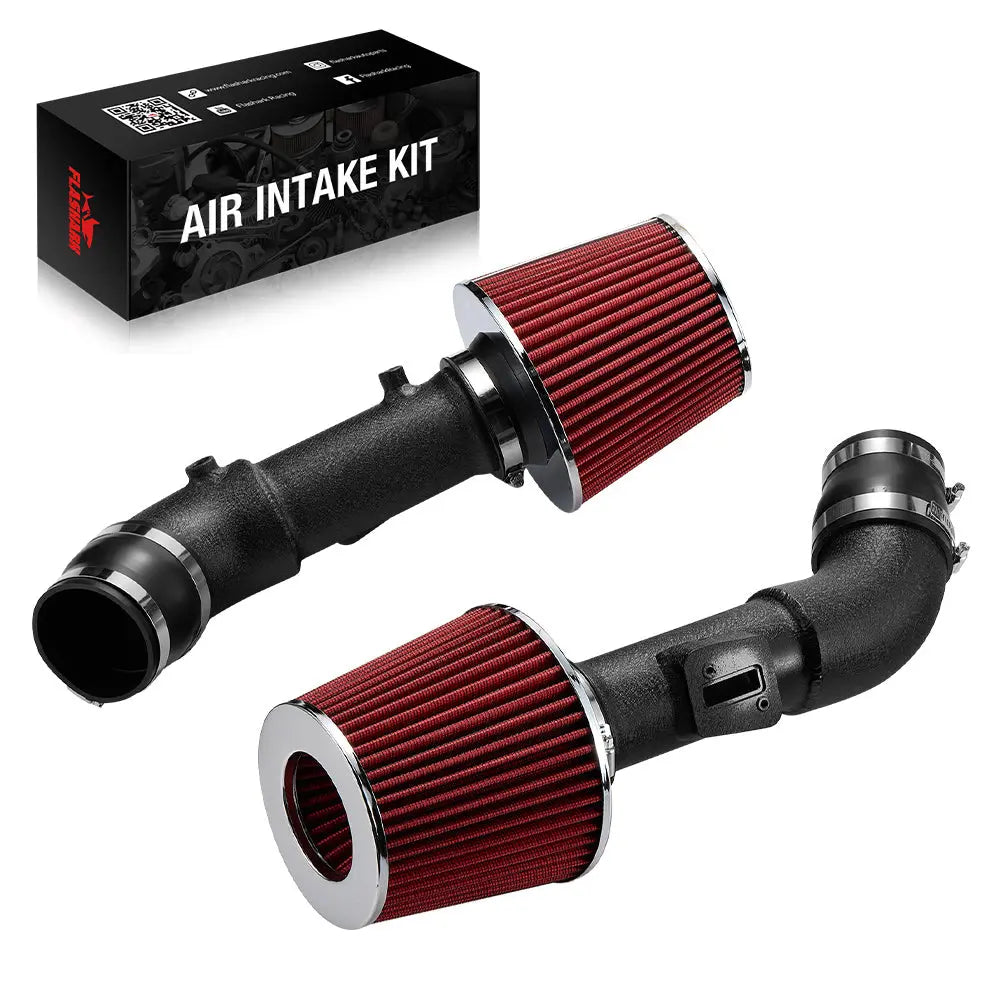
Kit de admisión de aire frío Flashark (VQ37VHR 3.7L V6)
Reemplace sus restrictivas cajas de aire de fábrica con tuberías ligeras de aluminio T-304. Experimente un sonido deportivo intenso y ganancias NA genuinas.
- Ganancias de potencia: Aumenta la potencia entre un 7-10% y el par motor entre un 6-8%
- Diseño: Filtros cónicos rojos lavables/reutilizables de alta calidad
- Compatibilidad: Atornillado directo para 370Z 2008-2017 y G37 2008-2013
Arreglando la exhalación: Arquitectura del sistema de escape
Hacer que el aire entre en el VQ37 es solo la mitad de la batalla; sacarlo de manera eficiente es donde nace el verdadero carácter de tu G37.
Resolviendo el "Rasp del VQ" (Sonido de trompeta)
Si alguna vez has estado cerca de motores VQ, conoces el rasp. Cuando actualizas a catalizadores de alto flujo (HFC) o a tubos de prueba, eliminas el denso núcleo cerámico que amortigua el escape. El resultado es a menudo un traqueteo áspero y metálico en las RPM de rango medio. Para solucionarlo, busca sistemas de escape que utilicen resonadores Helmholtz o tuberías en Y específicamente ajustadas. Estas son cámaras diseñadas para rebotar ondas de sonido específicas contra sí mismas para cancelar el zumbido y el rasp, dejándote con un aullido VQ profundo y exótico.
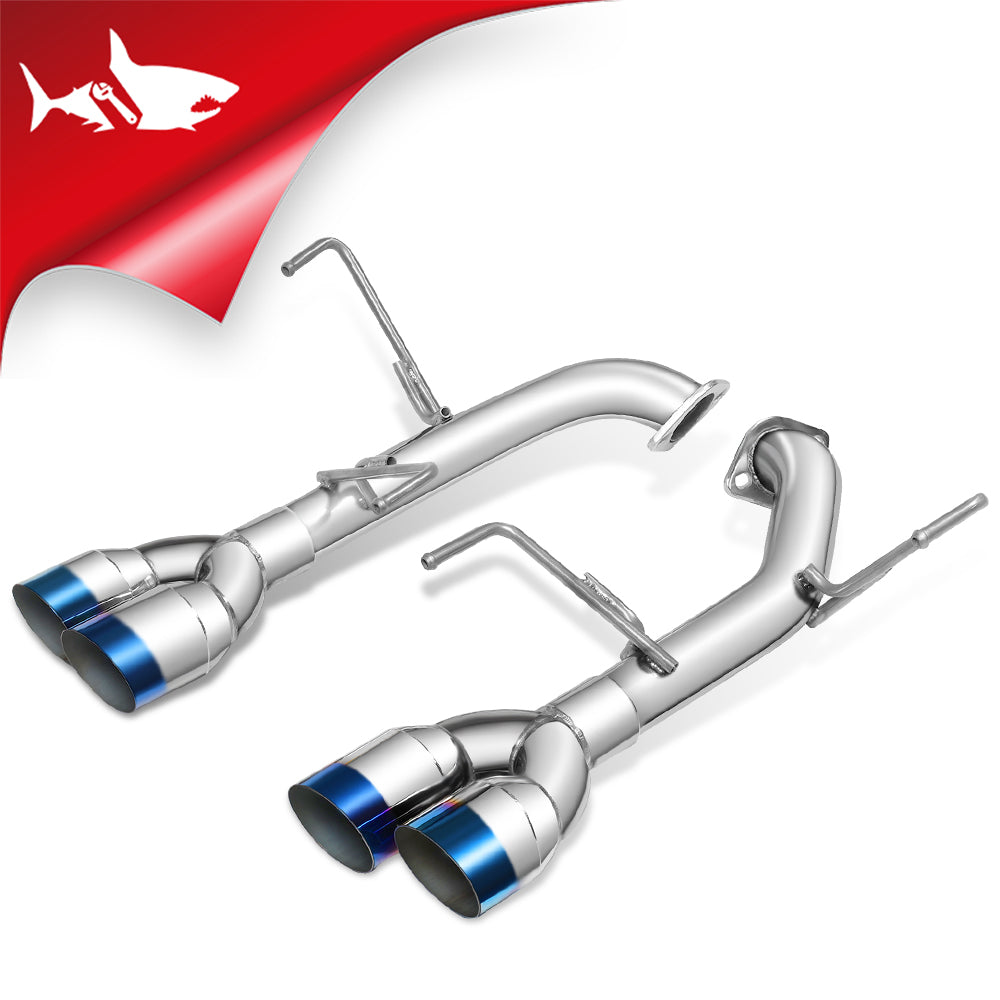
Sistemas Axle-Back vs. Cat-Back
Comprender la diferencia entre los diseños de escape es crucial para gestionar tus expectativas de rendimiento y tu presupuesto.

| Tipo de sistema | Componentes reemplazados | Beneficio principal | Ganancia de potencia |
|---|---|---|---|
| Axle-Back | Solo silenciadores traseros y puntas de escape. | Sonido agresivo, mejora estética. | Prácticamente cero (Mantiene los restrictivos tubos medios/en Y) |
| Cat-Back | Todo desde los convertidores catalíticos hacia atrás (tubo en Y, tubo medio, silenciadores). | Elimina una contrapresión masiva, profundiza el tono. | Ganancias genuinas de 10-15 CV en rueda |
El dilema de los tubos de prueba y los HFC
Los catalizadores de fábrica son el mayor cuello de botella en el VQ37. Reemplazarlos con tubos de prueba Infiniti G37 (rectos, sin filtración) produce la máxima potencia, pero es increíblemente ruidoso, áspero y estrictamente para uso fuera de carretera/pista. Los catalizadores de alto flujo (HFC) ofrecen un sustrato metálico que fluye significativamente mejor que los de serie, manteniendo la nota de escape algo refinada y minimizando el olor a combustible crudo. (¿Curioso por los números exactos del dinamómetro? Lee nuestro análisis completo: ¿Los tubos de prueba añaden caballos de fuerza al G37?)

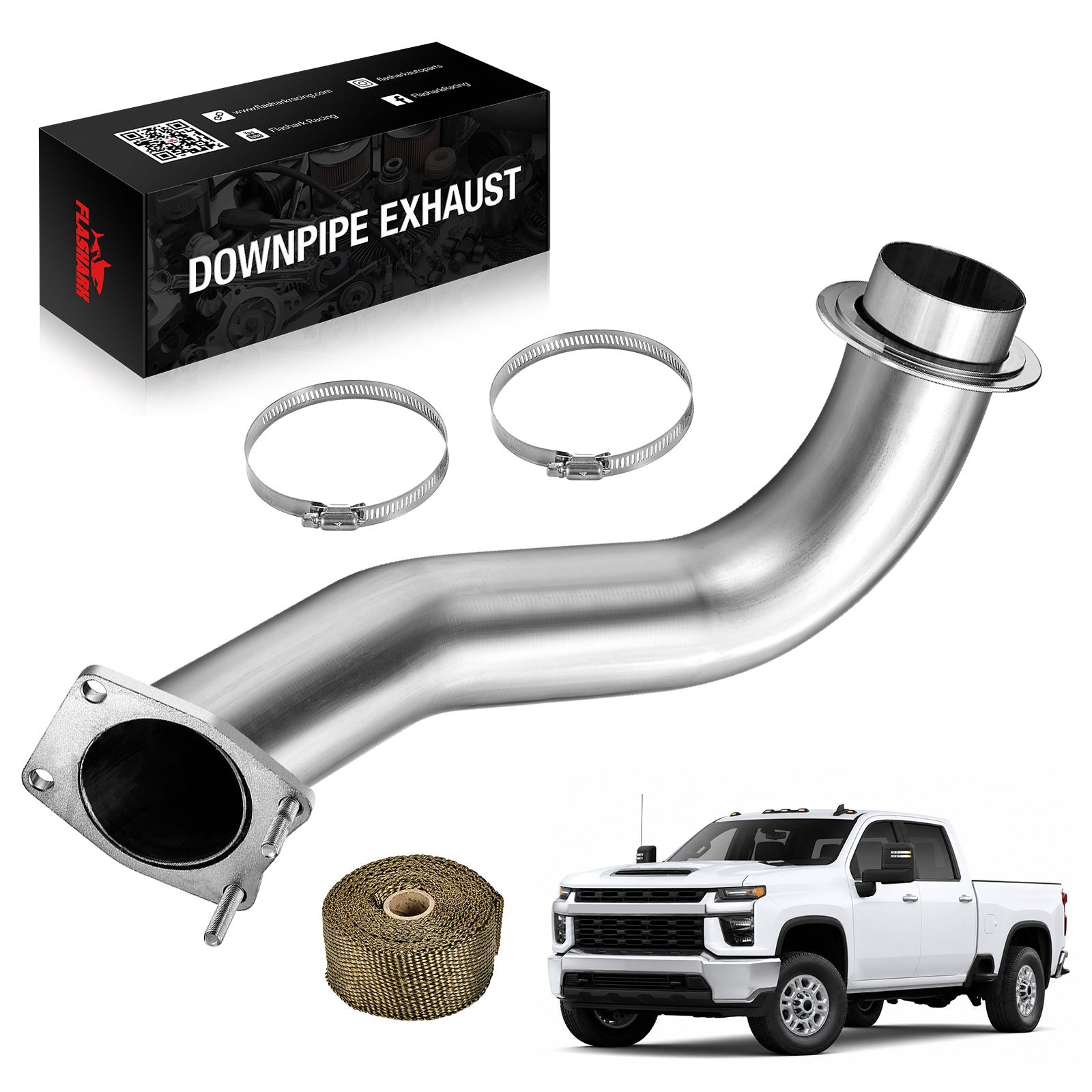
Tubos de prueba/Downpipe Flashark de 2.5" (Z34/G37)
Elimina los catalizadores de fábrica altamente restrictivos para despertar tu VQ37VHR. Diseñado para un uso en pista de alto rendimiento con un flujo sin restricciones.
- Material: Acero inoxidable T-304 de calibre 16 de alta resistencia
- Flujo: Tubos de 2.50" de diámetro doblados con mandril
- Calidad de construcción: Soldado profesionalmente con TIG con bridas mecanizadas CNC gruesas
La última frontera: Actualización de los colectores de escape (Headers)
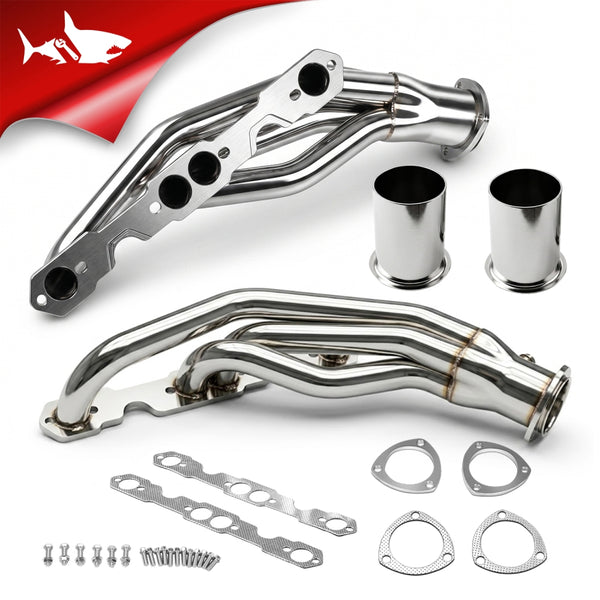
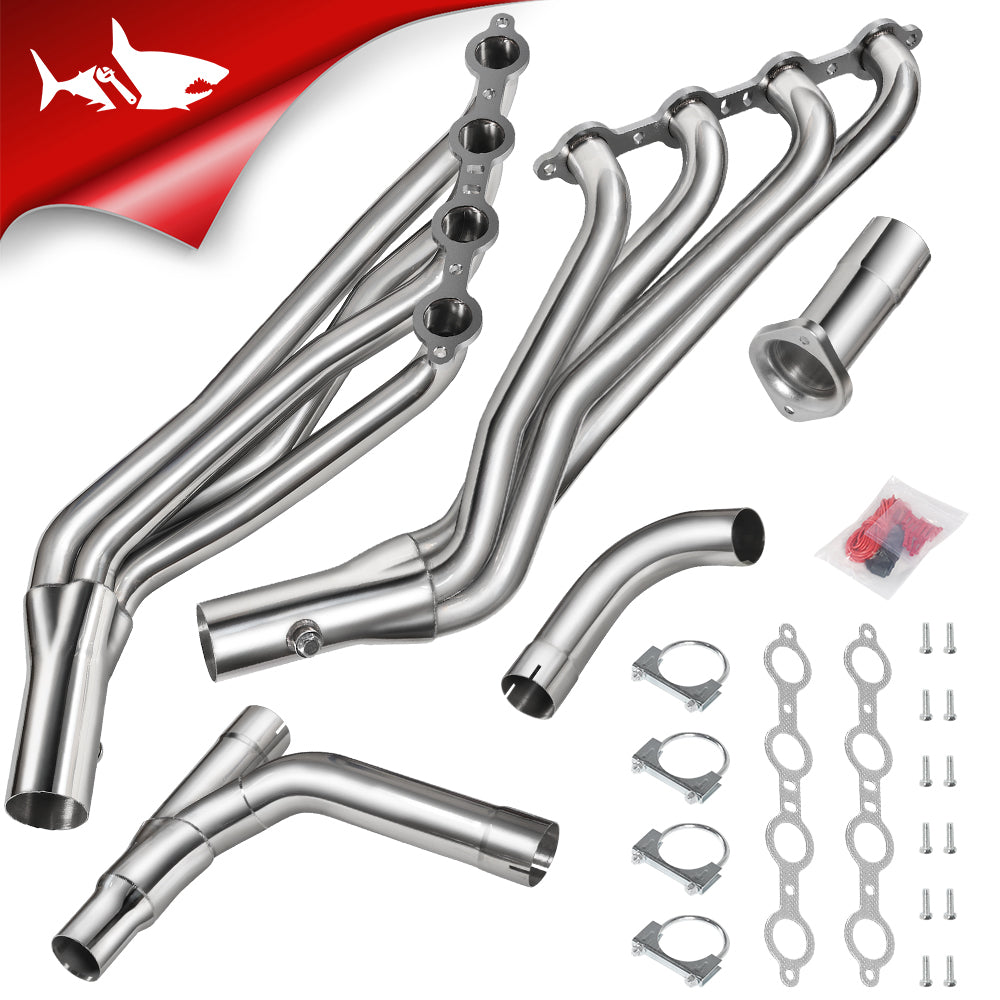
Si ya has abordado los catalizadores y el sistema cat-back, los colectores de escape de fábrica son la última gran restricción que impide que tu VQ37 alcance su verdadero potencial atmosférico. La actualización a colectores de escape Infiniti G37 del mercado de accesorios es donde obtendrás esos últimos 10 a 15 caballos de fuerza en rueda. Generalmente tienes dos rutas: Colectores cortos (Shorty Headers), que se atornillan directamente a tus catalizadores existentes (o a tus nuevos HFC/Tubos de prueba) para un aumento modesto en el par motor de rango medio, y Colectores de tubo largo (LTH), que reemplazan por completo tanto los colectores como los catalizadores en un solo tubo continuo y de flujo libre para la máxima potencia a altas revoluciones.
👨🔧 La realidad del mecánico (Los tornillos endemoniados): Quitar los colectores de fábrica no es un proyecto de bricolaje fácil para el fin de semana. Los tornillos que unen los colectores de fábrica a los convertidores catalíticos sufren ciclos de calor extremos y son famosos por griparse, romperse y arruinar por completo tu fin de semana. Si vas a hacer este trabajo tú mismo, empapa esos tornillos con líquido penetrante (como PB Blaster) durante 24 horas antes, trae un soplete y prepárate para levantar ligeramente el motor solo para tener espacio para la llave.

Colectores de escape Flashark 3-2-1 (3.5L/3.7L)
La modificación de respiración NA definitiva. Elimina los colectores originales altamente restrictivos para ofrecer una aceleración más potente, una respuesta del acelerador más rápida y un tono de rendimiento profundo.
- Rendimiento comprobado: Ganancias en dinamómetro de hasta 15 CV y 20 lb-pie de par motor
- Especificaciones: Entrada de 2.0" / Salida de 2.5" con un diseño de tubería 3-2-1 de alto flujo
- Calidad: Acero inoxidable T-304 pulido a espejo con bridas CNC
La sinergia: Por qué necesitas la combinación completa
Instalar un escape de flujo libre mientras se mantienen las cajas de aire de serie es como intentar correr respirando por una pajita. La actualización a una combinación completa de admisión y escape del G37 crea una "bomba" eficiente. El efecto de barrido del escape en realidad ayuda a introducir la carga de admisión fresca en la cámara de combustión. Cuando se combinan, las ganancias son exponenciales, no solo aditivas.
Para obtener resultados óptimos, recomendamos encarecidamente que los componentes de su actualización sean compatibles. Por ejemplo, una Admisión de aire corto Flashark combinada con un escape Cat-Back Flashark garantiza que las características del flujo de aire estén equilibradas de principio a fin, utilizando acero inoxidable 304 de primera calidad y tubos de 2.5 pulgadas óptimos para las bandas de potencia de los motores de aspiración natural.
El último paso: No te saltes la reprogramación
Las piezas atornilladas cambian los parámetros físicos del motor, pero la ECU de fábrica no sabe automáticamente cómo maximizarlos. Sin una reprogramación, el motor puede funcionar con una mezcla pobre y dejarás entre el 30% y el 40% de tu potencia potencial sobre la mesa. Una reprogramación profesional (optimizando las relaciones aire/combustible, el encendido y la escala del MAF) es lo que realmente une una combinación de admisión y escape del G37, lo que produce ganancias realistas de 20-30+ caballos de fuerza en la rueda.
Preguntas frecuentes (FAQ)
P1: ¿Necesito una reprogramación después de instalar una admisión y un escape G37?
R1: Sí. Aunque el coche funcionará sin ella, se recomienda encarecidamente una reprogramación de la ECU (como Uprev o EcuTek). Calibra los sensores MAF, optimiza las relaciones aire/combustible, evita que el motor funcione peligrosamente con una mezcla pobre y desbloquea todo el potencial de potencia de tus nuevas modificaciones.
P2: ¿Qué es el infame "rasp del VQ" y cómo lo soluciono?
R2: El "rasp" es un sonido metálico áspero, similar al de una trompeta, que suele producirse entre 3.500 y 4.500 RPM, normalmente provocado por la eliminación de los catalizadores de serie. Para solucionarlo, necesitas un sistema de escape equipado con resonadores Helmholtz o tubos de prueba resonados diseñados para cancelar esas frecuencias específicas.
P3: Escape de 2.5 pulgadas vs. 3 pulgadas: ¿Cuál es mejor para un G37 atmosférico?
R3: Para un VQ37HR atmosférico (NA), la tubería doble de 2.5 pulgadas es óptima. Mantiene la velocidad de los gases de escape necesaria para un fuerte par motor a bajas y medias revoluciones. Un sistema de 3 pulgadas es demasiado grande para una configuración NA y resultará en una pérdida de potencia a bajas revoluciones, aunque es ideal para configuraciones sobrealimentadas o turboalimentadas.
P4: ¿Una admisión de aire frío (CAI) puede causar un golpe de ariete en mi G37?
R4: Existe un riesgo. Las CAI colocan los filtros de aire en la parte baja del parachoques delantero. Si conduces por un charco profundo o agua estancada que sumerge el filtro, el motor puede actuar como una aspiradora, succionando agua hacia los cilindros y causando una falla catastrófica (golpe de ariete). Evita el agua profunda o utiliza una válvula de bypass.
P5: ¿Admisión de aire corto (SRI) vs. Admisión de aire frío (CAI) para el VQ37HR?
R5: Las SRI son más fáciles de instalar, suenan increíblemente agresivas y son más seguras contra la entrada de agua, pero son propensas a la absorción de calor (aspiran aire caliente del motor). Las CAI ofrecen aire más frío y denso para obtener la máxima potencia en el dinamómetro, pero requieren una instalación más difícil y conllevan un riesgo de golpe de ariete.
P6: ¿Los catalizadores de alto flujo (HFC) o los tubos de prueba activan la luz de "Check Engine" (CEL)?
R6: Sí, modificar o eliminar los catalizadores de fábrica casi siempre activará un código P0420/P0430 (eficiencia del sistema catalítico). Puedes resolver esto usando "defoulers" (espaciadores) en los sensores de oxígeno o haciendo que un sintonizador desactive el código específico en la ECU.
P7: ¿Cuánta potencia puedo ganar de forma realista con modificaciones de respiración?
R7: Con una admisión de calidad, un escape completo tipo cat-back y una reprogramación personalizada profesional, un VQ37HR en buen estado puede ganar de forma realista entre 20 y 35 caballos de fuerza en la rueda (whp) respecto al stock, transformando completamente la capacidad de respuesta del coche.
P8: ¿Son legales los tubos de prueba para mi G37?
R8: En la gran mayoría de las jurisdicciones, no. Los tubos de prueba eliminan por completo los dispositivos de control de emisiones del vehículo, lo que los hace ilegales para uso en la calle y prácticamente garantiza el fallo durante una inspección de emisiones. Están estrictamente destinados para uso en pista o fuera de carretera.
P9: ¿Qué material es el mejor para un escape de repuesto para el G37?
R9: El acero inoxidable 304 es el estándar de oro de la industria. Ofrece un excelente equilibrio entre durabilidad, resistencia extrema al óxido y la corrosión, y longevidad. El titanio es más ligero pero significativamente más caro y propenso a agrietarse si no se fabrica perfectamente.
P10: ¿Por qué mi nuevo escape huele a quemado?
R10: Esto es completamente normal durante los primeros 50 a 100 millas. Los nuevos sistemas de escape están recubiertos con aceites de fabricación, y el relleno de fibra de vidrio dentro de los silenciadores necesita tiempo para curarse. El olor a quemado se disipará naturalmente después de unos cuantos ciclos de calor adecuados.
P11: ¿Puedo instalar estos componentes yo mismo sobre borriquetas?
R11: Sí, la mayoría de las admisiones y escapes atornillados se pueden instalar en un garaje con borriquetas de calidad y herramientas manuales básicas. Sin embargo, los pernos que conectan los convertidores catalíticos a los colectores de escape están notoriamente oxidados y son difíciles de quitar. Utiliza abundante líquido penetrante y nunca trabajes debajo de un coche apoyado únicamente en un gato hidráulico.