


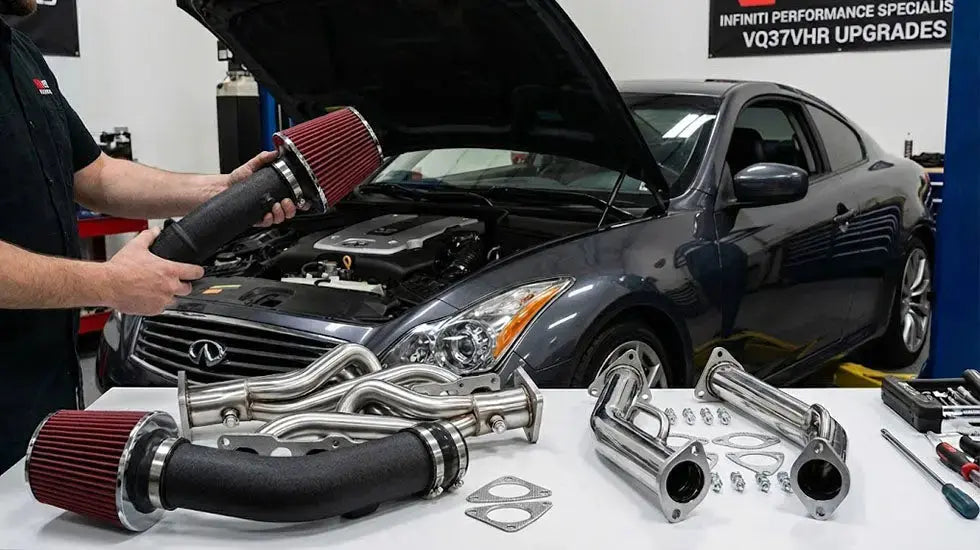
The Infiniti G37 and Nissan 370Z share the VQ37VHR 3.7L V6, a naturally aspirated platform with a strong factory foundation and a large aftermarket. The right bolt-on parts can improve airflow, sound, throttle response, and the way the car feels through the rev range. The wrong combination can add noise, create fitment problems, or make the car less enjoyable to drive every day.
This guide is for G37 owners planning a practical naturally aspirated build. The best path depends on your vehicle year, body style, drivetrain, current exhaust, budget, local requirements, and whether you plan to calibrate the ECU after the hardware is installed.
- Start with the complete vehicle condition. Resolve warning lights, intake leaks, exhaust leaks, worn ignition components, and maintenance issues before adding performance parts.
- Choose intake and exhaust parts as a system. Pipe routing, filter location, catalytic-converter configuration, Y-pipe design, mufflers, and calibration all affect the final result.
- A larger part is not automatically the right part. Exhaust-pulse energy, collector position, sound control, and chassis clearance matter as much as raw pipe size.
- Tune requirements vary. Engine condition, MAF readings, fuel, emissions equipment, sensor behavior, and the installed hardware combination all matter.
- Confirm fitment before ordering. Match the part to the G37 year, engine, drivetrain, body style, emissions equipment, and existing exhaust connection.
1. High-Flow Dual Cold Air Intakes
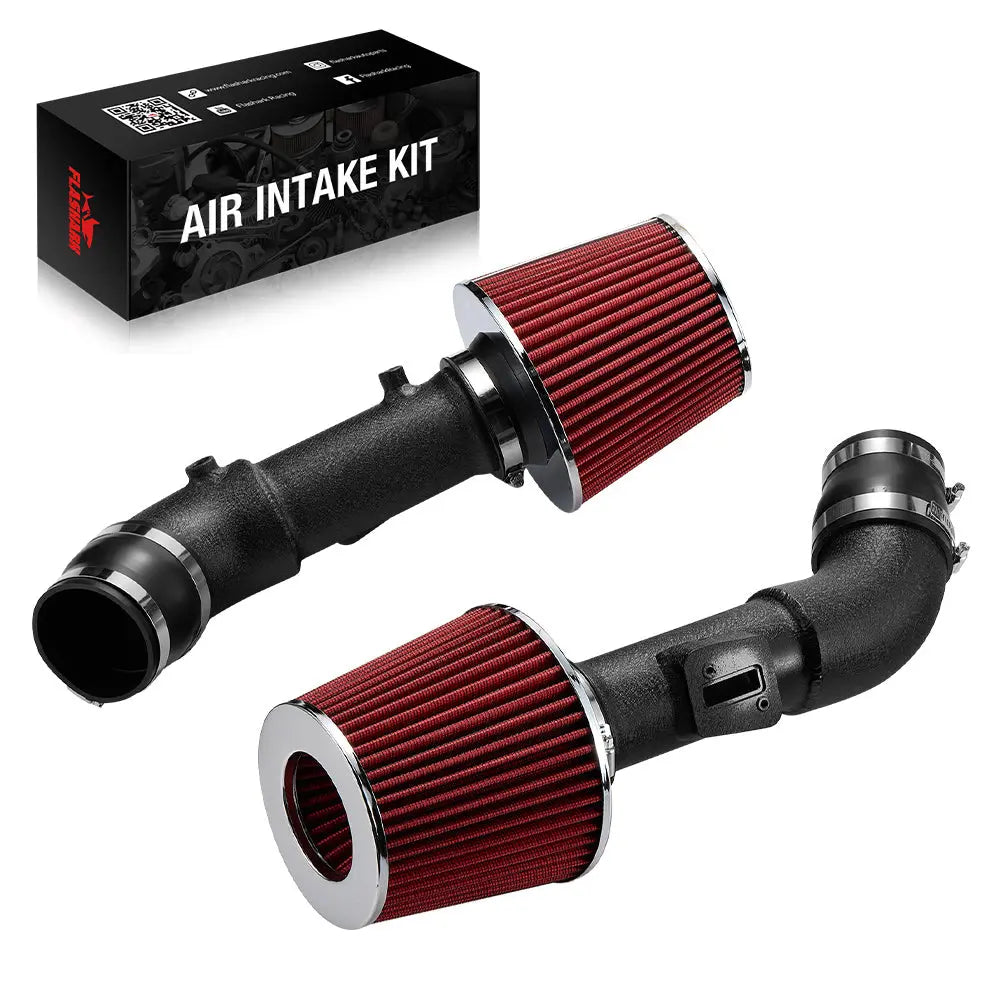
The factory VQ37VHR intake system is designed around noise control, filtration, packaging, and predictable airflow. An aftermarket intake changes the path between the air inlet, filters, MAF sensors, and throttle bodies. That can alter intake sound and airflow behavior, but the final result depends heavily on filter placement, heat shielding, pipe diameter, MAF housing design, and the temperature of the air entering the system.
A dual intake layout should maintain balanced airflow to both throttle bodies. On a VQ37VHR, a filter placed near engine-bay heat can see higher intake-air temperatures during traffic, heat soak, or repeated low-speed operation. A well-designed shielded setup can help separate the filters from radiant heat, but the seal, feed path, and installation quality still matter.
For owners comparing product options, browse the Cold Air Intake collection. The vehicle-specific G37 Cold Air Intake should be matched to the selected vehicle configuration before ordering.

Cold Air Intake vs. Short Ram Intake on a G37
Some owners use “cold air intake” as a broad term for any aftermarket intake. In practice, the filter location and air path make a real difference. A short ram layout usually keeps the filters in the engine bay and can simplify installation. A longer cold-air layout may place the filters closer to an outside-air source, but it can require more installation work and more attention to water exposure, bumper clearance, and filter access.
Neither layout is automatically correct for every owner. A daily-driven G37 in a wet climate may prioritize protected filter placement and service access. A car built around higher-rpm naturally aspirated use may prioritize a different intake path. The complete combination matters more than the label on the box.
2. High-Flow Cats or Test Pipes
The factory catalytic-converter section is a major part of the G37 exhaust path. Owners commonly compare high-flow catalytic converters and test pipes when they want a freer-flowing exhaust system. The tradeoff is not only flow. It also involves sound, exhaust odor, warning-light behavior, local road-use requirements, and how the rest of the exhaust controls resonance.
High-flow catalytic converters retain an emissions-control component while changing the restriction level and internal construction. Test pipes replace the factory catalyst section with a straight-through path. The exact sound and drivability outcome depends on the downstream Y-pipe, cat-back, resonators, mufflers, exhaust leaks, sensor condition, and calibration.
The existing Test Pipes collection is useful for comparing available exhaust-path options. For a vehicle-specific purchase path, see the G37 Test Pipes product page and match the selected configuration to the vehicle before ordering.
Rasp and drone are different problems. Rasp is usually a sharper, metallic exhaust character at certain engine speeds. Drone is a low-frequency cabin resonance during steady cruising. Either can be influenced by the complete exhaust path, especially the Y-pipe, resonators, mufflers, tailpipe layout, and any leaks at flanges or sensor bungs.
For a deeper sound-focused comparison, see resonated vs. non-resonated test pipes for G37 and 370Z. If you plan to install this section yourself, the G37 test-pipe installation checklist covers common preparation and installation points.
3. Headers and a Cat-Back Exhaust System
Headers, catalytic-converter components, the Y-pipe, mid-pipes, resonators, mufflers, and tailpipes work together. Replacing only one section can change the sound and flow characteristics of the whole system, but it does not make the other restrictions disappear.
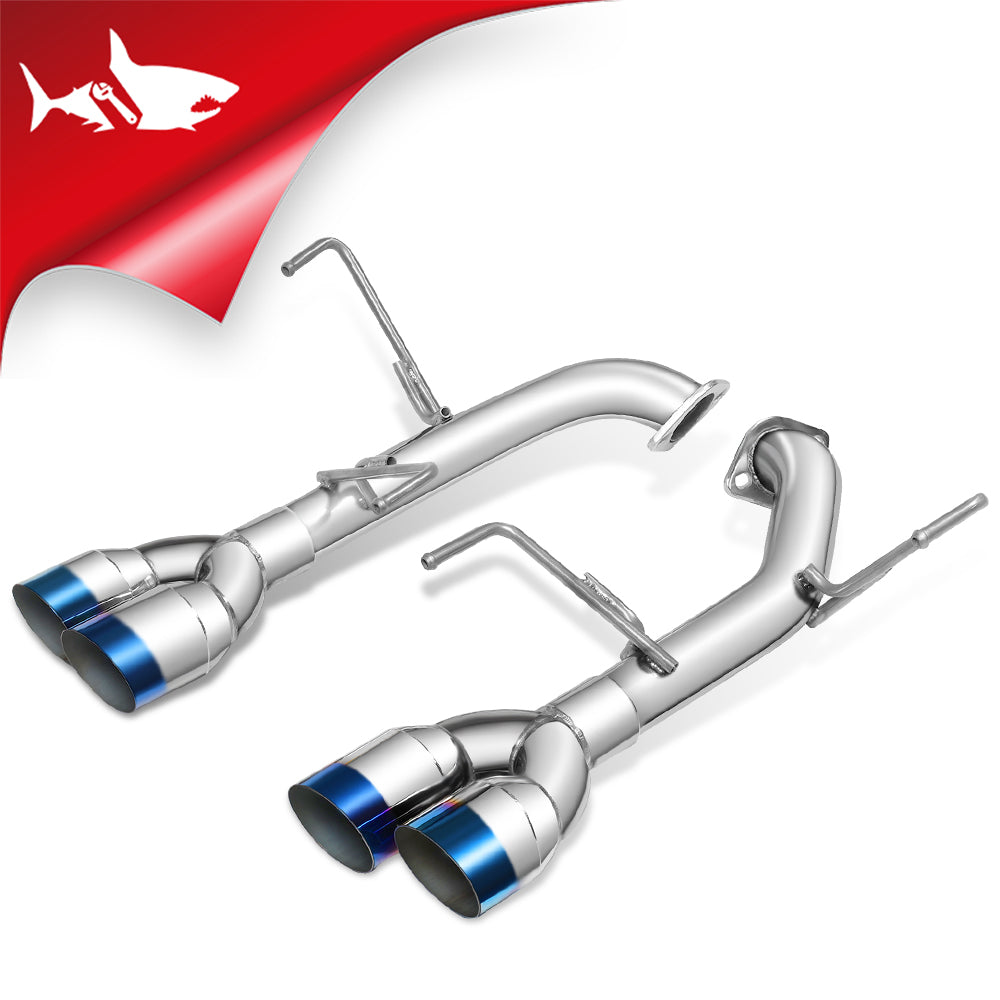
A cat-back exhaust generally changes the system from the rear of the catalyst section toward the back of the vehicle. It is often chosen for exhaust tone, rear-section flow, and appearance. Browse cat-back exhaust systems when comparing that part of the build.
Headers change the exhaust path closer to the cylinder head. Primary-tube layout, collector design, outlet position, sealing surfaces, and clearance all affect installation and behavior. Longer primary routing is often selected when the goal is to influence scavenging through the midrange and upper operating range, but collector position and the downstream connection can be just as important as tube length.
The Exhaust Headers collection provides broader category options. For a G37/370Z-specific product path, see the G37 Exhaust Headers listing.

| Component | What It Changes | Key Checks Before Buying | Common Tradeoff |
|---|---|---|---|
| Dual intake | Air path, filter location, intake sound, MAF housing configuration | Vehicle year, MAF arrangement, filter placement, heat shielding, water exposure | Installation access and heat management vary by layout |
| High-flow cats or test pipes | Catalyst-section restriction, exhaust tone, sensor environment | Emissions equipment, sensor locations, flange style, downstream exhaust | Sound, odor, compliance, and warning-light behavior can change |
| Headers | Exhaust routing near the cylinder head and collector area | Chassis clearance, outlet connection, wiring clearance, drivetrain and body style | Installation access and hardware condition can add complexity |
| Cat-back exhaust | Rear exhaust flow, exhaust character, resonance control | Connection diameter, Y-pipe compatibility, hanger locations, ground clearance | A louder system can introduce drone or rasp without proper sound control |
| ECU calibration | Fueling, MAF scaling, ignition strategy, throttle behavior | Installed hardware, fuel quality, engine condition, diagnostic data | The calibration must match the actual vehicle configuration |
Here is the part that matters during installation: do not tighten every connection before the system is aligned. Start by loosely supporting the components, confirm flange engagement, sensor-wire clearance, tunnel clearance, hanger position, and rear-tip alignment, then tighten the system progressively. A system installed under tension can shift as it heats and cools.

4. Intake Plenum and Airflow Balance
The upper intake plenum is part of the VQ37VHR intake tract, not a separate shortcut around the rest of the system. Porting, manifold changes, and related airflow work should be considered alongside the intake path, throttle bodies, engine condition, exhaust configuration, and ECU calibration.
On a naturally aspirated VQ build, airflow changes are rarely isolated. A change that appears helpful at one engine speed can have a different effect elsewhere in the operating range. That is why a plenum modification should be selected for the intended use of the car rather than treated as a guaranteed power add-on.
Before changing the plenum, inspect the intake system for cracked couplers, loose clamps, vacuum leaks, damaged wiring, and dirty or incorrectly installed sensors. Solving those issues first gives you a cleaner baseline and makes later changes easier to diagnose.
5. ECU Calibration After Bolt-On Parts
Hardware changes can alter the way the engine measures and uses air. ECU calibration may be considered after intake and exhaust modifications, especially when the installed parts change the MAF housing, airflow path, catalyst section, or overall exhaust configuration. Tune requirements vary by vehicle and installed hardware.
A calibration should match the actual vehicle, fuel, engine condition, intake, exhaust, emissions equipment, and diagnostic condition. Sensor location, wiring condition, exhaust leaks, and the complete intake-and-exhaust combination can all affect how the car behaves after modifications.
Do not use tuning as a substitute for mechanical inspection. An exhaust leak near an oxygen sensor, an intake leak after the MAF sensor, or a poorly aligned component can create problems that software alone will not fix.

Build the G37 as a Complete System
The most useful Infiniti G37 performance upgrades are the ones that work with the rest of the car. Start with maintenance and fitment. Choose an intake layout that suits the climate and driving style. Match the exhaust components to the sound and use case you want. Check clearances, hardware, wiring, and connections before final tightening. Then consider calibration based on the complete setup.
For a deeper discussion of how intake and exhaust components interact, read The Ultimate VQ37 Breathing Mod Combo: G37 Intake & Exhaust for Max Power & Sound.
Frequently Asked Questions: G37 Performance Upgrades
Q1: What is the best first bolt-on modification for an Infiniti G37?
A1: Start with the vehicle’s condition. Address maintenance issues, intake leaks, exhaust leaks, warning lights, and worn ignition parts before adding performance hardware. After that, an intake or cat-back exhaust is often chosen based on the owner’s priorities for sound, service access, and the rest of the planned build.
Q2: Do G37 bolt-on modifications require an ECU tune?
A2: Tune requirements vary by vehicle and installed hardware. Intake design, MAF housing changes, exhaust configuration, fuel, engine condition, emissions equipment, and diagnostic data should all be considered before calibration decisions are made.
Q3: Is a cold air intake better than a short ram intake for a G37?
A3: Neither design is automatically better for every car. Filter location, heat shielding, weather exposure, pipe routing, installation access, and the intended driving use determine which layout makes more sense.
Q4: Will test pipes make a G37 louder?
A4: Replacing the catalyst section can change exhaust volume and character, but the final result depends on the Y-pipe, cat-back, resonators, mufflers, leaks, and the rest of the exhaust system.
Q5: Can test pipes affect a check-engine light?
A5: Warning-light behavior can be affected by sensor location, exhaust leaks, wiring condition, emissions equipment, calibration, and the complete exhaust configuration. A fixed outcome should not be assumed.
Q6: Are G37 headers difficult to install?
A6: Header installation difficulty depends on chassis clearance, hardware condition, outlet connection, sensor access, drivetrain, body style, and the existing exhaust system. Plan the job around safe vehicle support, clearance checks, and careful wiring protection.
Q7: Will headers, test pipes, and a cat-back exhaust fit every G37?
A7: No. Match the system to the vehicle year, engine, drivetrain, body style, emissions equipment, sensor layout, and exhaust connection. Similar-looking G37 and 370Z parts are not automatically interchangeable.
Q8: What causes rasp on a G37 exhaust?
A8: Rasp can be influenced by catalyst-section changes, resonator design, muffler design, Y-pipe layout, pipe thickness, exhaust leaks, and the rest of the exhaust path. The part that creates more flow is not always the part causing the unwanted sound.
Q9: Can a larger exhaust pipe reduce low-speed response?
A9: Exhaust size is only one variable. Primary-tube dimensions, collector design, pipe routing, crossover design, engine speed, and the complete downstream exhaust all influence exhaust-pulse behavior. A bigger pipe is not automatically the right pipe.
Q10: What should I check before installing G37 intake or exhaust parts?
A10: Confirm vehicle fitment, inspect the selected configuration, check package contents, inspect old hardware, support the vehicle safely, protect wiring and sensors, test-fit all connections, and check for leaks or contact points after installation.

Steven Chen
Automotive Performance Specialist | Engine & Exhaust Systems
Steven focuses on practical engine performance, exhaust fitment, and real-world upgrade paths for classic and modern enthusiast vehicles. He reviews small-block Ford, LS, truck, and street/strip applications with one goal in mind: helping builders choose parts that actually work together. His philosophy: "Good power starts with the right combination, not the biggest part."







1 comment
Steven gravelle
I just bought a beautiful INFINITY EX 35 I would like to tweet more Hp out of it with bolt on parts to start please get back to me