Listen. If you own an Infiniti G37, Nissan 370Z, or a Q50 packing that glorious 3.7L VQ37VHR engine, you already know what a beast it is at high RPMs. But those factory airboxes? They’re basically putting a muzzle on it. Nissan engineered those restrictive paper filters and corrugated plastic tubes to keep intake noise down for the average commuter, completely choking the engine's breathing potential.
So, you want to let it breathe. You jump on the forums, and instantly you hit a brick wall: the endless short ram intake vs cold air intake G37 debate. Half the guys are bragging about how loud their short tubes are, and the other half are telling you to rip off your bumper and cut your car's frame to install long tubes.
I’ve wrenched on hundreds of VQ engines over the last 15 years. I’ve bolted up almost all the popular cold air intakes on the market, strapped them to the dyno, and street-tuned the ECUs. I'll shoot it to you straight: the forum "experts" are missing the sweet spot. Making the wrong choice here will either lose you horsepower, or turn your daily driver into a hydro-locking nightmare.
The Mechanic's TL;DR
Don't want to dig through the dyno sheets? Here is the absolute bottom line for modifying the VQ37 intake:
- Unshielded Short Ram Intake (SRI): Garbage for performance. It sucks in oven-hot air from the engine bay and will literally make your car slower in summer traffic.
- Long-Tube CAI (Behind Bumper): Makes good power, but requires cutting your car's radiator core support, dropping the bumper, and puts you at severe risk of Hydrolock (sucking up water) if it rains.
- Shielded Cold Air Intake (The Sweet Spot): The ultimate solution. Uses custom metal heat shields to block engine heat while keeping the filters safe inside the upper engine bay. You get dyno-proven power, zero cutting, and zero rain anxiety.
📖 Related Reading: The Ultimate VQ37 Breathing Mod Combo: G37 Intake & Exhaust for Max Power & Sound
The Trap: Unshielded Short Ram Intakes (SRI)
A bare-bones short ram intake is exactly what it sounds like. You ditch the factory boxes and slap on short metal tubes with exposed conical air filters sitting right next to the engine block and radiator fans.
The Fatal Flaw: Heat Soak Hell
The VQ37 runs incredibly hot. When you stick an unshielded filter right behind a blistering exhaust manifold, you are sucking in heat. Physics dictates that hot air is less dense, meaning less oxygen for the engine.

🔧 Shop Note: Back in the summer of 2018, a guy brought his G37 Coupe into my shop complaining it felt bogged down off the line. I popped the hood and saw a set of cheap, unshielded aluminum short ram intakes. I hooked up the OBD scanner, and the MAF sensor was reading intake temps north of 150°F. The ECU was desperately pulling ignition timing to prevent knock. On the dyno with the hood closed, those SRIs actually lost him 8 wheel horsepower compared to stock. He paid money to lose power.
The Nightmare: Long-Tube CAI (Bumper-Off Installs)
So, the forum guys tell you to buy a "true" long-tube CAI that routes the pipes all the way down behind the front bumper. Yes, it gets cold air, but at what cost?

⚠️ Mechanic's Warning: Installing a long-tube CAI on a G37/370Z is a headache. You have to completely remove the front bumper. Worse, you usually have to take a Dremel tool and physically butcher (cut and enlarge) your factory composite radiator core support to make the pipes fit. And the biggest dealbreaker? Hydrolock. Because the filters sit inches off the pavement, hitting one deep puddle in a rainstorm can suck water directly into the engine, bending the rods and destroying your V6 instantly.
The Cure: Shielded Cold Air Intakes (The "Goldilocks" Setup)

This is where smart engineering comes in. The best G37 cold air intakes for street-driven G37s don't require you to cut your car or panic when it rains. Enter the Shielded CAI.
Instead of routing pipes to the floor, this setup keeps the high-flow filters safely in the upper engine bay. However, it uses heavily engineered Metal Heat Shields that bolt into the factory locations. These shields box out the radiant heat from the engine block. Furthermore, they are designed to seal against the hood and utilize the G37's factory front air-scoops, feeding high-pressure, freezing cold ambient air directly to the filters.
The Hard Truth: Head-to-Head Comparison
| Feature | Unshielded Short Ram | Long-Tube CAI | Shielded CAI (Flashark) |
|---|---|---|---|
| Heat Soak Risk | Severe | Minimal | Minimal (Shielded) |
| Hydrolock (Water) Risk | Zero | High Danger | Zero (Safe in rain) |
| Installation | Easy (30 mins) | Hard (Bumper off, Cutting) | Easy Bolt-On (No cutting) |
| Expected Whp Gain | +2 to -8 whp (Loses power) | +10 to +15 whp (Tuned) | +8 to +14 whp (Tuned) |
The Mechanic's Final Verdict: What Should You Buy?
If you bring your G37 into my bay today and tell me to make it breathe right without butchering your frame or making you terrified of rain puddles, I am installing a shielded intake system. Period.
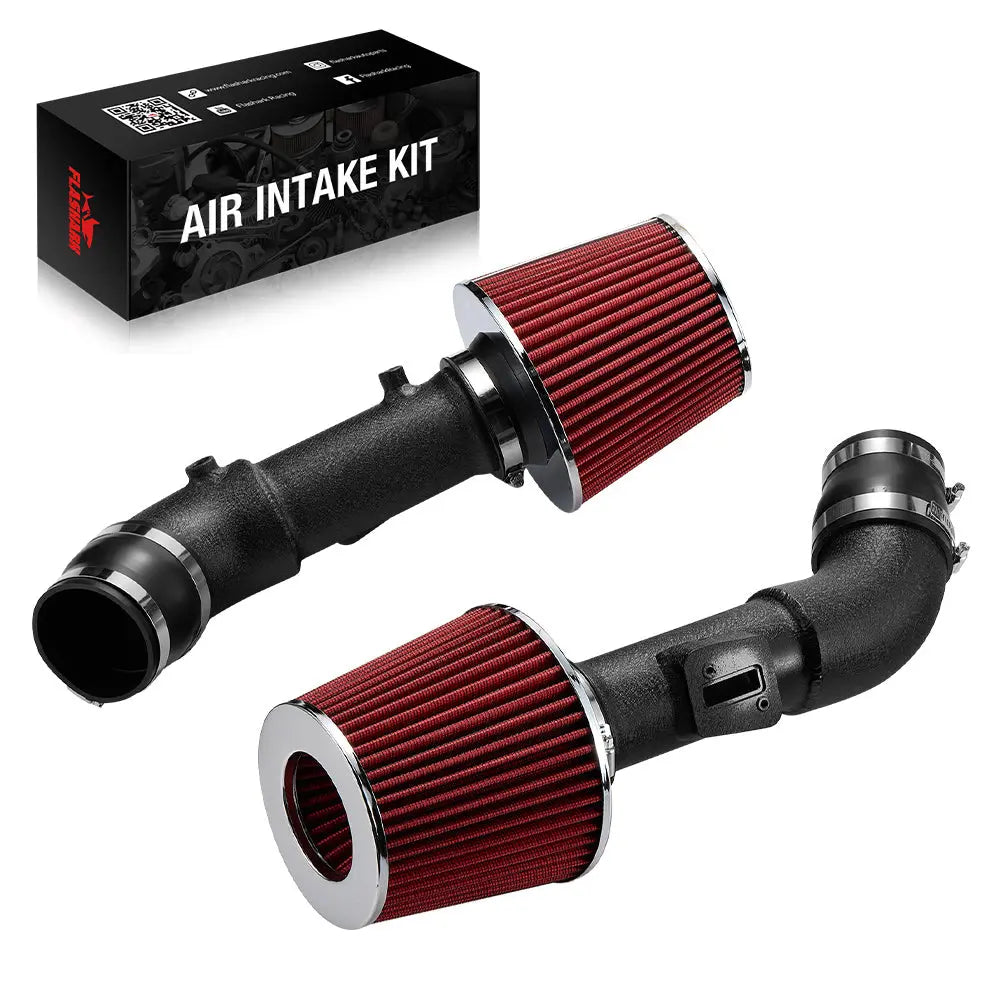
I highly recommend looking at the Flashark Racing Shielded Dual Cold Air Intake Kit. From a mechanic's perspective, it dominates the competition:
- Custom Heat Shields: It includes bolt-in heat shields that block engine bay heat and utilize the factory ram-air ducts for true cold air.
- 100% Hydrolock Proof: The filters sit high up in the engine bay. You can drive through torrential rain without sweating bullets over hydro-locking your V6.
- Zero Cutting Required: It’s a true bolt-on kit. Keep your bumper on, put the Dremel away, and install it in your driveway in under an hour.
- Dyno-Proven Power: Mandrel-bent aluminum piping ensures smooth airflow to the dual throttle bodies, increasing horsepower and torque while giving you that glorious VQ induction growl.
Frequently Asked Questions (G37 Intake Mods)
Q1: Will a Shielded Cold Air Intake cause heat soak like a Short Ram?
A1: No. A bare short ram sits fully exposed. A shielded CAI (like the Flashark kit) uses thick metal partitioning to isolate the air filters from engine bay heat. When the hood closes, it creates a sealed chamber that only feeds on fresh ambient air from the front grille.
Q2: Is it safe to drive with this intake in the rain (Hydrolock risk)?
A2: 100% safe. Because a shielded CAI keeps the air filters in the upper factory locations rather than routing them down to the floorboard, there is zero risk of submerging the filters in a puddle and hydrolocking your engine.
Q3: Do I need to cut my car to install this kit?
A3: Not at all. Unlike long-tube cold air intakes that require you to physically cut and enlarge the composite radiator core support, a shielded CAI is a direct bolt-on replacement. You don't even need to remove your front bumper.
Q4: How much horsepower does a shielded cold air intake actually add to a G37?
A4: You can expect a solid 10 to 14 wheel horsepower (whp) increase. Because the heat shields block the radiant engine heat and the filters draw from the factory cold air ducts, the engine gets the dense oxygen it needs to make real, dyno-proven power.
Q5: Will installing a cold air intake hurt my G37's gas mileage (MPG)?
A5: Actually, it usually improves it slightly. By freeing up the restrictive factory intake, your engine doesn't have to work as hard to pull in air (pumping losses are reduced). A more efficient engine burns fuel better. Just don't spend all day doing wide-open throttle pulls to hear the intake roar, and your MPG will be fine.
Q6: Will a shielded cold air intake trigger a Check Engine Light (CEL)?
A6: No. As long as the intake uses the proper 2.5-inch diameter piping at the Mass Airflow (MAF) sensor housings—like the Flashark kit does—your factory ECU will read the incoming air correctly. Just make sure you plug the MAF sensors back in securely during install and ensure all silicone couplers are tight to prevent vacuum leaks.
Q7: Do I need an ECU tune after installing this intake on my G37?
A7: For a standard-diameter shielded intake kit, a tune is not strictly required. The factory ECU’s fuel trims can adapt to the increased airflow safely without throwing a Check Engine Light. However, an UpRev or EcuTek tune is always recommended later down the road to extract the absolute maximum horsepower from all your bolt-on mods.
Q8: How does the sound compare to the factory airbox?
A8: The factory airbox is designed with silencers and baffles to keep the car quiet. By replacing it with aluminum piping and open-element cone filters, you will unlock a deep, aggressive induction howl, especially when you push past 4,000 RPM.
Q9: How often should I clean the air filters on my G37 intake?
A9: As a mechanic, I tell my customers to inspect the cone filters every time they do an oil change (around 5,000 miles). You should do a full clean and re-oil (if using oiled filters) or wash (if using dry washable filters) every 10,000 to 15,000 miles, depending on how dusty your local roads are.
Q10: Will an intake void my Infiniti factory warranty?
A10: Thanks to the Magnuson-Moss Warranty Act, a dealership cannot void your entire vehicle warranty just because you installed an aftermarket part. They must prove that the specific aftermarket intake directly caused the failure of the component in question.