Mira, seré completamente honesto contigo. Llevo más de 15 años metido de lleno en los compartimentos del motor de los Honda. Desde los ruidosos EK hatchbacks hasta los modernos 10ma generación con turbocompresor, he trabajado en cientos de estos coches. Todas las semanas, algún joven viene a mi taller pidiendo el "mejor sistema de admisión de aire frío para Honda Civic" porque vieron un video de YouTube de cinco minutos y creen que atornillar un tubo brillante convertirá su coche de uso diario en un monstruo de pista.
Aquí está la realidad: una admisión mal diseñada en realidad te hará perder caballos de fuerza. Lo he visto en el dinamómetro más veces de las que puedo contar. Tu caja de aire Honda de serie es restrictiva, sí, pero está diseñada para tomar aire frío del paso de rueda. Colocar un filtro barato sin protección justo al lado del colector de escape caliente es una receta para el desastre. Si quieres ganancias reales y probadas en dinamómetro —estamos hablando de una sólida caída de 8 a 12 whp en las temperaturas del aire de admisión (IAT)— necesitas entender tu chasis y la disposición del motor específicos.

Lo importante - Mejores opciones para tu generación de Civic
¿No tienes tiempo para leer las hojas de dinamómetro? Aquí está el resultado final. Si buscas mejorar con una admisión de aire frío Honda fiable, elige según tu configuración específica:
- 1992-2000 (EG/EK): Si tienes un chasis más antiguo, un kit de admisión de aire frío para los modelos Honda Civic de 1992-1997 es crucial. Los motores de la serie D necesitan un CAI de ajuste directo para reemplazar el caucho de fábrica podrido y despejar el compartimiento del motor.
- 2006-2011 (8ª Gen): El R18 necesita sistemas blindados para una mejor respuesta del acelerador. Los propietarios del K20Z3 Si deben usar un verdadero conducto de aire frío para ese límite de 8,600 RPM.
- 2012-2015 (9ª Gen): El K24Z7 sufre de un grave efecto de calor. Reubica el filtro lejos de los ventiladores del radiador. Punto.
- 2016-2020 (10ª Gen): Los modelos 1.5T necesitan configuraciones de alto flujo para reducir el retraso del turbo y amplificar la válvula de derivación.
¿Por qué siquiera mejorar la admisión?
¿Por qué quitar la caja de plástico de fábrica en primer lugar? Dos palabras: Volumen y Temperaturas. La admisión OEM está silenciada para mantener el motor tranquilo para el conductor diario. Fuerza el aire a través de un laberinto de resonadores de plástico. Si activas el VTEC, tu motor literalmente jadea.
Una admisión del mercado de accesorios suaviza la trayectoria del flujo de aire, pero lo que es más importante, reduce las IAT. Por cada 10 grados Fahrenheit que bajas, ganas aproximadamente un 1% de caballos de fuerza. El aire más frío es más denso. El aire más denso significa más oxígeno, lo que permite a la ECU añadir más combustible para una explosión mayor.

Los aficionados ven un tutorial rápido y sujetan un filtro de seta barato directamente al cuerpo del acelerador, apoyado en el colector de escape. ¿El resultado? Una zona de absorción de calor. Un chico vino el verano pasado quejándose de que su coche se sentía como un caracol al arrancar. Conectamos el escáner OBD y su IAT estaba subiendo a 145°F. Por favor, no hagas esto. El blindaje térmico adecuado y las carcasas precisas del sensor MAF son obligatorios.
Las mejores tomas de aire frío por generación de Civic (2000-2020)
La era dorada: 1996-2000 (EK/EJ)
Los motores D16 y B16 son a prueba de balas. Pero, ¿esas mangueras de admisión de goma de 20 años? Se agrietan y pierden vacío como locas. Si quieres la mejor toma de aire frío para tu Honda Civic 2000, necesitas algo que se ajuste en el parachoques.
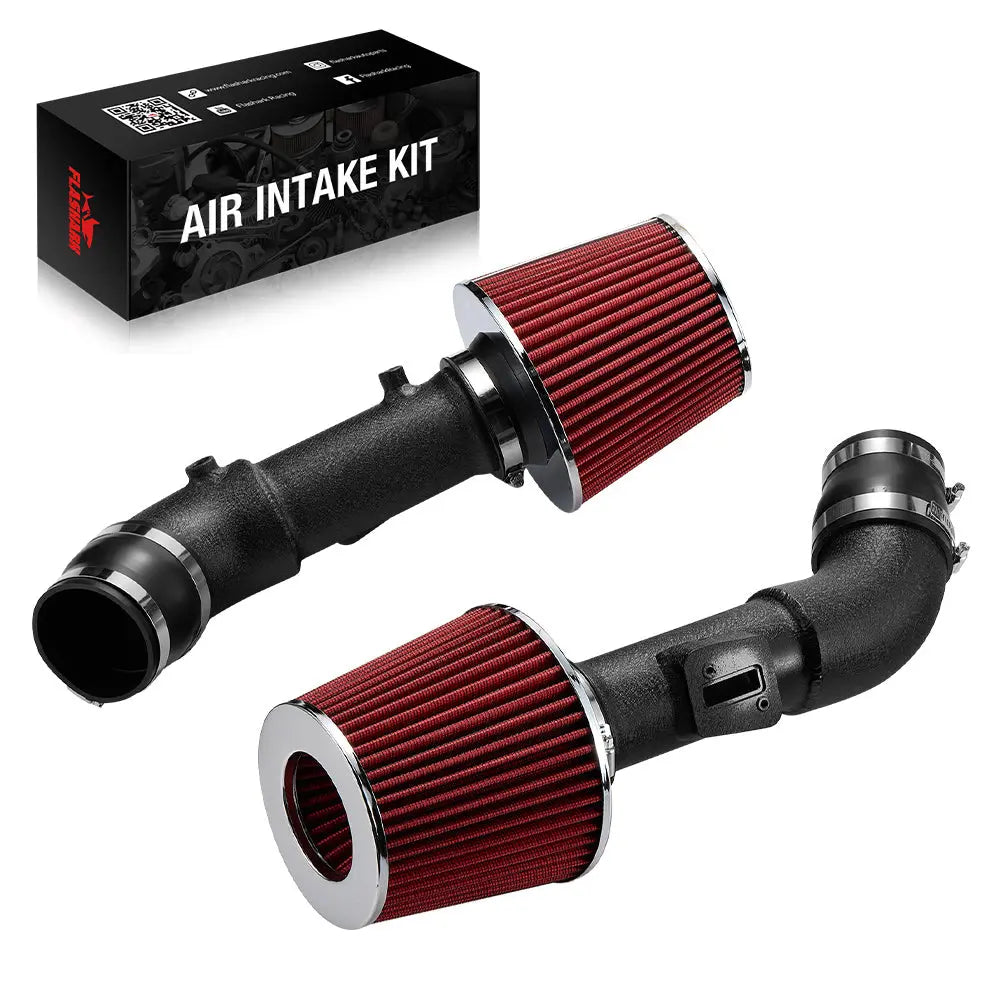
Para construcciones diarias estándar, usualmente instalo este kit de admisión de aire frío de ajuste directo. Elimina instantáneamente las tuberías de fábrica secas y podridas. Si buscas más potencia o hiciste un "mini-me swap", querrás un diseño de mayor flujo que posicione el filtro lo suficientemente bajo como para tomar aire ambiente, pero lo suficientemente alto como para evitar la paranoia de los charcos.
8ª Generación (2006-2011): Economía del R18 vs. Potencia del K20Z3
Honda nos dio dos coches totalmente diferentes aquí. ¿Conduces un R18 modelo base? No ganarás carreras de arrastre, pero mejorar la tubería de admisión despierta significativamente ese acelerador electrónico lento. Es una victoria fácil para un Honda Civic no-Si del 2006.
Ahora, el Si con el K20Z3... ese es otro animal. Anhela respirar a más de 8,000 RPM. Necesitas una tubería adecuada de 3 pulgadas. Para el Si de 8ª generación, este sistema de admisión de aire frío específico es mi elección porque las dimensiones de la carcasa del MAF son perfectas. Sin códigos de mezcla pobre, sin CEL. Solo un cruce VTEC limpio.

9ª Generación (2012-2015): Despertando el K24Z7
La 9ª generación cambió las RPMs elevadas por un mejor rendimiento a bajas revoluciones. Debido a que el K24 aspira más aire a bajas revoluciones, la caja de fábrica lo estrangula tempranamente. El truco aquí es la colocación del MAF. El K24 es ridículamente sensible al aire turbulento.
Necesitas un sistema con un enderezador de aire integrado. En el dinamómetro, un sistema de admisión de aire frío correctamente instalado en un Honda Civic Si 2014 o 2015 constantemente produce una potencia adicional de 9-11 whp con Hondata FlashPro.
10ª Generación (2016-2020): La revolución del Turbo 1.5T
El turbo L15B7 cambió las reglas del juego. Cuando buscas la mejor admisión de aire frío para un Honda Civic 2017 o 2020, ya no se trata solo de aire frío, sino de la caída de presión.
Deshacerse de la restricción de fábrica permite que el compresor turbo aspire aire con menos esfuerzo, reduciendo el tiempo de spool en casi 300 RPM. Además, finalmente te permite escuchar ese dulce "silbido" de la válvula de derivación que Honda silenció de fábrica.
Admisión de aire corta (Short Ram) vs. Admisión de aire frío (CAI) verdadera
El debate que nunca muere. Vamos a desglosarlo con hechos.

| Característica | Admisión de aire corta (SRI) | Admisión de aire frío (CAI) |
|---|---|---|
| Ubicación del filtro | En la parte superior del compartimiento del motor. | Dentro del guardabarros. |
| Riesgo de absorción de calor | Alto (Aspira aire caliente del compartimiento del motor). | Bajo (Aspira aire ambiente). |
| Riesgo de bloqueo por agua | Cero. | Moderado (Si se conduce en agua profunda). |
Un tipo trajo su Civic Si 2015 al taller quejándose de una severa pérdida de par a bajas revoluciones con el aire acondicionado encendido. Encontramos una admisión de aire corta de mala calidad apuntando directamente a los ventiladores del radiador. Tan pronto como el refrigerante se calentaba, estaba forzando un secador de pelo en el cuerpo del acelerador. Lo tiramos, instalamos una verdadera CAI con un escudo contra el agua, e instantáneamente recuperamos 8 whp. A menos que trates tu Civic como un submarino, una CAI adecuada es la verdad para los Hondas de aspiración natural.
Preguntas frecuentes sobre las admisiones de aire frío para Honda Civic
P1: ¿Una admisión de aire frío arruina el motor de tu Honda Civic?
R1: Absolutamente no. Siempre y cuando uses un filtro de alta calidad, lo limpies regularmente y te asegures de que todas las líneas de vacío estén conectadas de forma segura, no dañará tu motor. La suciedad que pasa por un filtro barato es lo que causa el desgaste del cilindro, no el aire frío.
P2: ¿Cuántos caballos de fuerza añade realmente una admisión de aire frío?
R2: En una ECU de serie, espera una ganancia realista de 3 a 7 caballos de fuerza a la rueda (whp). Combina un kit de admisión de calidad con una puesta a punto adecuada (como Hondata o KTuner) en un modelo Si, y podrás ver ganancias de 10-15 whp a medida que el afinador ajusta los valores de combustible para el aire más denso.
P3: ¿Necesito una reprogramación después de instalar una admisión en mi Civic Si?
R3: Para admisiones estándar de 2.5 o 2.75 pulgadas, no. La ECU de fábrica ajusta los valores de combustible de forma segura. Pero si instalas una admisión "de competición" masiva de 3.5 pulgadas, la escala del MAF se desajusta. Correrás peligrosamente con mezcla pobre sin una reprogramación.
P4: ¿Esto anulará mi garantía de Honda?
R4: Según la Ley de Garantía Magnuson-Moss, un concesionario no puede anular la garantía completa de tu vehículo solo por una pieza del mercado de accesorios. Tienen que demostrar que la admisión específica causó la falla.
P5: ¿Cuál es la mejor admisión de aire frío para el Civic Si 2012-2015?
R5: Para el K24Z7, la mejor admisión es un diseño de guardabarros real que mueve el filtro fuera del compartimento caliente. Las marcas que utilizan una carcasa de MAF mecanizada con precisión para evitar códigos de error de mezcla de combustible son obligatorias para la 9ª generación.
P6: ¿Puede una admisión causar un testigo de "check engine" (CEL)?
R6: Sí, pero generalmente solo si está mal diseñada. Un CEL ocurre cuando el diámetro de la carcasa del sensor MAF difiere del de serie, o si el aire golpea el sensor de forma errática. Una unidad bien diseñada mantiene las especificaciones de fábrica para que la ECU funcione correctamente.
P7: ¿Es real el riesgo de bloqueo por agua?
R7: Es un riesgo, pero muy exagerado por los guerreros del foro. Para que se produzca un bloqueo por agua, el filtro debe estar completamente sumergido en agua para que actúe como una pajita. La lluvia normal o las salpicaduras no lo causarán. Simplemente usa una cubierta prefiltro repelente al agua si vives en un clima húmedo.
P8: Admisión de aire frío (CAI) vs. Admisión de aire corta (SRI) – ¿Cuál suena mejor?
R8: Esto es subjetivo, pero es la pregunta que más me hacen en el taller. Una Admisión de Aire Corta (SRI) coloca el filtro justo debajo del capó, cerca del cortafuegos. Cuando activas el VTEC o aumentas la presión del turbo, obtienes un rugido de inducción muy fuerte y crudo dentro del habitáculo. Una Admisión de Aire Frío Verdadera (CAI) es usualmente más profunda pero más silenciosa en el interior porque el filtro está escondido en el guardabarros. Si quieres el máximo ruido, opta por una SRI. Si quieres el máximo rendimiento con un tono más sutil, opta por una CAI.
P9: ¿Mejorará mi consumo de gasolina (MPG) con una admisión?
R9: Teóricamente, sí. Al permitir que el motor respire con mayor facilidad, se reducen las pérdidas por bombeo, lo que puede mejorar ligeramente la eficiencia durante la conducción en carretera. Sin embargo, la realidad es que la mayoría de las personas aman tanto el nuevo sonido que terminan conduciendo con el pie más pesado, lo que en la práctica reduce su MPG.
P10: ¿Puedo instalar una admisión de aire frío yo mismo, o necesito un taller?
R10: La mayoría de las admisiones de aire corto (SRI) son proyectos increíblemente fáciles de hacer uno mismo que requieren herramientas métricas básicas, destornilladores y aproximadamente una hora. Las admisiones de aire frío verdaderas (CAI) son más avanzadas, a menudo requieren la extracción del parachoques delantero, el revestimiento interior del guardabarros y, a veces, la reubicación de la batería. Si no te sientes cómodo quitando el parachoques de tu Civic de 10ª generación, llévalo a un profesional.
P11: Filtros de aire secos vs. aceitados – ¿Cuál es la diferencia?
R11: Los filtros de algodón aceitados (como los estilos K&N más antiguos) permiten un flujo de aire ligeramente mayor, pero requieren un lavado y reengrase tediosos. El mayor riesgo es el exceso de aceite, que envía aceite por el conducto y arruina los sensibles sensores de flujo de masa de aire (MAF) en los Hondas más nuevos (a partir de la 8ª generación). Los filtros sintéticos secos filtran casi igual de bien, proporcionan suficiente flujo para el uso en la calle, son más fáciles de limpiar (con aire comprimido) y son seguros para los sensores modernos. Recomiendo los filtros secos para los Hondas de calle.
P12: ¿Importa el material de la tubería (Aluminio vs. Plástico/Composite)?
R12: Sí, mucho. El aluminio se ve muy bien, pero es un conductor de calor. En el tráfico denso con paradas y arranques, esa tubería de metal actúa como un horno, calentando el aire de entrada antes de que llegue al motor. Las admisiones de plástico o composite tienen mejores propiedades aislantes, manteniendo el aire más frío. Si el rendimiento es el objetivo por encima de la estética, opta por el plástico.
P13: ¿Qué pasa con las "válvulas de derivación de aire" o los calcetines de agua para CAIs?
R13: Una válvula de derivación es un filtro de espuma instalado a mitad del tubo que se abre si el filtro principal está completamente sumergido para evitar la entrada de agua. Funcionan, pero restringen ligeramente el flujo. Un calcetín de agua (Hydro-shield) es una envoltura de prefiltro repelente al agua que evita que las salpicaduras lleguen al filtro principal. Para la mayoría de los Hondas de uso diario con una CAI de guardabarros adecuada, un calcetín Hydro-shield es todo lo que realmente necesitas para tu tranquilidad.
P14: Mi Civic es automático (o CVT), ¿sigue valiendo la pena una admisión?
R14: Absolutamente. Los principios del motor no cambian según la transmisión. Seguirás obteniendo una mejor respuesta del acelerador y el sonido de admisión agresivo, lo que hará que el viaje diario sea mucho más atractivo, incluso si no cambias las marchas manualmente.
P15: ¿Es legal una admisión de aire frío en todas partes?
R15: No necesariamente. Las leyes federales de emisiones suelen permitirlas, pero los estados con normas más estrictas, como California (CARB), exigen que las admisiones de postventa tengan un número de Orden Ejecutiva (EO) grabado en ellas. Si tu admisión no tiene esa etiqueta CARB, es técnicamente ilegal para uso en la calle en esos estados y suspenderás la inspección visual.