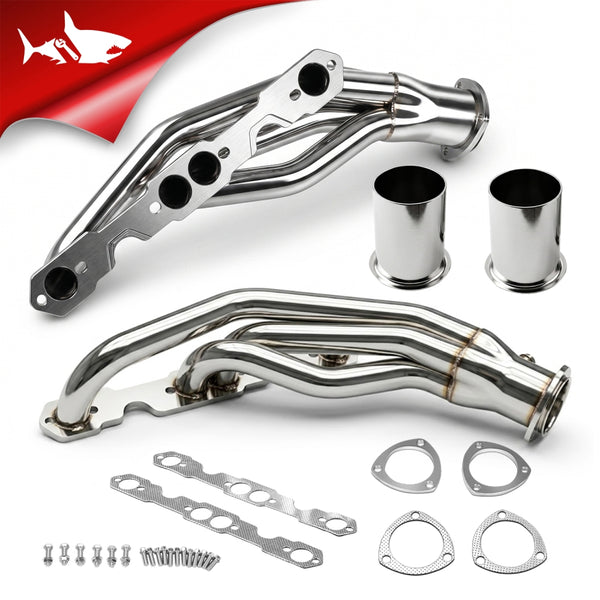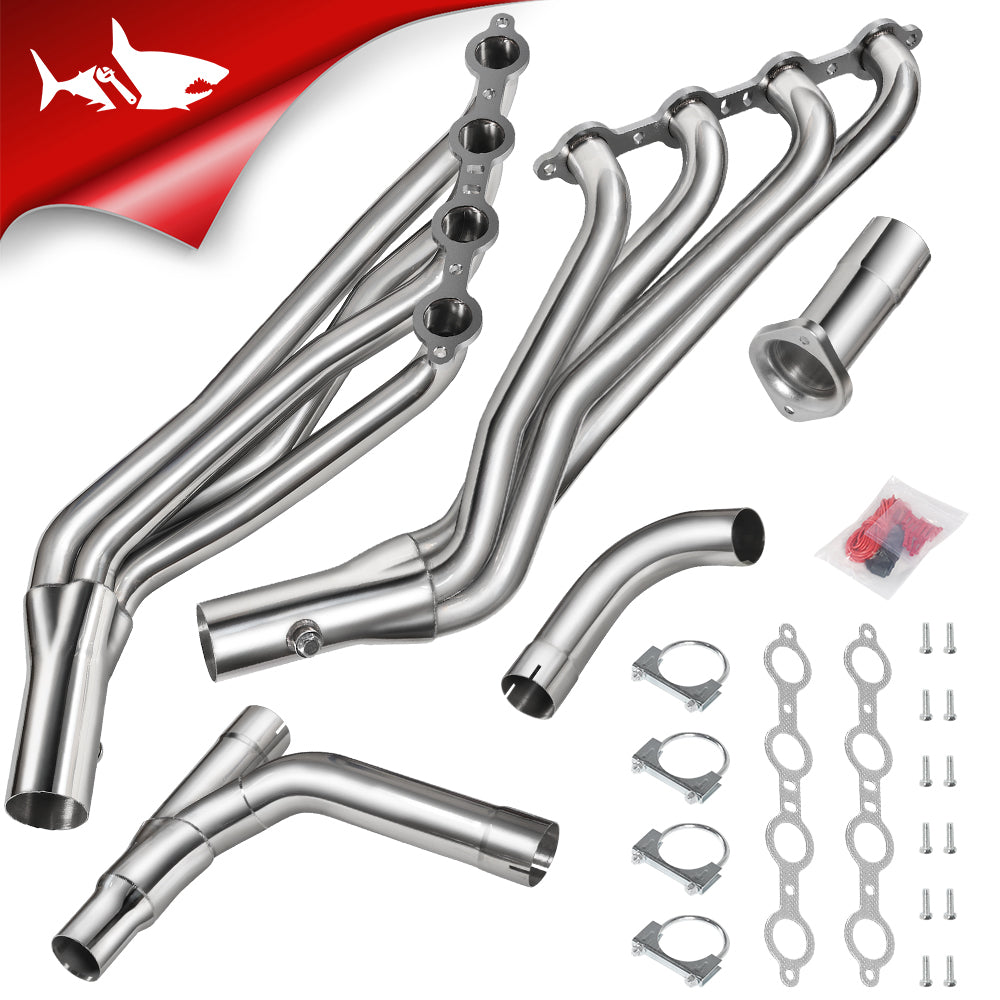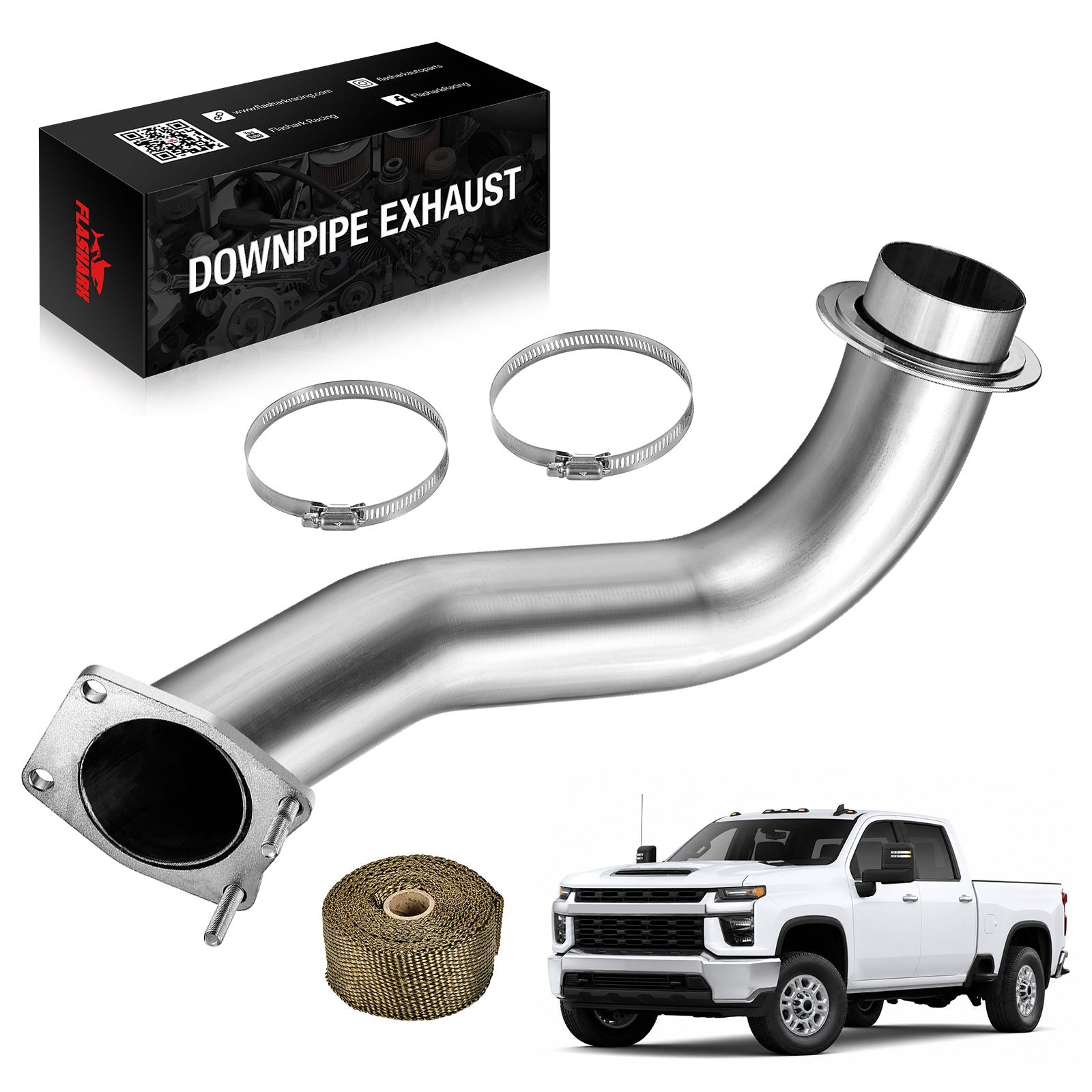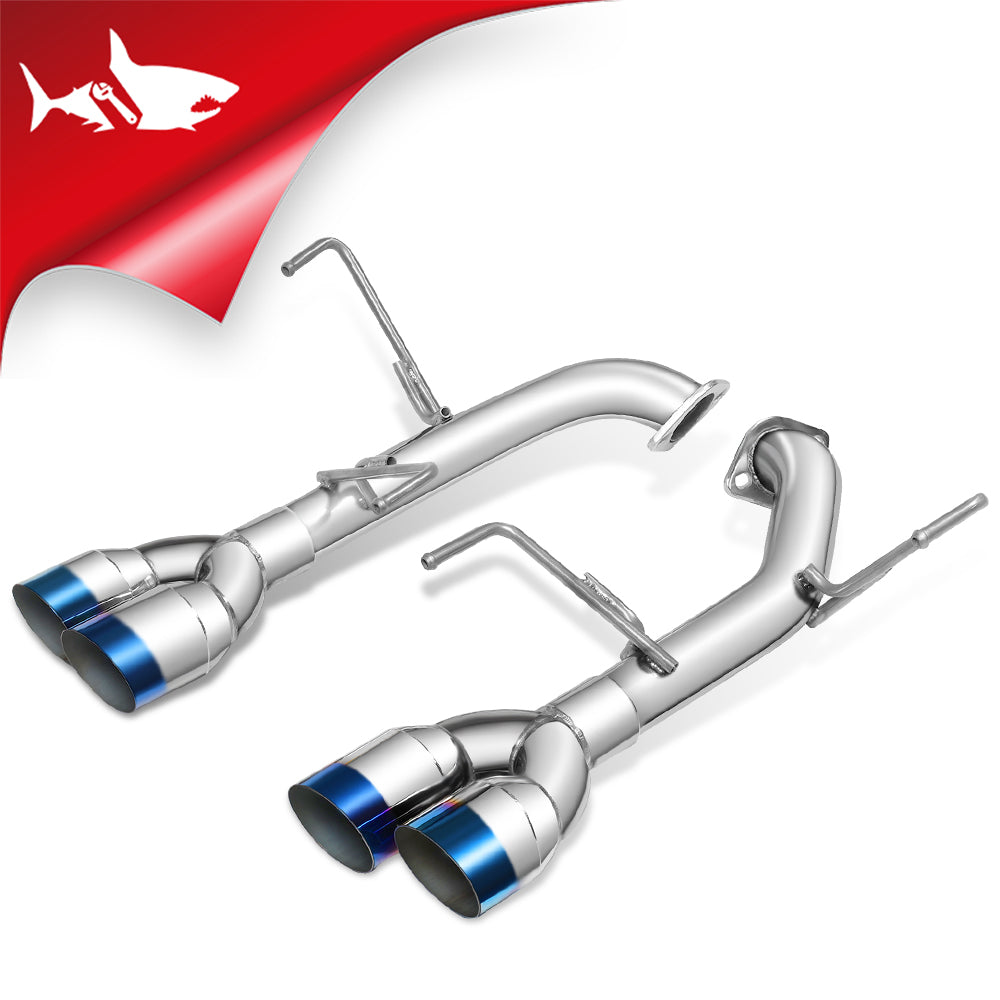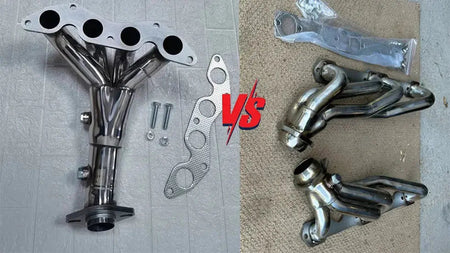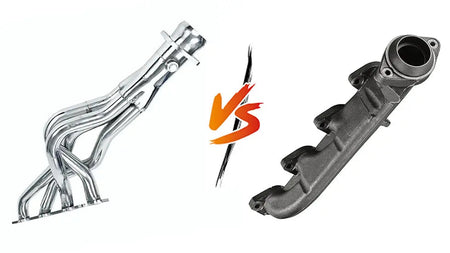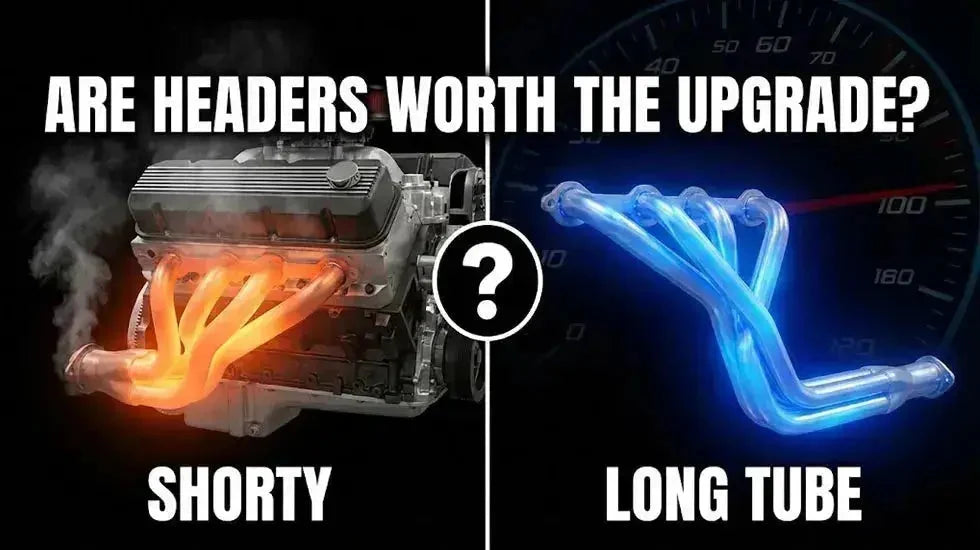
Mejorar el sistema de escape de tu coche con colectores es una de las maneras más efectivas de activar el motor. Los colectores de escape de fábrica suelen ser de hierro fundido, diseñados para una producción en masa económica y la reducción de ruido, no para un flujo de escape óptimo. Los colectores son una solución revolucionaria al reducir la contrapresión y permitir que el motor respire libremente.
Sin embargo, a la hora de elegir la configuración adecuada, el debate entre colectores de tubo corto y largo genera confusión entre muchos entusiastas. Esta guía detalla las diferencias reales, las verdades básicas sobre la instalación y si vale la pena invertir en ellos para tu sistema específico.
Respuesta rápida / Conclusión primero
-
Colectores cortos: Ideales para conductores diarios o quienes buscan mejoras moderadas de rendimiento sin cambios significativos en su sistema de escape. Son más fáciles de instalar y más económicos, pero no ofrecen las mismas mejoras de rendimiento que los colectores de tubo largo.
-
Colectores de tubo largo: Son ideales si buscas maximizar la potencia y el par motor, especialmente en aplicaciones de alto rendimiento. Ofrecen un mejor flujo de escape, pero su instalación es más compleja y costosa.
-
¿Valen la pena los colectores en general? En general, vale la pena invertir en colectores para quienes buscan mejorar el rendimiento del motor. El valor depende de tus necesidades de conducción, tu presupuesto y la potencia que desees obtener del motor.
¿Qué son los colectores de escape?
Los colectores de escape reemplazan los restrictivos colectores de escape de fábrica. En lugar de evacuar todos los gases de escape de los cilindros a una sola cámara compartida, los colectores proporcionan a cada cilindro su propio tubo primario. Estos tubos finalmente se unen en un colector.
Colectores cortos vs. colectores de tubo largo: Las diferencias reales

Para facilitar la elección, aquí hay un resumen rápido de cómo se comparan estas dos configuraciones entre sí:
| Característica | Encabezados cortos | Colectores de tubo largo |
|---|---|---|
| Mejor para | Conducción diaria, uso en la calle | Días de pista, carreras, configuraciones de alto HP |
| Ganancias de potencia | Par motor de RPM bajas a medias | Caballos de fuerza de RPM medias a altas |
| Instalación | Relativamente fácil (montable) | Complejo (requiere modificaciones) |
| Emisiones | Generalmente cumple con la normativa CARB | A menudo, solo para uso todoterreno. |
¿Cómo afectan los cabezales al rendimiento del vehículo?
Caballos de fuerza, torque y barrido
Las pruebas de la industria demuestran consistentemente que los colectores de escape de tubo largo pueden aumentar la potencia entre un 15 % y un 20 % en motores V8, especialmente cuando se combinan con una correcta calibración de la ECU. Los colectores de escape cortos suelen ofrecer un aumento más moderado, del 5 % al 10 %, pero esa potencia se entrega a bajas revoluciones, donde realmente se siente al conducir con arranques y paradas frecuentes.
¿Los cabezales mejoran el rendimiento de combustible (MPG)?
Es una pregunta frecuente en el taller: ¿los colectores aumentan el consumo de combustible? La respuesta corta es sí. Al reducir drásticamente la contrapresión del escape, los colectores permiten que el motor expulse los gases de escape con menos pérdida parásita de potencia. Como el motor no tiene que esforzarse tanto en el escape, la eficiencia del combustible puede mejorar. Sin embargo, seamos realistas: si instala colectores y le encanta el nuevo sonido agresivo del escape, su pie derecho pesado anulará cualquier aumento en el consumo de combustible.
Actualizaciones de plataformas populares: ¿cuál funciona mejor?
No todos los motores reaccionan a los encabezados de la misma manera. Así es como la actualización afecta a algunas de las plataformas más populares que observamos:
- Chevy/GMC 5.3L y 6.0L (Silverado/Sierra): Las plataformas LS y Vortec responden increíblemente bien a los colectores de tubo largo. Una Silverado 5.3L puede experimentar mejoras significativas en el torque a medio régimen, lo que la hace perfecta para remolcar o empujar neumáticos de gran tamaño.
- Dodge/Chrysler Hemi de 5.7L y 6.4L (Charger, Challenger, Ram 1500): El espacio en algunos compartimentos de motor Hemi es notoriamente reducido. Los colectores cortos son una gran ventaja para la Ram 1500, ya que permiten un rápido aumento de par, mientras que los motores Scat Pack de 6.4L y los 300C ofrecen un aumento de potencia increíble con una configuración de tubo largo completo.
- Ford Coyote 5.0L y Triton 5.4L (F150, Mustang GT): Al Coyote 5.0 le encanta respirar. Los colectores de escape de tubo largo en un Mustang GT o F150, combinados con una configuración personalizada, son posiblemente la modificación más rentable que se puede hacer en estos camiones y autos.
- Nissan/Infiniti VQ37 (G37, 370z): Para los fanáticos del JDM, reemplazar los colectores de fábrica restrictivos por colectores de tubo largo transforma el motor VQ, eliminando el notorio ruido y desbloqueando una potencia seria a altas RPM.
¿Por qué vale la pena tener encabezados?

Más allá de las cifras del dinamómetro y el ahorro de combustible, los colectores de escape cambian drásticamente el sonido de su vehículo. El acero tubular, más delgado en comparación con el hierro fundido grueso, permite que se escuche mejor el pulso de escape del motor. Los colectores de tubo largo crean un ralentí agresivo y entrecortado, y una alta aceleración, mientras que los cortos proporcionan un rugido refinado y potente.
¿Qué configuración debería elegir?

Elija Shorty Headers si: conduce su automóvil todos los días, desea un proyecto de entrada para el fin de semana sin una fabricación importante y necesita conservar sus convertidores catalíticos de fábrica para cumplir con las emisiones.

Elija colectores de tubo largo si: está construyendo un automóvil de pista dedicado o una máquina de calle de alta potencia y no le importa gastar más en una puesta a punto y un tubo intermedio personalizado a juego.
Preguntas frecuentes
P1: ¿Cuál es la diferencia entre los colectores de tubo corto y largo?
A1: Los colectores cortos tienen un diseño más corto, lo que proporciona un aumento moderado del par motor a bajas revoluciones y una instalación más sencilla. Por otro lado, los colectores de tubo largo son más largos y están diseñados para maximizar el rendimiento a altas RPM, ofreciendo un mayor aumento de potencia, especialmente en aplicaciones de alto rendimiento.
P2: ¿Vale la pena utilizar cabezales cortos para conductores diarios?
A2: Sí, los colectores cortos son ideales para el uso diario. Proporcionan un aumento notable del par motor a bajas revoluciones, lo que mejora la respuesta del coche. Además, son fáciles de instalar y más económicos que los colectores de tubo largo. Son perfectos para quienes buscan mejoras moderadas de rendimiento sin modificaciones significativas.
P3: ¿Cuánta potencia puedo obtener al instalar colectores de tubo largos?
A3: Los colectores de tubo largo pueden aumentar la potencia entre un 15 % y un 20 %, dependiendo del tipo de motor y otras modificaciones. Estos colectores destacan a altas RPM, lo que los convierte en la opción ideal para los entusiastas del rendimiento que buscan la máxima potencia.
P4: ¿Pueden los cabezales mejorar el ahorro de combustible?
A4: Sí, los colectores pueden mejorar el ahorro de combustible al optimizar el flujo de escape, reducir la contrapresión y permitir que el motor funcione con mayor eficiencia. Si bien la mejora puede no ser significativa para la conducción diaria, puede ser más notable en aplicaciones de alto rendimiento o de circuito.
P5: ¿Son legales los encabezados en todos los estados?
A5: Los colectores de escape pueden no ser legales en todos los estados, especialmente los de tubo largo, que pueden afectar las emisiones. Antes de comprar colectores de escape, consulte la normativa local sobre emisiones para asegurarse de que cumplan con las leyes de su estado. Algunos vehículos pueden necesitar modificaciones adicionales o ajustes de emisiones.
P6: ¿La instalación de cabezales de tubo largos anulará mi garantía?
A6: Instalar colectores de escape largos puede anular la garantía de su vehículo, especialmente si las modificaciones afectan el motor o el sistema de emisiones. Es importante consultar con el fabricante o concesionario de su vehículo para comprender las implicaciones de la garantía antes de realizar cualquier modificación.
P7: ¿Qué tan difícil es instalar colectores de tubos largos?
A7: Instalar colectores de tubo largo es más complejo que instalar colectores cortos. Suele requerir una instalación profesional, ya que puede implicar la reubicación de componentes del escape, la reubicación de piezas del motor y la puesta a punto. Dependiendo del vehículo, también podría requerir modificaciones en la columna de dirección o el subchasis.
P8: ¿Puedo instalar los encabezados cortos yo mismo?
A8: Sí, los colectores cortos son más fáciles de instalar que los de tubo largo. La mayoría de los aficionados a los coches pueden instalarlos ellos mismos, ya que suelen requerir menos modificaciones y se pueden atornillar directamente al sistema de escape existente.
P9: ¿Los colectores de tubo largos afectan el sonido de mi sistema de escape?
A9: Sí, los colectores de tubo largo pueden mejorar significativamente el sonido del escape. Proporcionan un tono más profundo y agresivo, especialmente a altas RPM. Esta es una razón clave por la que los entusiastas de los coches de alto rendimiento optan por los colectores de tubo largo, además de por su aumento de potencia.
P10: ¿Son los colectores de escape una buena inversión para un automóvil que no está muy modificado?
A10: Sí, los colectores de escape pueden ser una excelente inversión para un coche sin modificaciones importantes. Incluso sin modificaciones significativas del motor, los colectores mejorarán el flujo de escape, reducirán la contrapresión y aumentarán la potencia y el par motor, especialmente a altas revoluciones. Los colectores cortos son ideales para vehículos con menos modificaciones.
P11: ¿Cómo sé si mi vehículo necesita colectores de tubo cortos o largos?
A11: Si conduce un vehículo de uso diario o busca mejoras moderadas de potencia, los colectores cortos son probablemente la mejor opción. Si es un entusiasta de las carreras o busca aumentos significativos de potencia para aplicaciones de alto rendimiento, los colectores de tubo largo son una mejor opción.
P12: ¿Los cabezales mejoran la respuesta del acelerador?
A12: Sí, los colectores mejoran la respuesta del acelerador al reducir la contrapresión del escape. Esto permite que el motor respire con mayor eficiencia, lo que se traduce en una respuesta del acelerador más rápida y un mejor rendimiento general del motor, especialmente con colectores cortos para conducción diaria o colectores de tubo largo para aplicaciones de alto rendimiento.
P13: ¿Los cabezales afectarán el rendimiento de las emisiones de mi vehículo?
A13: Los colectores pueden afectar las emisiones, especialmente los de tubo largo, ya que reducen la contrapresión, lo que puede alterar el flujo de gases de escape. Si las emisiones le preocupan, asegúrese de que los colectores que elija cumplan con la normativa local sobre emisiones. Algunos colectores de posventa incluyen convertidores catalíticos para facilitar el cumplimiento de las normas sobre emisiones.
Q14: ¿Cómo mantengo los encabezados después de la instalación?
A14: Para el mantenimiento de sus colectores, asegúrese de limpiarlos regularmente y revisarlos para detectar cualquier signo de óxido o daño. Los colectores de acero inoxidable son más resistentes a la corrosión, pero aun así es importante inspeccionarlos periódicamente, especialmente después de un uso intensivo o exposición a condiciones adversas.
P15: ¿Necesito ajustar mi vehículo después de instalar los cabezales?
A15: Sí, en muchos casos, la instalación de colectores requiere un ajuste para garantizar un rendimiento óptimo del motor. Los colectores de tubo largo, en particular, pueden afectar la mezcla aire-combustible, por lo que suele ser necesario ajustar la ECU (Unidad de Control del Motor) del vehículo para maximizar el rendimiento de los colectores. Los colectores cortos pueden no requerir un ajuste tan exhaustivo, pero aun así es recomendable revisar si es necesario realizar algún ajuste.