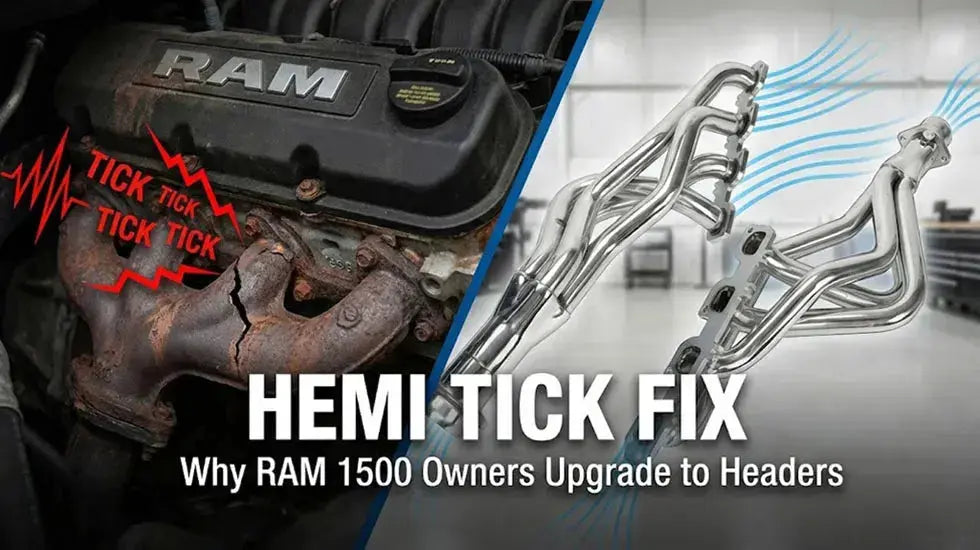
Si tienes una RAM 1500 del 2009 al 2018 (o la RAM Classic del 2019 al 2024), conoces ese sonido. Arrancas la camioneta en una mañana fría y suena como si tuvieras una carta atascada en los radios del ventilador. Tic. Tic. Tic.
Cinco minutos después, el motor se calienta, el metal se expande y el ruido desaparece. Te dices a ti mismo que está bien. No es así.
Llevo 15 años reparando camionetas y veo al menos tres RAM al mes con este problema. ¿La mala noticia? Tienes una fuga de escape causada por tornillos rotos del colector. ¿La buena noticia? No necesitas un motor nuevo; simplemente necesitas cambiar a colectores de escape de alta calidad para detener el ciclo de fallos.
Antes de comprar piezas, verifique el ruido.
- Fuga en el colector de escape: Ruidoso al arrancar en frío, desaparece o se vuelve más silencioso cuando el motor alcanza la temperatura de funcionamiento (aprox. 5-10 minutos). Es seguro conducirlo a corto plazo.
- Fallo del taqué ("Estertor de la muerte"): Golpeteo metálico que no desaparece , ni siquiera en caliente. Aumenta con las RPM. No conduzca. Necesita una reparación del árbol de levas y el taqué, no de los colectores.
El fallo de ingeniería: ¿Por qué los colectores de serie tienen pernos de presión?
El Hemi de 5.7L utiliza culatas de aluminio y colectores de escape de hierro fundido . Aquí es donde empieza la lucha por la física.
El aluminio se calienta y se expande rápidamente. El hierro fundido se calienta lentamente y se expande menos. Cada vez que conduces, estos dos metales se enfrentan en un tira y afloja. El colector de fábrica, de tipo tronco, es rígido; no se flexiona. Por lo tanto, toda esa fuerza de corte se transfiere al eslabón más débil: los pernos.
Finalmente, los tornillos traseros (cilindros 7 y 8) se cortan en el interior de la culata.
 Figura 1. Falla típica en el cilindro 7/8. El colector se deformó, rompiendo las cabezas de los tornillos.
Quitamos el colector "nuevo" y ya estaba deformado 3 mm. Me pagó el trabajo dos veces porque reemplazó una pieza defectuosa con el mismo diseño defectuoso. No seas ese tipo.
La solución: cabezales de acero inoxidable
La solución permanente no es un nuevo colector de hierro fundido; es cambiar el material a acero inoxidable .
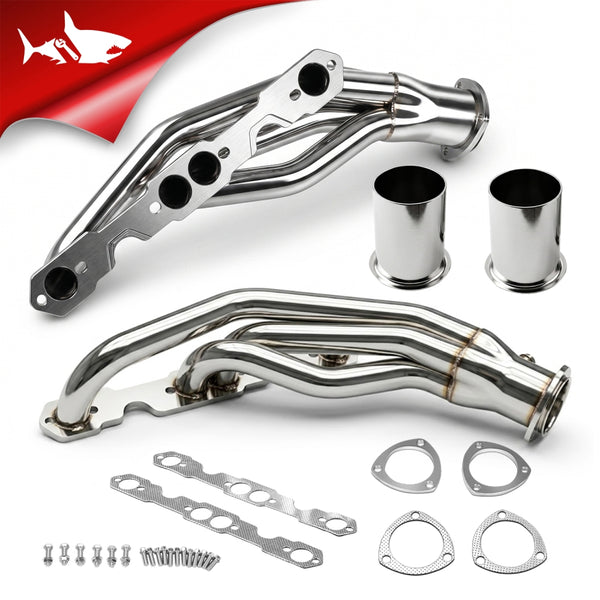
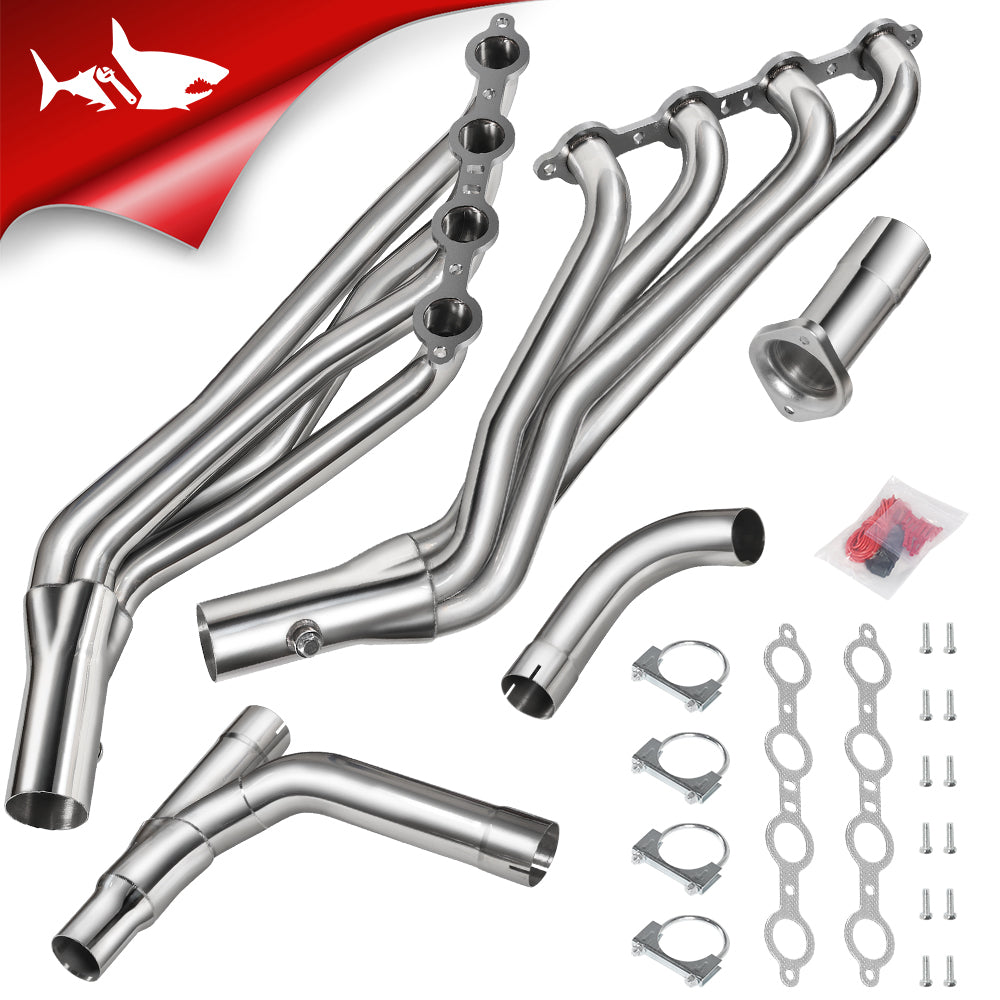
Aquí es donde entran en juego piezas como los colectores de tubo corto/largo Flashark para Dodge Ram 5.7L Hemi 2009-2018 . A diferencia de un tronco de hierro macizo, estos colectores utilizan tubos primarios individuales que se flexionan ligeramente con los ciclos de calor. Esta liberación de tensión permite que los pernos se mantengan intactos y la brida plana.

Colectores cortos vs. colectores de tubo largos: ¿qué necesitas?
No lo compliques demasiado. Aquí tienes el desglose según el uso que le des a tu camión:
- 🔧 Colectores cortos: Son un reemplazo directo. Se conectan al tubo en Y y a los convertidores catalíticos originales.
Veredicto: Ideal para conductores diarios que desean reparar el tictac, mantener apagada la luz de verificación del motor (CEL) sin realizar ajustes y pasar la inspección fácilmente. - 🔧 Encabezados de tubo largo: estos eliminan los catalizadores primarios o requieren un Y-Pipe personalizado.
Veredicto: Solo para quienes buscan potencia (añade 20-30 HP con una modificación). Advertencia: Necesitará una modificación personalizada de la ECU para eliminar los códigos del sensor de O2. Si no la modifica, su tablero se iluminará como un árbol de Navidad.

Charla real: Instalación y problemas
Si lo haces tú mismo o le entregas las piezas a un mecánico, aquí tienes tres factores decisivos para el éxito o el fracaso del trabajo. La mayoría de los artículos de SEO lo pasan por alto, pero esto es lo que importa en el taller.
1. La junta lo es todo
No use las juntas de papel baratas que vienen con algunos kits de colectores económicos. Se quemarán a los 8000 km. Necesita una junta de acero multicapa (MLS) (como las originales de Mopar) o una junta de grafito grueso como Remflex si la superficie es ligeramente irregular. La junta MLS es el estándar de la industria por algo.
2. La extracción del perno es la parte difícil
Quitar el colector viejo es fácil. Sacar el espárrago roto de la culata es una pesadilla. A menudo hay que soldar una tuerca al espárrago roto o usar un taladro angular en un espacio muy reducido (a través del paso de rueda).
Mi consejo: Si se te rompe un perno al ras de la culata y no tienes soldador ni experiencia extrayendo espárragos, deja de intentarlo. Llama a un profesional. Es más barato pagar dos horas de mano de obra que una culata nueva.
3. Actualice su hardware
No vuelvas a usar los pernos de fábrica. Recomiendo ampliamente cambiar a pernos de bloqueo Stage 8 o, al menos, a herrajes ARP de alta calidad. Los pernos Stage 8 tienen una pestaña de bloqueo que impide que se aflojen, independientemente de la vibración.
¿Estás listo para arreglarlo de una vez por todas?
No espere a que la fuga de escape dañe las válvulas o derrita el cableado. Los colectores de acero inoxidable Flashark son la solución económica para el Hemi Tick.
Compatible con: RAM 1500 2009-2018 y RAM 1500 "Classic" 2019-2024 (Hemi de 5.7L)
Comprar encabezados Flashark RAM 1500Preguntas frecuentes: Preguntas frecuentes de la tienda
P1: ¿La instalación de cabezales de repuesto anulará mi garantía de fábrica?
R1: Este es el temor más común. Legalmente, bajo la Ley de Garantía Magnuson-Moss en EE. UU., un concesionario no puede anular la garantía completa de su vehículo solo por haber instalado una pieza de repuesto. Solo pueden rechazar una reclamación si pueden demostrar que el colector causó la falla específica (por ejemplo, si instala colectores y la radio se rompe, la radio sigue cubierta). Sin embargo, la garantía de los colectores de escape desaparece al retirarlos. Si le preocupa, los colectores cortos suelen ser más económicos para el concesionario que los tubos largos.
P2: ¿Necesito estrictamente un ajuste de la ECU después de instalar los cabezales?
A2: Depende de qué versión compres:
Colectores cortos: generalmente NO . Como se conservan las ubicaciones de fábrica de los convertidores catalíticos y los sensores de O2, la camioneta suele adaptarse sin problemas.
Colectores de escape de tubo largo: SÍ, por supuesto. Los tubos largos desplazan los sensores de O2 aguas abajo y suelen eliminar los catalizadores primarios. Sin una calibración personalizada (como HP Tuners o DiabloSport), se encenderá inmediatamente la luz de "Check Engine" (código P0420/P0430) y la camioneta podría funcionar con una mezcla rica.
P3: ¿Qué tan difícil es la instalación para un aficionado al bricolaje?
A3: Siendo sincero: en una escala del 1 al 10, esto es un 7 u 8. El lado del pasajero es estrecho, pero se puede manejar. El lado del conductor es un dolor de cabeza por el eje de dirección, las líneas de freno y el tubo de la varilla de nivel de aceite.
Consejo profesional: Sumerja los pernos viejos del colector en aceite penetrante (como PB Blaster o Kroil) todas las noches durante 3 días antes de comenzar el trabajo. Si un perno se siente esponjoso al girarlo, deténgase y caliéntelo con un soplete antes de romperlo.
Q4: ¿Debo utilizar las juntas incluidas en la caja?
A4: En mi taller, siempre recomiendo mejorar. Si bien las juntas incluidas son adecuadas para un presupuesto ajustado, nada supera las juntas originales Mopar de acero multicapa (MLS) o las juntas de grafito Remflex para una mayor durabilidad. Dado que la mano de obra es la parte más difícil, invierte $30 adicionales en juntas premium para no tener que volver a hacerlo.
P5: ¿Por qué a veces el Hemi Tick suena como si viniera de debajo del camión?
A5: El sonido se propaga. Cuando el colector se deforma, suele haber fugas en los cilindros traseros (7 y 8), que están pegados al cortafuegos. El tictac suele rebotar en el cortafuegos y bajar por el túnel de transmisión, lo que hace que algunos conductores piensen que se trata de un problema de transmisión o de un escudo térmico suelto. Si el tictac se produce en frío y desaparece en caliente, el 99 % de las veces se debe a ese colector.