Desde el clásico Chevy de bloque pequeño hasta el moderno HEMI y el robusto Toyota i-FORCE, el V8 de 5.7 L es uno de los motores de cilindrada más emblemáticos de la historia del automóvil. Logra el equilibrio perfecto entre la facilidad de conducción diaria y la potencia bruta.
Pero ya sea que conduzcas una Ram 1500, un Camaro o una Tundra, es probable que tu motor de 5.7L oculte una potencia considerable. ¿La causa? Los restrictivos colectores de escape de fábrica, diseñados para reducir el costo y el ruido, no el rendimiento.
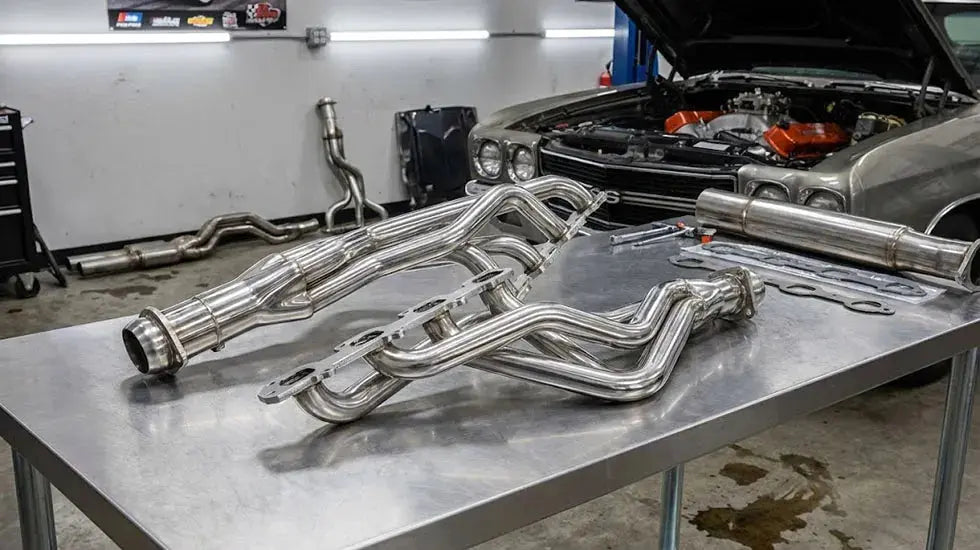
Si busca maximizar el rendimiento, los colectores de tubo largo son sin duda la mejora más efectiva. Esta guía detalla las mejores mejoras para colectores de tubo largo 5.7 y le ayuda a elegir la configuración adecuada para su plataforma de motor.

🏁Conclusión rápida: ¿Vale la pena instalar colectores de tubo largo para un motor de 5,7 L?
La respuesta corta es sí, siempre que busques mejoras de rendimiento significativas en lugar de una simple modificación del sonido.
Aquí está el desglose para la plataforma 5.7L:
-
Mejoras en el rendimiento: espere entre 15 y 30 caballos de fuerza en las ruedas (WHP) y entre 20 y 35 ft-lbs de torque cuando se combina con una puesta a punto adecuada de la ECU.
-
Ideal para: conductores que buscan potencia de RPM medias a altas, un volumen de escape más fuerte y un torque de remolque mejorado (en camiones).
-
Requisito: a diferencia de los cabezales "Shorty", los tubos largos generalmente requieren una sintonización de ECU personalizada para evitar las luces de verificación del motor (CEL) y optimizar las relaciones de combustible.
-
Desventaja: la instalación es más difícil que el reemplazo de fábrica y generalmente están destinados para uso todoterreno o en carreras, según las leyes de emisiones de su estado.
La ciencia de la velocidad: ¿Por qué colectores de tubo largos?
En resumen: los colectores de tubo largo optimizan la limpieza del escape al evitar la interferencia de pulsos, creando un efecto de vacío que extrae el escape y aspira aire fresco, algo que los colectores estándar no pueden hacer.
Los colectores de escape de serie suelen estar hechos de hierro fundido con conductos cortos y desiguales. Esto provoca que los pulsos de escape colisionen, creando una contrapresión que obstruye el motor.
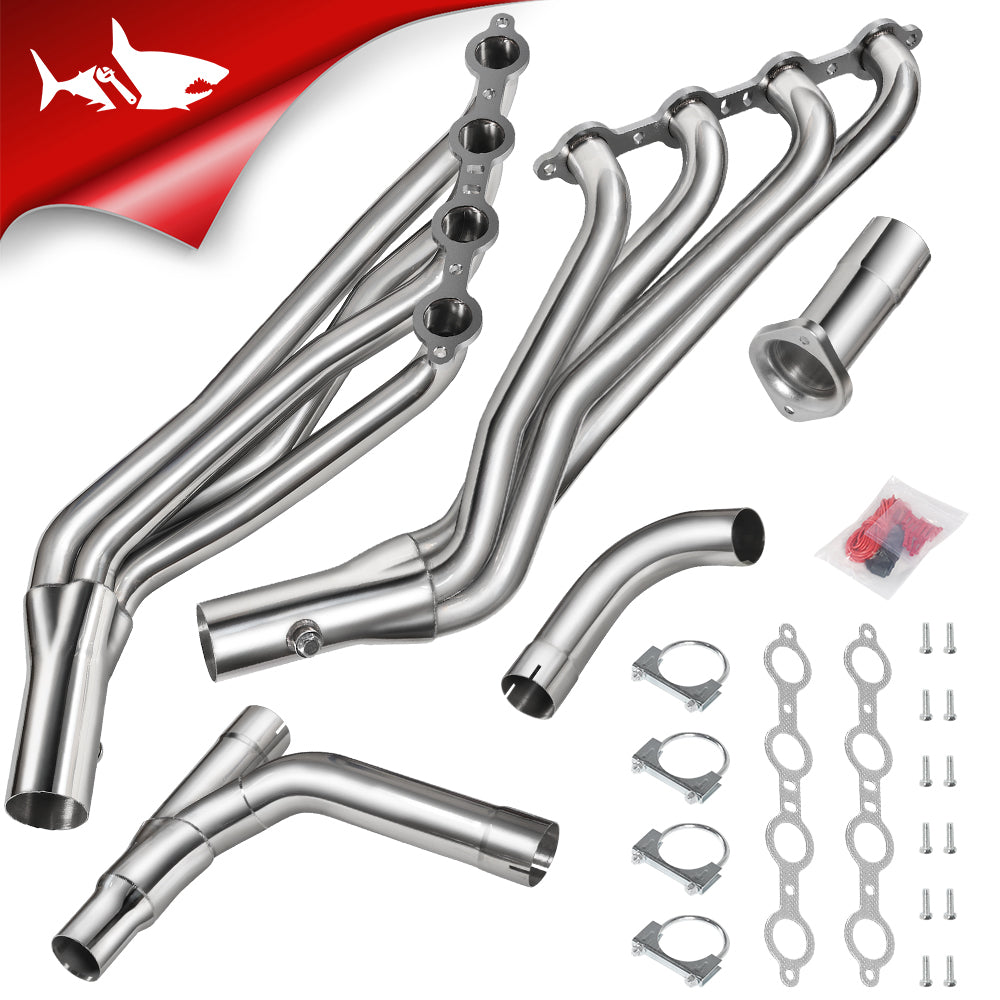
Los colectores de tubo largo revolucionan el mercado gracias a la función de barrido. Al proporcionar a cada cilindro un recorrido largo, uniforme y de igual longitud, sincronizan los pulsos de escape para que no compitan entre sí. A medida que un pulso de gas de escape baja por el tubo, crea un vacío detrás de él. Este vacío extrae los gases quemados restantes del cilindro y ayuda a aspirar aire fresco y combustible hacia la cámara de combustión para el siguiente ciclo.
El resultado:
-
Ganancias masivas: aumento significativo de potencia en comparación con el stock.
-
Par motor en todas partes: a diferencia de los colectores cortos, los tubos largos proporcionan amplias ganancias de par motor en todo el rango de RPM medias y altas.
-
El sonido: Ese rugido profundo, entrecortado y agresivo del V8 americano que hace girar cabezas.
Desglose del motor de 5,7 l: Cómo elegir los colectores adecuados
En resumen: "5.7L" se refiere al desplazamiento, no a la arquitectura del motor; debe seleccionar cabezales específicos para su familia de motores (Mopar HEMI, GM LS/SBC o Toyota i-FORCE) para lograr una correspondencia adecuada de los puertos y el espacio libre del chasis.
Dado que el motor "5.7L" abarca varias familias de motores distintas, el ajuste es fundamental. A continuación, desglosamos las mejores opciones de tubo largo para las plataformas de 5.7L más populares.
1. Dodge y Ram: el HEMI V8 de 5.7 L

Ideal para: Reparar el famoso "HEMI Tick" causado por colectores deformados y al mismo tiempo obtener un torque masivo para camiones.
Al HEMI de 5.7L (especialmente la generación Eagle) le encanta respirar. Sin embargo, los colectores HEMI de fábrica son conocidos por ser restrictivos y tener pernos que se rompen, lo que provoca fugas de escape. La actualización a colectores de tubo largo de acero inoxidable T304 no solo soluciona el problema de los pernos rotos de forma permanente, sino que también libera todo el potencial del HEMI.
-
Aplicación: Ram 1500, Charger R/T, Challenger R/T, Chrysler 300C.
-
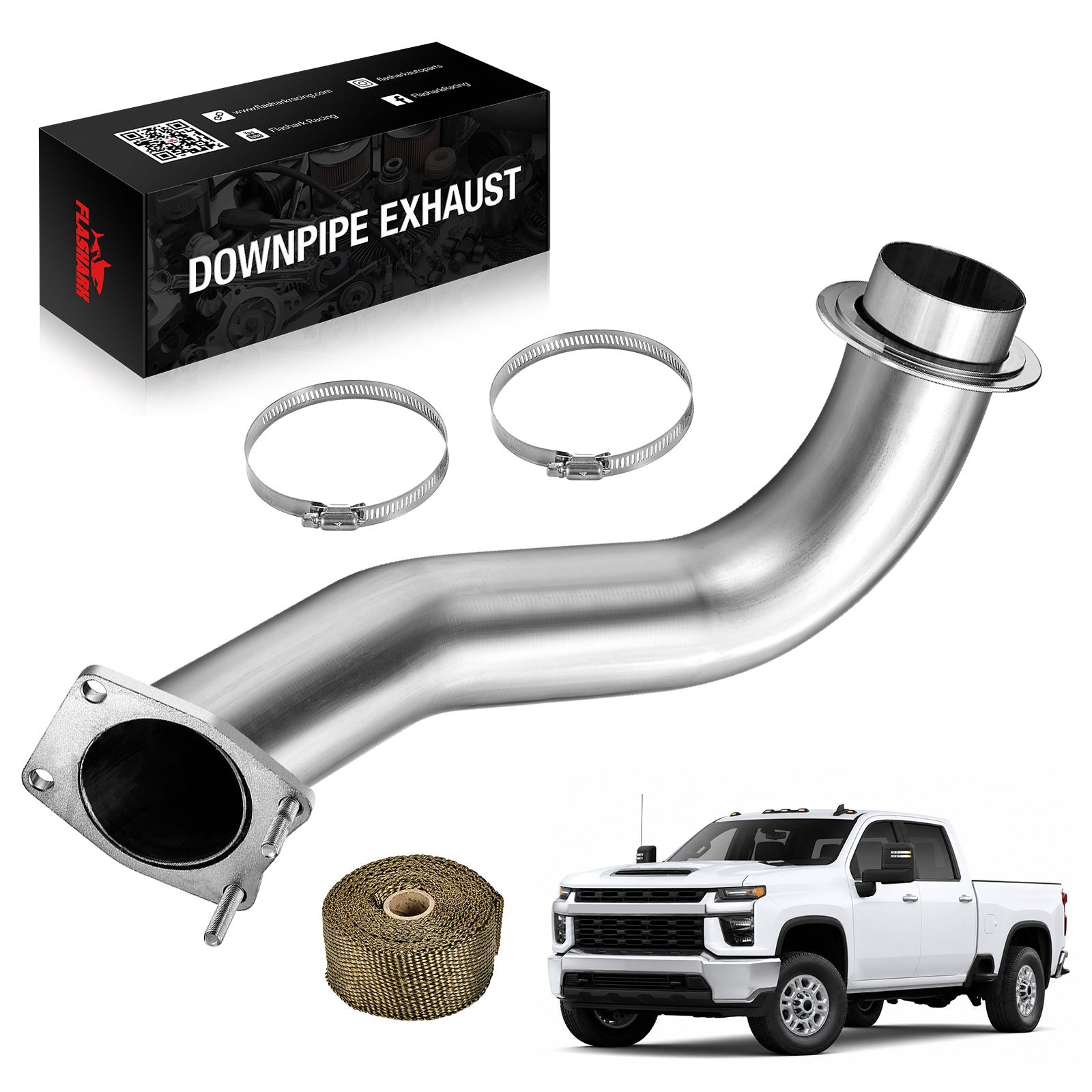
Nota sobre el rendimiento: En una Ram 1500, los tubos largos combinados con un tubo en Y de alto flujo pueden transformar la capacidad de remolque y la aceleración de la camioneta.
-
Consejo de montaje: Busque kits que incluyan arneses de extensión para sensores de O2, ya que la ubicación del sensor se moverá más hacia abajo.
¿Buscas la potencia de Mopar?
2. GM y Chevy: El LS1 / LS6 de 5.7L

Ideal para: construcciones de calle o pista de altas RPM donde la máxima potencia es la prioridad.
La arquitectura del motor LS es legendaria por algo. Presente en el Corvette C5 y el Camaro/Firebird de 4.ª generación, el LS1 de 5.7 L responde increíblemente bien a las modificaciones del escape.
-
Aplicación: Corvette C5 (1997-2004), Camaro SS / Z28 (1998-2002), Pontiac Firebird / Trans Am.
-
El reto: El espacio en estos compartimentos del motor es reducido (especialmente en el Corvette). Se necesitan colectores de escape doblados con mandril diseñados para maximizar el espacio libre alrededor del eje de dirección y los largueros del chasis.
-
La ganancia: El orden de encendido del LS crea un rugido distintivo con tubos largos. Se esperan ganancias considerables en la gama alta, especialmente si planea mejorar el árbol de levas más adelante.
Descorche su motor LS:
3. El clásico: Chevy 5.7L de bloque pequeño (350 SBC)

Ideal para: restaurar la potencia de gama baja para remolcar y conducir todo terreno en camiones OBS.
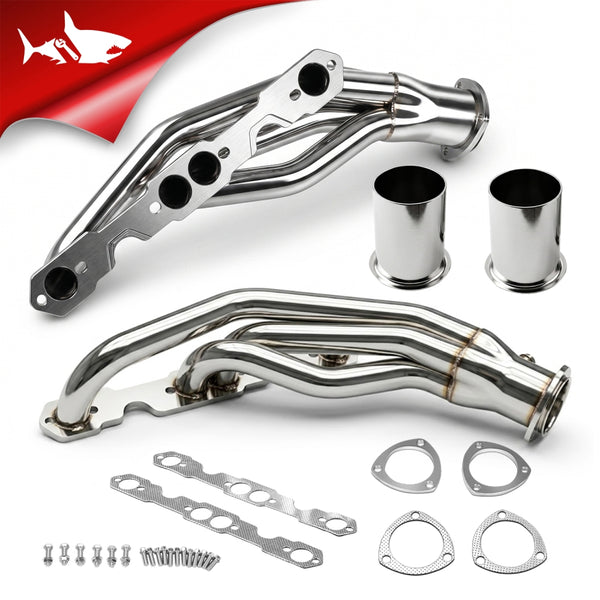
Antes del LS, estaba el Small Block Chevy 350. Millones de camionetas y SUV Chevy C/K 1500 OBS (Old Body Style) dependen de este caballo de batalla.
-
Aplicación: Chevy Silverado / GMC Sierra 1500/2500, Tahoe, Suburban 1988-1998.
-
Por qué actualizar: Los colectores de fábrica de tipo registro de estos camiones son increíblemente restrictivos. Los colectores de tubo largo son esenciales para reactivar estos camiones más antiguos.
Restaura el rugido de tu camión OBS:
4. Toyota: El i-FORCE V8 de 5.7L (3UR-FE)
Ideal para: propietarios de Tundra que desean eliminar los convertidores catalíticos de fábrica restrictivos para lograr un rendimiento todoterreno.
El V8 de 5.7L de la Toyota Tundra es una bestia, pero viene completamente silenciado de fábrica. El 3UR-FE es un motor de doble árbol de levas en cabeza que genera mucho aire, pero está estrangulado por cuatro convertidores catalíticos.
-
Aplicación: Toyota Tundra (2007-2021), Sequoia, Land Cruiser.
-
Nota sobre el rendimiento: Los propietarios de Tundra suelen reportar lentitud en la gama media. Los colectores de escape de tubo largo suelen prescindir de los convertidores catalíticos primarios (para uso todoterreno), lo que reduce significativamente la contrapresión.
Guía técnica del comprador: tamaños y materiales
En resumen: para la mayoría de los motores de 5,7 L de aspiración natural, utilice tubos primarios de 1-3/4" y acero inoxidable revestido de cerámica para obtener el mejor equilibrio entre torque, longevidad y gestión del calor.
Al explorar nuestro catálogo, verá diferentes especificaciones. Aquí le mostramos cómo elegir:
Diámetro del tubo primario
-
1-5/8" o 1-3/4": El tamaño ideal para la mayoría de los motores atmosféricos de 5.7 L. Este tamaño mantiene una alta velocidad de los gases de escape, lo que preserva el par motor a bajas revoluciones, crucial para autos de calle y camionetas como la Ram 1500 o la Tundra.
-
1-7/8" o 2": Recomendado solo para motores muy modificados (inducción forzada, levas de alta elevación o kits de carrera). Si su motor es de fábrica, un ajuste demasiado grande puede afectar el par motor a bajas revoluciones, haciendo que el coche se sienta lento al arrancar.
Selección de materiales
-
Acero inoxidable (T304): La mejor opción para una mayor durabilidad. Resiste la oxidación y la decoloración. Si vive en la zona industrial o cerca de la costa, es obligatorio.
-
Recubrimiento cerámico: Muy recomendable. El recubrimiento cerámico retiene el calor dentro de los colectores. Esto aumenta la velocidad del escape (los gases calientes se mueven más rápido) y reduce drásticamente las temperaturas bajo el capó, protegiendo así el cableado y las mangueras.
Instalación y puesta a punto: qué esperar
En resumen: planifique un día completo de instalación y calcule el presupuesto para una puesta a punto personalizada de la ECU inmediatamente después, ya que la eficiencia volumétrica del motor cambiará drásticamente.
Instalar colectores de tubo largo supone una modificación importante. Esto es lo que necesita saber:
-
Luz de verificación del motor (CEL): debido a que los tubos largos generalmente mueven o quitan los convertidores catalíticos, activarán una CEL en los vehículos modernos debido a las lecturas del sensor de O2.
-
El ajuste es esencial: Para obtener la potencia anunciada y apagar las luces del tablero, se requiere un ajuste personalizado de la ECU. Este ajuste optimiza el ajuste y la sincronización del combustible para adaptarse al mayor flujo de aire.
-
Espacio libre: En modelos más antiguos (como el Chevy SBC), verifique el espacio libre alrededor de los cables de las bujías. Podría necesitar fundas de bujía en ángulo o fundas térmicas para evitar quemar los cables.
Veredicto final: ¿debería actualizar?
La decisión de instalar colectores de tubo largo en su motor de 5,7 L depende de sus objetivos.
-
SÍ, CÓMPRALOS SI: Buscas la máxima potencia (15-30 HP o más), planeas realizar más modificaciones en el motor (árbol de levas, supercargador) o buscas ese sonido agresivo y listo para la pista. Es la pieza de alto rendimiento con la mejor relación calidad-precio para la plataforma de 5.7L.
-
PIENSE DOS VECES SI: Está buscando un vehículo sencillo y silencioso para uso diario o vive en una región con inspecciones visuales de emisiones extremadamente estrictas donde está prohibida la reubicación del convertidor catalítico.
Preguntas frecuentes sobre colectores de tubo largo de 5,7 l
P1: ¿Cuánta potencia agregarán los colectores de tubo largo a un Hemi o LS de 5.7L?
A1: En un motor estándar de 5.7L (como el Ram 1500 Hemi o el LS1), generalmente se puede esperar de 15 a 30 caballos de fuerza en las ruedas y de 20 a 35 ft-lbs de torque después de una correcta puesta a punto en el dinamómetro o en la calle. Las mejoras son más notables en el rango de RPM medio-alto en comparación con los colectores de serie.
P2: ¿Necesito una puesta a punto después de instalar colectores de tubo largos?
R2: Sí. Los colectores de escape largos alteran significativamente el flujo de aire y la eficiencia volumétrica del motor. Además, alejan los sensores de oxígeno del motor. Sin una calibración, el motor puede funcionar con una mezcla pobre o rica, y es casi seguro que se encienda la luz de verificación del motor (CEL) por la eficiencia del catalizador (códigos P0420/P0430).
P3: Colectores de tubo largo vs. colectores de tubo corto: ¿cuál es mejor para el 5.7L?
A3: Depende de tu objetivo. Los colectores de tubo largo ofrecen mayor potencia máxima y aumento de par, pero son más difíciles de instalar y pueden afectar el cumplimiento de las normas de emisiones. Los colectores cortos son más fáciles de instalar (a menudo son reemplazos directos) y suelen ser respetuosos con las emisiones, pero ofrecen una mejora de rendimiento significativamente menor (normalmente solo de 5 a 10 CV).
P4: ¿Los colectores de tubo largo se adaptarán a mi camioneta 4x4/4WD?
A4: La mayoría de los colectores están diseñados para configuraciones de chasis específicas. Para camionetas de 5.7L como la Ram 1500 o la Toyota Tundra, asegúrese de seleccionar la versión 2WD o 4WD específica en la página del producto. Los ejes de transmisión delanteros en los modelos 4x4 a veces pueden interferir con el enrutamiento de los colectores si se elige el kit incorrecto.
Q5: ¿Actualizar los encabezados anula mi garantía?
A5: Generalmente, una pieza de repuesto por sí sola no anula la garantía, a menos que el concesionario pueda demostrar que la pieza causó una falla específica (Ley de Garantía Magnuson-Moss). Sin embargo, dado que los colectores de tubo largo requieren una calibración de la ECU, esta misma calibración a menudo puede anular la garantía del sistema de propulsión. Recomendamos consultar con su asesor de servicio o instalarla en vehículos fuera de garantía.