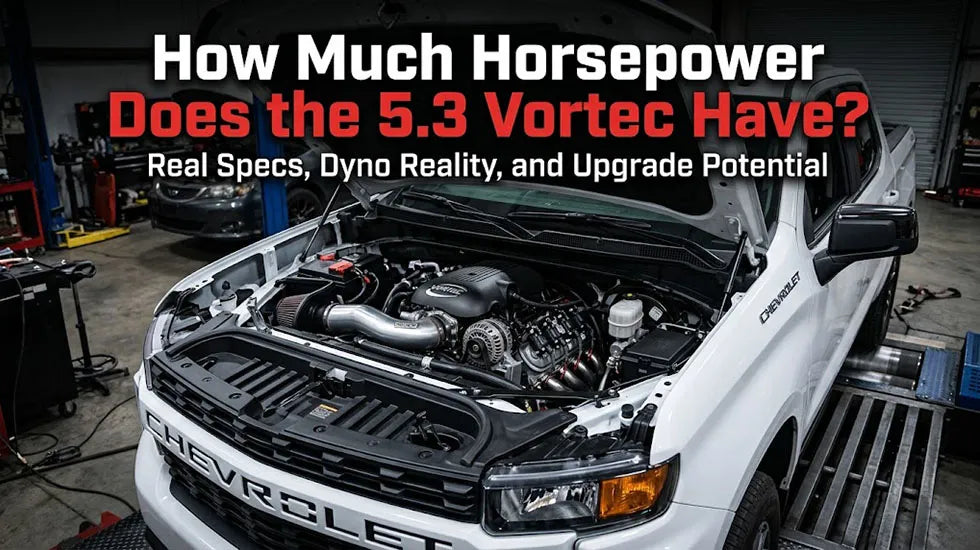
Pregunte a cinco propietarios de camionetas Chevy cuánta potencia genera un motor 5.3 y podría obtener cinco respuestas diferentes. Un tipo dice 270 caballos de fuerza. Otro jura que el suyo tiene una potencia nominal de 295. Alguien con un L33 de bloque de aluminio dice 310. Luego, un propietario de una Silverado más nueva se une a la conversación con 355 caballos de fuerza y toda la discusión se desvía.
El problema no siempre es la mala información. GM utilizó varios códigos de motor 5.3L, calibraciones de vehículos, sistemas de combustible, combinaciones de culatas y cambios de generación. La pregunta cuántos caballos de fuerza tiene el 5.3 Vortec no puede responderse con precisión con un solo número a menos que primero sepa el año, el código RPO, la aplicación del vehículo y si se refiere a la potencia al cigüeñal o a la potencia a la rueda.
Honestamente, esa distinción importa más que la mayoría de las piezas atornillables. Un LM7 saludable de 295 hp puede sentirse más fuerte que un motor de mayor potencia descuidado que arrastra neumáticos de gran tamaño a través de una 4L60E desgastada. Los números en un folleto le dicen dónde comenzó el motor. No le dicen lo que llega al pavimento veinte años después.
Respuesta rápida
- La mayoría de los motores de camiones Vortec 5.3L tradicionales Gen III y Gen IV tenían una potencia nominal de fábrica de entre 270 y 326 caballos de fuerza.
- Los primeros motores LM7 se sitúan en el extremo inferior, mientras que los L33 y las versiones Gen IV posteriores suelen generar más potencia.
- Los L83 y L84 Gen V son comúnmente llamados "5.3 Vortec" por los propietarios de camiones, pero GM los comercializa como motores EcoTec3. Estas versiones tienen una potencia nominal de 355 caballos de fuerza en aplicaciones de camiones comunes.
- Las clasificaciones de fábrica se miden en el cigüeñal. Una camioneta estándar mostrará un número más bajo en un dinamómetro de chasis porque la transmisión, el eje de transmisión, el diferencial, la caja de transferencia, los neumáticos y las condiciones de prueba consumen potencia.
- Antes de pedir piezas de rendimiento, identifique el motor por su código RPO, no solo por la cilindrada y el año del modelo.
¿Cuántos caballos de fuerza tiene el 5.3 Vortec?
La mayoría de los motores vendidos bajo el nombre tradicional Vortec 5300 generan aproximadamente 270–326 caballos de fuerza al cigüeñal. Ese rango cubre mucho terreno porque "5.3 Vortec" incluye múltiples motores Gen III y Gen IV utilizados en Silverado, Sierra, Tahoe, Yukon, Suburban, Avalanche, Trailblazer, furgonetas y varias otras aplicaciones de GM.
El LM7 de bloque de hierro inicial comenzó cerca de 270 caballos de fuerza en algunas aplicaciones y se movió hacia 285–295 caballos de fuerza a medida que cambiaron las calibraciones. La versión de alto rendimiento L33 de bloque de aluminio tenía una potencia nominal de alrededor de 310 caballos de fuerza. Los motores Gen IV posteriores, como el LY5, LMG, LH6 y LC9, comúnmente alcanzaron entre 300 y 326 caballos de fuerza, dependiendo de la capacidad de combustible, la plataforma del vehículo, la configuración del escape y la calibración.
Luego está la familia Gen V más nueva de inyección directa. Los L83 y L84 son V8 de bloque pequeño de 5.3L, pero pertenecen a la generación EcoTec3 en lugar de la familia tradicional Vortec 5300. Su clasificación común para camiones es de 355 caballos de fuerza y 383 lb-pie de torque.
| Familia de motores | Códigos RPO comunes | Años de modelo típicos | Rango de HP de fábrica común | Qué cambia |
|---|---|---|---|---|
| Gen III Vortec 5300 | LM7, L59, LM4, L33 | 1999–2007 | Aproximadamente 270–310 hp | Bloque de hierro o aluminio, acelerador por cable o electrónico, calibración de gasolina o combustible flexible. |
| Gen IV Vortec 5.3L | LH6, LY5, LMG, LC9, LH8, LH9 | 2005–2014 | Aproximadamente 300–326 hp | VVT, electrónica más nueva, sistemas de reluctor 58x y AFM en muchas aplicaciones. |
| Gen V EcoTec3 5.3L | L83, L84 | 2014 y posteriores | 355 hp | Inyección directa, compresión más alta, VVT y AFM o DFM según la versión. |
Nota del mecánico: No compre un árbol de levas, admisión, colector, ECU o arnés de intercambio basándose en "es un 5.3 de 2007". El año del modelo 2007 superpone plataformas y generaciones de motores. Lea la etiqueta RPO, verifique el sistema de aceleración y confirme si el motor usa una configuración de reluctor 24x o 58x.
Potencia del 5.3 Vortec por generación y código RPO
Potencia del Gen III LM7 y L59
El LM7 es la versión que la mayoría de la gente imagina cuando escucha "5.3 de desguace". Bloque de hierro. Culatas de puerto catedral. Admisión de camión. Arquitectura simple. Millones de ellos terminaron en camiones y SUV GMT800.
Dependiendo del año y la aplicación, el LM7 comúnmente tenía una potencia nominal de aproximadamente 270 a 295 caballos de fuerza. Los ejemplos tempranos se sitúan más bajos. Las calibraciones posteriores generalmente se sitúan más cerca de 285–295 caballos de fuerza. El L59 está estrechamente relacionado, pero admite el funcionamiento con combustible flexible en vehículos aplicables.
Estos motores son populares porque el bloque es duradero, las piezas de repuesto están por todas partes y la electrónica se comprende bien. No son exóticos. Precisamente por eso les gustan a los constructores.

Potencia del Gen III LM4 y L33
Los LM4 y L33 utilizan bloques de aluminio, lo que ahorra peso en comparación con el LM7 de bloque de hierro común. El LM4 generalmente tenía una potencia nominal de alrededor de 290 caballos de fuerza en sus aplicaciones originales.
El L33 es el que entusiasma a la gente. A menudo llamado el 5.3 de alto rendimiento, utiliza un bloque de aluminio, culatas de mayor flujo, un perfil de leva ligeramente más agresivo y una potencia nominal de fábrica de alrededor de 310 caballos de fuerza.
No identifique un L33 solo por el bloque de aluminio. Varios motores GM 5.3L usaban bloques de aluminio. Verifique el código RPO y los detalles de fundición antes de pagar "dinero de L33" por un motor desconocido en un palé.
Potencia del Gen IV LY5, LMG, LH6 y LC9
La Gen IV trajo electrónica actualizada, un reluctor de cigüeñal 58x en aplicaciones comunes, distribución variable de válvulas en varias versiones y Active Fuel Management en muchos motores de camiones y SUV.
La potencia de fábrica suele oscilar entre 300 y 326 caballos de fuerza. Los motores de combustible flexible pueden tener diferentes clasificaciones de gasolina y E85 porque la ECU puede usar diferentes estrategias de encendido y combustible cuando el sistema de combustible detecta contenido de etanol.
El número de fábrica más alto no convierte automáticamente un motor Gen IV en la plataforma de rendimiento más fácil. El hardware AFM, el consumo de aceite, el estado de los levantaválvulas, la electrónica y la compatibilidad de intercambio deben considerarse. Un LM7 limpio con una presión de aceite estable puede ser un mejor punto de partida que un LMG descuidado de mayor potencia con un levantaválvulas colapsado.
Potencia del Gen V L83 y L84 EcoTec3
Los L83 y L84 tienen una potencia nominal de 355 caballos de fuerza en aplicaciones comunes de Silverado, Sierra, Tahoe, Yukon y vehículos relacionados. Utilizan inyección directa, distribución variable de válvulas, mayor compresión y un sistema de combustible completamente diferente al de los motores Vortec de inyección por puerto anteriores.
Siguen siendo parte de la familia de bloques pequeños de GM, y los propietarios de camiones los llaman casualmente Vortec. Suficiente en una conversación de aparcamiento. Sin embargo, al comprar piezas, esa terminología imprecisa causa errores costosos. Una admisión de LM7, un paquete de levas de LMG o un colector de GMT800 no se vuelven compatibles con Gen V solo porque la insignia de desplazamiento diga 5.3L.
Cómo identificar qué 5.3 Vortec tienes
Antes de discutir sobre la potencia, averigüe qué hay debajo del capó. Comience con el código RPO. En muchos camiones y SUV GM más antiguos, la etiqueta de identificación de piezas de servicio se encuentra dentro de la guantera. Otros vehículos pueden colocar información de identificación en un lugar diferente o requerir una búsqueda por VIN.
Utilice este orden de identificación
- Localice la etiqueta RPO: Busque códigos como LM7, L59, L33, LY5, LMG, LC9, L83 o L84.
- Confirme el año y la plataforma del vehículo: Distinga las generaciones de camiones GMT800, GMT900, K2XX y posteriores.
- Verifique el VIN: El octavo carácter del VIN puede ayudar a identificar el motor, pero decodifíquelo para el vehículo y año exactos.
- Inspeccione el sistema de aceleración: Los cuerpos de aceleración operados por cable tempranos y los sistemas drive-by-wire posteriores requieren diferentes componentes electrónicos y piezas.
- Confirme las fundiciones del bloque y la culata: Esto es especialmente importante para los motores que han sido intercambiados o reconstruidos.
- Verifique el hardware de AFM, VVT y el sistema de combustible: No asuma que esos sistemas están presentes o ausentes solo basándose en las tapas de válvulas.
Advertencia: las cubiertas del motor mienten
Las cubiertas de plástico, los colectores de admisión, los cuerpos de aceleración, las tapas de válvulas y los sistemas de accesorios pueden ser intercambiados. Un vendedor puede creer honestamente que el motor es un L33 porque tiene un bloque de aluminio. Eso no lo hace cierto. Utilice el código RPO, la información de fundición, el sistema de reluctor y los datos originales del vehículo juntos.
Potencia al cigüeñal vs. potencia a la rueda en un 5.3 Vortec
La potencia de fábrica se mide en el cigüeñal del motor bajo condiciones estandarizadas. Un dinamómetro de chasis mide la potencia después de que viaja a través del convertidor de par, la transmisión, la caja de transferencia, el eje de transmisión, el diferencial, los ejes, las ruedas y los neumáticos.
Por eso, una camioneta de 295 hp no envía 295 caballos de fuerza a las ruedas traseras. Parte de la potencia es consumida por la fricción, el movimiento del fluido, la masa giratoria, la deformación de los neumáticos y la carga del tren motriz.
A la gente le encanta usar un porcentaje fijo de pérdida en el tren motriz. A mí no. Una camioneta de cabina regular 2WD con un paquete de ruedas y neumáticos más ligero no es lo mismo que una Tahoe 4WD levantada con neumáticos de barro pesados. El tipo de dinamómetro, la selección de marchas, el deslizamiento del convertidor, la temperatura del fluido y el método de corrección pueden mover el resultado nuevamente.

| Clasificación de fábrica al cigüeñal | Rango aproximado de planificación del dinamómetro de chasis | Variables que modifican el número |
|---|---|---|
| 270 hp | Aproximadamente 220–240 whp | 2WD vs 4WD, condición de la transmisión, tamaño de los neumáticos, tipo de dinamómetro. |
| 295 hp | Aproximadamente 240–265 whp | Deslizamiento del convertidor, relación de transmisión, condición del motor, temperatura ambiente. |
| 310 hp | Aproximadamente 255–280 whp | El peso del vehículo no cambia directamente la potencia en el dinamómetro, pero la configuración de los neumáticos y la transmisión sí. |
| 320–326 hp | Aproximadamente 265–290 whp | Tipo de combustible, calibración AFM/VVT, condición del escape, factor de corrección. |
| 355 hp | Aproximadamente 290–320 whp | Tren motriz Gen V, transmisión, hardware 4WD y procedimiento de dinamómetro. |
Estas cifras de potencia a la rueda son rangos de planificación, no garantías. Un dinamómetro es más útil cuando el mismo vehículo se prueba en la misma máquina, en la misma marcha, bajo condiciones similares, antes y después de una modificación.
Caso del taller Composite Garage: La potencia "perdida"
Para ser honesto, este es un compuesto de varios escenarios comunes de talleres de camiones, en lugar de una factura de cliente reclamada.
En este caso, tengo una Silverado 1500 de 2004 en el elevador. El propietario ha instalado una admisión, un escape cat-back ruidoso y una afinación portátil. Espera que la camioneta entregue cerca de 300 caballos de fuerza a la rueda porque el motor fue anunciado con alrededor de 295 caballos de fuerza de fábrica. El dinamómetro de chasis muestra 246 whp.
Está convencido de que el motor está desgastado. Empiezo con las comprobaciones aburridas: ajustes de combustible, retardo de detonación, presión de combustible, bujías, temperatura de la transmisión, comportamiento del convertidor y contrapresión del escape. El motor está sano. La potencia "perdida" es principalmente un malentendido. Comparó la potencia al cigüeñal con la potencia a la rueda, luego añadió las ganancias anunciadas como si cada número se sumara perfectamente.
Después de corregir una pequeña fuga en el escape y ajustar la calibración, la camioneta mejora en el rango medio. Aún no produce 300 whp, porque nunca fue una base realista para la combinación. La lección es simple: mida de la misma manera antes y después, o los números no contarán una historia útil.
Por qué su 5.3 puede sentirse más lento de lo que indica su potencia
Peso del camión y aerodinámica
Un 5.3L instalado en una camioneta 2WD de cabina regular y caja corta no se siente como el mismo motor en una Suburban cargada. El motor puede producir la misma potencia al cigüeñal, pero tiene más masa que acelerar y más resistencia aerodinámica que superar a velocidad de carretera.
Tamaño del neumático y masa giratoria
Los neumáticos pesados de 33 o 35 pulgadas cambian el engranaje efectivo, añaden masa giratoria y aumentan la resistencia a la rodadura. El motor no perdió caballos de fuerza en papel. La camioneta simplemente necesita más torque para acelerar el conjunto de rueda y neumático.
Por eso, un camión 5.3 levantado con engranajes de carretera puede sentirse perezoso incluso después de una admisión y un escape. A veces, la relación de eje correcta hace más por la aceleración real que otra pieza de flujo de aire.
Transmisión y convertidor de par
Una 4L60E desgastada puede ocultar potencia a través del deslizamiento del convertidor, una aplicación suave del embrague, calor y cambios retardados. Una calibración de transmisión de fábrica también puede reducir el torque durante los cambios para proteger el tren motriz.
No confunda una afinación de cambio agresiva con un gran aumento de potencia. Los cambios más firmes pueden hacer que la camioneta se sienta drásticamente más rápida porque se dedica menos tiempo a deslizarse durante el cambio, incluso cuando la potencia máxima del motor apenas cambia.
Estado del motor
Antes de modificar un 5.3 de alto kilometraje, compruebe:
- Consistencia de la compresión entre cilindros
- Presión de combustible bajo carga
- Ajustes de combustible a corto y largo plazo
- Retardo de detonación durante una aceleración a plena carga
- Lecturas del MAF y fugas de admisión
- Estado de las bujías y las bobinas
- Fugas en el colector de escape y pernos rotos
- Restricción del convertidor catalítico
- Presión de aceite cuando está completamente caliente
- Deslizamiento de la transmisión y temperatura del fluido
No me interesa venderle a alguien un árbol de levas para un motor que no puede mantener la presión de combustible. Primero, arregle la base. Las piezas de rendimiento amplifican la combinación que ya tiene, incluidos sus problemas.
¿Cuánta potencia puede soportar un 5.3 Vortec de serie?
No existe un "límite de potencia segura" único. Un motor con la parte inferior de serie que sobrevive a una prueba de dinamómetro con un número alto no es lo mismo que remolcar cuesta arriba en el calor del verano, hacer repetidas pasadas en la pista de arrastre o conducir 20,000 millas al año.
Construcciones de motores de aspiración natural con la parte inferior de serie
Un 5.3 de aspiración natural con un árbol de levas, muelles de válvula, colectores, admisión, escape y una puesta a punto adecuada suele estar más limitado por el flujo de aire y la cilindrada que por el conjunto giratorio de serie. Las combinaciones suaves pueden añadir aproximadamente 40–80 caballos de fuerza a la rueda, dependiendo del árbol de levas, las culatas, la compresión, el escape, el convertidor y la línea de base.
Alcanzar 400 caballos de fuerza a la rueda de forma atmosférica con un 5.3 es un trabajo diferente. Ahora estamos hablando de un flujo serio en las culatas, compresión, sincronización del árbol de levas, selección del colector de admisión, RPM y control del tren de válvulas. Eso no es un fin de semana de admisión y silenciador.
Construcciones de motores "Stock-Bottom-End" potenciados
Muchas construcciones de calle conservadoras apuntan aproximadamente a 450–550 whp en un motor Gen III o Gen IV 5.3 con "stock-bottom-end" en buen estado. Algunas combinaciones sobreviven más. Otras fallan por debajo de eso. El kilometraje, la holgura de los anillos del pistón, la detonación, el suministro de combustible, la presión del aceite, la temperatura de carga y la puesta a punto deciden el riesgo que se asume.
Una configuración de 6 a 8 psi en un motor sano puede añadir aproximadamente 100-180 whp, dependiendo de la eficiencia del turbo, el interenfriamiento, la presión de escape, el combustible y la calibración. De nuevo, es un rango de planificación. No una promesa.

No ignore la transmisión
En una camioneta de calle pesada, la 4L60E, el convertidor, la bomba de combustible, el eje trasero o el sistema de refrigeración pueden convertirse en el primer eslabón débil. La potencia del motor acapara la atención. La temperatura de la transmisión es a menudo lo que termina el viaje a casa.
Cómo aumentar la potencia en un 5.3 Vortec
La construcción más limpia no es la que tiene la lista de piezas más larga. Es aquella en la que la admisión, el escape, el árbol de levas, el convertidor, la relación de transmisión, el sistema de combustible y la calibración están de acuerdo con lo que se supone que debe hacer la camioneta.
Paso 1: Establezca una línea de base saludable
Empiece con el mantenimiento y los datos. Reemplace las bujías y cables dañados. Repare las fugas de vacío y escape. Confirme la presión del combustible. Escanee los ajustes de combustible y el retardo de detonación. Verifique si los convertidores catalíticos están restringidos. Asegúrese de que la transmisión pueda soportar la potencia que ya se produce.
Muchos principiantes instalan tres piezas de flujo de aire a la vez, luego persiguen una luz de "check engine" sin datos de referencia. No haga eso. Cambie un sistema a la vez cuando sea posible, registre el resultado y conserve las piezas viejas hasta que se pruebe la nueva combinación.
Paso 2: Mejore la ruta de admisión
Una admisión de aire frío es una modificación de apoyo al flujo de aire. En un 5.3 atmosférico, por lo demás de serie, una expectativa realista suele ser de aproximadamente 3-8 caballos de fuerza adicionales en la rueda en partes útiles de la curva. Las comparaciones de picos favorables pueden mostrar aproximadamente 6-10 caballos de fuerza, pero la temperatura, la geometría del MAF, el procedimiento del dinamómetro y las condiciones de prueba son importantes.
El primer cambio que la mayoría de los conductores notan no es un número pico gigante. Es el sonido de la inducción, una respuesta ligeramente más limpia cuando se abre el acelerador y menos restricción en la parte superior del rango de RPM.
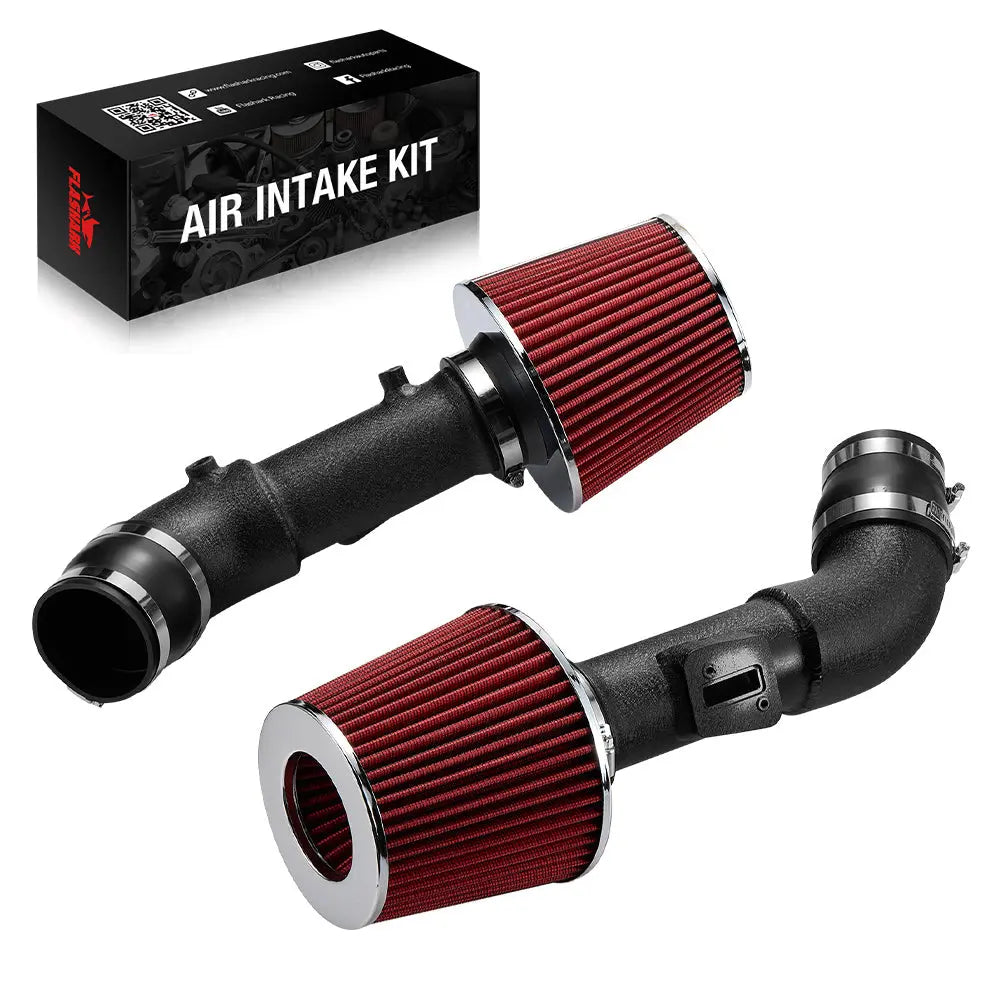
Para aplicaciones GMT800 compatibles, el kit de admisión de aire frío para Chevy/GMC 5.3 Vortec 1999-2006 utiliza un tubo de admisión de 4 pulgadas, un filtro cónico y un escudo térmico. Confirme el estilo exacto de la carrocería, el motor, la ubicación del MAF y la ruta de admisión antes de realizar el pedido.
Los propietarios que investigan otras plataformas pueden comparar kits de admisión de aire frío por aplicación de vehículo en lugar de asumir que todos los sistemas GM 5.3L usan la misma disposición de tubo y sensor.
Para un desglose más profundo de las expectativas del dinamómetro, el "heat soak", los errores del MAF y los resultados combinados de admisión y escape, lea la guía sobre las ganancias realistas de caballos de fuerza de la admisión de aire frío 5.3.

Kit de admisión de aire frío Flashark para Chevy/GMC 4.8L, 5.3L y 6.0L Vortec de 1999–2006
Un sistema de admisión de 4 pulgadas con filtro cónico seco y escudo térmico para aplicaciones compatibles de camiones y SUV GMT800. Verifique el motor, el estilo de la carrocería y el ajuste del MAF antes de la compra.
$89.99 $129.99
Comprobar compatibilidad y precio actualPrecio mostrado en el momento de la preparación de esta guía. Confirme el precio en vivo en la página del producto.
Paso 3: Mejore el barrido de escape
Los colectores de escape pueden generar un cambio de rendimiento mayor que solo una admisión, ya que afectan la eficiencia con la que los gases de escape salen del cilindro. Los tubos primarios largos pueden mejorar el barrido y reducir la pérdida por bombeo, especialmente en el rango medio y alto de RPM.
En un 5.3 suave con un tubo en Y adecuado, sensores de oxígeno que funcionan, un escape de flujo libre y una puesta a punto competente, un rango de planificación de aproximadamente 8-18 whp es sensato. Algunas combinaciones completas de colectores, escape, admisión y puesta a punto muestran aproximadamente 15-30 whp sobre la línea de base original. Ese resultado completo no pertenece a una sola pieza.
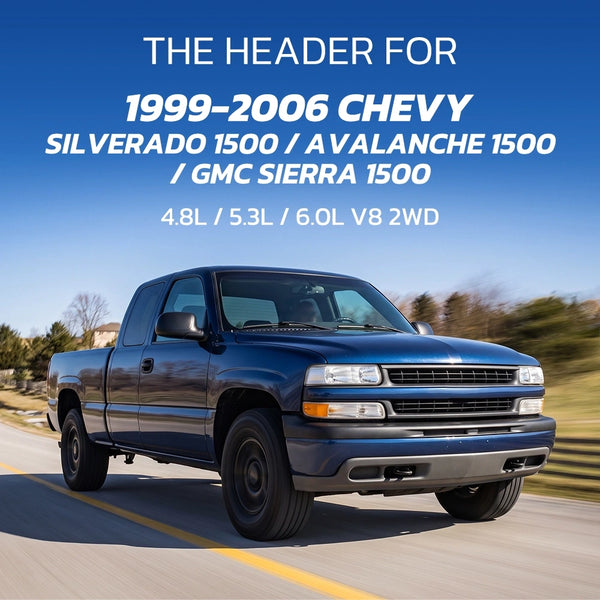
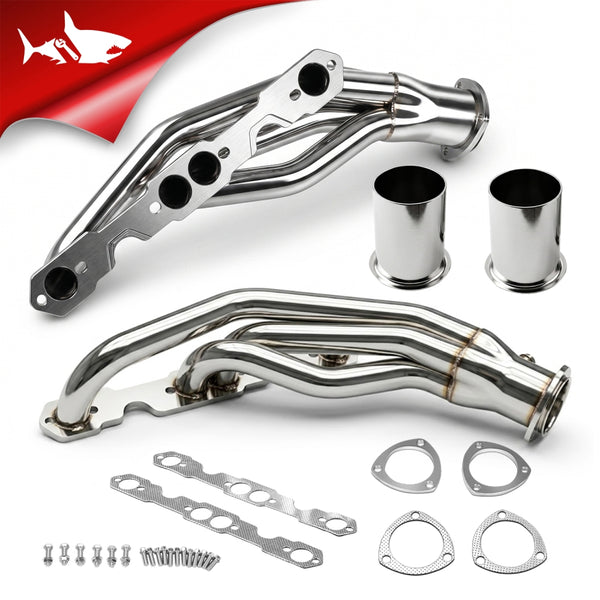
Para configuraciones 2WD y 4WD compatibles, los colectores de tubo largo y tubo en Y para Chevy/GMC 5.3L 1999-2006 proporcionan una alternativa específica de plataforma al restrictivo colector de fábrica. Verifique primero la configuración de la EGR, la transmisión, el plan del convertidor catalítico, la holgura de la dirección y los requisitos de emisiones locales.
Los constructores que comparan diferentes vehículos pueden buscar colectores de escape de rendimiento por aplicación de vehículo en lugar de elegir solo por desplazamiento del motor.
El diámetro primario también importa. Una camioneta de trabajo estándar no necesita automáticamente el tubo más grande del mercado. La comparación entre los colectores de 1-3/4 vs 1-7/8 en un 5.3 explica por qué un primario más pequeño a menudo funciona mejor para la conducción diaria, el remolque y la respuesta de gama baja a media.
¿Todavía no decides si necesitas tubos largos? La guía sobre los colectores cortos 5.3 vs colectores de serie cubre la menor ganancia de potencia, la facilidad de instalación, el cambio de sonido y el valor de reemplazo de los diseños de tubos cortos.
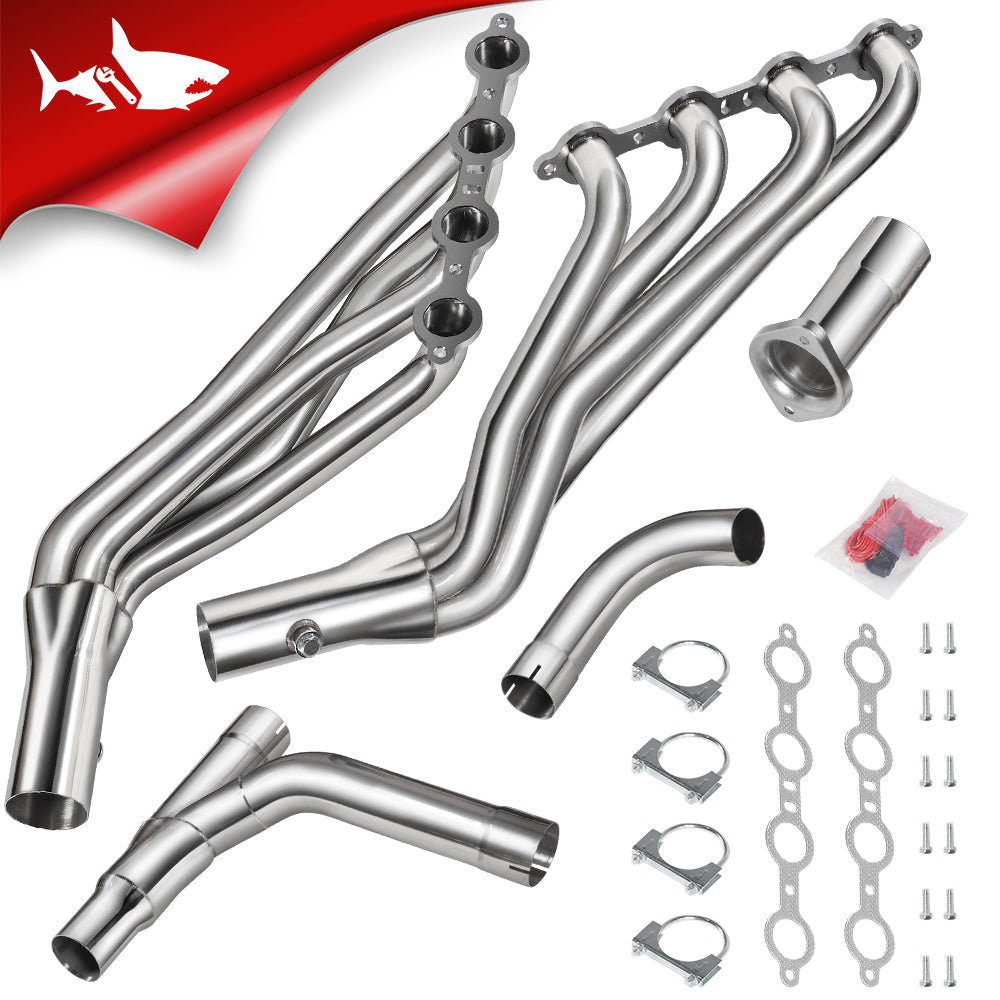
Colectores de tubo largo y tubo en Y Flashark para camiones Chevy/GMC Vortec 1999–2006
Diseñado para aplicaciones compatibles de Silverado, Sierra, Avalanche y GMT800 relacionadas de 4.8L, 5.3L y 6.0L. Las configuraciones disponibles varían según la EGR y la selección del paquete de admisión.
$269.99 $399.99
Comprobar compatibilidad y precio actualEl precio refleja la selección predeterminada de la página del producto en el momento de la preparación de esta guía. Otras variantes pueden diferir.
Paso 4: Ajuste el motor y la transmisión correctamente
Un ajuste puede modificar el momento de encendido, el combustible, el comportamiento del acelerador, la gestión de par, la presión de cambio, el bloqueo del convertidor, los límites de velocidad y otras estrategias de control. El resultado depende del combustible utilizado y del hardware ya instalado.
Un ajuste en una camioneta atmosférica completamente de serie puede producir un modesto aumento de la potencia máxima. La mayor diferencia "sentida en el asiento" a menudo proviene de la calibración del acelerador, la reducción de la gestión de par y la mejora del comportamiento del cambio.
Escúcheme en esto: un pedal del acelerador más sensible no es lo mismo que 30 caballos de fuerza nuevos. Algunas calibraciones simplemente solicitan una mayor apertura de la mariposa del acelerador antes en el recorrido del pedal. La camioneta se siente agresiva porque se alcanza el mismo flujo de aire con menos movimiento del pedal.
Paso 5: Añada un árbol de levas, muelles y piezas de apoyo
Un árbol de levas es donde un 5.3 atmosférico puede empezar a sentirse como un motor diferente. Cambia la sincronización de las válvulas, la duración, la elevación, el solapamiento y el rango de RPM donde el motor respira eficientemente.
Un árbol de levas de camión suave con muelles, varillas de empuje, colectores, admisión, escape y una puesta a punto personalizada puede añadir aproximadamente 40-70 whp. Las combinaciones más agresivas pueden superar eso, pero la calidad del ralentí, el par a bajas velocidades, los requisitos del convertidor, el vacío del freno, la holgura del pistón a la válvula y la estabilidad del tren de válvulas se vuelven más importantes.
No elija un árbol de levas por el video de ralentí más ruidoso. Un Silverado pesado con engranajes y convertidor de serie necesita un árbol de levas diferente al de un cupé ligero con motor LS y un stall de 3,600 rpm.

Paso 6: Actualice el colector de admisión y las culatas cuando la combinación lo requiera
El colector de admisión de fábrica para camiones no es chatarra. Sus conductos largos soportan el par a bajas y medias revoluciones, que es exactamente donde un camión de calle trabaja.
Un colector de rendimiento de conductos más cortos puede mejorar el flujo de aire a altas RPM, pero puede suavizar el rango donde un camión pesado pasa la mayor parte de su tiempo. El trabajo en las culatas sigue la misma regla. Un mayor flujo de aire es útil solo cuando el árbol de levas, la compresión, el escape, el sistema de combustible y las RPM de funcionamiento pueden usarlo.
Paso 7: Añada un turbocompresor o un sobrealimentador para un aumento importante de potencia
La inducción forzada cambia la escala de la construcción. Un "bolt-on" atmosférico puede ganar caballos de fuerza de un solo dígito o de dos dígitos bajos en la rueda. Un sistema turbo bien combinado puede añadir más de 100 whp con un aumento de presión conservador.
El turbo en sí es solo una parte. Un sistema utilizable también necesita:
- Inyectores de combustible y bomba de combustible de tamaño correcto
- Interenfriamiento y control de la temperatura de carga
- Wastegate y hardware de control de impulso
- Rutas fiables de alimentación y drenaje de aceite
- Tiempo de encendido seguro y calibración de combustible
- Monitorización de sensor de oxígeno de banda ancha
- Planificación de transmisión y convertidor
- Ruta de escape con espacio libre térmico adecuado
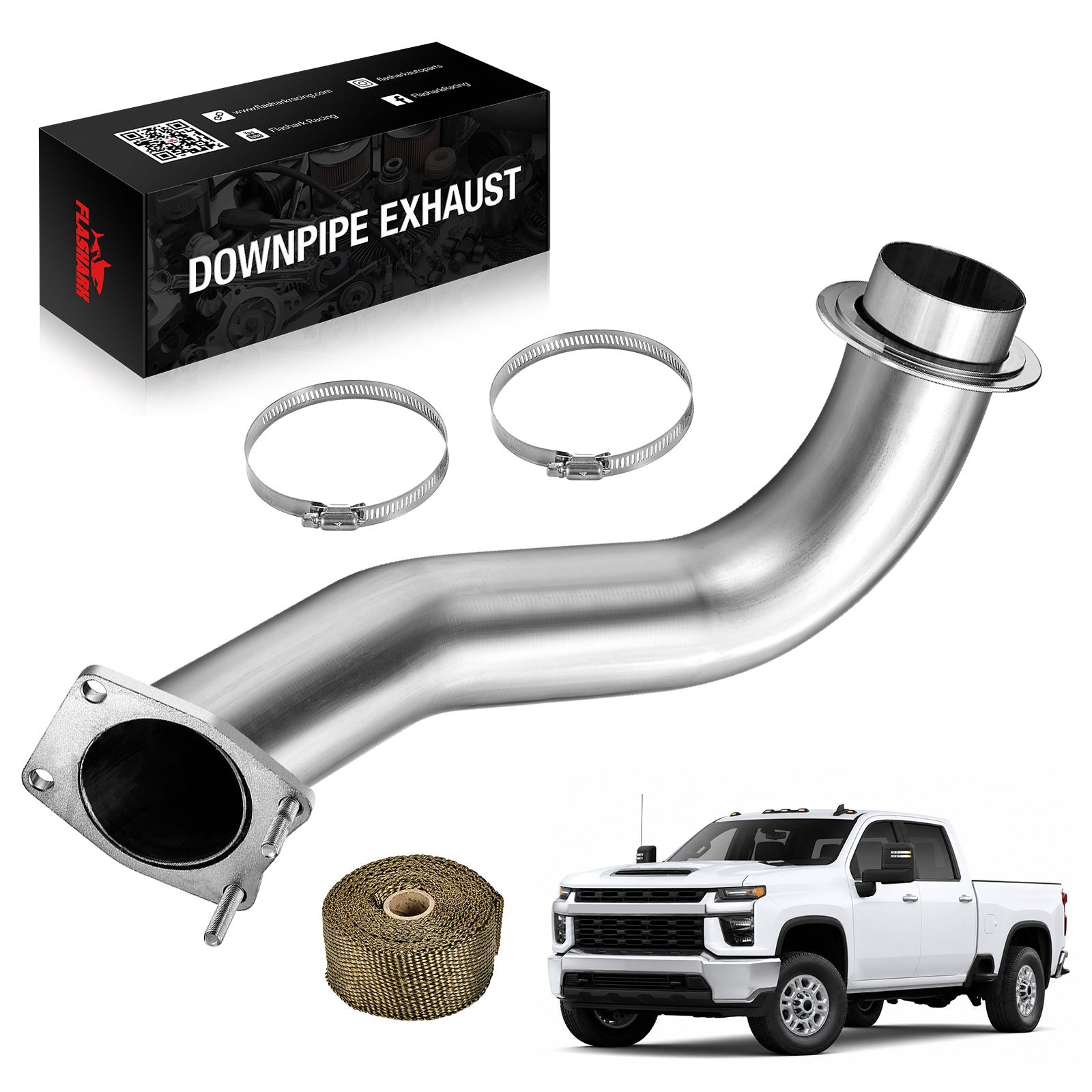
Para combinaciones de camiones con un solo turbocompresor fabricado, un downpipe de turbo T4 de 3 pulgadas para construcciones de camiones 5.3 Vortec puede proporcionar un punto de partida para dirigir el escape lejos de la turbina. Esta no es una pieza "bolt-on" universal de aumento de caballos de fuerza. La ubicación del turbo, la orientación de la brida, la holgura del chasis, la ruta de la válvula de descarga, la ubicación del sensor de oxígeno y el resto del sistema de escape aún deben coincidir con la construcción.

Flashark 3.0-Inch T4 Turbo Downpipe para Chevy Silverado y GMC Sierra 1999–2013
Un componente de downpipe T4 de acero inoxidable para construcciones personalizadas de un solo turbocompresor para camiones Vortec/LS de 4.8L, 5.3L, 6.0L y 6.2L. Confirme la posición del turbo, el enrutamiento y los requisitos de fabricación.
$168.98 $198.00
Ver especificaciones y precio actualPrecio mostrado en el momento de la preparación de esta guía. Los sistemas turbo personalizados pueden requerir fabricación adicional y piezas de apoyo.
Advertencia sobre la legalidad en la calle
Los colectores de escape, los tubos de escape del turbocompresor, los cambios en el convertidor catalítico, la reubicación del sensor de oxígeno y la calibración de la ECU pueden afectar el cumplimiento de las emisiones. Confirme los requisitos federales, estatales y locales antes de modificar un vehículo de uso en la calle.
Comparación de potencia de 5.3 Vortec de serie vs modificado
Los rangos que se muestran a continuación son útiles para la planificación, pero no son automáticamente aditivos. Una admisión que gane 5 CV en la rueda, unos colectores que ganen 15 CV y una puesta a punto que gane 10 CV no garantizan un total de 30 CV. Cada pieza cambia el comportamiento de la siguiente.
| Configuración 5.3L | Cambio de potencia típico | Lo que el conductor suele notar | Trabajo de apoyo |
|---|---|---|---|
| Motor de serie en buen estado | Línea de base de fábrica | Funcionamiento silencioso, buen rendimiento a bajas velocidades, cambios conservadores. | Mantenimiento y línea de base de diagnóstico. |
| Admisión de aire frío | Comúnmente alrededor de 3-8 whp en un camión de serie | Más sonido de inducción y una respiración más limpia a altas RPM. | Geometría MAF correcta, conexiones selladas, gestión del calor. |
| Colectores cortos | A menudo alrededor de 5-12 whp en combinaciones suaves | Tono de escape más nítido y mejora modesta de la respuesta. | Instalación sin fugas y tubo en Y compatible. |
| Tubos largos, escape y ajuste | Aproximadamente 15-30 whp como paquete completo | Mayor fuerza de tracción de rango medio a alto y sonido más agresivo. | Ajuste, planificación de O2, ajuste del escape, verificación de emisiones. |
| Árbol de levas suave, muelles, colectores y ajuste | Comúnmente alrededor de 40-70 whp | Banda de potencia notablemente más fuerte, ralentí cambiado, tracción a RPM más altas. | Muelles, varillas de empuje, ajuste, convertidor y comprobaciones de holgura. |
| Configuración turbo intercooler de 6-8 psi | Aproximadamente 100-180 whp, según la combinación | Aumento importante de par y aceleración mucho más rápida. | Sistema de combustible, ajuste, intercooler, escape, transmisión, control de calor. |
La mejor ruta de actualización del 5.3 Vortec según el objetivo
Confiable para el uso diario
- Mantenimiento completo y línea base con herramienta de escaneo
- Sistema de admisión bien ajustado
- Escape tipo cat-back suave o escape de fábrica sin fugas
- Calibración conservadora del motor y la transmisión
- Enfriador de transmisión si el camión trabaja duro o remolca
Esta configuración no ganará un concurso de hojas de dinamómetro. Puede hacer que el camión sea más limpio, más nítido y más agradable sin convertir cada viaje en una sesión de diagnóstico.
Camión de remolque y trabajo
- Priorizar el torque de bajas y medias revoluciones
- Usar una relación de transmisión sensata para el tamaño de los neumáticos y el peso del remolque
- Evitar árboles de levas de gran tamaño y colectores primarios innecesariamente grandes
- Mejorar la refrigeración y el control de la temperatura de la transmisión
- Utilizar una calibración diseñada para carga, no un mapa de aceleración para carreras de arrastre
Camión de alto rendimiento para calle
- Colectores de tubo largo y un tubo en Y a juego
- Admisión y ruta de escape completa
- Árbol de levas de camión suave a moderado
- Muelles de válvula y longitud de varilla de empuje medida
- Convertidor seleccionado según el árbol de levas y el peso del vehículo
- Ajuste personalizado del motor y la transmisión
Construcción para calle o pista con sobrealimentación
- Verificaciones de compresión, fugas y presión de aceite
- Turbocargador o supercargador dimensionado según el objetivo de potencia real
- Inyectores, bomba, regulador y líneas de combustible con capacidad adecuada
- Intercooler y temperatura de aire de admisión estable
- Monitoreo de banda ancha y sincronización de encendido conservadora
- Planificación de transmisión, convertidor, eje de transmisión, diferencial y ejes
Errores comunes de potencia del Vortec 5.3
Citar un número para cada motor 5.3L
Un LM7 temprano, un L33 de alto rendimiento, un Gen IV LMG y un Gen V L84 no son el mismo paquete de motor. Utilice el código RPO y la aplicación del vehículo.
Sumar ganancias anunciadas
Las piezas interactúan. Una ganancia de colector medida en un motor con árbol de levas no se puede sumar directamente a una ganancia de admisión medida en un motor de serie y una ganancia de ajuste medida con combustible premium.
Comparar HP al cigüeñal con HP a la rueda
Esta es la forma más rápida de convencerse de que un camión saludable tiene 50 caballos de fuerza menos. Confirme dónde y cómo se midió el número.
Tratar el sonido como aceleración
Una admisión y un escape más ruidosos hacen que el motor se sienta más activo. A veces el camión es más rápido. A veces sus oídos están haciendo la mayor parte del trabajo.
Elegir piezas para una construcción futura que quizás nunca ocurra
No arruine el comportamiento a baja velocidad de un vehículo de uso diario de serie porque podría instalar un motor stroker 408 y un turbocargador de 80 mm dentro de tres años. Construya el camión que conduce hoy, o haga un plan por etapas real.
Ignorar el ajuste y el equipo de emisiones
El desplazamiento del motor no confirma la holgura de la transmisión, la compatibilidad con el EGR, la configuración del catalizador, la posición del sensor de oxígeno o la legalidad para la calle.
Vortec 5.3 vs LS 6.0: ¿Cuál es mejor para la potencia?
El 6.0L tiene más desplazamiento y generalmente produce más torque con una combinación similar de culata y árbol de levas. Eso lo hace atractivo para camiones pesados, remolque y construcciones de aspiración natural.
El 5.3L contraataca con un menor costo de compra, gran disponibilidad, fuerte soporte posventa y excelente potencial de sobrealimentación. Un 5.3 saludable ya en su camión suele ser más barato de construir que cambiar a un núcleo 6.0 cuestionable simplemente porque internet dice que lo más grande es mejor.
Para un camión pesado de aspiración natural, es más fácil lograr un torque satisfactorio a bajas velocidades con el 6.0. Para una construcción turbo de bajo presupuesto, el 5.3 sigue siendo uno de los puntos de partida de mejor valor en la familia de motores de bloque pequeño de GM.
Preguntas frecuentes sobre la potencia del Vortec 5.3
P1: ¿Cuántos caballos de fuerza tiene un Vortec 5.3 de serie?
R1: La mayoría de los motores Vortec 5.3L tradicionales Gen III y Gen IV producen aproximadamente 270–326 caballos de fuerza al cigüeñal. La clasificación exacta depende del código RPO, el año del modelo, la aplicación del vehículo, el tipo de combustible y la calibración de fábrica.
P2: ¿Cuántos caballos de fuerza tiene un Vortec 5.3 de 1999?
R2: Un LM7 5.3L de 1999 suele tener una potencia nominal cercana a los 270 caballos de fuerza al cigüeñal. Confirme el vehículo original y el código RPO, ya que las clasificaciones y aplicaciones pueden diferir.
P3: ¿Cuántos caballos de fuerza tiene un Vortec 5.3 de 2003?
R3: Un Vortec 5.3L de 2003 suele rondar los 285–295 caballos de fuerza al cigüeñal, dependiendo de si es un LM7, L59, LM4 u otra versión específica de la aplicación.
P4: ¿Cuántos caballos de fuerza tiene un Vortec 5.3 de 2005?
R4: Un 5.3L de 2005 puede variar desde aproximadamente 295 caballos de fuerza en aplicaciones comunes de camiones hasta alrededor de 310 caballos de fuerza para el L33 de alto rendimiento. El año del modelo por sí solo no es suficiente para identificar el motor.
P5: ¿Qué motor Vortec 5.3 tiene la mayor potencia de fábrica?
R5: Entre los motores Vortec 5.3L tradicionales Gen III y Gen IV, las aplicaciones de alto rendimiento y combustible flexible posteriores pueden alcanzar aproximadamente 326 caballos de fuerza. Los motores EcoTec3 Gen V L83 y L84 más nuevos tienen una potencia nominal de 355 caballos de fuerza, pero técnicamente son de una generación diferente.
P6: ¿Es el Vortec 5.3 un motor LS?
R6: Los motores Vortec 5.3L Gen III y Gen IV son motores de bloque pequeño basados en LS. Comparten la arquitectura central de LS, pero los colectores de admisión de camión, los accionamientos de accesorios, la electrónica, los cárteres de aceite, los sistemas de reluctor y otras piezas pueden diferir.
P7: ¿Cuántos caballos de fuerza a la rueda produce un Vortec 5.3 de serie?
R7: Un camión 5.3L tradicional de serie comúnmente produce aproximadamente 220–290 caballos de fuerza a la rueda, dependiendo de su clasificación de fábrica al cigüeñal, transmisión, configuración 2WD o 4WD, paquete de neumáticos, condición del motor y procedimiento de dinamómetro.
P8: ¿Puede un Vortec 5.3 de serie alcanzar los 400 caballos de fuerza?
R8: Alcanzar 400 caballos de fuerza al cigüeñal es realista con el árbol de levas, colectores, admisión, escape y ajuste adecuados. Alcanzar 400 caballos de fuerza a la rueda de forma natural requiere una combinación mucho más seria de culata, compresión, árbol de levas y RPM.
P9: ¿Puede un Vortec 5.3 con la parte inferior del motor de serie soportar 500 caballos de fuerza?
R9: Muchos motores 5.3L Gen III y Gen IV saludables con la parte inferior del motor de serie operan cerca de 500 caballos de fuerza con un aumento conservador y piezas de soporte adecuadas, pero no hay un límite de seguridad garantizado. La holgura del anillo, la detonación, el suministro de combustible, la presión de aceite, el kilometraje y la puesta a punto determinan el riesgo.
P10: ¿Cuántos caballos de fuerza añade una admisión de aire frío a un Vortec 5.3?
R10: En un camión de serie saludable, una admisión de aire frío bien diseñada suele añadir aproximadamente 3–8 caballos de fuerza a la rueda en partes útiles de la curva. El conductor puede notar más el sonido de la admisión y la respuesta del acelerador que el cambio de potencia máxima.
P11: ¿Cuántos caballos de fuerza añaden los colectores a un Vortec 5.3?
R11: Los colectores cortos pueden añadir aproximadamente 5–12 caballos de fuerza a la rueda en una combinación suave, mientras que los colectores largos con un escape y ajuste adecuados pueden contribuir a una ganancia total de aproximadamente 15–30 caballos de fuerza a la rueda. Los resultados dependen del resto del motor y del sistema de escape.
P12: ¿Cuántos caballos de fuerza añade un árbol de levas a un Vortec 5.3?
R12: Un árbol de levas de camión suave con muelles de válvula, colectores, admisión, escape y ajuste personalizado puede añadir aproximadamente 40–70 caballos de fuerza a la rueda. El tamaño del árbol de levas, las culatas, la compresión, el convertidor y el ajuste pueden mover significativamente el resultado.
P13: ¿Se puede turboalimentar un Vortec 5.3 de serie?
R13: Sí, un 5.3L de serie saludable puede ser turboalimentado, pero la construcción requiere un suministro de combustible adecuado, intercooler, control de impulso, ajuste seguro, enrutamiento de aceite y soporte de la transmisión. Un sistema conservador de 6–8 psi puede añadir aproximadamente 100–180 caballos de fuerza a la rueda, dependiendo de la combinación.
P14: ¿La desactivación del AFM añade caballos de fuerza?
R14: La desactivación del AFM normalmente no crea una ganancia significativa de caballos de fuerza máximos por sí misma. Cambia el comportamiento de la desactivación de cilindros y puede mejorar la consistencia, pero una desactivación por software no es lo mismo que eliminar mecánicamente los levantaválvulas y el hardware del AFM.
P15: ¿Es la 4L60E el eslabón débil en un camión 5.3 modificado?
R15: La 4L60E puede convertirse en un eslabón débil cuando aumentan el peso del vehículo, el tamaño de los neumáticos, el calor, los cambios agresivos, la carga del convertidor y el par motor añadido. La condición y la calibración de la transmisión son tan importantes como el número de caballos de fuerza máximos.
Veredicto final: ¿Qué produce realmente tu 5.3?
Entonces, ¿cuántos caballos de fuerza tiene el Vortec 5.3? Para los motores tradicionales Gen III y Gen IV, el rango honesto de fábrica es aproximadamente 270–326 caballos de fuerza al cigüeñal. Los motores LM7 tempranos se sitúan en la parte inferior. Las versiones L33 y Gen IV posteriores se sitúan más arriba. Los motores Gen V L83 y L84 EcoTec3 tienen una potencia nominal de 355 caballos de fuerza, pero deben tratarse como una generación de motor separada al comprar piezas.
La potencia real a la rueda de su camión será inferior a la clasificación del folleto. Eso es normal. El tipo de transmisión, el deslizamiento del convertidor, la configuración de la transmisión, los neumáticos, la condición del motor, el combustible, el clima y el procedimiento del dinamómetro influyen en el resultado.
Una vez que conozca el código RPO y establezca una línea base saludable, el 5.3 responde bien a mejoras sensatas en el flujo de aire. Una admisión y un escape pueden mejorar la respuesta. Los colectores y el ajuste pueden hacer que el rango medio y superior de RPM sea más fuerte. Un árbol de levas correctamente emparejado cambia la personalidad del motor. El sobrealimentación cambia todo el nivel de potencia, pero también expone cada decisión débil de combustible, refrigeración y transmisión que intentó ignorar.
Una buena potencia comienza con la combinación correcta, no con la pieza más grande.

Steven Chen
Especialista en Rendimiento Automotriz | Sistemas de Motor y Escape
Steven se enfoca en el rendimiento práctico del motor, el ajuste del escape y las rutas de actualización del mundo real para vehículos clásicos y modernos de entusiastas. Revisa aplicaciones de bloque pequeño Ford, LS, camiones y calle/pista con un objetivo en mente: ayudar a los constructores a elegir piezas que realmente funcionen juntas. Su filosofía: "Una buena potencia comienza con la combinación correcta, no con la pieza más grande".