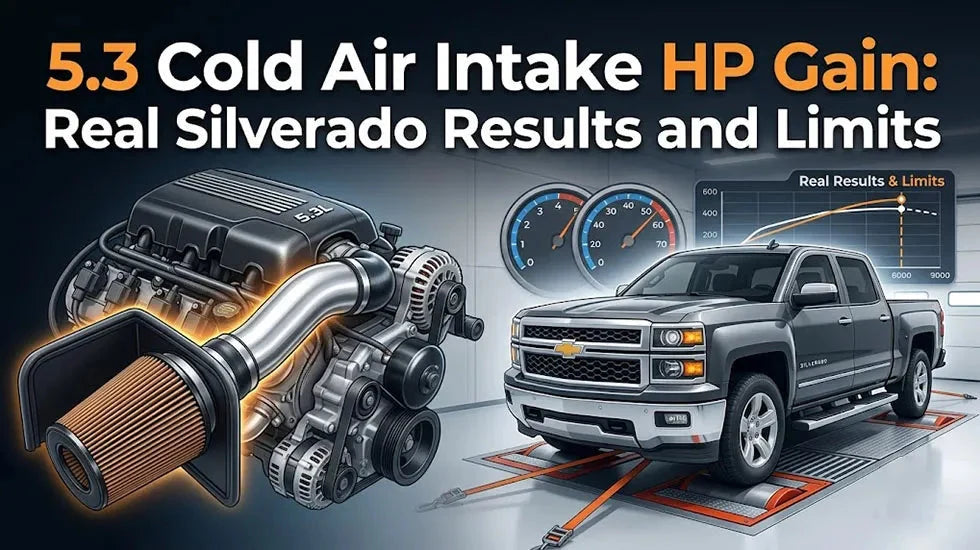
Cold air intake horsepower claims are all over the place. One listing promises a double-digit gain. A forum owner installs a kit on Saturday, drives around the block, and says it only made the truck louder. Then somebody else swears the same modification completely changed the way his 5.3L pulls.
Honestly, all three people may be describing what they actually experienced.
The problem is that 5.3 cold air intake hp gain cannot be reduced to one magic number. A stock 2002 Silverado LM7, a 2011 Silverado LMG with AFM, and a 2014 Silverado L83 are different engine packages with different controls, intake layouts, factory power levels, and airflow demands. Add tire size, transmission loss, ambient temperature, exhaust work, tuning, and dyno procedure, and the number moves again.
This guide separates the useful information from the noise. We will look at realistic wheel-horsepower expectations, throttle response, high-RPM airflow, tuning, exhaust combinations, installation mistakes, and the important difference between GMT800, GMT900, and the 2014 K2XX platform.
Quick answer: How much horsepower does a cold air intake add to a 5.3 Silverado?
- Stock truck without tuning: A reasonable expectation is roughly 3–8 additional wheel horsepower across the useful part of the curve. Favorable peak comparisons may reach approximately 6–10 HP.
- 2014 Silverado 5.3L L83: Published third-party intake tests have reported approximately 6.61 HP at 4,998 rpm and 10 HP at 4,700 rpm, depending on the intake and test procedure.
- Intake with cat-back exhaust: The complete combination may feel stronger at higher rpm, but the total gain cannot be credited to the intake alone.
- Intake with headers and tuning: The engine can make better use of added airflow, although the tune, headers, exhaust, and intake must be evaluated as one system.
- What you usually notice first: More induction sound, a cleaner response when the throttle opens, and less breathlessness near the upper end of the rpm range.
Mechanic’s note: Do not treat the ranges above as a Flashark-specific dyno guarantee. They are realistic planning figures based on comparable naturally aspirated 5.3L truck combinations and published third-party testing. Vehicle condition and test method still decide the final number.
How Much Horsepower Does a Cold Air Intake Add to a 5.3 Silverado?
On an otherwise stock truck, the intake is rarely the modification that turns a mild 5.3L into a tire-fryer. That is not an insult to the part. It is simply how a naturally aspirated engine works.
At low throttle, the throttle blade itself is the main restriction. The engine is not asking for maximum airflow while you are creeping through traffic at 1,700 rpm. Open the throttle, raise engine speed, and increase load, though, and pressure loss through the filter, corrugated tube, resonators, bends, and MAF housing begins to matter more.
That is why the largest measured difference often appears closer to the top half of the tachometer rather than right off idle.

| Measurement | Factory Intake | Well-Fitted Cold Air Intake | What the Driver Notices |
|---|---|---|---|
| Peak power | Stock baseline | Commonly about 3–8 whp through the useful range; favorable peak tests may show 6–10 HP | Usually subtle without before-and-after testing |
| Throttle response | Quiet and deliberately damped | Can feel more immediate when the throttle opens | Often easier to notice than the peak horsepower |
| High-rpm airflow | Adequate for stock output but designed around noise, packaging, filtration, and cost | Smoother tube and larger filter can reduce pressure drop under heavy airflow demand | Engine may feel less restricted above roughly 3,500–4,000 rpm |
| Intake temperature | Usually stable because the airbox is well isolated | Depends heavily on heat-shield sealing and access to outside air | Poor sealing can reduce gains during slow traffic |
| Sound | Soft and heavily muffled | Deeper induction note under load | Usually the most obvious immediate change |
| Tuning requirement | Factory calibration | Usually no tune when MAF geometry remains compatible | Tuning becomes more valuable with headers, cam, or major airflow changes |
Stock 5.3L Silverado Without a Tune
A healthy stock truck with the factory calibration will normally remain within the ECU’s ability to correct fueling after a properly designed intake is installed. The MAF measures incoming air, the oxygen sensors provide feedback, and short-term and long-term fuel trims make small adjustments.
That does not mean every intake is automatically safe. Tube diameter around the MAF, sensor placement, air leaks, and turbulence still matter. Move the sensor into a badly shaped housing and the ECU may receive a distorted airflow signal even though plenty of air is entering the engine.
For a stock truck, I would plan around 3–8 whp rather than an automatic 20–30 HP. The improvement may be real and repeatable on a dyno while remaining difficult to feel during light-throttle street driving.
Intake With a Cat-Back Exhaust
A cat-back can reduce some downstream restriction and change the exhaust note, but most street systems leave the catalytic converters and factory manifolds in place. Those front sections still control a large part of the exhaust-side pressure.
A sensible intake-and-cat-back combination may deliver a modest improvement in upper-rpm pull and sound. Depending on the truck and hardware, the complete combination might show roughly 8–15 whp over a stock baseline. Listen closely: that is a combined result, not intake-only power.
Sound also plays tricks on you. When a V8 suddenly has a deeper intake roar and a louder exhaust note, the truck feels busier. Faster, even. A stopwatch or dyno may show a smaller change than your ears suggest.
Intake With Long-Tube Headers and ECU Tuning
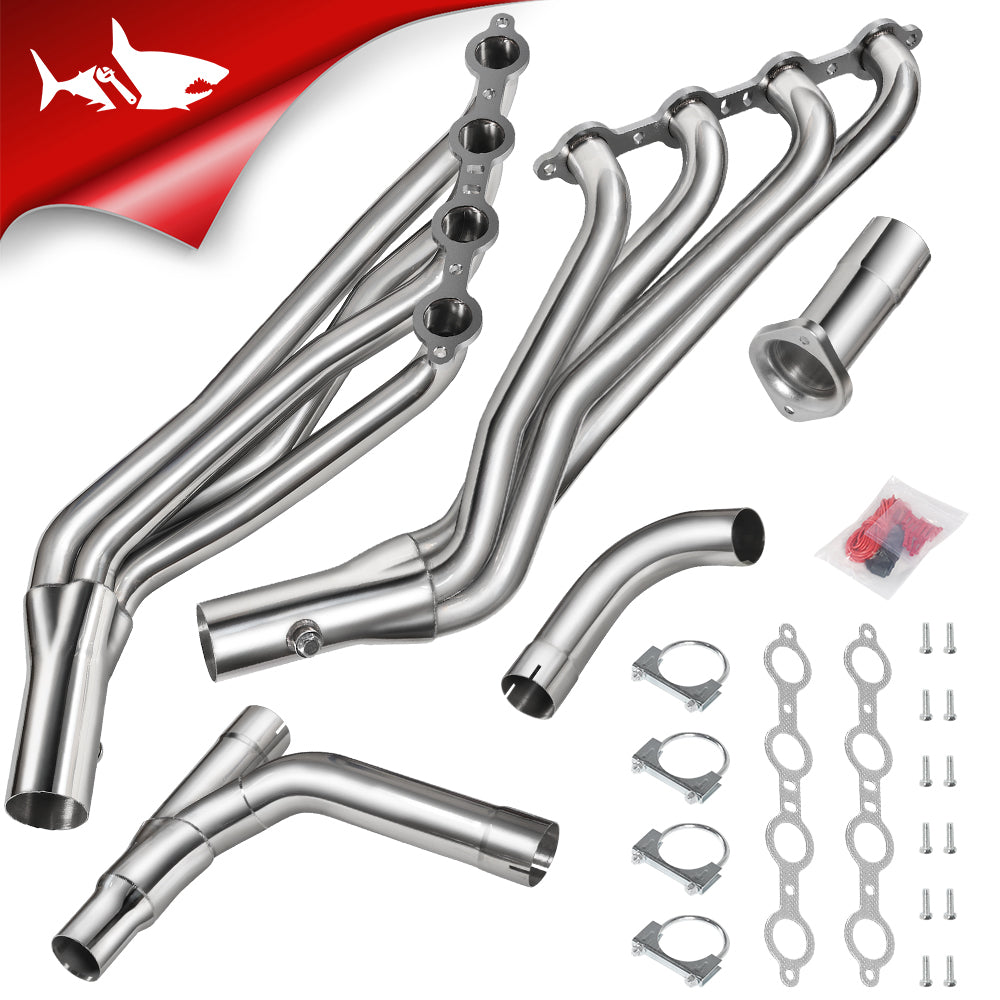
This is where the intake begins to make more sense as one piece of a full airflow package. Long-tube headers reduce exhaust-side pumping loss. A freer Y-pipe and exhaust help move spent gas out. The tune can then adjust fuel, spark, torque management, throttle behavior, and transmission strategy around the new hardware.
A mild 5.3L with long tubes, a proper exhaust path, intake, and calibrated tune can often gain approximately 15–30 whp as a complete package. Cammed combinations can go considerably higher. Again, do not put the entire number on the intake box.
2014 Silverado Cold Air Intake HP Gains: What the Numbers Mean
The phrase 2014 Silverado cold air intake hp gains needs its own section because the 2014 Silverado 1500 is not simply another GMT900 truck with a different grille.
Why the 2014 5.3L L83 Must Be Treated Separately
The 2014 Silverado 1500 introduced the K2XX platform and the Gen V 5.3L EcoTec3 L83. It uses direct injection, variable valve timing, Active Fuel Management, a different cylinder-head and intake architecture, and newer engine controls. Factory output is rated at 355 hp and 383 lb-ft on gasoline.
That is a different package from a Gen III LM7 or Gen IV LMG. The displacement badge still says 5.3L, but the intake routing, MAF arrangement, throttle connection, calibration, and mounting points can differ.
Published 2014 Silverado Intake Test Examples
Two useful published examples show why a range is more honest than one universal answer:
- Example one: An estimated 10 HP increase at approximately 4,700 rpm.
- Example two: An estimated 6.61 HP increase at approximately 4,998 rpm.
Both results put the larger change in the mid-to-upper rpm range. Neither says the truck gained the same amount at 2,000 rpm. Neither proves that every intake, every fuel blend, and every Silverado will repeat the result.
This is the correct way to discuss 2014 Silverado cold air intake hp gains: name the test conditions, identify where the gain occurred, and avoid turning a single peak point into an across-the-board promise.
A Realistic Target for a Stock 2014 Silverado 5.3L
For a stock L83 with a healthy engine and factory calibration, approximately 5–10 peak HP is a defensible planning range for a well-designed intake under favorable conditions. The wheel-horsepower change through the entire curve may be smaller.
The driver is more likely to notice:
- Stronger induction sound: Especially when the throttle opens beyond normal cruising angles.
- Cleaner high-rpm breathing: Most noticeable during highway merging, passing, or a full-throttle pull.
- Slightly sharper response: Provided the MAF signal is stable and the intake is not heat-soaking badly.
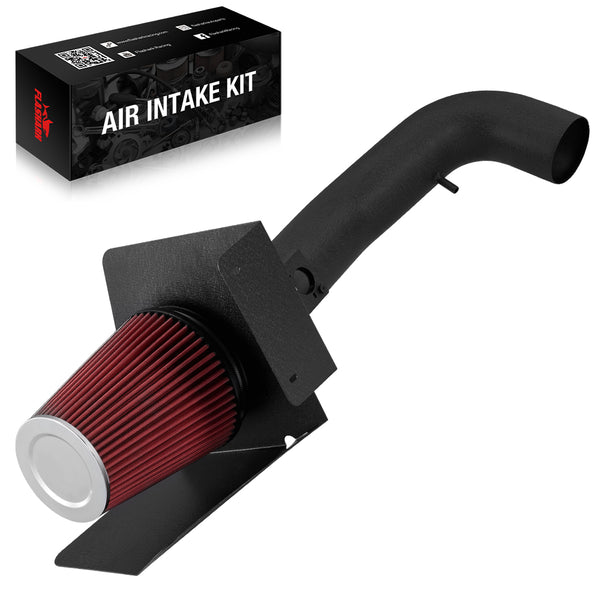
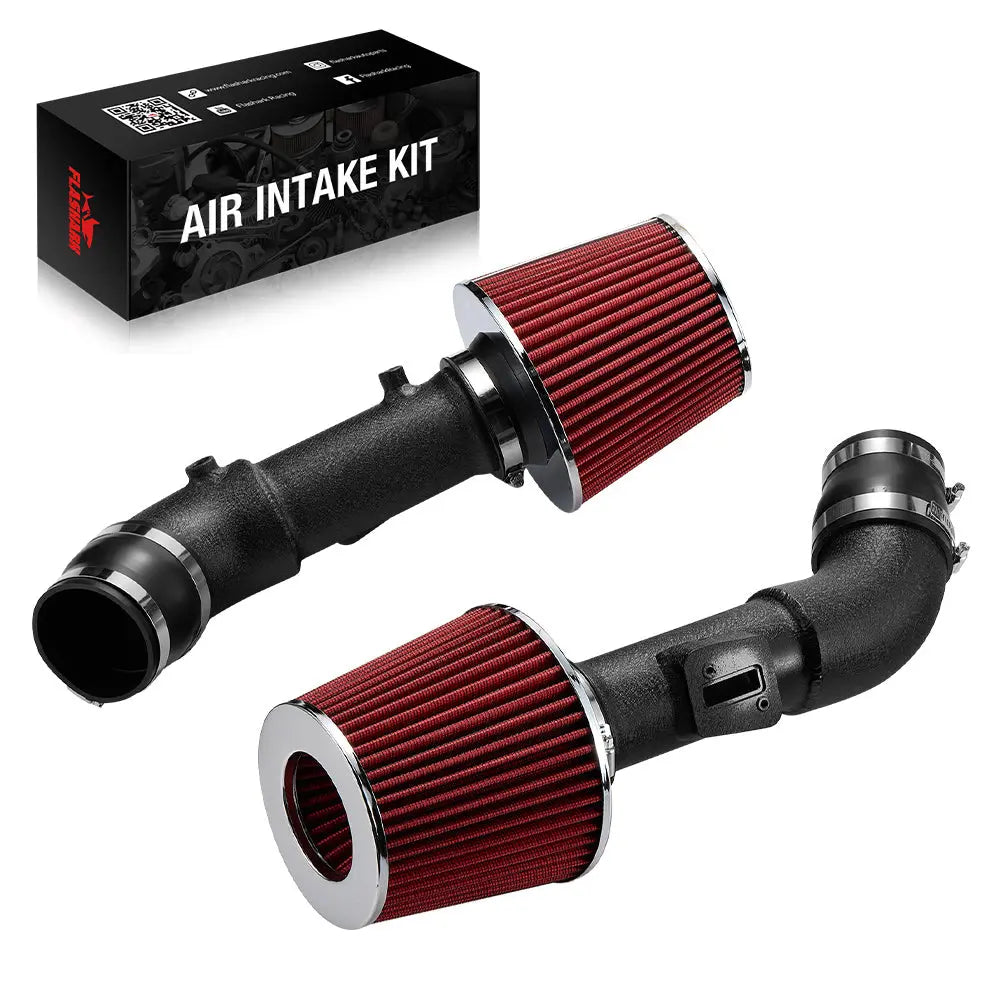
Flashark Cold Air Intake for 2007–2014 Chevy/GMC V8
Available in separate 2007–2008 and 2009–2014 selections. For a 2014 Silverado 1500, verify the L83 engine, MAF housing, throttle-body connection, intake routing, and mounting points before ordering.
$89.99 Compare-at price not displayed
Price shown for the 2009–2014 variant at the time of drafting. Confirm the live page before purchase.
GMT800 vs GMT900 vs 2014 L83 Intake Differences
GM generation overlap can make online fitment messy. A seller writes “1999–2014 5.3,” the buyer sees the right displacement, and everybody assumes the tube will bolt on. That is how return labels get printed.

For a broader breakdown of RPO codes, factory horsepower, AFM, and engine-generation differences, read the guide to 5.3 Vortec specifications, horsepower limits, and common problems.
1999–2006 GMT800 5.3L Vortec
Most 1999–2006 Silverado and Sierra 5.3L trucks use Gen III engines such as the LM7 or L59. These trucks commonly have a large plastic airbox, a panel filter, molded resonators, and a corrugated inlet hose designed to keep noise down.
Replacing that path with a smooth tube and larger cone filter can make the intake sound much more obvious. On a stock truck, I would still keep the horsepower expectation conservative. The main gains are reduced restriction under load, easier filter service, and a more direct induction note.
The 1999–2006 Chevy/GMC 5.3L cold air intake kit uses a 4-inch aluminum tube, dry filter, and heat shield for compatible Vortec truck and SUV applications. Verify the engine, body style, MAF position, and whether the vehicle is a later “Classic” model before ordering.
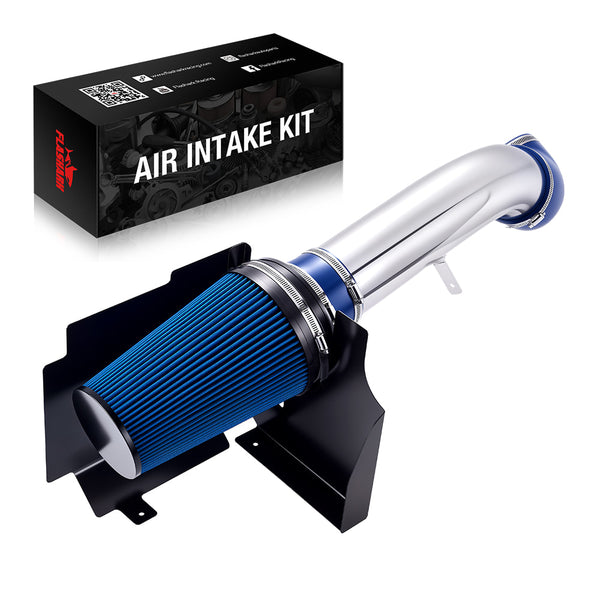
Flashark 1999–2006 Chevy/GMC Vortec Cold Air Intake
A 4-inch polished aluminum intake with a dry cone filter and heat shield for compatible Silverado, Sierra, Tahoe, Yukon, Suburban, Avalanche, and related Vortec applications.
$79.99 $129.99
Price shown for the intake-only option at the time of drafting. Product variants and promotional pricing may change.
2007–2013 GMT900 5.3L Vortec
The 2007–2013 GMT900 generation brought drive-by-wire control across the mainstream truck range, newer MAF strategies, and Gen IV engines such as the LMG and LC9. Many applications also use AFM.
The original airbox is not useless. It already pulls air from a cooler area near the fender. A replacement intake has to do more than expose a cone filter under the hood. It should provide a sensible air path, support the filter, preserve MAF accuracy, and limit direct exposure to exhaust and radiator heat.
For owners who want a polished 4-inch setup with a narrower year range, the 2009–2013 Silverado and Sierra 4-inch cold air intake kit is the more specific option. Confirm the engine and factory intake arrangement rather than ordering by body shape alone.
2014 K2XX 5.3L EcoTec3 L83
The 2014 Silverado 1500 moved to the K2XX chassis and Gen V L83. This is where a lot of catalog language gets sloppy. A broad “2009–2014” title may cover different variants, but it does not make a 2014 L83 intake identical to a 2011 LMG intake.
2014 fitment warning
Do not order by “5.3L” alone. Confirm that the product selection matches the 2014 Silverado 1500 L83 intake layout. Check the MAF housing, sensor bolt pattern, throttle-body coupler, PCV or breather connections, tube routing, heat-shield shape, and mounting points. A 2014 HD or overlapping SUV application may use different hardware.
Where You Actually Feel the Difference
Throttle Response
“Throttle response” is one of those phrases people throw around without explaining it. An intake cannot remove the electronic delay deliberately built into the pedal and throttle calibration. It also cannot create a pile of torque at 1,500 rpm out of thin air.
What it can do is reduce the pressure drop between the filter and throttle body as airflow demand increases. It also removes some factory sound-damping chambers. The engine sounds more awake as soon as the blade opens, which makes the response feel more immediate.
The distinction matters. Faster sound is not always the same as substantially faster acceleration.
High-RPM Airflow
A 5.3L four-stroke engine consumes far more air at 5,000 rpm and wide-open throttle than it does at 2,000 rpm while cruising. This is why an intake restriction that is nearly irrelevant around town can become measurable during a full pull.
The published 2014 examples showing 6.61 HP at 4,998 rpm and 10 HP at 4,700 rpm fit that pattern. The intake starts earning its keep when the engine is moving enough air for tube shape, filter area, and pressure loss to matter.

Induction Sound and Perceived Acceleration
Remove the sealed factory airbox and the 5.3L stops whispering. At light throttle, the difference may be modest. Lean into the pedal and you hear the filter, the air rushing through the tube, and the V8 working against load.
That sound is part of the appeal. There is nothing wrong with enjoying it. Just do not use your ears as a calibrated dyno.
Representative shop-floor case
I use this example because the same pattern shows up again and again. A 2014 Silverado 5.3L owner installs an open-element intake and expects a 20-whp transformation. On the first drive, the truck sounds much stronger above 3,500 rpm, yet normal part-throttle acceleration feels almost unchanged.
When I approach a truck like that, I do not start by blaming the intake. I check the MAF installation, fuel trims, couplers, heat-shield seal, and intake-air temperature. If those numbers look normal, the explanation is usually simple: the part reduced restriction where airflow demand was high, while the driver expected a large torque increase where airflow demand was still low.
That is not a failed modification. It is an expectation problem.
Why Cold Air Intake Dyno Numbers Vary So Much
Crank Horsepower vs Wheel Horsepower
GM’s advertised engine rating is measured at the crank under controlled procedures. A chassis dyno measures power after losses through the transmission, torque converter, driveshaft, differential, wheel bearings, tires, and—in four-wheel-drive testing—additional driveline components.
A 355-hp L83 does not put 355 hp to the rear tires in stock form. Therefore, “10 HP gained” must be labeled clearly:
- Crank HP: Estimated engine output before driveline loss.
- WHP or RWHP: Power measured at the driven wheels.
- Estimated HP: May be based on a dyno comparison, calculated airflow, or another test procedure.
If the manufacturer does not specify the measurement, do not silently turn the number into wheel horsepower.
Peak Gain vs Peak Horsepower
This catches a lot of people.
Imagine the stock truck makes 250 whp at 4,700 rpm and 265 whp at 5,300 rpm. The intake version makes 260 whp at 4,700 rpm but still peaks at 269 whp near 5,300 rpm. The advertising can truthfully say “10 HP gain,” while the vehicle’s absolute peak power increased by only 4 whp.
Both numbers are useful. They answer different questions.
Intake-Air Temperature and Heat Soak
A larger filter does not help much if it is surrounded by stagnant engine-bay heat. Aluminum tubing also absorbs radiant heat while the truck sits still. Once the vehicle moves, airflow through the tube is rapid and the effect can shrink, but heat-shield design and sealing still matter.
Watch intake-air temperature relative to ambient temperature:
- At idle after heat soak: A noticeable temperature rise is normal.
- At steady road speed: Temperature should begin dropping toward ambient if the filter has access to outside air.
- During repeated dyno pulls: Fan placement and cooldown time can materially change the result.
Dyno Type, Weather Correction, Fuel, and ECU Learning
Two honest dyno tests can produce different numbers. Dynojet, Mustang, and load-bearing dynos do not always report the same value. Correction method matters. So do humidity, barometric pressure, coolant temperature, tire pressure, transmission temperature, fuel quality, and test gear.
The ECU also needs a clean signal. Disconnecting the battery immediately before one run, testing with unstable fuel trims, or comparing a cold baseline against a fully heat-soaked modified run can skew the result.
Listen to me on this one: A single dyno screenshot without the full curve, correction method, test gear, ambient conditions, and baseline procedure is not enough to declare that one intake is worth 15 horsepower and another is worth three.
Does a 5.3 Silverado Need a Tune After a Cold Air Intake?
When the Stock Calibration Is Usually Enough
A bolt-on intake designed around the original MAF sensor and a compatible MAF housing normally works with the factory calibration. The ECU has enough adaptive range to handle modest airflow changes.
After installation, check for:
- Stable idle
- No diagnostic trouble codes
- No whistle caused by an unsealed coupler
- Normal short-term and long-term fuel trims
- No hesitation when the throttle opens
If fuel trims remain roughly within plus or minus 5% during normal closed-loop operation, that is generally reassuring. Consistent corrections beyond approximately 10% deserve investigation. Do not immediately buy a tune to hide an air leak.
When Tuning Becomes More Valuable
Tuning is more useful when the truck already has multiple airflow changes or when the new intake materially changes the MAF housing. Common examples include:
- Long-tube headers and a freer Y-pipe
- Camshaft, springs, and valvetrain upgrades
- Ported or larger throttle body
- Different intake manifold
- Major MAF tube-diameter change
- Higher-octane or ethanol-based calibration
- Transmission and torque-management changes
Tuning does not merely “turn on” the intake. It coordinates spark, fueling, airflow modeling, throttle control, transmission behavior, and torque limits around the complete combination.
Why Tuned Power Is Not Intake-Only Power
Suppose a stock truck gains 5 whp from an intake. A tune is then added, torque management is reduced, spark is optimized, and the truck shows a 14-whp total improvement from the original baseline. Calling that a “14-whp cold air intake” is misleading.
The correct description is: intake plus calibration produced the total result.
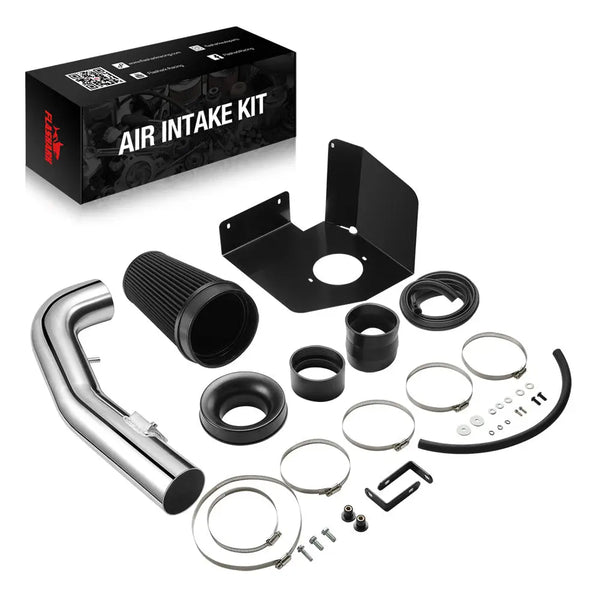
Flashark 2009–2013 Silverado/Sierra 4-Inch Intake
A polished aluminum 4-inch tube, cone filter, heat shield, couplers, and mounting hardware for listed 4.8L, 5.3L, 6.0L, and 6.2L applications. This option keeps the fitment range focused on 2009–2013 trucks.
$99.99 $139.99
Pricing displayed at the time of drafting. Check the product page for current availability and exact engine fitment.
How Exhaust Upgrades Change Intake Results
With the Stock Exhaust System
On a completely stock truck, the intake is only one section of a long airflow path. The cylinder heads, camshaft, factory manifolds, catalytic converters, Y-pipe, muffler, and calibration still determine how much air the engine can use.
This is why a large tube does not automatically create a large gain. Bigger is useful only when the rest of the engine demands the airflow and the MAF calibration remains correct.
With a Cat-Back Exhaust
A cat-back changes the rear section of the exhaust. It can improve sound and reduce some restriction, but it normally leaves the factory manifolds and catalytic converter section untouched.
The intake and cat-back may complement each other at higher rpm. Just keep the expectations grounded. The truck will usually sound more different than it measures.
With Long-Tube Headers and a Y-Pipe
Long-tube headers change the pressure-wave behavior and primary exhaust restriction much more than a rear muffler swap. On a suitable street build, that can move the engine’s airflow requirement high enough for intake restriction to become more relevant.
For a broader plan covering intake, headers, camshafts, fueling, tuning, and other supporting modifications, review the complete 5.3 Vortec performance-upgrade path.
The order I usually recommend for a basic street truck is simple:
- Fix maintenance problems first: Misfires, vacuum leaks, dirty MAF sensors, weak fuel pressure, and exhaust leaks can erase the value of new hardware.
- Improve the airflow path: Intake, headers, Y-pipe, and a sensible exhaust should match the truck’s intended rpm range.
- Calibrate the combination: Tune only after the hardware is installed and mechanically sound.
- Protect the drivetrain: A tired 4L60E does not care how attractive the dyno graph looks.
Flashark Cold Air Intake Fitment Guide
For 1999–2006 GMT800 Trucks
Start with the vehicle year, engine RPO, body style, throttle control, and MAF arrangement. Early cable-throttle and later drive-by-wire applications are not always interchangeable just because both engines displace 5.3 liters.
Check whether the truck has factory or swapped components. A junkyard LM7 installed in another chassis may use a different throttle body, accessory drive, radiator position, and air-filter location than the donor truck.
For 2007–2013 GMT900 Trucks
Confirm the engine and intake layout, especially around transition years. A “2007 Classic” may retain GMT800 body and intake architecture, while a new-body 2007 truck uses the GMT900 arrangement.
Sierra owners can also browse GMC cold air intake kits for Sierra applications to compare options by vehicle instead of relying only on a broad displacement label.
For 2014 Silverado 1500 L83 Trucks
The 2009–2014 Silverado and Sierra V8 cold air intake kit includes a listed 2009–2014 selection, but the buyer should still confirm the exact 2014 engine and physical layout before purchase.
Compare the product photos with the original assembly under your hood. Look at:
- MAF housing shape and bolt pattern
- Sensor orientation
- Throttle-body coupler diameter
- PCV and breather connections
- Tube bends and clearance
- Heat-shield mounting holes
- Radiator hose and fan-shroud clearance
When You Are Shopping Across Multiple Vehicles
For other engines and platforms, the broader selection of vehicle-specific performance air intake kits is more useful than trying to adapt a Silverado tube to an unrelated engine bay.
A universal-looking tube may physically fit between two points, but that does not guarantee a correct MAF signal, safe filter placement, proper crankcase ventilation, or adequate clearance under engine movement.
Installation Mistakes That Can Erase the Gain

Installing the MAF Sensor Backward
Most MAF sensors are directional. Look for an airflow arrow or match the original sensor orientation before removing it. Installing the sensor backward can cause poor idle, hesitation, abnormal fuel trims, and a check-engine light.
Leaving an Air Leak After the MAF
Any opening between the MAF and throttle body allows unmetered air to enter. The ECU did not count that air, so fueling goes lean and trims climb positive.
Common leak points include:
- Couplers folded under a clamp
- Loose breather hoses
- Unused fittings left uncapped
- Clamps positioned partly off the tube bead
- Cracked factory PCV connections
Over-Oiling a Serviceable Filter
Some reusable filters require oil. Too much oil can migrate toward the MAF element and attract contamination. Flashark applications using a dry filter avoid the oiling step, but the filter still needs correct cleaning and complete drying before reinstallation.
For maintenance instructions, see how to clean a dry cold air intake filter.
Leaving Gaps Around the Heat Shield
A heat shield does not need to be airtight like a submarine, but large gaps can allow hot radiator and exhaust air to feed the filter at low speed. Fit the supplied edge seal correctly and align the shield with the factory cool-air opening whenever the design allows it.
Overtightening Clamps
More torque is not always more secure. A worm-drive clamp can deform a silicone coupler, crush a thin tube, or push the connection out of alignment. Tighten it enough to prevent movement, then recheck after the first heat cycle.
Representative diagnostic case
A common post-install complaint goes like this: the truck idles rough, the check-engine light appears, and the owner assumes the larger intake tube confused the ECU. In the representative cases I use for diagnosis training, the scan tool often shows long-term fuel trim climbing toward approximately +15% to +20%.
I start with the simple items. MAF connector fully seated? Sensor facing the right direction? Coupler folded under the clamp? Breather line connected? Smoke test clean?
Once the post-MAF leak is repaired, fuel trim commonly returns much closer to the normal single-digit range. Many new owners jump straight to tuning software when the real problem is a ten-minute installation mistake. Do not do that.
How to Test Whether the Intake Added Power
Use the Same Dyno and the Same Procedure
For a meaningful before-and-after comparison, keep as many variables as possible unchanged:
- Same dyno
- Same test gear
- Same fuel and fuel level
- Similar ambient temperature and humidity
- Similar coolant and transmission temperature
- Same tire pressure
- Same drivetrain mode
- Comparable cooldown time
Run the truck more than once. The highest lucky pull is not always the most representative result.
Compare the Full Curve
Peak horsepower is only one point. Look at power and torque between roughly 3,000 and 5,500 rpm. A modification that adds 5 whp over a broad section may improve acceleration more consistently than one that briefly spikes 9 HP near the limiter.
Log Intake Temperature and Fuel Trims
A basic scan tool or logging device can expose issues that the seat of your pants cannot identify. Useful channels include:
- Intake-air temperature
- MAF airflow
- Short-term fuel trim
- Long-term fuel trim
- Throttle angle
- Ignition timing
- Knock retard
- Engine coolant temperature
Do Not Rely on One Street Pull
Traffic, wind, road grade, transmission behavior, and starting speed can change a street test. A GPS performance meter and repeated testing on a safe, controlled course are better than guessing, but they still do not replace a controlled dyno comparison.
Is a Cold Air Intake Worth It for Your 5.3 Silverado?
It Makes Sense for These Owners
- You want more V8 induction sound: The intake note becomes much clearer when the throttle opens.
- You regularly use the upper rpm range: Highway passing and full-throttle acceleration are where reduced intake restriction matters most.
- You are planning headers and tuning: The intake becomes part of a coordinated airflow package.
- Your factory tube or airbox is damaged: An aftermarket kit can replace aging plastic and rubber parts while adding a reusable filter.
- You understand modest gains: You are buying a supporting modification, not expecting forced-induction power.
It May Not Be Your Best First Modification
- You expect 20–30 whp from the intake alone: That is not a responsible expectation for a stock naturally aspirated 5.3L.
- The truck has unresolved maintenance problems: Fix misfires, vacuum leaks, dirty sensors, low fuel pressure, and exhaust leaks first.
- You only care about low-rpm towing torque: Gearing, tuning, transmission strategy, and exhaust selection may have a larger effect.
- You cannot confirm fitment: A wrong MAF housing or tube layout creates more trouble than value.
- You drive in severe dust and ignore filter maintenance: Any high-flow filter still needs inspection and cleaning.
Cost vs Performance Verdict
Judged only by peak horsepower per dollar, a cold air intake is not always the strongest modification available for a 5.3L truck. A proper tune or long-tube header package may produce a larger measurable change, although it also costs more and involves more work.
The intake earns its place by being relatively straightforward, improving induction sound, reducing some high-load restriction, and supporting future airflow modifications. Buy it for that combination—not for an inflated promise printed without test conditions.
Final Verdict on 5.3 Cold Air Intake HP Gain
The honest answer is not glamorous: a stock 5.3L Silverado commonly gains a few wheel horsepower, with favorable peak tests landing around 6–10 HP. The change is usually strongest in the upper half of the rpm range.
Owners commonly notice induction sound and throttle feel before they notice outright acceleration. Add a freer exhaust, headers, and a proper calibration, and the intake becomes more useful because the engine is moving more air. But the total package gain should never be mislabeled as intake-only power.
The final rule is simple. Match the intake to the truck—not merely to the “5.3” badge. GMT800, GMT900, and the 2014 L83 do not share one universal intake arrangement. Confirm the platform, engine, MAF housing, connections, and routing before ordering.
That is the realistic 5.3 cold air intake hp gain story. Modest power. Better sound. Cleaner high-rpm breathing. More value when the rest of the combination can use it.
Frequently Asked Questions
Q1: How much horsepower does a cold air intake add to a 5.3 Silverado?
A1: A healthy stock 5.3L Silverado will commonly see approximately 3–8 additional wheel horsepower through the useful portion of the power curve. Favorable peak tests may show about 6–10 HP, but the exact result depends on the intake, engine generation, temperature, fuel, drivetrain, and test procedure.
Q2: What are realistic 2014 Silverado cold air intake hp gains?
A2: Published third-party tests for compatible 2014 Silverado 5.3L applications have reported approximately 6.61 HP at 4,998 rpm and 10 HP at 4,700 rpm. These figures come from different intake systems and should not be treated as guaranteed Flashark results.
Q3: Will I feel the horsepower gain after installing an intake?
A3: You may notice sharper sound and response, especially above approximately 3,500 rpm. A single-digit wheel-horsepower increase is measurable but may not create a dramatic low-speed push in a heavy full-size truck.
Q4: Does a 5.3 Silverado need a tune after a cold air intake?
A4: A correctly designed bolt-on intake that retains compatible MAF geometry usually works with the factory calibration. Tuning becomes more useful when the truck also has headers, a camshaft, a different throttle body, a major MAF housing change, or other substantial airflow modifications.
Q5: Does a cold air intake improve throttle response?
A5: It can make the engine feel more immediate when the throttle opens by reducing intake restriction and removing factory sound-damping chambers. It does not remove all electronic throttle delay or create a large low-rpm torque increase by itself.
Q6: Does a cold air intake add more power with an exhaust?
A6: It can. A freer exhaust allows the engine to move more air through the complete system, making intake restriction more relevant. The final number must be credited to the intake, exhaust, headers, and tune as a combination rather than to the intake alone.
Q7: Is the stock Silverado airbox already a cold air intake?
A7: The factory airbox usually draws air from a cooler fender or grille area, so it already performs part of the cold-air function. Aftermarket systems focus on reducing tube restriction, increasing filter area, removing resonators, and changing sound while still trying to control engine-bay heat.
Q8: Are cold air intake gains mainly at high rpm?
A8: Usually, yes. Intake airflow demand rises with engine speed and throttle opening. This is why published peak improvements commonly appear between roughly 4,500 and 5,300 rpm rather than during low-speed cruising.
Q9: Will a cold air intake make my 5.3 Silverado louder?
A9: Yes. The largest sound difference occurs under moderate to heavy throttle. Idle may remain fairly close to stock, while wide-open throttle produces a deeper and more noticeable induction roar.
Q10: Can a cold air intake cause a check-engine light?
A10: A properly fitted intake should not normally trigger a light. Common causes include a backward MAF sensor, loose MAF connector, air leak after the sensor, incorrect MAF housing, disconnected breather line, or excessive contamination on the sensing element.
Q11: Can an oiled filter damage the MAF sensor?
A11: Excess filter oil can migrate onto the MAF element and collect dirt, especially when the filter is heavily over-oiled. This is not guaranteed to happen with every oiled filter, but correct servicing is important. A dry filter avoids the oiling step.
Q12: Does an aluminum intake tube suffer from heat soak?
A12: Aluminum absorbs heat while the vehicle sits, but moving air passes through the tube quickly once the truck is driving. Filter location, heat-shield sealing, road speed, ambient temperature, and access to outside air generally matter more than tube material alone.
Q13: Will a cold air intake improve fuel economy?
A13: A small improvement is possible under steady driving, but it should not be promised. Tire size, gearing, load, traffic, speed, tune, fuel, and driving behavior usually have a much larger effect on Silverado fuel economy.
Q14: Will the same intake fit every 2007–2014 Silverado 5.3L?
A14: No. The 2007–2013 GMT900 trucks and the 2014 K2XX Silverado 1500 use different engine and intake architectures. A 2007 Classic may also retain an earlier layout. Confirm the engine, MAF housing, throttle connection, tube routing, and mounting points.
Q15: Is a cold air intake worth it on a stock 5.3 Silverado?
A15: It is worthwhile for owners who want stronger induction sound, modest high-rpm airflow improvement, a reusable filter, and a foundation for later exhaust or tuning work. It is not the right purchase for someone expecting an intake-only 20–30 whp increase.
Q16: Is a cold air intake legal for street use in every state?
A16: Not necessarily. California and some other jurisdictions may require an applicable CARB Executive Order for emissions-controlled vehicles. Check the product’s current emissions status and your local regulations before installing it on a street-driven truck.

Steven Chen
Automotive Performance Specialist | Engine & Exhaust Systems
Steven focuses on practical engine performance, exhaust fitment, and real-world upgrade paths for classic and modern enthusiast vehicles. He reviews small-block Ford, LS, truck, and street/strip applications with one goal in mind: helping builders choose parts that actually work together. His philosophy: "Good power starts with the right combination, not the biggest part."