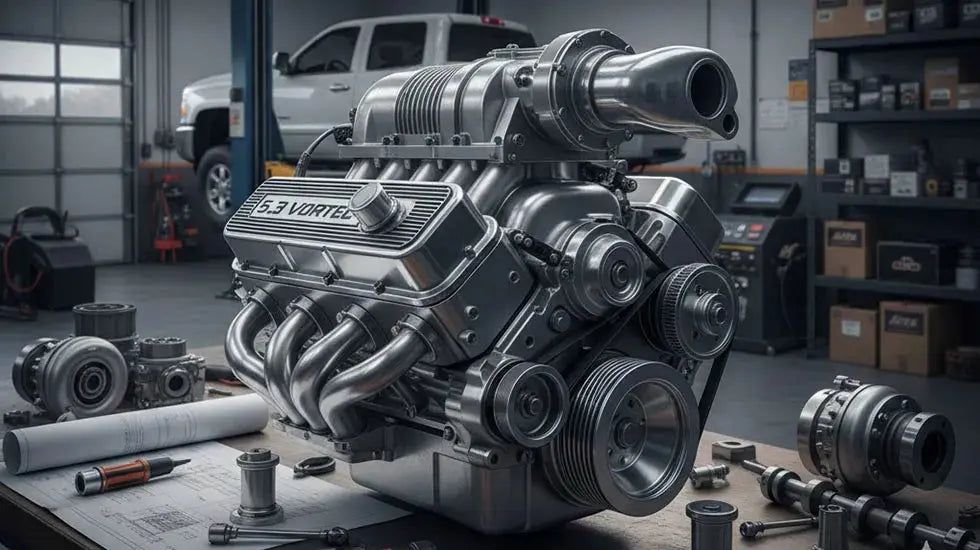
A useful 5.3-liter truck or SUV build starts with the combination, not the biggest part in the catalog. Before choosing an intake, headers, camshaft, tuner, or forced-induction system, identify the vehicle year, engine configuration, drivetrain, emissions equipment, intended use, and the condition of the engine and transmission.
This guide covers Chevrolet Silverado, GMC Sierra, Chevy Tahoe, and related GM truck and SUV applications commonly described by owners as having a “5.3 Vortec.” That name spans more than one vehicle generation and electronic configuration, so two similar-looking parts are not automatically interchangeable. Use the upgrade principles below to plan the build, then match every vehicle-specific part to the exact application before ordering.
- Start with engine health, cooling performance, fuel delivery, transmission condition, and active warning lights before adding performance parts.
- For a daily-driven truck, a well-matched intake, exhaust, and calibration strategy is usually more useful than choosing parts by size alone.
- For towing, prioritize usable torque, temperature control, transmission behavior, and reliability under sustained load.
- Camshaft and forced-induction builds require a complete combination that may include valvetrain, fuel-system, cooling, drivetrain, and calibration changes.
- Header and exhaust results depend on primary routing, collector position, catalytic converters, Y-pipe design, pipe size, mufflers, leaks, and calibration.
- Tune requirements and warning-light behavior vary with the vehicle and installed hardware. Treat the intake, exhaust, sensors, emissions equipment, and calibration as one system.
- Review local emissions and road-use requirements before modifying emissions-related equipment.
Essential Performance Upgrades for the 5.3 Vortec
The most effective 5.3 Vortec performance upgrades depend on what the vehicle actually needs to do. A street truck, towing vehicle, off-road SUV, and higher-output project place different demands on the engine, transmission, cooling system, and exhaust.
| Build goal | Useful starting points | Supporting checks | Common mistake |
|---|---|---|---|
| Daily driving | Maintenance baseline, intake-path inspection, exhaust repair or a matched exhaust change, and calibration review | Fuel trims, leaks, filter condition, cooling operation, tire size, and transmission behavior | Replacing several parts before diagnosing an existing drivability problem |
| Towing | Cooling, transmission support, appropriate gearing, and parts selected for usable low- and midrange response | Loaded temperatures, vehicle weight, axle ratio, tire diameter, fuel quality, and trailer use | Choosing an aggressive camshaft or oversized exhaust only by its peak-output description |
| Naturally aspirated street build | Matched intake, headers or exhaust, camshaft and valvetrain planning, and calibration | Engine condition, converter behavior, gearing, fuel capacity, valve-to-piston clearance where applicable, and downstream exhaust layout | Buying each component separately without checking how the combination will operate |
| Forced induction | Turbocharger or supercharger system planning, charge-air temperature control, fuel delivery, and professional calibration | Compression and leak-down condition, oiling, fuel quality, sensor data, cooling, transmission capacity, and traction | Treating boost pressure as the only measure of engine load or system capability |
Upgrading the Intake System
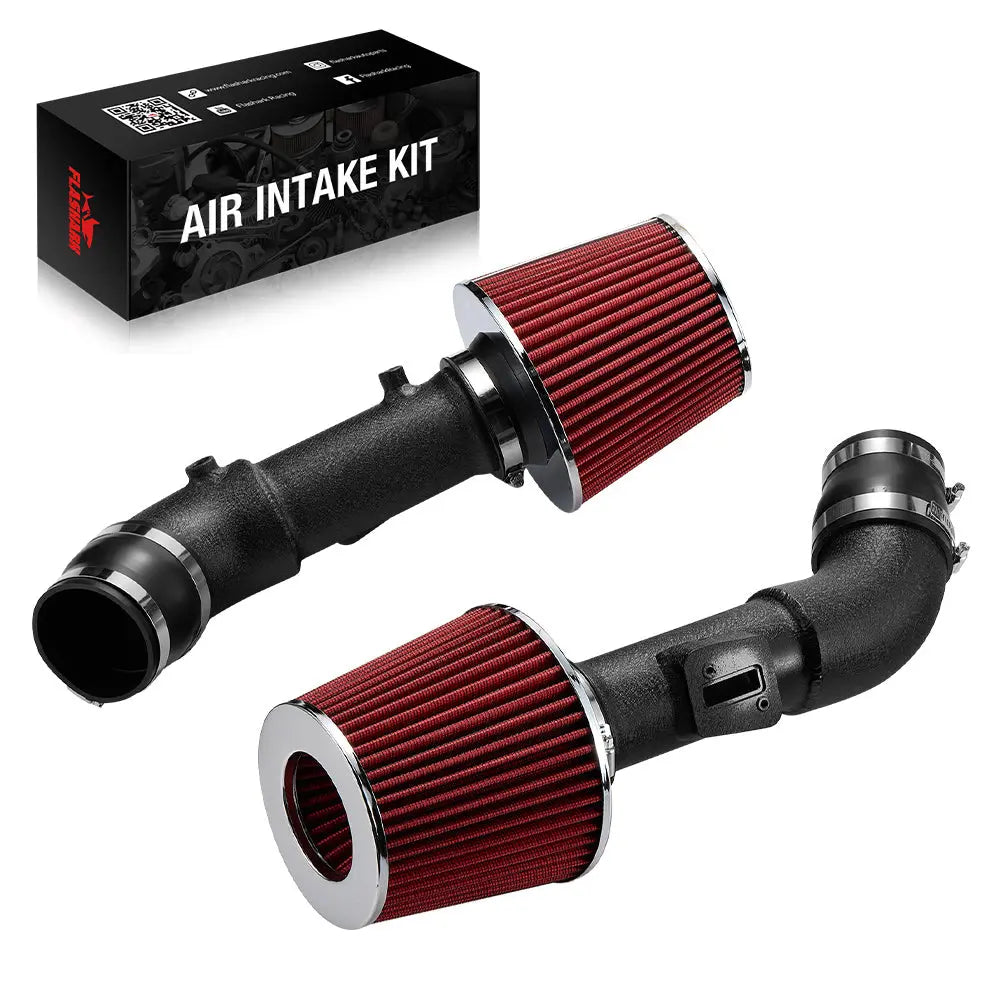
The intake system has to supply clean air with predictable sensor readings and reasonable inlet temperatures. A cold air intake may reduce restriction in part of the inlet path, but its effect depends on filter design, duct routing, heat isolation, airflow measurement, throttle-body configuration, and calibration. A larger tube is not automatically the right tube.
Owners comparing parts for earlier applications can review the 1999–2006 5.3 Vortec cold air intake. Selected later applications are covered by the 2009–2014 5.3 Vortec cold air intake. Match the selected configuration to the vehicle year, engine, sensor arrangement, intake connection, and emissions equipment before ordering.

A high-flow replacement filter can be a practical service item when it fits the housing correctly and provides suitable filtration. A throttle-body spacer is a different type of modification. Its effect depends heavily on the intake-manifold and throttle-body design, so it should not be treated as a universal airflow solution.
After intake work, check every clamp and coupling. Unmetered air entering through a loose connection can affect fuel trims, idle quality, throttle response, and warning-light behavior. Keep wiring away from sharp edges and confirm that the intake tube cannot contact the fan, belt drive, hood, or hot exhaust components.
Upgrading the Exhaust System
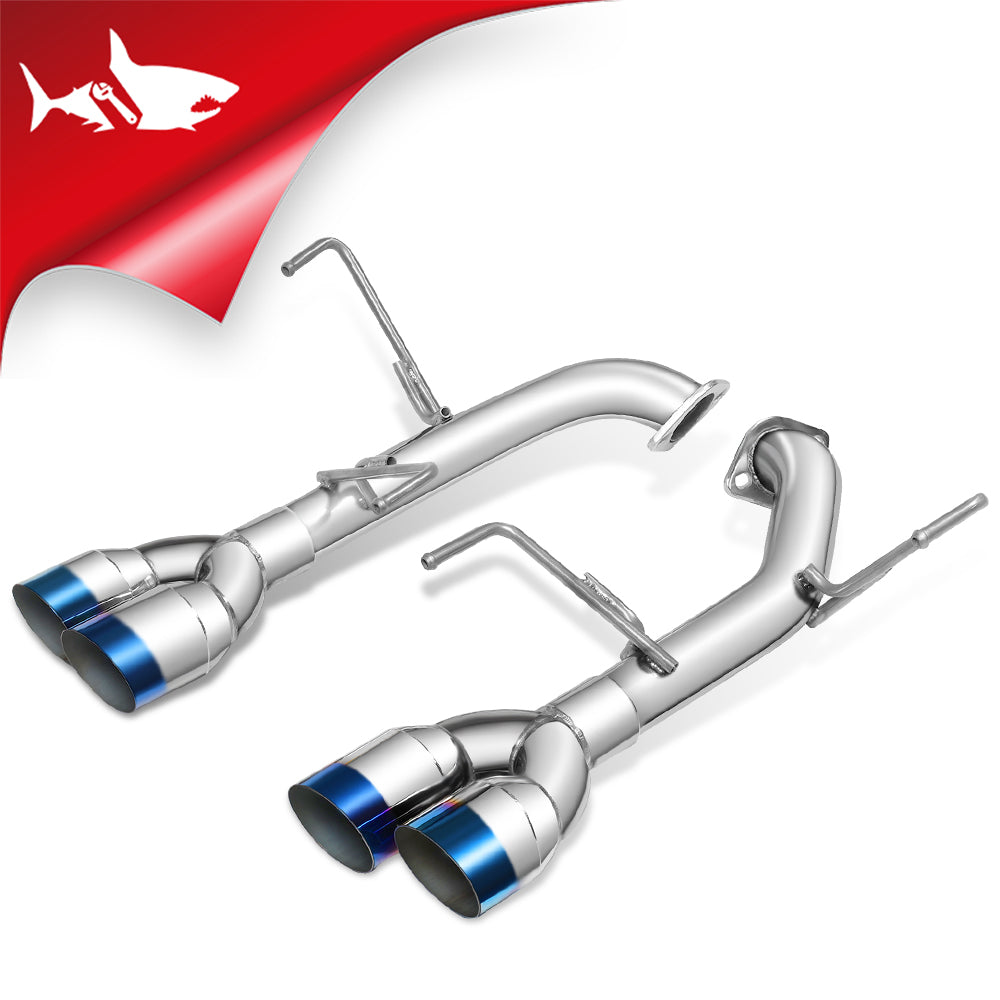
The exhaust should be considered from the cylinder head to the tailpipe. Headers, collectors, catalytic converters, Y-pipes, mid-pipes, mufflers, resonators, and tailpipes all influence flow, sound, clearance, and installation.
A matched header can reduce unnecessary restriction and influence exhaust-pulse behavior compared with a restrictive or leaking factory manifold. The result depends on primary-tube routing, tube size, collector design, collector placement, engine condition, downstream exhaust, and calibration. An oversized primary or pipe may reduce pulse energy at lower engine speeds even if it offers more area at higher flow demand.
| Exhaust component | Where it sits | What matters | Installation checks |
|---|---|---|---|
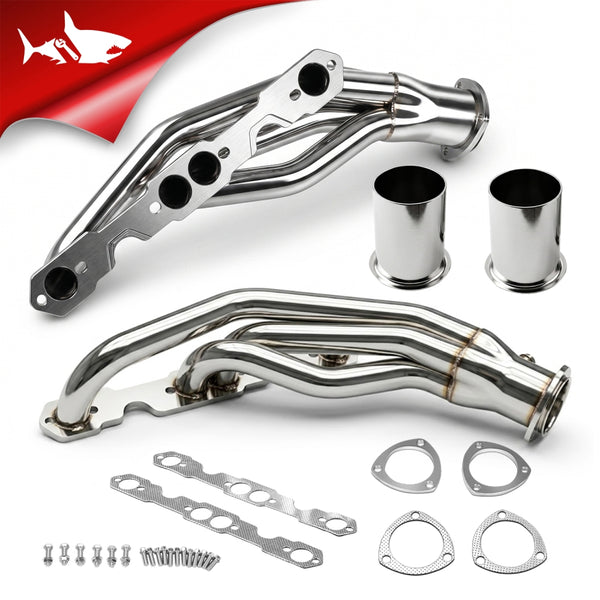
| Shorty or compact header | Near the factory manifold location | Port alignment, flange sealing, tube routing, and connection to the downstream exhaust | Spark-plug access, steering clearance, wiring, heat exposure, and outlet alignment |
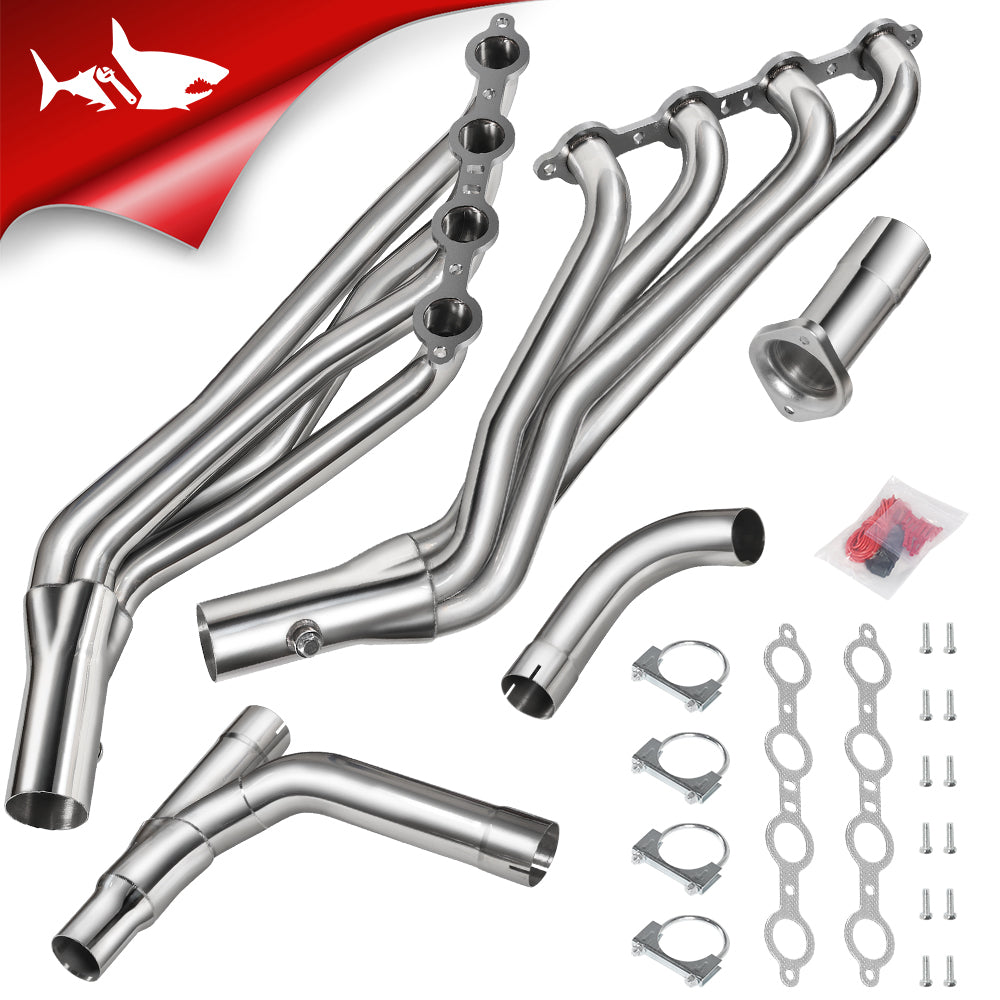
| Long-tube header | Extends farther under the vehicle before the collector | Primary routing, collector position, scavenging behavior, ground clearance, and downstream connection | Frame, transmission, driveshaft, starter, steering, floor, sensor wiring, and service access |
| Y-pipe | Joins the left and right exhaust paths | Merge geometry, collector compatibility, catalytic-converter layout, and outlet connection | Crossmember clearance, transmission access, ground clearance, and leak-free joints |
| Cat-back exhaust | Starts behind the catalytic-converter section | Pipe routing, muffler and resonator design, tailpipe position, and sound control | Hanger alignment, body clearance, spare-tire clearance, outlet position, and joint alignment |
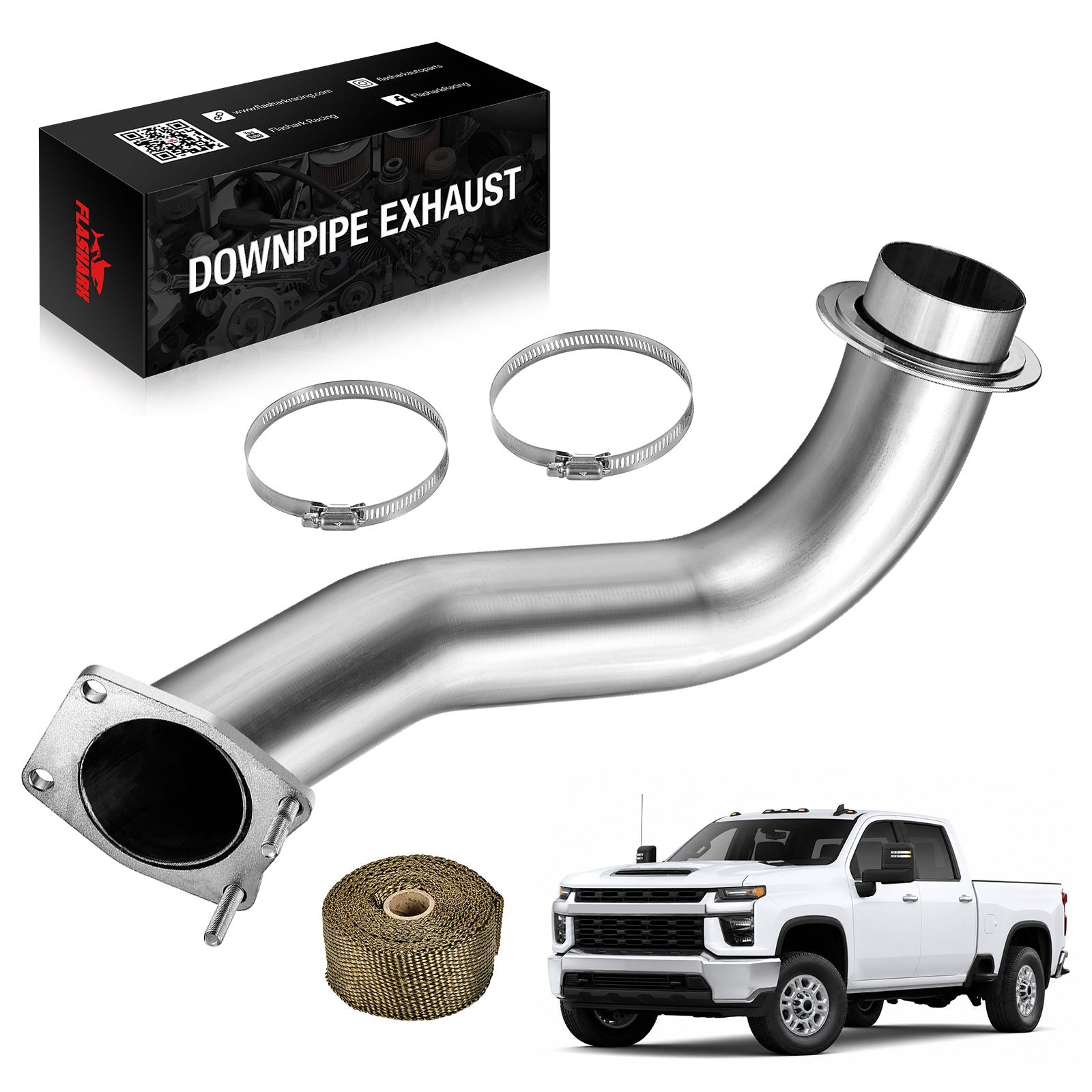
Some owners use “long tube headers” as a broad shopping term, but tube routing and collector position determine the real installation path. Likewise, a Y-pipe is not the same part as a cat-back. The term “downpipe” is normally associated with the exhaust leaving a turbocharger, although shoppers sometimes use it loosely for other front exhaust sections.
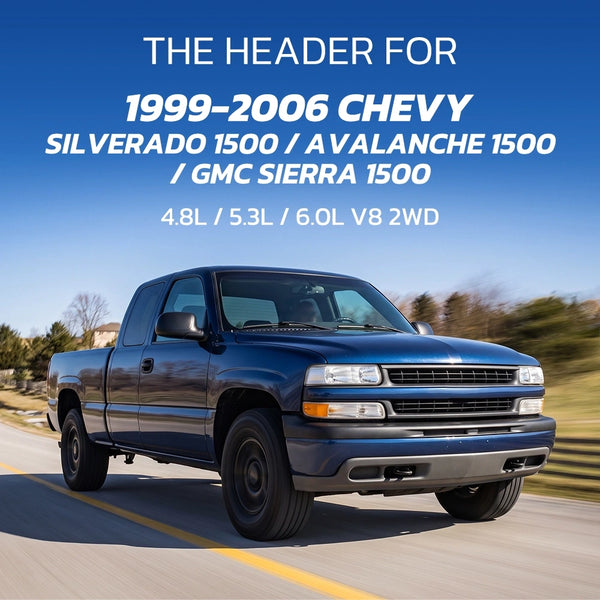
Flashark offers vehicle-specific header options for selected applications, including 1999–2006 5.3 Vortec headers and 2007–2014 5.3 Vortec headers. Compare the product configuration with the vehicle year, engine, drivetrain, steering layout, emissions equipment, sensor arrangement, and downstream connection.

Camshaft Upgrades
The camshaft changes valve timing and lift, so it affects far more than peak output. Cam choice can alter idle quality, low-speed response, the usable rpm range, cylinder pressure, vacuum, converter behavior, valvetrain demand, and calibration requirements.
A towing-oriented combination usually places more value on usable low- and midrange torque than an aggressive high-rpm profile. A naturally aspirated street build may accept a rougher idle and a narrower operating range, but the cam still has to work with the intake, exhaust, compression, gearing, converter, vehicle weight, and intended driving conditions.
Camshaft selection should also account for the supporting valvetrain and mechanical clearances. Do not assume that a cam kit, lifter kit, springs, pushrods, timing components, or calibration are interchangeable across every 5.3-liter application. Match the complete package to the engine configuration.
Fuel System Modifications
More airflow does not automatically mean that every truck needs larger injectors. Fuel-system changes should be driven by measured demand, injector operation, fuel pressure, the planned calibration, fuel type, and the complete engine combination.
Forced induction, a substantial airflow increase, or a change in fuel can raise fuel-system demand. In those situations, injector capacity, pump delivery, wiring, pressure control, and calibration need to be evaluated together. Installing oversized injectors without appropriate data and calibration is not a substitute for system planning.
Forced Induction for Higher Airflow Demand
Turbochargers and superchargers can move substantially more air than a naturally aspirated intake system, but the compressor is only one part of the build. Engine condition, charge-air temperature, fuel delivery, exhaust routing, oiling, cooling, calibration, transmission capacity, and traction all affect the result.
Turbochargers vs. Superchargers
A turbocharger uses exhaust energy to drive its compressor. Turbine sizing, exhaust housing, manifold design, charge piping, intercooling, wastegate control, and exhaust backpressure influence response and operating range. Turbo lag is not a fixed characteristic; it changes with the complete combination.
A mechanically driven supercharger links compressor speed to engine operation through its drive system. It can provide a different response profile, but it also adds drive load and heat. Packaging, belt alignment, inlet restriction, intercooling, and calibration are important selection factors.
| System | Driven by | Major planning areas |
|---|---|---|
| Turbocharger | Exhaust energy | Manifold routing, turbine selection, wastegate control, oil supply and drain, charge piping, intercooling, heat management, and calibration |
| Supercharger | Mechanical drive from the engine | Drive alignment, belt wrap, inlet path, bypass control, intercooling, under-hood clearance, heat management, and calibration |
Boost Levels and Tuning
Boost pressure by itself does not describe cylinder load or safe operating margin. Compressor efficiency, charge temperature, ignition timing, air-fuel control, fuel quality, exhaust backpressure, engine condition, and detonation control all matter.
Tune requirements vary by vehicle and installed hardware. Calibration should be developed around the complete combination, not copied from a different truck that happens to use a 5.3-liter engine. Data logging should include the parameters needed to evaluate fueling, temperature, ignition behavior, airflow measurement, and system control for that application.
Supporting Modifications for Forced Induction
A forced-induction plan may affect the fuel system, cooling system, spark strategy, crankcase ventilation, transmission, converter or clutch, driveshaft, differential, tires, and braking system. Which parts need to change depends on the vehicle, engine condition, intended load, fuel, calibration, and target operating range.
Take a minute before ordering parts as an “upgrade kit.” A useful package is one in which the compressor, fuel delivery, calibration, cooling, exhaust, and drivetrain requirements have been considered together. A box containing several compatible-looking components does not prove that the complete vehicle combination is ready for the added load.
Engine Tuning and ECU Remapping
Why Tuning Is Crucial
The engine control system manages fueling, ignition, airflow calculations, throttle operation, torque management, transmission behavior, emissions monitoring, and other functions that vary by application. Hardware changes can alter the operating conditions the calibration expects.
A tune cannot repair a vacuum leak, weak fuel pump, exhaust leak, damaged sensor, failing ignition component, or mechanical engine problem. Diagnose those issues first. The complete intake, exhaust, emissions, fuel, and calibration combination should then be reviewed as one system.
ECU Remapping vs. Plug-and-Play Tuners
“Performance chip” is a common shopping term, but it can refer to very different products. Depending on the vehicle, the relevant option may be a handheld programmer, a device that loads a prepared calibration, or a custom calibration developed for the installed hardware.
A prepared tune may be intended for a limited range of configurations. A custom calibration can account for a more specific combination, but its quality still depends on accurate vehicle data, sound mechanical condition, suitable instrumentation, and the person performing the work. Do not assume that one file applies to every 5.3 Vortec, Silverado, Sierra, or Tahoe.
Cooling System Upgrades for Performance
Upgrading Radiators
Cooling-system capacity matters when the engine operates under sustained load, high ambient temperature, towing conditions, or increased airflow demand. Radiator selection should consider heat rejection, core condition, airflow through the heat exchangers, fan control, coolant condition, pressure integrity, and available space.
A larger radiator does not correct trapped air, a weak cap, a damaged fan system, an incorrect thermostat, restricted airflow, or a combustion-related cooling problem. Test the system before replacing parts.
Upgrading Cooling Fans
Fan performance depends on airflow through the radiator, shroud design, fan control, electrical capacity, and the space between the fan, engine, and accessories. An electric-fan change may also interact with the vehicle’s control strategy. Wiring, relays, fusing, connectors, and calibration should be matched to the electrical load.
Oil Coolers and Transmission Coolers
Oil and transmission temperature are especially important in towing, off-road, forced-induction, and repeated high-load use. A cooler must receive adequate airflow and should not create poor hose routing, leakage points, or pressure problems. Temperature data is more useful than choosing a cooler by physical size alone.
Transmission and Drivetrain Modifications
Transmission Upgrades
The transmission has to manage vehicle weight, tire diameter, axle ratio, engine torque, shift strategy, and heat. A higher-output engine combination can expose an already worn transmission, but the correct response depends on the actual failure risk and intended use.
Possible planning areas include cooling, fluid condition, converter or clutch behavior, shift control, internal capacity, and driveshaft condition. Do not select a converter, clutch, or shift strategy without considering the camshaft, gearing, tire size, driving environment, and calibration.
Differential Gear Upgrades
Axle ratio changes the relationship between engine speed and road speed. It can improve acceleration or help the engine operate in a more useful range under load, but it also affects cruising rpm, noise, fuel consumption, speedometer accuracy, and traction.
On four-wheel-drive vehicles, front and rear axle ratios must remain correctly matched. Tire diameter and intended road speed should be part of the gearing calculation.
Suspension and Handling Enhancements
Coilovers, Shocks, and Springs
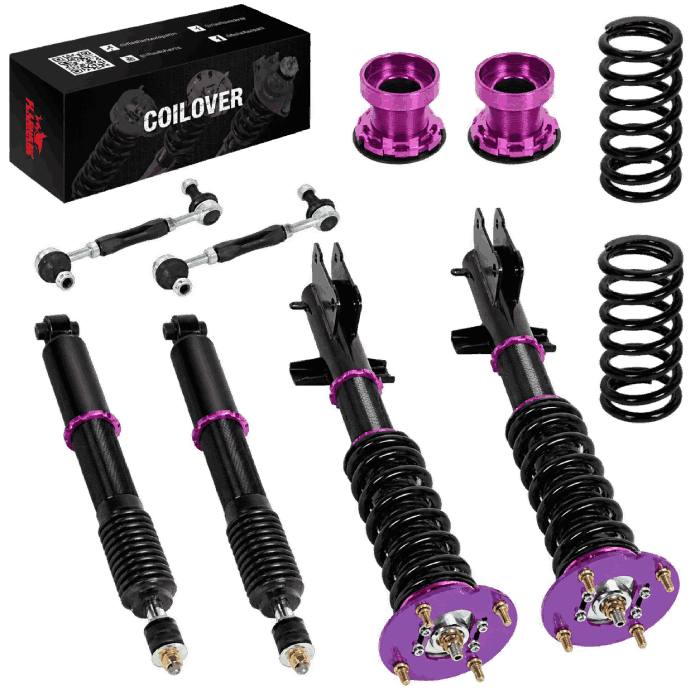
Engine output is only useful when the chassis can control the vehicle. Shocks and springs should be selected for vehicle weight, ride height, suspension travel, payload, road conditions, and intended use. Coilovers are not automatically the correct solution for every truck or SUV, particularly when towing capacity and suspension travel are priorities.
Sway Bars and Chassis Control
Sway bars influence roll stiffness and the balance between the front and rear suspension. A larger bar can reduce body roll, but the final handling balance depends on springs, dampers, tires, alignment, weight distribution, and road surface. Chassis braces should fit without interfering with steering, exhaust, drivetrain, or service access.
Tire Upgrades for Better Grip
Tires affect acceleration, braking, steering response, ride quality, wet performance, and load capacity. Select the tire for the vehicle’s real use rather than appearance alone. Diameter changes can also affect effective gearing, speedometer readings, clearance, and transmission behavior.
How to Maintain Your 5.3 Vortec After Performance Upgrades
Regular Maintenance for Modified Engines
A modified vehicle should have a maintenance plan that reflects how it is used. Check fluids, filters, belts, hoses, clamps, exhaust fasteners, wiring, heat shielding, and visible leaks. Reinspect recently installed components after heat cycles, especially where gaskets, slip joints, clamps, and hangers can settle.
Service intervals may need to change for towing, dusty operation, short-trip use, track use, or forced induction. Use fluid specifications and service procedures appropriate to the vehicle and installed components.
Monitoring Engine Health
Useful monitoring may include coolant temperature, oil pressure, fuel trims, air-fuel data, ignition behavior, transmission temperature, and boost pressure where applicable. The relevant parameters depend on the vehicle and modification.
Do not ignore a new sound, smell, warning light, fluid leak, temperature change, or drivability problem after an installation. Stop and inspect the system before a minor clearance or sealing issue becomes a damaged component.
Installation Planning and Common Mistakes
- Identify the vehicle: Record the year, make, model, engine, drivetrain, transmission, body configuration, emissions equipment, and relevant sensor layout.
- Inspect the baseline: Address leaks, misfires, cooling faults, damaged mounts, weak wiring, and transmission problems before adding parts.
- Compare connection points: Check flanges, couplers, collectors, hangers, sensor provisions, and downstream connections.
- Plan clearance: Inspect the frame, steering, starter, transmission, crossmember, driveshaft, floor, hoses, brake lines, fuel lines, and wiring.
- Test-fit before final tightening: Leave enough movement to align the complete system without forcing one connection into place.
- Protect heat-sensitive parts: Route wiring and hoses away from hot surfaces and moving components.
- Complete the calibration plan: Consider how the installed hardware interacts with airflow measurement, fueling, torque management, transmission control, and emissions monitoring.
- Inspect after operation: Check for leaks, contact marks, loose hardware, shifted hangers, damaged wiring, and abnormal temperatures after heat cycling.
Choosing the Right 5.3 Vortec Performance Parts
Use the following checks when comparing 5.3 Vortec performance parts or a multi-part upgrade kit:
- Does the application match the exact vehicle year, engine, drivetrain, transmission, body configuration, and steering layout?
- Does the part retain or change the catalytic-converter and oxygen-sensor arrangement?
- Where does the part connect to the factory or aftermarket system?
- Will the intake or exhaust routing clear the chassis, accessories, wiring, hoses, and service points?
- Does the build require a calibration review or additional data logging?
- Can the fuel, cooling, transmission, and driveline systems support the intended use?
- Do the selected components work together at the rpm and load range that matters for the vehicle?
- Are the selected configuration and package contents correct for the planned installation?
- Do local emissions and road-use requirements permit the planned modification?
For a street-driven Silverado, Sierra, or Tahoe, a balanced combination usually delivers a better ownership experience than a collection of unrelated parts. Fitment matters more than the marketing number, and the complete system determines the result.
FAQ
Q1: What are the most useful first upgrades for a 5.3 Vortec?
A1: Start by checking engine health, cooling operation, fuel delivery, transmission condition, intake leaks, exhaust leaks, and active warning lights. After that, choose intake, exhaust, calibration, gearing, or cooling changes according to how the vehicle is used. A daily driver and a towing truck should not automatically receive the same combination.
Q2: How much horsepower can 5.3 Vortec performance upgrades add?
A2: There is no reliable universal number. The result depends on the engine configuration, mechanical condition, intake, camshaft, exhaust, fuel, calibration, drivetrain, and test method. Compare performance figures only when the vehicle, fuel, tune, hardware, dyno type, correction method, and wheel or crank horsepower measurement are clearly stated.
Q3: Should I upgrade the intake or exhaust first?
A3: Inspect both systems before buying parts. Repair leaks or restrictions first, then choose the component that addresses the actual limitation and fits the long-term build. An intake may be a simpler starting point, while headers can involve more fitment, heat, sensor, exhaust-connection, and calibration considerations.
Q4: What is the difference between shorty and long-tube headers?
A4: Shorty or compact headers generally keep the outlet closer to the factory manifold area. Long-tube designs extend the primary tubes farther before the collector. Tube routing, primary size, collector position, chassis clearance, downstream connection, and the intended operating range matter more than the label alone.
Q5: Will headers change the exhaust sound?
A5: Headers can change exhaust tone and pulse character, but they do not determine the final sound by themselves. Catalytic converters, Y-pipe design, pipe size, mufflers, resonators, tailpipes, exhaust leaks, and engine calibration all influence volume, tone, rasp, and drone.
Q6: Does a 5.3 Vortec need a tune after an intake or header installation?
A6: Tune requirements vary by vehicle and installed hardware. Airflow measurement, sensor location, emissions equipment, exhaust leaks, fuel trims, and the calibration strategy can all affect the decision. Review the complete combination and monitor vehicle data instead of assuming that every part either always or never requires tuning.
Q7: Will an intake, header, or exhaust modification cause a check-engine light?
A7: Warning-light behavior depends on the vehicle, installed hardware, sensor layout, wiring condition, exhaust sealing, emissions equipment, and calibration. Do not assume a fixed result. Inspect for leaks and wiring problems, scan the vehicle, and diagnose the reported condition rather than replacing parts at random.
Q8: Do I need larger injectors for a cold air intake or headers?
A8: Not automatically. Injector and fuel-pump requirements should be based on measured fuel demand, injector operation, fuel pressure, fuel type, calibration, and the complete airflow combination. Larger injectors still require appropriate control and calibration.
Q9: Can I install a supercharger or turbocharger on a stock 5.3-liter engine?
A9: The decision depends on engine condition, compression and leak-down results, fuel quality, charge temperature, calibration, oiling, cooling, fuel delivery, intended load, and drivetrain capacity. A stock engine designation alone does not establish a safe operating limit.
Q10: Is a cat-back exhaust enough to improve performance?
A10: A cat-back can change the restriction and sound of the exhaust behind the catalytic-converter section, but the performance result depends on the complete system and the vehicle’s existing limitation. Pipe routing, mufflers, resonators, tailpipes, upstream exhaust, engine airflow, and calibration all matter.
Q11: Are camshaft upgrades suitable for towing?
A11: A camshaft can be selected around towing use, but its timing and lift must suit the required rpm range, vehicle weight, gearing, converter or clutch, compression, intake, exhaust, valvetrain, and calibration. An aggressive high-rpm cam is not automatically a useful towing upgrade.
Q12: How do I choose the correct part for my Silverado, Sierra, or Tahoe?
A12: Match the part to the vehicle year, engine, drivetrain, transmission, body configuration, steering layout, emissions equipment, sensor arrangement, and connection type. Check the selected configuration and package contents before installation, and contact customer support if you need help identifying the correct application.
Q13: Are 5.3 Vortec performance parts street legal?
A13: Mechanical fit does not establish road legality or emissions compliance. Requirements vary by location, vehicle, emissions configuration, and product certification. Review local emissions and road-use rules before modifying catalytic converters or other emissions-related equipment.
Q14: Can I install these upgrades myself?
A14: Service items and some intake or cat-back installations may be manageable for an experienced owner with suitable tools and safe lifting equipment. Headers, camshafts, fuel-system work, forced induction, internal transmission work, and calibration can require specialized equipment and knowledge. Stop if the installation involves an unfamiliar safety, wiring, fuel, clearance, or calibration issue.
Q15: What should I inspect after installing performance parts?
A15: Check for intake and exhaust leaks, loose hardware, contact marks, shifted hangers, damaged wiring, hose clearance, abnormal temperatures, warning lights, and changes in drivability. Reinspect clamped and gasketed connections after heat cycling, and diagnose any new symptom before continuing to operate the vehicle under heavy load.

Steven Chen
Automotive Performance Specialist | Engine & Exhaust Systems
Steven focuses on practical engine performance, exhaust fitment, and real-world upgrade paths for classic and modern enthusiast vehicles. He reviews small-block Ford, LS, truck, and street/strip applications with one goal in mind: helping builders choose parts that actually work together. His philosophy: "Good power starts with the right combination, not the biggest part."