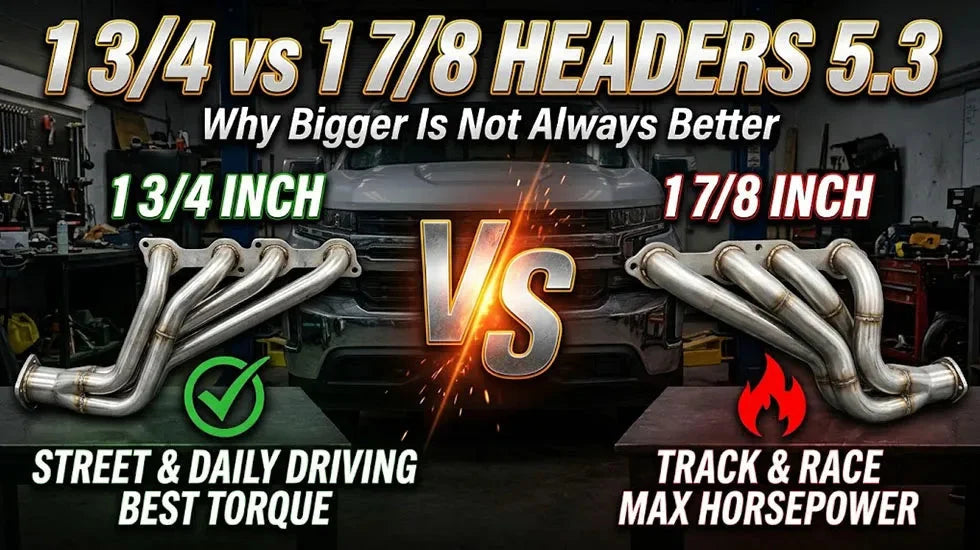
If you are shopping long tube headers for a 5.3 Silverado, Sierra, Tahoe, Suburban, or another LS/Vortec truck, you have probably heard the same garage argument a hundred times: “Just get the bigger tubes.” Sounds simple. It is not.
The debate around 1 3/4 vs 1 7/8 headers 5.3 is really a question about how your truck breathes, where it makes torque, how heavy it is, what gear it runs, and whether the engine is stock, cammed, boosted, or just trying to pull a trailer without feeling lazy.
Listen, I like big exhaust parts as much as the next guy. But I have also seen plenty of 5.3 trucks get overbuilt on paper and feel softer on the street. Bigger primary tubes can help a serious build. On a mostly stock daily truck? Sometimes they just add cost, heat, clearance headaches, and a tune bill before the engine is ready to use that extra pipe.
Quick Answer: Which header size is better for a 5.3?
- For a stock or lightly modified 5.3 daily truck: 1-3/4 inch headers are usually the safer, more balanced choice.
- For a cammed 5.3, heads/cam setup, or high-RPM street/strip build: 1-7/8 inch headers start making more sense.
- For towing, work trucks, and heavy street use: 1-3/4 usually keeps better low-to-mid-range response.
- For boosted or future high-horsepower plans: 1-7/8 gives more airflow room, but only if the rest of the build can use it.
- For most 5.3 truck owners: do not buy by tube size alone. Check cam, RPM range, tune, Y-pipe, drivetrain, and fitment first.
What Do 1-3/4 and 1-7/8 Headers Mean on a 5.3?
The numbers refer to the primary tube diameter of the header. Each cylinder pushes exhaust gas into its own primary tube before the tubes merge into a collector. A 1-3/4 inch primary is smaller. A 1-7/8 inch primary is larger.
Simple enough. But the part most new builders miss is this: a header is not just a pipe. It is a timing tool. The length, diameter, collector size, and merge design all affect how exhaust pulses leave the cylinder.
Tech Tip: Smaller primary tubes tend to keep exhaust gas speed higher at lower RPM. Larger primary tubes can carry more volume at higher RPM. That is why a 1-7/8 header can help a cammed 5.3 but feel unnecessary on a bone-stock grocery-getter truck.
Primary Tube Diameter Is About Velocity and Volume
A 5.3L Vortec does not move the same exhaust volume as a 6.0L or 6.2L. That matters. On a stock 5.3 with factory cam timing, factory heads, factory converter, and a mild cat-back, the engine may not need a huge primary tube to make good street power.
Think of it like blowing through a straw. Too small, and it becomes a restriction. Too big, and the air slows down before it does useful work. Exhaust is hotter and more complex than that, but the idea holds.

Why a 5.3 Truck Is Not the Same as a 6.0 or 6.2 Build
A lot of advice online gets copied from 6.0, 6.2, LS swap, and drag builds. That is where people get into trouble. A 6.0 with a cam and high stall wants more pipe than a stock 5.3 work truck. No shame in that. Different engines, different needs.
If you are comparing 1 7/8 vs 1 3/4 headers 5.3, start with the engine you actually have, not the engine you might build three years from now.
1-3/4 vs 1-7/8 Headers 5.3 Power Comparison
Here is the no-nonsense version. Both sizes can make power. The difference is where they help, how soon they help, and how much supporting work they need.
| 5.3 Setup | 1-3/4 Headers | 1-7/8 Headers | Real-World Take |
|---|---|---|---|
| Stock 5.3 daily driver | Usually the better street match | Works, but may be more pipe than needed | Expect better sound, throttle response, and mid-range pull with proper tune. |
| Stock 5.3 with intake, cat-back, tune | Strong choice for low-mid response | Fine if you plan future cam work | Realistic planning range: about 8-18 whp depending on tune and exhaust restriction. |
| Mild cam 5.3 | Still usable, especially for street trucks | Often the better long-term match | A tuned cammed build can see stronger upper-RPM gains, often 20-35 whp across the right combo. |
| Heads/cam/high-stall 5.3 | May start becoming a bottleneck | Better airflow room | The bigger header makes more sense when the engine actually lives above 4,500 rpm. |
| Boosted 5.3 | Can work on mild power goals | Usually better for higher airflow demand | Packaging, heat, and turbo/supercharger layout matter more than tube size alone. |

Do not treat those numbers like a promise. A healthy 5.3, correct tune, tight exhaust seal, good Y-pipe, and working O2 sensors can make a header swap feel sharp. A tired truck with leaks and no tune can make an expensive header feel like a mistake.
Factory Manifold vs Long Tube Header Parameters
The stock cast manifold is not evil. It is cheap, quiet, compact, emissions-friendly, and easy for the factory to package. But once miles pile up, you start seeing broken manifold bolts, cold-start ticking, warped flanges, and lazy exhaust flow.
| Parameter | Factory Cast Manifold | Aftermarket Long Tube Header | Why It Matters |
|---|---|---|---|
| Material | Cast iron | Stainless steel or coated steel | Headers reduce weight and improve flow, but they need good sealing and heat management. |
| Runner design | Short, compact shared outlet | Individual longer primaries | Longer primaries improve scavenging and help the engine breathe better at load. |
| Common failure | Broken bolts, ticking, warped flange | Leaks at collector, gasket, clamp, or Y-pipe | The install quality matters as much as the part. |
| Power behavior | Quiet, restrictive at higher load | Stronger mid/high RPM breathing | You feel more difference when paired with tune, intake, and a healthy exhaust path. |
If you are still deciding whether long tubes are even the right move, read this long tube vs shorty headers 5.3 Silverado guide before you spend money. That choice comes before the 1-3/4 vs 1-7/8 argument.
Why Bigger Headers Are Not Always Better on a 5.3
Here is where people get mad in forums. A bigger header does not automatically make a faster truck. It gives the engine more flow capacity. That is different.
If the engine does not have enough camshaft, cylinder head flow, compression, RPM, or airflow demand, the big primary may not show much benefit. Worse, the truck may feel lazier at the exact RPM where you actually drive it.
Peak Horsepower Is Not the Whole Story
Dyno charts love peak numbers. Trucks do not live on peak numbers. Your 5.3 Silverado spends most of its time pulling from 1,500 to 4,000 rpm. Rolling away from a light. Climbing a grade. Passing at half throttle. Pulling a small trailer. That is where street torque matters.
A 1-7/8 header may win a few horsepower at the top on the right build. Nice. But if the truck gives up response down low, that tiny peak number does not feel like a win from the driver seat.
The Street Torque Mistake I Keep Seeing
First-Person Garage Case:
I remember a 2008 Silverado 1500 5.3 that came in after a weekend header install. The owner had gone straight to big 1-7/8 long tubes because a forum thread said, “buy once, cry once.” The truck was stock except for a loud muffler and an intake tube. No cam. No tune. Stock converter.
At first he thought the headers were junk. Low-speed throttle felt soft, the truck had a sharp tick on cold start, and the check engine light showed up after a few drive cycles. We got it on the lift and found three things: one collector clamp was not seated, two plug wires were too close to the tube, and the rear O2 wiring was stretched tight. After sealing it, routing the wires properly, and cleaning up the tune, it drove better. But honestly? For how he used the truck, a 1-3/4 setup would have been the cleaner choice.
That is the whole lesson. The part was not automatically bad. The combination was not right.
Truck Weight, Gear Ratio, and Tire Size Matter
A 5.3 truck on 33-inch tires with highway gears is not going to feel like a light LS-swapped coupe. Add a lift kit, big tires, tools in the bed, and a stock converter, and now low-end response matters even more.
If the truck is heavy and mostly street-driven, smaller primaries can keep the engine feeling tighter in the low and middle rpm range.
When 1-3/4 Headers Make More Sense for a 5.3
For most stock or lightly modified 5.3 trucks, I lean toward 1-3/4. Not because it sounds cooler. Not because it wins keyboard wars. Because it fits how these trucks are actually driven.
Stock 5.3 Daily Driver
If your 5.3 has the stock cam, stock heads, stock converter, and you mainly want better sound, less manifold restriction, and sharper throttle response, 1-3/4 is usually enough header.
You are not choking the engine by avoiding 1-7/8. That is the part people need to hear. A well-installed 1-3/4 long tube with a proper Y-pipe and tune can feel better than a bigger header installed with leaks, bad sensor placement, and no calibration.
Towing, Work Truck, and Street Use
If your truck tows, hauls, or sees stop-and-go driving, do not build it like a high-RPM drag truck unless that is what it is. You want clean throttle, stable fuel trims, manageable sound, and less heat drama.
- Daily driving: 1-3/4 is usually smoother and easier to live with.
- Light towing: 1-3/4 helps keep the combo focused on useful street response.
- Mild bolt-ons: intake, cat-back, and tune do not automatically demand 1-7/8.
- Budget builds: 1-3/4 often reduces the chance of buying extra parts to fix fitment problems.
Best Fitment Path for 99-06 GMT800 Trucks
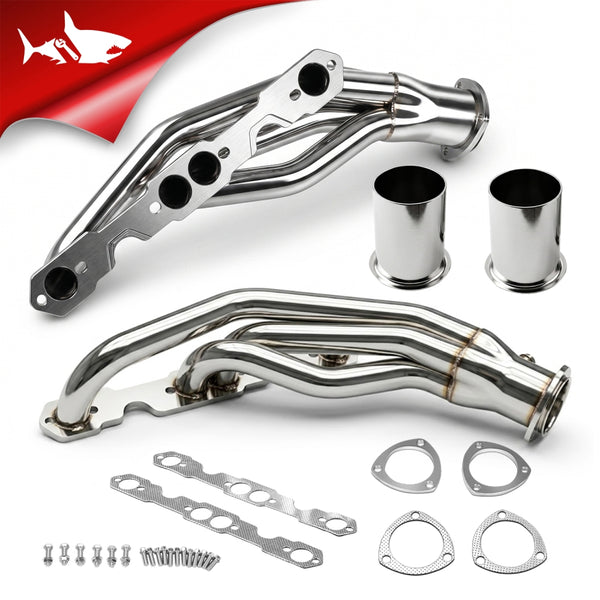
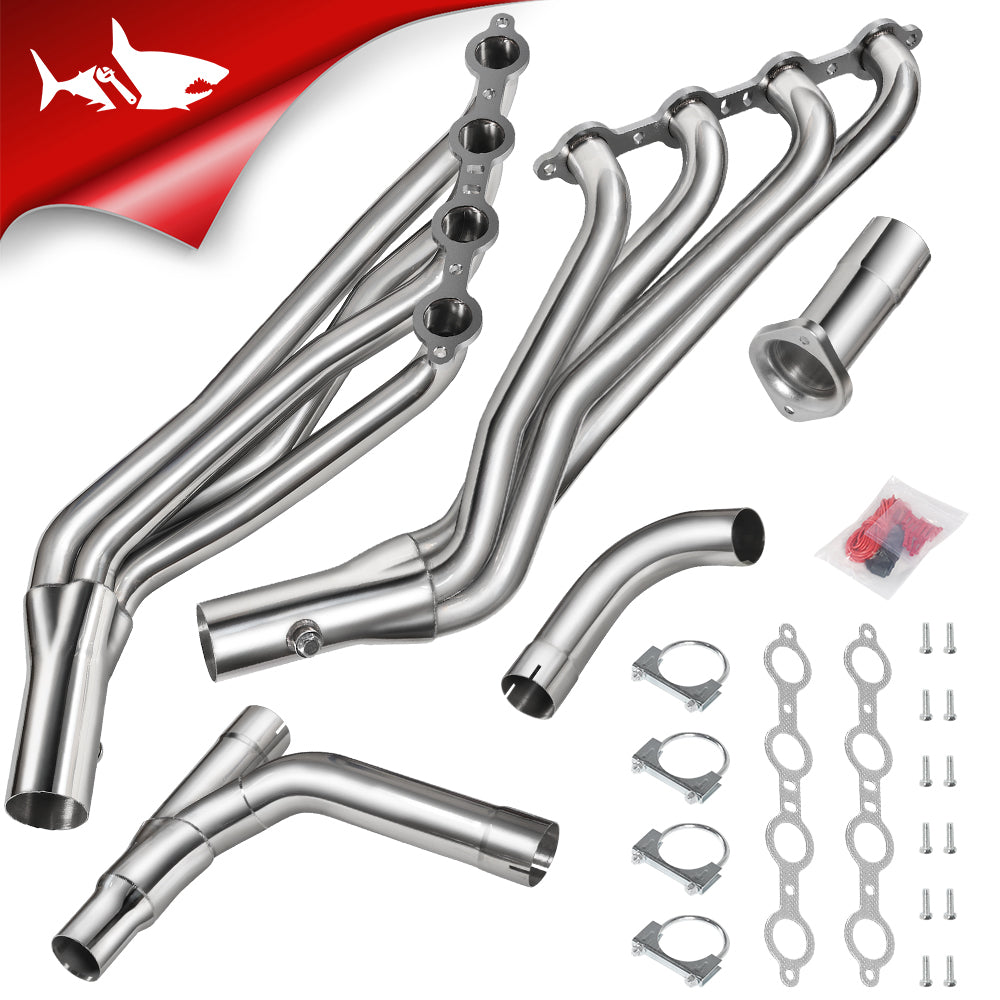
For 1999-2006 Silverado and Sierra 1500 owners, fitment is half the battle. If you are working with a 2WD GMT800 and want a complete long tube setup, the 1999-2006 Chevy/GMC GMT800 5.3 long tube headers and Y-pipe kit is the kind of setup I would look at because the Y-pipe question is already part of the package, not an afterthought.

Flashark Long Tube Headers & Y-Pipe for 1999-2006 Chevy/GMC GMT800 1500
Good fit for builders who want a more complete long tube setup instead of chasing a separate Y-pipe later. Best checked carefully on 2WD vs 4WD trucks before ordering.
Sale Price: $269.99 $399.99
View FitmentWhen 1-7/8 Headers Are Worth It on a 5.3
Now, I am not here to scare you away from 1-7/8. Bigger primaries have their place. A serious 5.3 can absolutely use them.
Cammed 5.3 Builds
Once you add a cam, the engine’s breathing demand changes. More duration, more overlap, more RPM, more exhaust volume. That is when 1-7/8 starts looking less like overkill and more like the right tool.
A mild truck cam can still run well with 1-3/4. But if the cam wants to pull hard past 5,500 rpm, the larger primary can support that upper-range airflow better.
Heads, Intake, Converter, and Higher RPM Use
If the build includes ported heads, a higher-flow intake manifold, a looser converter, deeper gears, and a tune built around wide-open-throttle airflow, 1-7/8 makes sense. At that point, the header is part of a full combination.
This is also where a 1-3/4 header can become the smaller door in a room full of bigger airflow parts.
Boosted or Future High-Horsepower 5.3
For boost, the answer depends on the setup. A supercharged street truck and a turbo truck do not always use the same exhaust layout. But generally speaking, a boosted 5.3 with serious power goals wants more exhaust capacity than a stock one.
If you know the truck is getting cam, boost, and fuel system upgrades soon, 1-7/8 can be a smart future-proof move. If “boosted someday” really means “maybe after I finish the garage,” do not overbuild the truck today for a fantasy combo.
Do 1-7/8 Headers Lose Low-End Torque on a 5.3?
Sometimes. Not always. That is the honest answer.
On a stock 5.3, a 1-7/8 header can feel a little softer down low if the tune, collector, Y-pipe, and exhaust system are not dialed in. But a properly tuned truck with no leaks may feel perfectly fine. The difference is rarely as dramatic as forum arguments make it sound.
Here is the mistake: people install headers, skip the tune, ignore a leak, drive around with heat-soaked plug wires, and then blame the tube size.
Mechanic Note: Before judging header size, fix the basics. No exhaust leaks. No melted plug wires. No stretched O2 sensor harness. No loose collector. No fuel trims going crazy. Then talk about torque.
Fitment Problems 5.3 Owners Forget to Check
This is where the internet gets quiet. Tube size is fun to debate. Fitment is where your knuckles bleed.
2WD vs 4WD Header and Y-Pipe Clearance
A header can fit the engine and still fight the truck. That is especially true on 4WD models. The front driveshaft, transfer case, crossmember, frame rail, and Y-pipe routing can turn a simple install into a Saturday that ruins your Sunday.

Before buying, check:
- Year range and platform: GMT800, GMT900, or newer body style.
- Engine: 4.8, 5.3, 6.0, or 6.2.
- Drivetrain: 2WD or 4WD.
- Transmission: 4L60E, 4L80E, 6L80, or swapped setup.
- Y-pipe routing and collector location.
- O2 sensor extension length.
- Plug wire and steering shaft clearance.
If you are working on the 1999-2006 platform, this 99-06 Silverado long tube headers and Y-pipe guide is worth reading before you order parts.
Steering Shaft, Starter, and Spark Plug Wire Heat
A 1-7/8 primary is physically larger. That extra size can matter around the steering shaft and plug wires. Do not wait until the truck is half apart to discover your plug boots are kissing hot stainless.
Use heat sleeves where needed. Route plug wires cleanly. Check clearance with the engine rocked slightly under load if you can. Trucks move. Exhaust moves. Heat makes everything less forgiving.
Y-Pipe, Collector, and Exhaust Leak Risk
A lot of “bad header” noise is really a bad seal at the collector or Y-pipe. I have seen guys chase a tick at the head flange for an hour, then find the leak at a slip joint two feet downstream.
If the factory Y-pipe has to be cut, welded, twisted, or forced into place, your leak risk goes up. That is why I like matched systems when the budget allows it.
Do You Need a Tune After Installing Headers on a 5.3?
Yes, if you want the job done right.
The truck may start and drive without a tune. That does not mean it is optimized. Long tube headers move the O2 sensors, change exhaust flow, alter scavenging, and can affect fuel trims. A tune helps the engine understand the new airflow instead of guessing around it.
What the Tune Actually Helps
- Correcting fuel trims after airflow changes.
- Improving throttle response and part-throttle drivability.
- Cleaning up wide-open-throttle fueling.
- Reducing annoying check engine light problems when legally configured.
- Helping the truck use the header instead of just sounding louder.

O2 Sensors, CEL, and Rear O2 Codes
Long tubes often move the O2 sensors farther downstream. That can require extensions. Catless systems can trigger catalyst efficiency codes and may not be legal for street use depending on your state and local laws.
Legal Warning:
Always check federal, state, and local emissions laws before installing aftermarket headers, especially catless long tube systems. Some parts may be intended for off-road or competition use only. Do not assume a part is street legal just because it bolts on.
If you want a deeper install breakdown, including parts prep, O2 extensions, Y-pipe checks, and common mistakes, keep this 5.3 long tube headers install guide open before you crawl under the truck.
Sound Difference: Does 1-7/8 Sound Better Than 1-3/4?
Maybe louder. Maybe deeper. But not automatically better.
Header size changes tone, but the rest of the exhaust decides whether that tone sounds clean or obnoxious. Cats, Y-pipe merge, muffler design, resonators, tailpipe length, and exit location all matter.
What Usually Changes
- 1-3/4 headers: crisp, tight, strong street tone when paired with a good exhaust.
- 1-7/8 headers: deeper and more aggressive on some builds, especially cammed trucks.
- Catless long tubes: louder, sharper smell, higher CEL and compliance risk.
- Poor Y-pipe merge: rasp, leaks, weird drone, and that tinny sound nobody wants.
Drone Is the Part Nobody Mentions in Cold-Start Videos
Cold-start clips lie. They are fun, but they lie. What matters is how the truck sounds at 1,800 to 2,200 rpm on the highway. That is where drone either leaves you alone or makes you hate your own truck.
If your 5.3 is a daily driver, do not build the exhaust for a ten-second phone video. Build it for the drive home.
Cost: Buying Once vs Buying Wrong
Cheap headers can work. Expensive headers can still leak if installed badly. The smart move is not automatically buying the most expensive part. It is buying the right part for your truck, then installing it like you care.
Where the Extra Cost Usually Comes From
- O2 sensor extensions.
- Better gaskets and bolts.
- Plug wire heat sleeves.
- Y-pipe cutting or welding.
- Collector clamps or V-band fixes.
- ECU tune.
- Broken manifold bolt extraction.
Many new guys only price the headers. That is how a $250-$400 parts decision becomes a $900 weekend.
When Future-Proofing Makes Sense
If you already have the cam, springs, converter, and tune planned, bigger primaries are easier to justify. If your build sheet is real, not imaginary, 1-7/8 may save you from buying twice.
When Future-Proofing Becomes Overbuilding
If your truck is stock and the future plan is “maybe cam someday,” be careful. I have heard that line for years. Half those trucks never get the cam. They just drive around with more header than they needed.
Best Flashark Header Options for 5.3 Silverado Builds
Flashark is not the only name in the header world, but it is a practical option for builders who want a budget-conscious upgrade without turning the truck into a full custom fabrication project.
If you are comparing broader fitment across GM truck applications, the Chevy exhaust headers collection is the better starting point. If you are shopping beyond Chevy and GMC platforms, browse the full exhaust headers category and narrow by vehicle fitment before you fall in love with a tube size.
Larger-Primary Option for 1999-2006 Silverado 5.3L V8
For trucks that need an EGR-compatible option or a larger-primary header path, the 1999-2006 Chevy Silverado 1500 5.3L V8 headers with EGR page is worth checking. It lists a 1.875 inch inlet size, which puts it right in the 1-7/8 conversation for owners building a more aggressive 5.3 combo.
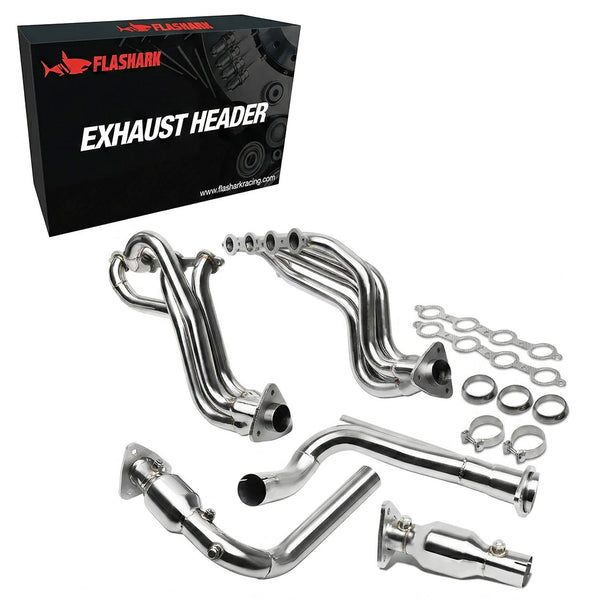
Flashark 1999-2006 Chevy Silverado 1500 5.3L V8 Exhaust Header with EGR Valve
A stronger option for owners who need EGR compatibility or want a larger-primary header for a tuned, cammed, or future-upgraded 5.3 setup.
Sale Price: $219.99 $399.99
Check Header OptionFinal Recommendation: 1-3/4 or 1-7/8 Headers for a 5.3?
If your 5.3 is stock or lightly modified, I would not lose sleep over skipping the bigger tube. A 1-3/4 long tube header is usually the smarter street choice. It keeps the combo responsive, reduces overbuilding, and still gives you the sound and flow upgrade most truck owners actually want.
If your 5.3 has a cam, better heads, higher RPM use, boost plans, or a serious tune, then 1-7/8 starts to earn its keep. That is when the engine can actually use the extra airflow.
The real answer to 1 3/4 vs 1 7/8 headers 5.3 is this: buy for the build you have, not the comment section you read last night.
No-BS Buying Rule:
- Choose 1-3/4 for stock 5.3, daily driving, towing, light bolt-ons, and better street manners.
- Choose 1-7/8 for cammed 5.3, heads/cam, higher RPM, boosted plans, and builds with real supporting mods.
- Do not choose by diameter alone. Check Y-pipe, tune, O2 sensors, drivetrain, emissions rules, and install clearance first.
FAQ About 1-3/4 vs 1-7/8 Headers for a 5.3
Q1: Are 1-7/8 headers too big for a stock 5.3?
A1: Not too big to bolt on, but often more header than a stock 5.3 really needs. On a daily-driven stock truck, 1-3/4 usually gives a better balance of response, fitment, and cost.
Q2: Are 1-3/4 headers better for low-end torque?
A2: Usually, yes, especially on stock or mildly modified street trucks. The smaller primary can help maintain exhaust velocity at lower RPM. But tune quality, collector design, Y-pipe routing, and leaks can change how the truck feels.
Q3: How much horsepower do headers add to a 5.3 Silverado?
A3: A realistic planning range for a mild 5.3 with long tubes and a proper tune is often around 8-18 wheel horsepower, with some stronger combinations showing more. Cammed or heads/cam builds can see larger gains because the engine can use the extra exhaust flow.
Q4: Do I need a tune for long tube headers on a 5.3?
A4: Yes, a tune is strongly recommended. The truck may run without one, but the tune helps correct fuel trims, improve throttle response, manage O2 sensor behavior, and get the real benefit from the headers.
Q5: Will 1-7/8 headers lose torque on a 5.3?
A5: They can feel softer down low on some stock trucks, especially without a tune or with exhaust leaks. On a cammed or properly tuned build, the difference may be small, and the larger header may pull harder up top.
Q6: What header size is best for a cammed 5.3?
A6: For a mild cam, both 1-3/4 and 1-7/8 can work. For a bigger cam, higher RPM setup, ported heads, or street/strip build, 1-7/8 usually makes more sense.
Q7: What header size is best for towing with a 5.3?
A7: For towing and work-truck use, 1-3/4 is usually the better fit. It keeps the build focused on low-to-mid-range response instead of chasing peak horsepower.
Q8: Do 1-7/8 headers sound louder than 1-3/4?
A8: They can sound deeper or more aggressive, but the full exhaust setup matters more. Cats, muffler, resonator, Y-pipe merge, and tailpipe exit affect tone and drone more than primary diameter alone.
Q9: Are 1-3/4 headers enough for a boosted 5.3?
A9: For mild boost, they may be enough. For higher power goals, 1-7/8 usually gives more airflow room. Boosted setups also depend heavily on turbo or supercharger packaging, heat control, and tuning.
Q10: Will long tube headers cause a check engine light?
A10: They can, especially if O2 sensors are moved, cats are removed, or the rear O2 sensors see unexpected readings. Use the correct sensor extensions, check for leaks, and get a proper tune while staying within applicable emissions laws.
Q11: Are catless long tube headers legal on a street-driven 5.3?
A11: Do not assume they are legal. Catless systems can violate emissions laws in many areas. Always check federal, state, and local rules before removing or modifying emissions equipment.
Q12: What supporting parts do I need for 5.3 long tube headers?
A12: Common supporting parts include a matched Y-pipe, gaskets, header bolts, O2 sensor extensions, plug wire heat sleeves, collector clamps, and a tune. On rusty trucks, plan for broken manifold bolt extraction too.
Q13: Is 1 3/4 vs 1 7/8 headers 5.3 a big difference on the street?
A13: On a stock truck, the difference may be smaller than people expect. The tune, exhaust seal, Y-pipe, and supporting mods usually affect street feel more than the small diameter difference by itself.
Q14: Should I buy 1-7/8 headers now if I might cam the truck later?
A14: If the cam upgrade is already planned and budgeted, 1-7/8 can be smart. If it is just a vague future idea, 1-3/4 may be the better choice for how the truck drives today.

Steven Chen
Automotive Performance Specialist | Engine & Exhaust Systems
Steven focuses on practical engine performance, exhaust fitment, and real-world upgrade paths for classic and modern enthusiast vehicles. He reviews small-block Ford, LS, truck, and street/strip applications with one goal in mind: helping builders choose parts that actually work together. His philosophy: "Good power starts with the right combination, not the biggest part."