Dejémonos de florituras de marketing. Si estás aquí, probablemente estés lidiando con el infame "Hemi Tick".
Empieza como un suave golpeteo en los arranques en frío y, finalmente, suena como un tractor. Veo esto cada semana en el taller. El problema no es solo "mala suerte", es física. Los colectores de escape de fábrica son de hierro fundido, mientras que las culatas son de aluminio. Se expanden y contraen a ritmos diferentes. Eventualmente, el colector se deforma y ¡zas!, se rompen los espárragos traseros en los cilindros 7 y 8.

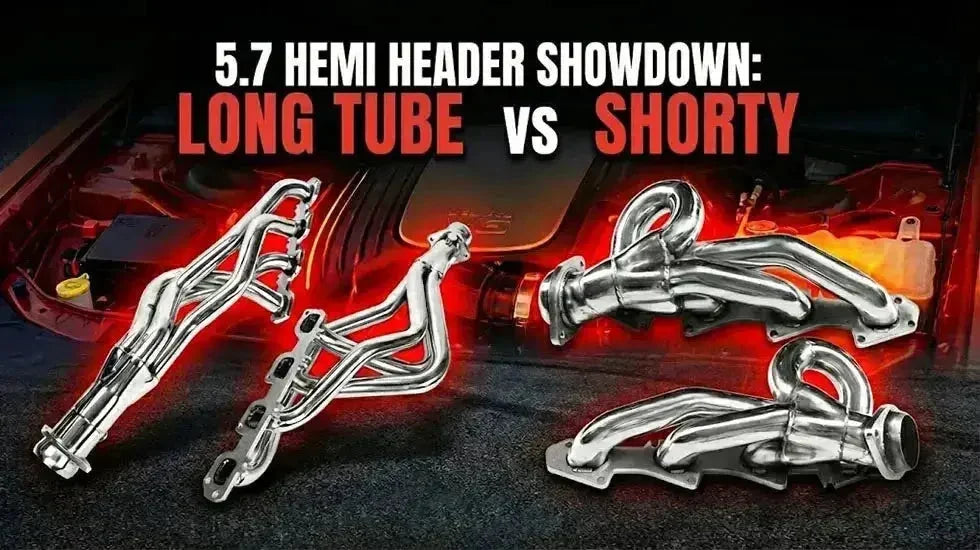
Así que, de todos modos, tienes que quitar el escape. La pregunta es: ¿Lo reemplazas con un sistema "Shorty Header" o te comprometes con una configuración "Long Tube"?
Esto no es solo cuestión de sonido. Se trata de curvas de par, ajuste de la ECU y si quieres pasar la inspección o establecer un tiempo en el cuarto de milla. Llevo 15 años trabajando con Rams, Chargers y Challengers, y esta es la realidad técnica de lo que necesitas.
- Propietarios de Ram 1500 (uso diario/remolque): Elijan los colectores "Shorty Headers". Mantendrán el par a bajas revoluciones (crucial para mover un camión pesado), no requieren ajuste y la instalación es manejable.
- Charger/Challenger R/T (Rendimiento): Opten por los colectores "Long Tube Headers". Obtendrán una ganancia significativa de CV en la parte alta del rango (+25-30whp), pero deben ajustar la ECU y la instalación es complicada.
- La regla de oro: Nunca reutilice los pernos de los colectores de fábrica. Use tornillería de Grado 8 y juntas MLS OEM Mopar, o tendrá que volver a hacer este trabajo en 6 meses.
La ingeniería: por qué fallan los colectores de serie
Antes de hablar de mejoras, entendamos el punto de fallo. Los colectores de "estilo tronco" de serie restringen la velocidad de los gases de escape. Es como intentar exhalar a través de una pajita.
Los colectores de escape del mercado de accesorios utilizan tubos de acero inoxidable doblados con mandril. Esto ofrece dos beneficios:
- Consistencia térmica: El acero inoxidable disipa el calor de manera diferente al hierro fundido, lo que reduce la tensión en los pernos de montaje.
- Recuperación (Scavenging): Esta es la clave. Al suavizar el flujo, el pulso de escape saliente crea un vacío detrás de él, literalmente extrayendo el siguiente pulso del cilindro. Mejor recuperación = más aire fresco = más combustión.
Shorty Headers: La solución para "arreglarlo bien"

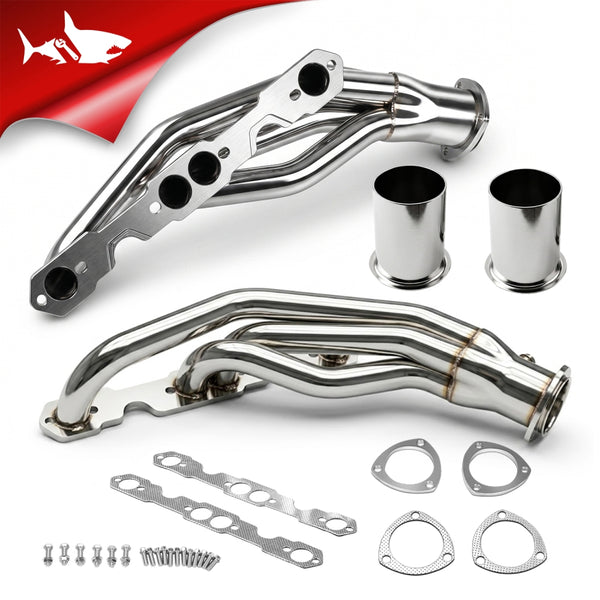
Los Shorties son reemplazos directos atornillados. Terminan en la misma ubicación de brida que los colectores de serie, lo que significa que se atornillan directamente a los convertidores catalíticos de fábrica (mid-pipes).
¿Para quién es esto?
Esto es para el propietario de una Ram 1500 o para el Charger de uso diario. Si remolcas un barco o transportas madera, te interesa el par motor entre 1.500 y 3.000 RPM. Los "shorties" preservan este par motor a bajas revoluciones. No generarán grandes cifras de potencia máxima (quizás +10-12 CV), pero solucionan el problema del "tick" de forma permanente y pasan las emisiones en la mayoría de los estados.
"En 2019, un cliente trajo unos colectores sin marca de 150 dólares. Le advertí sobre el grosor de la brida, pero él insistió en la instalación para ahorrar dinero.
Tres meses después, volvió. Las bridas eran tan delgadas (menos de 1/4 de pulgada) que el calor las deformó como un plátano, reventando la junta. Tuvimos que hacer todo el trabajo de 6 horas dos veces.
La regla del mecánico: No me importa la marca que compres, pero debes asegurarte de que la brida tenga al menos 3/8 de pulgada de grosor y esté cortada con láser. Por eso yo, personalmente, instalo cómodamente la serie de acero inoxidable de Flashark, ya que cumplen con esa especificación de 3/8" de grosor sin el precio de 'Kooks' o 'ARH'. No pagues por el logotipo, paga por el grosor del acero."
Colectores de Tubo Largo: El Compromiso de Caballos de Fuerza
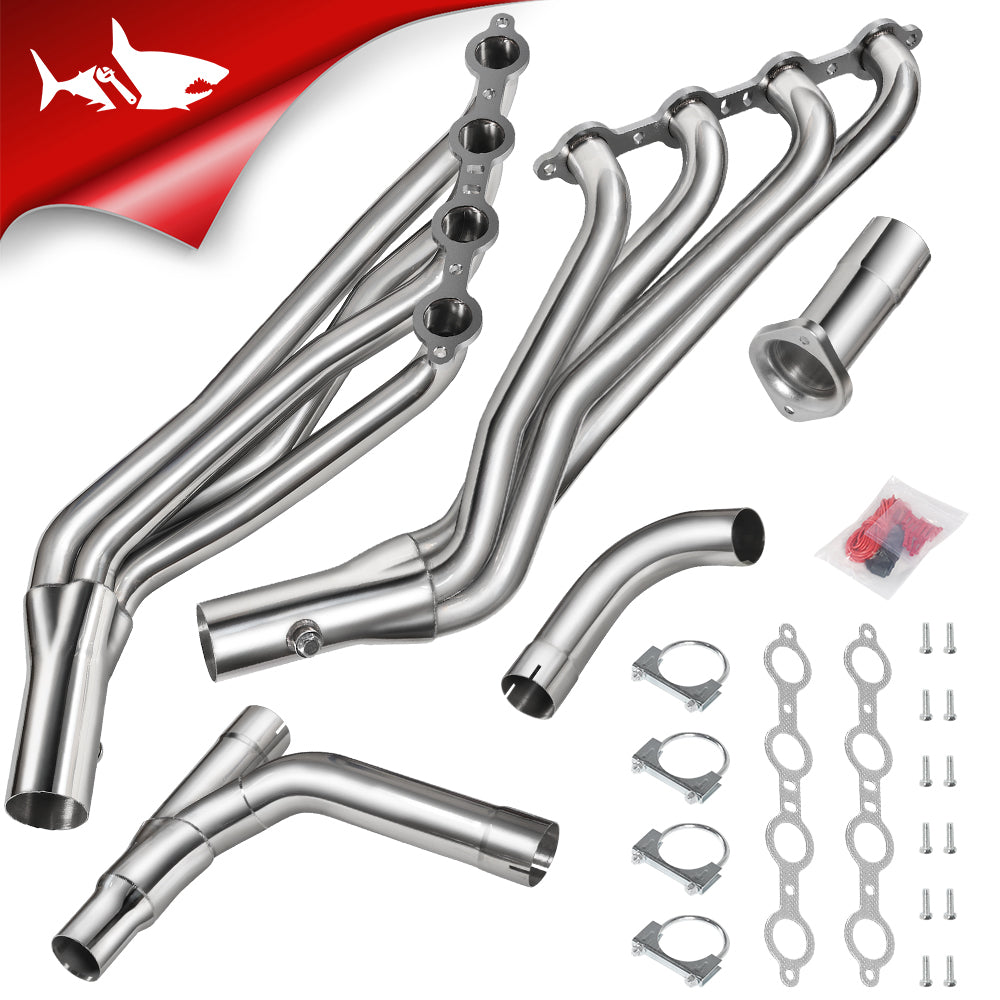
Los colectores de tubo largo se extienden mucho más, eliminando normalmente los convertidores catalíticos de fábrica o empujándolos más atrás. Optimizan la velocidad de los gases de escape para la potencia a altas revoluciones.
Las ganancias y el equilibrio
En un dinamómetro, los colectores de tubo largo de alto flujo para Hemi 5.7 realmente brillan por encima de las 3.500 RPM. Se esperan entre +25 y +30 caballos de potencia a la rueda con un ajuste adecuado. El sonido es agresivo, profundo y crudo.
Sin embargo, debido a que se modifica drásticamente la velocidad del escape, se perderá un poco de par justo al ralentí. Para un coche más ligero (Challenger), esto no importa. Para un camión pesado, es posible que se note.
Si tu Dodge o Ram fue fabricado en 2015 o después, detente y lee esto.
Los colectores de tubo largo REQUIEREN una reprogramación personalizada de la ECU para desactivar los sensores de oxígeno traseros y ajustar los mapas de combustible. Sin embargo, Mopar encriptó los PCM a partir de 2015. No se puede simplemente enchufar un sintonizador.
Debes comprar un "PCM desbloqueado" o enviar el tuyo para que lo desbloqueen. Esto cuesta entre 200 y 600 dólares adicionales, además de los colectores y el dispositivo de sintonización.
"Un joven trajo su Charger R/T 2016 al taller el año pasado. Había gastado todo su presupuesto en colectores de tubo largo y un sintonizador portátil básico. Instalamos los colectores (lo cual es un trabajo arduo en los modelos AWD) y fuimos a flashear la sintonización.
Muro. El sintonizador no se comunicaba con la ECU encriptada. El coche mostraba códigos, funcionaba con una mezcla rica y estaba en modo de emergencia. Tuvo que dejar el coche en mi elevador durante 5 días mientras enviábamos su PCM a desbloquear. No seas ese tipo. Presupuesta el desbloqueo antes de comprar los tubos."
Realidades de la instalación: lo que el manual no dice
Elijas Shorty o Long Tube, aquí tienes los consejos técnicos necesarios para asegurar que el trabajo no se convierta en un desastre.
1. La varilla medidora y el eje de dirección

En el lado del conductor, el espacio es inexistente. Probablemente necesitarás desatornillar el eje de dirección para deslizar los colectores. El tubo de la varilla de nivel de aceite también está en el camino. No lo fuerces, se romperá. Desatorníllalo del bloque.
Recuerdo a un cliente que compró un juego de colectores de tubo largo Hemi 5.7 específicamente para su Ram, pensando que era un trabajo de 2 horas porque los pasos de rueda parecían abiertos. Terminó teniendo que levantar ligeramente el motor en el lado del conductor solo para despejar el nudillo de la dirección. Cabe, pero hay que tener paciencia.
2. La absorción de calor del motor de arranque (solo tubos largos)
Los colectores de tubo largo a menudo dirigen las tuberías peligrosamente cerca del motor de arranque (especialmente en el lado del pasajero). El calor radiante puede quemar el solenoide del motor de arranque, lo que provoca problemas de "arranque en caliente" donde el coche no arranca después de conducir.
Consejo profesional: Mientras estés allí, envuelve el motor de arranque con un escudo térmico reflectante o una manta. Es una póliza de seguro de 30 dólares que te ahorrará una grúa más tarde.
3. Juntas y herrajes
Tira las juntas de papel que vienen en la caja. No me importa quién las haya fabricado. Utiliza juntas OEM Mopar Multi-Layer Steel (MLS) (N.º de pieza 5045495AA / 5045496AA). Además, verifica tus pernos. Si tus colectores utilizan los espárragos de fábrica, genial. Si utilizan pernos nuevos, asegúrate de que sean de Grado 8 y utiliza antiadherente de alta temperatura.
👮 La realidad de la "inspección de emisiones"
Antes de hacer clic en "Comprar", consulta las leyes de tu estado. Esta es la razón número uno por la que veo a clientes devolver piezas.
- Estados de California y CARB (NY, CO, etc.): Generalmente NO PUEDES instalar legalmente colectores de tubo largo. Desplazan los convertidores catalíticos de su ubicación de fábrica, lo que es un fallo automático. Necesitas estrictamente colectores "Shorty" que tengan un Número de Orden Ejecutiva (EO) de CARB estampado.
- El fallo "visual": Incluso si tu coche no enciende la luz de "Check Engine" (porque la desactivaste con el ajuste), un técnico de smog experimentado mirará debajo. Si ven tubos largos que desplazan los catalizadores, suspenderás la inspección visual.
- Federal/Otros estados: Los colectores "Shorty" suelen ser legales en 49 estados porque mantienen las ubicaciones de los convertidores de fábrica.
Pregúntate: ¿Quiero volver a cambiar mi escape a la configuración de serie cada año solo para obtener una pegatina? Si no, los "Shorties" son la apuesta más segura.
Veredicto: Tomando la decisión
| Característica | Colectores Cortos (Shorty Headers) | Colectores Largos (Long Tube Headers) |
|---|---|---|
| Mejor Aplicación | Ram 1500 (Remolque/Diario), Estados con Inspección | Charger/Challenger (Pista/Calle), Sonido Máximo |
| Ganancia de CV | +10-12 WHP | +25-30 WHP (Requiere Ajuste) |
| Curva de Torque | Preserva el Rango Bajo | Cambia a RPM Medias/Altas |
| ¿Ajuste de PCM? | No (Plug & Play) | SÍ (Desbloqueo requerido para 2015+) |
| Dificultad de Instalación | Difícil (6/10) | Avanzado (9/10) - Necesita Extensiones de O2 |
La Prueba de Sonido: Zumbido, Raspeo y Rugido
Seamos realistas. No solo estás comprando colectores por el rendimiento; quieres que tu Hemi suene como una bestia. Pero hay una diferencia enorme entre "fuerte y bueno" y "fuerte que te da dolor de cabeza".
🎵 Sonido de los colectores Shorty
- Tono: Profundo, refinado y nítido.
- Volumen: Aproximadamente un 15-20% más fuerte que el de serie.
- Zumbido en la cabina: Inexistente. Aún puedes mantener una conversación en la autopista.
- Veredicto: Ideal para conductores diarios que quieren escuchar el motor solo cuando lo exigen.
🔥 Sonido de los colectores de tubo largo
- Tono: Crudo, entrecortado y agresivo.
- Volumen: 40-50% más fuerte (ruido ensordecedor).
- Zumbido en la cabina: Significativo. Sin resonadores de alta calidad, sentirás la vibración a 2.000 RPM.
- Veredicto: Para la multitud del "Mírame" y para construcciones de pista.
¿Listo para arreglar el "tic"?
Ya sea que necesites Shorties para remolcar o Long Tubes para la pista, las bridas de acero inoxidable de 3/8" de Flashark resuelven el problema de la deformación para siempre.
*Ambos incluyen juntas y herrajes necesarios.