


 Need car parts? Shop by vehicle
(Select the exact fit for your vehicle)
Need car parts? Shop by vehicle
(Select the exact fit for your vehicle)
Colector de escape de Chevrolet Avalanche 1500

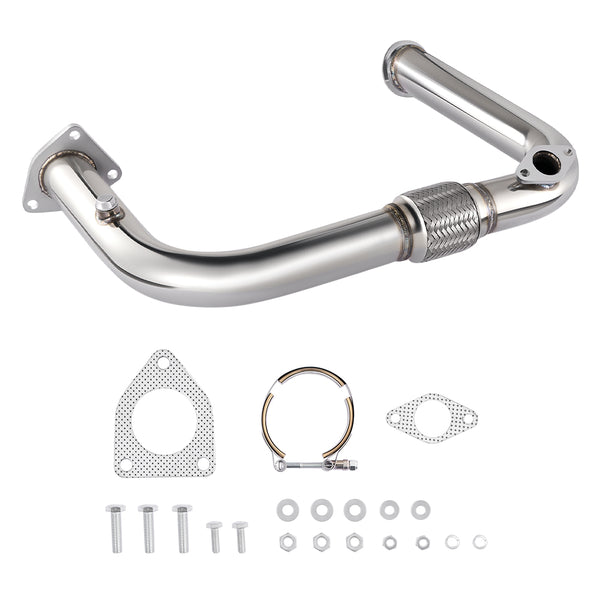
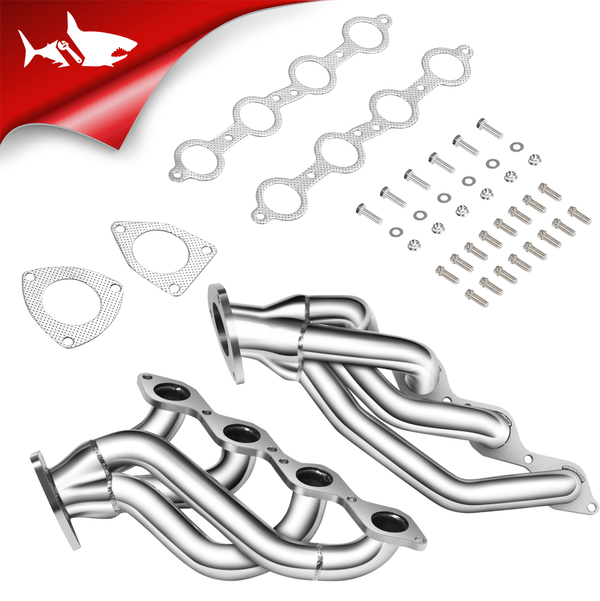
Comprar por modelo : Todos los modelos Chevrolet | Avalanche 1500 | Silverado 1500 | Suburban 1500 | Chevy C1500 | Chevrolet Camaro
Recently viewed
Choosing Headers for a 2002–2006 Avalanche 1500
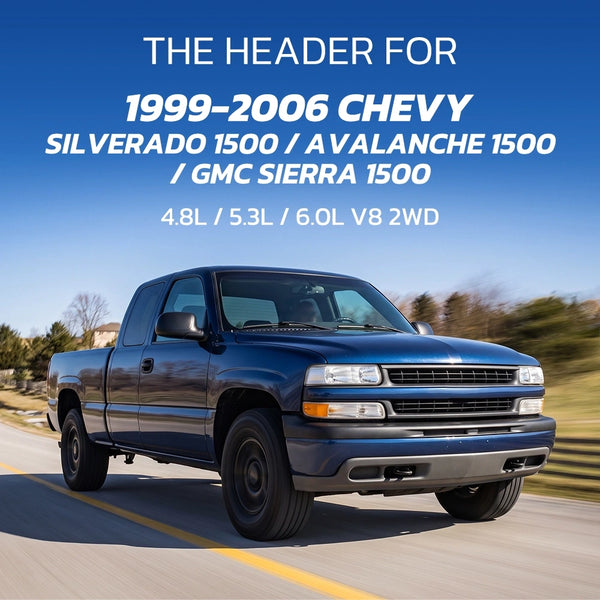
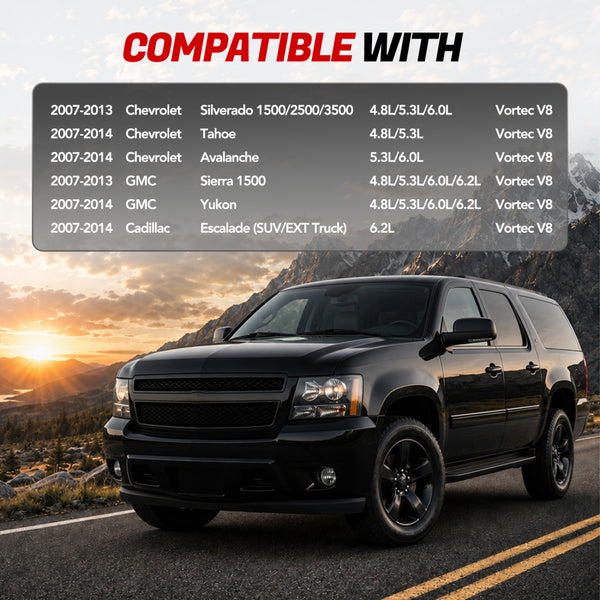
This collection is intended for first-generation Chevrolet Avalanche 1500 trucks with the 5.3L Vortec V8. It does not cover the Avalanche 2500, the 8.1L engine, model years before 2002, or later-generation Avalanche applications.
Although the available headers share the same basic purpose, they are not interchangeable in every installation. Header length, EGR provisions, O2 sensor arrangements, outlet connections, and available space around the drivetrain can determine which product is appropriate for your truck.
Before You Buy
- Confirm a 2002–2006 Chevrolet Avalanche 1500 with the factory 5.3L Vortec V8.
- Identify whether the truck is 2WD or 4WD and verify clearance for that drivetrain.
- Check whether the original exhaust configuration requires an EGR connection.
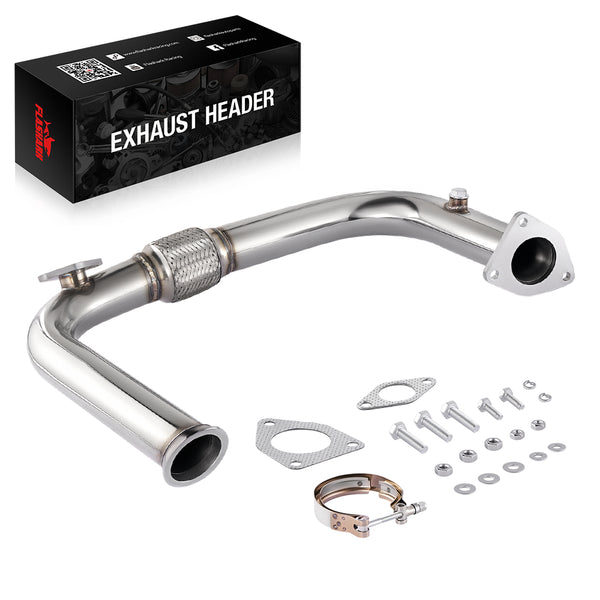
- Compare the header outlet with the existing Y-pipe and catalytic-converter section.
- Confirm O2 sensor locations, wiring reach, included hardware, and any required downstream exhaust work.
Shorty or Long-Tube?
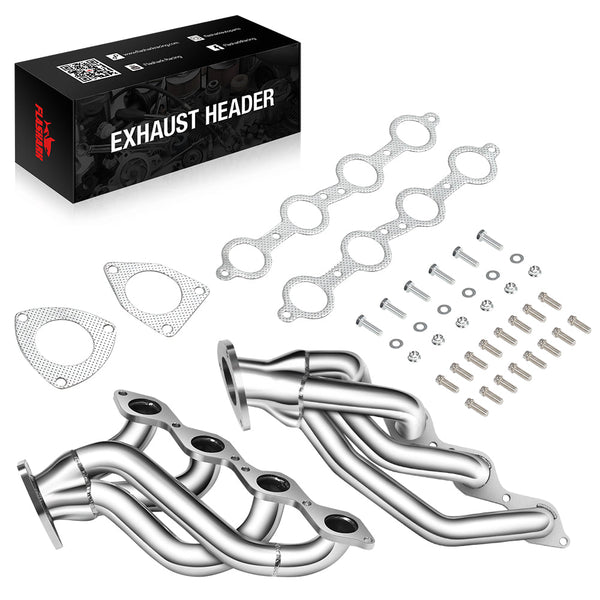
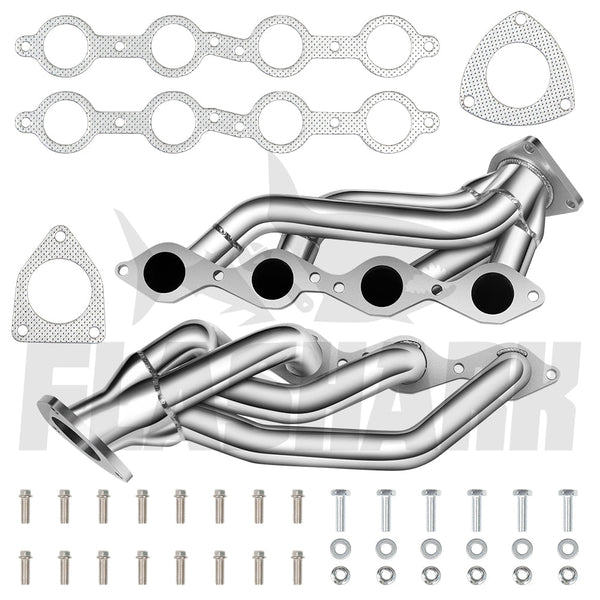
Shorty headers use a compact layout that stays closer to the position of the factory manifolds. They are generally the more practical starting point when the goal is to replace the manifolds without redesigning a large portion of the exhaust. However, the exact flange position and connection to the factory Y-pipe still need to be checked before purchase.
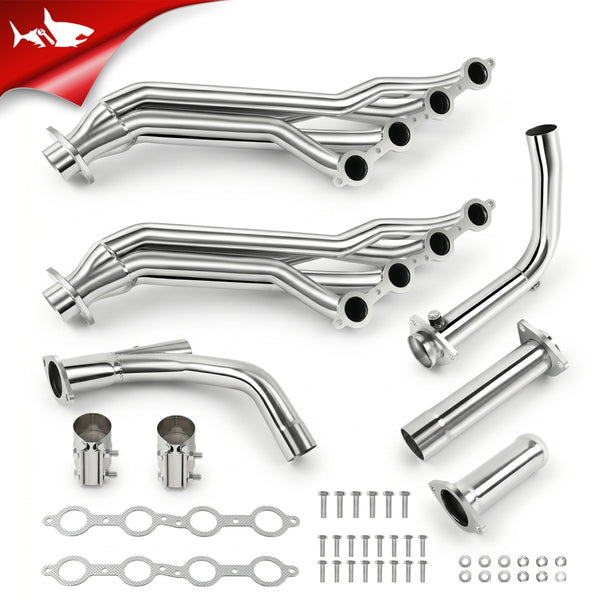
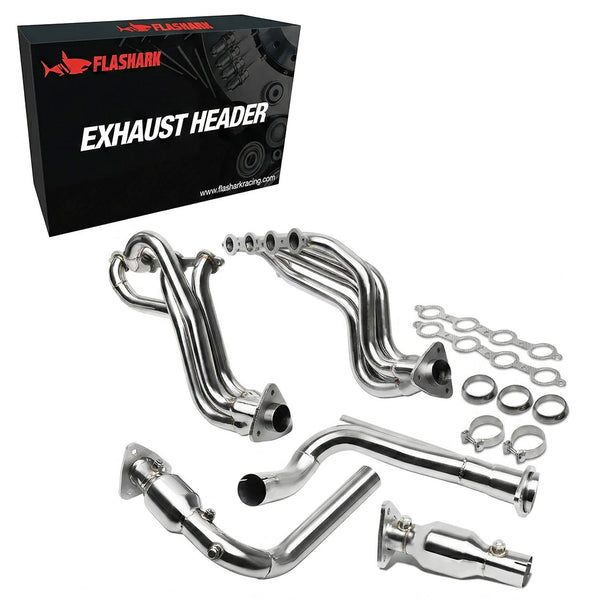
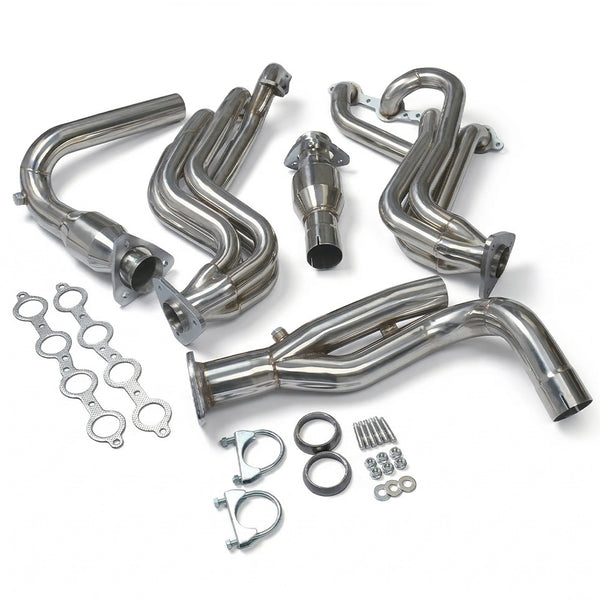
Long-tube headers extend farther under the truck and change where the exhaust connects downstream. This layout can support stronger exhaust scavenging under the right conditions, but it also creates more installation variables. A matching Y-pipe, custom tubing, welding, O2 sensor planning, or changes around the catalytic-converter section may be necessary.
| Header Style | Confirmed Collection Application | EGR Provision | O2 Sensor Information | Downstream Connection | Installation Planning |
|---|---|---|---|---|---|
| Shorty | 2002–2006 Avalanche 1500, 5.3L V8 | Current specification states no EGR interface | Current specification lists no O2 sensor locations on the headers | Intended for a layout closer to the factory exhaust; flange compatibility must be verified | Check EGR requirements, Y-pipe alignment, catalytic-converter layout, and drivetrain clearance |
| Long-Tube | 2002–2006 Avalanche 1500, 5.3L V8 | Current product information states that an EGR connection is provided | Bung count, exact locations, and extension requirements need verification | May require a matching Y-pipe or custom exhaust connection | Plan for additional clearance checks, O2 wiring, catalytic-converter placement, and possible fabrication |
Check the EGR Configuration
The current shorty-header specification states that it does not include an EGR interface, while the current long-tube product information identifies an EGR provision. This difference matters because an EGR-equipped truck needs the correct connection unless the vehicle has been legally and properly configured otherwise.
Do not choose between the two products from the model year alone. Inspect the existing exhaust hardware and compare it with current product photos and specifications. If the truck's configuration is unclear, confirm it by VIN and under-hood inspection before ordering.
Plan the O2 Sensor and Catalytic-Converter Layout
The shorty-header specification lists no O2 sensor locations on the headers themselves, which may be appropriate when the original sensors remain farther downstream. The long-tube listing refers to relocated O2 sensors but does not clearly document the number of bungs, their positions, or whether extensions are included. Those details need to be confirmed for the exact product supplied.
Long-tube headers may also change the relationship between the engine, O2 sensors, Y-pipe, and catalytic converters. Depending on the completed exhaust configuration, additional wiring, fabrication, or calibration work may be needed. A Check Engine Light cannot be ruled out when sensor or catalytic-converter locations change.
Emissions and Road-Use Notice
Do not assume that either header is legal for every road-use application. Confirm whether the selected product changes, relocates, or interferes with emissions equipment, and check the regulations that apply where the vehicle is registered. No CARB or 50-state legality claim should be assumed without product-specific documentation.
Verify Drivetrain and Chassis Clearance
The Avalanche 1500 was offered in both 2WD and 4WD configurations. Shared engine mounting points do not prove that a header will clear every component underneath both versions. On a 4WD truck, the front driveshaft and differential deserve particular attention. Steering components, the transmission area, heat shields, wiring, and brake or fluid lines should also be checked.
Complete 2WD and 4WD clearance documentation is not currently provided for every product in this collection. Treat drivetrain compatibility as a required pre-purchase check rather than assuming that a shared GMT800 platform guarantees clearance.
Understand the Exhaust Connection
A header can bolt to the cylinder heads correctly and still require work at the outlet. Before installation, compare the listed outlet diameter and flange arrangement with the existing Y-pipe. Also confirm whether the package contains the required gaskets, bolts, collectors, reducers, clamps, or connection flanges.
The long-tube option should be approached as an exhaust-system project rather than a simple manifold exchange. If the existing Y-pipe does not match, professional cutting, welding, or fabrication may be necessary. Collector construction and exact collector dimensions should be confirmed when those details affect the planned connection.
Set Realistic Performance and Sound Expectations
Headers can reduce restrictions compared with factory cast manifolds and may change throttle response, exhaust character, and how the engine delivers power. The result depends on the header design, the rest of the exhaust, catalytic converters, engine condition, calibration, and other modifications.
No fixed horsepower, torque, fuel-economy, or sound increase should be expected from this collection alone. Shorty headers usually produce a more restrained change and preserve a layout closer to stock, while long-tube headers can create a more noticeable exhaust change when paired with a compatible downstream system.
Technician's Note
As a general installation practice, verify the VIN, engine displacement, EGR hardware, drivetrain, O2 sensor locations, and current exhaust routing before removing the factory manifolds. Test-fit the headers and loosely assemble the downstream exhaust before final tightening. Check nearby wiring and hoses for heat exposure, inspect all sealing surfaces, and look for exhaust leaks after the first complete heat cycle. This is general installation guidance, not a record of a verified installation on every Avalanche configuration.
Frequently Asked Questions
Q1: Which Chevrolet Avalanche models are covered by this header collection?
A1: This collection is intended for 2002–2006 Chevrolet Avalanche 1500 models equipped with the 5.3L Vortec V8. It does not cover the Avalanche 2500, the 8.1L engine, 1999–2001 model years, or later-generation Avalanche applications.
Q2: Will these headers fit every 2002–2006 Avalanche 1500?
A2: Not automatically. The truck still needs the correct 5.3L engine, EGR configuration, drivetrain clearance, O2 sensor arrangement, and downstream exhaust connection for the selected header. Compare the vehicle with the current product specifications before ordering.
Q3: What is the difference between the shorty and long-tube options?
A3: Shorty headers use a compact layout closer to the factory exhaust path and are generally the simpler option to integrate. Long-tube headers extend farther under the truck and may require a matching Y-pipe, custom tubing, welding, O2 sensor planning, or changes around the catalytic-converter section.
Q4: Does the shorty header include an EGR connection?
A4: The current shorty-header specification states that no EGR interface is provided. Inspect your truck for EGR hardware and confirm the requirement before purchasing because an EGR-equipped application needs the appropriate connection.
Q5: Does the long-tube header include an EGR connection?
A5: The current long-tube product information states that an EGR connection is provided. Confirm the location and connection style against your original hardware because the product information does not document every vehicle-side detail.
Q6: Will the shorty headers connect to the factory catalytic converters?
A6: The shorty design is intended to stay closer to the factory exhaust layout, but exact compatibility with the original Y-pipe and catalytic-converter section still needs to be verified. Compare the flange position, outlet size, and existing exhaust before installation.
Q7: Does the long-tube header include a compatible Y-pipe?
A7: Do not assume that a compatible Y-pipe is included unless the selected product or variant explicitly lists one in the package contents. The current long-tube installation may require a matching Y-pipe or custom exhaust work.
Q8: Will I need O2 sensor extensions or a tune?
A8: That depends on the final O2 sensor locations, wiring reach, catalytic-converter layout, and downstream exhaust configuration. The long-tube product information does not fully document these details, so extensions or calibration work may be necessary and a Check Engine Light cannot be ruled out.
Q9: Will these headers fit both 2WD and 4WD Avalanche 1500 models?
A9: The Avalanche 1500 was available in both drivetrain configurations, but complete clearance evidence is not provided for every header in this collection. Verify space around the front driveshaft, differential, steering components, transmission area, wiring, and heat shields before ordering.
Q10: Are these headers legal for street use?
A10: Street-use legality depends on the selected product, the completed exhaust configuration, and local emissions regulations. Do not assume CARB or 50-state legality unless product-specific certification or exemption documentation is provided.


