


 Need car parts? Shop by vehicle
(Select the exact fit for your vehicle)
Need car parts? Shop by vehicle
(Select the exact fit for your vehicle)
Colector de escape de la Chevrolet Silverado 1500



Recently viewed
Choosing Headers for Your Silverado 1500
The Silverado 1500 products in this collection span several truck generations, so the right header depends on more than whether the badge says 5.3L. A 2003 GMT800, a 2011 GMT900, and a 2016 Silverado may share a familiar V8 layout, but they do not share every chassis clearance, emissions component, sensor position, or exhaust connection.
Start with the truck’s model year and factory engine. Next, identify the drivetrain and determine whether the existing system uses an EGR connection. Finally, compare the product’s collector or supplied Y-pipe with the exhaust components already on the truck. This order helps prevent the most common fitment mistakes.
Before You Buy
- Confirm the exact model year and factory-installed engine, not just the engine displacement.
- Check whether the selected product supports 2WD, 4WD, or both. Drivetrain clearance is product-specific.
- Determine whether the truck requires an EGR connection and choose a header with the matching provision.
- Review what is included after the collectors, especially when comparing header-only and header-with-Y-pipe options.
- Compare O2 sensor and catalytic-converter locations with the individual product information before installation.
Long-Tube and Shorty Header Differences
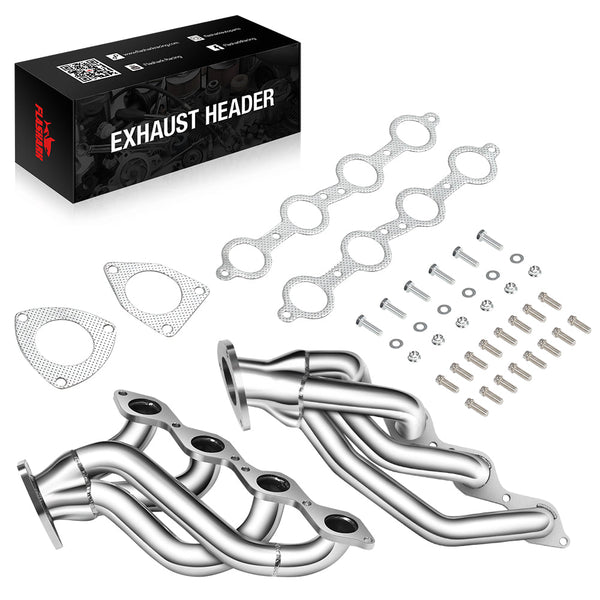
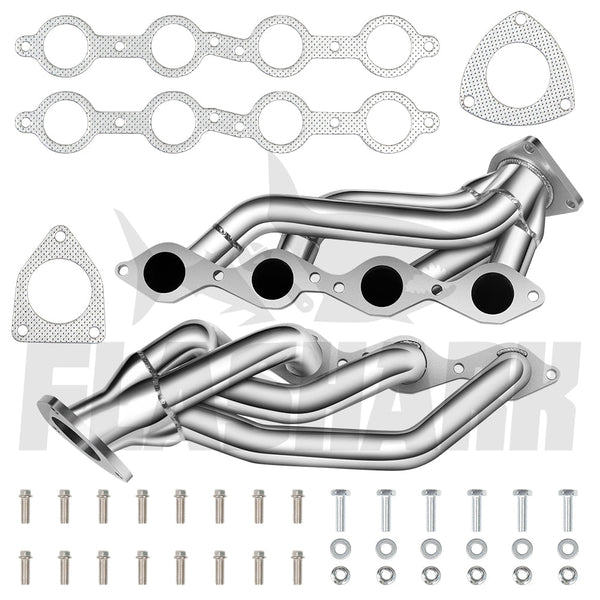
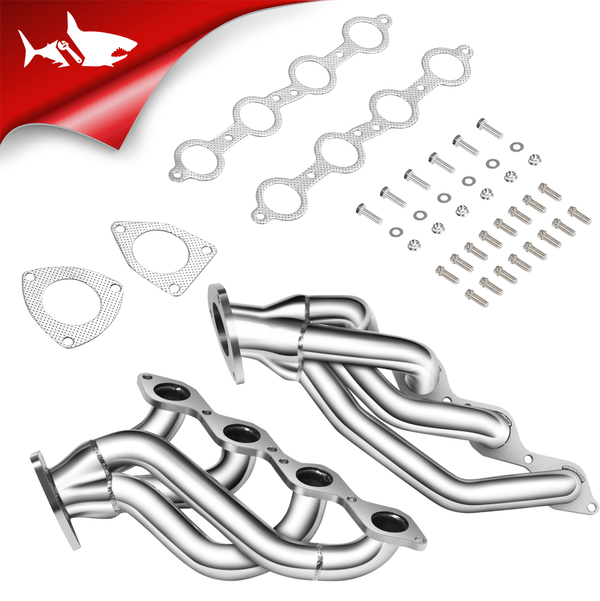
Shorty headers use a compact layout that keeps the collector closer to the factory manifold area. They may suit owners who want a manifold-area replacement without planning an entirely new front section of the exhaust. The shorty products shown in this collection are intended for select 1999–2006 Silverado 1500 trucks with 4.8L or 5.3L Vortec V8 engines. The listed shorty configurations do not include an EGR interface, so they should not be ordered for a truck that requires one.
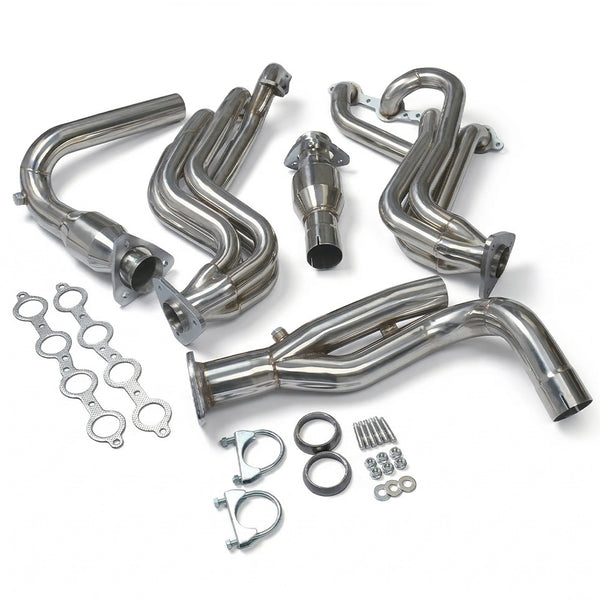
Long-tube headers extend farther beneath the truck before the primary tubes merge. This layout can support improved exhaust flow and a stronger exhaust note when the rest of the system is properly matched. It also makes collector location, transmission-area clearance, steering clearance, front driveline clearance, O2 sensor routing, and the downstream exhaust connection more important.
| Configuration | Current Collection Coverage | Connection Planning | Main Fitment Checks |
|---|---|---|---|
| Shorty Headers | Select 1999–2006 Silverado 1500 4.8L and 5.3L applications | Compact collector position intended to remain closer to the factory manifold area | EGR requirement, outlet connection, engine, and exact year |
| 1999–2006 Headers with EGR Provision | Select GMT800 Silverado 1500 4.8L, 5.3L, and 6.0L applications | Collector and downstream exhaust layout must be compared with the truck | EGR equipment, drivetrain clearance, O2 sensors, and existing exhaust |
| 2007–2013 Long-Tube Headers | Select 4.8L, 5.3L, 6.0L, and 6.2L Vortec V8 applications | Header-only and selected Y-pipe configurations are available | 2WD/RWD requirement, engine family, collector choice, and sensor routing |
| 2014–2017 Long-Tube Headers | Select 5.3L and 6.2L Silverado 1500 applications | May require adjustment or exhaust modification depending on the truck | Exact 2014–2017 configuration, drivetrain, cab-related exclusions, and exhaust layout |
Header-Only or Headers with a Y-Pipe?
A header-only option supplies the header section but may leave the connection between the collectors and the existing exhaust to the installer. This can be appropriate when the truck already has compatible exhaust work or when a builder plans to fabricate the front section around a specific catalytic-converter and mid-pipe arrangement.
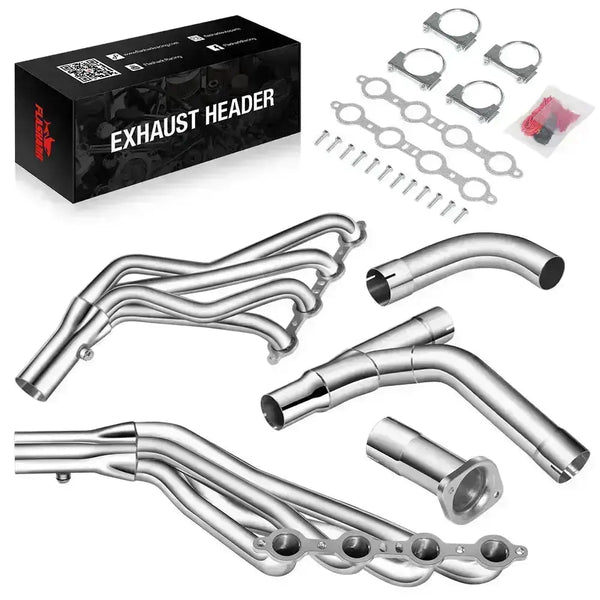
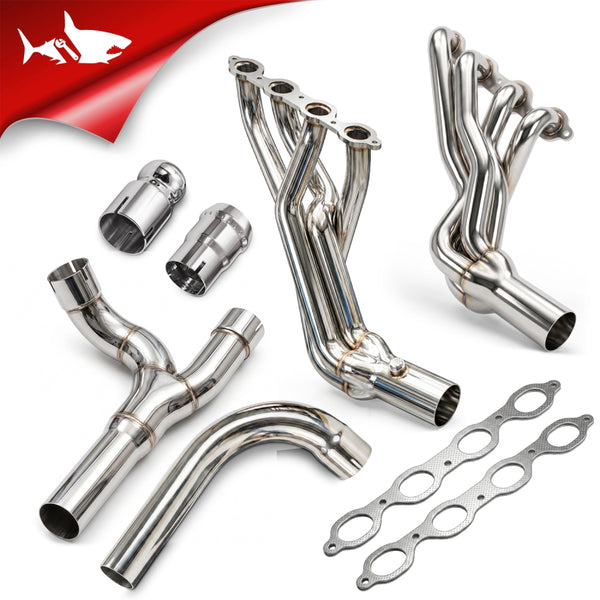
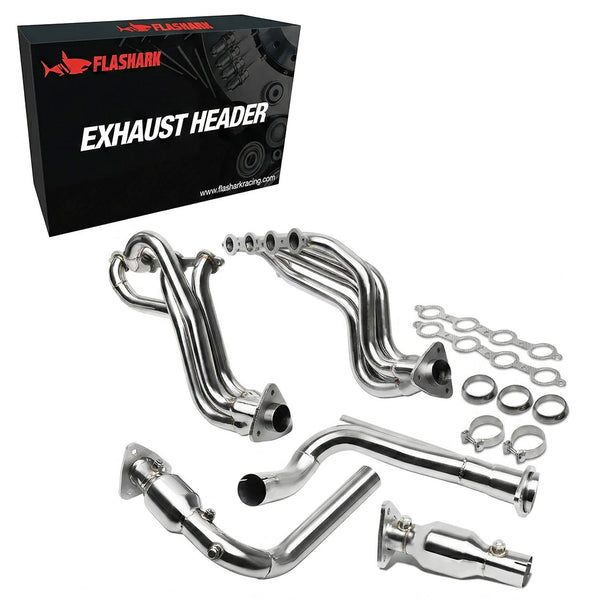
A long-tube option supplied with a Y-pipe provides more of the path from the two header collectors toward the single downstream exhaust connection. It can simplify parts planning, but it does not make every installation universal. The Y-pipe still has to clear the chassis and drivetrain, accommodate the intended O2 sensors and catalytic-converter arrangement, and meet the existing mid-pipe at the correct location and diameter.
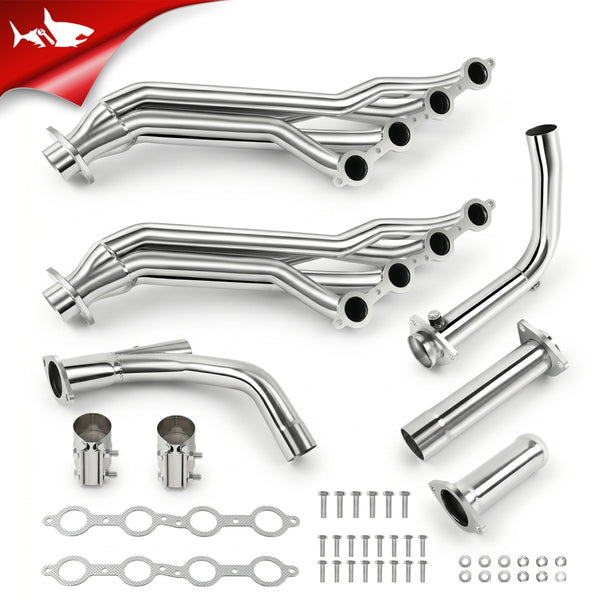
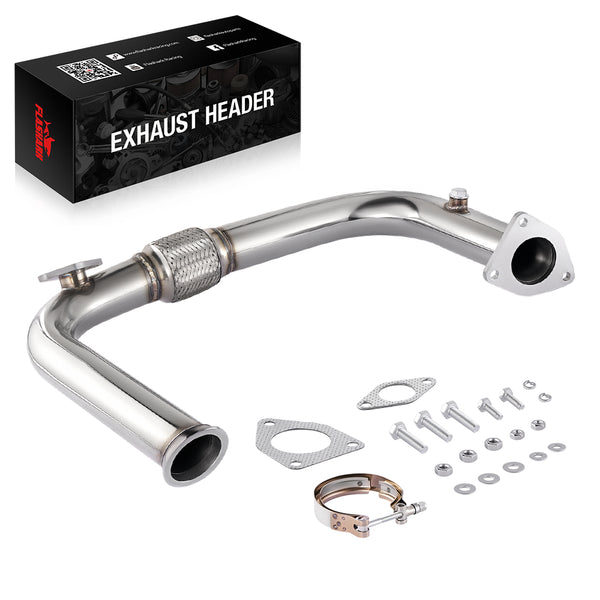
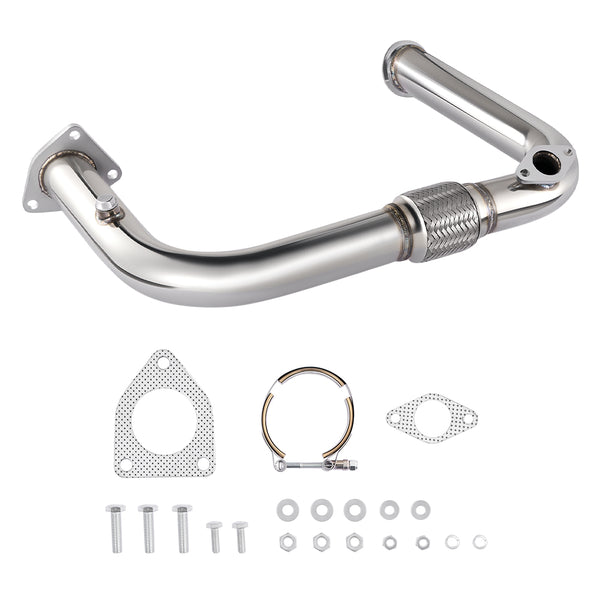
Check the selected variant carefully. Product images may show multiple configurations, so the included parts for one option should not be assumed to come with another.
Fitment by Silverado Generation
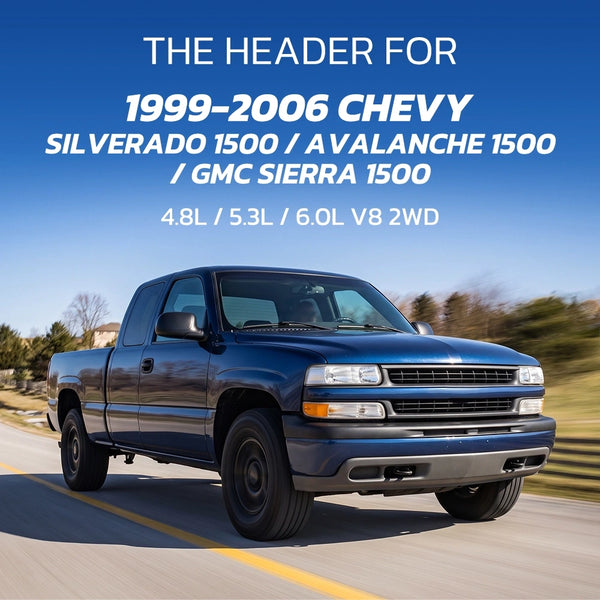
1999–2006 GMT800: The current collection includes shorty headers and EGR-equipped header configurations for selected 4.8L, 5.3L, and 6.0L V8 trucks. EGR equipment is a critical dividing point. Two trucks from this period can have the same engine displacement but require different provisions at the header.
2007–2013 GMT900: Selected long-tube products cover 4.8L, 5.3L, 6.0L, and 6.2L Vortec V8 applications. The applicable long-tube product in this collection is limited to compatible 2WD/RWD trucks and should not be ordered for a 4WD or 4x4 Silverado.
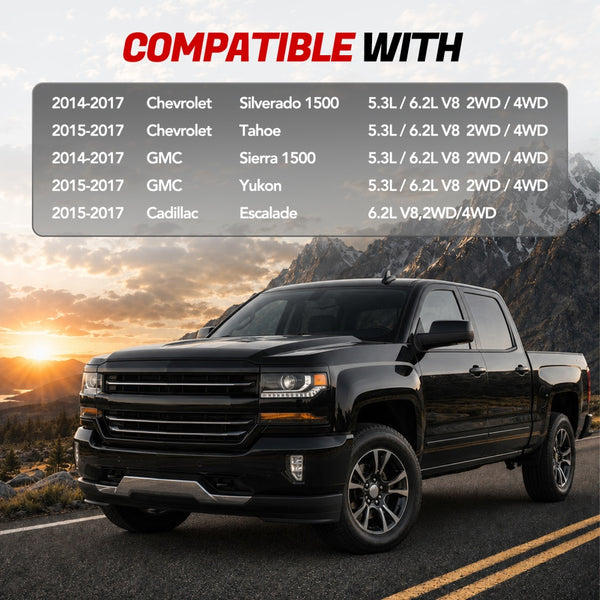
2014–2017 Silverado 1500: A separate long-tube product covers selected 5.3L and 6.2L applications and lists both 2WD and 4WD coverage. However, its product information also identifies configurations that may require modification and a specific 2014 5.3L exclusion. Treat 2014 as a transition year and verify the full vehicle configuration on the individual product page.
Important 2014 Fitment Warning
Do not choose a Silverado header only because a product title includes 2014. One long-tube configuration in this collection excludes the 2014 Silverado 1500 5.3L EcoTec3, while the separate 2014–2017 product has its own fitment conditions and exclusions. Confirm the engine family, drivetrain, cab configuration, and product-specific fitment before ordering.
Clearance, O2 Sensors, and Catalytic Converters
Headers occupy more space than a compact cast manifold, especially near the steering shaft, spark plug boots, transmission area, front driveline, and frame. Clearance can also change when a truck has an engine swap, suspension changes, replacement engine mounts, or an existing aftermarket exhaust. A shared engine bolt pattern does not prove that every tube route will clear every Silverado chassis and drivetrain combination.
O2 sensor planning depends on the selected header and downstream components. Some configurations provide sensor locations in the Y-pipe, while the listed shorty headers have no O2 sensor locations in the header assembly itself. Confirm where the truck’s upstream and downstream sensors are installed and whether the supplied parts provide the required bungs in the correct positions.
The collection does not establish one universal catalytic-converter arrangement. Depending on the product and the truck, the original converter locations may not align with a long-tube collector or supplied Y-pipe. Any required converter, sensor, flange, or mid-pipe work should be identified before installation.
Tuning, Check Engine Lights, and Performance Expectations
Headers can reduce exhaust restriction and may change throttle response, higher-rpm performance potential, and exhaust tone. The result depends on the engine, header design, catalytic converters, downstream exhaust, intake system, calibration, fuel, and installation quality. No fixed horsepower or torque increase can be stated for every product and truck in this collection.
A tune is not automatically required for every shorty-header installation, but it may be advisable with long-tube headers or other supporting modifications. Changes to O2 sensor position, catalytic-converter efficiency, or exhaust flow can contribute to a check engine light on some vehicles. Correct installation and sensor placement reduce avoidable problems, but they do not justify a guarantee that a CEL will never occur.
Technician’s Note
This is general installation guidance, not a record of a specific Flashark installation. Before removing the factory manifolds, compare the new header’s EGR provision, collector position, flange type, sensor bungs, and included connection parts with the truck. Inspect the manifold bolts, spark plug wires, engine mounts, steering clearance, and existing exhaust condition. If the collectors do not meet the current exhaust in the correct location, stop and plan the required connection work instead of forcing the assembly into place.
Emissions and Road-Use Requirements
Header installation can change the location or operation of emissions-related components. Product availability does not establish that a header is legal for every road-use application or inspection area. Confirm local emissions and noise requirements before purchase, particularly when catalytic-converter placement or O2 sensor routing will change. Do not assume 50-state legality unless the selected product has current, product-specific documentation supporting that claim.
Frequently Asked Questions
Q1: What years of Chevy Silverado 1500 are covered by this collection?
A1: The collection includes headers for select 1999–2017 Chevrolet Silverado 1500 applications. Coverage is divided among different products, so not every header fits every year within that range.
Q2: Which Silverado 1500 engines are represented in this collection?
A2: Current products cover select trucks with 4.8L, 5.3L, 6.0L, and 6.2L gasoline V8 engines. The supported engine depends on the model year, platform, drivetrain, and selected header.
Q3: Should I choose long-tube or shorty headers?
A3: Choose shorty headers when the verified compact configuration matches your truck and exhaust plan. Choose long-tube headers when you are prepared to check collector location, chassis clearance, O2 sensor routing, catalytic-converter placement, and the downstream exhaust connection.
Q4: Do the 2007–2013 long-tube headers fit a 4WD Silverado?
A4: No. The applicable 2007–2013 Silverado long-tube product in this collection is limited to compatible 2WD/RWD applications and is not listed for 4WD or 4x4 trucks.
Q5: Will these headers fit a 2014 Silverado 1500 5.3L?
A5: Do not select a product by the year and engine size alone. The 2007–2013 Vortec long-tube configuration does not fit the 2014 Silverado 1500 5.3L EcoTec3, while the separate 2014–2017 product has its own conditions and exclusions. Verify the full vehicle configuration on that product page.
Q6: How do I know whether I need an EGR-equipped header?
A6: Inspect the factory exhaust manifold area or confirm the original emissions configuration by VIN and equipment records. If the truck uses an EGR connection at the manifold, select a product with the matching provision; the listed no-EGR shorty headers are not a substitute.
Q7: What is the difference between header-only and header-with-Y-pipe options?
A7: A header-only option may require a compatible existing connection or custom work after the collectors. A header-with-Y-pipe option includes more of the front exhaust connection, but its clearance, O2 sensor positions, catalytic-converter arrangement, and mid-pipe connection still must match the truck.
Q8: Will Silverado headers connect directly to the factory exhaust?
A8: That depends on the selected header and the truck’s current exhaust layout. Shorty and long-tube products use different collector positions, and long-tube installations may require a matching Y-pipe, flange work, or other exhaust modification.
Q9: Do I need a tune after installing headers?
A9: Not every header installation automatically requires a tune. However, calibration review may be advisable for long-tube headers or builds with additional intake, exhaust, catalytic-converter, or O2 sensor changes.
Q10: Can these headers cause a check engine light?
A10: A check engine light is possible if sensor position, exhaust leaks, catalytic-converter efficiency, wiring, or calibration does not match the completed setup. Correct installation can reduce avoidable issues, but a CEL-free result cannot be guaranteed.
Q11: Are these Silverado headers legal for street use?
A11: Street-use and emissions requirements vary by location and vehicle configuration. Confirm the rules that apply to your truck and look for current, product-specific compliance documentation before changing catalytic converters or other emissions-related components.


