


 Need car parts? Shop by vehicle
(Select the exact fit for your vehicle)
Need car parts? Shop by vehicle
(Select the exact fit for your vehicle)
Honda Civic Catback Exhaust
Shop Cat-Back Exhaust by Brand: Honda
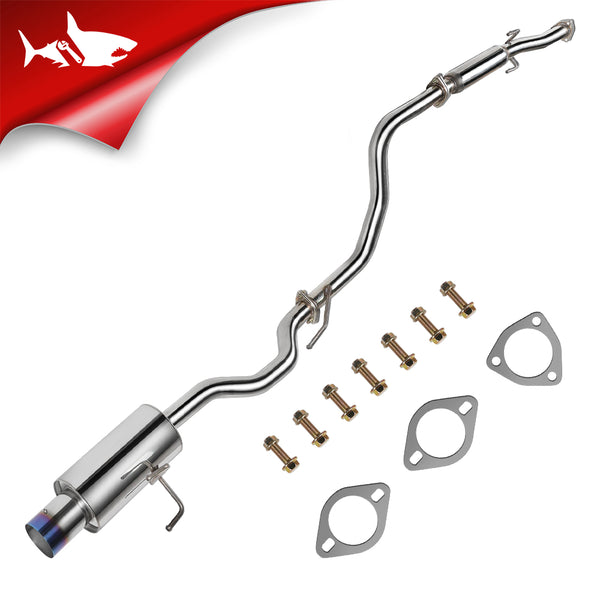
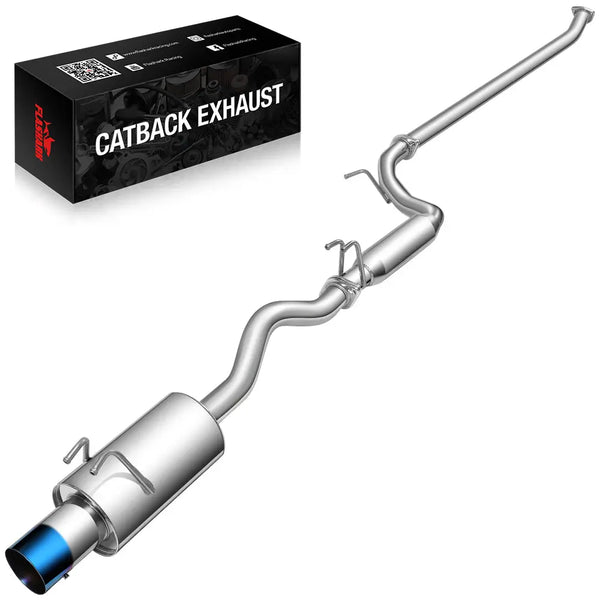
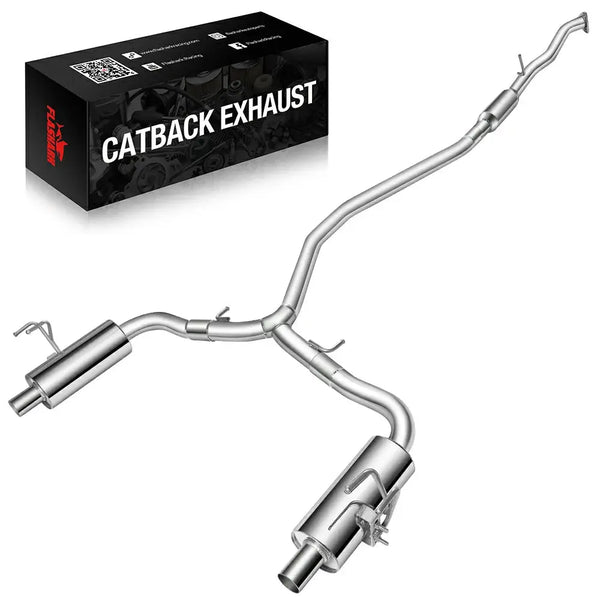
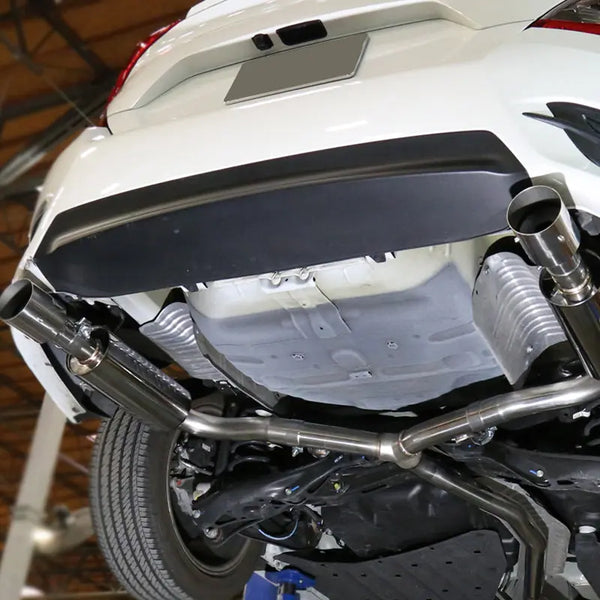
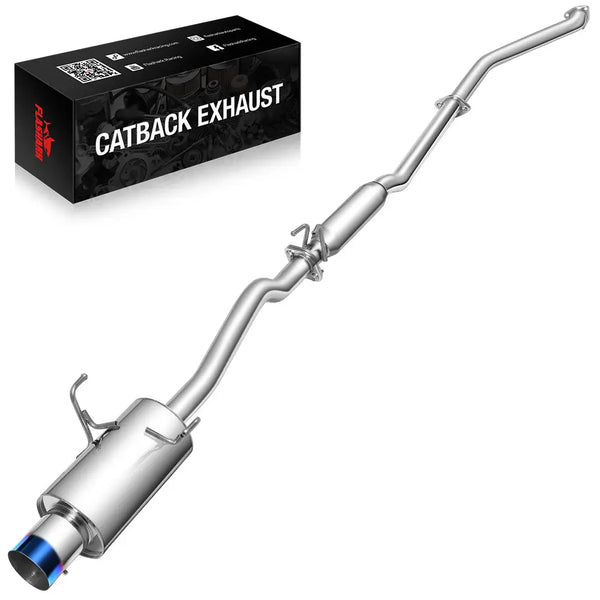
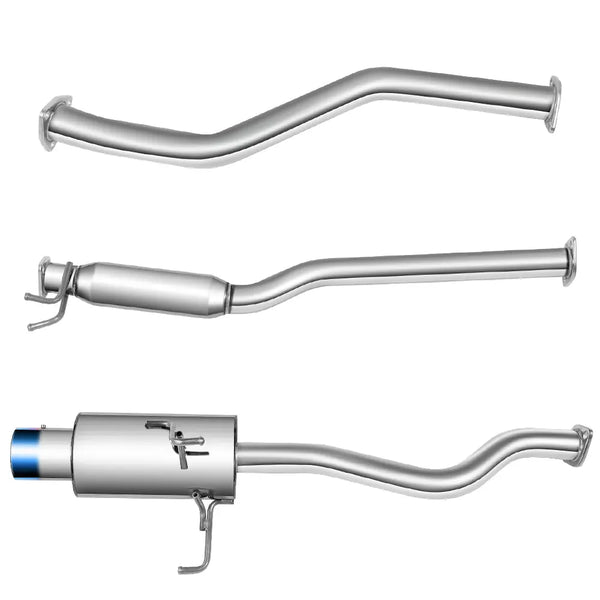
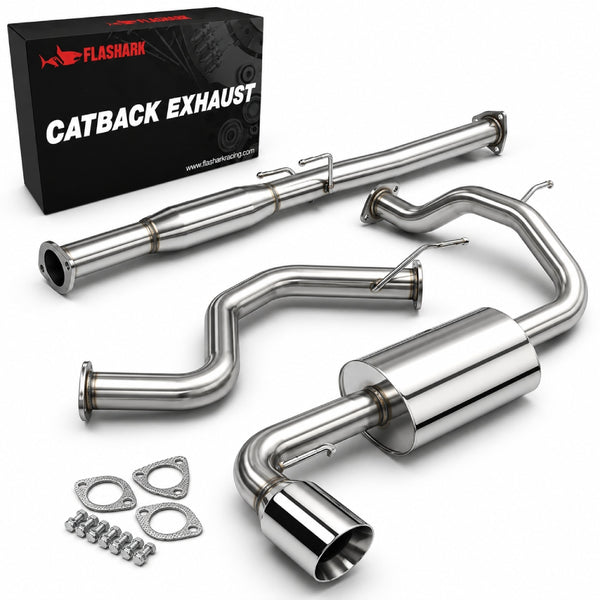
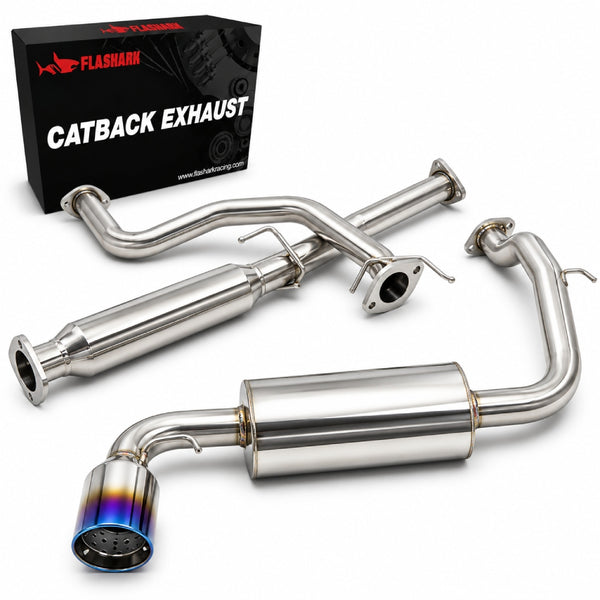
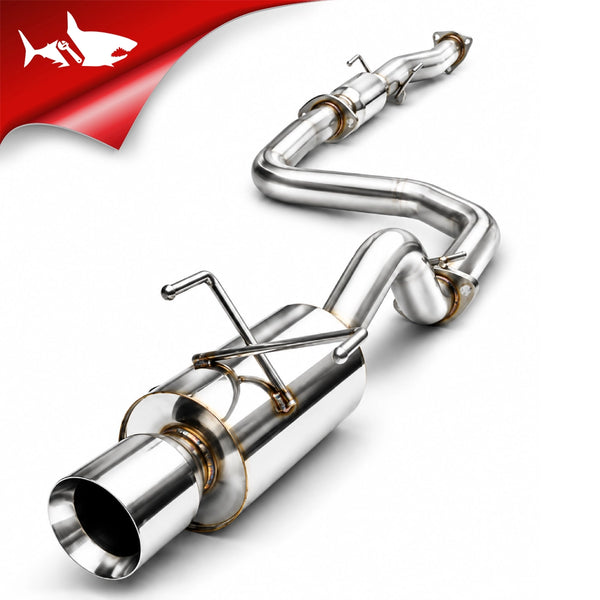
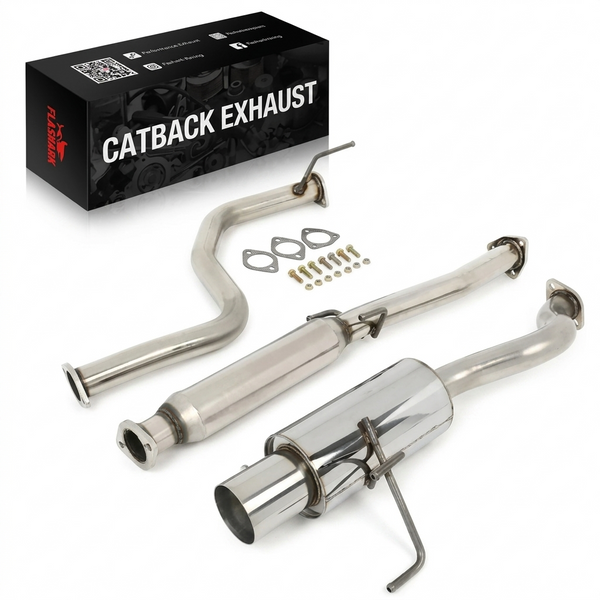
Choose a Flashark cat-back exhaust for select Honda Civic applications from 1988 through 2021. The products in this collection cover specific 1.5L, 1.6L, 1.7L, 1.8L, and 1.5L turbo configurations, with options for certain sedans, coupes, and hatchbacks. Available designs include stainless-steel piping, N1-style mufflers, and rolled or burnt exhaust tips in several pipe and outlet sizes. These systems replace the rear exhaust section after the applicable factory connection, providing a more noticeable exhaust tone and a sportier rear appearance. Fitment is not universal across each listed year range, so confirm the exact year, engine, trim, and body style on the individual product page before ordering.
Shop Cat-Back Exhaust by Brand: Honda
Choose a Flashark cat-back exhaust for select Honda Civic applications from 1988 through 2021. The products in this collection cover specific 1.5L, 1.6L, 1.7L, 1.8L, and 1.5L turbo configurations, with options for certain sedans, coupes, and hatchbacks. Available designs include stainless-steel piping, N1-style mufflers, and rolled or burnt exhaust tips in several pipe and outlet sizes. These systems replace the rear exhaust section after the applicable factory connection, providing a more noticeable exhaust tone and a sportier rear appearance. Fitment is not universal across each listed year range, so confirm the exact year, engine, trim, and body style on the individual product page before ordering.
Choose the Right Honda Civic Cat-Back Exhaust
Honda used different engines, body styles, wheelbases, and exhaust routing across the Civic generations represented here. Two cars from the same model year may not use the same cat-back system, particularly when one is a sedan and the other is a coupe or hatchback.
Start with the vehicle year, then confirm the engine and body style. Review the individual product listing for exclusions, pipe size, flange configuration, tip design, and included parts before making your selection.
Before You Buy
- Match the complete year, engine, trim, and body style—not the model name alone.
- Do not assume that a coupe, sedan, and hatchback from the same generation share the same exhaust routing.
- Check the front connection, flange pattern, hanger locations, and required gaskets or hardware.
- Review all exclusions carefully, especially for Civic Si and EP3 applications.
- Contact Flashark fitment support before ordering if the product title, selected variant, and fitment details do not agree.
Current Civic Fitment and Exhaust Designs
The table below summarizes the fitment and specifications currently stated across the products in this collection. It is a shopping reference, not a substitute for checking the selected product page. Rows marked for verification contain overlapping coverage or listing details that require additional confirmation.
| Application | Engine | Stated Body Style | Pipe or Inlet | Outlet Design | Fitment Note |
|---|---|---|---|---|---|
| 1988–1991 Honda Civic cat-back exhaust | 1.5L | 3-door stated by the current variant | Verify on product page | 4-inch rolled or burnt tip options | Confirm the selected tip variant and 3-door application. |
| 1992–1995 Honda Civic 1.5L/1.6L cat-back exhaust | 1.5L or 1.6L | Coupe, hatchback, and sedan stated | 2.25-inch inlet stated | Rolled or burnt tip; verify selected version | Multiple body styles are listed, so confirm the exact SKU and routing before ordering. |
| 1992–1995 Honda Civic 1.5L cat-back exhaust | 1.5L | Current variant states 3-door | 2.25-inch inlet stated | 4-inch rolled tip | Verify before ordering because the visible title and current body-style variant are not fully consistent. |
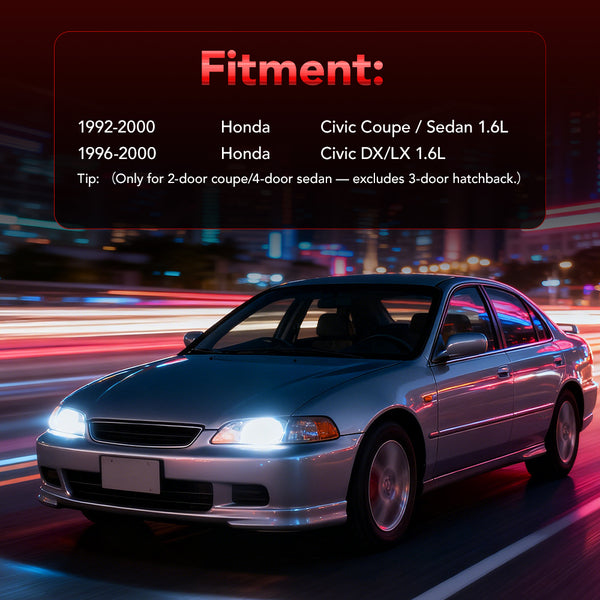
| 1992–2000 Honda Civic cat-back exhaust | 1.5L or 1.6L | 2-door or 4-door stated; coupe and sedan emphasized | 2.25-inch piping | 4-inch burnt rolled tip | Coverage overlaps other 1992–1995 products. Confirm the body style and selected configuration. |
| 2001–2005 Honda Civic cat-back exhaust | 1.7L D17 application stated | 2-door or 4-door stated | 2.25-inch inlet; other pipe-size text varies | 4-inch N1-style burnt tip | Primary fitment information excludes the 2.0L Si hatchback/EP3. Confirm all details before purchase. |
| 2006–2011 Honda Civic sedan cat-back exhaust | 1.8L R18A1/R18A4 stated | 4-door sedan; DX, LX, and EX stated | 2.25-inch tubing | Single N1-style muffler with 4-inch burnt tip | Do not assume compatibility with the Civic Si, coupe, or another engine. |
| 2016–2021 Honda Civic 1.5T sedan cat-back exhaust | 1.5L turbo | 4-door sedan | 2.3-inch inlet | N1-style muffler with 3.8-inch outlet | Do not assume compatibility with the coupe, hatchback, Si, Type R, or 2.0L naturally aspirated model. |
Pipe Size, Muffler, and Tip Differences
The diameter of the exhaust pipe and the diameter of the visible tip describe different parts of the system. A product with a 4-inch tip does not use 4-inch piping from front to rear. The products in this collection include stated pipe or inlet sizes around 2.25 inches, 2.3 inches, and, on one listing, a broader 2.25-to-2.5-inch description that should be confirmed before purchase.
Most of the listed systems use a single N1-style muffler or a similar straight-through layout. Rolled tips have a rounded outer edge, while burnt tips use a heat-colored finish for a blue, purple, or gold appearance. These outlet differences primarily affect appearance and sound character; they do not establish vehicle compatibility.
Sound and Driving Expectations
A cat-back system generally produces a more noticeable tone than the original rear exhaust, especially during acceleration. The exact result will vary with the engine, muffler and resonator layout, transmission, cruising RPM, vehicle load, exhaust leaks, and any other installed exhaust parts.
Cabin drone is also vehicle- and speed-dependent. A system that is comfortable at one cruising speed can become more noticeable at another. Because the current products do not share one verified sound test under identical conditions, no fixed volume or drone-free claim applies across this collection.
The freer-flowing layout may change throttle feel or exhaust response, but the products on this page do not have a common controlled test that supports a guaranteed horsepower or torque figure. Choose primarily by verified fitment, construction, pipe layout, sound preference, and outlet design.
Connection and Installation Checks
A cat-back replaces the exhaust section behind its intended front connection and normally retains the applicable upstream emissions components. That description does not guarantee that every Civic uses the same flange, pipe length, or hanger arrangement.
Before removing the original exhaust, compare the new system with the vehicle and inspect:
- The front flange shape, bolt pattern, and pipe diameter.
- The location and condition of the rubber exhaust hangers.
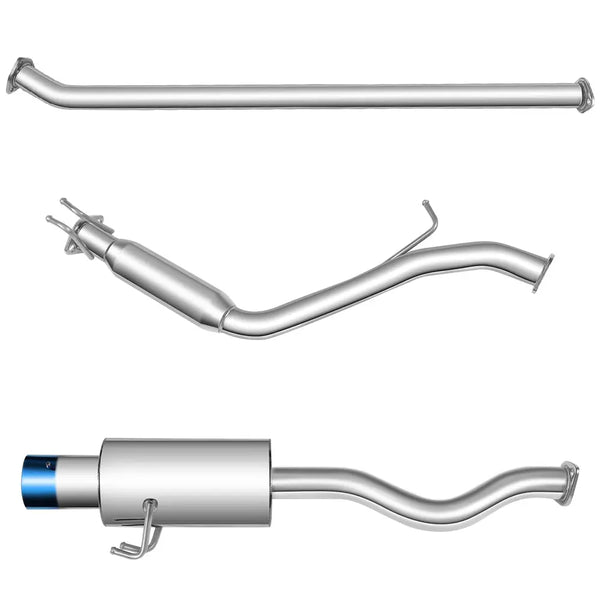
- The number and order of the supplied pipe sections.
- The required gaskets, clamps, bolts, and nuts.
- Clearance around the heat shields, suspension, chassis, and rear bumper.
- The final tip position and clearance from painted or plastic surfaces.
Technician's Note
As a general installation practice, assemble the sections loosely and seat every hanger before fully tightening the connections. This leaves room to align the pipes and center the outlet. Older vehicles may have corroded hardware, damaged hangers, previous exhaust repairs, or altered flanges, so additional replacement parts or adjustment may still be necessary.
Frequently Asked Questions
Q1: Does one cat-back exhaust fit every Honda Civic within the listed year range?
A1: No. Honda Civic exhaust routing can change with the generation, engine, body style, wheelbase, and trim. Match the exact year, engine, and body style to the individual product listing before ordering.
Q2: Will these cat-back systems fit a Honda Civic Si?
A2: Do not assume Civic Si compatibility. The primary fitment information for the 2001–2005 1.7L system excludes the 2.0L Si hatchback/EP3, and the 2006–2011 system is listed for 1.8L R18 sedans rather than the K20-powered Si. Only order for an Si when the selected product explicitly confirms that application.
Q3: Can the same exhaust fit a Civic sedan, coupe, and hatchback?
A3: Not necessarily. These body styles can use different wheelbases, pipe lengths, hanger positions, and rear-bumper clearances. A shared model year or engine does not prove that the complete cat-back system is interchangeable.
Q4: What is the difference between the pipe diameter and the exhaust tip diameter?
A4: Pipe diameter describes the exhaust passage through the system, while tip diameter describes the visible outlet at the rear of the vehicle. A 4-inch tip does not mean the complete system uses 4-inch piping.
Q5: How should I choose between a rolled tip and a burnt tip?
A5: Choose according to the available product fitment and your preferred appearance. A rolled tip has a rounded outer edge, while a burnt tip has a heat-colored finish. Tip style alone does not determine pipe size, sound level, or compatibility.
Q6: Will a Flashark Honda Civic cat-back exhaust cause cabin drone?
A6: Cabin drone is possible with any more noticeable exhaust system. Its intensity can vary with engine speed, transmission, cruising RPM, muffler and resonator design, exhaust leaks, and other modifications, so a drone-free result cannot be guaranteed.
Q7: Is an ECU tune required after installing one of these systems?
A7: A cat-back installed behind the intended factory connection typically does not require ECU calibration solely to operate. However, tuning needs can differ on vehicles with additional engine, turbocharger, intake, downpipe, sensor, or exhaust modifications.
Q8: Will a cat-back exhaust trigger a check engine light?
A8: A properly fitted cat-back normally leaves the applicable upstream catalytic converter and oxygen sensors in place, but no universal zero-CEL guarantee can be made. Existing sensor faults, exhaust leaks, altered emissions parts, poor sealing, or other vehicle problems can still trigger a warning light.
Q9: Is cutting or welding required?
A9: The listed systems are intended as fitment-specific replacements, but installation conditions vary. Corroded hardware, previous exhaust repairs, altered flanges, damaged hangers, or a mismatch in body style can require additional parts, adjustment, cutting, or welding.
Q10: What should I verify before ordering a Honda Civic cat-back exhaust?
A10: Confirm the full model year, engine size, trim, body style, front connection, flange pattern, hanger locations, pipe size, and included hardware. If the product title, selected variant, and fitment details do not agree, contact Flashark fitment support before purchasing.