2011-2015 Chevy Cruze 1.4L Turbo Cold Air Intake FAQs
Q1: Is this cold air intake legal in my state?
A1: Not legal for sale or use in California (and other CARB-adopting states) — this kit does not carry a CARB Executive Order number. Outside CARB-adopting states, confirm your local emissions and inspection rules before ordering.
Q2: Will this fit my Chevy Cruze?
A2: Yes, if it's a 2011-2015 Cruze with the factory 1.4L turbocharged engine (codes LUJ/LUV) — that covers every first-generation J300 trim: LS, LT, LTZ, and Eco. The 1.8L naturally aspirated Cruze is not compatible — it uses a different intake manifold routing, throttle body position, and sensor layout. The 2016+ second-generation Cruze (J400) is also not compatible, even though it shares 1.4L turbo displacement (LE2) — match by generation, not displacement.
Q3: How much horsepower will this add?
A3: Typical intake-only gains for this application are approximately 5-10 hp on an otherwise stock 1.4L turbo. The Cruze 1.4T is a 138 hp economy engine, so you'll notice the sharper throttle response and louder turbo spool more than a peak horsepower number. Actual results depend on the vehicle, calibration, installation, and supporting hardware.
Q4: Will this cold air intake improve my MPG?
A4: MPG is dominated by driving habits; an intake alone can't guarantee a measurable gain. Expect the main benefit as throttle response and intake tone rather than fuel economy.
Q5: Do I need a tune after installing?
A5: No tune is required for a bolt-on install that retains the factory sensors. The MAF sensor housing diameter maintains factory calibration, so the ECU can adjust fuel trims within its normal operating range on the stock tune. A custom tune (such as Trifecta or BNR) can optimize performance if you're also running a downpipe, larger intercooler, or increased boost — but it's optional. See our full breakdown of whether a cold air intake needs a tune.
Q6: Will it make the turbo louder?
A6: Yes — and that's the change Cruze 1.4T owners notice most. The factory intake's baffles and resonator chambers are designed to silence the turbo; replacing them with an open-element filter and smooth tube lets you hear the spool (a rushing, whistling sound starting around 2,500 RPM) and the bypass-valve flutter when you lift off the throttle. Normal cruising volume remains close to stock.
Q7: Can this intake cause a check engine light?
A7: A properly installed system will not trigger a CEL. The most common causes after an intake install on the Cruze 1.4T are a MAF sensor installed backward (the arrow must face the airflow direction), a loose or disconnected breather hose, a vacuum leak from an improperly sealed coupler, or MAF contamination during handling. If a CEL appears, scan the code, inspect all connections, and verify MAF orientation before concluding the intake is the problem.
Q8: Is this a true cold air intake or a short ram?
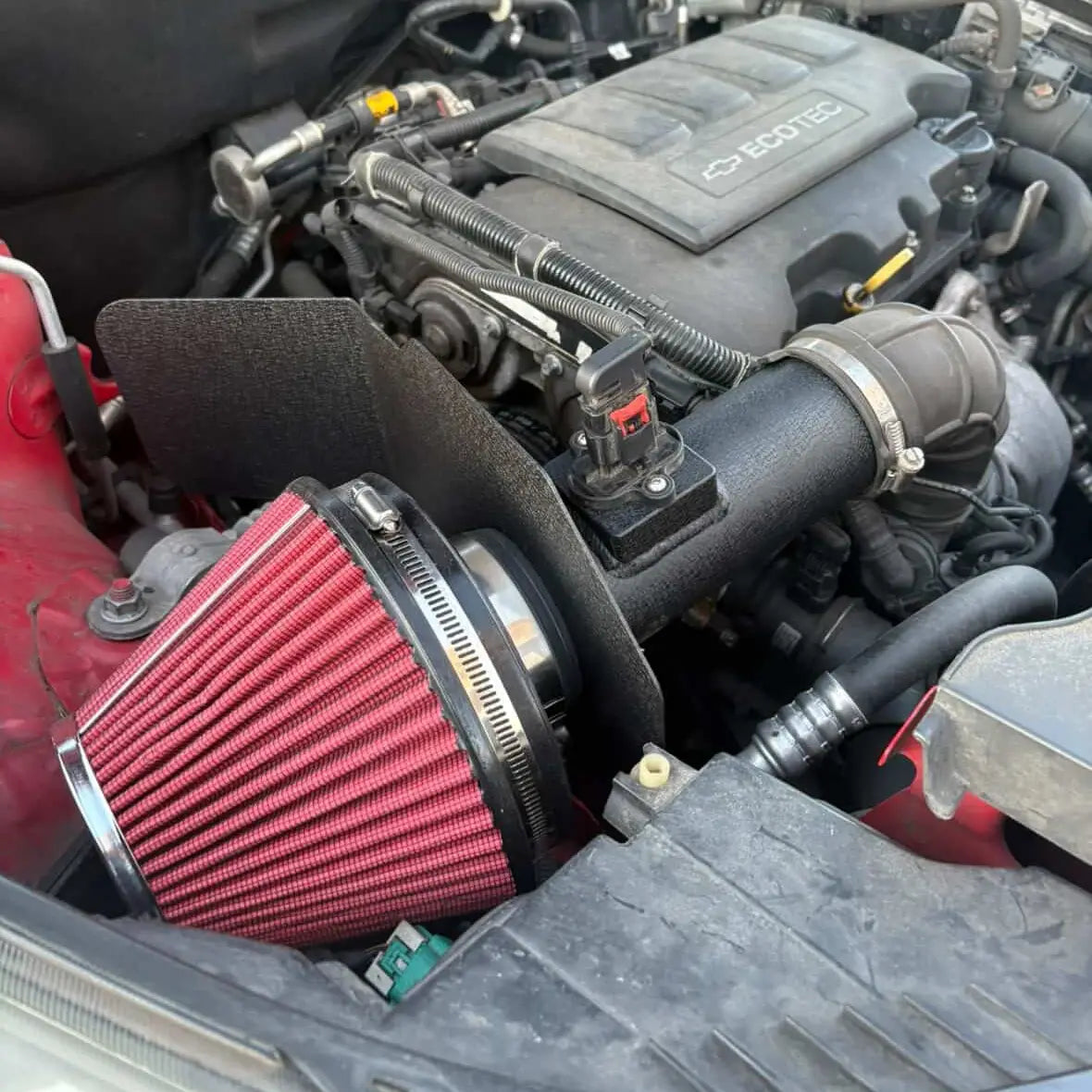
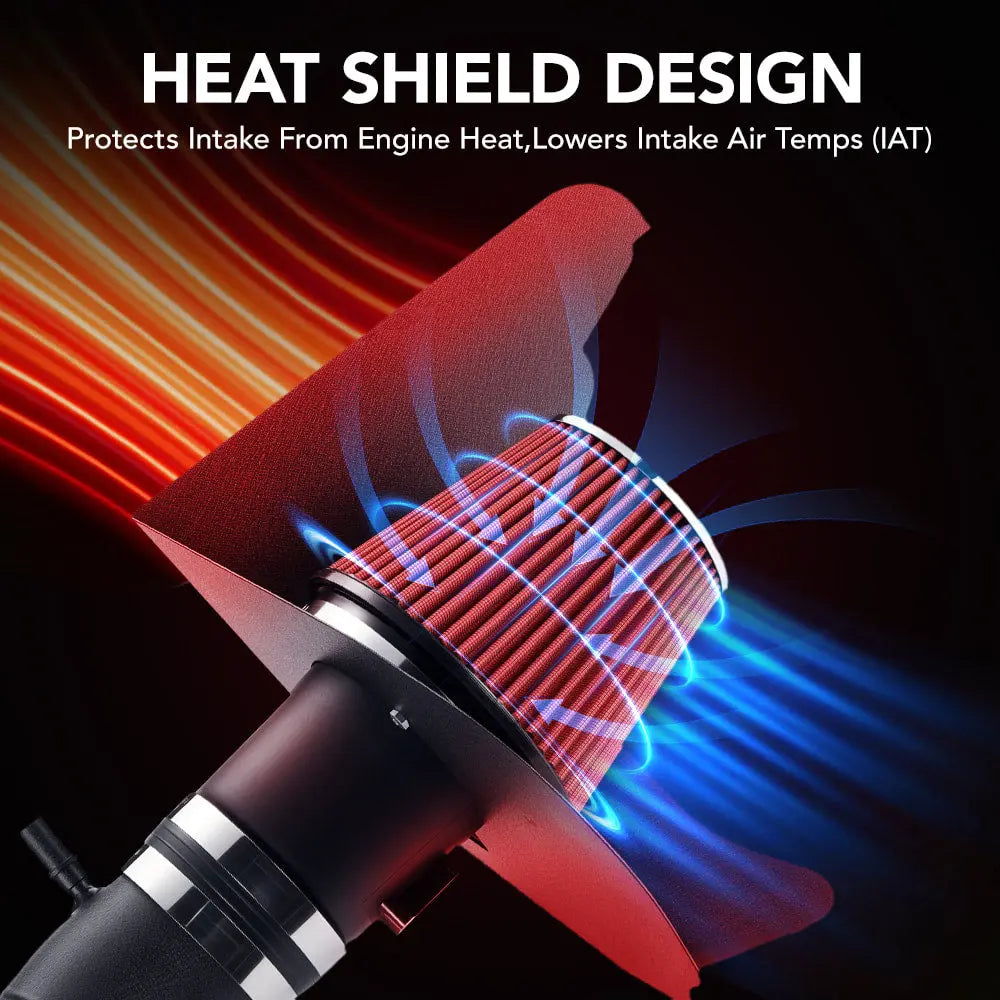
A8: It's a hybrid design that leans on cold air. A steel heat shield blocks radiant engine-bay heat, and the retained factory lower airbox keeps drawing air from the fender well — not from behind the radiator. That's better than a bare open-cone filter sitting in the engine bay, though intake temperatures still rise in stop-and-go traffic. At road speed, the fender-well feed and heat shield work together to deliver cooler air than the factory sealed box, which heat-soaks over time.
Q9: Is this safe in rain or deep water?
A9: Normal rain driving is fine — the filter sits high in the engine bay behind the headlight, not low in the bumper, and the retained lower airbox helps shield it from direct splashes. Avoid deep standing water and flooded roads: if the filter becomes submerged, the engine can hydrolock and suffer severe damage. If you regularly ford water crossings, this intake is not for you.
Q10: How do I clean the filter?
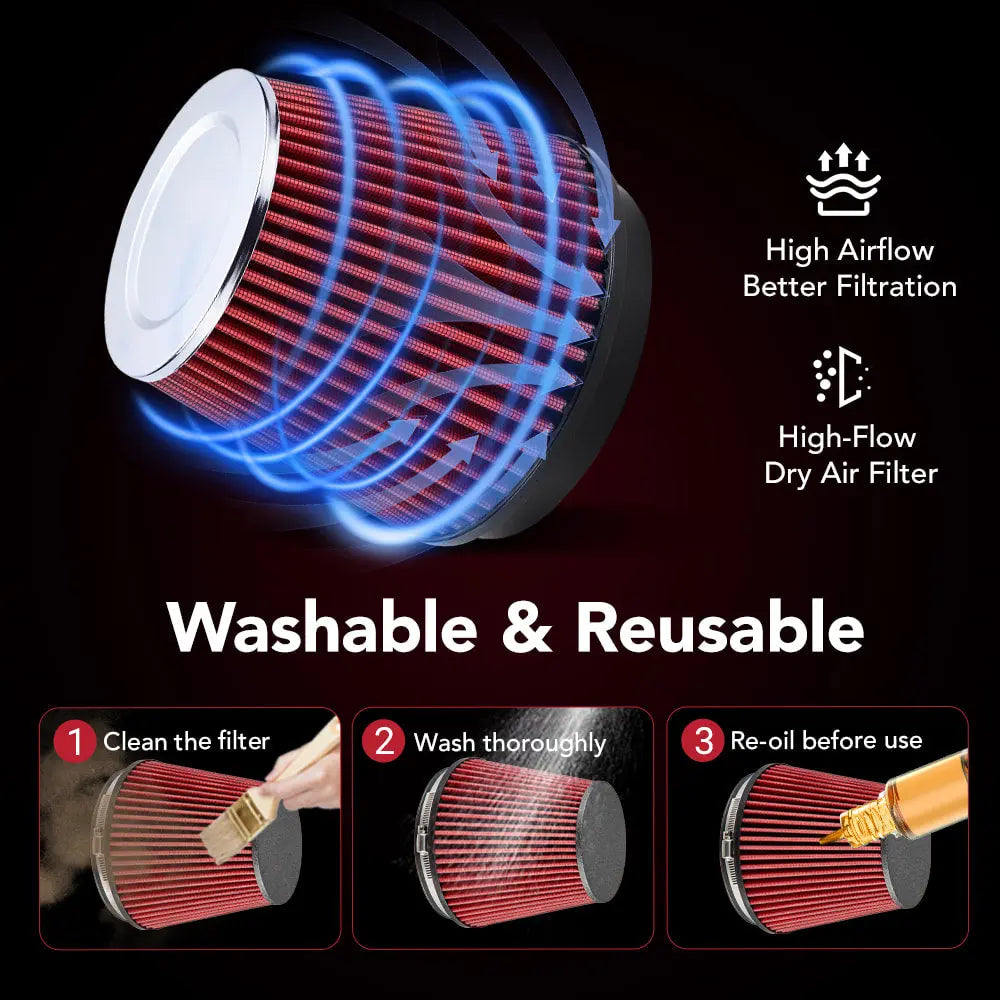
A10: Under normal paved-road driving, inspect every 15,000-20,000 miles; on gravel or dusty roads, every 5,000-10,000. This is a dry filter: blow it clean with compressed air from the inside out, or wash with mild soap and water, and let it dry completely before reinstalling. Do not oil this filter — the Cruze 1.4T's MAF sensor is sensitive to contamination, and oil can cause drivability issues and inaccurate airflow readings. Our step-by-step filter cleaning guide covers the full process.
Q11: What's included, and what do I still need?
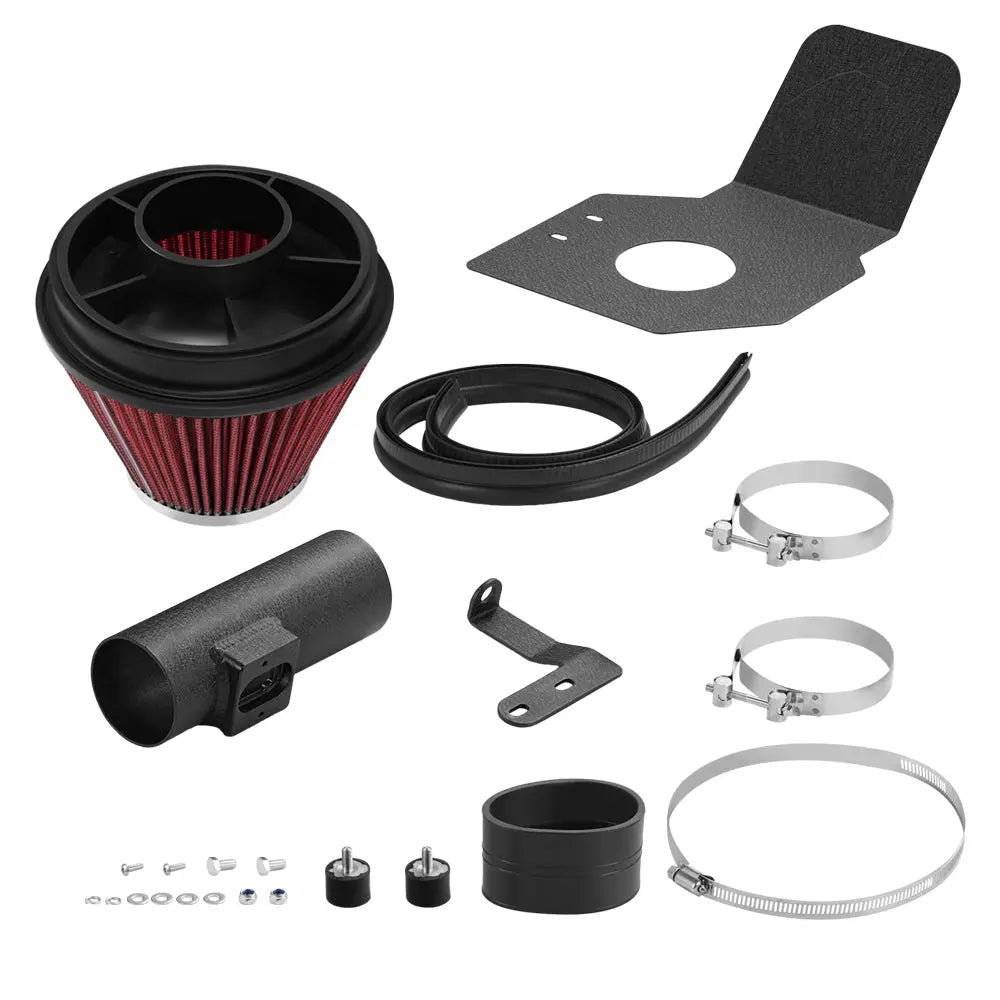
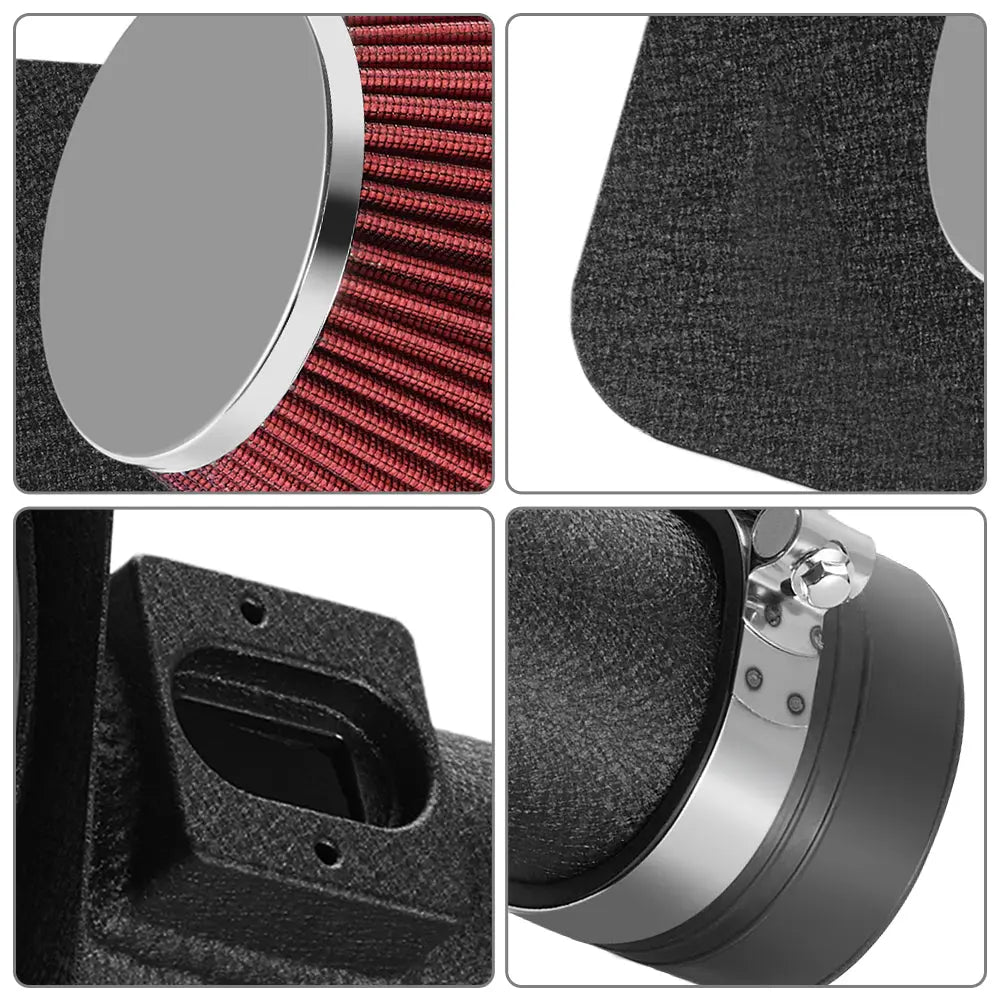
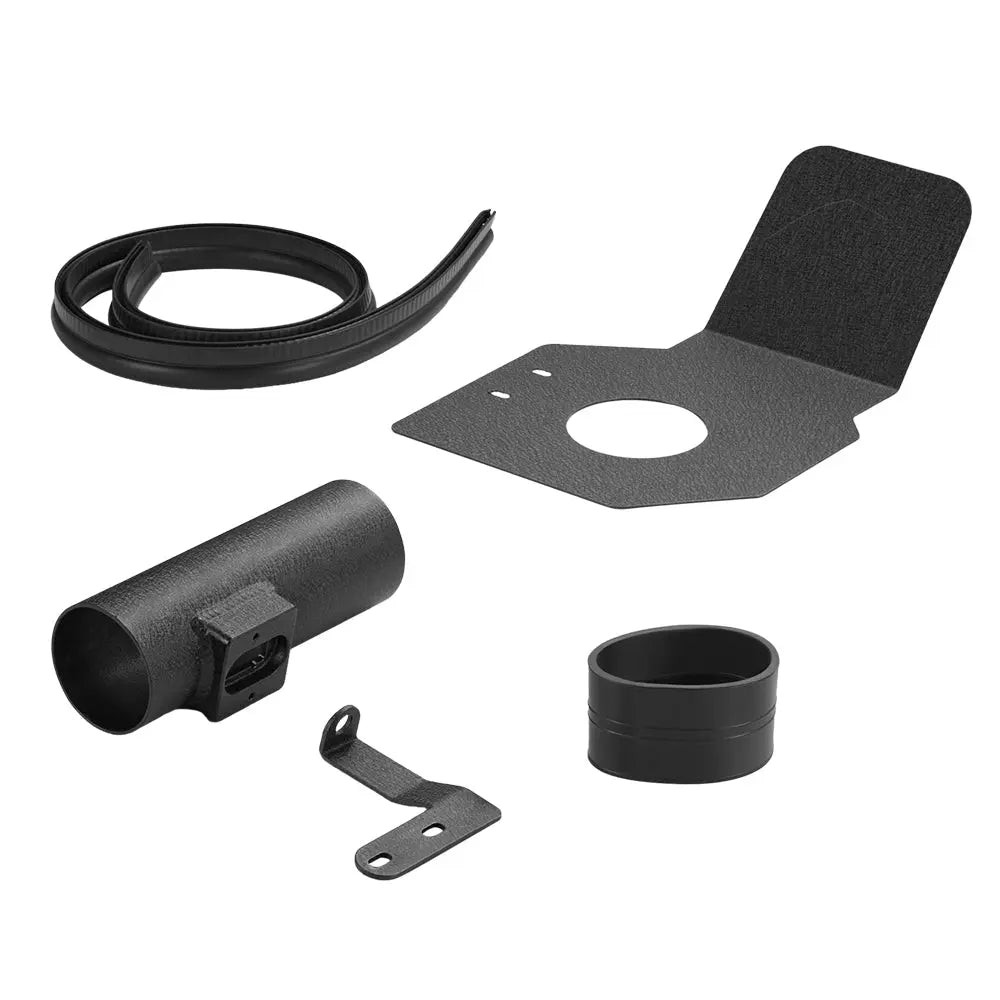
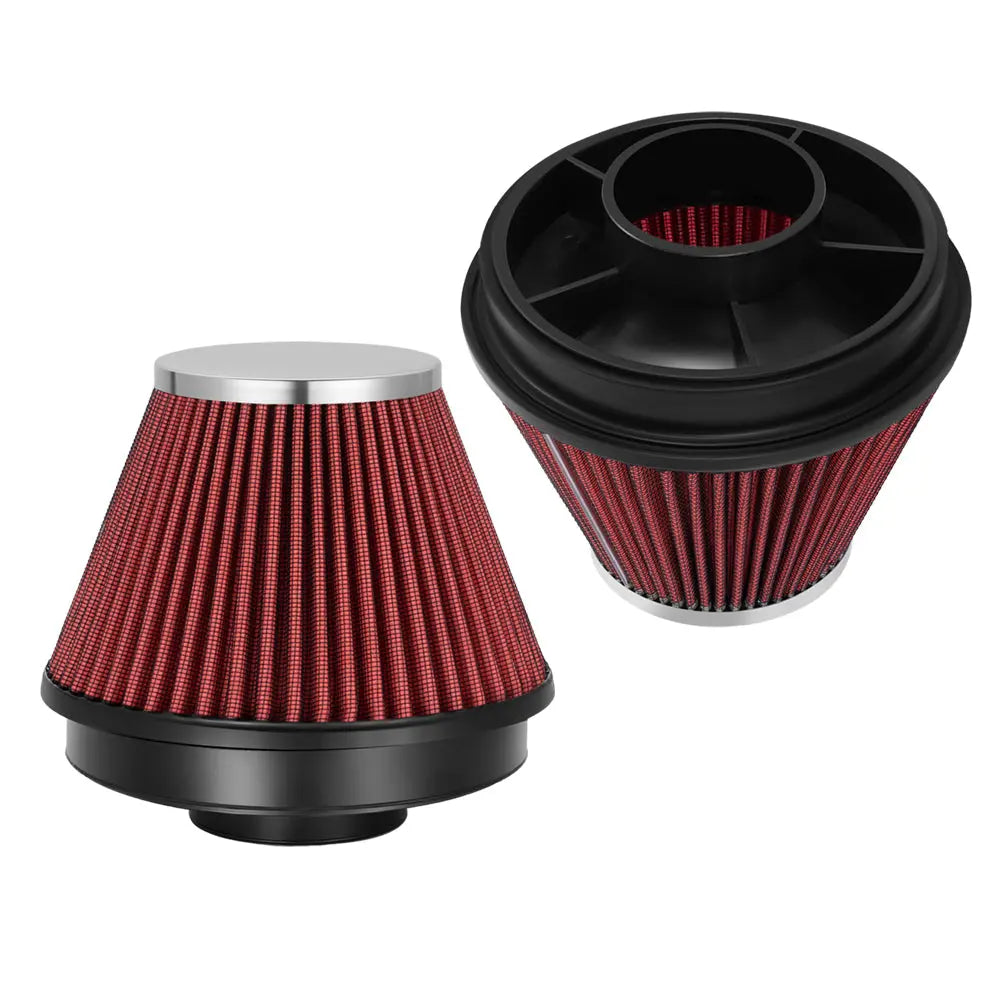
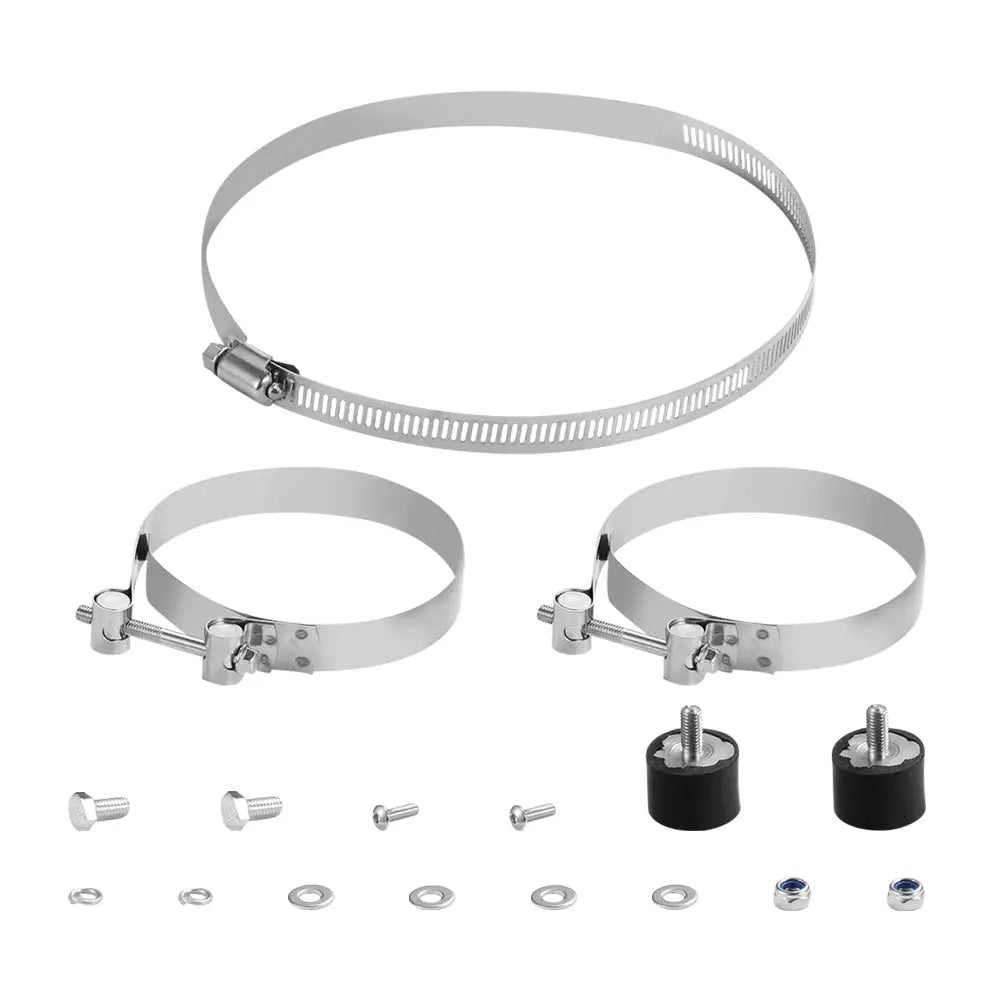
A11: The kit includes the intake tube, dry conical filter, steel heat shield, hose clamps, silicone couplers, breather hose with connector, mounting bracket with hardware, and the installation guide. The MAF sensor is a transfer part from your factory intake — it is not included — and you'll need basic hand tools. Plan on 45-90 minutes: the factory lower resonator is the most tedious part, and the MAF must transfer with the arrow pointing the correct way.
Q12: What should I check if the engine idles roughly or hesitates after installation?
A12: Work through this list in order: MAF sensor direction (arrow points toward the engine), all clamps and couplers fully seated with no gaps, breather hose connected and not kinked, MAF connector fully seated with no stretched wiring, no packaging material left inside the tube, and no rub points against the hood, fan shroud, or moving parts. Scan for trouble codes if the problem persists; to isolate the issue, reinstall the factory intake — if the problem disappears, retrace your installation steps. Our rough idle after intake installation checklist walks through each fix in detail.
Q1: Will this intake fit my 2011-2015 Chevy Cruze 1.4L Turbo?
A: Yes. This intake is designed for 2011, 2012, 2013, 2014, and 2015 Chevrolet Cruze models with the factory 1.4L turbocharged engine (engine codes LUJ/LUV). This covers all first-generation (J300) Cruze trims: LS, LT, LTZ, and Eco. Before ordering, confirm your engine on the underhood label — the 1.4L turbo and 1.8L naturally aspirated Cruze look different under the hood but share the same body.
Q2: Will it fit the 1.8L Cruze?
A: No. This intake is specifically for the 1.4L turbocharged engine. The 1.8L naturally aspirated Cruze uses a completely different intake manifold routing, throttle body position, and sensor layout. Installing this on a 1.8L will result in fitment failure. Confirm your engine before purchasing — the 1.4L has a plastic engine cover with "ECOTEC TURBO" lettering, while the 1.8L does not.
Q3: Will this fit a 2016 or newer Cruze?
A: No. The 2016+ Cruze is a second-generation (J400) platform with a completely redesigned engine bay, different intake routing, and updated sensor positioning. Even though the 2016+ also uses a 1.4L turbo engine (LE2), the intake layout is incompatible with the first-gen kit. Match by vehicle generation, not just engine displacement.
Q4: How much horsepower will I gain?
A: Expect approximately 5-10 WHP gain on an otherwise stock 1.4L turbo Cruze. The factory intake on these cars is heavily restricted by ribbed plastic tubing and multiple resonator chambers, so the airflow gain is real. However, the Cruze 1.4T is a 138 hp economy engine, not a high-output performance motor — you will notice the sharper throttle response and louder turbo spool significantly more than you'll feel a peak horsepower number.
Q5: Does this intake require an ECU tune?
A: No. This intake is designed to run on the stock ECU without any tuning. The MAF sensor housing diameter maintains factory calibration, so the ECU can adjust fuel trims within its normal operating range. A custom tune (such as Trifecta or BNR) can optimize performance if you're also running a downpipe, larger intercooler, or increased boost — but it's optional, not required for this intake to function correctly.
Q6: Will this intake make the turbo louder?
A: Yes — and that's the #1 thing Cruze 1.4T owners love about this mod. The factory intake's baffles and resonator chambers are designed to silence the turbo. Replacing them with an open-element filter and smooth tube lets you hear the turbo spool (a rushing/whistling sound starting around 2,500 RPM) and the bypass valve flutter when you lift off the throttle. Normal cruising volume remains close to stock. If you want your Cruze to sound turbocharged instead of like an appliance, this is the way.
Q7: Can this intake cause a check engine light?
A: A properly installed system will not trigger a CEL. The most common causes of a check engine light after intake installation on the Cruze 1.4T are: MAF sensor installed backward (arrow must face airflow direction), loose or disconnected breather hose, vacuum leak from an improperly sealed coupler, or MAF sensor contamination during handling. If you get a CEL, scan the code, inspect all connections, and verify MAF orientation before concluding the intake is the problem.
Q8: Is this a true cold air intake or a short ram?
A: It's a hybrid design that leans on cold air. This kit includes a steel heat shield to block radiant engine-bay heat, and it retains the factory lower cold-air box that draws air from the fender well — not from behind the radiator. This is better than a bare, open-cone filter sitting in the engine bay, but intake temperatures will still rise in stop-and-go traffic. Once moving at road speed, the fender well feed and heat shield work together to deliver noticeably cooler air than the sealed factory airbox (which heat-soaks over time).
Q9: Can water damage the engine with this intake?
A: The retained lower factory airbox helps shield the filter from direct splashes, but no intake is waterproof. Avoid driving through deep standing water or flooded roads — if the filter becomes submerged, the engine can hydrolock. For normal daily driving in rain, the risk is minimal because the filter sits high in the engine bay behind the headlight, not low in the bumper. If you regularly ford water crossings, this intake is not for you.
Q10: How often should the filter be cleaned?
A: Under normal paved-road driving, inspect every 15,000-20,000 miles and clean as needed. If you drive on gravel roads, construction zones, or dusty conditions, inspect every 5,000-10,000 miles. This is a dry filter — clean it by blowing compressed air from the inside out, or wash it with mild soap and water, then allow it to dry completely before reinstalling. Do NOT oil this filter. The Cruze 1.4T's MAF sensor is sensitive to contamination, and oil from an over-oiled filter can cause drivability issues and inaccurate airflow readings.
Q11: How difficult is installation?
A: Installation is manageable for a DIY owner with basic hand tools. Approximate time: 45-90 minutes. The process: remove the factory airbox lid and intake tubing (the lower resonator is the most annoying part — be patient) → transfer the MAF sensor to the new tube (note orientation!) → mount the heat shield bracket → position the new tube and filter → reconnect breather hoses → tighten all clamps → check clearance with the hood and fan shroud. Recheck all connections after the first heat cycle and short test drive.
Q12: What should I check if the engine idles roughly or hesitates after installation?
A: In order: verify the MAF sensor is installed in the correct direction (arrow points toward the engine) → check all clamps and couplers are fully seated with no gaps → confirm the breather hose is connected and not kinked → inspect the MAF sensor connector is fully seated and the wiring isn't stretched → make sure no packaging material is left inside the tube → check that the intake tube isn't rubbing against the hood, fan shroud, or any moving part → scan for trouble codes if the problem persists. If you need to isolate the issue, reinstall the factory intake — if the problem disappears, retrace your installation steps.





 Product Specifications


