Q1: Does this fit my 1991-2001 Jeep Cherokee XJ 4.0L?
A: Yes. This intake is designed specifically for the 1991-2001 Jeep Cherokee XJ with the 4.0L AMC 242 inline-six engine. It fits all XJ trim levels (SE, Sport, Classic, Limited, Country, 60th Anniversary, Freedom) as long as the engine is the 4.0L I6. It does NOT fit the 2.5L I4, Grand Cherokee, Wrangler, or Comanche — even if they share the same 4.0L engine, the engine bay layout and mounting points are different.
Q2: Will this fit a Grand Cherokee (ZJ/WJ) or Wrangler (YJ/TJ) with the 4.0L?
A: No. While the Grand Cherokee and Wrangler use the same AMC 242 4.0L engine, the engine bay dimensions, throttle body position, fender layout, and available mounting points differ from those of the XJ. This kit's heat shield bracket and intake tube geometry are designed for the XJ specifically. Using it on another platform would require fabrication and is not supported. We do not currently offer a dedicated intake for Grand Cherokee or Wrangler 4.0L applications.
Q3: What's the difference between 1991-1995 and 1996-2001 XJs for this intake?
A: The intake routing, throttle body connection, and mounting points are identical across all 1991-2001 XJ 4.0L models. The only difference is the IAT (Intake Air Temperature) sensor location:
• 1991-1995 (Renix/SBEC): IAT sensor is threaded into the intake manifold. The kit's IAT bung on the intake tube can be plugged if you leave the sensor in the manifold, or you can relocate it to the tube.
• 1996-2001 (OBD-II JTEC): IAT sensor is located in the factory airbox. Transfer the sensor to the provided grommet/bung on the new intake tube.
The physical installation is the same for both. No modifications are required for either system.
Q4: Is this a true cold air intake?
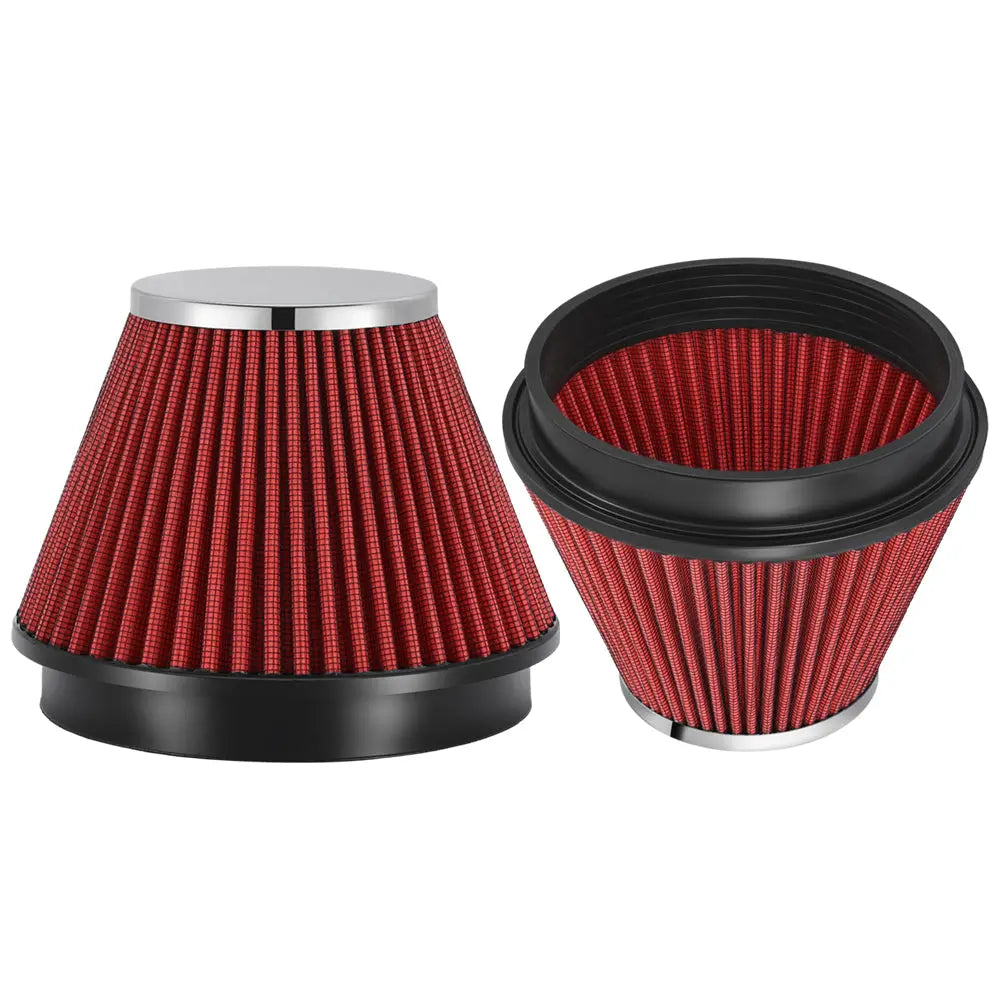
A: No — this is a short ram intake with a heat shield, not a true fender-well cold air routing. The filter sits in the engine bay behind a formed steel heat shield. Here's the honest breakdown:
• What the heat shield does: Blocks direct radiant heat from the exhaust manifold and cylinder head. Reduces the temperature of air entering the filter when the vehicle is moving and air is flowing through the engine bay.
• What it doesn't do: Eliminate heat soak. When you're idling in traffic or crawling on a trail, under-hood temperatures will rise regardless. Intake air temperatures will climb in those conditions.
For a daily-driven XJ or a trail rig, a short ram is the practical choice — no risk of water ingestion from fender-well routing (critical for a vehicle that may ford water), simpler installation, and sufficient performance improvement for street use. A true cold air intake that routes into the fender well is available for some platforms, but it introduces a water-crossing risk that is unacceptable for many XJ owners.
Q5: How much horsepower and torque will I gain?
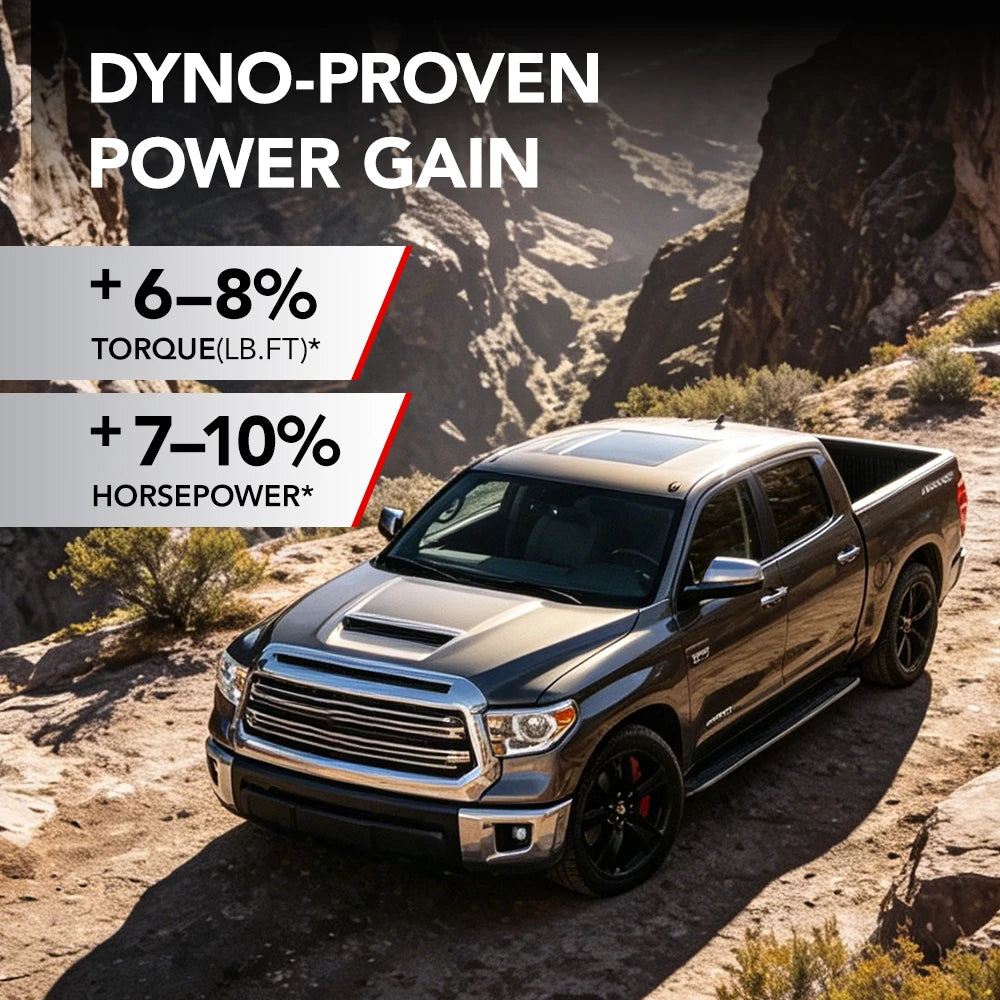
A: On a healthy, stock 4.0L, expect approximately 3-8 WHP and a noticeable improvement in throttle response in the 1,500-3,500 RPM range. The AMC 4.0L is a well-engineered engine from the factory — it's a tractor motor, not a high-strung performance engine. The factory airbox is restrictive in design (flat panel filter, ribbed rubber tube), so there is a real gain from uncorking it — but claims of double-digit horsepower from an intake alone on a stock 4.0L are marketing, not physics.
Where you'll feel the difference:
• Part-throttle response: Quicker, sharper pedal feel when merging onto the highway or accelerating from a stop
• Sound: The deep inline-six induction growl is significantly louder than stock — this is the #1 thing XJ owners notice
• Combined with other mods: Gains are additive — if you've already done a throttle body spacer, header, or exhaust, the intake will complement those mods
Q6: Will this improve my gas mileage?
A: Any fuel economy improvement from an intake alone on an XJ is negligible in the real world — likely within the margin of error of your driving habits. The XJ's fuel economy (15-18 MPG city, 18-22 MPG highway when new) is primarily determined by its brick-like aerodynamics, 3,000-3,400 lb curb weight, and your right foot. A freer-flowing intake may theoretically improve efficiency at steady-state cruise, but factors like tire pressure, roof rack, lift height, and driving style have far more impact. Buy this intake for the sound and throttle response — if you get a fractional MPG improvement, consider it a bonus.
Q7: Do I need a tune after installing this intake?
A: No. This is a bolt-on intake designed to work with the factory ECU calibration on both Renix/SBEC (91-95) and OBD-II JTEC (96-01) systems. The factory computer can adapt to the modest change in airflow within its closed-loop correction range.
A tune may be beneficial if you've done significant additional modifications — larger injectors, a performance cylinder head, a camshaft upgrade, a stroker build, or forced induction. But for a stock or lightly modified 4.0L with just an intake, a tune is not required.
Q8: Will this cause a check engine light or rough idle?
A: Properly installed, no. The most common causes of a check engine light or rough idle after intake installation on an XJ are:
• Vacuum leak: Unplugged or cracked vacuum lines (the XJ's plastic vacuum harness is brittle with age). Check every line during installation.
• IAT sensor not connected: The sensor must be properly seated in the bung and connected to the harness.
• Loose coupler/clamp: Unmetered air entering after the throttle body will cause a lean condition and rough idle.
• CCV (Crankcase Ventilation) hose disconnected: The 4.0L's CCV system connects to the factory airbox — this hose must be connected to the port on the new intake tube.
Double-check all connections, clamps, and vacuum lines after installation. Start the engine and listen for hissing (vacuum leak). Check for codes after the first drive cycle.
Q9: How does the heat shield actually work, and is it effective?
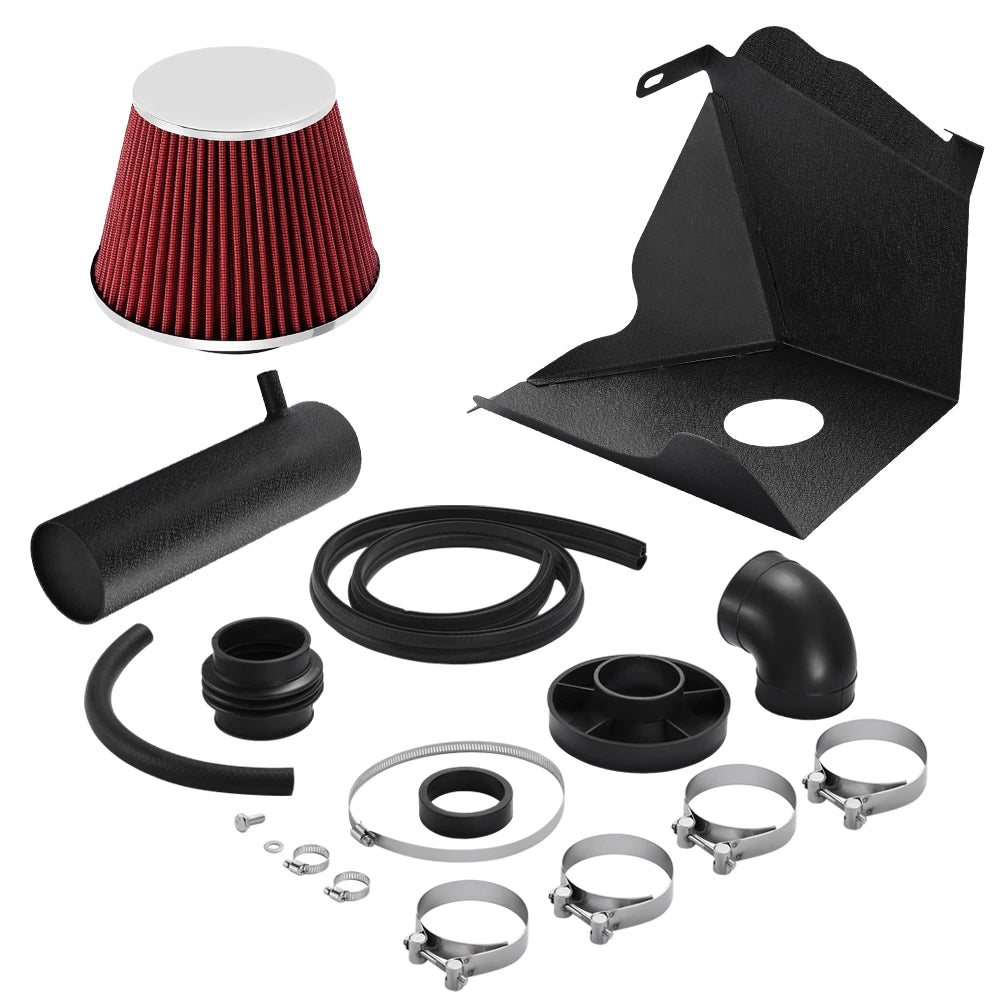
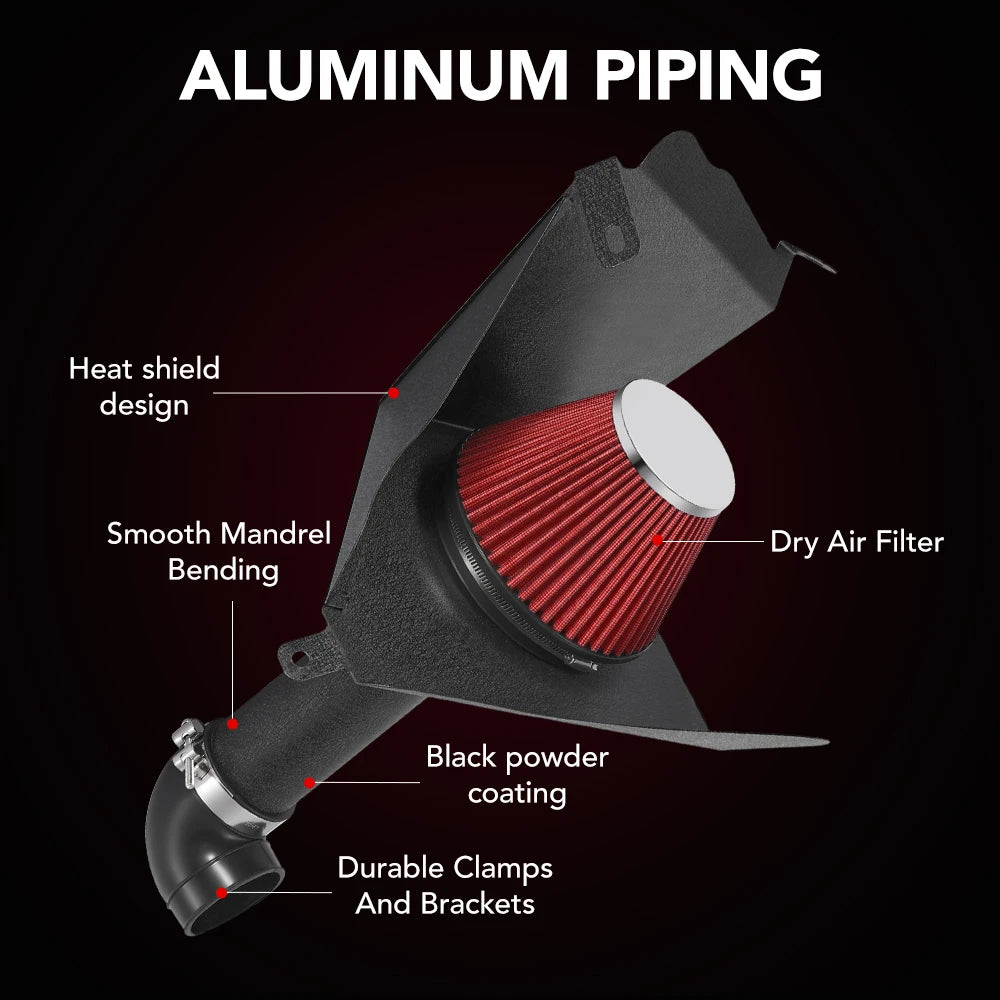
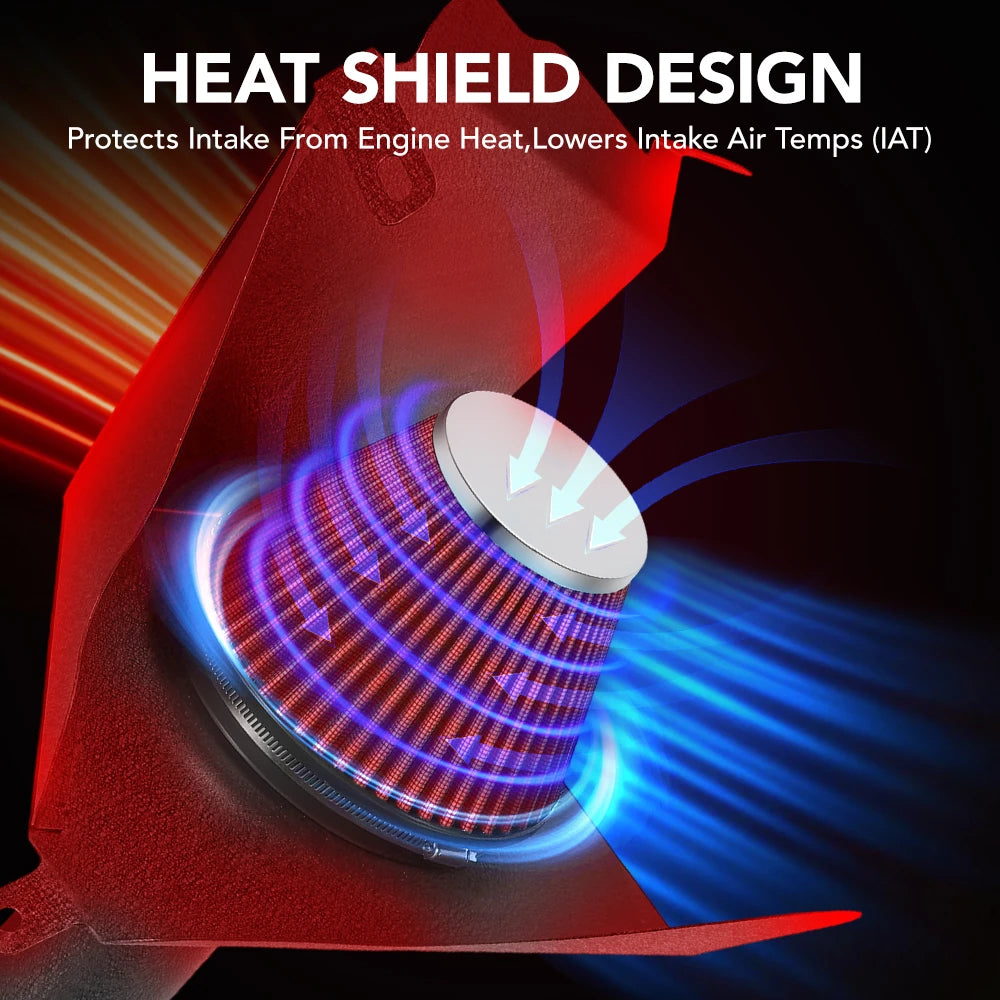
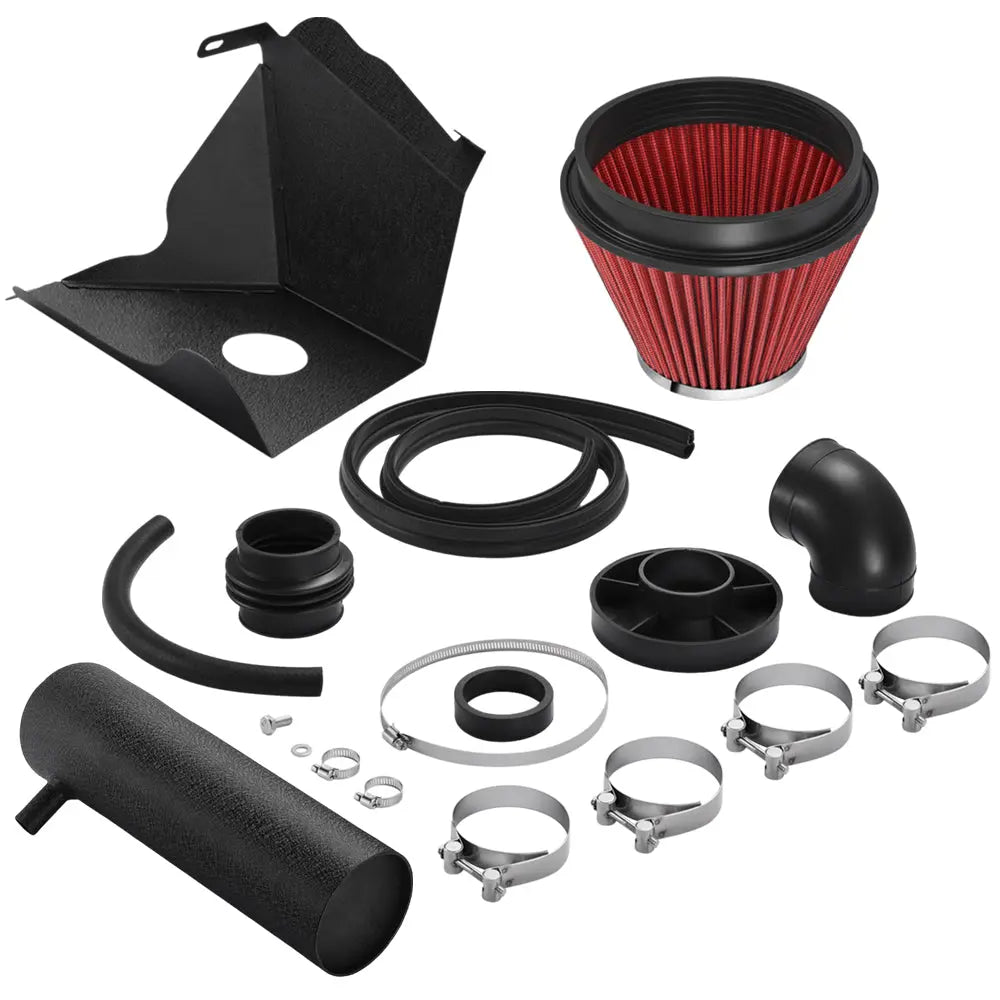
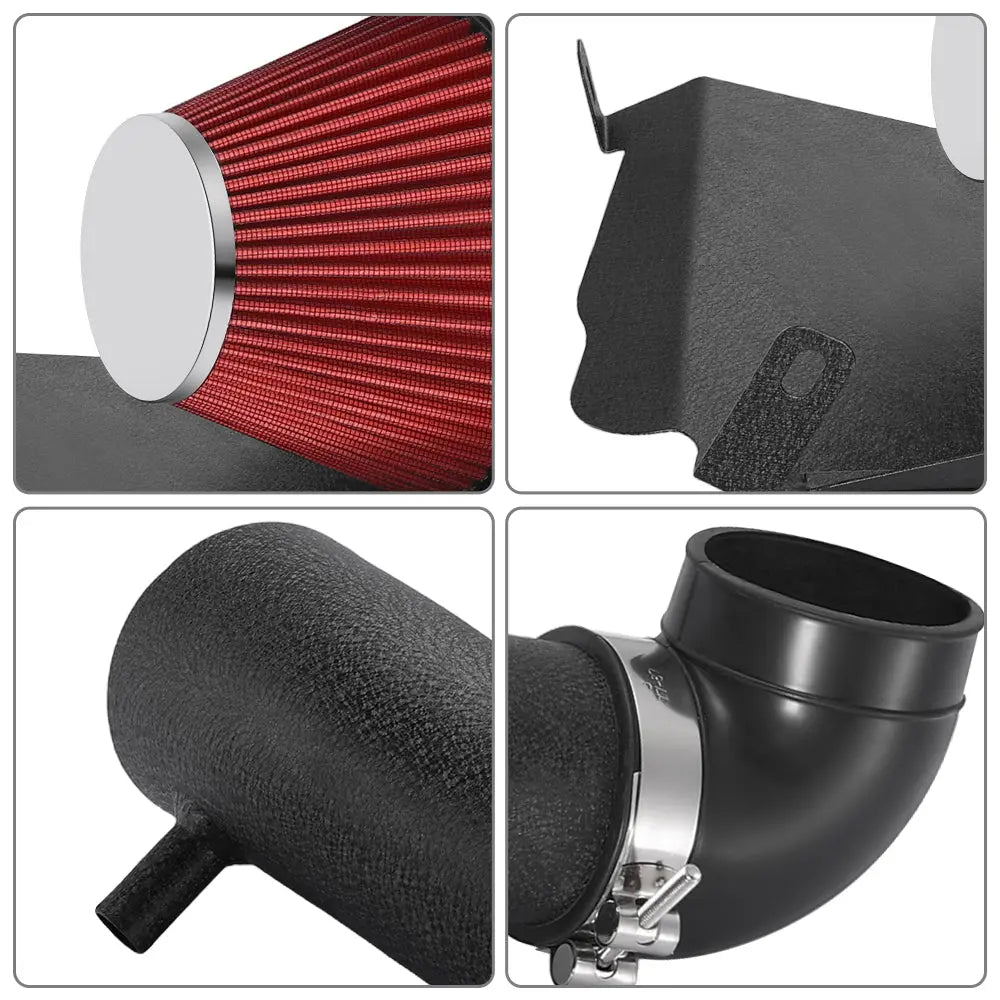
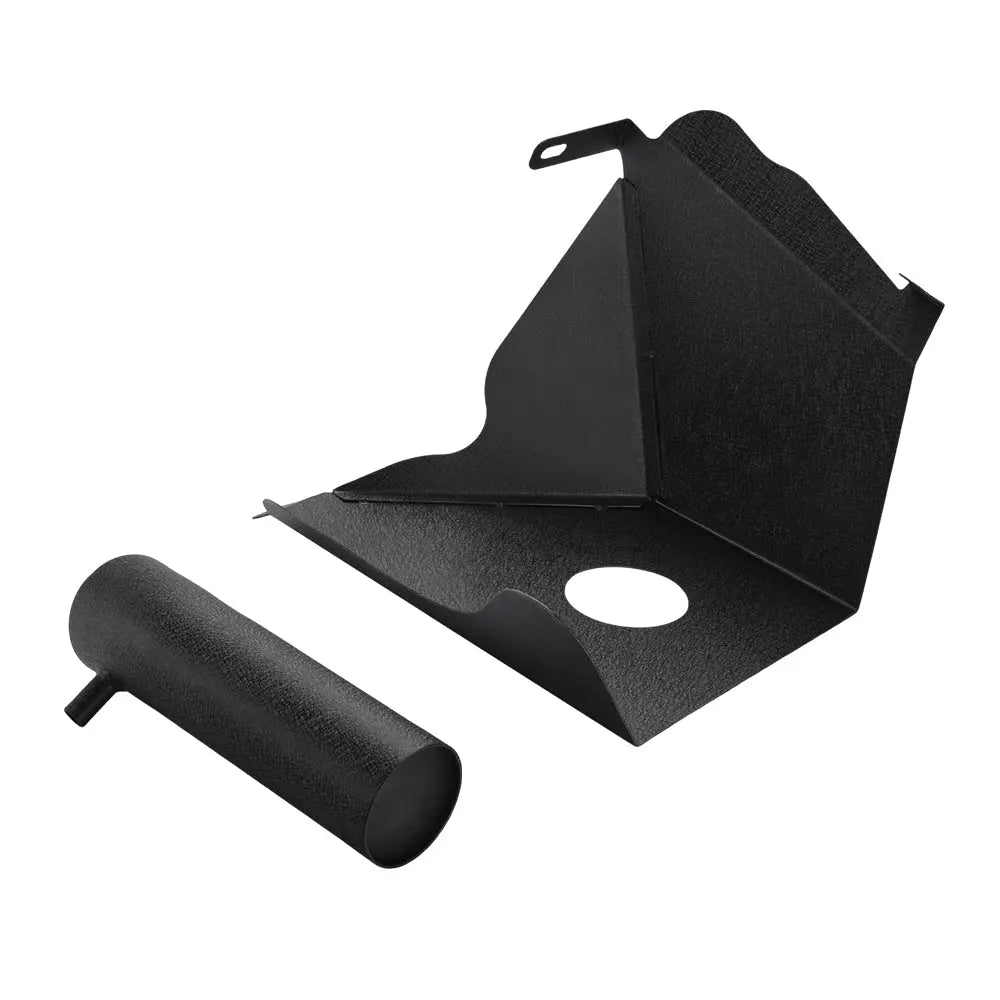
A: The formed steel heat shield creates a physical barrier between the air filter and the hottest components in the engine bay — the exhaust manifold (driver's side, directly below the intake area on the 4.0L) and the cylinder head. Here's what it does:
• Blocks radiant heat: The steel panel reflects and blocks infrared heat radiation from the exhaust manifold — this is the most significant heat source in the XJ engine bay.
• Creates a semi-isolated air pocket: When the vehicle is moving, cooler air entering through the grille and flowing through the engine bay reaches the filter more easily with the shield deflecting hot air upward.
• Does NOT eliminate heat soak: At idle, when crawling off-road, or after shutdown, under-hood temperatures will rise regardless of the shield. This is physics, not a design flaw.
Is it effective? For a street-driven XJ at speed — yes, it measurably reduces intake air temperatures compared to an exposed filter. For a trail rig crawling at 2 MPH, the effect is minimal. The shield is a meaningful improvement, not a magic solution.
Q10: Is this intake safe for off-road use, water crossings, and mud?
A: This is a short ram intake with the filter located in the engine bay behind the heat shield — it is NOT a fender-well cold air intake that places the filter low in the fender. This is actually an advantage for an XJ:
• Filter position: The filter sits at approximately the same height as the factory airbox, on the driver's side of the engine bay. It is not routed into the fender or below the headlight.
• Water crossing: The filter is well above the factory water fording depth. However, do NOT submerge the front end — if water reaches the top of the grille, it can enter the engine bay and be ingested. The dry filter is not waterproof.
• Mud and dust: The dry filter will collect dust and debris faster if you off-road regularly. Check and clean it more frequently — every 5,000-10,000 miles for frequent off-road use, or whenever you return from a particularly dusty or muddy trip.
• Do NOT pressure-wash the filter area: High-pressure water can force dirt through the filter media and into the engine.
For deep water crossings, no open-element intake is safe — consider a snorkel if water fording is a regular part of your off-roading.
Q11: How do I clean and maintain the filter?
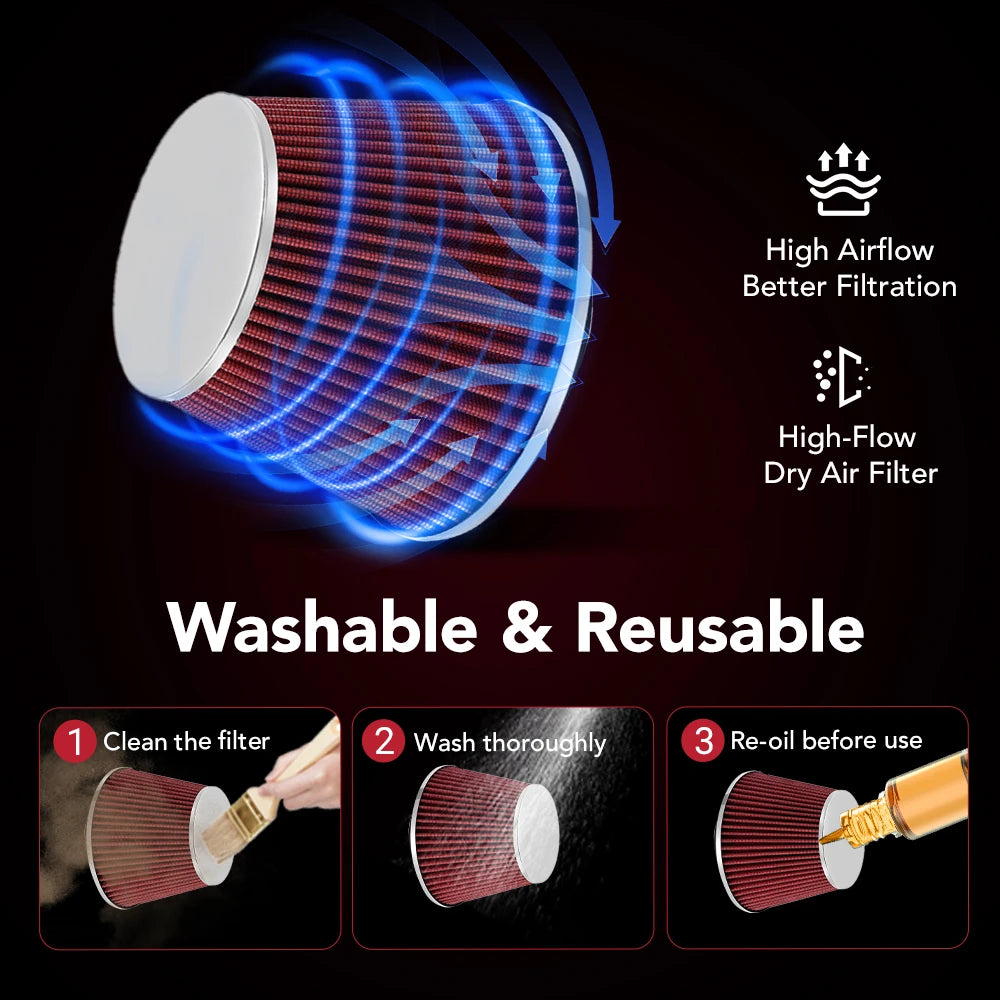
A: The dry filter is washable and reusable — no oil required. Here's the cleaning procedure:
1. Remove the filter from the intake tube (loosen the clamp).
2. Tap out loose debris — gently tap the filter against a hard surface to dislodge loose dirt and dust.
3. Rinse from the inside out — use low-pressure water (garden hose, not a pressure washer) and flush water from the clean side (inside) through to the dirty side (outside). This pushes dirt out rather than driving it deeper into the media.
4. Use a dry filter cleaner if needed — for heavy soiling, use a cleaner specifically formulated for dry synthetic filter media. Do NOT use oil-based filter cleaning kits designed for oiled cotton gauze filters.
5. Air dry completely — let the filter dry naturally at room temperature. Do NOT use compressed air, a heat gun, or direct sunlight to speed up drying — this can damage the filter media.
6. Reinstall — once completely dry, reinstall the filter and tighten the clamp.
Service interval: Every 15,000-20,000 miles under normal street driving. Every 5,000-10,000 miles if you frequently drive on dirt roads, off-road, or in dusty conditions. Inspect the filter whenever you change your oil.
Q12: Will this intake make my XJ louder?
A: Yes — and this is the #1 reason most XJ owners buy an intake. The factory airbox, with its multi-chamber resonator and ribbed rubber intake tube, was specifically engineered by Chrysler to silence induction noise. Removing it and installing an open-element filter on a straight aluminum tube unleashes the deep, throaty sound of the 4.0L inline-six pulling air.
What to expect:
• Cruising: Slightly deeper engine note, barely noticeable with the windows up and radio on
• Moderate acceleration: Distinctive deep intake growl, most pronounced between 2,000-3,500 RPM
• Full throttle: Loud, aggressive induction roar — this is the 4.0L sounding like the tractor motor it fundamentally is
• Exhaust note: Unchanged. This is an intake, not an exhaust. The exhaust note will sound exactly the same.
Q13: How long does installation actually take?
A: Realistically, 45-75 minutes for a first-time installer with basic hand tools. Here's what affects the time:
• Fast install (45 min): Well-maintained XJ with no rust, bolts come out clean, vacuum lines are intact and flexible, IAT sensor transfers without issue. Later model years (97-01) tend to have better-condition hardware.
• Average install (60 min): Typical XJ with some surface rust on hardware, one or two stubborn bolts, one brittle vacuum line that needs to be handled carefully.
• Longer install (75+ min): Rust-belt XJ with seized bolts, cracked vacuum harness that needs repair, or a Renix-era model where the IAT sensor requires careful handling.
Tools needed: 8mm, 10mm, and 13mm sockets/wrenches, flathead and Phillips screwdrivers, pliers for vacuum line clamps. Penetrating oil (PB Blaster) is highly recommended for older XJs — spray the airbox mounting bolts 10 minutes before starting.
Q14: Does this intake affect passing smog or emissions testing?
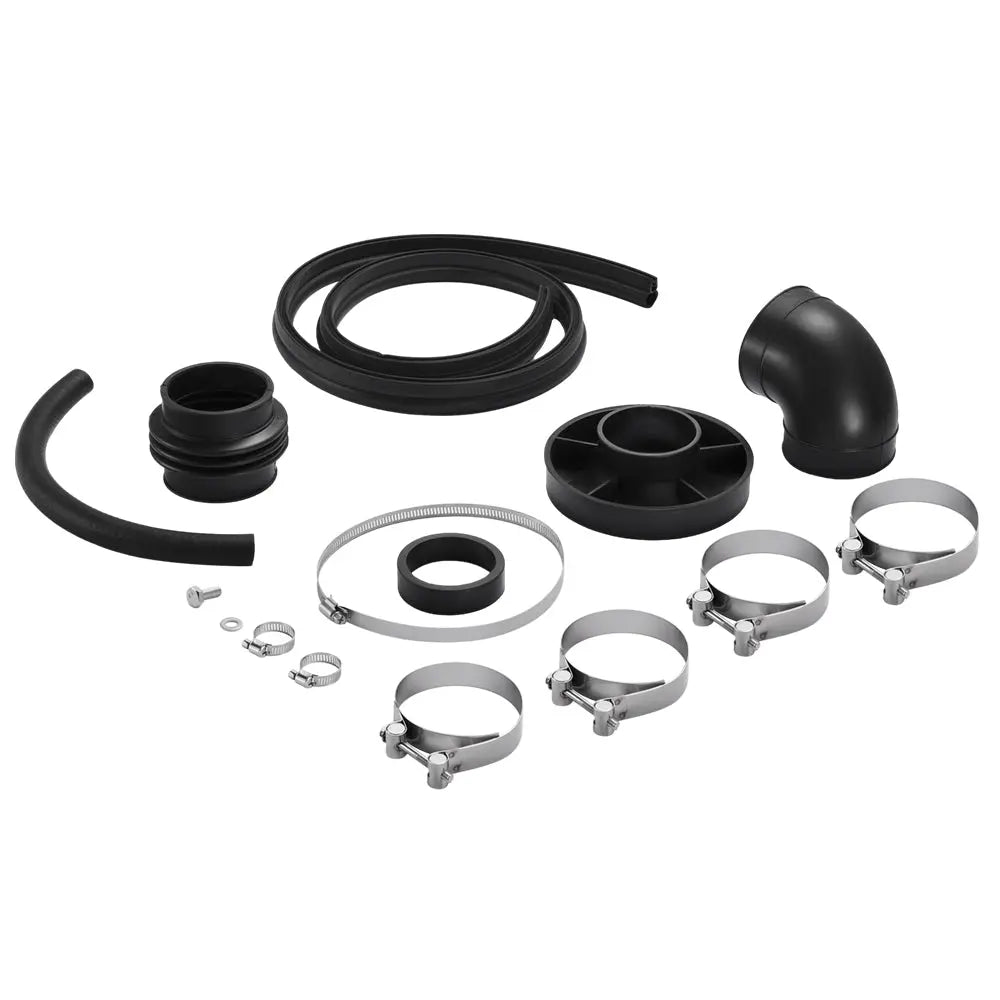
A: In most states, a cold air intake that retains the factory emissions equipment (CCV hose connection, IAT sensor, etc.) does not cause a smog check failure. This kit retains all factory emissions connections — the CCV hose connects to the provided port on the intake tube, and the IAT sensor transfers to the provided bung.
However, California (CARB) has stricter requirements. This intake does not carry a CARB EO (Executive Order) number. If you live in California or another state that enforces CARB standards and your vehicle is subject to visual inspection, this intake may not pass. Check your local regulations.
Q15: What if my XJ has aftermarket parts — throttle body, header, or a stroker engine?
A:• Throttle body spacer / bored throttle body: Compatible. The coupler connects to the throttle body inlet — a bored or aftermarket throttle body with the same outer diameter (factory 60mm flange) will fit. If you've installed a larger aftermarket throttle body (62 mm+), confirm that the coupler inner diameter matches.
• Aftermarket header: Compatible. The intake tube routing does not interfere with aftermarket headers. However, a header may increase under-hood temperatures near the filter — the heat shield is even more important in this case.
• Stroker engine (4.5L/4.6L/4.7L): Physically compatible — the intake connects to the same throttle body flange. A stroker will benefit more from a freer-flowing intake than a stock 4.0L, as the larger displacement demands more air.
• Aftermarket intake manifold: May or may not be compatible depending on the manifold's throttle body position. If the throttle body is in the factory location, it should fit. If the manifold relocates the throttle body, the intake tube geometry may not align.
If your XJ has significant engine modifications, contact us at service@flasharkracing.com with details about your specific setup before ordering.





 Product Specifications


