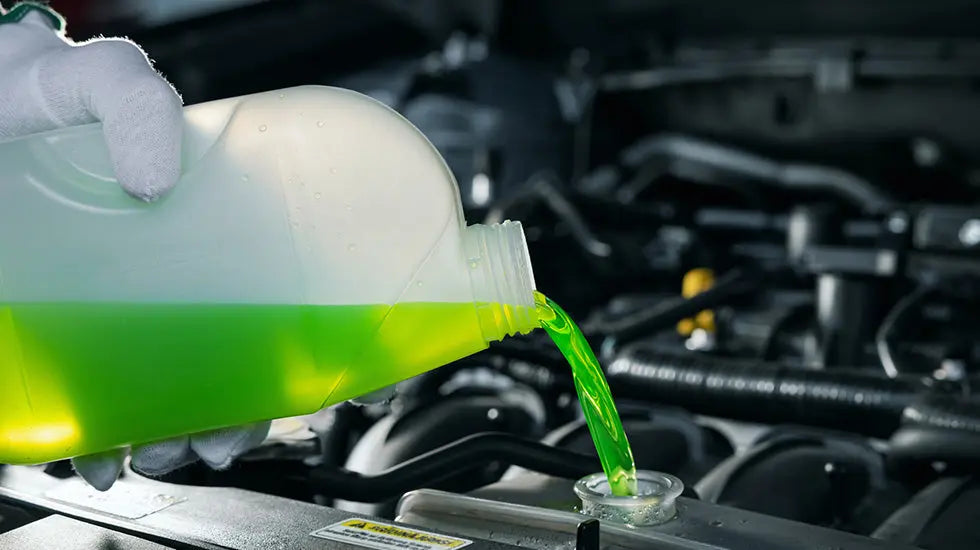
When the engine is completely cold and the vehicle is parked on level ground, the coolant should be within the marked cold range on the reservoir. Depending on the vehicle, those marks may read MIN and MAX, LOW and FULL, or FULL COLD. The correct level is not the top of the bottle, and there is no universal quantity that applies to every vehicle.
Coolant expands as it heats up, so the level may rise after the engine reaches operating temperature. That movement is normal within the limits specified by the vehicle manufacturer. Never remove a pressurized coolant cap while the engine or cooling system is hot.
- Check the coolant on level ground with the engine completely cold.
- Keep the level within the cold range marked on the reservoir or at the level specified in the owner’s manual.
- If the level is at or below the LOW or MIN mark, add the coolant specified for the vehicle.
- Do not fill the reservoir to the neck unless the vehicle’s service procedure specifically calls for it.
- A higher reading when hot can be normal because coolant expands.
- Do not open a pressurized reservoir or radiator cap while the system is hot.
- If the level repeatedly drops, inspect the cooling system instead of continuing to top it off.

Understanding the Cooling System
The cooling system carries heat away from the engine and releases it through the radiator. Coolant circulates through passages in the engine, hoses, the radiator, and other components included in the vehicle’s specific system.
As the coolant gets hotter, it expands. As it cools, it contracts. The reservoir gives the fluid room to move as its volume changes and helps the system maintain the intended coolant level.

The reservoir works with the rest of the cooling system; its level should not be judged without considering engine temperature and the markings on the tank.
The Role of the Coolant Reservoir
The coolant reservoir provides space for coolant expansion and, depending on the system design, allows coolant to return as the engine cools. It also gives the driver or technician a visible place to check the fluid level without removing a radiator cap.
A reservoir is not meant to be filled to the top simply because empty space is visible. That space may be part of the system’s expansion allowance. Use the molded or printed marks on the tank and the procedure in the owner’s manual.
Never loosen a radiator cap or pressurized reservoir cap while the engine and cooling system are hot. Pressurized steam and coolant can escape suddenly and cause serious burns. Allow the vehicle to cool fully before checking or adding coolant.
How Much Coolant Should Be in the Reservoir When Cold or Hot?
Here is the part that matters: judge the coolant level using the vehicle’s cold-check procedure, not by guessing from how full the bottle looks. Park on level ground, allow the engine to cool completely, and compare the level with the marks on the reservoir.
Some vehicles use LOW and FULL lines. Others use MIN and MAX or a single FULL COLD mark. A cold level near LOW is not automatically correct for every vehicle. If the owner’s manual directs you to add coolant to FULL or FULL COLD when the level is low, follow that instruction.
| Vehicle condition | What the level may do | Recommended action | Important limit |
|---|---|---|---|
| Engine completely cold | The level should be within the marked cold range or at the specified FULL COLD line. | Add the specified coolant if the level is at or below the minimum mark. | Use the vehicle’s markings and owner’s manual rather than a universal fill amount. |
| Engine warm or hot | The level can rise as the coolant expands. | Let the system cool before making a fill decision. | Do not open a hot pressurized cap. |
| Level above the maximum mark when cold | The reservoir may have less room for thermal expansion. | Adjust the level using the vehicle’s service procedure. | Do not remove coolant while the system is hot. |
| Level repeatedly falls after topping off | The system may be losing coolant or drawing air. | Inspect for leaks and cooling-system faults. | Repeated topping off is not a repair. |
The owner’s manual remains the final reference for a specific vehicle. For example, some vehicles specify a range between LOW and FULL when cold, while others call for the coolant to reach a dedicated FULL COLD line.
What Happens When the Level Is Too Low or Too High?
When the coolant level is too low
A low reservoir can leave the cooling system without enough fluid to control engine temperature properly. It can also be a sign of an external leak, an internal leak, a faulty pressure cap, trapped air, or a problem elsewhere in the system.
Do not assume that adding coolant has solved the problem. If the level drops again, the cause needs attention. Continuing to drive an overheating engine can result in serious engine damage.
When the reservoir is overfilled
Overfilling reduces the space available for coolant expansion. As the engine heats up, excess coolant may be discharged through the system’s overflow or pressure-control path. That can leave coolant residue around the reservoir and make a real leak harder to identify.
An overfilled bottle does not by itself explain every pressure problem. If the system repeatedly pushes out coolant, overheats, hardens hoses unusually quickly, or produces bubbles in the reservoir, further diagnosis is needed.
Read the level only after the vehicle has been sitting long enough to cool. A hot reading can make a correctly filled system look overfilled, while coolant that has not fully returned to the reservoir can make another design look low.
How to Top Off the Coolant Reservoir Safely
Topping off a low reservoir is usually straightforward, but coolant type and system design matter. Do not choose a coolant by color alone. Match the specification stated in the owner’s manual or service information.
- Park on level ground. Turn the engine off and allow it to cool completely.
- Locate the correct reservoir. Do not confuse the engine coolant reservoir with the washer-fluid or brake-fluid reservoir.
- Read the tank markings. Look for MIN/MAX, LOW/FULL, COLD FILL, or another vehicle-specific mark.
- Check the coolant specification. Use the coolant chemistry and mixture required for the vehicle.
- Open the cap only when safe. If the tank is pressurized or the system is still warm, wait.
- Add coolant slowly. Stop at the cold level specified for the vehicle. Do not fill to the neck unless the service procedure requires it.
- Install the cap correctly. Make sure it is seated and tightened as directed.
- Recheck the level. After the vehicle has completed a normal heat cycle and cooled again, inspect the level and look for fresh leakage.
Coolant is not the same as straight antifreeze. Many vehicles use a premixed coolant, while others specify a particular water-to-antifreeze ratio. Adding the wrong product or mixing incompatible coolant types can reduce corrosion protection and create deposits inside the system.
What to Check If the Coolant Level Keeps Dropping
A reservoir that needs frequent topping off is a symptom, not a maintenance schedule. Inspect the system when it is cold and look for dried coolant residue, wet fittings, stained plastic, or a sweet coolant odor.
| What you notice | Areas to inspect | Next step |
|---|---|---|
| Wetness or dried residue around the bottle | Reservoir seams, cap, hose fittings, and nearby hoses | Repair the leak and refill using the correct procedure. |
| Coolant under the front of the vehicle | Radiator, lower hoses, drain points, and water-pump area | Avoid driving if the level is unsafe or the engine overheats. |
| Level falls after cooling-system service | Bleeding procedure, hose connections, cap, and trapped air | Follow the vehicle-specific filling and bleeding procedure. |
| Temperature warning or overheating | Coolant level, visible leaks, radiator airflow, fan operation, and circulation faults | Stop safely and allow the engine to cool. Do not continue driving an overheating vehicle. |
| No visible external leak, but coolant keeps disappearing | Pressure cap and internal engine or cooling-system faults | Have the system pressure-tested and professionally diagnosed. |
Reservoir, Overflow Tank, Expansion Tank, and Degas Bottle
Drivers often use these names interchangeably, but the designs are not always identical.
- Coolant reservoir: A general term for the tank that holds coolant outside the engine and radiator.
- Overflow or recovery tank: A tank that receives expanding coolant from the radiator and can return it as the system cools.
- Expansion or surge tank: A tank that can be part of the pressurized cooling circuit.
- Degas bottle: A pressurized reservoir designed to help manage coolant expansion and separate air from the system.
This difference affects where the pressure cap is located and how the system is filled or bled. Treating every plastic bottle as a simple non-pressurized overflow tank is a common maintenance mistake.
When a Replacement Reservoir Makes Sense
A reservoir may need replacement if the tank is cracked, its fittings are damaged, the cap sealing area cannot hold the intended seal, or the plastic has deteriorated enough to make the level difficult to read. Inspect the hoses and cap at the same time so a damaged connection is not mistaken for a failed tank.
Drivers comparing replacement options can browse coolant reservoir tanks by application. Match the selected part to the vehicle’s model year, engine, cooling-system layout, hose connections, mounting points, and cap arrangement before ordering.
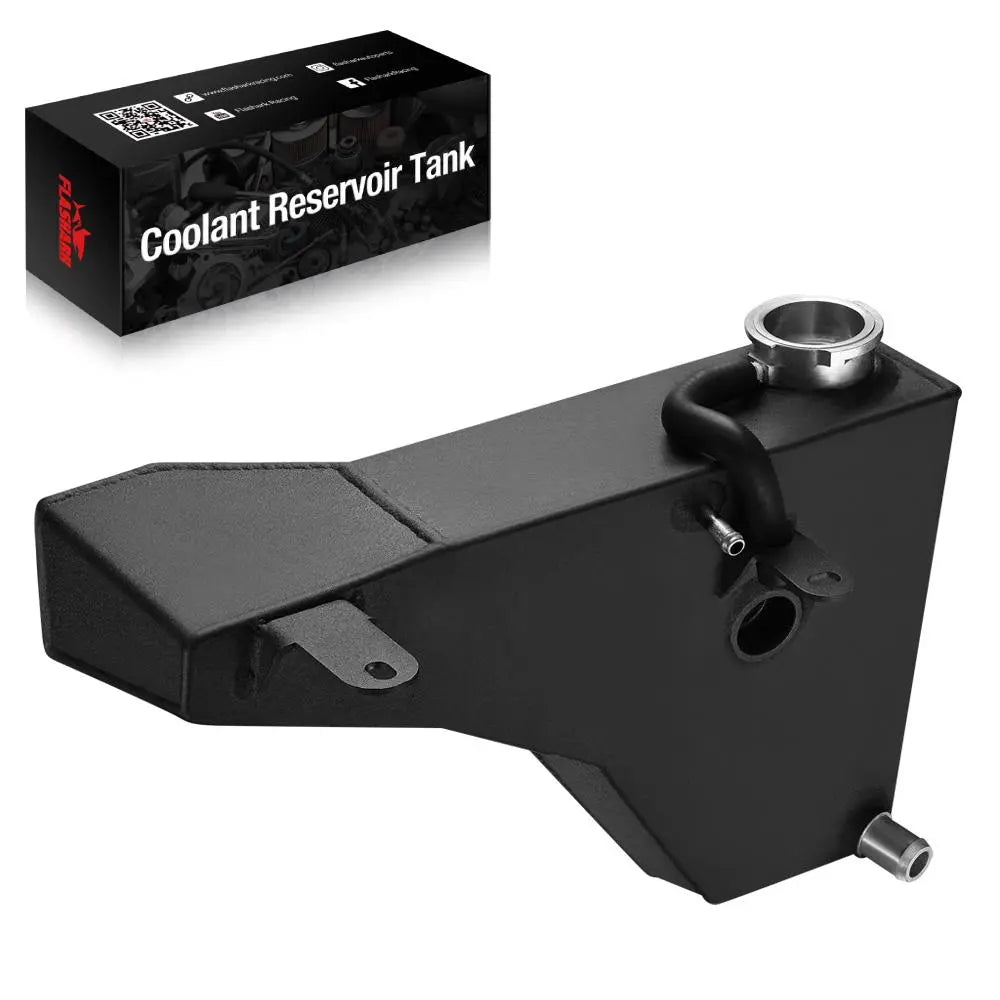
Dodge Charger, Dodge Challenger, and Chrysler 300C Coolant Reservoir Option
For supported Dodge Charger, Dodge Challenger, and Chrysler 300C configurations, Flashark offers an aluminum coolant reservoir and degas bottle option. Review the fitment details for the selected vehicle and compare the mounting points, hose connections, cap arrangement, and coolant-level visibility with the system being replaced.
Replacing the reservoir will not correct an unrelated radiator, hose, water-pump, pressure-cap, air-bleeding, or internal engine fault. Diagnose repeated coolant loss before choosing the repair.
Maintaining the Cooling System
Check the coolant level periodically and before a long trip, especially if the vehicle has recently had cooling-system work. The engine should be cold, the vehicle should be level, and the coolant should remain within the specified range.
Coolant replacement intervals vary by vehicle and coolant specification. Follow the time and mileage schedule in the owner’s manual rather than using one universal interval. Coolant that is contaminated, mixed with an incompatible product, or affected by a cooling-system repair may require service sooner.
Look beyond the fluid level during routine checks. Inspect the reservoir, cap, radiator, and visible hoses for staining, cracks, swelling, loose connections, or fresh leakage. A stable level and normal operating temperature are more useful than repeatedly adding coolant without finding out where it went.
Frequently Asked Questions
Q1: Does the coolant reservoir need to be completely full?
A1: No. The correct level is the marked cold range or the level specified in the owner’s manual, not the top of the bottle. Empty space above the mark can be necessary for coolant expansion.
Q2: Where should the coolant level be when the engine is cold?
A2: It should be within the cold range marked on the reservoir. Depending on the vehicle, that may mean between LOW and FULL, between MIN and MAX, or at a FULL COLD line.
Q3: How much coolant should be in the reservoir when the engine is hot?
A3: The level may rise above its cold position as the coolant expands. Let the engine cool before deciding whether to add or remove coolant, and never open a hot pressurized cap.
Q4: Is it safe to drive with coolant below the MIN or LOW mark?
A4: A low reading can indicate insufficient coolant or an active leak. Allow the engine to cool, add the specified coolant if the vehicle’s procedure permits it, and investigate the cause. Do not continue driving if the engine is overheating or the coolant level is unsafe.
Q5: What happens if I overfill the coolant reservoir?
A5: Overfilling reduces the space available for thermal expansion. Excess coolant may be discharged as the engine heats up, leaving residue or leakage around the tank. Adjust the level only when the system is cold.
Q6: Why does the coolant level keep dropping after I top it off?
A6: Possible areas to inspect include the reservoir, pressure cap, radiator, hoses, water pump, heater circuit, and recently serviced connections. If no external leak is visible, the system may need pressure testing and further diagnosis.
Q7: Can I add coolant when the engine is hot?
A7: Do not open a hot radiator cap or pressurized reservoir cap. Hot coolant and steam can escape under pressure. Allow the cooling system to cool fully and follow the vehicle’s filling procedure.
Q8: Can I choose coolant by its color?
A8: No. Color alone does not identify the coolant chemistry or manufacturer specification. Use the coolant type and mixture stated in the owner’s manual or service information.
Q9: Can different coolant types be mixed?
A9: Do not mix coolants unless their compatibility and the vehicle specification are clear. Incompatible products can reduce corrosion protection or form deposits. If the coolant identity is unknown, use the appropriate service procedure instead of guessing.
Q10: Are coolant, antifreeze, and radiator fluid the same thing?
A10: The terms are often used loosely. Antifreeze is the concentrated chemical component, while engine coolant is the working fluid used in the vehicle, often supplied as a premixed antifreeze-and-water solution. Use the formulation required for the vehicle.
Q11: What should I do if the reservoir is empty when the engine is cold?
A11: Do not assume that filling the bottle alone will restore the system. Check for visible leakage and follow the vehicle-specific filling and bleeding procedure. If the engine has overheated or the system is losing coolant, arrange a proper diagnosis.
Q12: When should a coolant reservoir be replaced?
A12: Replacement can be appropriate when the tank is cracked, leaking, badly discolored, damaged at a hose fitting, or unable to seal correctly at the cap. Confirm that the leak is coming from the reservoir rather than a nearby hose, cap, radiator, or other component.

Steven Chen
Automotive Performance Specialist | Engine & Exhaust Systems
Steven focuses on practical engine performance, exhaust fitment, and real-world upgrade paths for classic and modern enthusiast vehicles. He reviews small-block Ford, LS, truck, and street/strip applications with one goal in mind: helping builders choose parts that actually work together. His philosophy: "Good power starts with the right combination, not the biggest part."