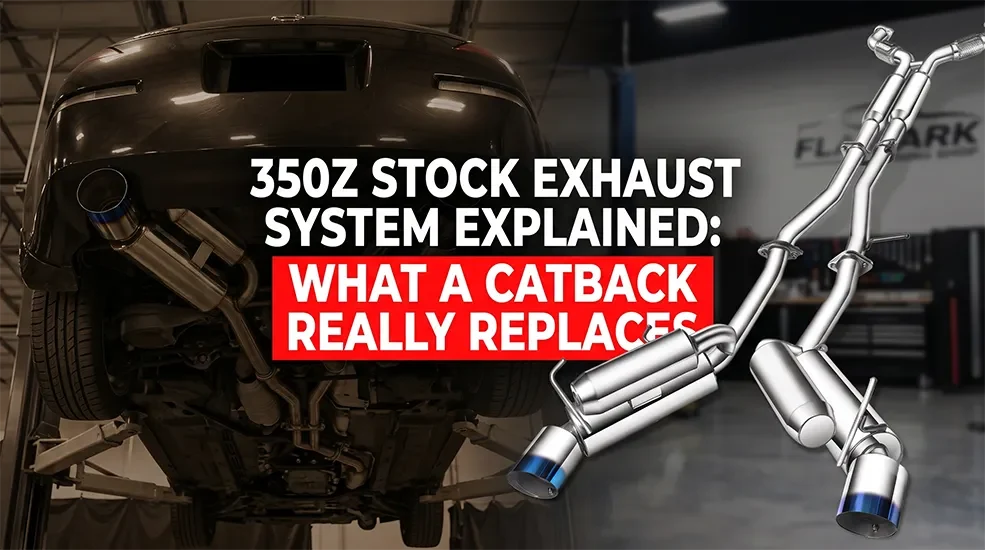
Sistema de escape original del 350Z explicado: qué reemplaza realmente un catback
Pregúntele a tres nuevos propietarios de 350Z qué reemplaza un catback y probablemente obtendrá tres respuestas diferentes. Un tipo dirá que reemplaza todo el escape. Otro dirá que elimina los catalizadores. Alguien más jurará que el Y-pipe es independiente. Esa confusión es exactamente la razón por la que la gente compra las piezas equivocadas.
Así que vamos a aclararlo a la manera del garaje. Sin florituras. Sin diagrama misterioso. Solo el recorrido real del escape debajo de un Nissan 350Z, cómo es el sistema de escape original del 350Z y qué se quita realmente cuando instala un catback.
Respuesta rápida: ¿Qué reemplaza un catback de 350Z?
- Un catback de 350Z suele reemplazar la sección de escape detrás de los catalizadores.
- Dependiendo del kit, puede incluir el Y-pipe, el tubo intermedio, la sección del silenciador y las salidas de escape.
- Por lo general, no reemplaza los colectores, los catalizadores o los sensores de oxígeno.
- Si desea reemplazar los catalizadores, está buscando test pipes o catalizadores de alto flujo, no un catback básico.
- Para la mayoría de las configuraciones de 350Z de uso diario, un catback es la primera mejora del escape porque cambia el sonido y el flujo de la sección trasera sin tocar el hardware de emisiones.
¿Qué es el sistema de escape original del 350Z?
El sistema de escape original del 350Z no es un tubo largo. Es una cadena de secciones. Cada sección tiene una función, y una vez que comprende esa cadena, comprar un catback se vuelve mucho menos confuso.

Siga los gases de escape de adelante hacia atrás:
- Colectores de escape
- Catalizadores
- Tubo en Y (Y-pipe) o sección de unión frontal
- Tubo intermedio (Mid-pipe)
- Sección trasera del silenciador
- Salidas de escape
Esa es la ruta básica. Los gases de escape calientes salen del VQ35, pasan por los colectores de fábrica, atraviesan los catalizadores, se unen a través del Y-pipe, luego viajan por el tubo intermedio y el silenciador antes de salir por el parachoques trasero.
Nota del mecánico: Cuando un cliente dice "escape original", siempre pregunto qué quiere decir. Algunas personas se refieren a todo el escape desde el motor hacia atrás. Algunos solo se refieren al silenciador. En un 350Z, esa diferencia importa.
Flujo de escape del 350Z desde el motor hasta el tubo de escape
Piénselo como una tubería. Los colectores recogen los gases de escape de los cilindros. Los catalizadores los limpian. El Y-pipe une ambas bancadas. La sección trasera controla el tono, el flujo y el aspecto del coche desde atrás.
Esta es también la razón por la que una mejora de catback no reemplaza mágicamente todo. Un catback comienza después de los catalizadores. El nombre lo delata: cat-back, que significa "detrás del catalizador".
Principales secciones de escape OEM en un 350Z
El diseño de escape de fábrica del 350Z es simple una vez que lo ve debajo del coche:
- Colectores de escape: Atornillados a las culatas del motor. No forman parte de un catback.
- Catalizadores: Situados después de los colectores. Son piezas de emisión.
- Tubo en Y: Fusiona las bancadas izquierda y derecha en el recorrido del escape trasero.
- Tubo intermedio: Conecta la sección de unión con la zona del silenciador.
- Silenciador y salidas: Controlan el sonido y la apariencia trasera.
- Juntas, bridas y soportes: Piezas pequeñas, grandes dolores de cabeza cuando están oxidadas o desalineadas.
Por qué el 350Z utiliza un diseño de tubo en Y
El 350Z tiene un motor V6, por lo que el escape sale por ambos lados del motor. El Y-pipe une esos dos lados antes de la sección trasera. Ese punto de unión afecta el flujo, el sonido y el ajuste.
Consejo de la vieja escuela: no ignore el Y-pipe. Un hermoso escape trasero puede seguir sonando plano o tener fugas si la brida del Y-pipe está deformada, oxidada o no coincide.
Diseño de escape original del 350Z explicado para principiantes
Aquí es donde los nuevos propietarios suelen confundirse. Un catback no es lo mismo que los test pipes. La eliminación del silenciador no es lo mismo que un catback completo. Un Y-pipe puede o no estar incluido, dependiendo del kit.
Colectores de escape y catalizadores
Los colectores de escape se encuentran justo en el motor. Los catalizadores se encuentran después de ellos. En la mayoría de las configuraciones de 350Z, un catback no toca ninguno de los dos.
Si alguien le dice que un catback "elimina los catalizadores", vaya despacio. Así no funciona un catback normal. Quitar o reemplazar los catalizadores significa test pipes, catalizadores de alto flujo o tubos de reemplazo de catalizadores. Ese es un trabajo diferente, con diferentes riesgos legales y de inspección.
Tubo en Y de fábrica y sección de unión frontal
El Y-pipe es la parte sobre la que la gente discute. En algunos sistemas catback del 350Z, el Y-pipe está incluido. En otros, el escape comienza después del Y-pipe. Por eso, siempre debe revisar las fotos del producto y la lista de piezas incluidas, no solo el título.
Si la brida delantera del nuevo sistema se atornilla directamente después de los catalizadores, el kit está reemplazando más de la sección trasera. Si comienza más atrás, su Y-pipe original permanece en su lugar.

Tubo intermedio, resonador, silenciador y salidas traseras
El tubo intermedio y la sección del silenciador son los que más dan forma al sonido. El silenciador amortigua los pulsos de escape. El resonador, si está presente, ayuda a controlar el sonido áspero. Las salidas cambian el aspecto trasero, pero no espere que las salidas por sí solas solucionen un mal tono.
Por eso, cortar un silenciador y soldar salidas grandes suele ser una mala idea. ¿Ruidoso? Sí. ¿Mejor? No siempre.
¿Qué reemplaza un escape catback de 350Z?
En un 350Z, un escape catback reemplaza la sección de escape detrás de los catalizadores. Esto suele significar los tubos traseros, la sección del silenciador y las salidas. Dependiendo del diseño, también puede reemplazar el Y-pipe.
Esta es la parte del escape original del 350Z que la mayoría de los propietarios mejoran primero porque cambia el coche sin abrir la parte del motor del escape. Obtiene un sonido más profundo, una apariencia trasera más limpia, menos restricción en la mitad trasera y una sensación de conducción más notable sin crear automáticamente un problema con el catalizador.
La respuesta simple: todo lo que está detrás de los catalizadores
En el lenguaje normal del taller, catback significa "desde los catalizadores hacia atrás". Esa es la forma más segura de recordarlo.
Entonces, si está buscando un escape catback de una sola salida para Nissan 350Z y G35 de 2003-2008, debe esperar que se dirija a la sección de escape trasera, no a los colectores ni a los catalizadores. Si compara un aspecto trasero más de fábrica, un escape catback de doble salida de 4.5 pulgadas para Nissan 350Z de 2003-2009 tiene más sentido para los propietarios que desean que la parte trasera del coche se vea más llena.
¿Incluye un catback de 350Z el Y-Pipe?
A veces. No siempre. Escúchame en esto: no asumas.
Algunos kits de 350Z están más cerca de un catback trasero completo e incluyen el Y-pipe. Otros son sistemas Y-back que comienzan después del Y-pipe. Algunos títulos de productos están escritos de forma imprecisa, especialmente en el mundo de los accesorios. Por eso, la foto de las piezas incluidas es más importante que el nombre comercial.
Regla del garaje: Antes de realizar el pedido, compruebe estas cuatro cosas:
- ¿El producto incluye un Y-pipe?
- ¿Dónde se conecta la brida frontal?
- ¿Sirve para cupé, roadster o ambos?
- ¿Su coche aún tiene catalizadores de serie, test pipes o piezas de repuesto anteriores?
¿Qué no se reemplaza con un catback?
Un catback normal de 350Z no reemplaza:
- Múltiples de escape o colectores
- Convertidores catalíticos
- Sensores de oxígeno primarios
- Hardware de escape del lado del motor
- Calibración de la ECU
Eso importa. Si su coche tiene un catalizador obstruido, un perno de múltiple roto, una fuga de escape frontal o una luz de "revisar motor" del sistema de catalizador, un catback solo probablemente no solucionará el problema de raíz.

Escape catback de una sola salida Flashark para 350Z y G35
Bueno para propietarios que desean un aspecto más ligero y limpio de una sola salida con un tono VQ más fuerte, manteniendo la sección del escape frontal y el catalizador separados.
Precio de venta: $139.99 Precio regular: $299.99
Ver catback de una sola salidaEscape original del 350Z vs. mejora con catback
Aquí está la comparación honesta. El escape original no es basura. Nissan no construyó el Z para que sonara como una cortadora de césped. La configuración de fábrica es silenciosa, duradera y habitable. Pero también es conservadora. Muy conservadora.
| Área | Escape original 350Z | Mejora con Catback |
|---|---|---|
| Sonido | Silencioso, suave, controlado | Más profundo, más fuerte, más notable bajo aceleración |
| Flujo | Diseñado para la comodidad y el control del ruido | Sección trasera menos restrictiva si está bien diseñada |
| Potencia | Línea base de fábrica | Ganancias pequeñas por sí solo; aproximadamente 5-10 CV es un rango realista en muchas configuraciones de calle |
| Estilo visual | Apariencia trasera OEM | Salida única, doble salida, salidas quemadas, salidas pulidas, mayor presencia trasera |
| Riesgo de inspección | El riesgo más bajo cuando todo funciona | Generalmente menor riesgo que los test pipes porque los catalizadores permanecen en su lugar, pero las normas locales aún importan |
En el dinamómetro, no me gusta prometer números milagrosos para un 350Z con solo un catback. Hablando en serio: muchos coches VQ35 de aspiración natural en buen estado obtienen pequeñas ganancias. Puede que sienta que el coche respira mejor en la parte superior, pero el cambio que se siente en el asiento suele ser de sonido, respuesta y carácter antes que de potencia bruta.
Con una admisión, un Y-pipe o test pipes, y una afinación adecuada, he visto configuraciones acercarse al rango de 8-12 whp de los cambios en el escape que funcionan juntos. Pero si el coche está gastado, tiene fugas o funciona mal, las piezas por sí solas no lo salvarán.
Catback vs Y-Pipe vs Test Pipes vs Axle-Back
Aquí es donde ocurren la mayoría de las compras erróneas. Los términos suenan similares. No lo son.
| Parte | Qué reemplaza | Efecto principal | Advertencia para novatos |
|---|---|---|---|
| Catback | Detrás de los catalizadores | Sonido, flujo trasero, apariencia trasera | Puede incluir o no un Y-pipe |
| Y-Pipe | Tubo de unión de fábrica después de los catalizadores | Flujo de unión y carácter de la sección media | Verifique la ubicación y el ajuste de la brida |
| Test Pipes | Catalizadores | Más volumen, más olor, más flujo | Puede causar CEL y problemas de emisiones |
| Axle-Back | Solo la sección trasera del silenciador | Principalmente sonido y aspecto trasero | Menos completo que un catback |
Si desea un desglose más amplio, la guía diferencias entre downpipe y escape cat-back vale la pena vincularla desde aquí porque explica por qué las piezas de escape delanteras y las traseras cumplen funciones diferentes.

Escape catback
Un catback es la mejor primera mejora de escape para la mayoría de los propietarios de 350Z que quieren que el coche suene vivo sin tocar inmediatamente las piezas de emisiones. Le da al VQ35 más voz. Más rugido. Un poco más de flujo. No un caos.
Mejoras de Y-Pipe y Mid-Pipe
El Y-pipe afecta el punto de unión. Puede afinar el flujo y cambiar el tono, especialmente cuando se combina con una sección trasera de flujo más libre. Pero no es lo mismo que eliminar los catalizadores.
Tubos de prueba y catalizadores de alto flujo
Los tubos de prueba reemplazan los catalizadores. Eso significa más sonido, más olor, más riesgo de sonido áspero y más riesgo de inspección. Los catalizadores de alto flujo son la solución intermedia más orientada a la calle, pero la legalidad aún depende de su estado y de la certificación exacta de la pieza.
Para una explicación más profunda sobre las emisiones, puede dirigir a los lectores a la comparación entre downpipe con catalizador y sin catalizador. Ayuda a explicar por qué quitar los catalizadores no es la misma decisión que reemplazar una sección de escape trasera.
Por qué los propietarios de 350Z se confunden antes de comprar piezas de escape
Porque internet usa las mismas palabras mal. Esa es la respuesta directa.
Algunos anuncios dicen catback cuando quieren decir sección trasera. Algunos dicen downpipe en un coche de aspiración natural cuando en realidad quieren decir test pipe o front pipe. Algunos propietarios llaman a todo lo que hay debajo del coche "el escape". Eso crea un desorden para los principiantes.
"Catback" no siempre significa el mismo kit
Un catback puede incluir el Y-pipe. Otro puede que no. Uno puede ser de salida única. Otro puede ser de doble salida. Uno puede usar un resonador. Otro puede ser lo suficientemente ruidoso como para hacer que su vecino odie los arranques en frío.
Por eso le digo a la gente que revise el diseño físico. Cuente los tubos. Mire la brida delantera. Mire los soportes. Compare la imagen del producto con lo que hay debajo de su coche.
Escape original, catalizadores originales y Y-Pipe original son cosas diferentes
Cuando alguien dice "mi 350Z tiene escape original", puede que quiera decir que el coche todavía tiene catalizadores originales pero un catback de repuesto. O puede que quiera decir que todo es original. O puede que quiera decir que solo el silenciador es original.
Pida fotos. En serio. Una foto de cinco segundos debajo del coche puede evitar un dolor de cabeza de devolución de dos semanas.
El ajuste puede cambiar según el año, el estilo de carrocería y la versión del motor
El 350Z tuvo diferentes años, versiones, configuraciones coupé y roadster, y diferencias entre VQ35DE/VQ35HR. No asuma que todos los escapes 350Z se adaptan a todos los 350Z.
Caso en primera persona desde el elevador:
Recuerdo un 350Z plateado de 2004 que llegó al taller en 2018. El propietario compró lo que pensó que era un escape completo. Esperaba que los catalizadores se quitaran. Levantamos el coche, desempacamos las piezas y ahí estaba: solo la sección trasera. Una pieza bonita, pero una expectativa equivocada. Los catalizadores de fábrica se quedaron en el coche, y la brida de su viejo tubo en Y estaba tan oxidada que tuvimos que calentar los herrajes antes de que algo se moviera. Ese trabajo le enseñó la misma lección que les digo a todos los nuevos propietarios de Z ahora: catback no significa automáticamente escape completo.
Cambios en el sonido, la potencia y la conducción diaria
Esta es la parte divertida. También es donde la gente más miente.
¿Cuánto más ruidoso es un catback 350Z?
Un catback hará que un 350Z sea más ruidoso que el de serie, pero el sonido exacto depende del diseño. El tamaño del silenciador, la ubicación del resonador, el diámetro de la tubería, la salida simple o doble y si aún tiene los catalizadores de serie, todo importa.
¿Catalizadores de serie más un catback resonado? Normalmente más profundo y manejable. ¿Tubos de prueba más escape sin resonador? Eso puede volverse áspero rápidamente. El VQ35 tiene un borde áspero cuando se le permite funcionar demasiado abierto.
¿Un Catback añade caballos de fuerza a un 350Z?
Sí, pero mantén tus expectativas realistas. Un catback puede reducir la restricción de la sección trasera, pero no es un kit turbo. En muchas configuraciones 350Z de serie o ligeramente modificadas, yo consideraría 5-10 hp un rango de soporte realista. La ganancia de caballos de fuerza en las ruedas puede ser menor dependiendo del tipo de dinamómetro, la temperatura, el kilometraje y el resto de la configuración.
Donde se siente mejor es en la respuesta del acelerador y la respiración a altas RPM. El coche tira de forma más limpia. Suena más despierto. Realmente escuchas el VQ trabajando en lugar de esconderse detrás del silenciador de fábrica.
Riesgos de zumbido, crepitación y ruido en la cabina
El zumbido suele aparecer a RPM constantes en carretera. El crepitación a menudo aparece cuando se quitan los catalizadores, se eliminan los resonadores o el escape está demasiado abierto para un coche de calle.
Muchos nuevos propietarios buscan primero "el escape 350Z más ruidoso". Mal movimiento. Comience con la calidad del tono. Un escape profundo y controlado envejecerá mejor que una configuración que suena emocionante durante tres días y molesta durante tres meses.
Escape catback 350Z de salida simple vs. doble
Ambos funcionan. Simplemente se adaptan a diferentes configuraciones.
Una configuración de punta única suele parecer más despojada y agresiva. Puede sentirse más inspirada en la pista. Una configuración de doble punta mantiene el parachoques trasero visualmente equilibrado y más cerca del estilo de doble salida de fábrica.
| Configuración | Ideal para | Qué esperar |
|---|---|---|
| Punta única | Estilo de pista, estilo drift, aspecto trasero minimalista | Estilo visual más agresivo y diseño trasero más simple |
| Doble punta | Configuraciones de calle, apariencia OEM+, aspecto de parachoques trasero más completo | Estilo trasero equilibrado, tono más profundo, apariencia más acabada |
Si desea comparar diseños antes de comprar, la guía de escape doble vs. simple para 350Z es una lectura de apoyo sólida. Para una vista completa de la categoría, la página de actualizaciones de escape catback de Nissan es el lugar más limpio para comparar los ajustes específicos de Nissan.

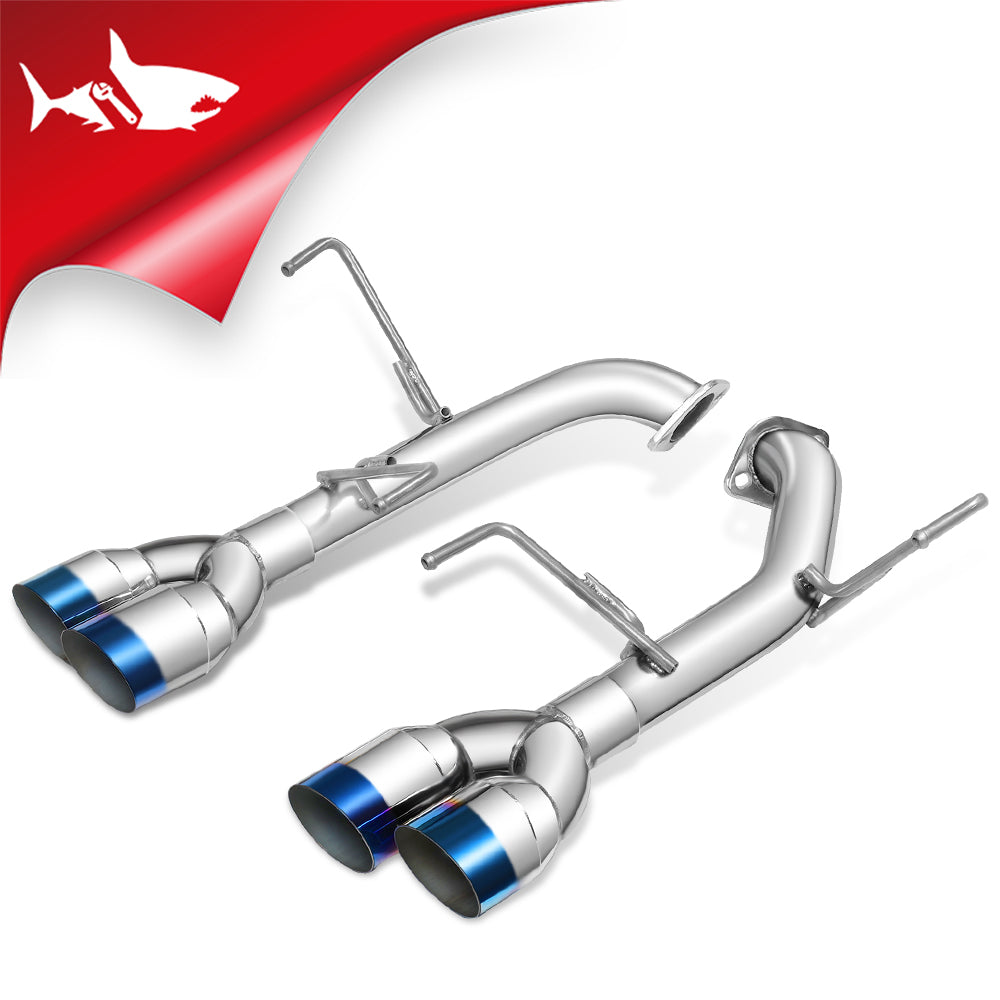
Escape Catback de doble punta Flashark 350Z
Mejor para propietarios que quieren que el parachoques trasero se vea completo, equilibrado y más OEM+ mientras obtienen un tono VQ de posventa más profundo.
Precio de oferta: $379.99 Precio regular: $499.99
Ver Catback de doble puntaNotas de instalación de catback 350Z para principiantes
Instalar un catback en un 350Z no es el trabajo más difícil del mundo, pero tampoco siempre es sencillo. La mayoría de estos coches son lo suficientemente viejos como para que el óxido, los herrajes redondeados, las juntas cocidas y los soportes doblados sean normales.
Lo que suele quitarse durante la instalación
Dependiendo del kit, puedes quitar:
- Sección del silenciador trasero
- Tubo intermedio
- Tubo en Y, si el nuevo sistema incluye uno
- Juntas y pernos de brida viejos
- Algunos soportes de goma desgastados si están estirados o agrietados
Los catalizadores suelen quedarse a menos que también esté instalando tubos de prueba o catalizadores de alto flujo.
Pernos oxidados, juntas y fugas de escape
Muchos nuevos propietarios ven un vídeo de instalación limpia y piensan que el trabajo lleva 45 minutos. Luego se meten debajo de un Z de 20 años y se encuentran con la realidad. A los pernos de brida oxidados no les importa su horario.
Advertencia de instalación en primera persona:
He visto a muchos principiantes apretar primero la brida delantera, luego luchar con las puntas del silenciador durante una hora porque la sección trasera está torcida. No hagas eso. Cuelga todo el sistema sin apretarlo primero. Haz que todas las bridas encajen. Deja que los soportes de goma soporten el escape. Luego alinea las puntas y aprieta de adelante hacia atrás. Parece más lento. Ahorra tiempo.

Alineación de las puntas y comprobación final de fugas
Después de la instalación, no solo arranque el coche, sonría y se vaya. Compruebe:
- Espaciado de las puntas con respecto al parachoques
- Tensión de las perchas
- Asentamiento de la junta de la brida
- Fugas en el arranque en frío
- Traqueteos después de que el escape se caliente
Una pequeña fuga en la brida puede hacer que el coche suene áspero y barato. Repare la fuga antes de culpar al diseño del escape.
Cómo elegir el catback adecuado para un 350Z
Empiece por cómo usa realmente el coche. ¿Conductor diario? ¿Coche de fin de semana para puertos de montaña? ¿Coche de drift? ¿Coche de exposición? Sea honesto. La configuración más ruidosa no siempre es la mejor.
Elija según el objetivo de sonido
- Tono de calle suave: Mantenga los catalizadores de serie y elija un sistema con silenciador y resonador.
- Tono agresivo y profundo: Un catback más una configuración de tubo en Y saludable funciona bien.
- Configuración muy ruidosa: Los tubos de prueba y el escape sin resonador lo lograrán, pero el riesgo de zumbido y crepitación aumenta rápidamente.
Elija según la apariencia trasera
La punta única se ve cruda. La doble punta se ve equilibrada. Ninguna es automáticamente mejor. Elija la que coincida con la personalidad del coche.
Elija según el ajuste y las piezas incluidas
Antes de comprar, compruebe el año, el estilo de carrocería, la versión del motor, los puntos de brida y si su escape actual sigue siendo de fábrica. Si no está seguro de qué configuración se adapta a su construcción, comience con sistemas de escape catback más amplios para construcciones de calle, luego reduzca por vehículo.
Errores comunes antes de comprar un escape 350Z
Los veo una y otra vez. Evítalos y ahorrarás dinero.
Comprar tubos de prueba pensando que son parte de un catback
Los tubos de prueba reemplazan los convertidores catalíticos. Un catback generalmente no lo hace. Gran diferencia.
Ignorar la compatibilidad del tubo en Y
Si su kit no incluye un tubo en Y y su tubo en Y de fábrica está oxidado, abollado o gotea, su nuevo escape puede no funcionar ni sonar como espera.
Elegir la configuración más ruidosa primero
No construya solo en torno al volumen. Un 350Z puede pasar de profundo a áspero muy rápidamente. La calidad del tono importa más que el volumen puro, especialmente en un coche de uso diario.
Veredicto final: Lo que realmente reemplaza un Catback 350Z
El sistema de escape original del 350Z es un diseño seccionado, no un único tubo misterioso. Un catback reemplaza principalmente el escape detrás de los convertidores catalíticos. Dependiendo del kit, eso puede incluir el tubo en Y, el tubo intermedio, el silenciador y las puntas. Normalmente no reemplaza los colectores ni los catalizadores.
Si su objetivo es un tono más profundo, un mejor flujo en la sección trasera y una apariencia más limpia, un catback es un primer paso inteligente. Si su objetivo es eliminar los catalizadores, buscar el volumen máximo o solucionar un problema en el escape delantero, debe buscar más allá de un catback.
Consejo de taller antiguo: compre la pieza que resuelve el problema real. No la pieza más ruidosa. No el título más barato. La pieza correcta.
Preguntas frecuentes sobre el sistema de escape original del 350Z
P1: ¿Qué piezas incluye el sistema de escape original del 350Z?
R1: El sistema de escape original del 350Z incluye colectores de escape, convertidores catalíticos, una tubería en Y o sección de fusión delantera, tuberías intermedias, sección del silenciador, puntas de escape, juntas, bridas y soportes de goma.
P2: ¿Qué reemplaza un escape catback en un 350Z?
R2: Un escape catback generalmente reemplaza la sección detrás de los convertidores catalíticos. En un 350Z, eso a menudo incluye la tubería intermedia, el silenciador, las puntas y, a veces, la tubería en Y, según el kit.
P3: ¿Un catback de 350Z reemplaza los convertidores catalíticos?
R3: No, en la mayoría de los casos. Un catback normal no reemplaza los convertidores catalíticos. Los tubos de prueba o los catalizadores de alto flujo son las piezas que reemplazan la sección del convertidor catalítico.
P4: ¿Es una tubería en Y parte de un escape catback 350Z?
R4: A veces. Algunos kits catback 350Z incluyen una tubería en Y, mientras que otros comienzan detrás de la tubería en Y de fábrica. Siempre verifique las fotos del producto y la lista de piezas incluidas antes de realizar el pedido.
P5: ¿Cuál es la diferencia entre una tubería en Y y los tubos de prueba en un 350Z?
R5: Una tubería en Y une los bancos de escape izquierdo y derecho después de los catalizadores. Los tubos de prueba reemplazan los convertidores catalíticos. Son partes diferentes en diferentes áreas del sistema de escape.
P6: ¿Puedo instalar un escape catback con catalizadores de serie?
R6: Sí. Muchos propietarios de 350Z instalan un catback manteniendo los convertidores catalíticos de serie. Esta suele ser la primera mejora más limpia para la conducción diaria y un menor riesgo de inspección.
P7: ¿Un escape catback hará que mi 350Z sea mucho más ruidoso?
R7: Por lo general, hará que el coche sea más ruidoso y profundo que el de serie, pero el sonido final depende del diseño del silenciador, los resonadores, el diámetro de la tubería, la disposición de salida simple o doble y si los catalizadores todavía están instalados.
P8: ¿Un escape catback 350Z añade caballos de fuerza?
R8: Un catback puede soportar una pequeña ganancia de potencia al reducir la restricción del escape trasero. En muchas configuraciones 350Z de serie o ligeramente modificadas, 5-10 hp es un rango más realista que las afirmaciones exageradas de grandes números.
P9: ¿Un escape catback causará que se encienda la luz de "check engine"?
R9: Un catback por sí solo generalmente no activa la luz de "check engine" porque normalmente no mueve los convertidores catalíticos ni los sensores de oxígeno. Sin embargo, las fugas de escape u otros cambios en la sección delantera aún pueden causar problemas.
P10: ¿Es lo mismo quitar el silenciador que un escape catback?
R10: No. Una eliminación de silenciador quita o desvía solo el silenciador trasero. Un catback es un sistema de escape trasero más completo que puede incluir tuberías, silenciadores, puntas y, a veces, la tubería en Y.
P11: ¿Por qué mi 350Z suena áspero después de las modificaciones de escape?
R11: El sonido áspero a menudo proviene de tubos de prueba, tuberías sin resonador, secciones de escape de gran tamaño, diseño de silenciador barato o fugas de escape. El VQ35 puede sonar agudo si la configuración está demasiado abierta.
P12: ¿Debo actualizar el tubo en Y o el catback primero?
R12: Si quieres un cambio de sonido mayor, empieza por el catback. Si tu escape trasero ya está mejorado y el tubo en Y de fábrica es restrictivo o tiene fugas, entonces una actualización del tubo en Y puede tener sentido.
P13: ¿Un catback de 350Z sirve tanto para coupé como para roadster?
R13: No asuma que sirve para ambos. Siempre confirme el año, el tipo de carrocería, el acabado, la versión del motor y las notas de ajuste del producto antes de comprar.
P14: ¿El escape de serie del 350Z es bueno para la conducción diaria?
R14: Sí. El escape de serie es silencioso, cómodo y práctico. Es simplemente conservador. Un catback es mejor para los propietarios que desean más sonido, un aspecto trasero más fuerte y un carácter de escape mejorado.
P15: ¿Necesito una puesta a punto después de instalar un catback 350Z?
R15: Normalmente no se requiere una puesta a punto para una instalación solo con catback. Una puesta a punto se vuelve más útil cuando se combina el catback con cambios en la admisión, mejoras en el tubo en Y, tubos de prueba, colectores u otras modificaciones en el flujo de aire.

Steven Chen
Especialista en rendimiento automotriz | Sistemas de motor y escape
Steven se enfoca en el rendimiento práctico del motor, el ajuste del escape y las rutas de mejora del mundo real para vehículos entusiastas clásicos y modernos. Revisa aplicaciones de Ford de bloque pequeño, LS, camiones y calle/pista con un objetivo en mente: ayudar a los constructores a elegir piezas que realmente funcionen juntas. Su filosofía: "La buena potencia comienza con la combinación correcta, no con la pieza más grande."