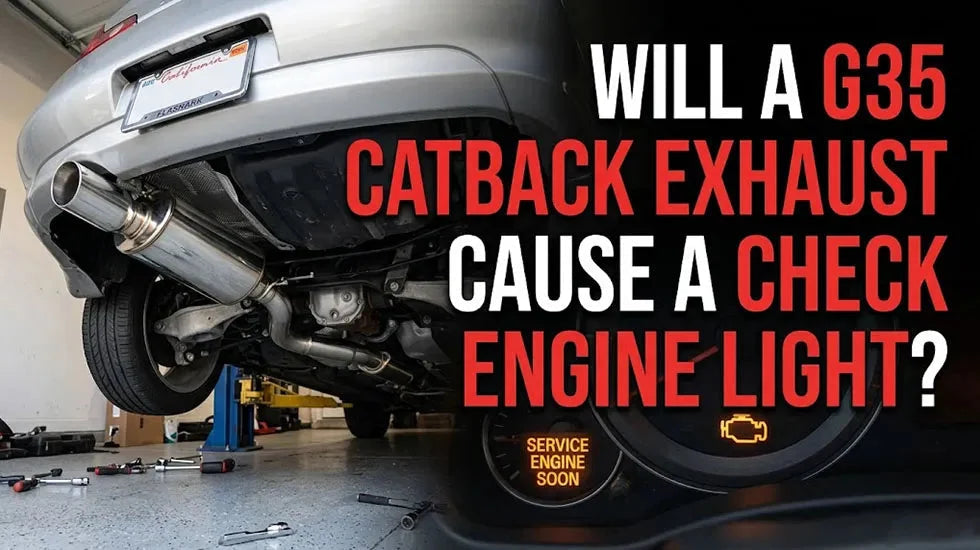
¿Un escape Catback para G35 Causará la Luz de "Revisar Motor"?
Un escape catback suele ser una de las primeras modificaciones que consideran los propietarios de un G35. El sonido se vuelve más profundo, la parte trasera luce más limpia y el VQ finalmente comienza a sentirse menos silenciado. Pero hay una preocupación que detiene a muchas personas antes de comprar: ¿un escape catback encenderá la luz de "Revisar motor" o "Servicio de motor pronto"?
Para un Infiniti G35, la respuesta depende de lo que realmente instales. Un catback verdadero es muy diferente de las tuberías de prueba (test pipes), los catalizadores de alto flujo (high-flow cats), los colectores (headers) o una configuración de escape completa. He visto a muchos propietarios culpar primero al escape trasero, cuando el problema real era un sensor de O2 viejo, una pequeña fuga de escape, un convertidor catalítico débil o un código pendiente que ya estaba esperando aparecer.
Respuesta Rápida
- Un escape catback G35 verdadero generalmente no debería causar una luz de "revisar motor" por sí solo porque se ubica después de los convertidores catalíticos y normalmente no altera el monitoreo del sensor de O2.
- Si la luz de "Servicio de motor pronto" (SES) se enciende justo después de la instalación, no culpes primero al silenciador. Escanea el código OBD-II antes de reemplazar piezas.
- Los códigos P0420 y P0430 suelen indicar eficiencia del convertidor catalítico, lecturas del sensor de O2 trasero, fugas de escape cerca de los catalizadores, tuberías de prueba o catalizadores de alto flujo.
- Si instalaste solo un catback, con los catalizadores y los sensores de O2 intactos, el riesgo de que se encienda la luz de "revisar motor" es bajo. Si instalaste tuberías de prueba, colectores, cambios en la tubería en Y o catalizadores de alto flujo al mismo tiempo, el riesgo aumenta rápidamente.
- Entonces, para la búsqueda "¿un catback encenderá la luz SES en un G35?", la respuesta honesta es: no suele hacerlo, pero el código decide la historia.
¿Qué se considera un verdadero escape Catback en un G35?
Antes de hablar sobre las luces en el tablero, necesitamos aclarar la terminología. Mucha gente llama a cada tubo brillante debajo del coche un "escape". Así es como empiezan los malos consejos.
Un escape catback es la sección del escape que comienza después de los convertidores catalíticos y se extiende hacia la parte trasera del coche. En un G35, eso generalmente significa tubería trasera, secciones de resonador o de tubo intermedio (mid-pipe) dependiendo del diseño, silenciador y salidas. No debe eliminar los convertidores catalíticos. No debe mover los sensores de O2 aguas arriba. No debe engañar a la ECU.
Si estás buscando, comienza con un verdadero sistema de escape catback para Nissan en lugar de adivinar a partir de una lista genérica de escapes. La compatibilidad (fitment) importa más de lo que la gente admite, especialmente cuando se trata de G35 Coupé, G35 Sedán, 350Z, RWD, AWD y diferentes diseños de chasis traseros.
Catback vs. Y-Pipe vs. Test Pipes
Aquí está la versión limpia y directa:
- Escape catback: sección de escape trasera después de los convertidores catalíticos. Bajo riesgo de CEL si se instala correctamente.
- Y-pipe: se ubica más adelante y une el flujo de escape. Puede ser inofensivo, pero el ajuste y las fugas en las bridas importan.
- Test pipes (tuberías de prueba): reemplazan los convertidores catalíticos. Alto riesgo de CEL y problemas de emisiones.
- High-flow cats (catalizadores de alto flujo): mantienen el material catalítico, pero aún pueden cambiar las lecturas del sensor de O2 trasero lo suficiente como para activar códigos de eficiencia del catalizador.
- Headers (colectores): reemplazan los colectores de escape de fábrica. Pueden mejorar el flujo, pero la instalación es más ajustada y el manejo del sensor de O2 importa más.
Nota del mecánico: Si el producto cambia algo antes o alrededor de los convertidores catalíticos, deja de llamarlo "solo un catback". Eso es un trabajo diferente, un nivel de riesgo diferente y un camino de resolución de problemas diferente.

¿Por qué un Catback de G35 normalmente no activa la luz SES?
La ECU no está ahí escuchando el tono de tu silenciador. No le importa si el coche suena más profundo, más ronco, más limpio o más ruidoso. Le importan las lecturas de los sensores.
En la plataforma VQ35, la ECU monitorea el contenido de oxígeno y la eficiencia del convertidor catalítico a través de sensores aguas arriba y aguas abajo. Los sensores delanteros ayudan a controlar el combustible. Los sensores traseros monitorean lo que sucede después de los catalizadores. Un verdadero catback se ubica detrás de esa área de monitoreo de emisiones.
Los sensores aguas arriba controlan el ajuste de combustible
Los sensores aguas arriba están cerca del motor. Su trabajo es serio: ayudar a la ECU a ajustar la relación aire-combustible. Si esas lecturas se vuelven extrañas, puedes obtener ajustes de combustible deficientes, funcionamiento irregular, mal kilometraje o una luz de "revisar motor".
Una sección catback trasera no debería alterar las lecturas del sensor aguas arriba. Si lo hace, algo más está sucediendo.
Los sensores aguas abajo monitorean la eficiencia del catalizador
Los sensores traseros comparan lo que sale de los convertidores catalíticos. Cuando la ECU ve demasiada similitud entre la actividad de oxígeno aguas arriba y aguas abajo, puede pensar que el catalizador no está haciendo suficiente trabajo. De ahí provienen los códigos P0420 y P0430.
Esa es también la razón por la que las tuberías de prueba (test pipes) son culpadas con tanta frecuencia. Eliminan el convertidor catalítico de la ecuación. Un catback no lo hace.

¿Un Catback encenderá la luz de "Servicio de motor pronto" (SES) en un G35?
La respuesta corta de nuevo: un verdadero catback normalmente no encenderá la luz SES en un G35. Pero "normalmente" está haciendo un trabajo importante aquí. Los coches viejos tienen sensores viejos. Los pernos viejos se rompen. Las juntas viejas gotean. Los códigos pendientes viejos esperan hasta el peor momento posible para aparecer y hacerte quedar en ridículo delante de tus amigos.
Es por eso que la pregunta "¿un catback encenderá la luz de "revisar motor" en un G35?" es mejor de lo que parece. La pieza en sí puede ser segura, pero la instalación puede exponer problemas que ya estaban presentes.
Cuando un Catback normalmente no activará la luz SES
Tu riesgo de que se encienda la luz de "revisar motor" es bajo cuando todo esto es cierto:
- Instalaste un catback real, no tuberías de prueba o un sistema de eliminación de catalizador.
- Los convertidores catalíticos permanecieron en su lugar.
- Los sensores de O2 permanecieron en sus ubicaciones de fábrica.
- El cableado del sensor de O2 no se estiró, derritió, pellizcó o desconectó.
- Las bridas sellaron correctamente con juntas nuevas.
- El coche no tenía códigos pendientes antes de la instalación.
Cuando la luz SES aparece después de una instalación de Catback
Aquí es donde la gente se confunde. La luz puede aparecer después de la instalación sin ser causada por el catback en sí.
Recuerdo un G35 Coupé de 2005 que llegó al taller hace unos años. El propietario acababa de instalar un escape trasero, condujo quizás 65 km, y la luz de "Servicio de motor pronto" (Service Engine Soon) se encendió. Estaba listo para quitar todo el sistema. Lo escaneamos primero. No adivinamos. Escaneamos. El código no era de eficiencia del catalizador. Era una pequeña fuga del sistema EVAP. La junta de la tapa de la gasolina estaba en mal estado, y el momento simplemente hizo que el catback pareciera culpable. Cinco minutos con una prueba de humo y una tapa nueva le ahorraron gastar dinero en sensores de O2 que no necesitaba.
Esa es la lección. Escanea primero. Repara después.
Situaciones comunes en las que "se culpó al catback"
- El código EVAP pendiente se confirmó después de algunos ciclos de conducción.
- El sensor de O2 trasero antiguo ya era lento.
- La fuga en la brida de la Y-pipe o del catalizador se alteró durante la instalación.
- La batería se desconectó, los monitores se restablecieron y luego reaparecieron los viejos problemas de emisiones.
- Se instalaron tuberías de prueba (test pipes) o catalizadores de alto flujo (high-flow cats) al mismo tiempo que el catback.
De fábrica vs. Catback vs. Catback con otras modificaciones
Esta es la parte que la mayoría de los compradores deberían examinar antes de pagar. Un catback es la primera modificación de escape más segura. El problema suele comenzar cuando la gente acumula piezas sin entender lo que cambia cada una.
| Configuración | ¿Catalizadores retenidos? | Riesgo del sensor de O2 | Riesgo típico de CEL | Cambio de sonido | Cambio de potencia realista |
|---|---|---|---|---|---|
| Escape G35 de serie | Sí | Bajo si los sensores están sanos | Bajo | Tono VQ silencioso, apagado | Línea base |
| Escape catback verdadero | Sí | Bajo | Normalmente bajo | Tono trasero más profundo, ruidoso y limpio | A menudo leve; alrededor de 5-10 hp es una expectativa realista en muchos coches de serie o ligeramente modificados |
| Catback más colectores (headers) | Normalmente sí, dependiendo de la configuración | Medio | Depende del manejo de O2, fugas y ajuste (tune) | Más agudo, más agresivo, más nota del motor | Los colectores pueden añadir alrededor de 10-15 whp con la configuración de apoyo y el ajuste adecuados |
| Catback más tuberías de prueba (test pipes) | No | Alto | Alto para problemas de tipo P0420/P0430 | Mucho más ruidoso, a menudo más áspero | Puede mejorar el flujo, pero el riesgo legal y de diagnóstico aumenta drásticamente |
El mejor primer paso si quieres sonido sin drama de la luz de "Revisar motor"
Si quieres que el G35 deje de sonar como un coche de cercanías de serie, pero aún no quieres tocar los catalizadores y las lecturas de O2 traseras, un catback real es la primera medida sensata. No la más salvaje. No la más ruidosa. La sensata.
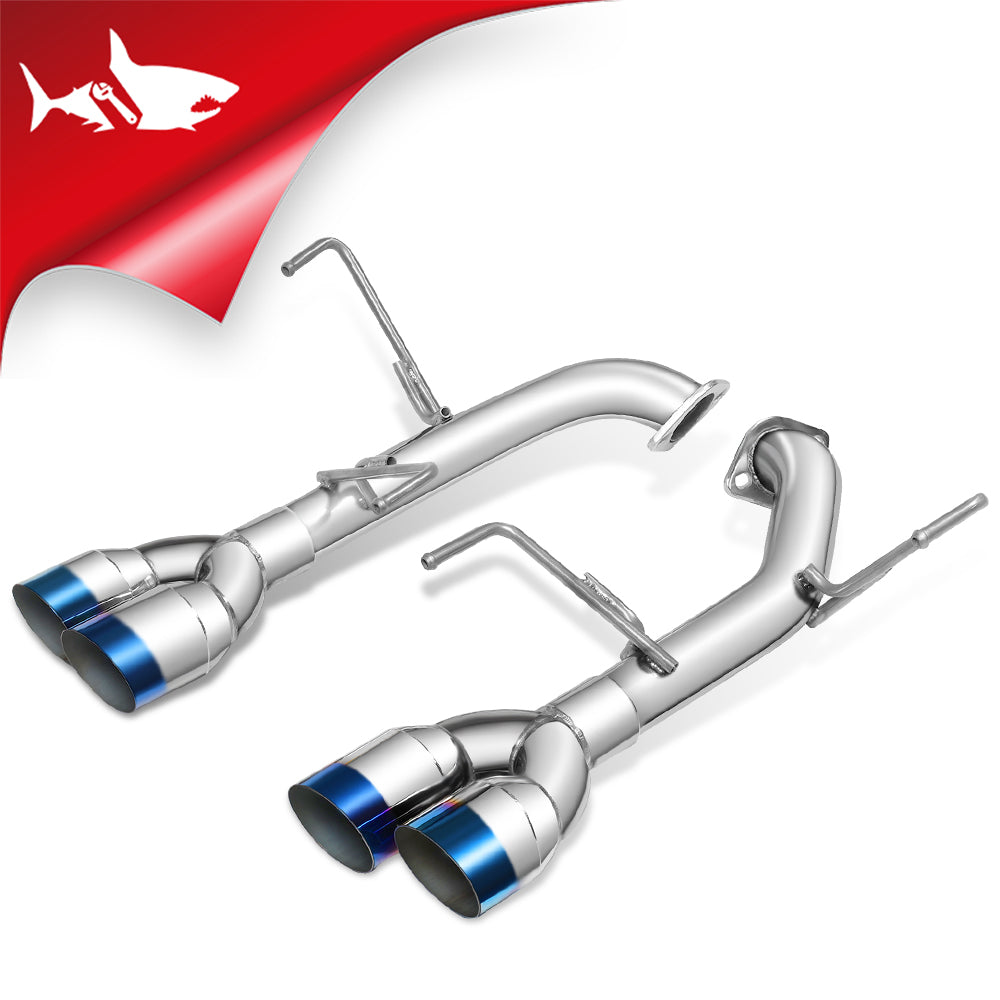
Una configuración como el escape catback para Nissan 350Z e Infiniti G35 de 2003-2008 tiene sentido para los conductores que desean un sonido VQ más profundo, tuberías traseras de 3 pulgadas y un aspecto de salida única de 4.5 pulgadas, manteniendo los convertidores catalíticos y el hardware del escape delantero separados de la sección catback.

Escape Catback Flashark para Nissan 350Z e Infiniti G35 (2003-2008)
Buena opción para compradores que desean un tono VQ más fuerte sin alterar la zona del convertidor catalítico. Utiliza tuberías de 3 pulgadas y una salida única de 4.5 pulgadas. Siempre verifica la compatibilidad con tu modelo cupé/sedán antes de realizar el pedido.
$139.99 $299.99
Ver escape CatbackAdvertencia de compatibilidad: No compres basándote solo en "G35". El enrutamiento del escape puede diferir entre coupé y sedán. En esta lista de catback de Flashark, la compatibilidad con el G35 Coupé requiere atención adicional, y los compradores del G35 Sedán no deben asumir que les queda.
¿Qué códigos suelen ser culpados en un Catback para G35?
Ahora vamos a lo difícil. El tablero dice "Servicio de motor pronto". Sientes que se te revuelve el estómago. ¿Y ahora qué?
No te quedes mirando el silenciador. Coge un escáner. Incluso un lector OBD-II básico es mejor que adivinar. El código te dice con qué sistema está enfadada la ECU.
P0420 y P0430: Códigos de eficiencia del catalizador
Estos son los códigos de los que más se habla en los hilos de escape del G35. P0420 indica eficiencia del catalizador por debajo del umbral en un banco, mientras que P0430 hace lo mismo en el otro banco.
¿Puede un catback causar esto por sí solo? Normalmente no. Yo miraría esto primero:
- Convertidores catalíticos envejecidos
- Problemas de señal del sensor de O2 trasero
- Fugas cerca de los catalizadores o del área del tubo en Y
- Tuberías de prueba (test pipes)
- Catalizadores de alto flujo (high-flow cats) con diferente comportamiento de eficiencia
- Monitores recientemente borrados que finalmente completan su ciclo de conducción
Códigos de circuito del sensor de O2
Códigos como P0137, P0138, P0139, P0157, P0158 y P0159 pueden indicar problemas de voltaje o respuesta del sensor de O2. Eso no significa automáticamente que el sensor esté defectuoso, pero sí significa que debes inspeccionar el circuito, el cableado, el conector y el estado del sensor.
Muchos novatos ven un video de instalación de dos minutos, tiran de las secciones del escape, dejan un tubo colgando de un cable y luego se preguntan por qué el coche está enfadado. Te sugiero que nunca hagas eso. Apoya el escape. Mantén el arnés despejado. Mira dos veces antes de apretar cualquier cosa cerca de un cable del sensor.
Códigos EVAP que no tienen nada que ver con el escape
P0442 y P0455 no son problemas de catback. Estos son códigos de fuga EVAP. Tapa de gasolina, manguera, válvula de purga, canister, plástico agrietado, ese tipo de cosas.
Por eso es importante el escaneo. Sin el código, cada comentario del foro parece convincente.
Catback vs. Tuberías de prueba: La verdadera diferencia de la luz de "Revisar motor"
Si tu amigo dice: "Mi G35 encendió la luz de "revisar motor" después del escape", pregúntale qué piezas del escape cambió. No cómo las llama. Qué cambió realmente.
Si quitó los convertidores catalíticos, eso no es un problema de catback. Eso es un problema de tuberías de prueba (test pipes). Y sí, eso puede activar la luz SES. A menudo.
Para una inmersión más profunda, Flashark ya tiene una guía útil sobre qué son las tuberías de prueba para el G35. Léela antes de agrupar las tuberías de prueba, los catalizadores y los silenciadores traseros en un solo saco.
Por qué las tuberías de prueba activan la luz con más frecuencia
Los sensores de O2 traseros buscan pruebas de que los convertidores catalíticos están haciendo su trabajo. Si se quitan los catalizadores, la ECU puede ver una actividad de escape que no coincide con la expectativa de fábrica. Ahí es donde comienza la conversación sobre la eficiencia del catalizador.
Algunas personas buscan atajos. No voy a guiarte a través de trucos para eludir las emisiones. Para un coche de uso diario, especialmente en los Estados Unidos, ten en cuenta el aspecto legal. Si el coche necesita inspección y los monitores de preparación, una luz SES encendida no es tu amiga.
Los catalizadores de alto flujo son mejores, pero no mágicos
Los catalizadores de alto flujo (high-flow cats) pueden ser un compromiso más inteligente que las tuberías de prueba, pero no son una pieza que garantice que no se encienda la luz de "revisar motor". El conteo de celdas, la calidad del catalizador, la ubicación del sensor, la sensibilidad de la ECU, las fugas de escape y la antigüedad de los sensores, todo importa.
Los coches VQ viejos son honestos de la peor manera. Si algo está débil, un mayor flujo de escape puede hacer que se manifieste.
¿Necesitas una reprogramación (Tune) después de instalar un Catback para G35?
¿Solo para un catback? Generalmente no.
Un G35 no debería necesitar una reprogramación (tune) solo para sobrevivir a un cambio de escape trasero. El coche puede sonar mejor y respirar un poco más libremente, pero la ECU puede manejar un catback normal sin una sesión heroica con el portátil. Una reprogramación se vuelve más útil cuando se apilan piezas: admisión, colectores (headers), catalizadores de alto flujo, modificaciones del pleno (plenum mods) o uso intensivo en pista.
Si aún estás eligiendo la ruta completa del escape, esta guía interna sobre headers vs. test pipes vs. catbacks para el G35 vale la pena leerla antes de comprar tres piezas a la vez y hacer que el diagnóstico sea doloroso.
Cuando una reprogramación empieza a tener sentido
- Instalaste colectores (headers) y cambiaste el barrido de escape cerca del motor.
- Añadiste modificaciones de admisión y quieres optimizar el combustible/tiempo.
- Estás buscando números de dinamómetro, no solo sonido.
- Instalaste múltiples componentes de escape y quieres que el coche esté ajustado como un sistema.
- Estás corrigiendo problemas de conducción después de confirmar que no hay fugas, sensores defectuosos o fallas mecánicas.
Para un VQ35 en buen estado solo con un catback, piense en algo modesto. Un catback puede mejorar el sonido y el flujo, pero no convertirá el coche en un motor diferente. En un coche con modificaciones leves, 5-10 CV es una expectativa realista a nivel de producto. En una configuración bien equilibrada con colectores, catback y ajuste, ver 8-12 whp o más del sistema de escape combinado es más creíble. Aun así, los dinamómetros varían. El clima varía. Incluso la presión de los neumáticos influye.
¿Qué pasa si quiere más potencia de la que le da un catback?
Entonces empieza a avanzar en el sistema de escape. Esto significa colectores, catalizadores, cambios en el tubo en Y, o una combinación completa. Mayor potencial de potencia. Más trabajo. Más calor. Más espárragos rotos si el coche vivió en una zona de óxido. Más posibilidades de que se encienda la luz de "check engine" (CEL) si el trabajo es descuidado.
Si está construyendo una configuración VQ35DE y quiere ir más allá del sonido trasero, los colectores de escape VQ35DE para Nissan 350Z y G35 de 2003-2007 son el tipo de mejora que considera después de entender el aspecto de la CEL y el trabajo involucrado.

Colectores de escape Flashark VQ35DE para 350Z y G35
Una mejor opción para los propietarios que buscan un flujo más fuerte cerca del motor en lugar de solo sonido trasero. Construido con acero inoxidable T304, tubos primarios de 1.75 pulgadas y un colector de 2.1 pulgadas. Más adecuado para compradores que están listos para un trabajo de instalación más ajustado.
$164.99 $235.00
Ver colectores VQ35DECómo diagnosticar la luz SES después de instalar un catback en un G35
Este es el proceso que usaría en el taller. Sin dramas. Sin adivinanzas. Sin tirar sensores al coche porque un extraño en Reddit lo dijo.

Paso 1: Leer el código
Utilice un escáner OBD-II y anote:
- Códigos confirmados
- Códigos pendientes
- Datos del cuadro congelado
- Kilometraje desde el borrado del código
- Si los monitores de preparación están completos
Si todo lo que sabe es "la luz está encendida", no sabe casi nada.
Paso 2: Confirmar lo que realmente se instaló
Sea honesto consigo mismo. ¿Solo instaló el catback? ¿O también instaló test pipes, tubo en Y, catalizadores de alto flujo, colectores, admisión o un ajuste?
Si instaló varias piezas a la vez, dificultó el diagnóstico. No imposible. Solo más complicado.
Paso 3: Comprobar si hay fugas en el escape
Mire las bridas primero. ¿Junta nueva? ¿Tensión uniforme de los pernos? ¿Alguna marca de hollín? ¿Algún golpeteo al arrancar en frío? ¿Algún silbido cerca del tubo en Y o del catalizador?
Las fugas en el silenciador trasero son molestas. Las fugas más cerca de los sensores importan más.
Paso 4: Inspeccionar el cableado del sensor de O2
Mire debajo del coche. No asuma simplemente.
- ¿Conector bien asentado?
- ¿Cable derretido?
- ¿Arnés estirado?
- ¿Cable del sensor rozando el tubo?
- ¿Escudo térmico doblado contra algo?
Una instalación descuidada puede hacer que un buen sensor parezca defectuoso.
Paso 5: Separar los códigos de escape de los códigos no relacionados
Si ve códigos de EVAP, fallos de encendido, MAF o ajuste de combustible, no intente forzar que el catback sea la causa. Diagnostique el sistema al que apunta el código.
No haga esto
- No borre el código sin registrarlo.
- No reemplace los cuatro sensores de O2 porque un tipo en línea dijo "siempre es el O2".
- No asuma que el catback está mal porque la sincronización parece sospechosa.
- No use un ajuste para ocultar una fuga real, un sensor muerto o un catalizador defectuoso.
Consejos de compra para evitar problemas de luz de motor del G35 con catback
Las buenas piezas siguen necesitando el coche adecuado. Eso parece obvio hasta que ves a alguien intentar atornillar un escape de coupé en una configuración de sedán incorrecta y luego culpar a la marca.
Verificar el ajuste para coupé, sedán, RWD y AWD
G35 Coupé y G35 Sedán no siempre son intercambiables. El G35x AWD puede ser diferente de nuevo. Antes de comprar cualquier cosa, coincida el año, el tipo de carrocería, la transmisión, el motor y el recorrido del escape.
Si no está seguro de qué sección trasera es la adecuada, explore los sistemas de escape catback más amplios para sonido de rendimiento y reduzca la búsqueda por marca, modelo y ajuste en lugar de lanzarse a la lista más barata.
Utilice juntas y herrajes nuevos
Las juntas de escape viejas son como vendajes viejos. A veces aguantan. Generalmente le decepcionarán en el peor momento.
- Utilice juntas nuevas siempre que sea posible.
- Limpie las superficies de contacto.
- Apriete las bridas de manera uniforme.
- Vuelva a comprobar los pernos después de un ciclo de calor.
- No deje el escape colgando sin soporte durante la instalación.
Instale un cambio importante en el escape a la vez
Si instala catback, test pipes, colectores, admisión y un ajuste todo en un fin de semana, y luego el coche arroja P0420, se ha creado su propia novela de detectives.
Instale por etapas si puede. Primero el catback. Condúzcalo. Escanéelo. Luego avance si todavía quiere más.
Sonido y potencia: lo que realmente cambia un catback en un G35
Un catback se trata principalmente de sonido, flujo, peso y sensaciones. No de caballos de fuerza mágicos.
El VQ35 tiene esa voz aguda y metálica que a la gente le encanta o de la que se queja. Un buen catback puede profundizarla y eliminar parte de la monotonía de fábrica. Uno malo puede hacer que sea lo suficientemente áspero como para asustar a los pájaros de los árboles.

Cambio de sonido
Espere un arranque en frío más fuerte, más tono bajo el acelerador y más presencia trasera. Si el diseño del silenciador y del resonador es decente, obtendrá un sonido más profundo sin convertir la conducción en carretera en un dolor de cabeza.
Cambio de potencia
En un G35 mayormente de serie, no espere que un catback por sí solo ofrezca grandes números en el dinamómetro. Las ganancias leves son realistas. El mayor beneficio es que prepara el camino del escape para futuras modificaciones.
Si también posee o sigue el mundo VQ del 350Z, esta guía sobre la mejor configuración de escape para 350Z con catback, axle-back y test pipes es útil porque el mismo error básico aparece allí también: la gente busca el ruido primero y diagnostica después.
Notas legales y de emisiones para propietarios de G35 en EE. UU.
Para uso en la calle en Estados Unidos, mantenga esto simple: un verdadero catback normalmente mantiene el hardware de emisiones en su lugar. Por eso, a menudo es la primera actualización más segura.
Los test pipes y la eliminación del catalizador son una categoría legal diferente. Las leyes de ruido también son un factor. Incluso si el coche no tiene CEL, una ordenanza de ruido local aún puede arruinarle el fin de semana.
No estoy aquí para decirle cómo eludir los sistemas de emisiones. Construya el coche de forma inteligente. Si es un coche de calle, manténgalo inspeccionable. Si es un coche solo para pista, etiquételo honestamente y comprenda las consecuencias.
Veredicto final: ¿Debería preocuparse por una CEL con un catback en un G35?
No si está comprando e instalando la pieza correcta.
Un verdadero escape catback para G35 es una de las mejoras de escape de menor riesgo porque generalmente se ubica detrás de los convertidores catalíticos y lejos de los sensores que la ECU utiliza para las decisiones de emisiones. Si su luz SES aparece después de la instalación, escanee el código antes de entrar en pánico. Los códigos P0420, P0430, códigos de circuito de O2, códigos EVAP y fallos de encendido cuentan historias diferentes.
Entonces, cuando alguien pregunta "¿encenderá la luz del motor un catback en un G35?", la respuesta no es un sí o un no perezoso. La verdadera respuesta es esta: un catback verdadero instalado correctamente generalmente no encenderá la luz, pero el código de falla siempre tiene la última palabra.
Preguntas Frecuentes
P1: ¿Un escape catback para G35 causará una luz de verificación del motor?
R1: Generalmente no. Un verdadero escape catback se encuentra después de los convertidores catalíticos y normalmente no altera la supervisión del sensor de O2. Si la luz se enciende, escanee el código OBD-II antes de culpar al catback.
P2: ¿Se encenderá la luz SES del G35 después de instalar un catback?
R2: En la mayoría de los casos, no. Si buscó "encenderá la luz SES del G35 un catback", la respuesta más segura es que un catback real no debería activar el SES por sí mismo, pero las fugas, los sensores viejos, los códigos pendientes u otras modificaciones del escape pueden hacer que la luz aparezca al mismo tiempo.
P3: ¿Por qué se encendió la luz SES de mi G35 después de instalar un escape?
R3: La instalación puede haber expuesto un problema existente, alterado el cableado, creado una fuga en la brida o simplemente ocurrió justo antes de que un código pendiente se confirmara. Lea el código primero.
P4: ¿Puede un catback para G35 causar P0420 o P0430?
R4: Un catback por sí solo generalmente no causa P0420 o P0430. Esos códigos a menudo apuntan a la eficiencia del convertidor catalítico, lecturas del sensor de O2 trasero, fugas de escape cerca de los catalizadores, test pipes o catalizadores de alto flujo.
P5: ¿Los test pipes causan una luz de verificación del motor en un G35?
R5: A menudo sí. Los test pipes reemplazan a los convertidores catalíticos, por lo que los sensores de O2 traseros pueden informar problemas de eficiencia del catalizador. Esa es una configuración de mucho mayor riesgo que un catback.
P6: ¿Los catalizadores de alto flujo causan SES en un G35?
R6: Pueden hacerlo. Los catalizadores de alto flujo suelen ser menos arriesgados que los test pipes, pero no están garantizados como libres de CEL. La calidad del catalizador, el estado del sensor, las fugas de escape y la sensibilidad de la ECU son importantes.
P7: ¿Necesito un ajuste para un escape catback en un G35?
R7: Generalmente no para un catback solo. Un ajuste se vuelve más útil cuando se agregan colectores, admisión, catalizadores de alto flujo u otras piezas que cambian el flujo y se desea optimizar toda la configuración.
P8: ¿Debo borrar el código después de instalar un catback?
R8: No lo borre primero. Registre el código y los datos del cuadro congelado. Si lo borra demasiado pronto, pierde la mejor pista que tenía.
P9: ¿Puede una fuga de escape activar una luz de verificación del motor?
R9: Sí, especialmente si la fuga está cerca de los convertidores catalíticos o los sensores de O2. Es menos probable que una pequeña fuga muy atrás, cerca del silenciador, afecte las lecturas de la ECU, pero aun así debe repararse.
P10: ¿Puede un sensor de O2 defectuoso hacer que parezca que el catback causó la CEL?
R10: Sí. Los G35 más antiguos a menudo tienen sensores y cableado envejecidos. Un sensor puede fallar al mismo tiempo que la instalación y hacer que el nuevo escape parezca culpable.
P11: ¿Es la luz de "Service Engine Soon" lo mismo que la luz de "Check Engine" en un G35?
R11: Para la mayoría de los diagnósticos prácticos, sí. En muchos vehículos Nissan e Infiniti, la luz de "Service Engine Soon" es la advertencia del tablero vinculada a los códigos de falla del motor y las emisiones.
P12: ¿Puedo pasar las emisiones con un escape catback en un G35?
R12: Si el catback mantiene intactos los convertidores catalíticos y los sensores de O2 y no hay una CEL activa, el riesgo de emisiones suele ser mucho menor que con los test pipes. Las leyes locales y las normas de ruido aún se aplican.
P13: ¿Un escape G35 más ruidoso afectará a la ECU?
R13: El sonido por sí solo no afecta a la ECU. La ECU reacciona a las lecturas de los sensores, los ajustes de combustible, la eficiencia del catalizador, los fallos de encendido y las señales eléctricas, no al volumen del silenciador.
P14: ¿Qué debo revisar primero si el SES se enciende después de un catback en un G35?
R14: Escanee el código primero. Luego verifique qué piezas se instalaron, inspeccione en busca de fugas, revise el cableado del sensor de O2 y separe los códigos relacionados con el escape de los códigos relacionados con EVAP, fallos de encendido o admisión.

Steven Chen
Especialista en rendimiento automotriz | Sistemas de motor y escape
Steven se enfoca en el rendimiento práctico del motor, el ajuste del escape y las vías de mejora reales para vehículos clásicos y modernos para entusiastas. Revisa aplicaciones de Ford de bloque pequeño, LS, camiones y de calle/pista con un objetivo en mente: ayudar a los constructores a elegir piezas que realmente funcionen juntas. Su filosofía: "La buena potencia comienza con la combinación correcta, no con la pieza más grande".