I've been wrenching on Nissan and Infiniti chassis for over 15 years, and if there's one thing I've learned, it's that the VQ35DE engine is both a masterpiece and a complete headache. You know that iconic VQ "trumpet" wail? The one that sounds like a brass section tearing down the highway? Yeah, it's legendary. But honestly, I can't tell you how many times a kid has rolled into my shop with a G35 sounding like a rattling tin can full of angry bees because they bought the wrong exhaust parts in the wrong order.
Listen to me. The aftermarket is full of companies trying to sell you shiny piping, promising massive horsepower gains. The truth is much dirtier. Exhaust modifications are a sequence. If you mess up the sequence, you waste money, trigger check engine lights, and ruin the exhaust note. Whether you are looking for a full system to wake up your neighbors or just hunting for high-quality Exhaust Headers to fix a factory bottleneck, understanding how gas flows out of your specific engine block is critical.
Today, we are skipping the marketing fluff. We are going to look at the cold, hard mechanical reality of modifying the 2003-2007 Infiniti G35 exhaust system.
The Bottom Line Up Front (TL;DR)
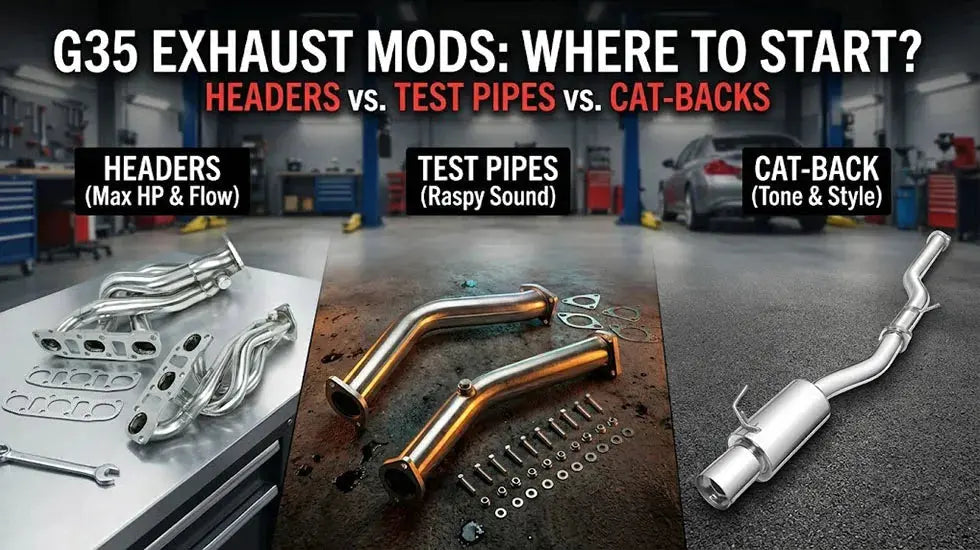
Which exhaust mod should you tackle first? It depends entirely on your end goal and tolerance for noise. Here is the unvarnished truth:
- For Maximum HP & Engine Health (The Smart Choice): Start with the headers. The factory cast-iron manifolds are a massive restriction. Replacing them fixes the root cause of power loss.
- For Instant Sound gratification (The Common Choice): Start with a cat-back system. It changes the tone and sheds weight, but expect minimal actual horsepower gains (maybe 5-8 whp).
- For Dedicated Track Cars on a Budget: Test pipes offer the highest flow per dollar, but will introduce severe rasp unless paired with a highly resonated exhaust system.
- The Expert Consensus: If you plan to do everything eventually, do the headers first. Fix the engine's breathing at the source.

Cat-Back Exhausts: The Sound & Style Upgrades
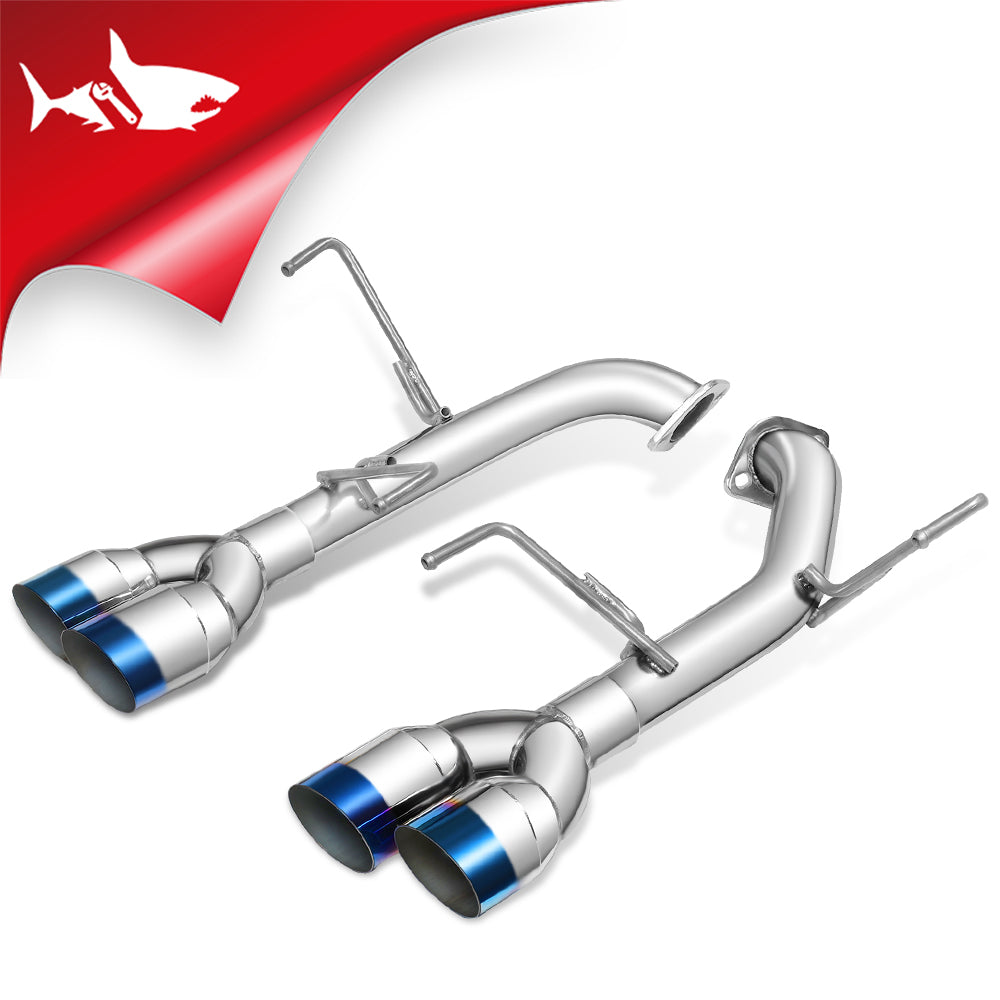
Let's start with the most popular modification. A g35 cat-back exhaust replaces everything from the catalytic converters rearward—the Y-pipe, the mid-pipe, the resonator, and the muffler.
Why do 80% of G35 owners start here? Because it's a relatively easy bolt-on job you can do in your driveway on jack stands, and the immediate auditory feedback makes you feel like you've done something massive. When you install a well-designed Catback Exhaust, you are primarily paying for that deep, aggressive tone and significant weight reduction over the bulky factory muffler.

But here is the reality check: you aren't making huge power here. The factory G35 mid-pipe and muffler are actually reasonably efficient for a naturally aspirated setup. You might see a bump of 5 to 8 wheel-horsepower (whp) on a dyno. If a manufacturer claims a 20 horsepower gain from a cat-back alone on a stock VQ35DE, they are lying to your face. It's a fantastic mod for smiles-per-gallon, but it doesn't solve the engine's fundamental breathing issues.
Test Pipes & High-Flow Cats: The Raspy Danger Zone
Test pipes (or straight pipes) replace your factory catalytic converters entirely. Mechanically, cats are the biggest restriction in any modern exhaust system because they use dense honeycomb structures to scrub emissions. Removing them allows exhaust gases to exit violently and quickly.
For track-focused builds, swapping to precision-welded g35 test pipes offers the best bang-for-buck power (often yielding 8-10 whp in the upper RPM range), but be prepared for a drastic sound change.

🛠️ From the Shop Floor
A lot of rookies watch YouTube tutorials, jack up their cars, and immediately bolt on cheap, non-resonated test pipes because it's cheap. I remember a kid brought his '06 manual coupe into my bay last year. He had done exactly this. The result? It sounded like someone throwing silverware into a blender every time he hit 3,500 RPM. Plus, the cabin smelled like unburnt fuel. I tell everyone: please don't do this unless you are building a dedicated drift missile or you have a seriously resonated Y-pipe to cancel out those frequencies.
Exhaust Headers: The True VQ35DE Power Source
Now we get to the meat and potatoes. If you actually want to make your engine breathe, you have to look right at the side of the engine block. The factory G35 exhaust manifolds are terrible. They are heavy, cast-iron logs designed for cheap mass production, not performance.
The inside of a factory manifold is rough, and the runners are extremely short and unequal in length. This causes the exhaust pulses from different cylinders to crash into each other, creating backpressure right at the exhaust valves. When exhaust gas can't escape the cylinder efficiently, fresh air and fuel can't enter efficiently. This is your bottleneck.

🛠️ From the Shop Floor
I clearly remember back in 2018, an older guy brought in a pristine '05 G35 sedan. He was complaining that the car felt absolutely choked out past 5,000 RPM. He had already spent two grand on a premium cat-back, and it did nothing for his top end. We put it on the lift, pulled the factory heat shields, and pulled the manifolds. The passenger side cast iron log actually had a hairline heat fracture, and the interior ports were choked with carbon buildup. We bolted on a set of equal-length stainless headers. We strapped it to the Dynojet, and it instantly made an extra 12 wheel-horsepower. More importantly, the under-hood temps dropped significantly.
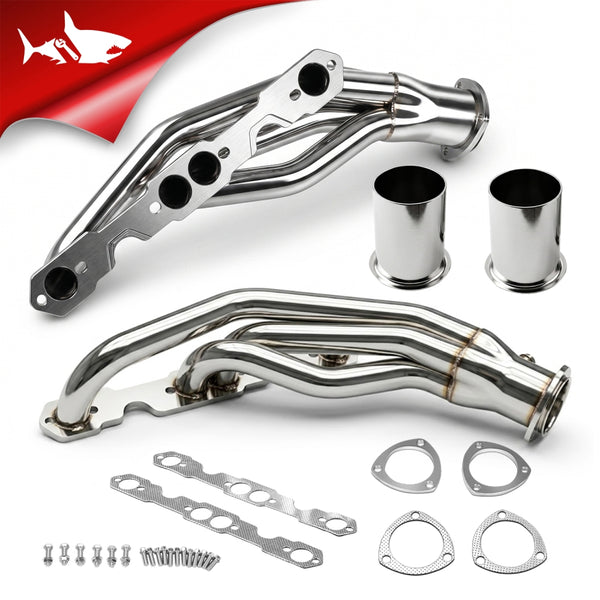
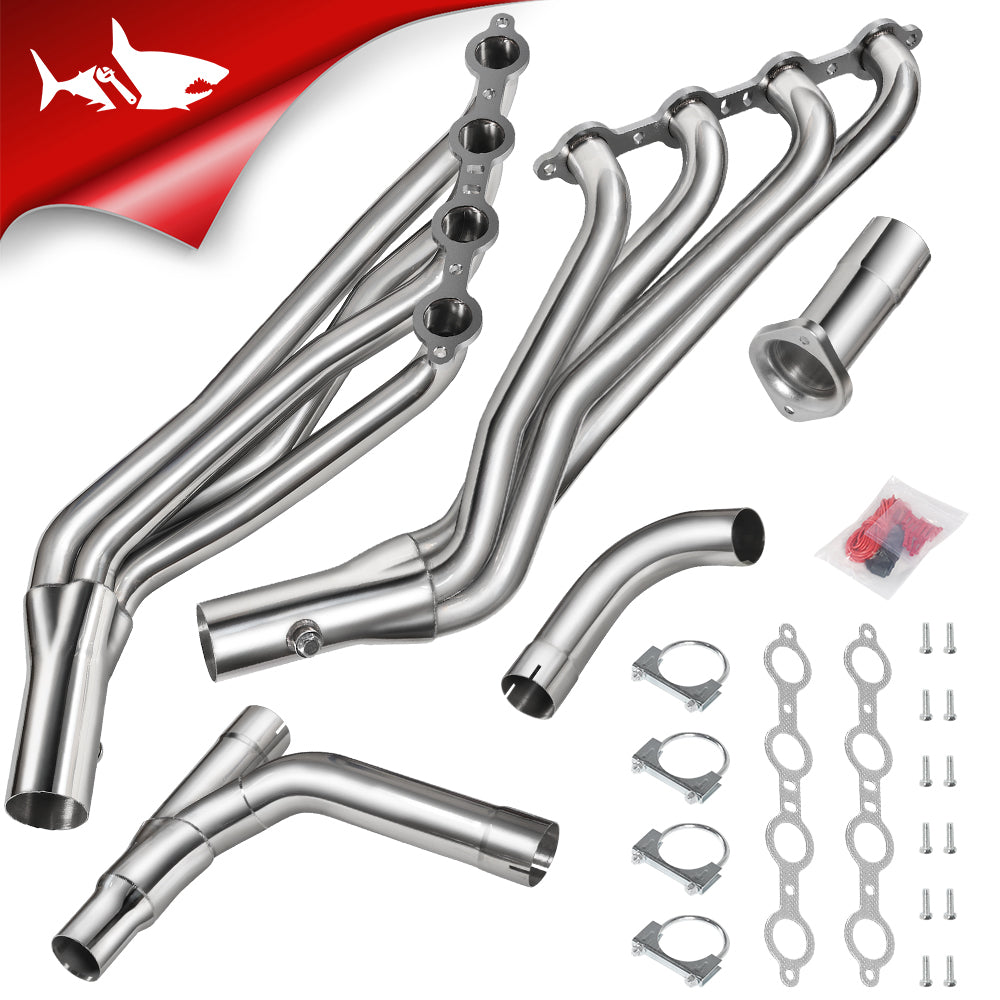
This is why upgrading to high-quality g35 headers is mechanically the best first step. It fixes a factory bottleneck that no cat-back system can ever overcome. Good aftermarket headers use T304 stainless steel, mandrel-bent tubing, and equal-length runners. This creates a "scavenging effect," where the fast-moving exhaust gas from one cylinder actually helps suck the exhaust gas out of the next cylinder.
The Flashark headers, for example, are designed specifically to utilize this scavenging effect for the VQ35DE. They aren't just pipes; they are mathematically tuned instruments. Yes, installing headers on a G35 is a pain. You have to navigate the steering column and engine mounts. But the mechanical payoff is the highest of any bolt-on exhaust mod.
| Modification | Estimated HP Gain (WHP) | Sound Impact | Installation Difficulty |
|---|---|---|---|
| Cat-Back Exhaust | 5 - 8 whp | Deep, Moderate Volume | Easy (Driveway/Jack stands) |
| Test Pipes | 8 - 10 whp | Loud, High Rasp Potential | Moderate (Rusty bolts are common) |
| Exhaust Headers | 10 - 15+ whp | Refined Trumpet Tone, Exotic | Hard (Tight engine bay space) |
The Final Verdict: Which Should Be Your First Mod?
After putting wrenches on hundreds of these cars, my advice is straightforward.
If you have the budget and want to do it right from an engineering standpoint, do the headers first. Get the hardest job out of the way. By replacing the restrictive factory manifolds with a precision-welded Flashark setup, you lower engine temperatures, gain legitimate horsepower, and set a perfect foundation. Any cat-back you add later will sound significantly better because the exhaust gas is flowing smoothly before it even reaches the mid-pipe.
If you are terrified of tight spaces and just want a weekend project to make your car sound cool at the local meet, grab a cat-back. Just don't expect it to throw you back in your seat.
Frequently Asked Questions (G35 Exhaust FAQ)
Q1: How much HP do G35 headers actually add?
A1: On a dyno, swapping factory cast logs for equal-length headers typically yields 10 to 15 wheel horsepower (whp) on a VQ35DE, depending on the supporting mods and engine health. The biggest difference is felt in the mid-range and top-end RPMs.
Q2: Do test pipes make a G35 sound raspy?
A2: Yes, almost always. Removing the catalytic converters eliminates the primary dampening of the VQ engine's high-frequency exhaust pulses. Unless you pair them with a heavily resonated Y-pipe and mid-pipe, you will experience severe metallic rasp.
Q3: Is a cat-back exhaust worth the money on a VQ35DE?
A3: If your goal is primarily aesthetic and auditory, yes. It sheds weight and provides a deeper tone. However, if your strict goal is horsepower per dollar, it is one of the least cost-effective first mods compared to headers or an intake plenum spacer.
Q4: Will modifying my G35 exhaust cause a check engine light (CEL)?
A4: A cat-back will not. Headers will not, provided you reuse the O2 sensors properly. Test pipes will cause a CEL (P0420/P0430 codes) because you are removing the catalytic converters, though O2 sensor spacers/defoulers can sometimes trick the ECU.
Q5: How hard is it to DIY install headers on a G35?
A5: It is highly frustrating. The VQ35DE is crammed tightly into the engine bay. You will need swivels, long extensions, penetrating oil, and plenty of patience. You often have to unbolt the steering shaft and lift the engine slightly off its mounts to get clearance.
Q6: What size exhaust piping is best for a naturally aspirated VQ35DE?
A6: For a naturally aspirated G35, a dual 2.5-inch or a single 3-inch exhaust system is optimal. Going larger (like dual 3-inch) on an N/A motor actually hurts exhaust gas velocity, killing your low-end torque.
Q7: Are long tube headers better than shorty headers for the G35?
A7: Long tube headers provide better peak horsepower and eliminate the need for separate test pipes/cats. Shorty headers bolt up to the factory or aftermarket cats, keeping you emissions compliant while still drastically improving flow over stock.
Q8: Do I need an ECU tune after installing an exhaust on my G35?
A8: You don't strictly *need* one for the car to run safely with just an exhaust. However, to actually extract the horsepower you just paid for, a custom tune (like Uprev) is highly recommended to adjust the air/fuel ratios for the newly increased airflow.
Q9: How can I fix the G35 exhaust rasp after modding?
A9: The most effective mechanical fix is welding in aftermarket resonators (like vibrant bottle-style resonators) into your Y-pipe or mid-pipe. Alternatively, swapping test pipes out for High-Flow Cats (HFCs) usually cures 90% of the rasp.
Q10: Can I install headers and test pipes at the same time?
A10: Absolutely. Doing them together saves labor time since you are already under the car disconnecting the exhaust flanges. Just be prepared for a massive increase in raw exhaust volume and fumes.